Category Archives: Portable Radio

Urban go-kit

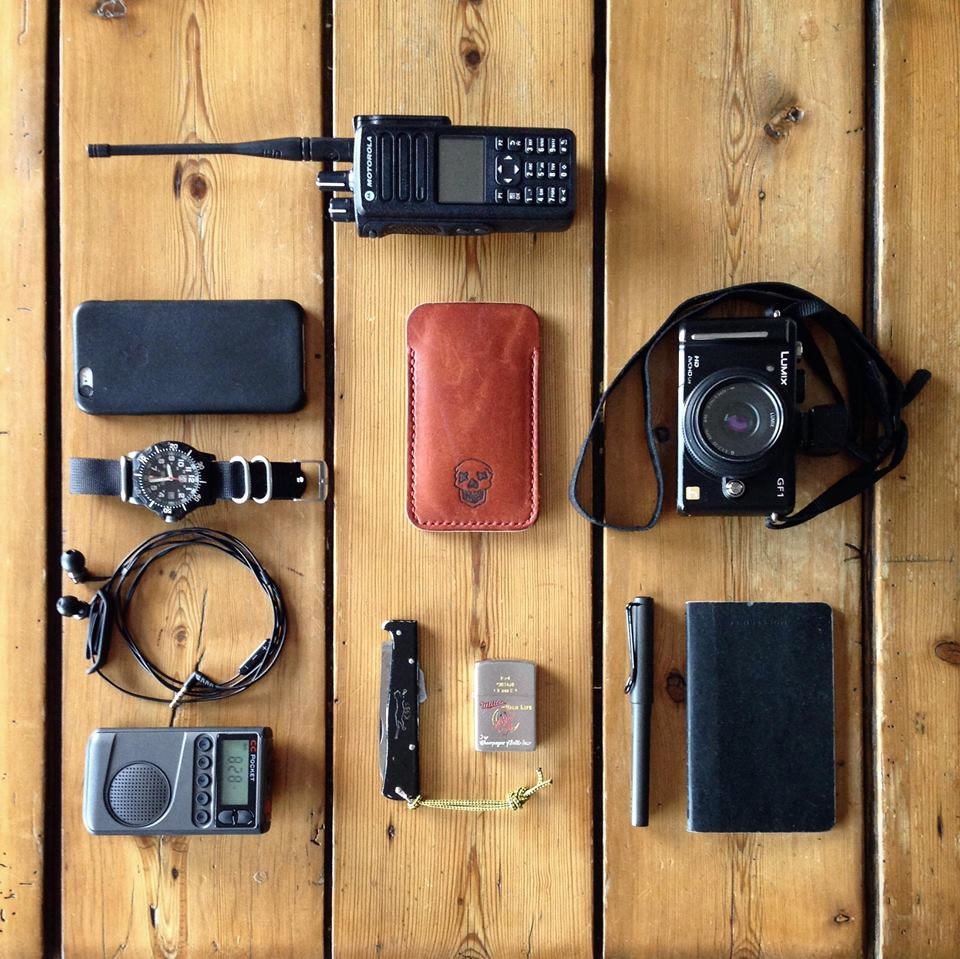
Davids-SuppliesMy good pal David Korchin (K2WNW) posted the above photo in his Facebook feed yesterday, simply titled, “Today’s carry.”

David is very much a kindred spirit; like me, he is constantly tweaking his go-gear. He works in New York City and likes to have his essentials with him there––radio included, of course. Since he’s a professional photographer, he never leaves home without the Lumix GF1 + Leica 20MM, very nice gear. Since he’s a ham and an avid ARES guy, he carries a Motorola XPR7550 UHF transceiver. And since he’s a radio listener, he carries the CC Pocket AM/FM radio.

True, he doesn’t have a shortwave radio in this kit, but he certainly takes his shortwave with him when traveling any further afield. Indeed, we once did some field work in Belize for ETOW and enjoyed a great SWLing session with the our Grundig G series receivers. Made for great comparison.

What’s in your kit?

Someday soon, I’ll take some photos of the kit that accompanies me most everywhere I go. In the meantime, we’d love to know what’s in your go-kit! If you have one, take a photo and add a few brief notes describing everything in it. I’ll post it here on the SWLing Post!

PS: For those who want to know, here’s David’s description of the above, in his own words:

“CLOCKWISE: Motorola XPR7550 UHF transceiver; Lumix GF1 + Leica 20MM; Moleskin folio notebook; Lamy Safari fountain pen; vintage Zippo lighter; Mercator lock blade penknife; CCrane Pocket radio; Sony El Cheapo™ earbuds; Luminox ANU Watch; iPhone; CENTER handmade leather card case from YXE, because Canada.”

Brilliant…! Thanks, DK!

How Bob found his Zenith “Bomber”

Zenith-Bomber-Clipper-1

After posting a link to Paul Litwinovich’s Zenith Transoceanic article, SWLing Post reader, Bob LaRose (W6ACU) sent me the following message:

“Just a quick story to follow-up on the excellent Zenith Transoceanic article today. It brought back a lot of great memories!

About twenty years ago I decided to collect some of the things that I couldn’t afford when growing up. I acquired quite a number of Hallicrafters receivers and other “heavy metal” including several transmitters (including my Viking I AM Transmitter). In the process of our last move, I got rid of a lot of the collection. One part of the collection that I did keep was my Transoceanics. If I remember correctly I have every major model except the military one mentioned in the article and the very last one.

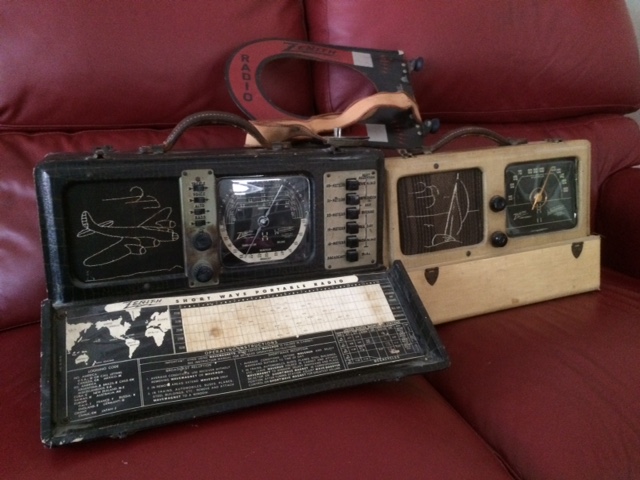
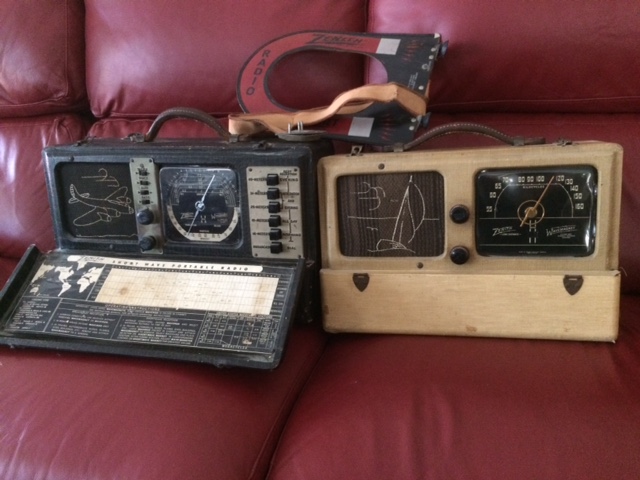
Here is my story is about obtaining a “Bomber” as described in the article. I was visiting a gun show at the North Carolina Fair grounds in Raleigh (I went there with a friend who is into Civil War collectables). Anyway, we were walking around and I spotted a small dusty suitcase on a table in the back of a booth. It was closed and to anyone else it looked like an old carrying case. However, by the size and the brown leatherette-grained case I thought it just might be a “Bomber”.

I tried not to act too excited and asked the seller what it was. He said it was an old radio and I asked him to bring it out. Sure enough, it was a Bomber! Still trying not to act too excited, I tried to let on that I didn’t know what is was and asked him if it worked. He said he didn’t know. I made a point of saying that it was missing the dial cover (but the pointer was there and unbent and the inside looked pretty clean and even had its “Wave Magnet”).

I asked him how much he wanted and he said $100. We haggled a bit over the condition and I finally got it for $75. I walked away very happy and excited!

Zenith-Bomber-Clipper-2

I spent some time cleaning it up, de-oxing the contacts and then used a VARIAC to slowly bring up the voltage to reform the electrolytics. But guess what? IT CAME TO LIFE!

I was even able to get the Sam’s manual and do an alignment. I don’t recall that I had to change any electrical parts or tubes and I even found a guy that made a replacement dial cover! It’s not as shiny as the one in the article but it was sure a great find. It proudly sits on the bookshelves in my office along with the Zenith “Sailboat” AM receiver mentioned in the article and my other Transoceanics. I’ve attached a picture of the two side-by-side. [See photos above]”

Many thanks, Bob, for sharing your “barn find”–or should I say “gun show find”(?)– Zenith “Bomber.” What a great story. I’m glad it’s in the hands of someone who has restored it and can appreciate its history. Indeed, your story proves that you never know where you’re going to find a vintage radio deal.

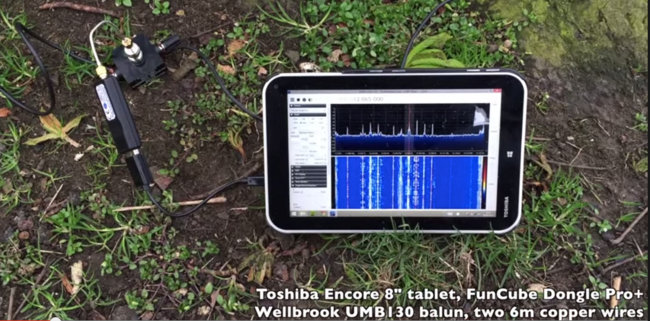
An inexpensive Windows tablet for portable SDRs?

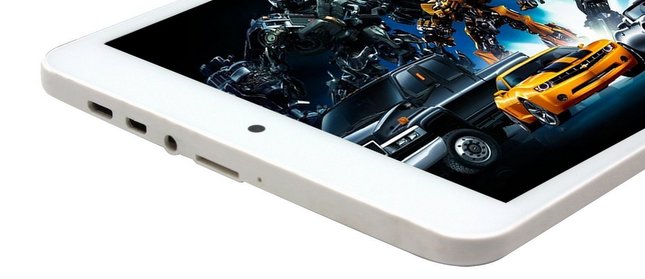
A tablet with two USB ports would be ideal.

I’ve never been a fan of tablet PCs. I have an old Android tablet that I occasionally use to watch Netflix and read eBooks, but when I want to interact with a computer, I typically want the convenience of a proper keyboard and the precision of a mouse or large track pad.

With that said, this year at the Winter SWL Fest, I was co-host of a forum called: “Time Travel, Teleportation & Spectrum Hoarding for the Contemporary DXer.” My good friend and co-host, Mark Fahey brought his Windows tablet PC and we used it to demonstrate how easily and effectively SDRs can be taken to the field and spectrum recordings can be reviewed practically anywhere. Indeed, Mark tunes through his spectrum recordings while taking the train to work! (How cool is that!?!)

This week, I reviewed a guest post about portable SDRs by London Shortwave; afterward, I decided that I must begin the search for a Windows tablet. Since I would only use this tablet for portable SDR work, I really want to keep it as affordable as possible ($200 US or less).

It appears to me that there are a few things that you must overcome in a portable SDR package including: mitigating internal noise produced by the tablet and accessories, and the ability to power the tablet and the SDR at the same time.

Windows Tablet Wishlist:

  • Inexpensive (less than $200)
  • Enough speed and memory to run SDR applications and record spectrum to an internal SD card or external portable drive
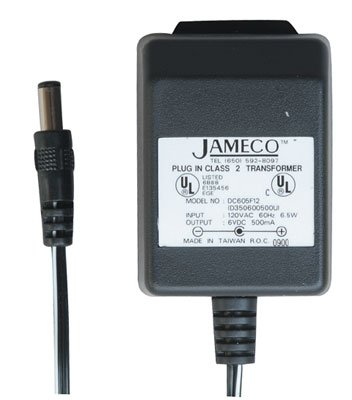
  • Separate USB and power ports or the ability to power both the tablet and SDR at the same time

My choices so far:

Readers: Your recommendations and advice are most welcome! Please comment especially if you have experience using tablet/SDR combos.

Pete gives Kaito high marks for customer service

PL-880 (1)

SWLing Post reader, Pete Jernakoff (K3KMS), writes:

“I purchased two PL-880 radios from Amazon about a year ago and before the soft muting issue became a hot topic. Both of my radios (8819 firmware version) suffered from this most annoying problem but it wasn’t until I started reading your excellent blog that I learned of the cause.

About two weeks ago, I called Kaito Electronics USA and asked if they could upgrade the firmware on my two radios to the 8820 version. The person I spoke to said (paraphrasing) “Sure! Send them to us any we’ll perform the upgrade for free. All you do is pay for the return shipping.”

So off the radios went to Kaito. About 10 days later I had them back with the new firmware installed. The return shipping was $10. Weak MW and SW signals are now easy to listen to: no soft muting issues at all. Kudos to Kaito for agreeing to perform the upgrade for me. My dealings with them were thoroughly pleasurable.”

Thanks for sharing that great experience, Pete! You’re right–the 8820 upgrade is certainly worth the shipping costs and I’m happy to hear Kaito makes the process so easy.

Don’t know the firmware version of your PL-880? Click here to learn how to display the firmware version.

For more information on PL-880 soft muting, click here.

Reader Survey: Comparing the Tecsun PL-680 and PL-660 on medium wave (AM)

Tecsun-PL-680-MW

[Update: Please note that this survey has been closed, but the audio samples–labeled Radio A and Radio B–will remain to allow others the opportunity to make an evaluation prior to reading the PL-680 review.]

[Update 2: The PL-680 review and readers’ survey results have now been posted! Check it out here.]

The results from the PL-680/PL-660 reader surveys (here and here) have been pouring in! As of this posting, well over 200 readers have participated by listening to and evaluating the two receiver comparison surveys. Thank you!

Yesterday evening, I spent time comparing the Tecsun PL-660 and PL-680 with medium wave reception in mind. I recorded dozens of samples and picked four broadcast recordings I felt best represented receiver performance. Note that this will be my final survey before I post the PL-680 review later this week.

If you’re not familiar with these readers surveys, please read our first post, as it contains all of the vital info and disclaimers.

To participate in this survey, start by simply listening, then fill out the form that follows with your choice of “Best Radio” for each broadcast. All of these medium wave samples were recorded in the evening hours, which I believe is more indicative of receiver sensitivity, selectivity and AGC. Notice that I indicate distance to target station (as the crow flies).


Audio Samples

AM_750_WSB_logo750 AM – WSB Atlanta, Georgia, USA (171 mi/275 km)

Radio A

Radio B

CFZM740 AM – CFZM Toronto, Canada (580 mi/933 km)

Radio A

Radio B

940WMAC940 AM – WMAC Macon, Georgia, USA (204 mi/328 km)

Radio A

Radio B

WLW-Logo700 AM – WLW Cincinnati, OH, USA (271 mi/436 km)

Radio A

Radio B


Submit your response

Click here to use our response form to vote on your favorites, or simply use the form embedded below:

I’ll leave all PL-660/PL-680 comparison surveys open for evaluation until I publish the Tecsun PL-680 review.

Reader Survey: Comparing the Tecsun PL-680 and PL-660 synchronous detection

PL-680-Sync-Detector

[Update: Please note that this survey has been closed, but the audio samples–labeled Radio A and Radio B–will remain to allow others the opportunity to make an evaluation prior to reading the PL-680 review.]

[Update 2: The PL-680 review and readers’ survey results have now been posted! Check it out here.]

The results from the PL-680/PL-660 reader survey have been pouring in! As of this posting, over 160 readers have participated by listening to and evaluating the AM shortwave audio samples. Thank you!

This morning, I spent time comparing the Tecsun PL-660 and PL-680 with synchronous detection in mind. Time permitting, I hope to publish at least a medium wave audio survey, too, before I post the PL-680 review later this week.   I doubt I will post an SSB reception survey since my digital recorder injects a bit of noise into those recordings.

If you’re not familiar with these readers surveys, please read our previous post, as it contains all of the vital info and disclaimers.

To participate in this survey, start by simply listening, then fill out the form that follows with your choice of “Best Radio” for each broadcast. Please note that I include two recordings per broadcast, but ask that you choose the best radio overall for each broadcast.

For example: if you feel that Radio A is better in the first recording of Radio Australia, but Radio B is slightly better in the second recording (again, of Radio Australia), you still need to chose which radio is best overall in the Radio Australia recordings set.

You’ll note that signal stability varies between the two recordings; this is simply the nature of shortwave radio. Also note that each recording was made within one minute of the other in each set.


 Audio Samples

Radio Australia 9,580 kHz

ABC-Radio-AustraliaBelow I’ve provided two recordings of Radio Australia on 9,580 kHz. In both recordings, I have the PL-660 and PL-680 in normal AM mode for the first half of the recording–you will hear a het (hetrodyne–which sounds like a high-pitch tone) in the upper sideband. About halfway through the recording, I switch each radio into lower sideband sync, which effectively removes the het sound.

I have provided two recordings for each radio since QSB (fading) was fast and deep. Indeed, you’ll note in the second set of recordings that the radios had more difficulty maintaining the sync lock.

First Recording: Radio A

First Recording: Radio B

Second Recording: Radio A

Second Recording: Radio B

Radio Riyadh 17,615 kHz

Saudi-Arabia - Radio-RiyhadRadio Riyadh could certainly be considered weak-signal listening this morning, though their opening on 16 meters was quite good for the time of day.

In the recordings below, I start in AM mode, then switch the radio to USB sync after 15 seconds, and to LSB sync after 30 seconds.

In the first set of recordings both radio’s filters are set wide; in the second set, narrow.

First Recording: Radio A – (wide band filter)

First Recording: Radio B – (wide band filter)

Second Recording: Radio A – (narrow band filter)

Second Recording: Radio B – (narrow band filter)


Submit your response

Click here to use our response form to vote on your favorites, or simply use the form embedded below:

I’ll leave all PL-660/PL-680 comparison surveys open for evaluation until I publish the Tecsun PL-680 review.