Category Archives: Portable Radio

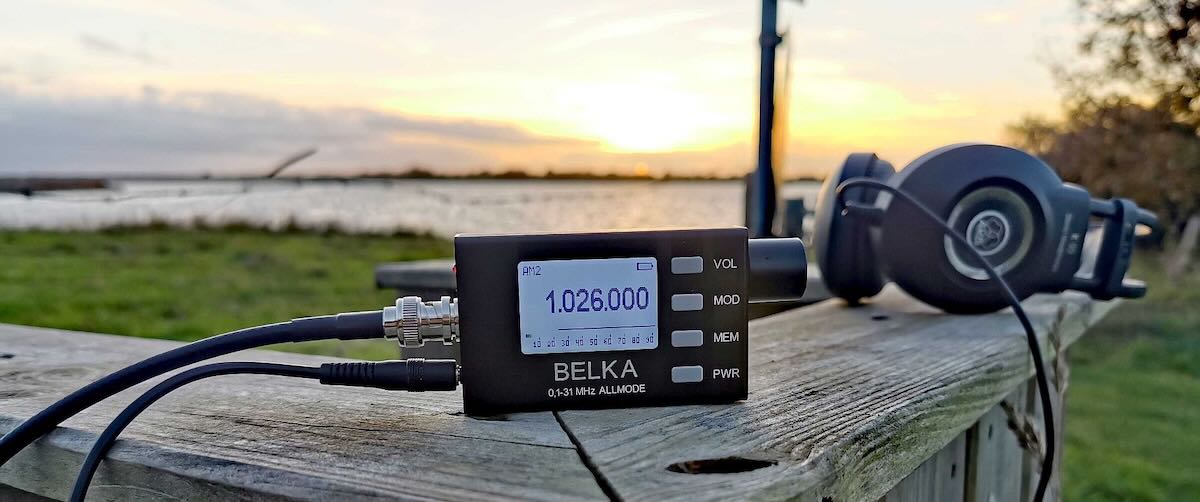
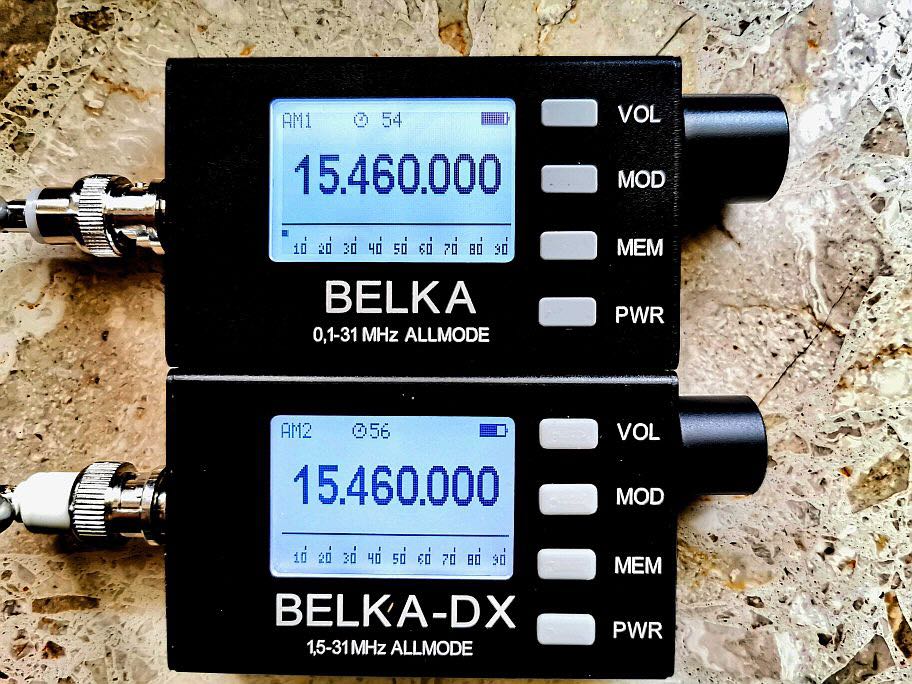
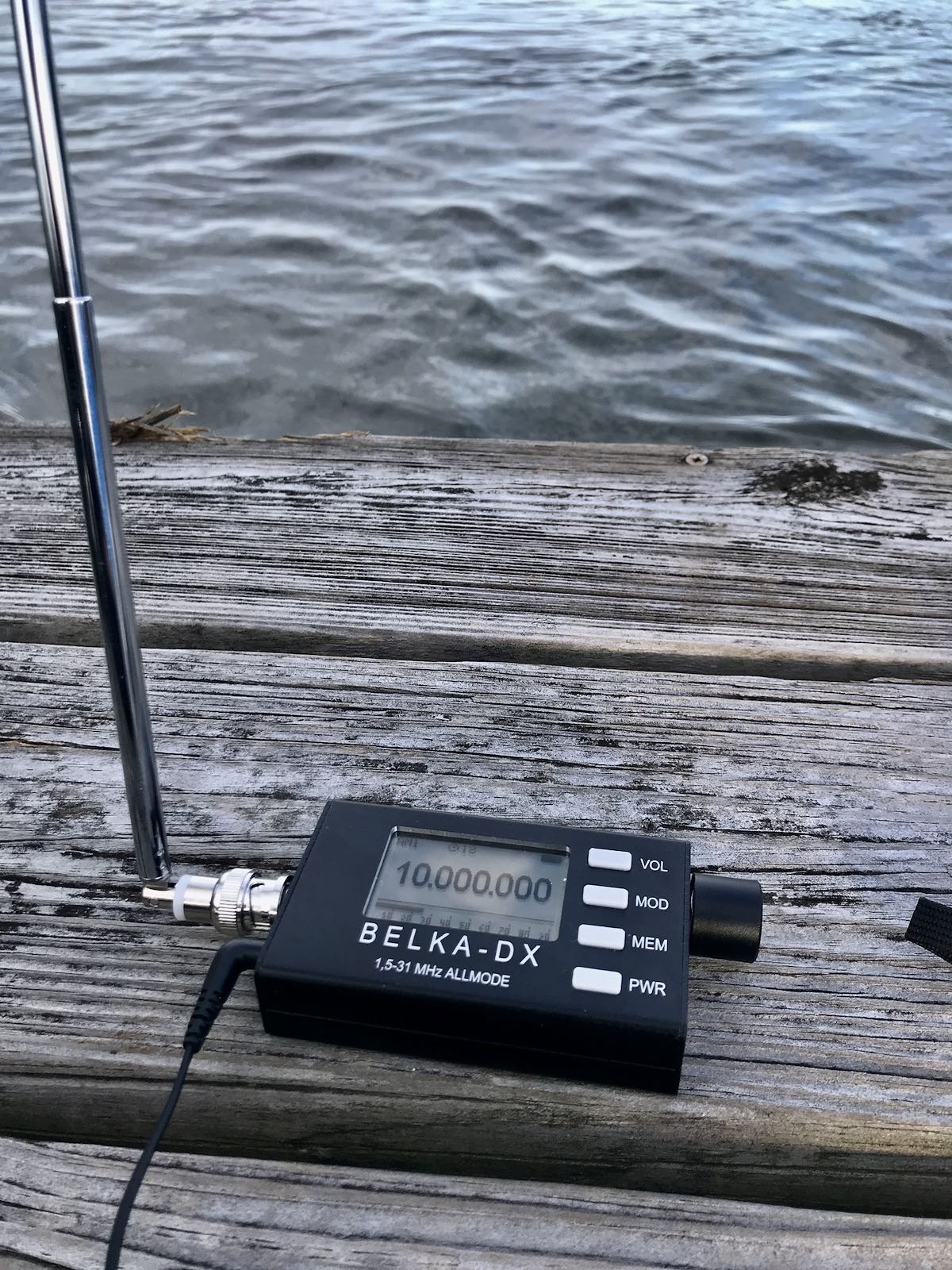
Belka DX updated to now cover mediumwave and longwave

Many thanks to SWLing Post contributor, Dave Garr, who writes:

I have some interesting news for all of those Belka DX fans, Alex the guy behind this magnificent receiver has just announced the introduction of a new model. Ok so it is still called the Belka DX but it has now got a total frequency coverage of 100KHz to 31MHz so those that have put off buying because of lack of Long wave and Medium wave have now had their prayers answered. There has been no fanfare announcement about this but they have just updated their website with the new added frequency range. I am just waiting for the first review to appear before committing my hard earned cash.
Regards
Dave Gurr

Click here to check it out.

Excellent news. I’m sure this will make the Belka DX even more popular than it already is. I have to assume a ferrite bar hasn’t been added (there isn’t much room for one in the Belka series) so you would need to pair a proper MW/LM antenna antenna in order to fully take advantage of the new bands.   

Thank you for the tip, Dave!

Solid copy: Tom receives JG2XA in the Netherlands on his PL-365

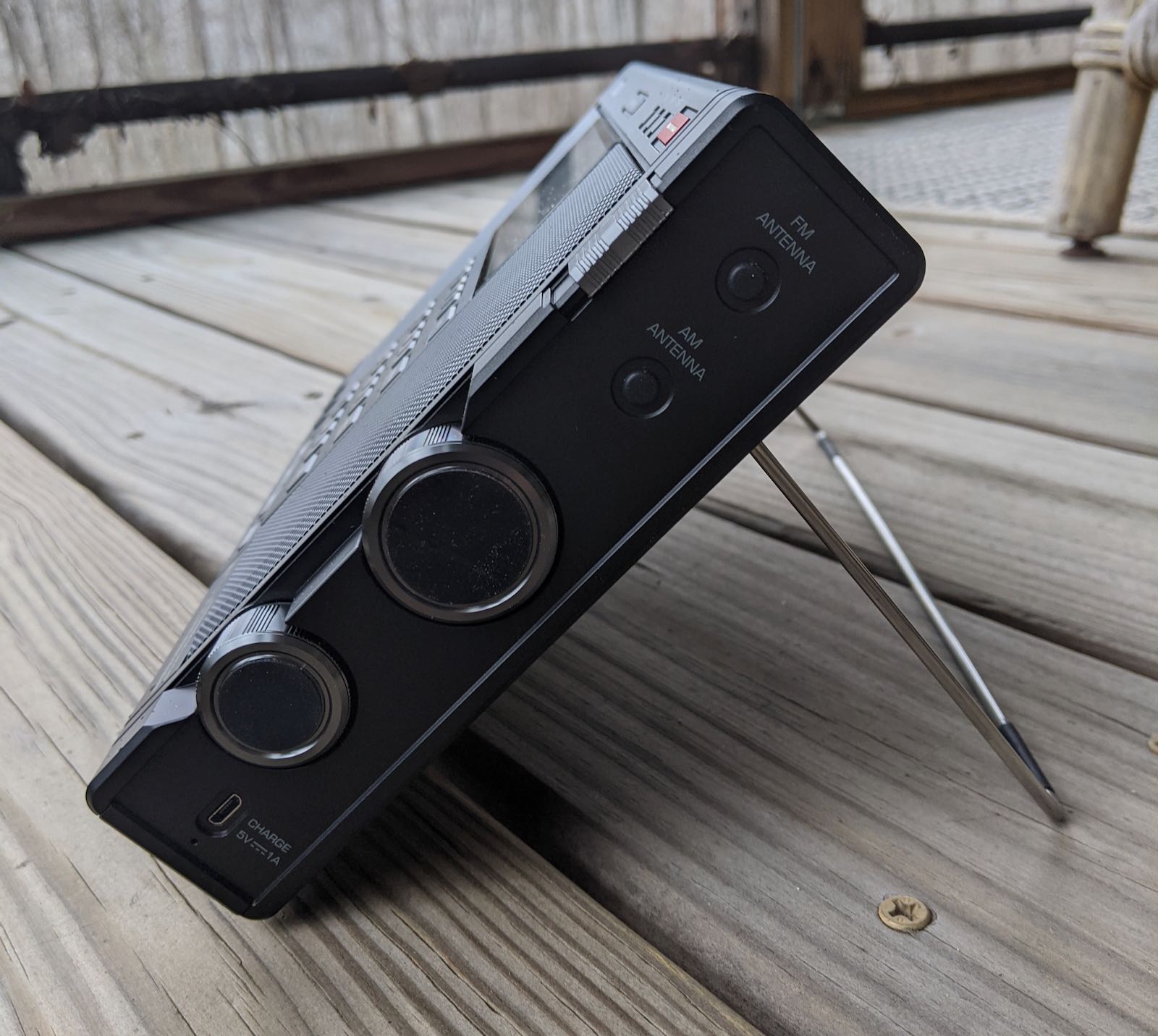
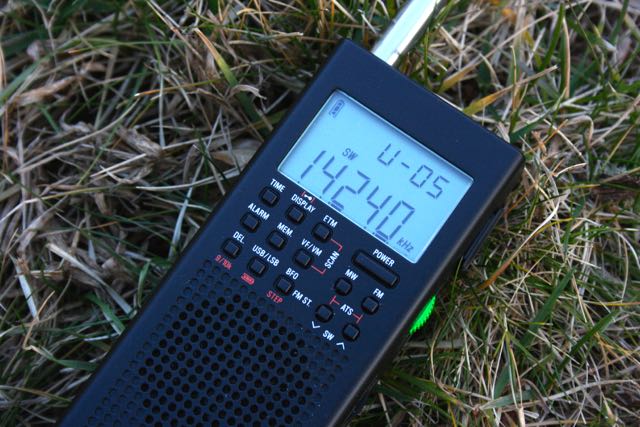
CountyComm GP5/SSB, aka Tecsun PL-to 365

Many thanks to SWLing Post contributor, Tom Kamp (PA/DF5JL), who shares the following brief report and video:

Today (September 21, 2022) around 2015 UT strong signal on 5006 kHz (CF) from JG2XA beacon from Japan (0.2 kW) near Den Helder, in North-Holland, The Netherlands.

JG2XA transmits continuously at 200 W on 5006 kHz and 8006 kHz. The type of radio signal is H2A (amplitude modulation with coded tones in the single sideband).

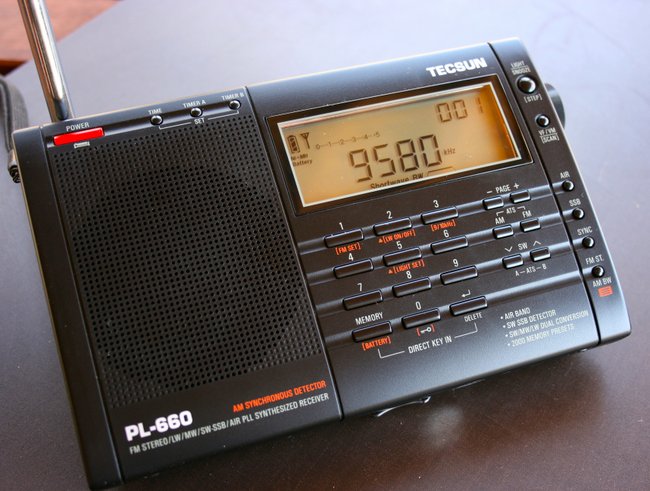
Received with the Tecsun PL-368 and the built-in telescopic antenna! The dBm display of the unit is very inaccurate (in USB), yet S5-S7 should be rated appropriately. Top signal, top RX ?

73 Tom Kamp PA/DF5JL

That’s quite a catch for the PL-365. Thanks for sharing this, Tom!

Treetop Antennas: Featured with my friend Wlodek (US7IGN) on BBC Radio 4 Short Cuts

I’m very honored to be featured with my good friend Wlodek (US7IGN) in a short radio documentary on BBC Radio 4 today.

Wlodek is long-time reader and subscriber here on the SWLing Post and QRPer.com. Wlodek lives in Kiev, Ukraine and we keep in touch these days over email. Like me, he is passionate about field radio work and before the Russian invasion, you’d often find him in nearby forests experimenting with some pretty impressive field antennas.

Sadly, when Russia invaded Ukraine earlier this year, it very quickly brought an end to all of that for Wlod. Not only were amateur radio operators not allowed to transmit under the state of emergency, but it’s no longer safe to venture into nearby forests.

Radio producer, Cicely Fell, learned about our love of all things field radio and put together an audio piece that airs today on BBC Radio 4:

BBC Radio 4 Short Cuts

From the forests of North Carolina, USA to the city of Kyiv, Ukraine – two ham radio enthusiasts seek each other out and a voice from the past prompts a dialogue on listening between a rabbi and a radio producer.

Click here to listen via the BBC Radio 4 website (note that the audio can be streamed shortly after the program airs today).

Many thanks to Cicely and her talented team at Falling Tree Productions for spending a little time with us in the forest and on the air! Truly an honor.

Small Unidirectional Loop Antenna (SULA) Part 2: Construction Notes

Many thanks to SWLing Post contributor extraordinaire, 13dka, who brings us Part Two of a three part series about the new SULA homebrew antenna project. This first article describes this affordable antenna and demonstrates its unique reception properties. This second article focuses on construction notes. The third and final article will essentially be a Q&A about the SULA antenna. All articles will eventually link to each other once published.

This wideband unidirectional antenna is an outstanding and innovative development for the portable DXer. I love the fact that it came to fruition via a collaboration between Grayhat and 13dka: two amazing gents and radio ambassadors on our SWLing.net discussion board and here on the SWLing Post. So many thanks to both of them!

Please enjoy and share Part 2:


Part 2: SULA Construction notes

by 13dka

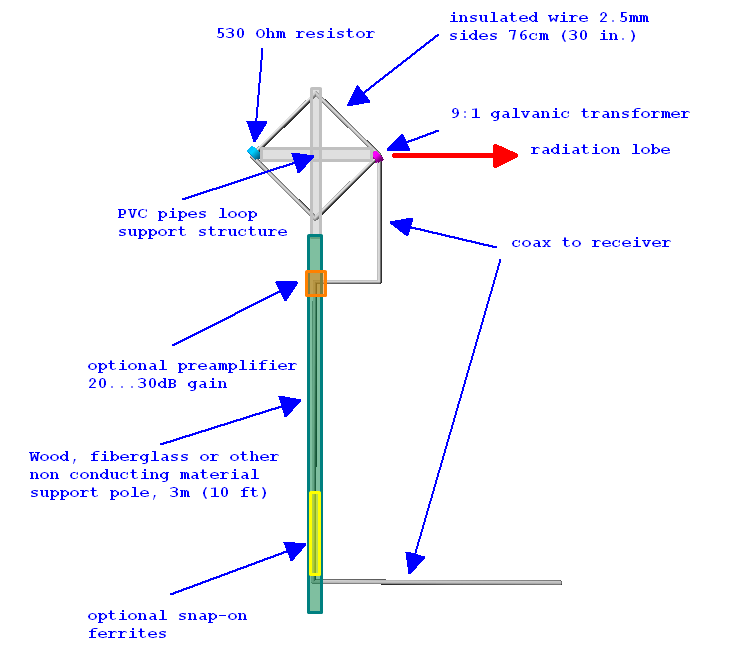
The drawing [above] has all you need to know. You basically need to put up a symmetrical wire diamond starting with a balun at the one end and terminating in a resistor at the other end of the horizontal boom, the sides are supposed to be 76cm/29.92″ long so you need to make yourself some…

Support structure:

I used 0.63″/1.6cm square plastic square tubing/cable duct profiles from the home improvement market to make the support structure. You can use anything non-conductive for that of course, broom sticks, lathes… The plastic profiles I used had the advantage of being in the house and easy to work on with a Dremel-style tool and everything can be assembled using the same self-tapping screws without even drilling. The profiles are held together with 2 screws, for transport I unscrew one of them and put that into an extra “parking” screw hole on the side, then I can collapse the cross for easy fit into the trunk, a rucksack etc.

These profiles are available in different diameters that fit into each other like a telescoping whip. This is useful to make the support structure variable for experiments and to control the loop shape and tension on the wire. The booms end up at 1.075m each, the profiles come in 1m length, so that’s 4 short pieces of the smaller size tube to extend the main booms by 37mm on each side

On the resistor end of the loop that smaller tube isn’t mounted in the “boom” tube but to the side of it in order to keep the wire running straight from the balun box on the other side.

Mast/mounting:

You can use anything non-conductive to bring it up to height. On second thought that is indeed bad news if you were planning on putting that up on your metal mast…and we have no data on what happens when you do it anyway. I don’t know if the smallest (4m) telescoping fiberglass poles would suffice for portable operation, but I’m a fan of just using the big lower segments of my 10m “HD” mast for the stiffness they give me (3 segments for the height, the 4th collapsed into in the base segment for easy rotation). Telescoping masts also give you easy control over…

Height:

The published patterns are for 3m/10′ feedpoint height over “average” ground. Increasing height further has no expectable advantage, instead it will deteriorate the favorable directional pattern of the loop. Flying it lower, or even a lot lower in windy weather on the other hand is causing a surprisingly moderate hit on performance.

Continue reading

Introducing the amazing SULA: An affordable unidirectional DX-grade loop antenna that you can build!

Many thanks to SWLing Post contributor extraordinaire, 13dka, who brings us a three part series about the new SULA homebrew antenna project. This first article describes this affordable antenna and demonstrates its unique reception properties. The second article will focus on construction notes. The third and final article will essentially be a Q&A about the SULA antenna. All articles will eventually link to each other once published.

This wideband unidirectional antenna is an outstanding and innovative development for the portable DXer. I love the fact that it came to fruition via a collaboration between Grayhat and 13dka: two amazing gents and radio ambassadors on our SWLing.net discussion board and here on the SWLing Post. So many thanks to both of them!

Please enjoy and share SULA Part 1:


Introducing the Small Unidirectional Loop Antenna (SULA) 1-30MHz

A small and simple, unidirectional and DX-capable loop “beam” for SWLs!

by 13dka

In early June, Andrew (grayhat), SWLing Post‘s resident antenna wizard suggested a variation of the “cardioid loop” on the SWLing Post message board: The original “cardioid loop” is a small loop receiving antenna deriving its name from a cardioid shaped (unidirectional) radiation footprint. The design is strikingly simple but it has a few downsides: It relies on a custom preamp, it needs a ground rod to work and it is unidirectional only up to 8 MHz.

Andrew’s version had the components all shuffled around and it did not only lose the ground rod, it also promised a nice cardioid pattern over the entire shortwave, from a small, diamond shaped loop. Wait…what? It can be made using parts available on Amazon and your DIY store:

You need some 3m wire and PVC tubes to create a support structure to hold the wire, a 530 Ohm resistor and a 9:1 balun like the popular “NooElec One Nine”. Since it’s a “lossy” design, adding a generic LNA like the NooElec “LANA HF” would help getting most out of it. When you put that all together you have what sounds like an old shortwave listener’s dream: a small, portable, tangible, and completely practical allband shortwave reception beam antenna with some more convenient properties on top, for example, it is a bit afraid of heights.

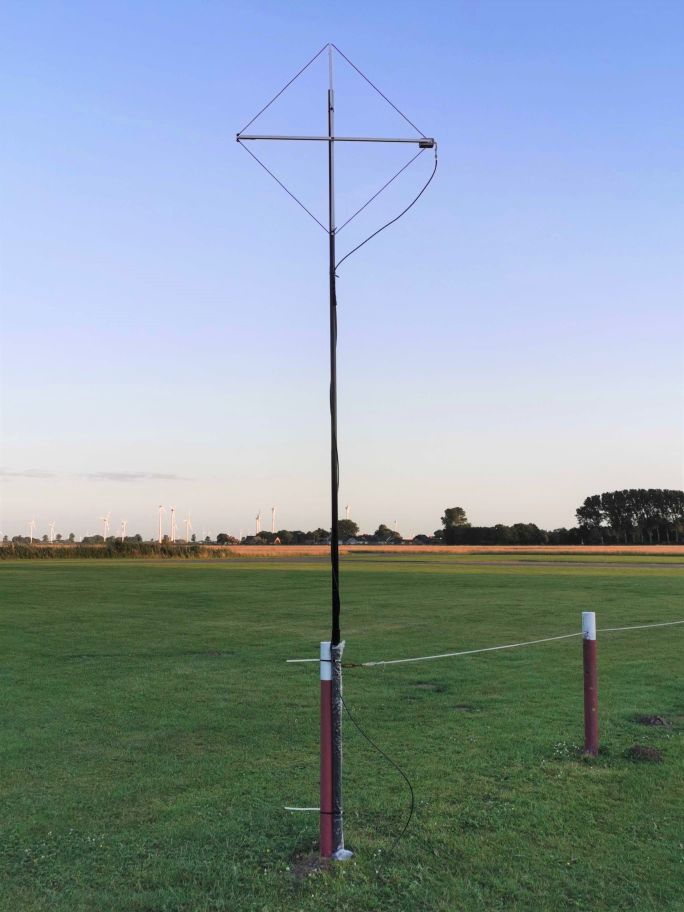
That sounded both interesting and plain crazy, but the .nec files Andrew posted were clearly saying that this antenna is a thing now. Unfortunately Andrew suffered a little injury that kept him from making one of those right away, I on the other hand had almost all the needed parts in a drawer so I ended up making a prototype and putting it through some of its paces, with Andrew changing the design and me changing the actual antenna accordingly, then mounting it upside down. Let me show you around:

  •  Small, diamond shaped wire loop (with 76cm/29.92″ sides), needing as little space as most other small loops.
  • Unidirectional with a ~160° wide “beam” and one pronounced minimum with a front/back-ratio of typically 20dB over the entire reception range 1-30MHz.
  • Moderate height requirements: It works best up to 3m/10′ above ground, where it gives you…
  • …a main lobe with a convenient flat takeoff angle for DX
  • Antenna is comparatively insensitive to ground quality/conductivity.
  • Wideband design, works best on shortwave and is pretty good up to 70cm.

A functional small beam antenna for shortwave reception that’s just as small and possibly even more lightweight (prototype:~250g/9oz) than your regular SML, that can be easily made out of easy to obtain parts and easily carried around for mobile/portable DXing and due to its cardioid shaped directional pattern also for direction finding, a “tactical” antenna that’s also doing DX? Unlike conventional, Yagi-Uda or wire beams it can achieve a low takeoff angle at only 3m/10ft height or less, the front/back ratio is typically better than that of a 3-element Yagi, with a particularly useful horizontal pattern shape. That it’s rather indifferent to soil quality could mean that more people get to reproduce the good results and being a real wideband antenna is making the SULA an interesting companion for multiband radios and SDRs. Really? A miracle antenna? Is it that time of year again? If I had a dollar for every….

Continue reading

Eton Elite Satellit HD Receivers – Now Shipping

Eton Elite Satellit HD

Thanks to commenter Keith on my “Consistently Inconsistent” article, we learn that the Eton Elite Satellit HD receiver is now shipping. Keith purchased the receiver from Amazon.com and is expecting delivery on August 18.

Note that over the half-hour it took me to write this update article, Amazon’s stock of the Elite Satellit HD dropped from 19 to 10!

There are also updates on availability found on three other web sites:

  • Eton Corporation: No longer does their page say “Arriving this month – reserve yours today!”. Instead, the radio is shown as “available today!”
  • Hammacher Schlemmer: their web page indicates “In stock – available for immediate shipment”.   EDIT: Wow, that was quick! Just after I posted this article, HS changed their web page to “We regret that this item is no longer available”.
  • Universal Radio: Gone is the “available late August” statement, and the radio is available for adding to your shopping cart and checkout.

This is great news for those who have awaited the receiver since its announcement in 2019, and especially for those getting the radio at the original pre-order price (myself included :^)

Keith, thanks again for the heads-up on your Elite Satellit HD order. Please leave some first impression comments when you receive it!


A regular contributor to the SWLing Post, Guy Atkins lives in the beautiful Puget Sound country of Washington State.

What are your favorite portables in 2022 and why?

I’m traveling this morning and packing up my EDC (everyday carry) bag here int he hotel room.

Last night, I was using the Tecsun PL-330 to do a little band-scanning and it dawned on me that I’ve used this radio along with the Belka DX quite extensively this summer while on an extended family road trip. Even before this trip, both of these radios were in heavy rotation.

I go through phases of using portables–sometimes I’ll dig out a vintage radio and use it for weeks, then I’ll switch it out for a modern rig. I like variety and giving all of my radios a little air time.

I packed the Belka DX and Tecsun PL-330 for our trip because they’re some of the most compact, lightweight radios I own.

I’m curious what radios you’re using now and why–? Please comment!