Category Archives: Radios

Hospitals and RF noise: FM and HD radio’s strong suit

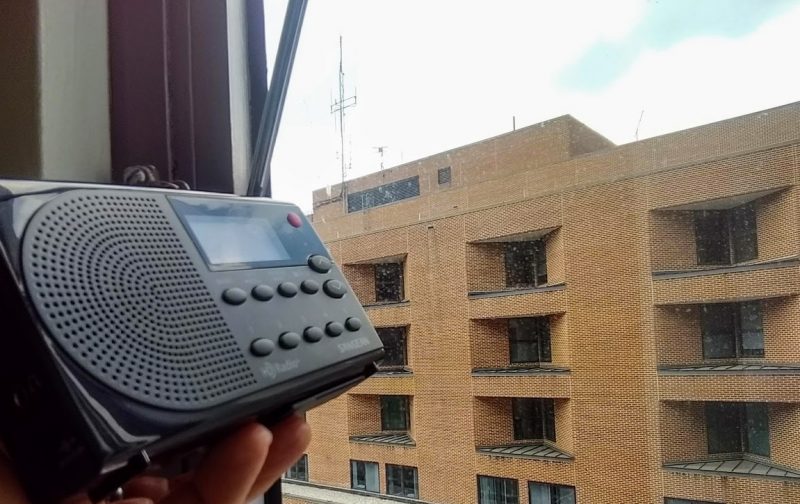
The Sangean HDR-14 AM/FM HD radio

For the past week, I’ve been away from home spending time with my mother at the hospital while she recovers from a surgery. I’ve got a number of reviews and evaluations in the pipeline, but thankfully no shortwave or HF radios on the table this week (although the ELAD FDM-S3 and CommRadio CTX-10 are just around the corner). Listening to shortwave (or even mediumwave) in a hospital room can be an exercise in futility–there are just too many devices emitting noise and the buildings are built like bunkers with incredibly thick walls to attenuate signals.

I’ve had the little Sangean HDR-14 with me, however, and have been very pleased with its ability to snag FM stations both analog and digital. I’ve also had fun discovering a surprisingly diverse FM landscape in this metro area. I haven’t snagged an AM HD station yet, but my hope is one evening I might DX one (fingers crossed and not holding my breath).

The Sangean HDR-14 (left) and CC Skywave SSB (right)

At the end of most days, I’ve been able to catch a little shortwave action with my CC Skywave SSB (pre-production) portable at the guest house where I’m staying. The evenings have been surprisingly peaceful here with only the occasional popup thunderstorm to insert a little QRN in my listening sessions.

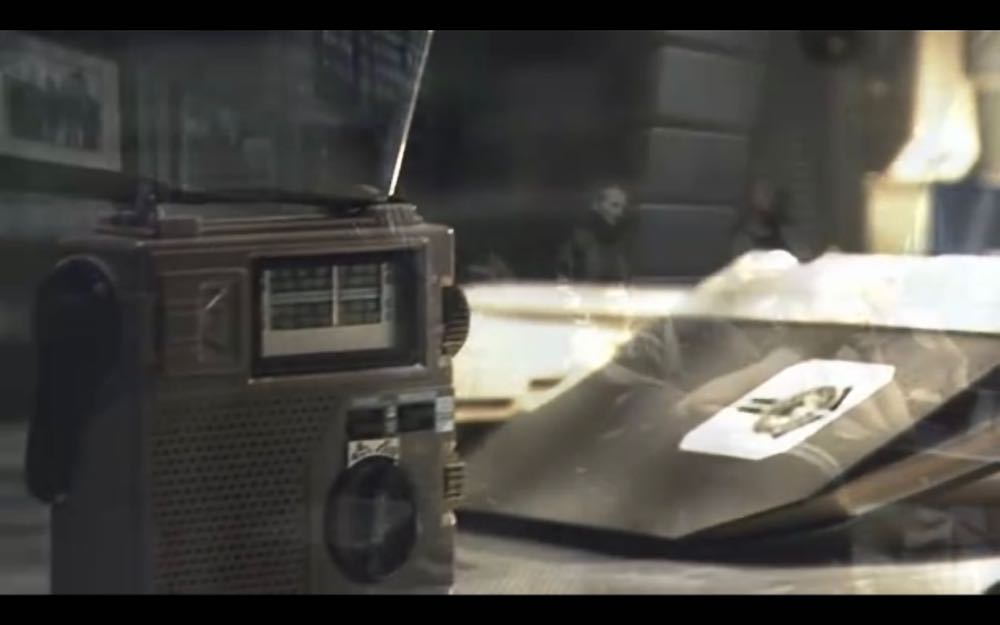
Last night, while listening to jazz on FM, I finished reading All The Light We Cannot See by Anthony Doerr (affiliate link).

We’ve mentioned this book before and I know of at least dozen SWLing Post contributors and friends who’ve personally recommended it to me.

It is a superb novel and will, no doubt, tug at the heart strings of any radio enthusiast or WWII history buff. Highly recommended!

Indeed, last night I couldn’t fall asleep until I finished the book around 12:30 AM!

And mom? She’s recovering quite well and we hope will be discharged from the hospital soon.

Raspberry Pi Vintage Radio

This project was a winner in the Maker Share Mission May contest. While not strictly shortwave, of course, many of SWLing Blog readers enjoy, as I do, all things radio, and especially creative and new expressions of radio. Here is a brief excerpt from the MakerShare posting:

Vintage radios are fascinating. At one point the radio was the main method for mass communication of news and entertainment and was manufactured in a variety of styles to be prominently displayed in a home. Unfortunately, many vintage radios that have been physically preserved no longer function and it is impractical for them to be repaired. Described is the design and implementation of the Raspberry Pi Radio (RPiRadio), a device that bypasses the analog electronics of a vintage radio and digitally recreates the behavior of a vintage radio that is able to be tuned to vintage radio programming.

The whole posting may be found here, with extensive details on the building of the radio and how it was programmed for sound replicating the vintage radio era.

While I love tinkering with old radios and trying to bring them back to life, some radios are just beyond reasonable repair. This can bring old radios back to life in a way which seeks to honor their past – a very cool idea indeed!

Robert Gulley, AK3Q, is the author of this post and a regular contributor to the SWLing Post.       Robert also blogs at All Things Radio.

Guest Post: Tom’s Backpack Shack 3.0

Many thanks to SWLing Post contributor, TomL, who shares the following guest post:


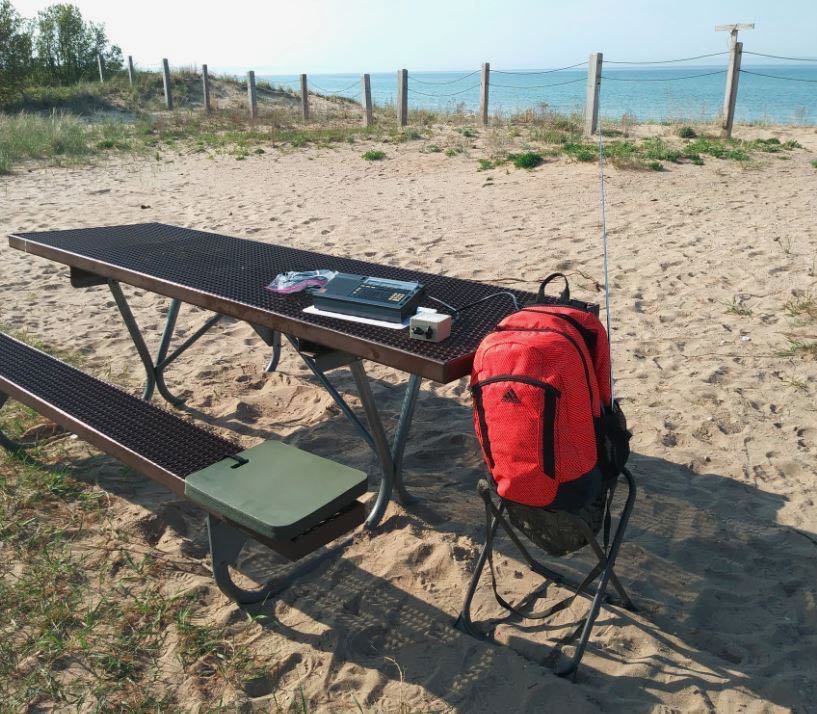
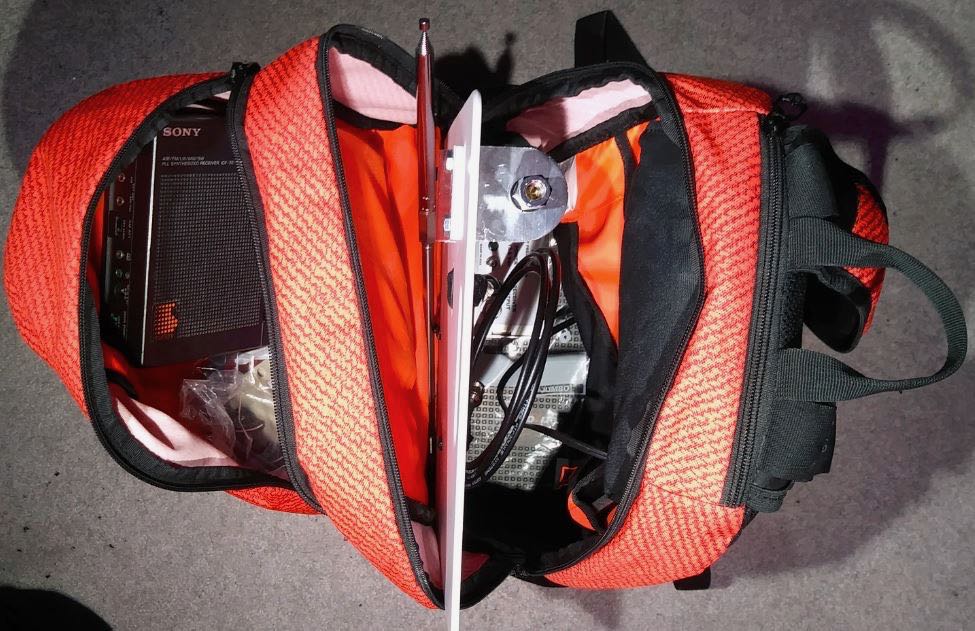
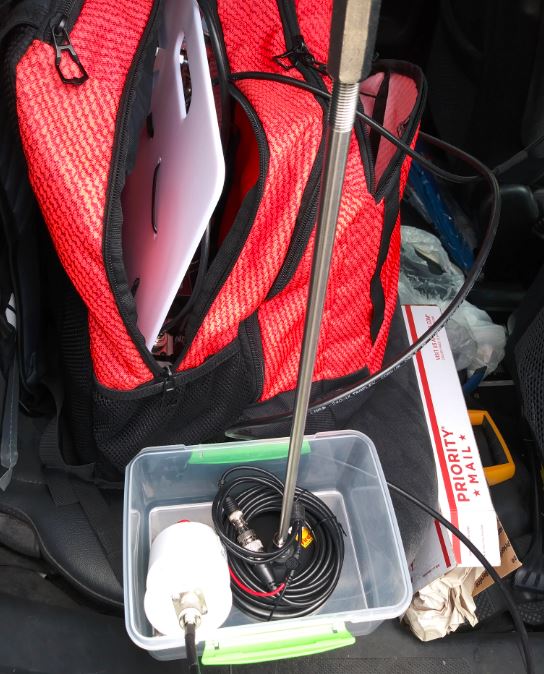
Backpack Shack 3 – Amplified Whip Antenna

by TomL

So, having enjoyed using the Ferrite Sleeve Loop I created last year, I have wanted something a little more sensitive and less bulky.  I will eventually create a much BIGGER FSL antenna on the order of 2 feet long and perhaps 18 or 24 inches in diameter for indoor/attic use.  But that is not a priority at the moment.

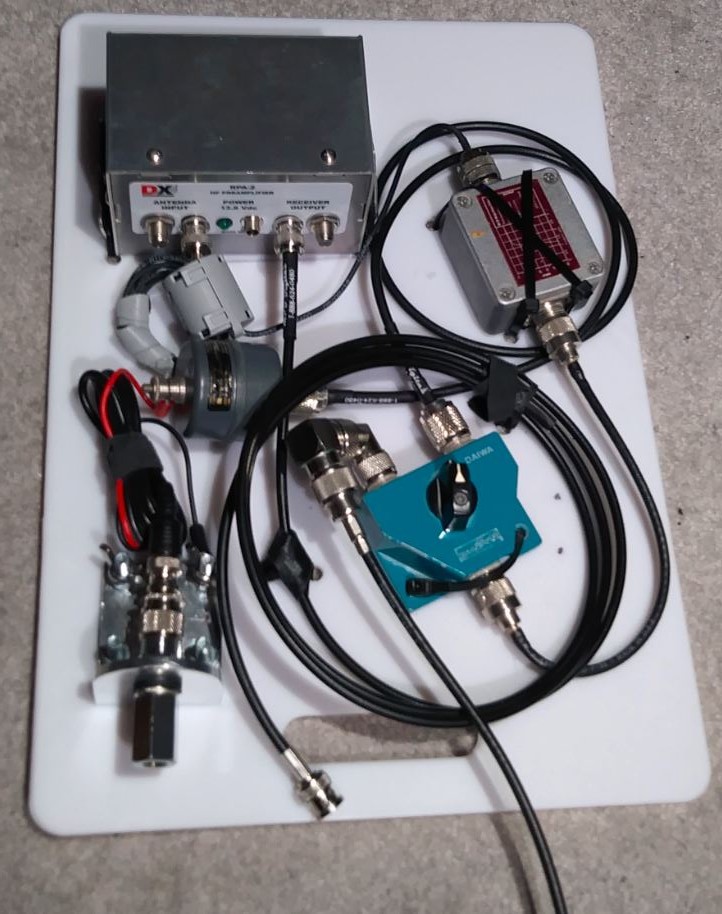
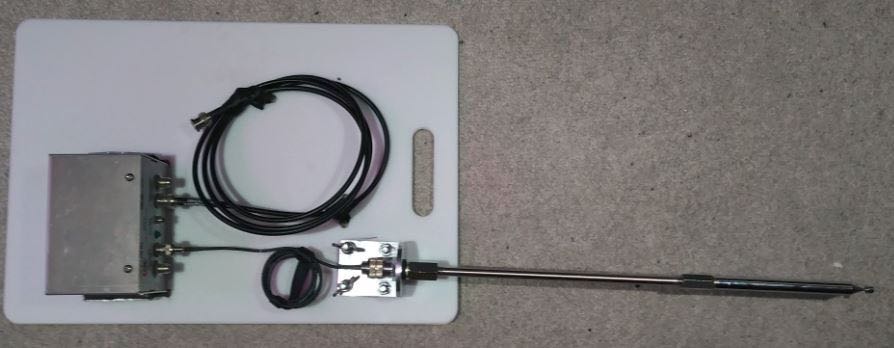
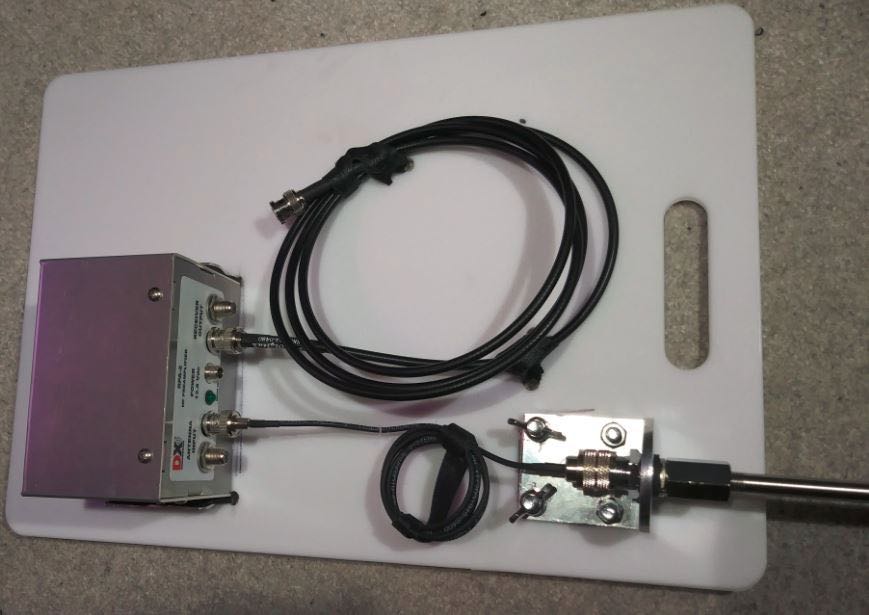
Since I already have the DX Engineering Pre-Amplifier and the very nice Cross Country Preselector from the loop project, I thought it might be useful to create an active whip antenna for it.  And the cool looking Solar Red backpack needed something to do!

Power

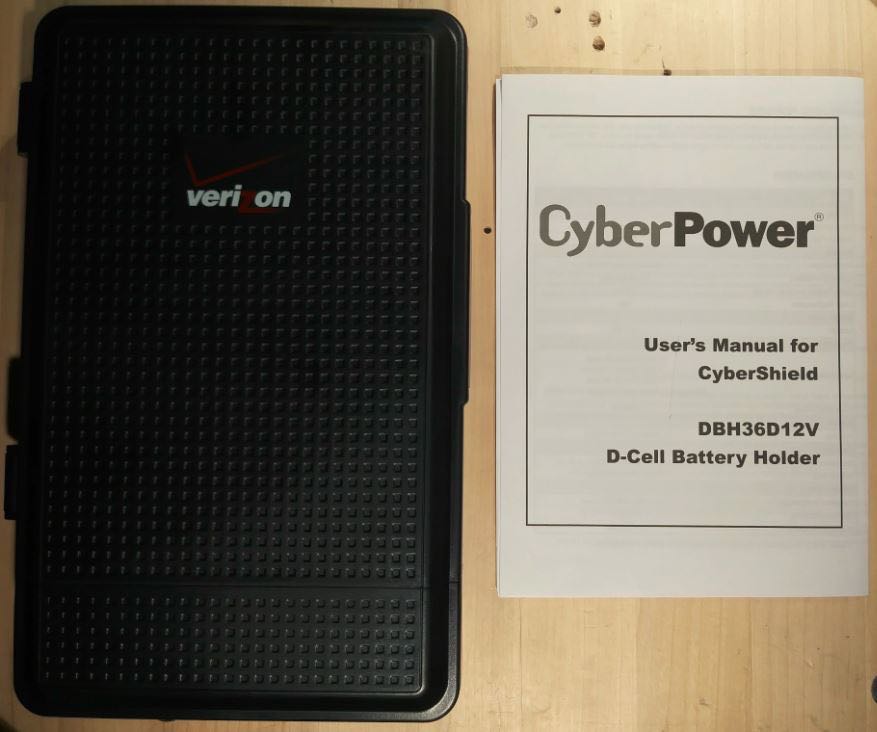
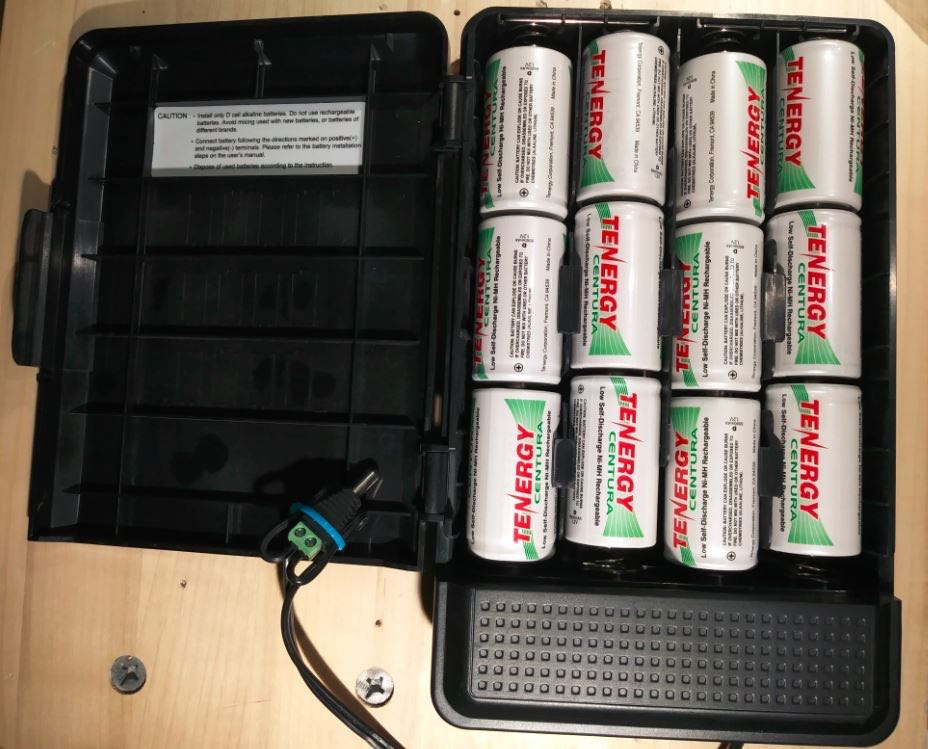
Now that the bulky loop was not taking up the main compartment of the backpack, I could think about what else to put in there, like a larger power pack.  I scoured FleaBay for ideas and stumbled upon this contraption for backup power to network systems, the CyberPower CyberShield for Verizon.

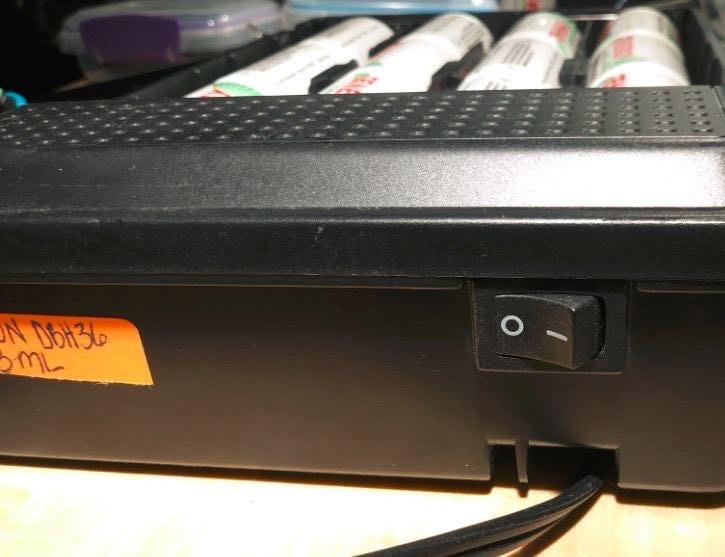
This has 12 spaces for D-cell batteries and was mounted inside the demarcation terminal to provide backup power for things like cable systems and Copper-to-Ethernet networks.  It is not waterproof, so would be inside the premises of the customer getting the internet/cable service. But my Pre-Amp needs 12-18Volts and would love to have nearly unlimited power.  So, I bought a used one, cut the end off of the power lead and put on my own 2.1×5.5mm plug (carefully glued down and tie-wrapped). Then I filled it with 1.2Volt Tenergy D-cells.

Everything was just fine until I forgot to double check the polarity of the plug that I had wired onto the end.  Plugged it into the DX Engineering Pre-Amp, flipped the power switch and fitzzz…. The Pre-Amp light went on, then off (permanently!).

So, my expensive mistake is that I start using the FREE multimeter I got from Harbor Freight and check the polarity before I connect homemade battery packs to anything!!

DX Engineering charged me $60 to fix my mistake and it is working fine now after I swapped the wires on the plug. Yes, their Pre-Amp is NOT reverse-polarity protected! Disappointing, since the price tag for that device is $148!!!  The CyberShield now sits comfortably inside the bottom of the backpack.

Antenna

Now that the drama was over regarding the Power pack, I could think about the whip.  I did not want a wimpy whip! (No one should rightly aspire to this, in my opinion). More FleaBay searches found me looking at Trucker parts.  Loaded whips, magnetic mounts, 10 foot tall MFJ telescoping whips, etc was looking a bit expensive.

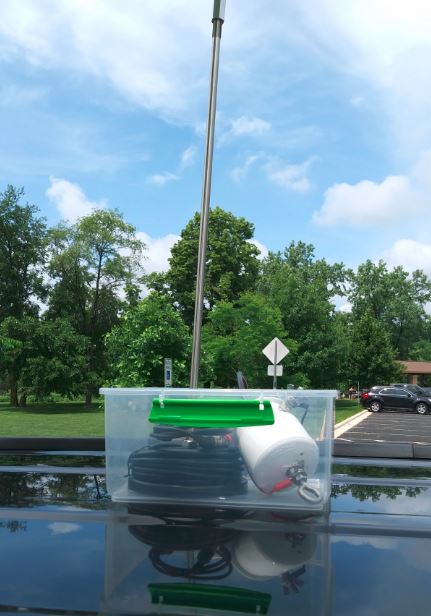
Besides that, I cannot fit a 10 foot tall telescoping whip into the backpack, I am limited to at most 18 inches (and that is at an angle to fit it in there).  But I found an old-fashioned mirror mount that looked promising since it had a nice SO-239 connector at the bottom and standard CB antenna fitting on top of 3/8”-24.

Then I found the 44 inch SuperAntenna with the same threads; then found the replacement Stainless Steel Shafts for a Wilson antenna in different lengths (I ordered the 10 inch version to test).  With a couple of rod coupling nuts and I was ready for testing!

Test Locations

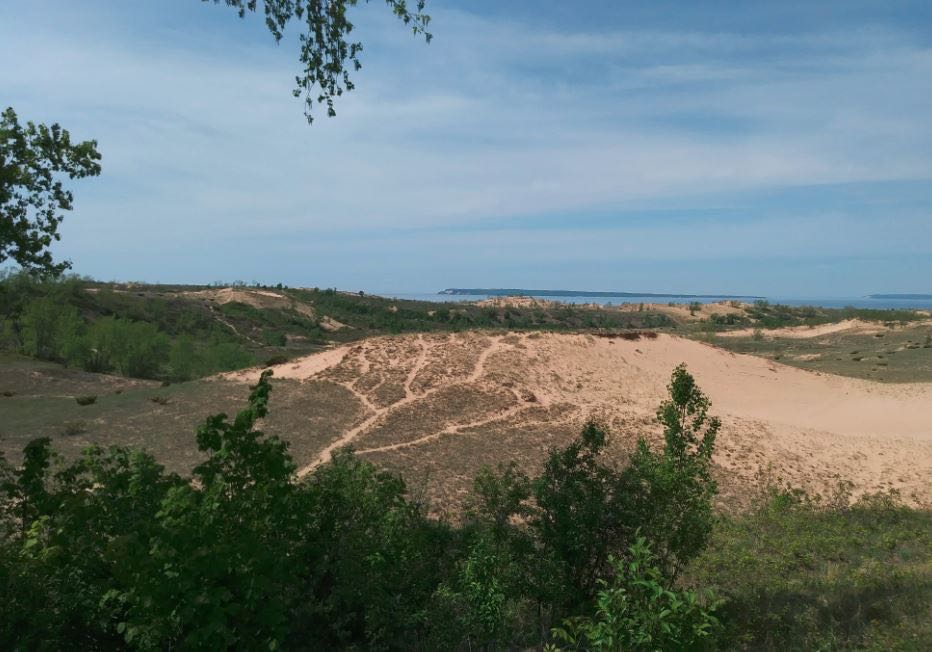
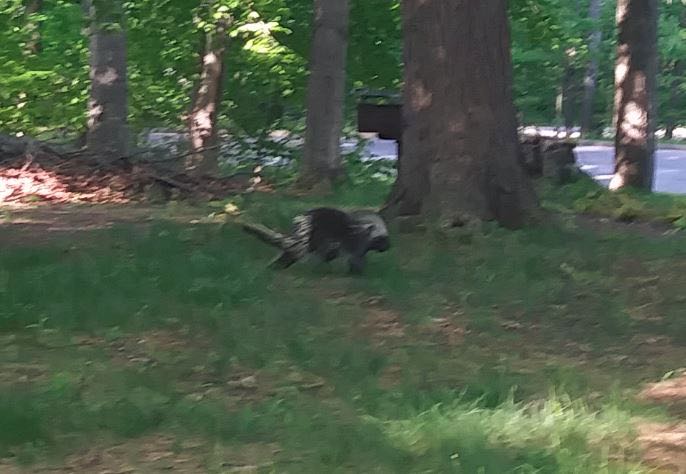
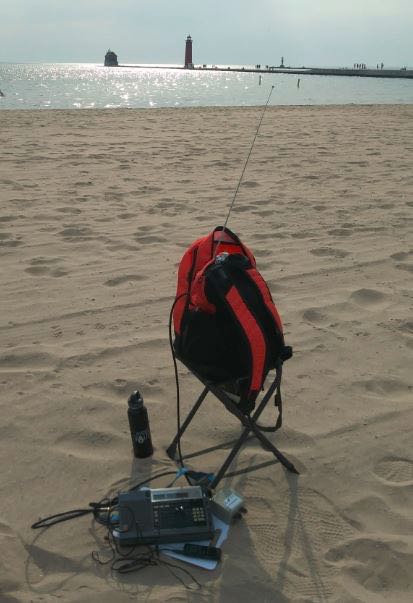
I had already scheduled a short vacation to Sleeping Bear Dunes on the thumb of Northwestern Michigan, so I took this test setup with my Sony ICF-2010. This area is a very nice remote National Lakeshore with minimal noise.  I tried a beach setting and a couple of hilltop picnic areas (including meeting a local Porcupine) and had very nice reception at all locations. The hilltop locations are approximately 400 – 600 feet above the Lake (yes, the Dunes are THAT big there!).

Meeting a local Porcupine

Later on, I went to Grand Haven, MI on the way home and stopped at their very lovely beach.

Reception was just as good as the hilltop locations at Sleeping Bear! In both areas, I was next to a large body of water (in this case, Lake Michigan) and makes for an advantageous place for DXing!  I had also stopped at a Rest Area off the highway and that was a terrible place even though it was electrically quiet but nowhere near the big Lake. I guess the rumors are true about being near a large body of water somehow enhances reception of weak signals–?

I will submit recordings later since I lost the mini-B cable for the Sony digital recorder and had to order a replacement.  However, this was a nice project that freed up some space inside the backpack. I will add an 18 inch extension to the whip that will give me a total length of 72 inches.  Plus, it is mounted 12 inches up on the poly cutting board and I place the backpack on a small hunters folding chair that is about 24 inches tall. So, the tip will be about 9 feet off the ground.

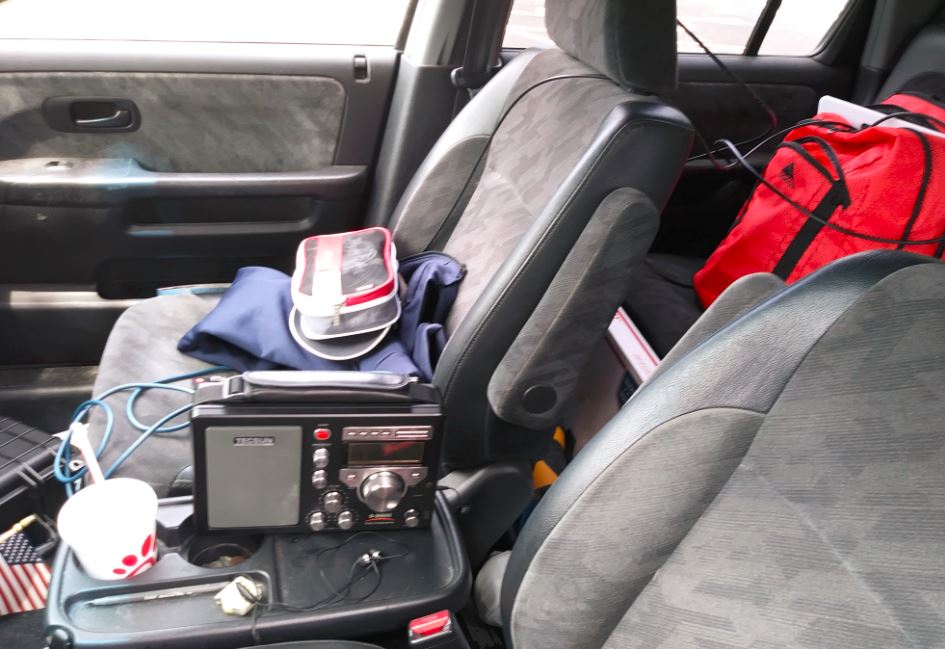
Not pictured but I was also able to easily fit inside a used CCrane Twin Coil Ferrite antenna for mediumwave use that also performed very well.  I noticed that the picnic benches at some locations are made of metal, so that gives me a future idea of trying to leverage that to use as a ground plane somehow.  The battery pack is heavy but also gives great ballast to the backpack and will not tip over. Cannot wait for the Tecsun S-8800 to arrive so I can try leaving the radio inside the bag and just use the remote control to tune!

Happy Listening,

TomL

Parts List


As always, I’m so impressed with your spirit of radio adventure, Tom! I love the fact that your goal is to make a field-deployable DX kit that isn’t cumbersome or time-consuming to set up on site. I imagine you only need a couple of minutes to open the pack and have it on the air. 

Those DXing spots are stunning! I had no idea one could find 400-600′ dunes in NW Michigan–! With that said, I’ve heard that part of the state is one of exceptional natural beauty.  If you could somehow turn the lake into a body of salt water–thus increasing ground conductivity–you’d really enhance that already impressive reception! I’m guessing that sort of project would be a bit outside your budget! Ha ha!  That and the freshwater fish might protest!

To me, there is no better way to enjoy radio than finding a nice RF quiet spot in the great outdoors…no matter where you live in the world. On top of that, Tom, you’re constantly building, experimenting, documenting and sharing your findings–you’re a true radio zealot! Huzzah!

Post readers: Read Tom’s past contributions and articles by clicking here

Click here to read Backpack Shack 3 – Part 2.

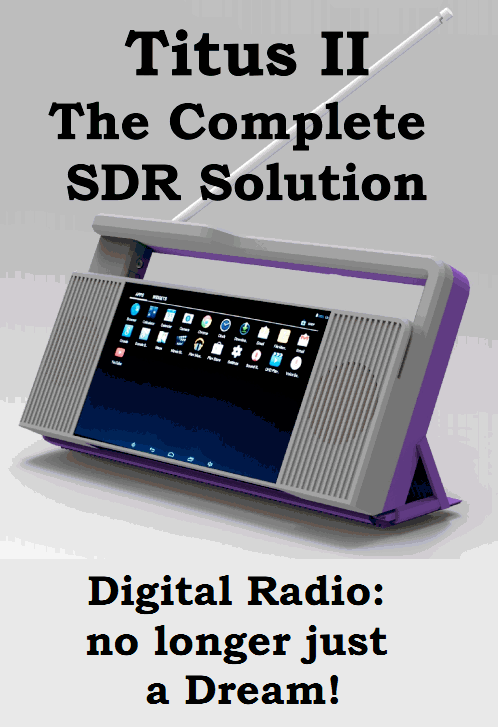
PatronX Titus SDR receiver update

A number of SWLing Post readers have been asking about the status of the Titus II portable DRM/SDR radio. I’ve been checking the project website, but had not seen an update in a long time, so I contacted the company. Mike, with PantronX, kindly replied with the following update:

As you might be aware, we have joined up with Fraunhofer to include their MMPlayer app standard on Titus–what a difference a professional decoder, for both analog, DRM(+), and DAB(+), makes! MMPlayer is full featured even including reliable one way file downloads with DRM.

We are attempting also to license HD to include on the app for North America, making a truly worldwide receiver. Some deficiencies in our version of Android have caused issues as well as MMPlayer. All of which have caused delays leading to some serious business decisions – as you can imagine. You are correct that broadcasters have made large orders that will be fulfilled first. There are units in the field testing and such and continuing resolution of the software issues.

One of the issues that folks seem to have a hard time understanding is that we can not just build a few hundred or even thousands of units. Our minimum run is 10,000pcs! To do that everything has to be 100% – including the software. We simply will not ship units that are not 100%. Titus works, MMPlayer works – its that last 5% that takes the most time to resolve. These facts preclude any incremental production attempts. All that being said, we are very hopeful that the first production run is ready by last quarter of this year.

Thank you for the update, Mike!

In the pipeline: a review of the Sangean HDR-14 portable AM/FM HD radio

Based on readers correspondence, the most anticipated non-shortwave radio to hit the market this year might be the Sangean HDR-14 AM/FM HD radio.

Sangean sent me a sample evaluation unit and I’ve had it on the air since taking delivery last week. I’m starting to put the elements of my HDR-14 review together while also writing Part 2 of my SDR primer for The Spectrum Monitor magazine (Part 1 was published last week). Indeed, I’ve a total of five reviews and evaluations on my desk right now–!

So far, I’m impressed with the little HDR-14. If you recall my review of the Sangean HDR-16, I mentioned that one of my benchmark distant HD FM stations is WFAE 2–its transmitter is a full 101 miles from my home and I’m well outside even the the fringe reception area.

The HDR-14 has a unique back stand: a small foot that swivels out of the base of the chassis.

I’m pleased to note that on more than one occasion, I’ve gotten a reliable HD lock of WFAE from my porch. A most positive sign!

Over the next three weeks, the HDR-14 will be travelling with me and I hope to even snag an AM HD station if all goes well.

I can tell you already that I’m as pleased as punch Sangean gave the HDR-14 a total of 20 AM and 20 FM memory presets. The larger HDR-16, in contrast, only has 5 AM and 5 FM presets.

Look for my review of the HDR-14 on the SWLing Post in the coming weeks. If interested, follow the tag: HDR-14

I’ve noted that both Universal Radio and Amazon.com (affiliate link) have the HDR-14 in stock and shipping. Universal’s price is $79.99 plus shipping and Amazon’s price is $88.67 including shipping.

Radio World features a tribute to the Zenith Transoceanic

Many thanks to a number of SWLing Post contributors who’ve shared a link to this excellent article by Denny Sanders in Radio World Magazine about the history of the Zenith Transoceanic:

Zenith Trans-Oceanic Radio in War and Peace

This iconic portable receiver was known for durability and quality

They say necessity is the mother of invention. Nothing proves this more than the story of how the iconic Zenith Trans-Oceanic portable radio receiver came into existence.

Commander Eugene McDonald (1886–1958), the founder of Zenith Radio, was a stickler for quality and insisted that any Zenith product represented cutting edge technology and design integrity.

He was also an accomplished yachtsman. During his many ocean voyages, he constantly was frustrated with the inability of any portable commercial radio set to perform reliably at sea. In about 1939, he ordered the Zenith R&D department to come up with a rock-solid, portable AM receiver sensitive enough to pull in signals from great distances. He insisted that the radio be a multi-band unit including shortwave, marine and aircraft bands.

The Zenith crew came up with a gem: the Trans-Oceanic, a gorgeous piece of engineering housed in a robust and dramatic cabinet designed by the brilliant Zenith industrial designer Robert Davol Budlong.[…]

Continue reading the full article at Radio World Magazine online.

Gary pulls apart and examines the XHDATA D-808


Many thanks to SWLing Post contributor, Gary DeBock, who shares the following report of the XHDATA D-808:


XHDATA D-808 AM-LW-FM-SW-AIR Portable- Tech Report

by Gary DeBock

The XHDATA D-808 portable is an AM-LW-FM-SW-SSB-AIR band model which has already been the subject of many excellent reviews. Until recently the model was not marketed to North American purchasers, but recently a couple of Chinese sellers have started soliciting North American buyers via eBay listings.

My own interest in the model was in comparing its AM Band performance to that of the best performing Ultralight radios– specifically the CC Skywave and Skywave SSB models. Although the D-808 is slightly larger than the 20 cubic inch limit for Ultralight radios, its size and weight make it very convenient to take along as a “travel portable,” specifically as an SSB-enhanced model capable of checking transoceanic station carrier strength on exotic ocean beaches. The Skywave SSB model can also do that– but at a $169.99 list price, compared to the $112.86 (plus $10 shipping) cost of the D-808. In addition, none of the published D-808 reviews seemed to have any information about internal components like the loopstick, or Si4735 DSP chip.

My first test was to compare the stock Skywave SSB model with the D-808 in fringe AM station reception. The Skywave SSB model has a reputation of being one of the most sensitive Ultralight radios, but the D-808 clearly outperformed it on both low band fringe station (550-KARI) and high band fringe station (1700-City of Auburn TIS) reception. The D-808 couldn’t quite hang with a 7.5″ loopstick Skywave model, but that only made me curious about how the same modification could enhance the D-808. So… it was time to disassemble the D-808, and find out why its loopstick was such a superior performer.

The D-808’s 3 7/8″ (98mm) loopstick is shown adjacent to the 2 3/4″ (70mm) loopstick of the CC Skywave models. The D-808 is much easier to disassemble than the CC Skywave models, though, so enhanced loopstick transplants should prove to be quite popular in the D-808.

The D-808 loopstick is 3.7/8″ (98mm) long, while that of the CC Skywave SSB model is only 2 3/4″ (70mm) long. Other reviewers have noted the excellent performance of the D-808 on the AM band, and this is probably one of the main reasons. The SSB mode operates very similar to that of the Skywave SSB in providing a quick check of carrier strength on weak AM band targets– the LSB mode can be set to +55, and the radio tuned to different frequencies to check fringe station carrier strength. This can provide a real-time check of propagation changes during time-limited propagation openings for live ocean beach DXing with Ultralight radios or other portables (or with the D-808 itself, if desired).

The D-808’s Si4735 DSP chip was initially used in the Eton Traveler III Ultralight radio model, which was fully reviewed in the 2015 Ultralight Radio Shootout (where it won top honors for MW sensitivity). The D-808 augments that capability with a significantly longer loopstick, plus multiple DSP filtering selections. As such, the D-808 in stock form should be a very superb performer.

The Si4735 DSP chip has markings of “3560, DCUL, .738” and provides a wide range of AM bandwidth choices for the Medium Wave DXer (6K, 4K, 3K, 2.5K, 2K, 1.8K and 1K). These perform very well, and as with the other DSP-enhanced portables, the narrowest bandwidth (1K) provides the most sensitive AM band reception.

In construction very similar to that of the CC Skywave, the D-808 separates into two main circuit boards, connected together by a plug-in ribbon cable. One strange quirk is that the Si4735 DSP chip is located on the RF board (close to the center right edge). The Si4735 DSP chip is also used in the Eton Traveler III Ultralight radio, and although that model lacks the multiple DSP filter selections of the D-808, is has been the subject of highly successful 7.5″ loopstick transplant modifications– proving that such enhanced Medium Wave and Longwave loopsticks will perform very well in the new, Si4735 chip- powered D-808.

Disassembly of the D-808 model is fairly straightforward in comparison to the CC Skywave models, and the technician doesn’t need to memorize a detailed reassembly protocol in order to perform a routine loopstick transplant operation. Neither C.Crane nor XHDATA are likely to show any sympathy to someone botching up an antenna transplant, so you need to be confident that that your skills are superior to those of the company technicians before taking the plunge. In the CC Skywave and CC Skywave SSB models various parts fit together like a puzzle, but the D-808 isn’t like that. It should prove to be a fairly popular model for enhanced MW and LW loopsticks.

Those considering a purchase of the D-808 should be advised that its type 18650 Li-ion 3.7v battery is not commonly available at most stores, and that Postal regulations supposedly forbid shipping these batteries through the mail. One of the eBay sellers (harelan ecommerce) did manage to ship me two of the standard XHDATA type 18650 batteries through the mail (along with two new D-808 models) but if your seller won’t do this, you can still purchase the batteries on eBay. Some of the 18650 batteries sold on eBay have a flat positive terminal which won’t contact the D-808 cabinet’s positive battery connector terminal, but in such a case you can simply insert a #8 lockwasher in between the two, and the arrangement will be very secure. From that point on you can simply recharge the battery with a USB terminal connector.


Thank you for sharing this technical overview of the XHDATA D-808, Gary! I’m looking forward to the antenna mods you’ll no doubt make to this compact DX machine!

Click here to read other posts about the XHDATA D-808 and here to read posts by Gary DeBock.