Shortwave listening and everything radio including reviews, broadcasting, ham radio, field operation, DXing, maker kits, travel, emergency gear, events, and more
Looking north toward Cape Lookout, Oregon, near the site of my SDR receiver recordings. Photo courtesy of Wikimedia Commons. In my original article 10 days ago, I set up a SWLing Post reader poll to let you give your opinion on which shortwave recordings within four pairs of audio files provided the most intelligible result. The recordings were intentionally noisy, low-level signals to help us discover–through critical listening to the files–if there is a clear favorite between the AirSpy HF+ or the Elad FDM-S2 receivers. Of course, there were only four pairs of recordings…not a very large sample size.
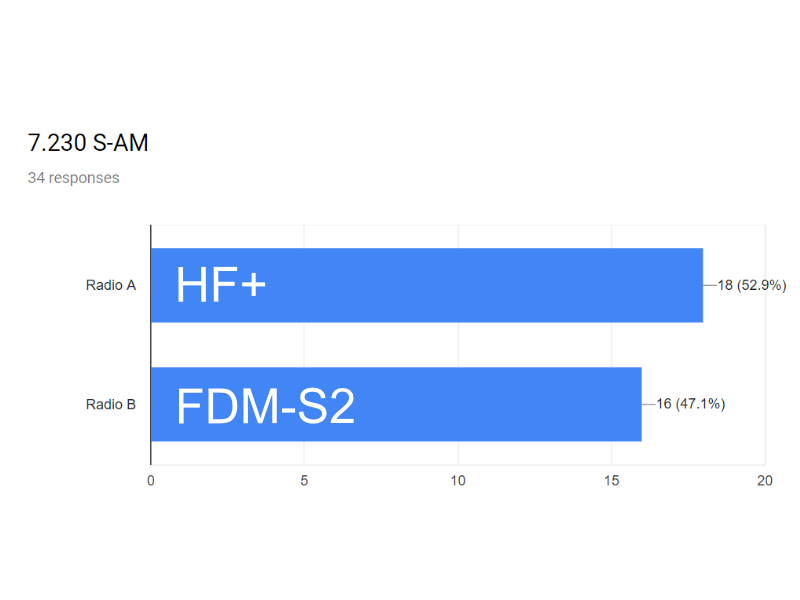
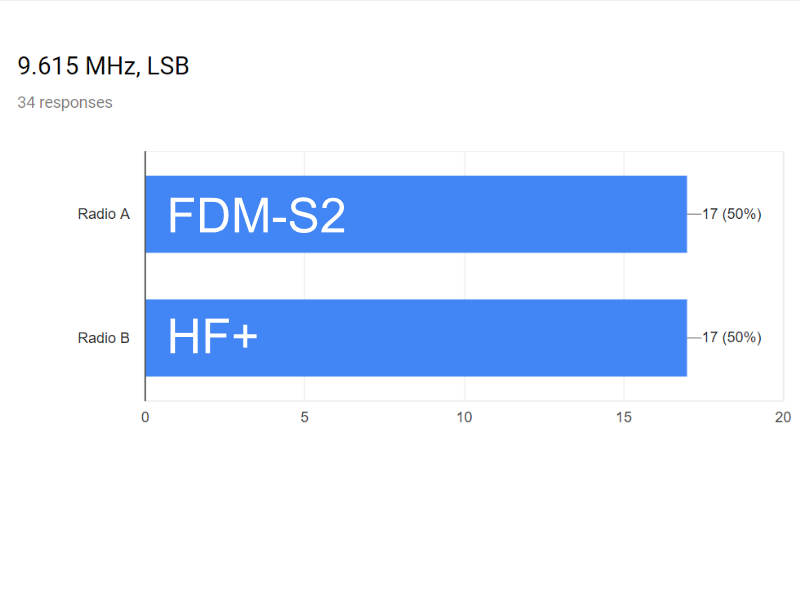
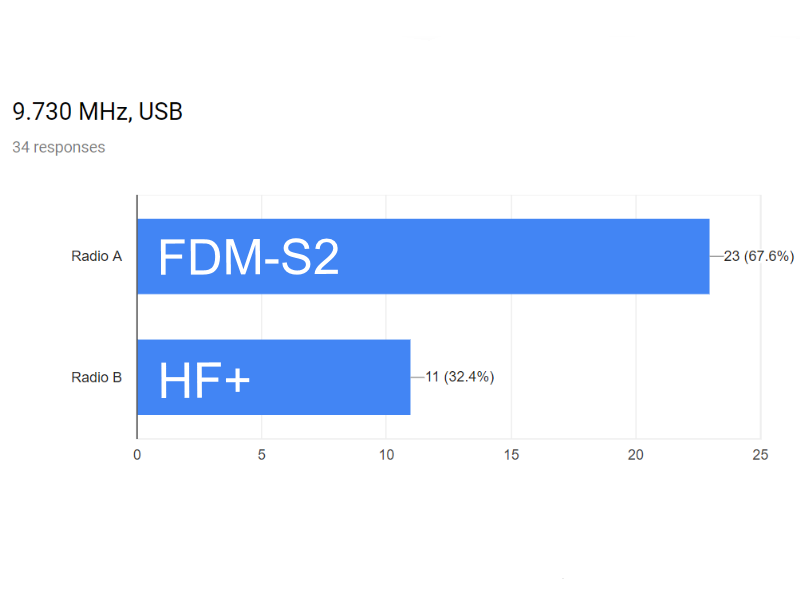
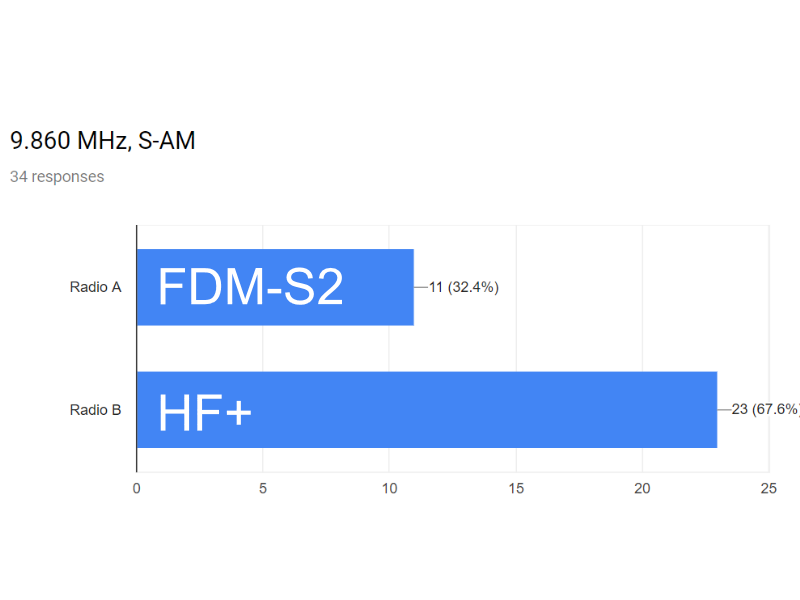
However, 34 readers of the original article took the time to listen and respond, so let’s get to the numbers, shown in these graphs:
Interestingly, the responses above seem to point to:
Two recording pairs tied in the results (50% / 50%) or were very close (HF+ 52.9% / FDM-S2 47.1%)
The FDM-S2 led one recording pair by a large margin (67.6% / 32.4%)
The HF+ led another recording pair by an equally large margin (67.6% / 32.4%)
Taken as a whole, no obvious winner emerged, although one might conclude the HF+ has a slight edge due to its lead in the “very close” recording pair of 7.230 MHz.
One thing is clear–the AirSpy HF+ is a surprisingly good performer for its price of $199 USD! For many enthusiasts this will be all the SDR they need.
As a final note, I’ll mention that the AirSpy HF+ used for the tests was totally stock. I have not yet performed the “R3 Bypass” mod nor the firmware update to my HF+ units. The simple R3 Bypass, discussed at length on the AirSpy Groups.io forum, significantly boosts sensitivity of the HF+ from longwave up to about 15 MHz, without any noted overload issues. For more on this modification from a MW DXer’s perspective, read Bjarne Mjelde’s insightful article at his Arctic DX Blog.
Thank you to all the readers who took the time to listen to the SDR recordings in this comparision and register your opinions.
Guy Atkins is a Sr. Graphic Designer for T-Mobile and lives near Seattle, Washington. He’s a regular contributor to the SWLing Post.
The following review first appeared in the January 2018 issue of The Spectrum Monitor magazine.
[IMPORTANT UPDATE (October 21, 2018): I’m pleased to report that C. Crane have addressed issues that I found in the first production run of the CC Skywave SSB. Click here to read the update.]
Those who know me know I’m all about travel, and all the things that make the travel experience enjoyable. I like to pack light, taking only the essentials, and if I’m traveling by air, I can easily fit two weeks of fun into one small carry-on. To me, the idea of lugging a huge suitcase, being subject to lost check-in luggage, and fretting over finding room in an overhead bin to squeeze in a huge bag simply has no appeal. Even though I often opt for the budget ticket, which means loading later, I know I can literally be the last one on board without fear because my travel bag is so compact that, if nothing else, it will fit underneath the seat in front of me.
Yet even though I travel light, I never ever travel without a radio. That’s a given in my bag. Since packable real estate in my carry-on is at a premium, I opt for the most bang-for-buck I can manage in a portable radio.
My radio travel partners
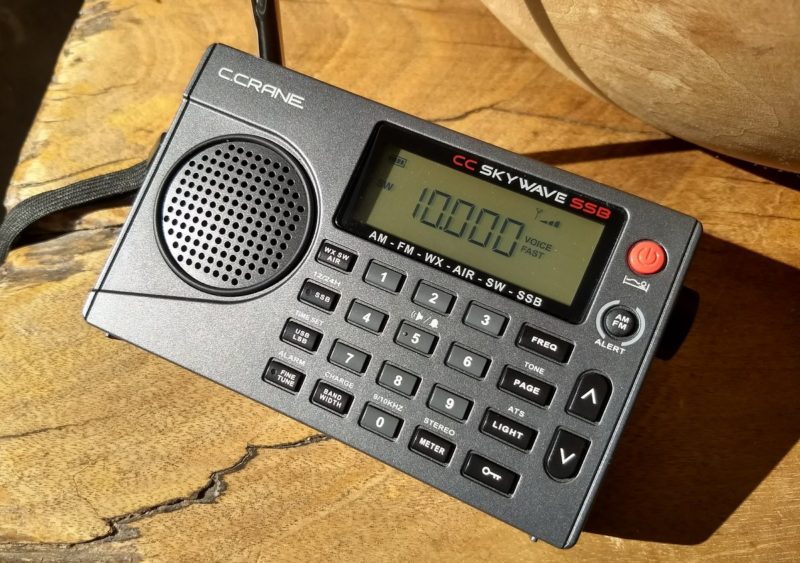
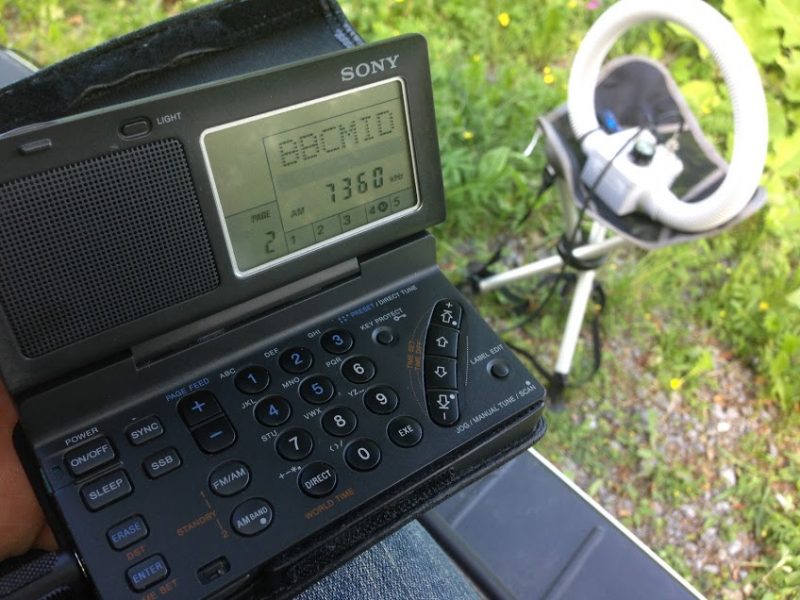
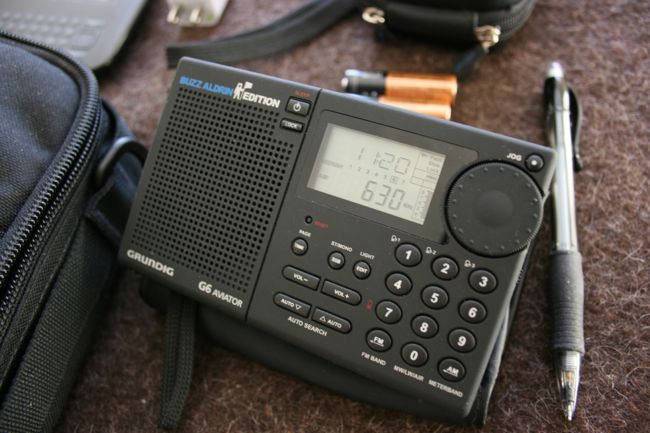
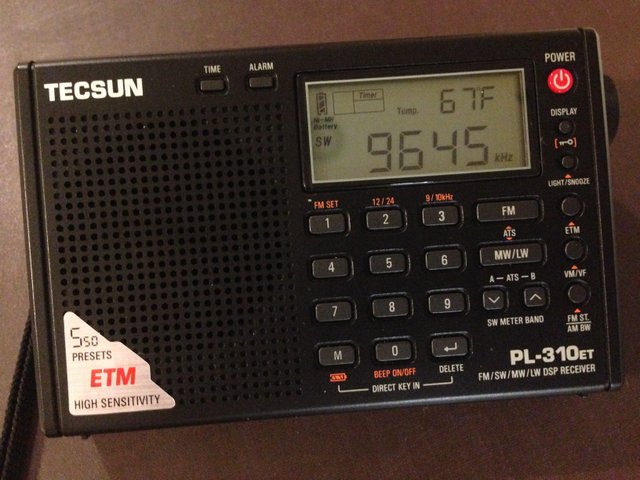
To date, I have a few favorite full-featured travel radios and know quite well both their strengths and weaknesses. Here’s a list with some notable pros and cons:
Pros: A 1990s era marvel of compact technology, it sports SSB mode, sync detection, headphone and audio out jacks, external antenna jack, and long life on two AA batteries. It has excellent sensitivity and selectivity. No muting between frequencies spoils listening pleasure.
Cons: Speaker audio is poor, no FM RDS, no weather radio, no AIR band, the battery cover may be easily broken, ribbon cable can break (in early models) and the clamshell design, while a cool feature, isn’t always practical and makes the unit feel prone to damage. Plus, the SW100 series is no longer manufactured and, due to desirability, typically have a price point well above the competition.
Pros: A compact, ergonomic full-featured radio which sports SSB mode, AIR band, external antenna jack, reasonable audio from internal speaker, very good shortwave and mediumwave performance for the size. No muting between frequencies.
Cons: Rubberized coating becomes sticky as it deteriorates, no weather radio, no audio-out jack, no RDS, and it’s no longer manufactured.
Pros: Very affordable (typically $40-50 shipped), excellent shortwave, mediumwave and FM reception, external antenna jack, average audio fidelity from built-in speaker, internal battery charging, common 5V mini USB plug, reasonably durable.
Cons: No SSB mode, no weather radio, no AIR band, no RDS, no dedicated audio-out jack, limited shortwave coverage compared with other portables 2.3 – 21.95 MHz
Pros: SSB mode, great shortwave, mediumwave, fm reception, vertical form factor great for handheld listening while walking/hiking, external ferrite bar antenna enables excellent AM/mediumwave reception.
Cons: Vertical form factor means it’s prone to fall over if placed on a bedside table, no direct entry keypad for frequencies, tinny audio from built-in speaker, no RDS, no AIR band, detachable external ferrite bar antenna is an extra piece to keep up with while traveling.
Pros: SSB mode, AIR mode, squelch control, FM RDS, dedicated fine-tuning control, external antenna jack, internal speaker provides better audio than other compact travel radios. Excellent sensitivity.
Cons: Slightly larger form factor than other travel radios. Somewhat awkward ergonomics. 7 VDC power port is non-standard. No dedicated audio out jack.
Pros: Overall excellent performance on shortwave, mediumwave, and FM. AIR band, North America weather radio (excellent sensitivity) with alerts, squelch control, common 5 VDC USB mini power port with charging capability, a great value at $89
Cons: No SSB mode, no external antenna jack, no RDS,
What radio I decide to pack really depends on the type of trip I’m taking.
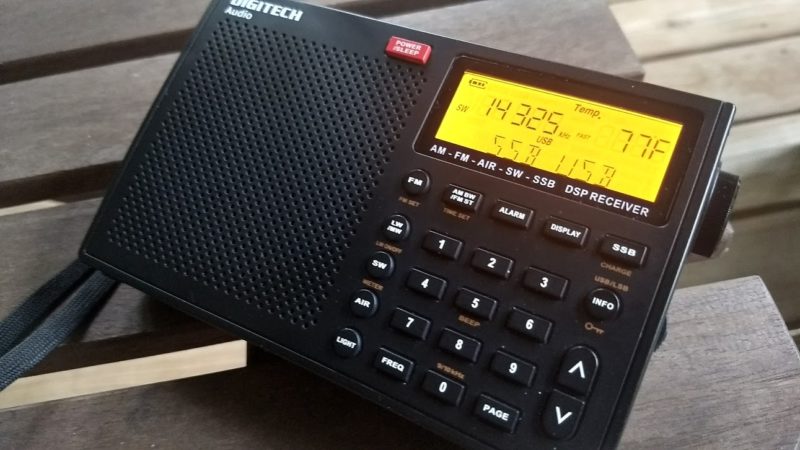
If I really want SSB mode to listen to HF pirates, ham radio, or utility stations, I tend to grab the Sony ICF-SW100, the Grundig G6, or more recently, the Digitech AR-1780 [and now the XHDATA D-808].
If I plan to do extended hiking or walking during my trip, I might grab the CountyComm GP5-SSB.
If I only plan to listen to AM/FM/SW broadcasts, and it’s a short trip––or one during which the radio might receive rough treatment––then I might grab the Tecsun PL-310ET. If I leave the PL-310ET in a hotel or drop it, I’m only out about $40. I’ve even been known to simply give one of these to someone, like a kid for example, who shows a fascination in shortwave radio.
If I plan to do off-air audio recordings during my travels, then the Sony ICF-SW100 because it’s the only radio with a dedicated audio-out port. Plus, it’s a great performer.
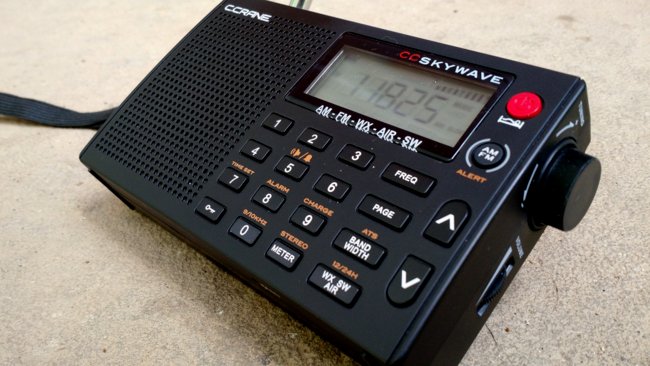
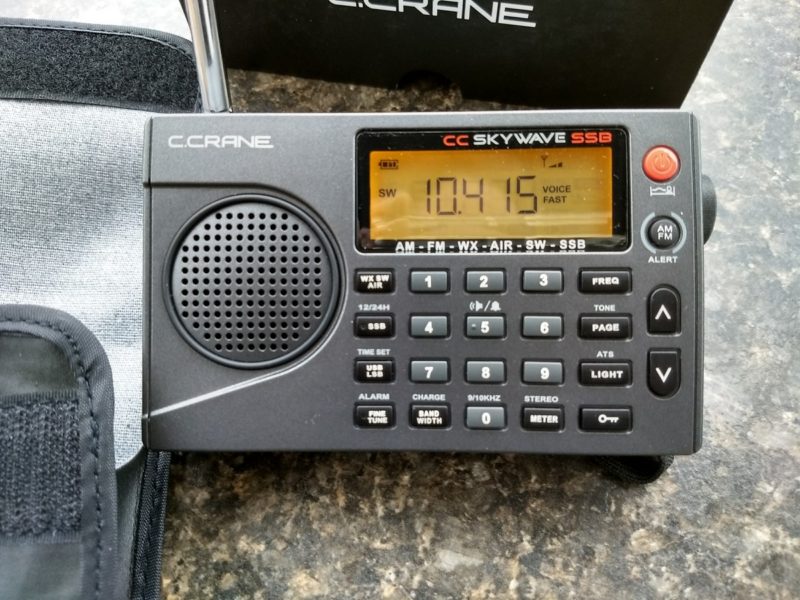
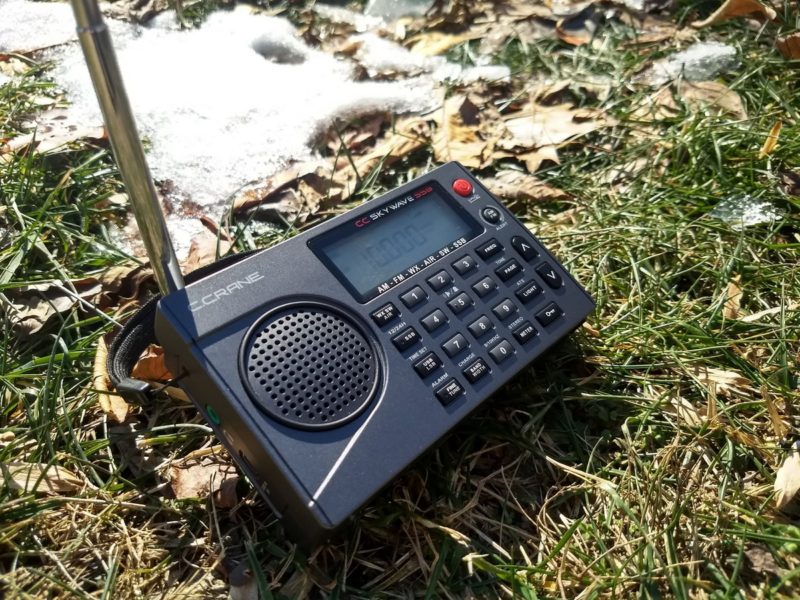
If I’m travelling by air, however, I almost always choose the CC Skywave: its unique combination of AM/FM/SW coverage, NOAA weather, and AIR band are simply hard to beat. It’s compact, durable, and gets the job done. Plus, the Skywave seems to operate for ages on a set of AA batteries. C. Crane really knocked it out of the ballpark with the CC Skywave.
But there was one glaring omission on the original CC Skywave: Single-sideband (SSB) mode.
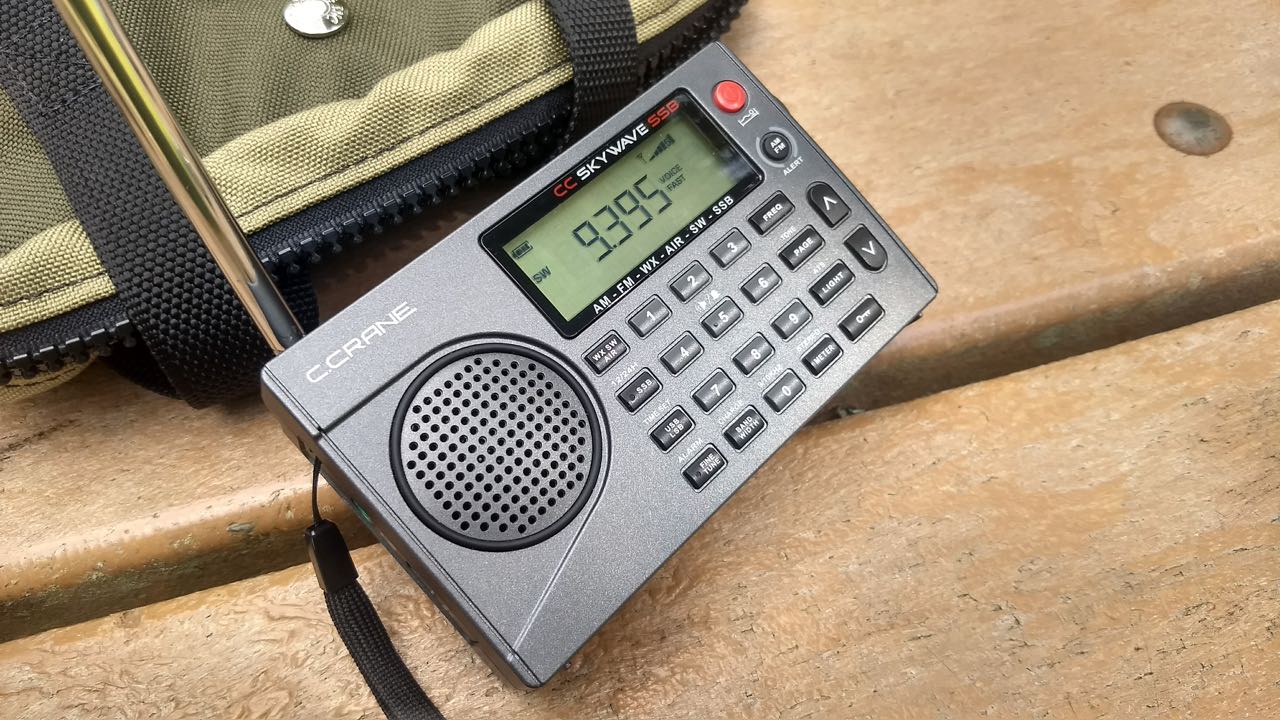
Enter the CC Skywave SSB
Earlier this year, I learned about a new radio in development at C. Crane: the CC Skywave SSB. I saw a Beta unit very early on and a few weeks later, knowing how much I appreciate the original Skywave, C. Crane asked me to help test the new Skywave SSB. I was happy to do my bit.
I actually do quite a bit of alpha- and beta-testing for manufacturers. While it’s time-consuming volunteer work, and requires meticulous attention to detail––even seemingly minor details––it gives me an opportunity to have meaningful positive impact on an upcoming product. Manufacturers that actively involve enthusiasts in their testing phase tend to produce better quality. I wish all manufacturers did this (yes, Tecsun, I’m looking squarely at you!).
After the Skywave SSB arrived, I started putting it through its paces. Typically, pilot run units have quirks and glitches buried in non-standard operating procedures. Try as I might, I couldn’t find any on the Skywave SSB. I’ve since learned that C. Crane invests heavily in pre-production testing; I saw their full list of iterative notes, and they were incredibly detailed. Result? No obvious problems. I’ve always believed that while C. Crane doesn’t always produce the most affordable products––nor do they stuff every bell-and-whistle into them––what they do produce is well thought out, user friendly, well documented, and performs at or near the top of its class.
Features
The CC Skywave SSB comes with a surprising amount of features for such a compact radio. Many of these features are also found on the original CC Skywave.
I’ve placed upgraded features in bold:
AM, FM, NOAA Weather band plus Alert, Shortwave (1711-29.999MHz) with SSB mode, and Airband
Frequency direct entry, plus auto scan and store
Lighted LCD display
Selectable fast or fine tuning (on all bands except weather)
Dedicated fine tuning control, selectable on front panel
400 memory presets
Runs on 2 AA Alkaline batteries (not included)
(Optional) CC Skywave AC power adapter w/ mini USB plug required for charging NiMH batteries.
Stereo headphone jack and fold-out back stand
Clock with 12/24 hour format and alarm
Rotary volume knob
Squelch control
High quality CC Buds Earphones and radio carry case included
Run Time (on batteries––approximate):
± 70 hours (earbuds)
± 60 Hours (built-in speaker)
10 Aviation Memories can be scanned for activity
You’ll notice there are actually very few obvious upgrades from the original Skywave to the Skywave SSB: just SSB mode, expanded HF coverage (from 1,711 to 29,999 kHz), and dedicated fine tune button/control. I’ve also learned that aviation band scanning is much faster on the newer model than on the original Skywave.
Other than those items, in terms of features, it’s very similar to the original CC Skywave.
Appearance
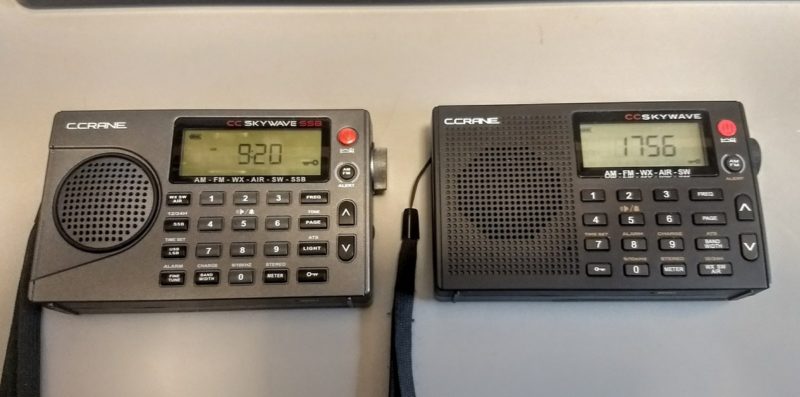
CC Skywave SSB (left) and the original CC Skywave (right)
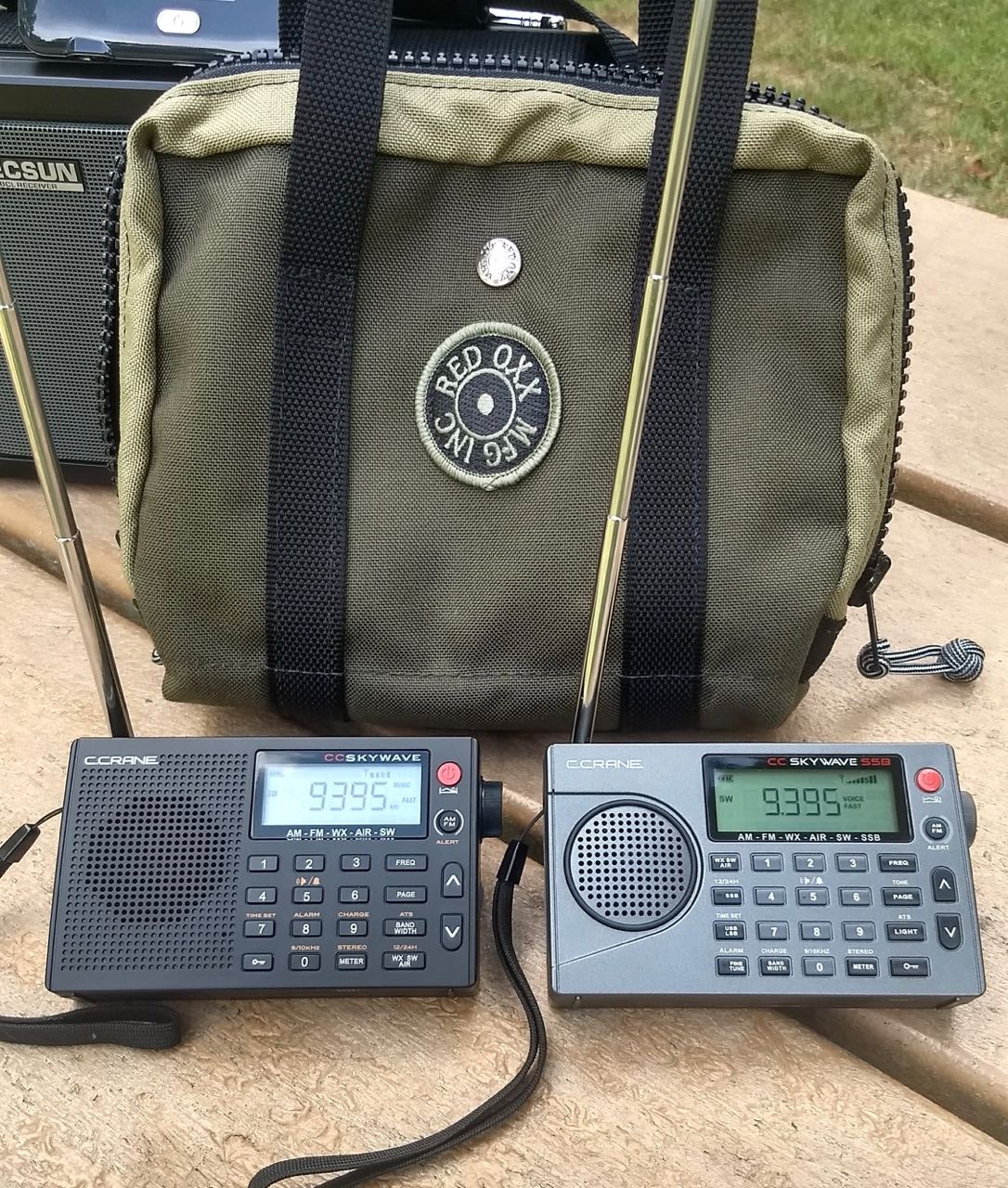
The original Skywave and Skywave SSB are nearly identical in terms of form factor; overall dimensions are identical (4.8″ W x 3″ H x 1″ D), although the Skywave SSB weighs 1.2 oz more than the original––a difference that’s scarcely detectable.
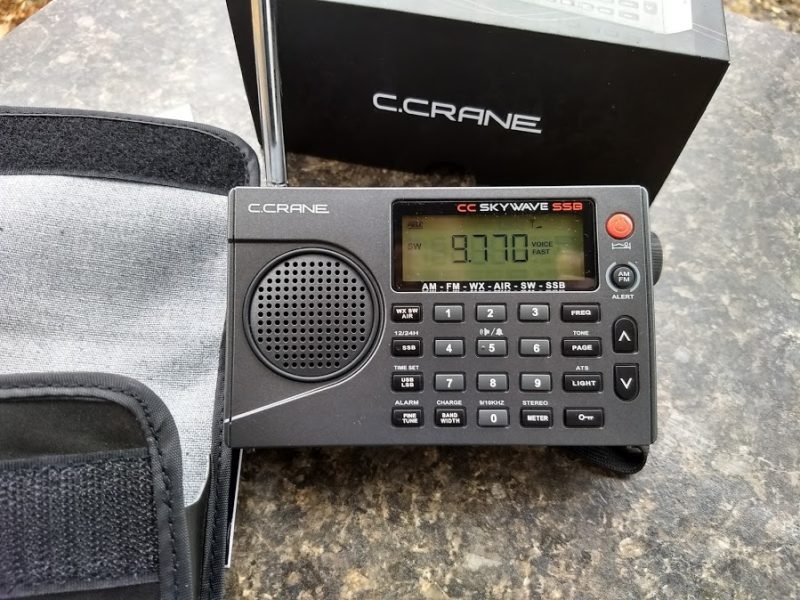
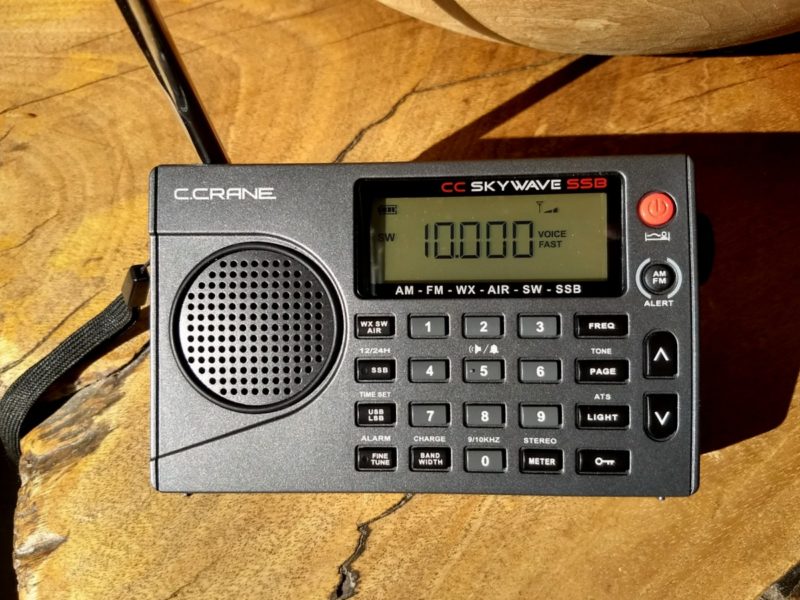
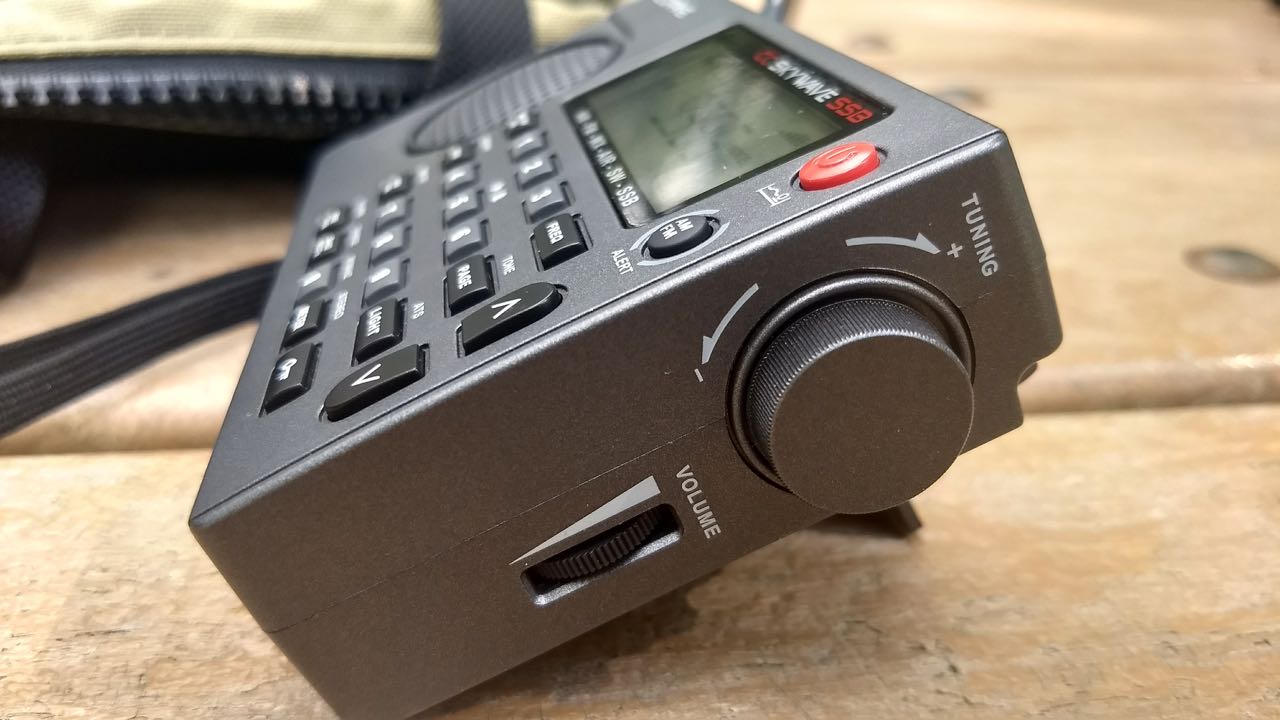
The tuning knob, volume control, power port, and headphones jack are in the same places on the SSB. The chassis color is different, however; the original Skywave is black, whereas the new Skywave SSB is grey––a dark warm or “dim” grey,” to be accurate.
Original CC Skywave (left) and CC Skywave SSB (right)
Where one finds the true difference between the new Skywave SSB and its predecessor is on the front panel. The Skywave SSB has dedicated buttons to enable both SSB mode, select upper or lower sideband, and a fine-tune control. The Skywave also has a dedicated backlight button. This accounts for a total of four additional buttons compared with the original Skywave.
In a rather nice touch, both the SSB and fine tune buttons have tiny red LED indicators to let the user know when they’re engaged.
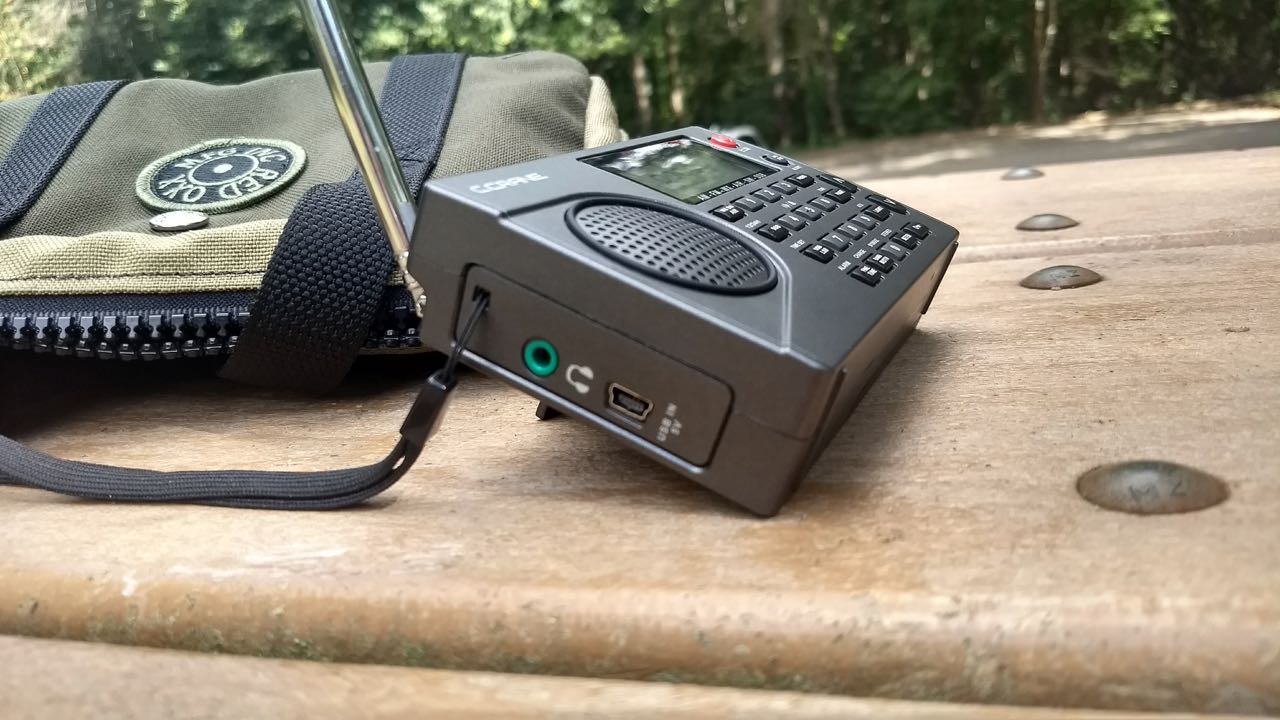
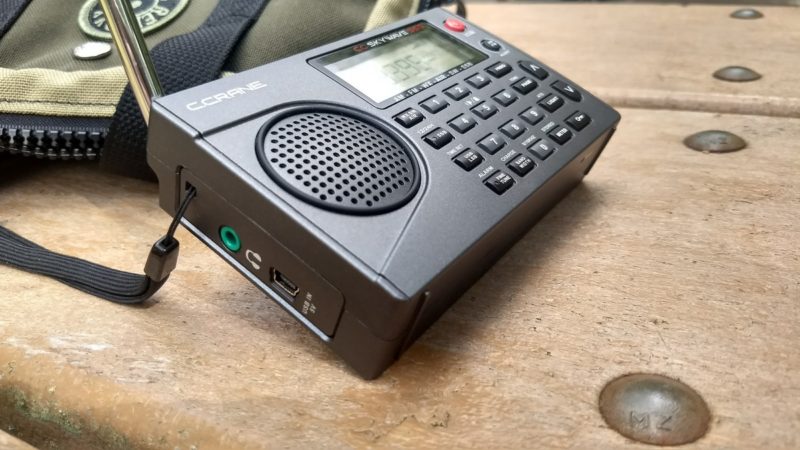
The CC Skywave SSB also has a redesigned speaker grill which more closely resembles the grill on their CC Pocket radio. Much to my surprise, once I shared detailed photos of the CC Skywave SSB, many of my readers expressed their disappointment with the speaker design. Many claimed it looked “cheap” as compared with the original Skywave and thus felt the chassis might be more subject to breakage. Some even got the impression that the speaker grill was raised in a way that it would lend itself to harm.
Actually, this is not accurate. Though it may appear that the speaker grill is elevated in photos, it’s actually in a recessed portion of the chassis and surrounded by an absorbent rubber ring, rising only ? 1 mm above the chassis, if that. And the hard plastic case feels as solid and robust as any portable I’ve tested. I wouldn’t hesitate to toss it in my pack.
Personally, I think the Skywave SSB is a handsome little radio! Perhaps I’m not as sensitive as others about chassis design, but I’m actually happy it’s not a clone of the original Skywave, making it much easier for owners of both models to distinguish them when packing!
From Pilot/Beta to production
While C. Crane allowed me to post a number of photos once the product announcement had been made, I would not publicly comment on performance. Indeed, I never post performance comments about pre-production units since I wouldn’t be evaluating the same product that hits the store shelves.
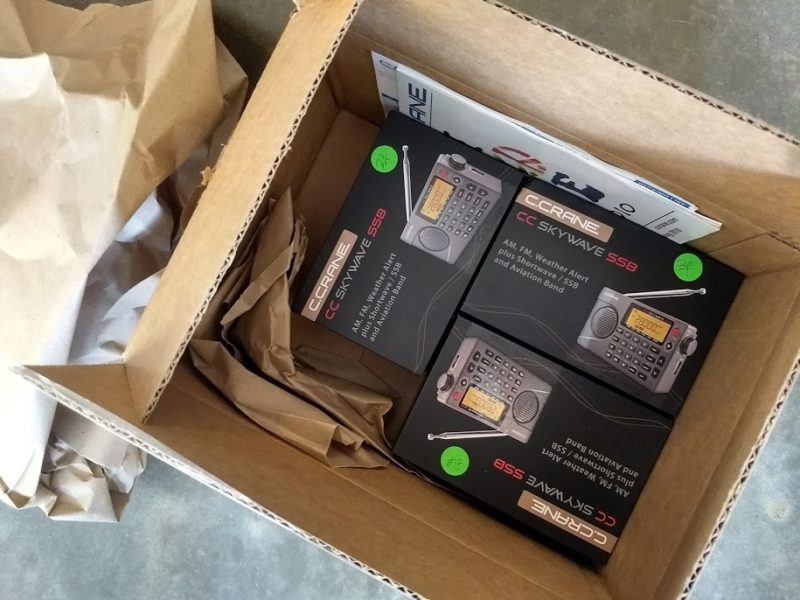
So once C. Crane posted an ordering page for the Skywave SSB, I placed an order, just like everyone else.
In truth, I was told there were only minor differences between the pilot unit and the production unit: some silk screening and other very minor changes.
Production Quirks
[IMPORTANT UPDATE: Again, please note that the following production quirks have been addressed in the second production run of the CC Skywave SSB. Click here to review the update.]
I was eager to get started on the review of the Skywave SSB, so as soon as I received it, I did what I always do: compared it with other radios!
I make my comparisons, by the way, at least fifty yards from my house to separate the radios from any inadvertent sources of local noise.
Production Radio #1
My first comparison was with the Digitech AR-1780 and the original CC Skywave. I quickly noted that the Skywave SSB was very slightly less sensitive than the other radios. I had tested the pre-production unit enough to know that the Skywave SSB’s performance should at least be on par with, if not a little better than, the original Skywave.
Upon careful listening, I discovered the production unit had a faint, internally-generated whine on some of the shortwave bands; when tuned to marginal signals, this whine manifested in the form of variable background noise. Between signals it was audible as a faint background whine, hardly noticeable. With that said, the whine was most notable while tuning––since the Skywave SSB mutes between frequency changes, the whine was most conspicuous during audio recovery between steps.
The pre-production unit had no trace of an internally-generated whine. Audio was very clean in comparison.
Here’s a sample of the first production radio being tuned down from 10,000 kHz in 5 kHz tuning steps:
I contacted C. Crane promptly, and to their credit, they immediately dispatched another unit from inventory, via UPS Next Day, along with a return label to send my faulty unit back to their engineering team.
Production Radio #2
The second unit arrived while I was on Thanksgiving vacation, but was sent to me directly at my hotel. The day I received the replacement Skywave SSB, I put it on the air. The first listening session with it, alone, revealed that this unit did not have the internally-generated whine, however, this unit had issues with sensitivity. All of my comparison receivers were outperforming this Skywave SSB on the shortwave broadcast bands. When I compared it with the pre-production Skywave SSB unit and the first production unit, the second production unit was about four to five S-units less sensitive…Odd.
I sent both production radios back to C. Crane with detailed notes and sample recordings. Their engineering team confirmed my findings and started looking into the variations in QC and double-checking their inventory to make sure none shipped with these problems.
Production Radio #3
A few days later, I was sent a third production unit. After putting it on the air, I immediately noticed the same faint noise characteristics of my first full production unit, which is to say, the notorious whine.
Once again, I contacted C. Crane. This time, I requested that no less than three radios be sent to me, and that they kindly expedite the request.
Production Radios #4, #5, and #6
I tested all three radios from this final batch of production units. What follows is an assessment of those radios.
First production run noises
I spent two full hours searching for birdies (internally generated noises) and other anomalies on the three CC Skywave SSB production units I received that Monday. Each radio’s noise location varied slightly (within 20-40 kHz).
Birdies
Birdies are a fairly common occurrence among sensitive receivers, and the CC Skywave SSB has about an average number. Fortunately, the birdies I noted are outside the space where I do my broadcast listening:
2,305 kHz
9,220 kHz
11,520 kHz
Background audio whine/tone
All of the production units (save Radio #2) had a very slight audio whine present––either via the internal speaker or headphones––on certain portions of the spectrum.
In the first full production unit I received, I believe this whine may have slightly affected the unit’s overall sensitivity. On the last three production units I received, the whine didn’t seem to have as much of an impact on overall sensitivity.
The whine is still there, however. And occasionally when the unit is tuned to a weak signal within one of these zones, other faint sweeping noises can be detected in the background.
Sometimes it’s even more noticeable when the broadcaster is weak and is located within one of the “whine zones.” Here’s an example of 10 MHz WWV time station comparing the original Skywave with the Skywave SSB. Note that at the time this was recorded we had terrible propagation due to a geo storm, so WWV was very weak, indeed.
Here are the frequency ranges where I noted the background whine:
7,830 – 8335 kHz
8,610 – 8,690 kHz (note: very faint)
9,770 – 10,415 kHz
11,585 – 11810 kHz
Another oddity is a noise I found prevalent on CHU Canada’s 7,850 kHz frequency. I’m guessing it may be due to the presence of a DSP birdie on top of a relatively strong broadcaster.
Here’s a video comparing the original Skywave with one of the production models:
I noted no birdies or noises on the mediumwave band.
I’ve no doubt, C. Crane will tackle these issues and solve them by the time the second production run ships.
In the meantime, I’ve become somewhat of an expert on the CC Skywave SSB, having evaluated a total of seven models and spending more time evaluating them than I have any other portable.
Let’s take a look at what we can expect from the CC Skywave SSB with these first production quirks aside.
Audio
Like its predecessor and many other travel radios (the Digitech AR-1780 and XHDATA D-808 being notable exceptions) the Skywave SSB’s audio from the internal speaker is adequate. It’s just shy of what I would call “tinny” because it does cover the mid-range . For spoken word content in AM and SSB, it does the job quite well. With music, you simply can’t expect any bass notes or room-filling audio. But then again, in a compact radio, my expectations are simply lower. The Digitech AR-1780 and XHDATA D-808 have the best audio of my compact travel radios, but they’re also the largest, so have a slightly bigger speaker.
I did note a minor amount of background hiss present somewhere in the audio amplification chain on the first production run units–most noticeable via headphones.
With the supplied CC Buds, you’ll be a happy camper.
Audio sounds rich via the headphones jack.
Performance
Of course, what we all want to know is how well the CC Skywave SSB performs. In a nutshell (spoiler alert!) it’s very similar to the original Skywave.
I break this down band-by-band below, starting with my favorite band.
Shortwave
Keeping in mind the frustrating experience with quality control, when I received the final three production units, I was very pleased with performance on the shortwave bands. The AGC characteristics are relatively stable, making weak signal listening a pleasant experience. Even though the Skywave SSB lacks a synchronous detector, I found that stability––even with periods of notable selective fading––is impressive.
In the realm of compact travel radios, both my pre-production and (better functioning) production models are strong performers. The Skywave SSB is slightly less sensitive than my larger, full-featured portables like the Tecsun PL-660, PL-680, PL-880, and Grundig Satellit. All of these radios, however, have longer telescoping whip antennas. If I add the gain from the included CC Reel antenna, the Skywave SSB can even hold its own with many of these.
I’ve been very pleased with the original Skywave for broadcast SWLing for a few years now. I’m happy to report that the Skywave SSB offers an incremental improvement over the original Skywave.
FM
Much like other modern DSP portables, FM performance is stellar for such a compact radio. The Skywave SSB was able to receive all of my benchmark FM stations. While audio fidelity from the Skywave SSB’s internal speaker is not a strong point, via headphones you’ll be quite pleased.
AM/Mediumwave
I’ve found the Skywave SSB to be capable mediumwave receiver. Performance characteristics are very similar to the original Skywave and the AGC settings even make MW DXing a pleasant experience. Since the internal ferrite bar isn’t terribly large, better performance can be achieved by coupling the Skywave SSB to an inexpensive loop antenna, like the Grundig AN200 AM Antenna.
Weather radio
Like the original Skywave, the Skywave SSB is an impressively capable weather radio receiver. From my home, I’m able to pick up a marginal NOAA weather radio frequency that most of my other weather radios cannot. The Skywave SSB also includes a handy weather alert feature that will monitor your chosen NOAA/Environment Canada frequency and wake up the receiver if an alert is issued.
Note that the weather alert feature works on a timer and, most importantly, if operating from battery, drains batteries as quickly as if you were monitoring a live station with the squelch open.
AIR band
While I didn’t compare performance with a triple conversion scanner, I’m favorably impressed with AIR band performance. During my tests, I noted no imaging or overloading on the AIR band, a very good thing. Additionally, the Skywave SSB offers improved scanning features for the AIR band, making it easier to monitor ground, tower, and even approach/departure frequencies at larger airports. When employing the squelch feature, you almost get the impression you’re holding a scanner, rather than a shortwave portable, in your hands.
Longwave
Like the original CC Skywave, the SSB does not cover the longwave band. In North America, there is very little to listen to on longwave, so many consumers will never take notice. I’m sure longwave DXers will wish it was a part of the package, however. Admittedly, when I’m traveling in Europe and other parts of the world where there are still stations on longwave, I’ll certainly miss the band.
Comparing to other compact travel radios
Trying to decide if the CC Skywave SSB will have the performance characteristics to displace my other travel portables, I compared it with the radios I mention at the beginning of this article.
In terms of overall sensitivity and selectivity, the CC Skywave SSB essentially runs neck-and-neck with, or in some respects slightly edges out, the Tecsun PL-310ET, Grundig G6, and CountyComm GP5-SSB.
However, both the Sony ICF-SW100 and the Digitech AR-1780 are more sensitive than the Skywave SSB. The Digitech AR-1780 has the best audio characteristics of the competitors, but is also slightly larger and heavier than the others.
Note, too, that the Sony ICF-SW100 and Grundig G6 are the only radios in this comparison that don’t mute between frequency changes. They’re the best band-scanning receivers.
And how does the Skywave SSB compare with the original CC Skywave? I find that the Skywave SSB has a slightly lower noise floor which is perhaps helped even further by better audio/tone characteristics. Sensitivity is about the same, but signals pop out of the background static better on the Skywave SSB.
In terms of features, the Skywave SSB likely offers the most for the traveler.
Summary
Every radio has its pros and cons, of course. When I begin a review of a radio, I take notes from the very beginning so that I don’t forget my initial impressions. Following is the list I’ve formed over the time I’ve been evaluating the CC Skywave SSB:
Pros:
Overall well thought out, considerate design
Excellent form factor for travel
Very good sensitivity and selectivity for a compact radio
Faster AIR scanning compared with the original Skywave
Better HF frequency coverage than the original Skywave (1.711-29.999 MHz, compared to 2.300-26.100 MHz)
Pleasant SSB audio
Multiple bandwidths in both AM and SSB modes
No overloading noted
Well-written operation manual
Excellent weather band reception
Nice red LED indication lamps for SSB and Fine Tune engagement
Supplied with:
a quality external reel antenna
CC Buds earphones
Soft case with Velcro closure
Excellent battery life from two AA cells (AA cells are a plus for travelers as they’re so ubiquitous)
Engaging SSB mode requires 2-3 seconds of delay (common for this DSP chip)
Some ticking noise in audio when pressing buttons (identical to the Digitech AR-1780)
No RDS
No audio-out jack
No longwave reception
ATS Scanning in 1st production run stops at 26,100 kHz
No synchronous detection (though not expected in this class of compact portable)
Shortwave ATS tuning time about half as fast as the original Skywave (original is quite speedy!)
$149 $169 price is at the top of its class
Conclusion
I love the CC Skywave SSB. Sure, I wish it had RDS, an audio-out jack, didn’t mute between frequencies, and was a little less expensive. But overall, it’s a fantastic package. I’m impressed with the amount of performance the Skywave SSB provides with such a short telescoping antenna.
Most reading this review will be scratching their heads wondering if: a) having SSB mode is worth the $60 premium over the original Skywave ($89 vs. $149)? and b) is any compact radio, for that matter, really worth $149––?
Because of how I travel, I would say that I easily use ultra-compact portables like the Skywave SSB about 70% of the time I’m found listening to portables.
When the Skywave SSB was first placed on the C. Crane website, they posted a price of $169––when the units started shipping, they reduced the cost to $149, and reimbursed those who had placed an order with the higher price. [UPDATE: Early 2018, they once again increased the price to $169.]
Though the initial $169 price made me wince a bit, I still ordered one. Why? Because to me being a traveler who loves an ultra compact, having an ergonomic, full-featured, durable, compact travel radio with SSB, AIR and NOAA weather radio is worth it!
Therefore, the CC Skywave SSB will be my travel radio of choice going forward––it’s essentially a Swiss Army Knife of a travel radio.
There’s another factor, too: I trust C. Crane. Despite the frustrating quirks I experienced reviewing my first production run units, I know C. Crane takes care of their customers in the long run, and will replace any faulty units without hesitation. They’ve taken every item of feedback I’ve provided directly to their engineers and quality-control specialists, and the work continues to resolve this radio’s concerns. If you have a Skywave SSB with noise, don’t hesitate to contact C. Crane about it.
Overall, I am optimistic about this radio. I expect the second production run will produce radios performing as they should––like the final production units I tested, but without the internally-generated noises. [Click here to read second production run update.] And if this occurs as I expect, you can expect good performers.
At any rate, I know this: I’ll be one of the first to test units of their second production run…and to let you know just what I find. (Bookmark the tag CC Skywave SSB for updates.)
Many thanks to SWLing Post contributor, Ivan (NO2CW), who writes:
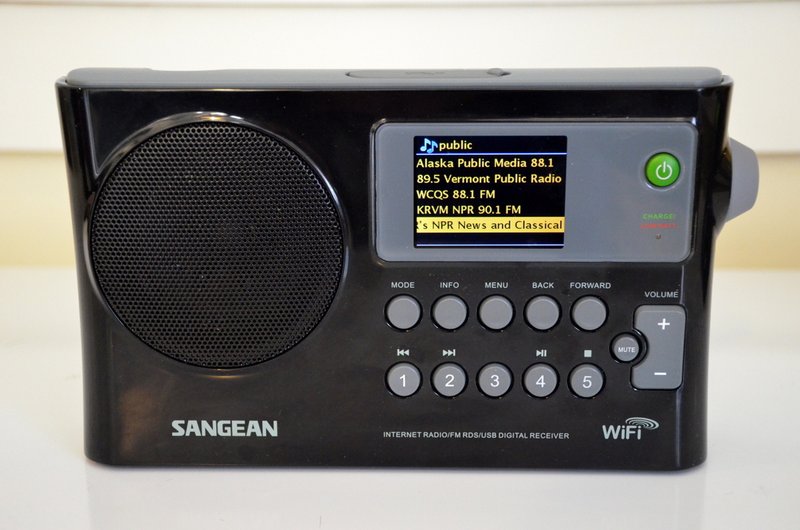
Hello, I posted on YouTube my review of the Sangean WFR-28 FM and Wifi Internet radio receiver.
In particular I was able to sideload my directory of English Language broadcast stations from over 100 countries using their “Favorites” menu. It now sounds like the good old days of shortwave …almost. I can listen to the morning traffic report in Singapore, local news from Guam, afternoon talk show from Gibraltar and a nighttime DJ from Uganda – all in English.
Of course, a number of personal assistant device like the Amazon Echo also stream radio via the TuneIn Radio aggregator, but since these devices rely on voice commands, some stations can be difficult to call up. I still prefer a proper WiFi radio/Internet appliance like the Sangean WFR-28 or Como Audio Solo.
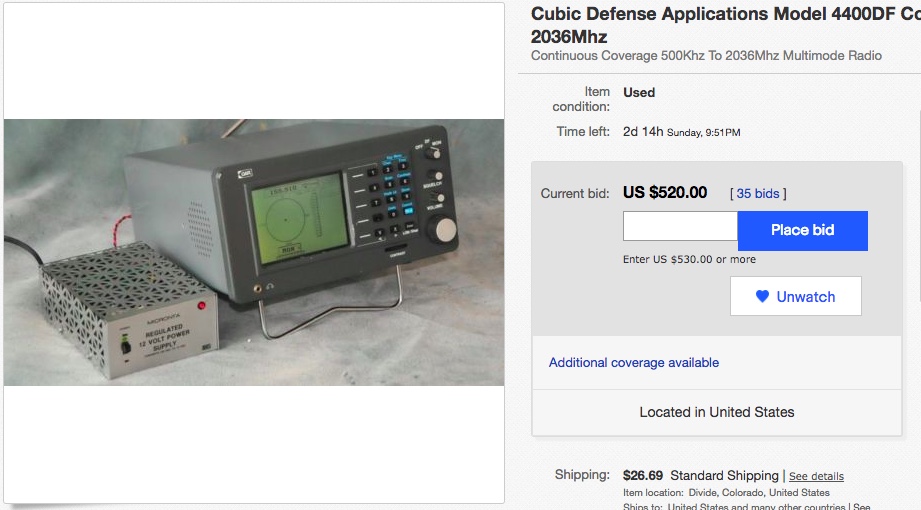
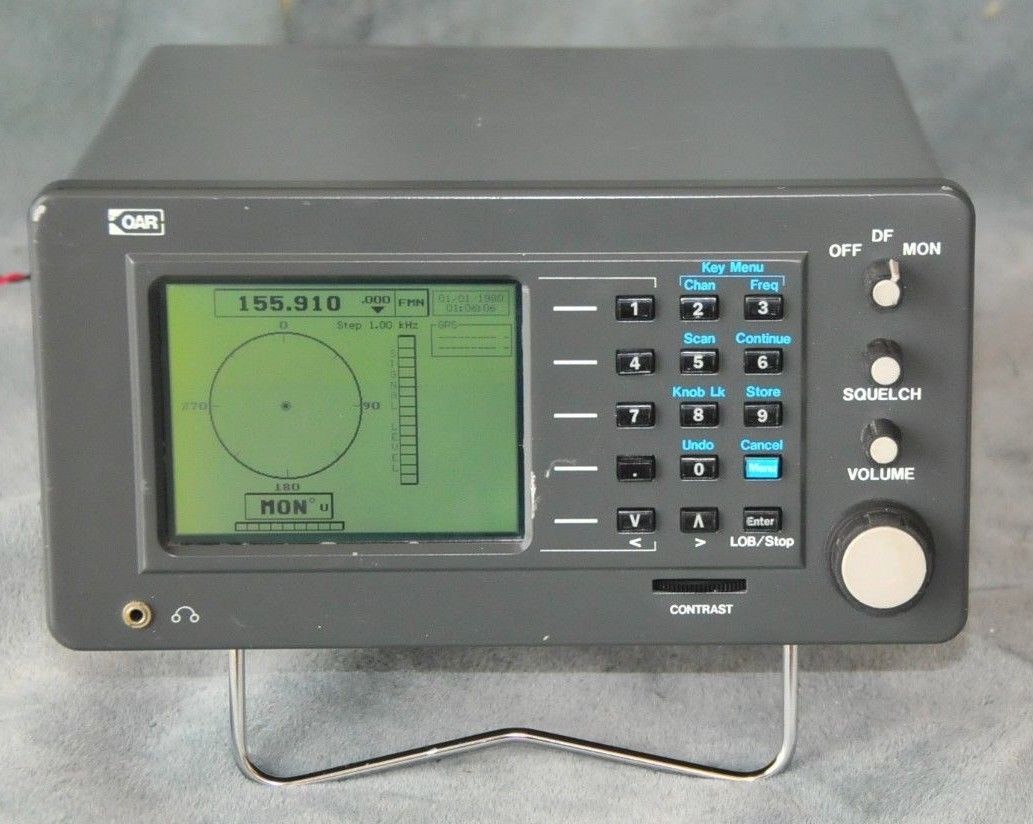
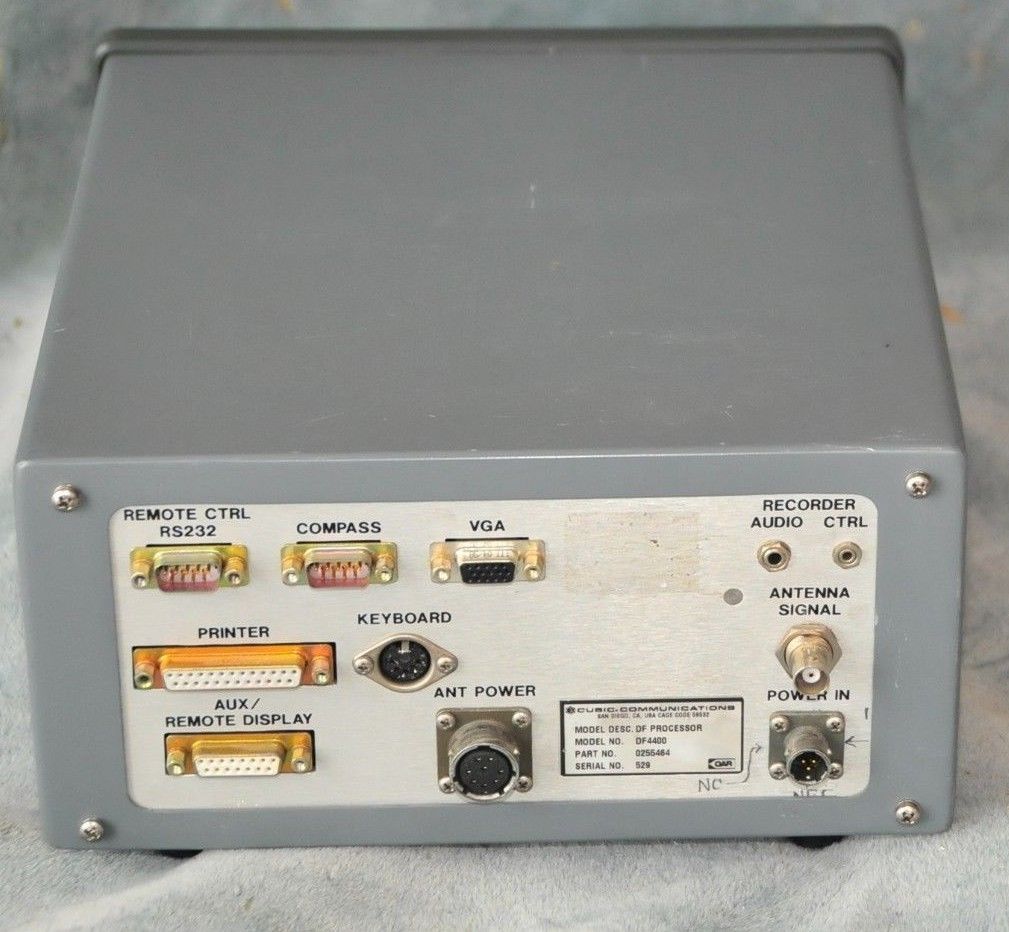
I’ve been following this listing the past few days–the seller actually launched the item with a very low starting bid.
eBay unearths so many products that I would have never known existed. This military receiver is certainly a case in point.
As the seller states, I imagine the original price tag for this receiver was hefty–likely thousands of dollars. The front panel lacks many of the controls we’d like to see on an HF radio (bandwidth, RF gain, notch, etc.), however, I imagine there are a number of functions on the backlit screen and possibly accessible via an external monitor and/or keyboard.
I’m curious: are there any SWLing Post readers out there who can comment about the performance of this receiver? Have you ever put one on the air? Please comment!
I’m currently spending the better part of a week at Cape Lookout State Park on the Oregon coast, with a great view of the ocean through tall evergreen trees. This is one of my favorite parks in the Pacific Northwest, especially when DXing during the blustery winters from one of the nice cabins at Cape Lookout.
The view from the beach near my cabin; the turbulent waves were a precursor to the gale force winds at the park during the night of the 23rd!
Although I’m at the park for trans-Pacific medium wave DXing, I’m also comparing receivers, both SDRs and portables. This morning I sought out a few weak shortwave signals, pitting the Elad FDM-S2 SDR ($529 USD) against the AirSpy HF+ ($199 USD). I have a pair of the HF+ receivers to cover all of medium wave (as the FDM-S2 easily does). Many SWLing Post readers already know that the upstart HF+ trades bandwidth to gain high performance in order to keep the price reasonable.
My antenna used for the following recordings was a small “Flag” antenna using a Wellbrook Communications FLG100LN module and a 2K ohm variable potentiometer for termination. The design uses crossed tent poles in an “X” formation to support the wire loop. This design travels easily in a compact package; I have Dave Aichelman of Grants Pass, Oregon to thank for this very useful “tent pole loop” implementation of the Wellbrook FLG100LN.
The Wellbrook-based antenna functions superbly, and its low-noise design helps hold down QRM from the nearby cabins (which unfortunately have been “upgraded” recently with noisy cold fluorescent [CFL] light bulbs). The area around the Cape Lookout cabins used to be superbly low noise and suitable for radio listening, but now it is more of a challenge than before. The Wellbrook FLG100LN is perfect for the situation though; Wellbrook ALA1530LN Pro and ALA1530S+ 1-meter loop antennas work commendably at the park too.
The Wellbrook FLG100LN module with a home brew RFI choke in-line
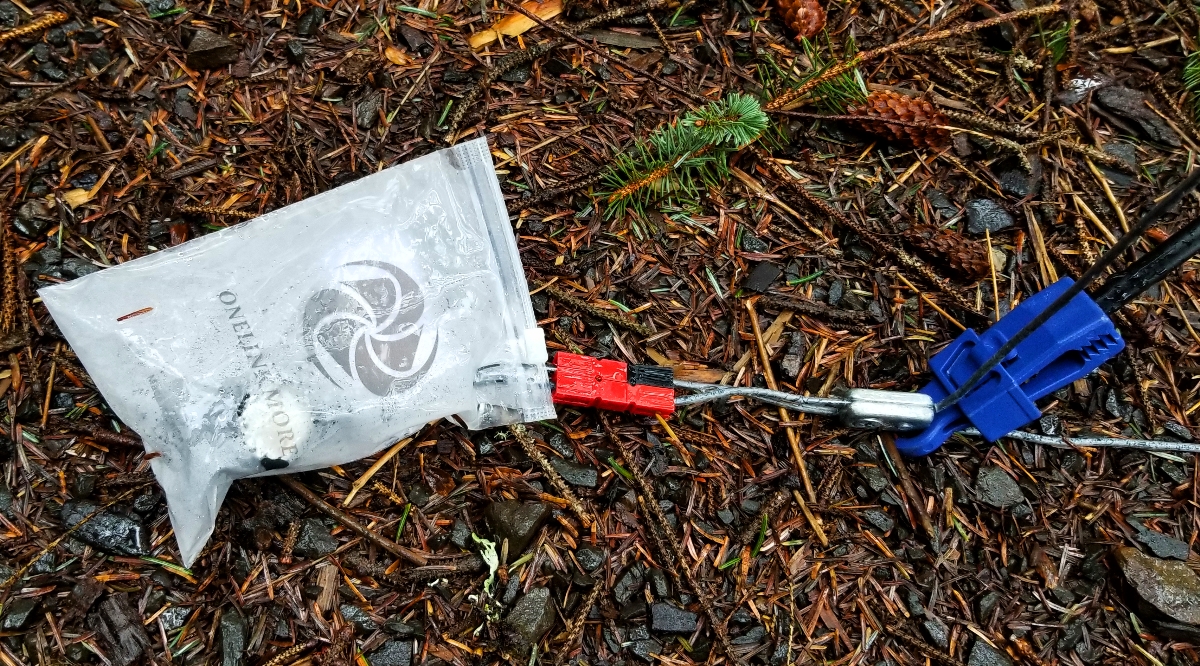
A 2K ohm variable potentiometer is protected from the elements in a small plastic bag. The “pot” is adjusted for the best nulling of medium wave stations off the back side of the antenna’s reception pattern.
The “tent pole loop” antenna is strapped to a fence railing with ultra-strong Gorilla Tape to keep the 7-ft. square loop vertical.
On with the recordings…
For the FDM-S2 and HF+ comparisons I used the SDR-Console V3 software. Every parameter was identical for the receivers–sampling bandwidth, filter bandwidth, AGC, mode and so on.
Take a critical listen to the weak signals recorded with the SDR receivers, identified as only “Radio A” and “Radio B”.A link to a poll is at the end of this article;please indicate which recording of each pair has the most intelligible audio in your opinion, and submit your choices when you’ve made up your mind on each audio clip. After a week or so I’ll post the results of the voting, and identify the receivers.
9.615 MHz, LSB, Radio A
9.615 MHz, LSB, Radio B (note: the same male announcer heard in clip “A” begins at 00:14 in this “B” clip)
9.730 MHz, USB, Radio A
9.730 MHz, USB, Radio B
7.230 MHz, S-AM, Radio A
7.230 MHz, S-AM, Radio B
9.860 MHz, S-AM, Radio A
9.860 MHz, S-AM, Radio B
Note on 7.230 MHz recording: this was an interesting frequency, as the signal was tightly surrounded by a very strong local 40m ham radio LSB station as well as a strong China Radio International signal. There were other strong amateur and broadcast stations within 30-50 kHz of 7.230 MHz, also. This A-B test more than the others may indicate receiver performance in a strong RF environment on a crowded band.
Ready for the poll? Register your votes at the Google Docs form below:
In a week to 10 days I’ll post the results in another article. NOTE: I haven’t provided a “both sound the same” choice in the poll to encourage you to ‘dig deep’ into the audio and listen critically–to find something that stands out in one clip versus the other.
Guy Atkins is a Sr. Graphic Designer for T-Mobile and lives near Seattle, Washington. He’s a regular contributor to the SWLing Post.
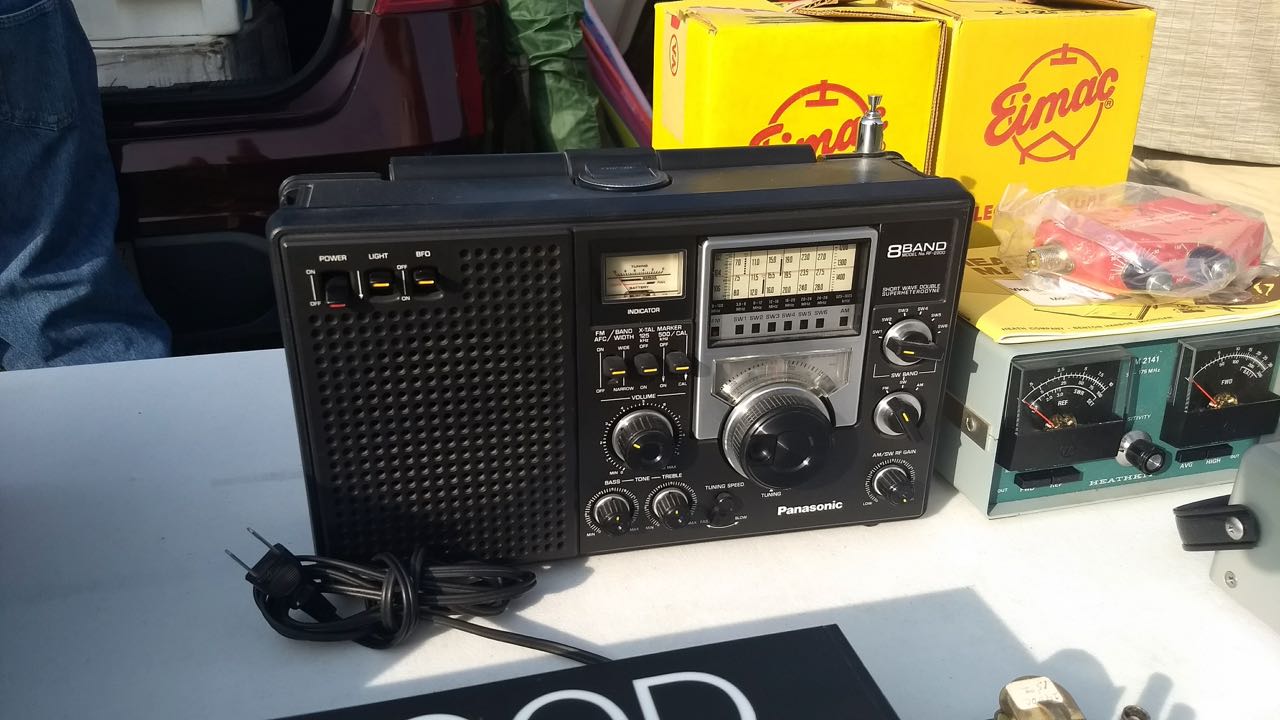
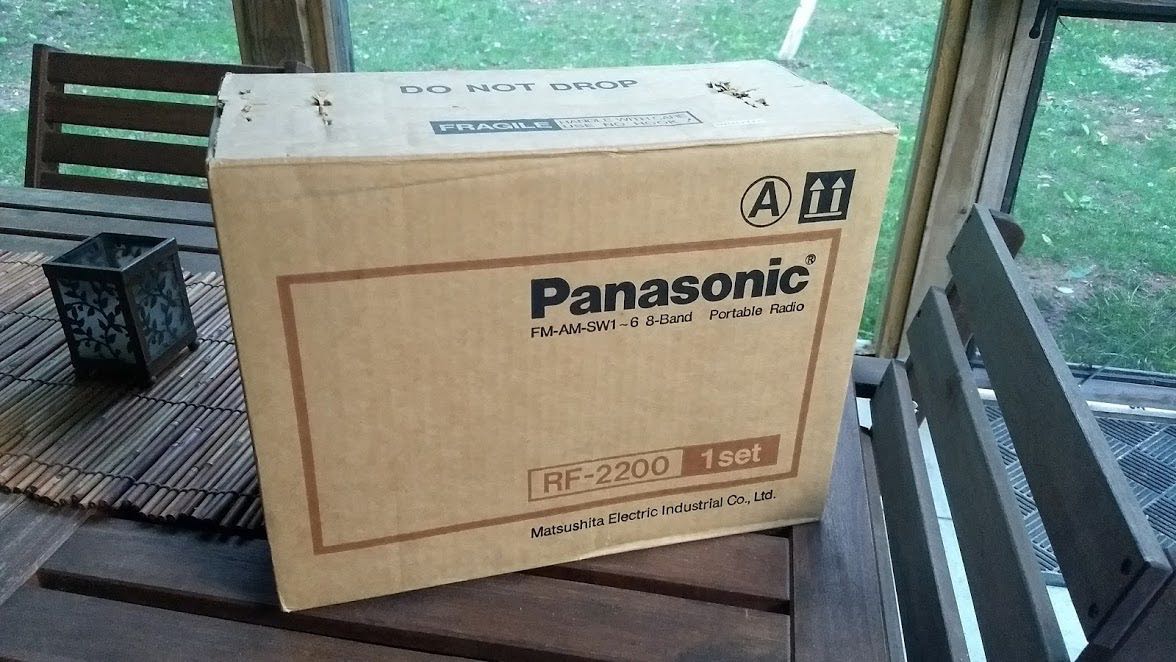
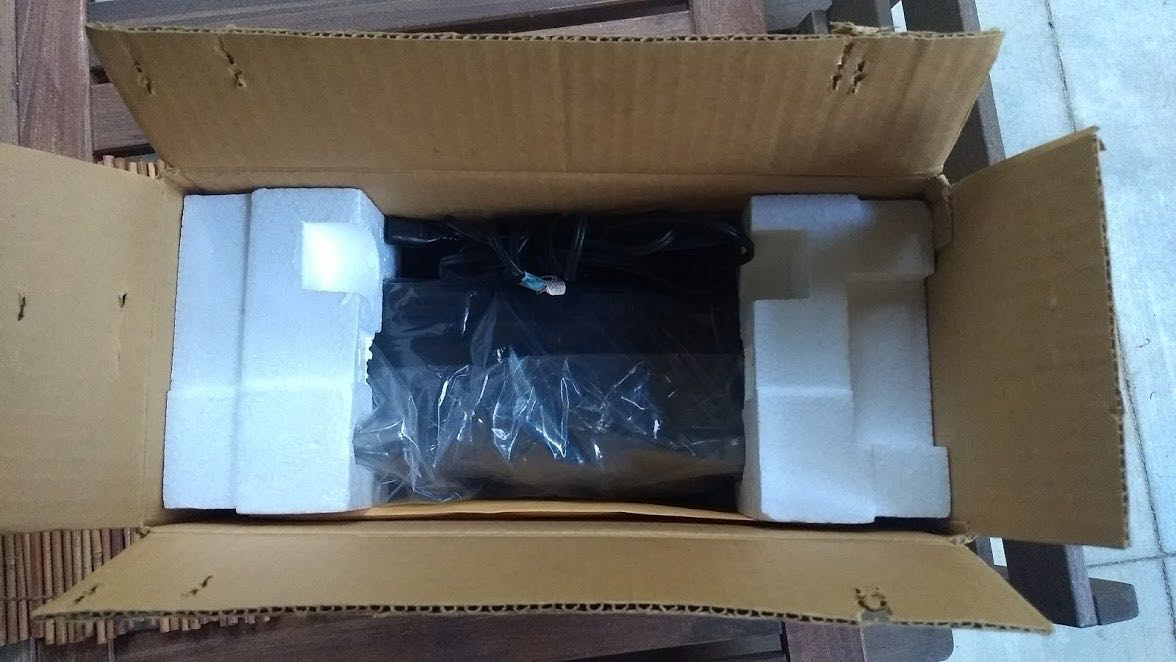
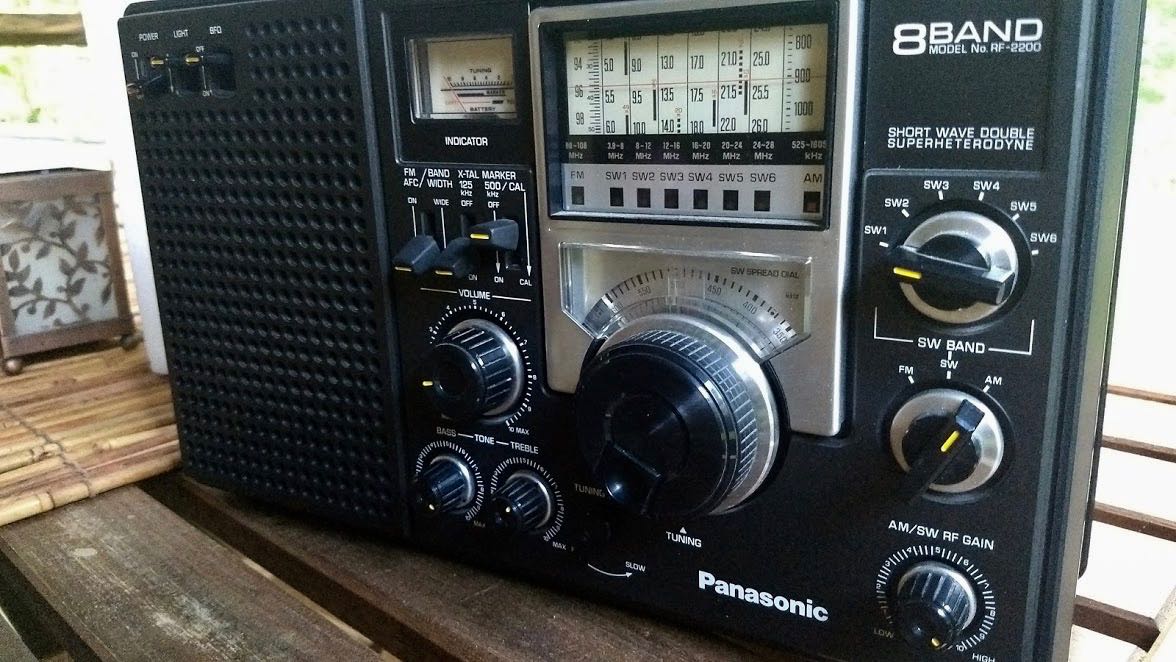
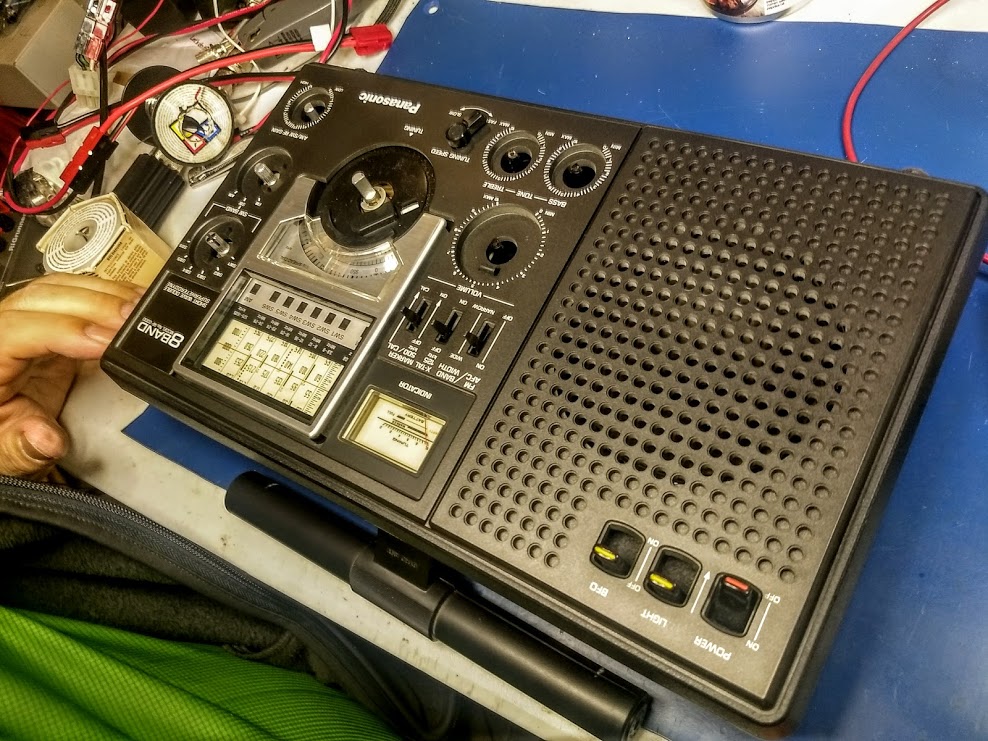
Last year, at Hamvention, I picked up a Panasonic RF-2200 for $70. It came with the original box, manual and was in superb cosmetic condition.
The seller told me that over the years he exclusively used the radio to listen to a local FM station.
At that price, I didn’t hesitate to make the purchase even if this would have simply been a non-functioning parts radio for my other RF-2200.
After I brought the radio home, I unpacked it and gave it a quick test.
FM worked brilliantly. Mediumwave and shortwave, however, were essentially deaf. I made the assumption that the ‘2200’s switches and pots likely needed cleaning with DeoxIT. The next day, I was leaving for a two month trip to Canada though, so I packed the RF-2200 back into its box and set it to the side of my shack table.
Fast-forward to yesterday…
While digging around my shack, I re-discovered the boxed RF-2200. Since I was planning to visit my buddy Vlado (the best radio repair guy in the world) yesterday evening, I thought I’d take the RF-2200 and do a proper contact cleaning. Several of the RF-2200’s switches and pots cannot be easily cleaned without removing the chassis.
(Click photos to enlarge.)
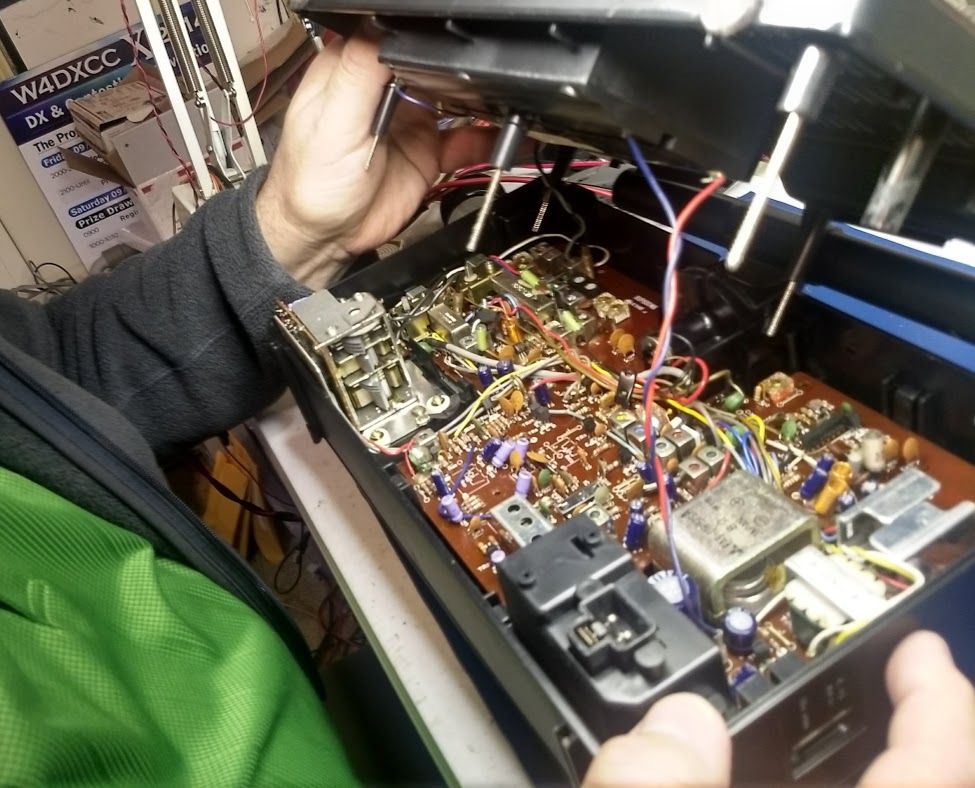
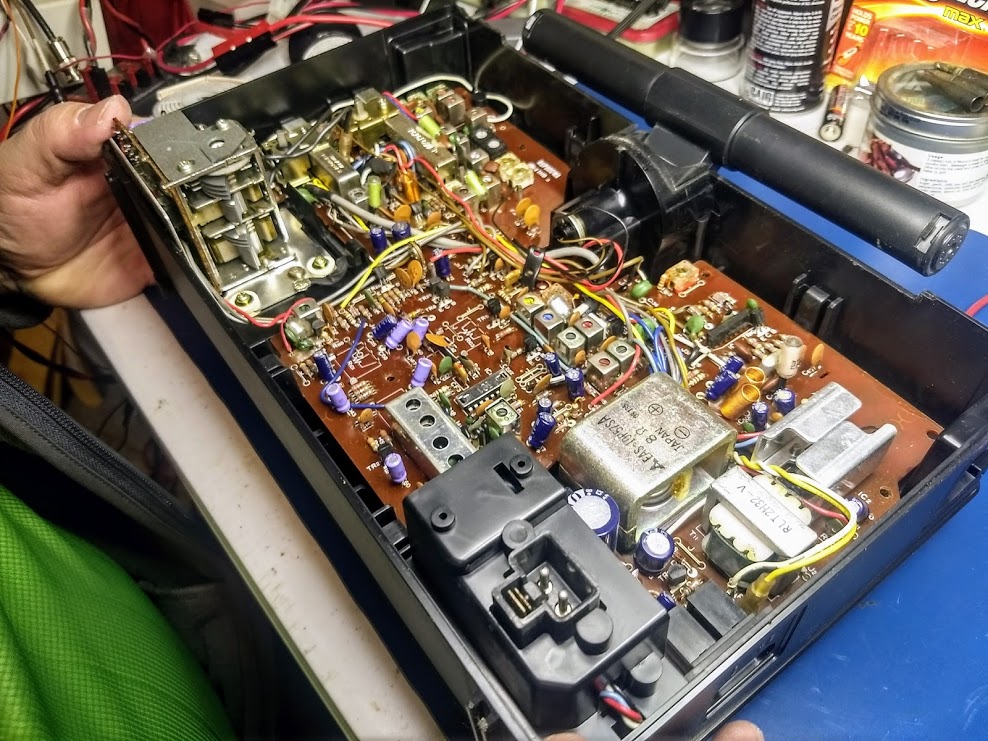
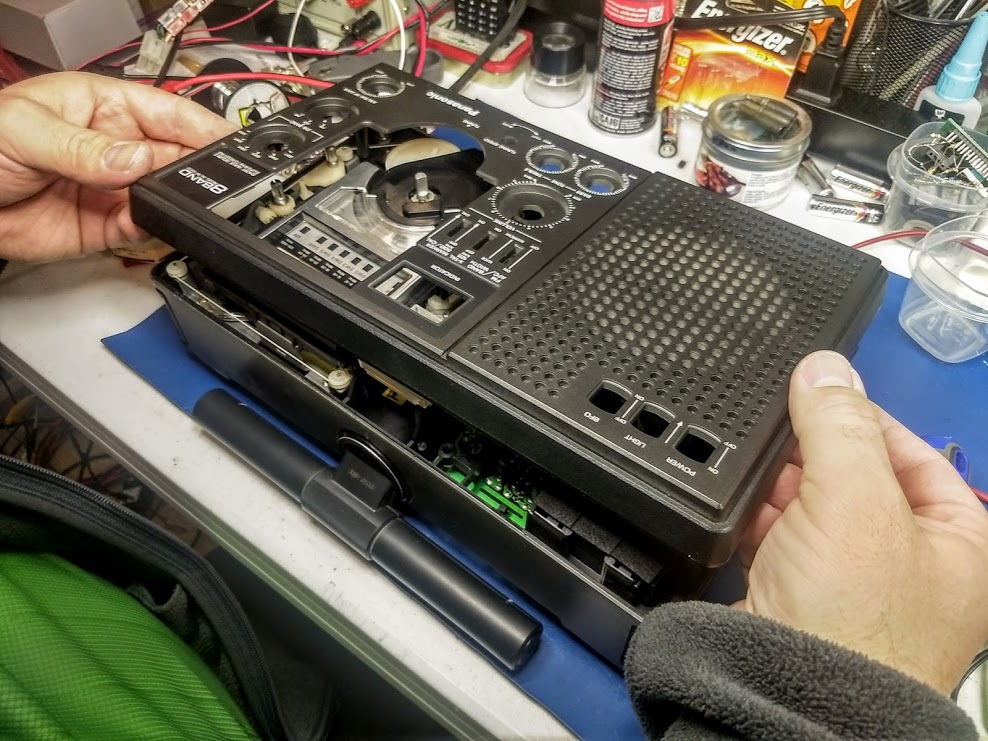
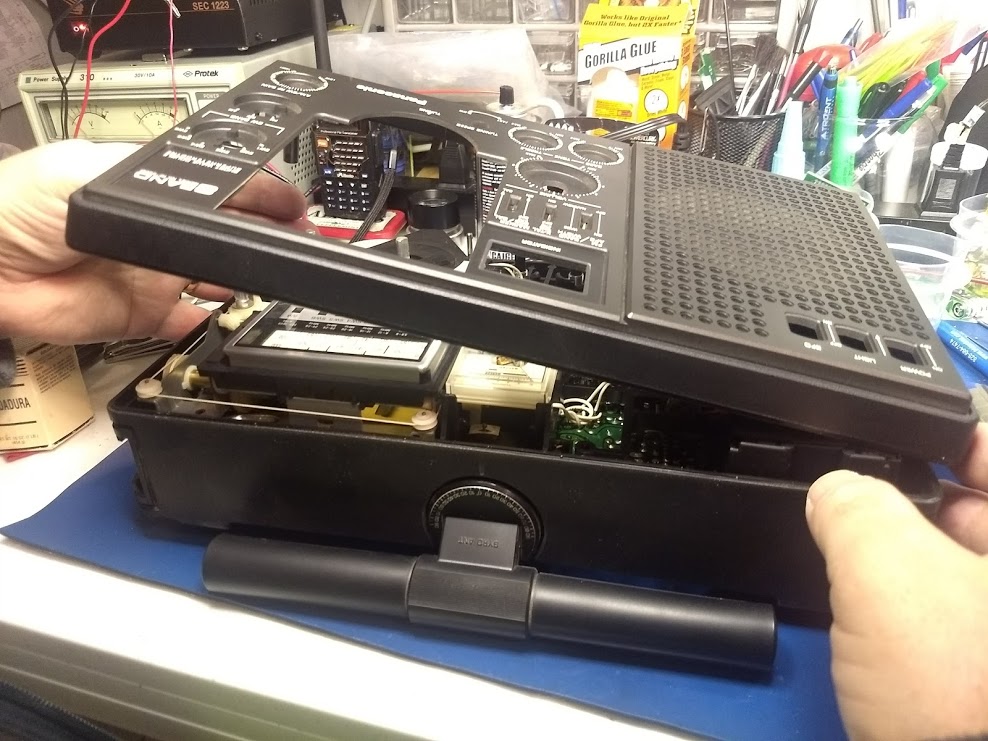
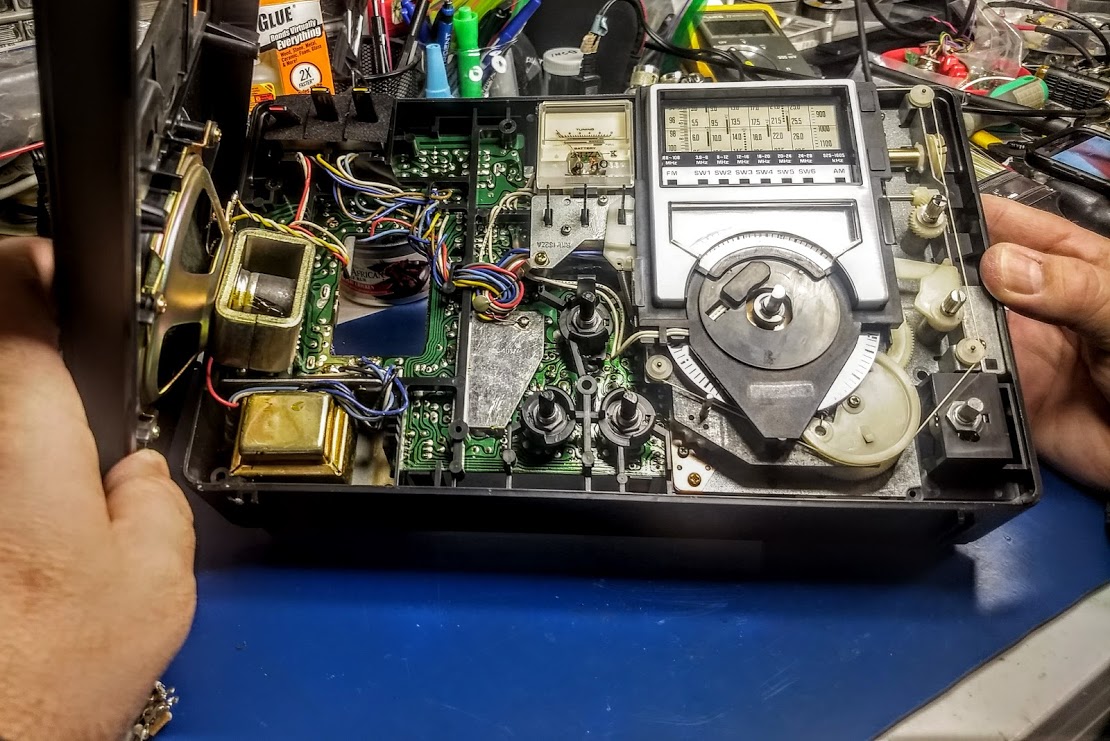
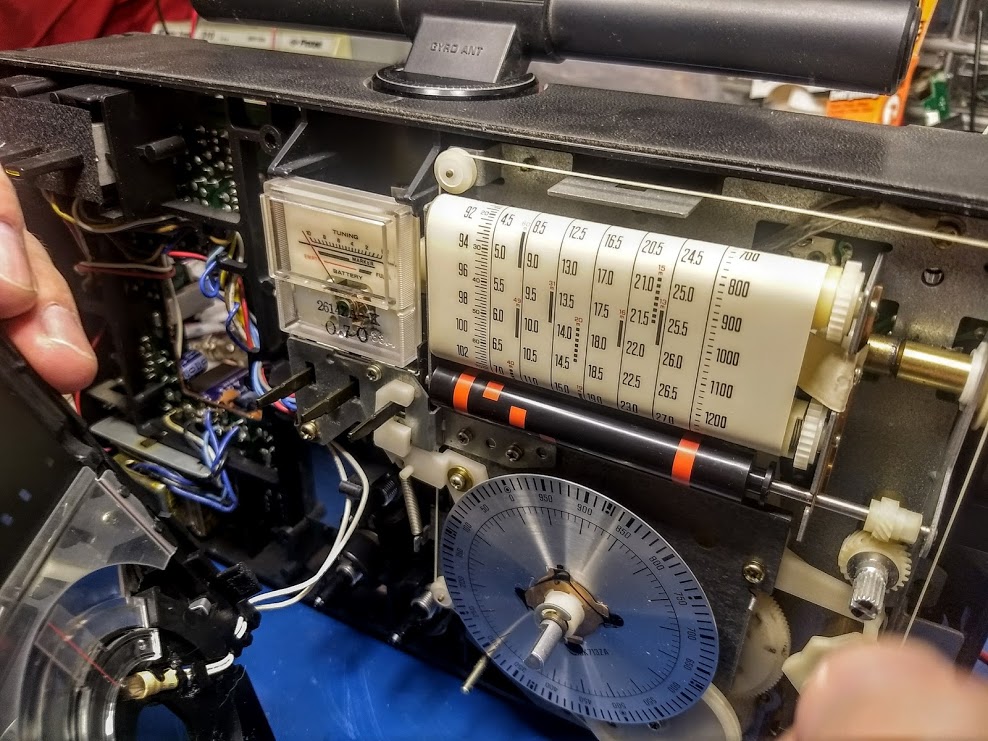
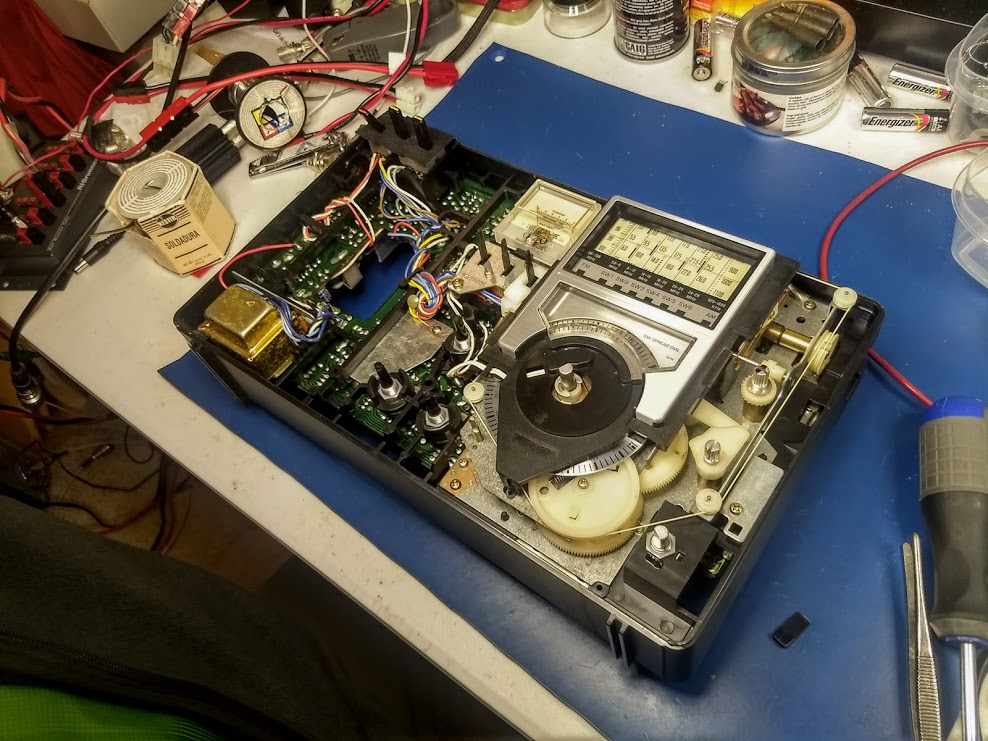
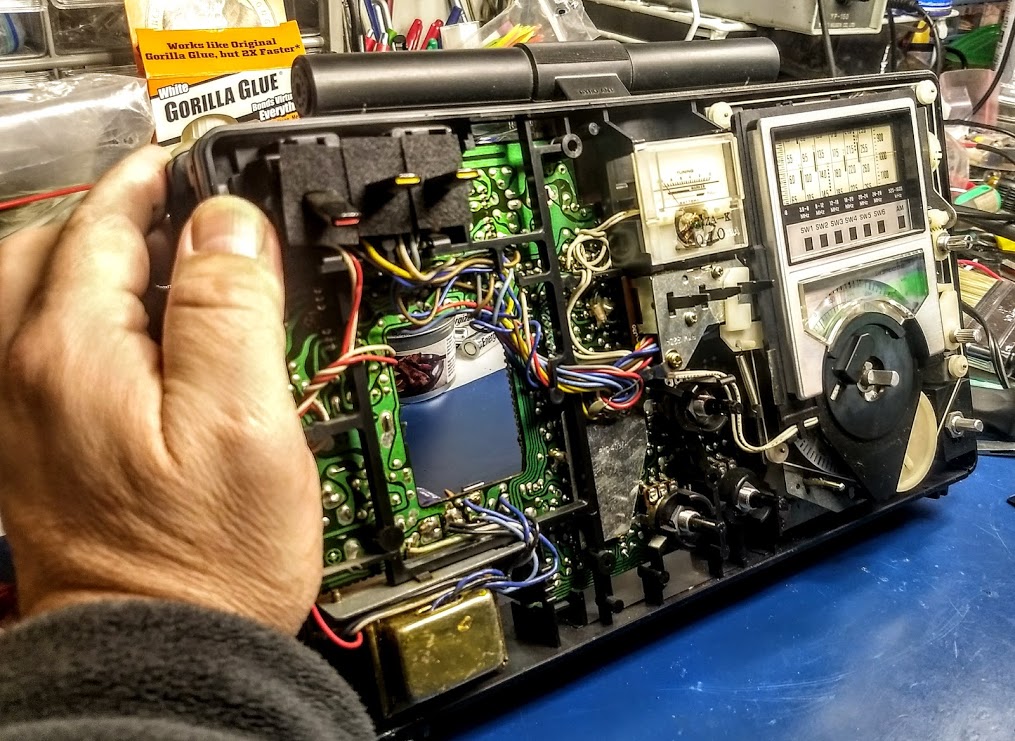
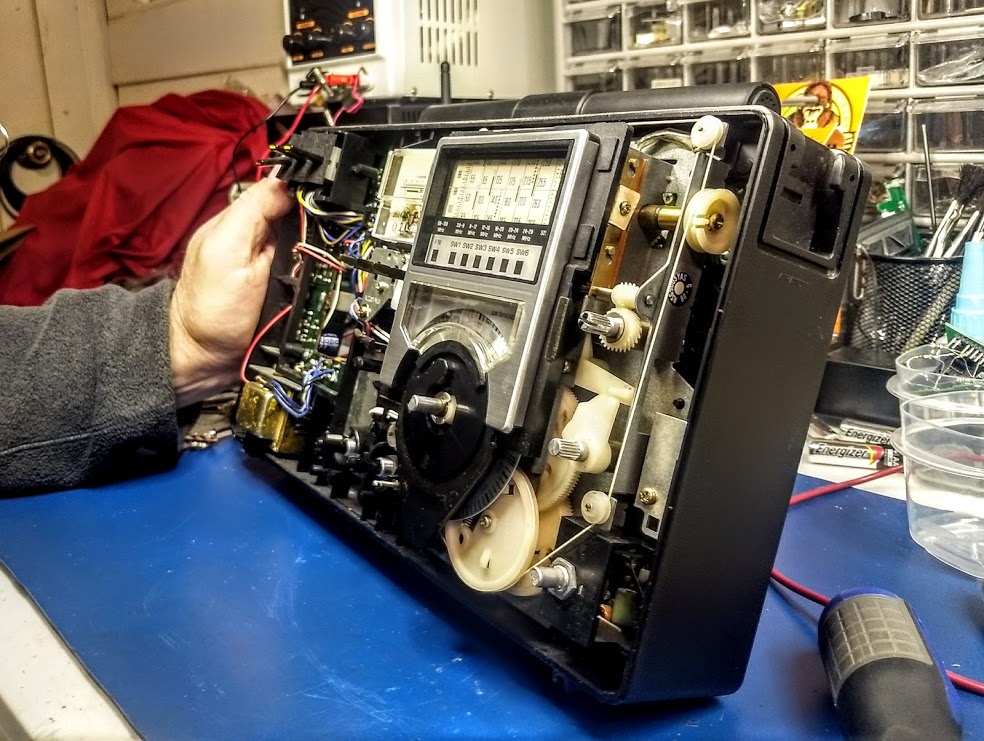
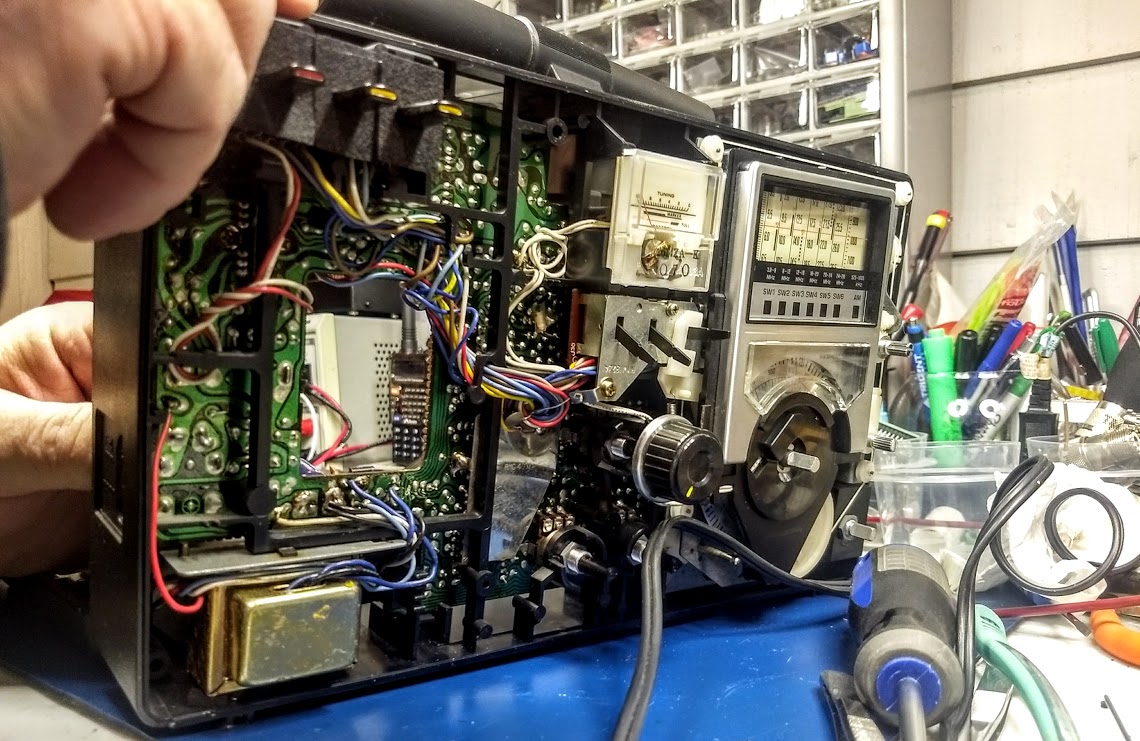
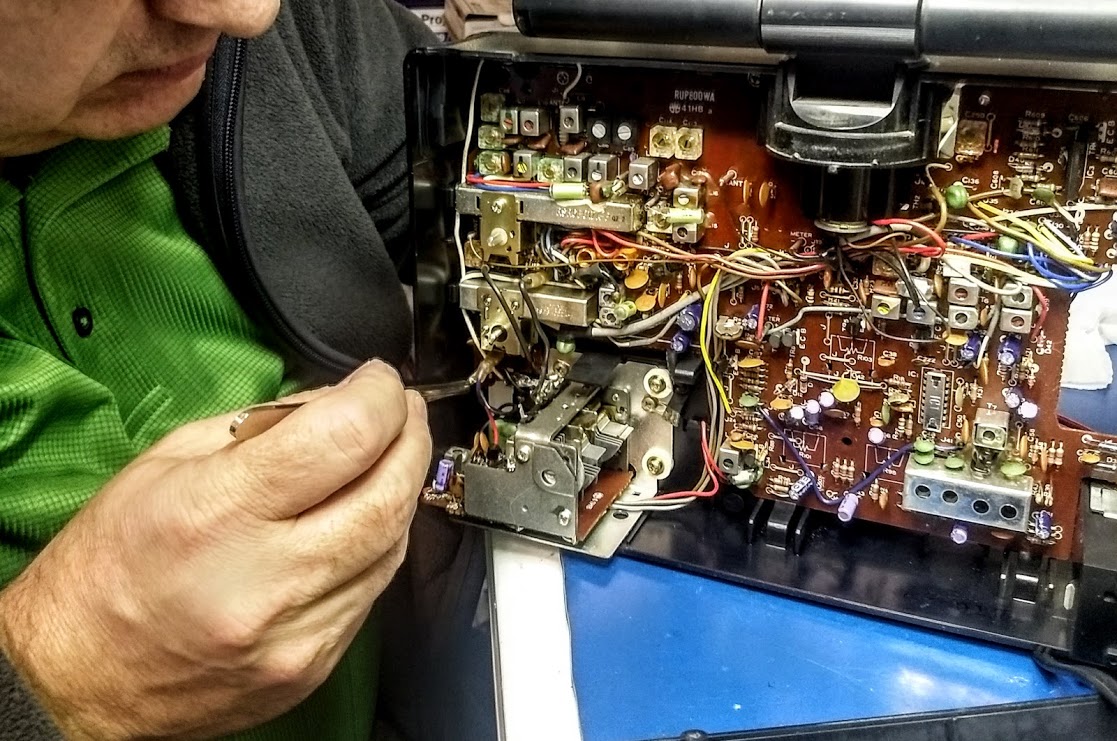
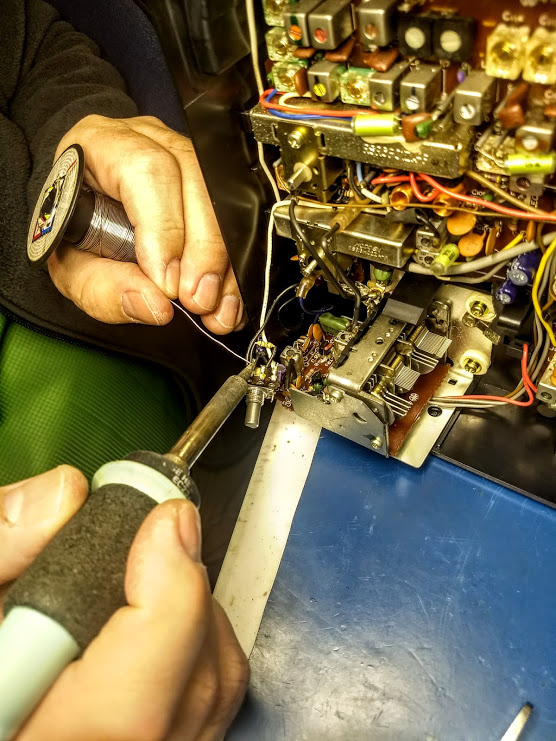
Vlado is familiar with the RF-2200 and since it’s not the easiest radio to work on, I asked for his expert hands on the job. Within seconds of handing him the radio, he plugged it in, tested the switches and pots, then removed the back cover (disconnecting the battery compartment leads) and then the front cover (disconnecting the speaker leads).
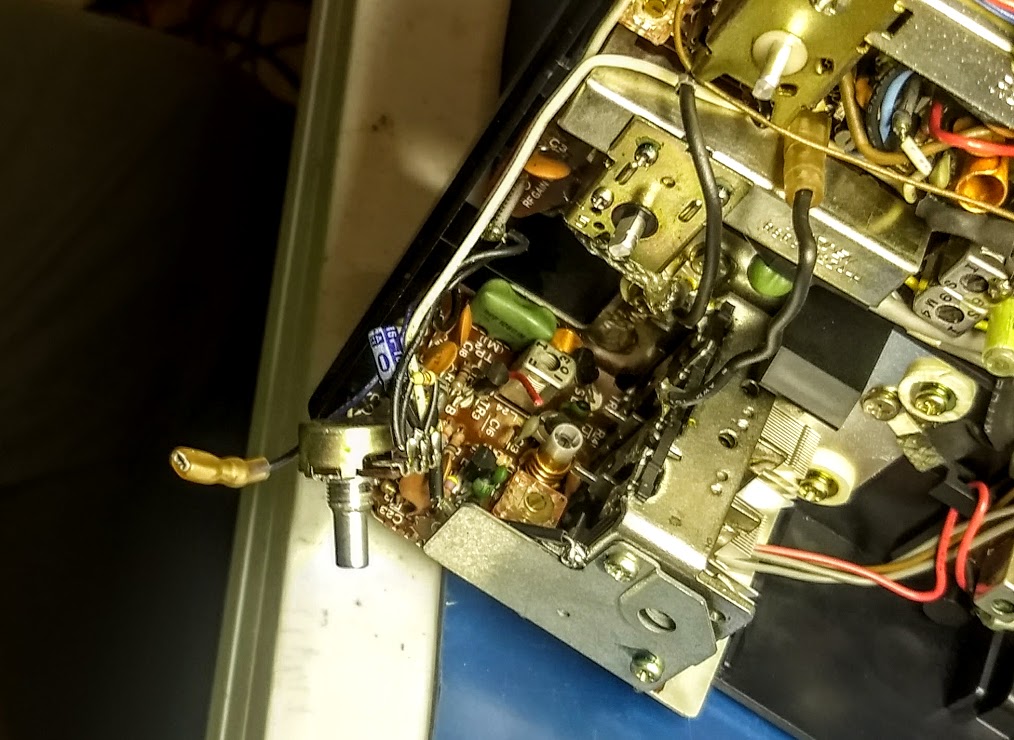
The magic behind the RF-2200’s classic analog dial: Vlado offered a word of caution to anyone operating on their RF-2200: as you can see in the photo below, the dial string snakes around the front of the radio and is very close to some key components. You must exercise caution when having a soldering iron tip near the string, or using lubricants nearby.I didn’t realize this, but by the time Vlado started taking apart the RF-2200, he had already determined that even though the contacts needed cleaning, this wasn’t the source of the audio problem for the MW and SW bands.Vlado expertly pulled out the pot for the FM/AM/SW selection–not an easy task–began cleaning it, testing it and re-soldering contacts.
Vlado determined the pot was actually in good shape, thus started testing the rest of the circuit.
After a few minutes of performing tests and getting intermittent performance, he determined that at least one, if not more, of the RF-2200’s caps need to be replaced. Of course, neither one of us was terribly surprised. At this point though, it was getting late and I had an early wake up time in the morning, so I left my RF-2200 with Vlado.
Am I worried about this prognosis? No, not in the slightest…
Doctor Vlado is on the job!
Vlado will have the RF-2200 back on the air in no time, working as well as it did when it was new. He’s actually performed a similar RF-2200 repair for an SWLing Post reader and I’m willing to bet this repair job is relatively simple compared to most he encounters (including the Icom IC-7200 he recently repaired after it was hit by lightening!).
I’ll try to post a “Part 2” update with photos of the RF-2200 repair. Follow the tag: Panasonic RF-2200 Repair
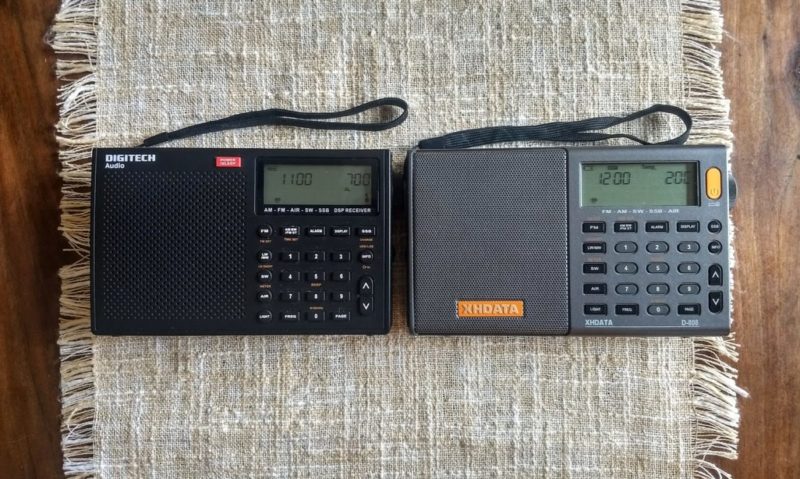
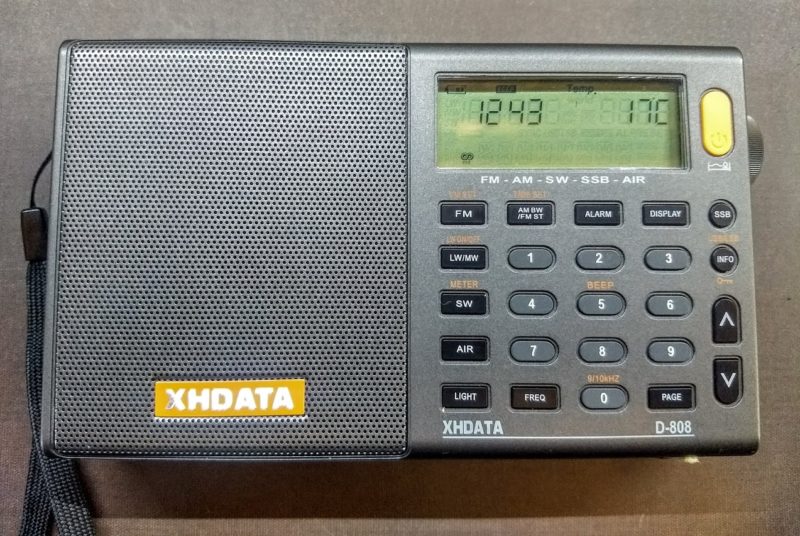
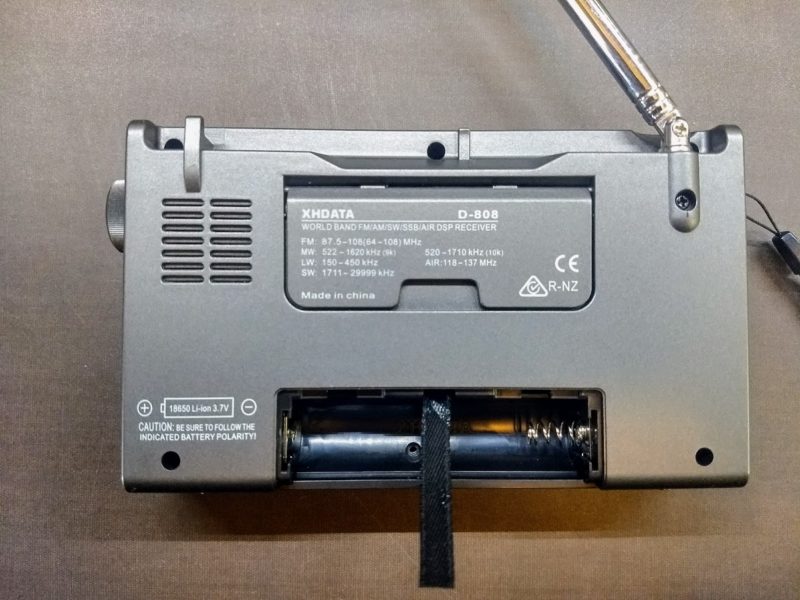
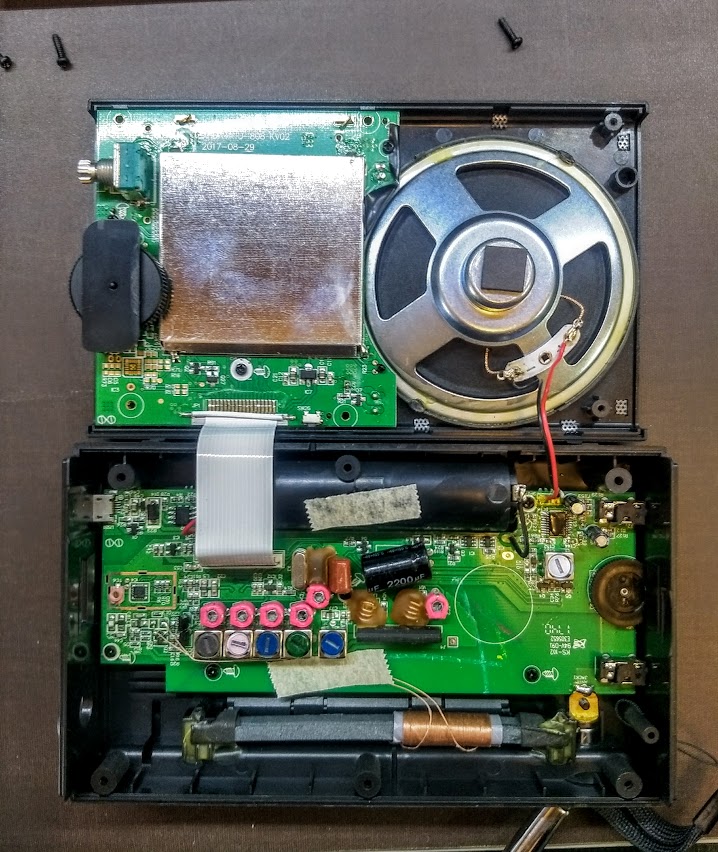
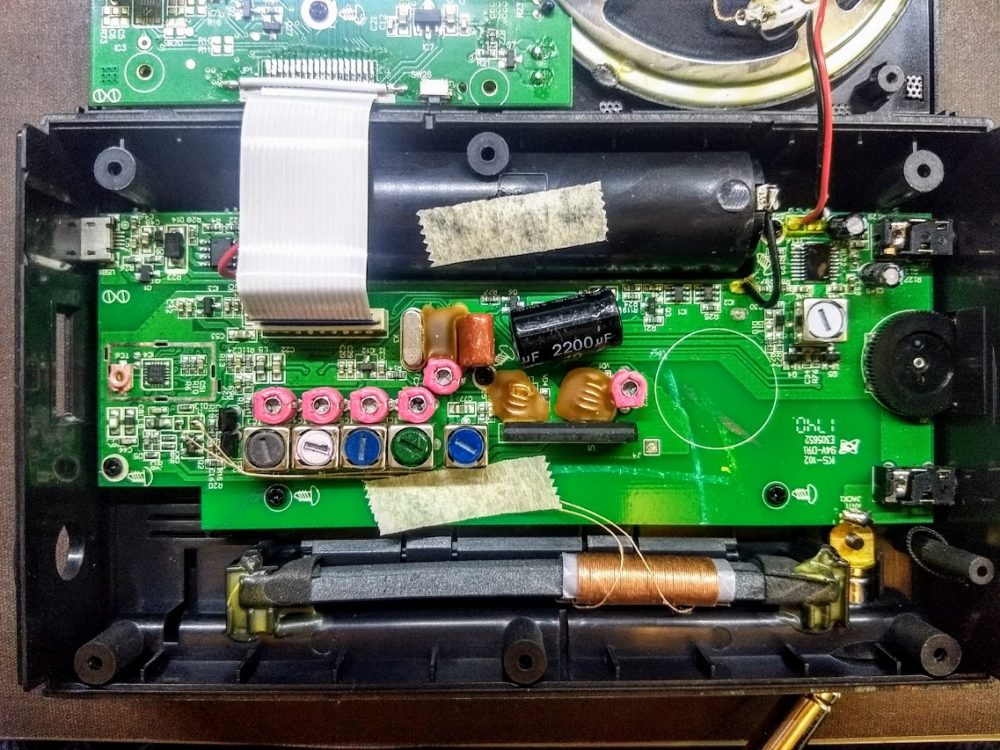
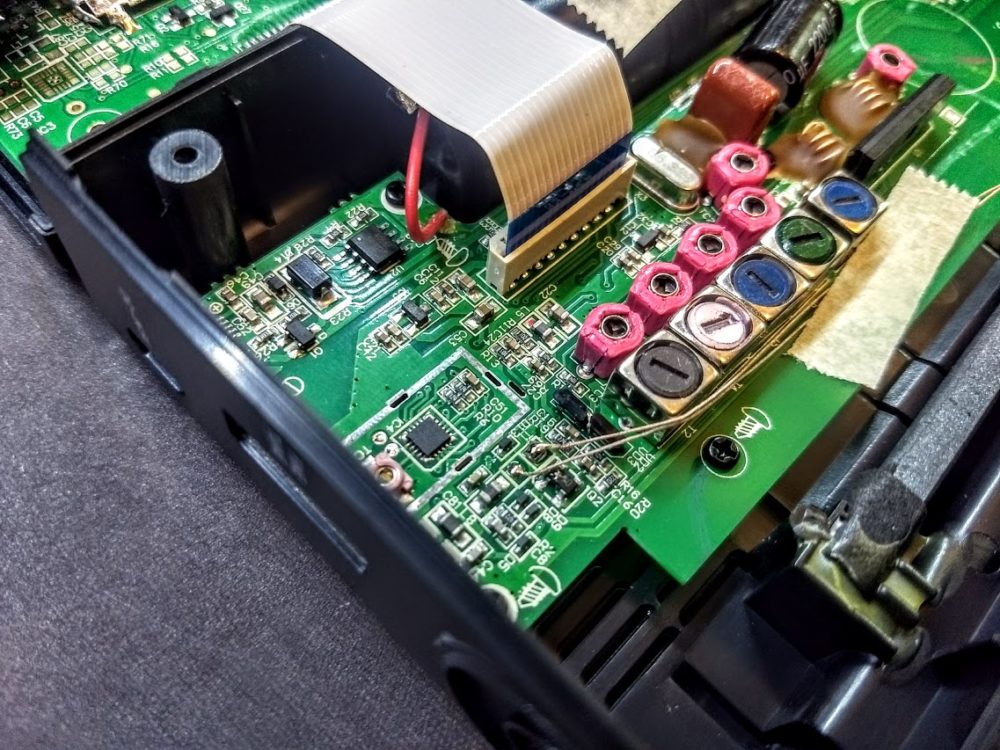
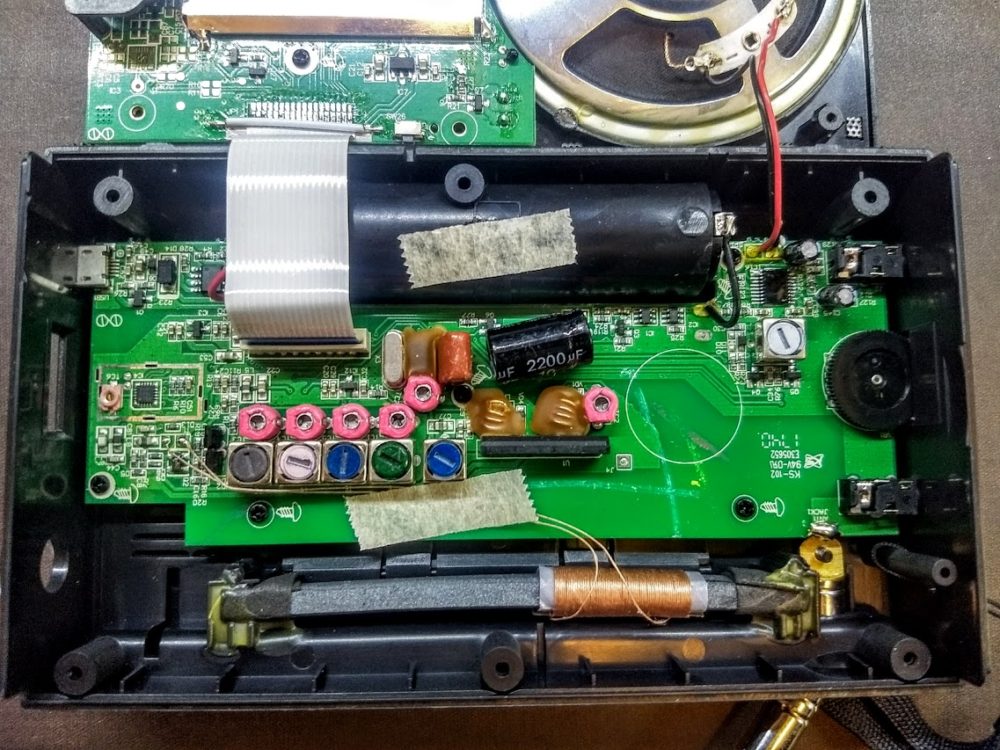
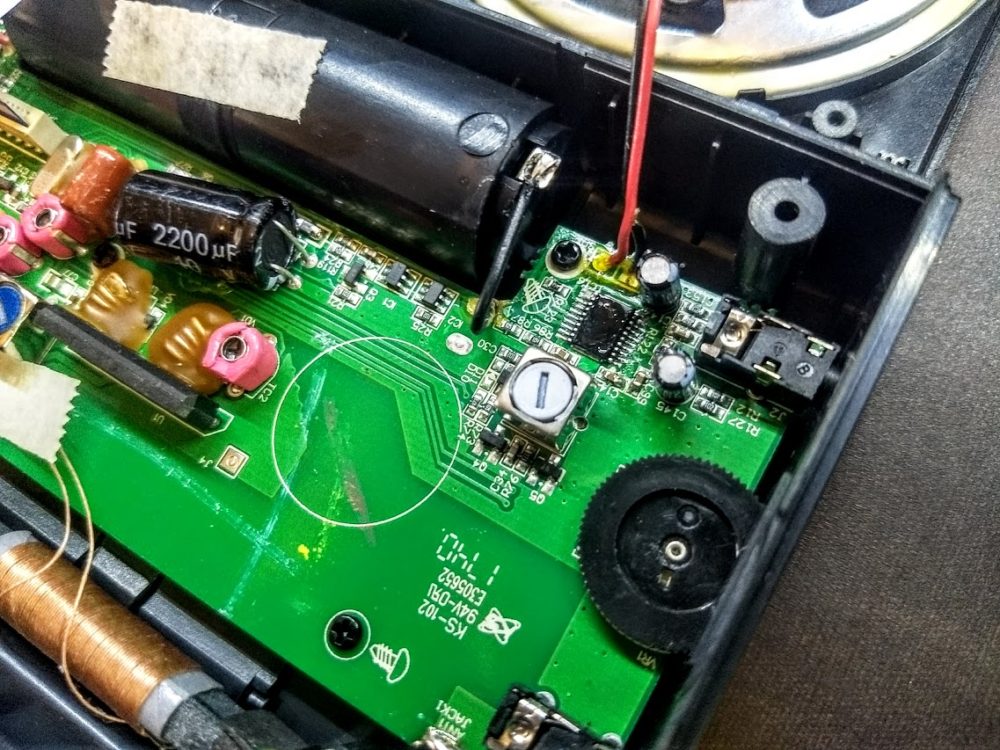
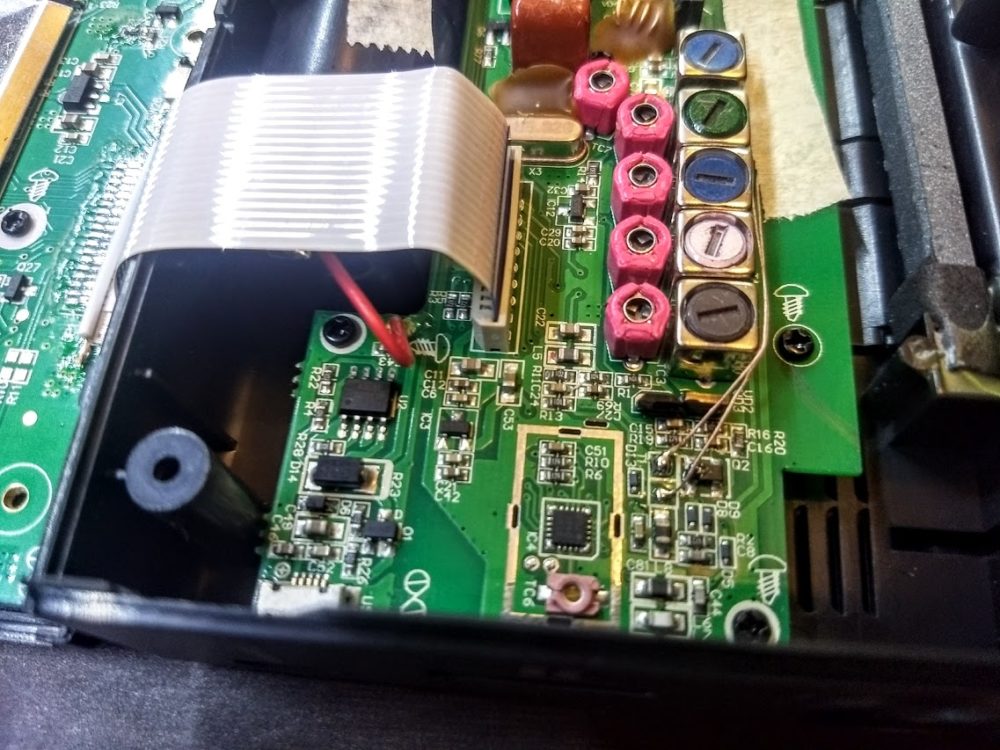
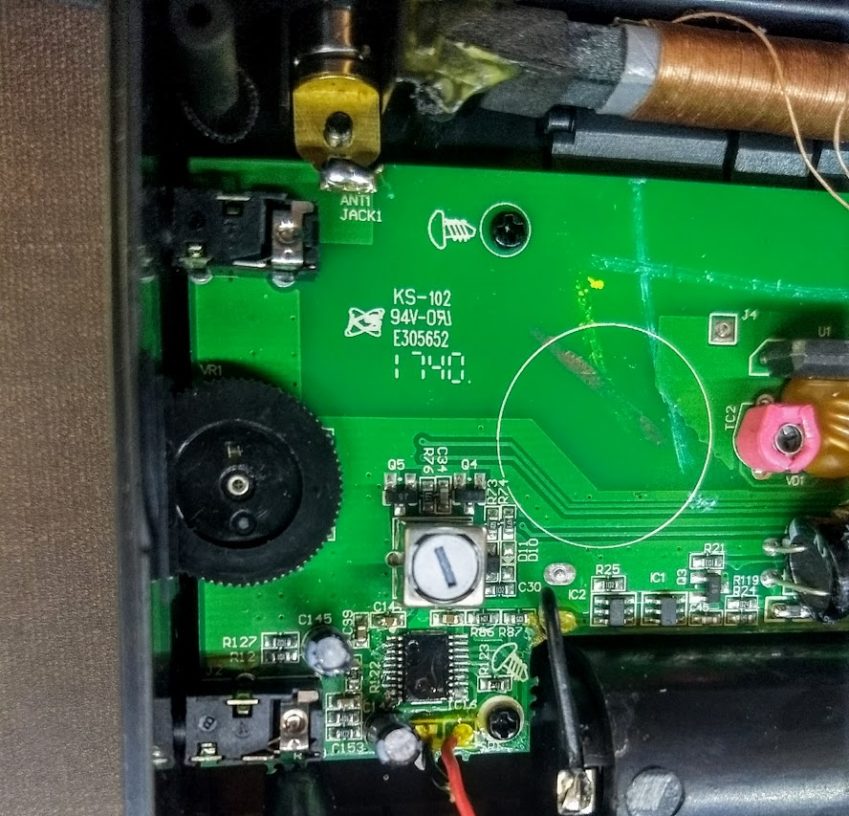
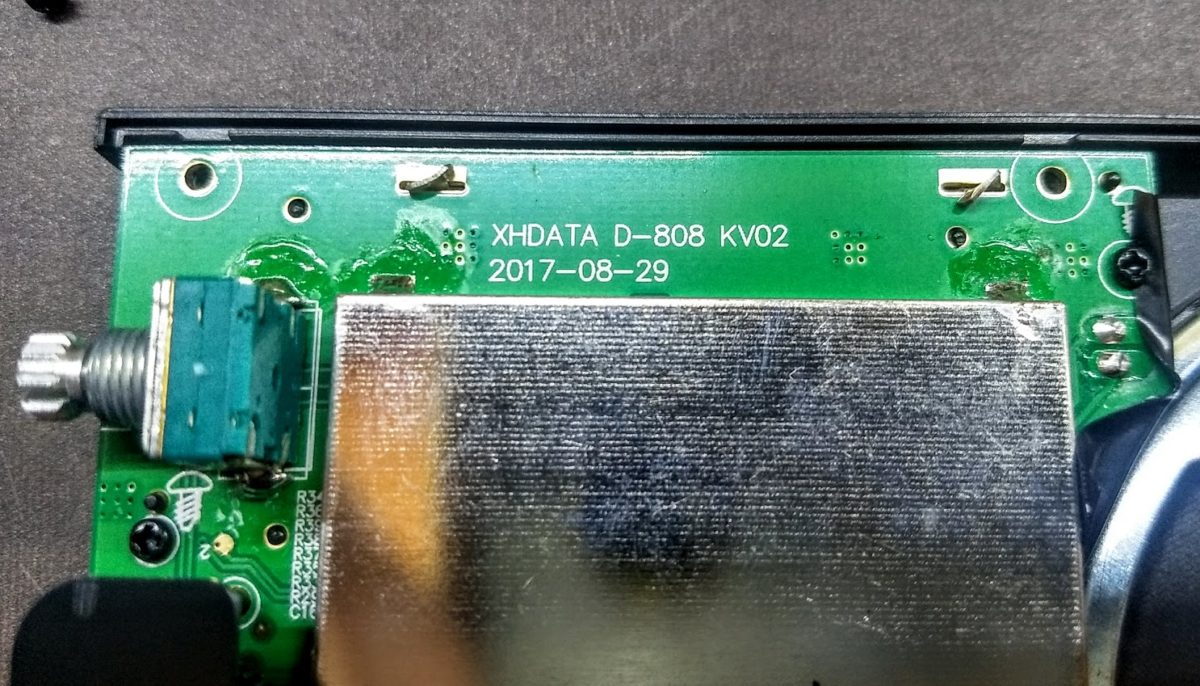
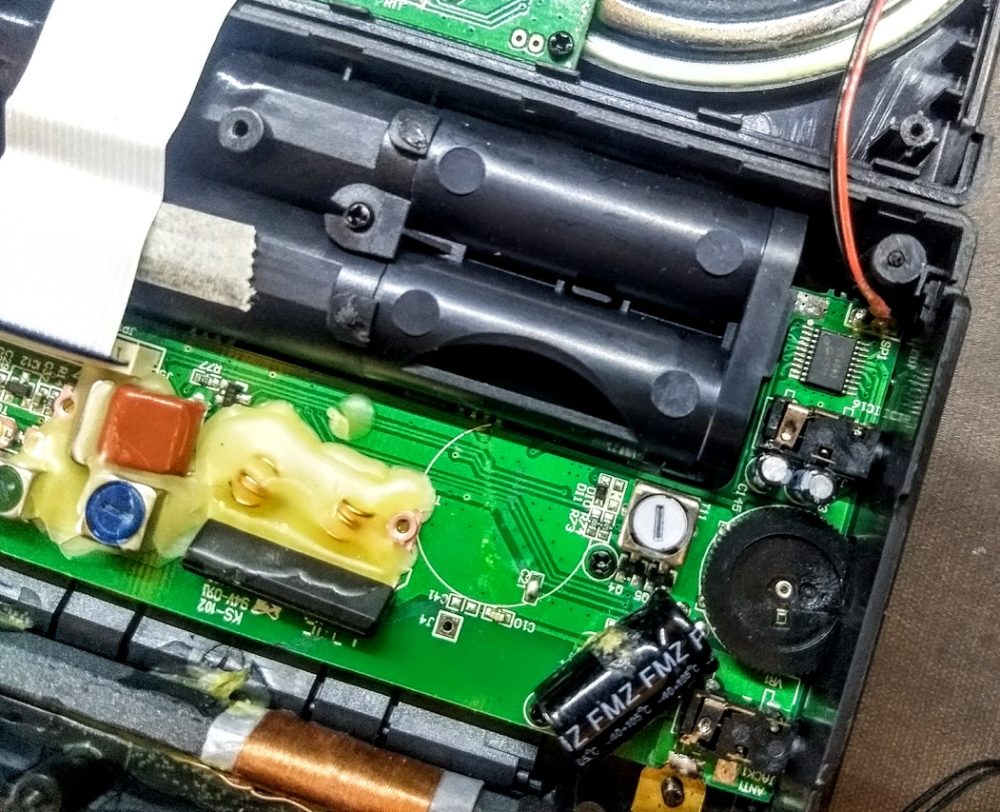
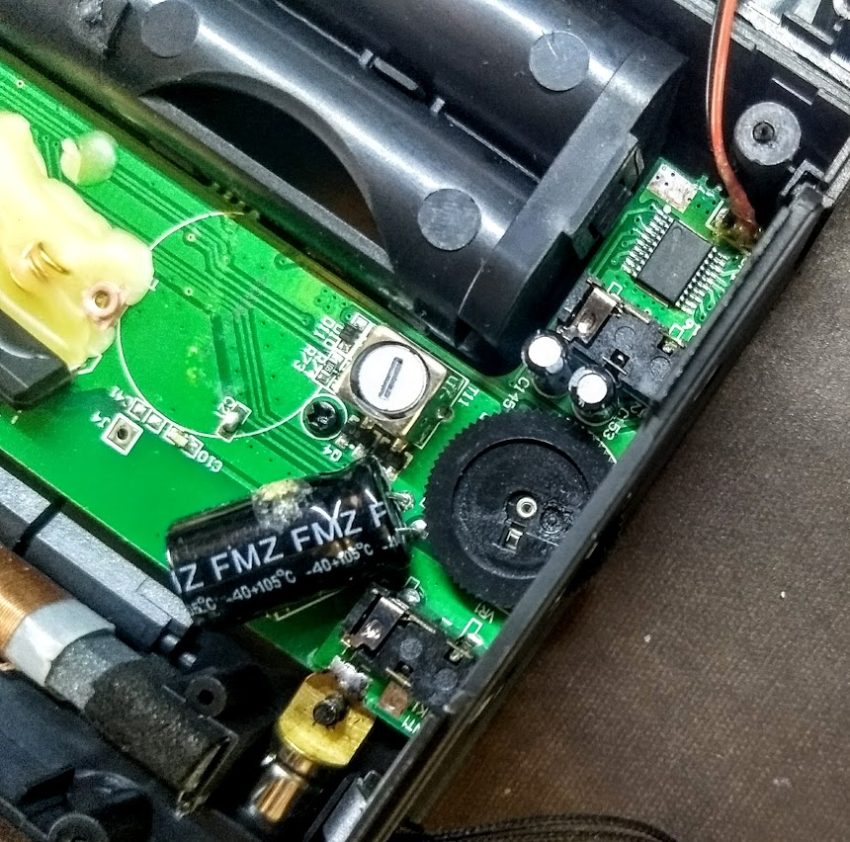
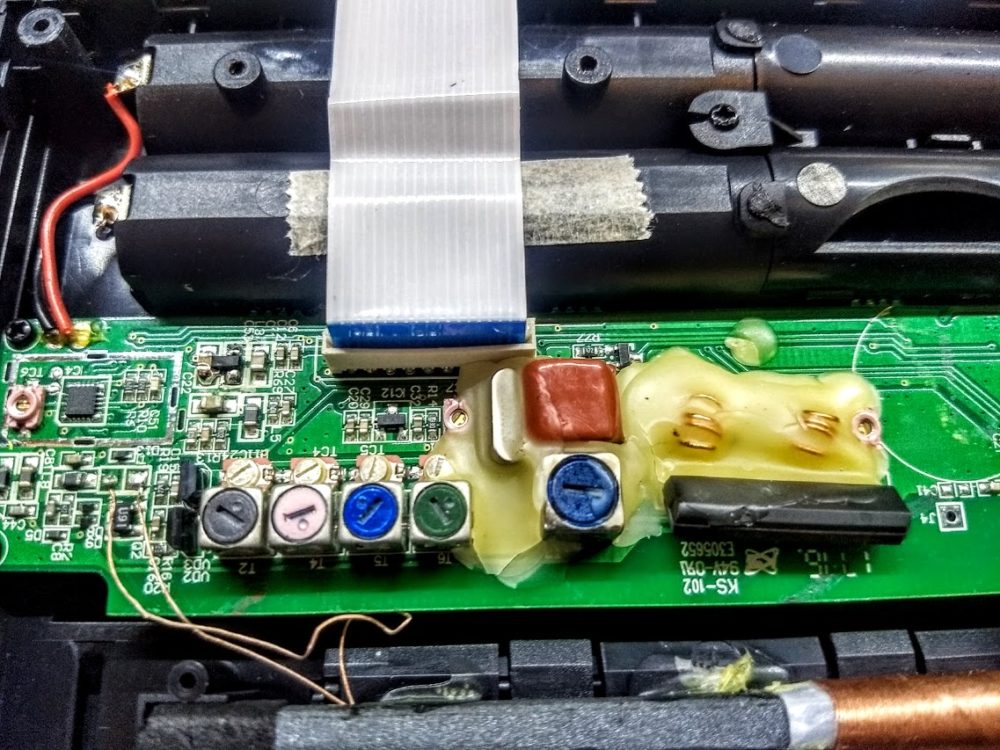
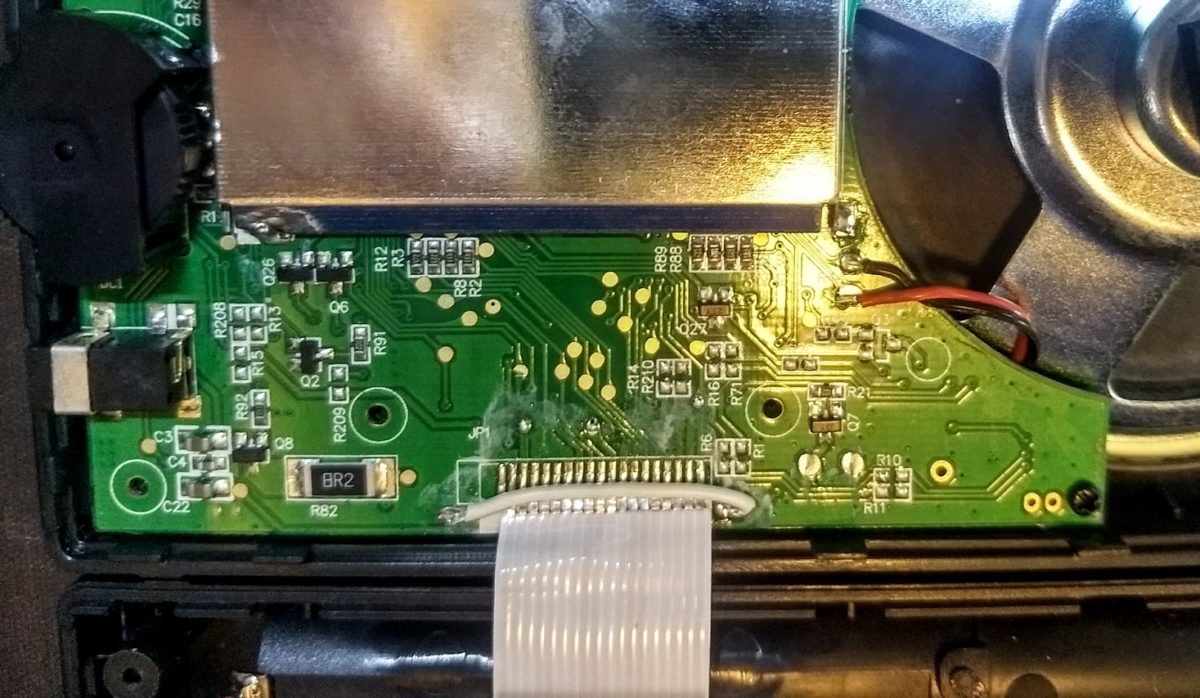
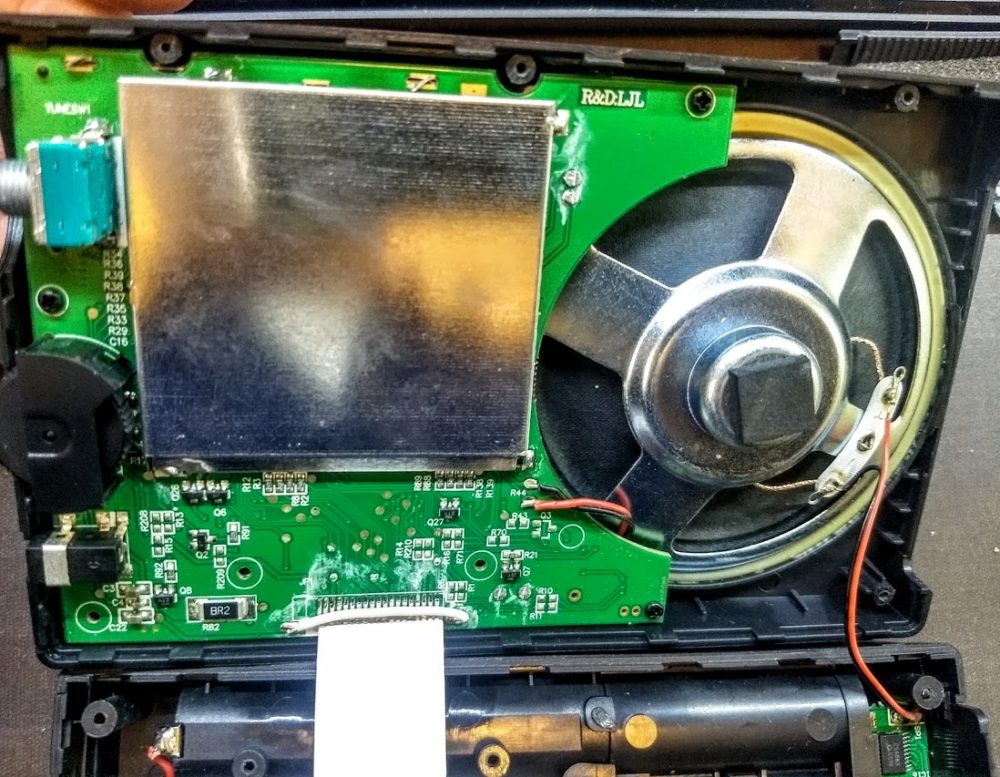
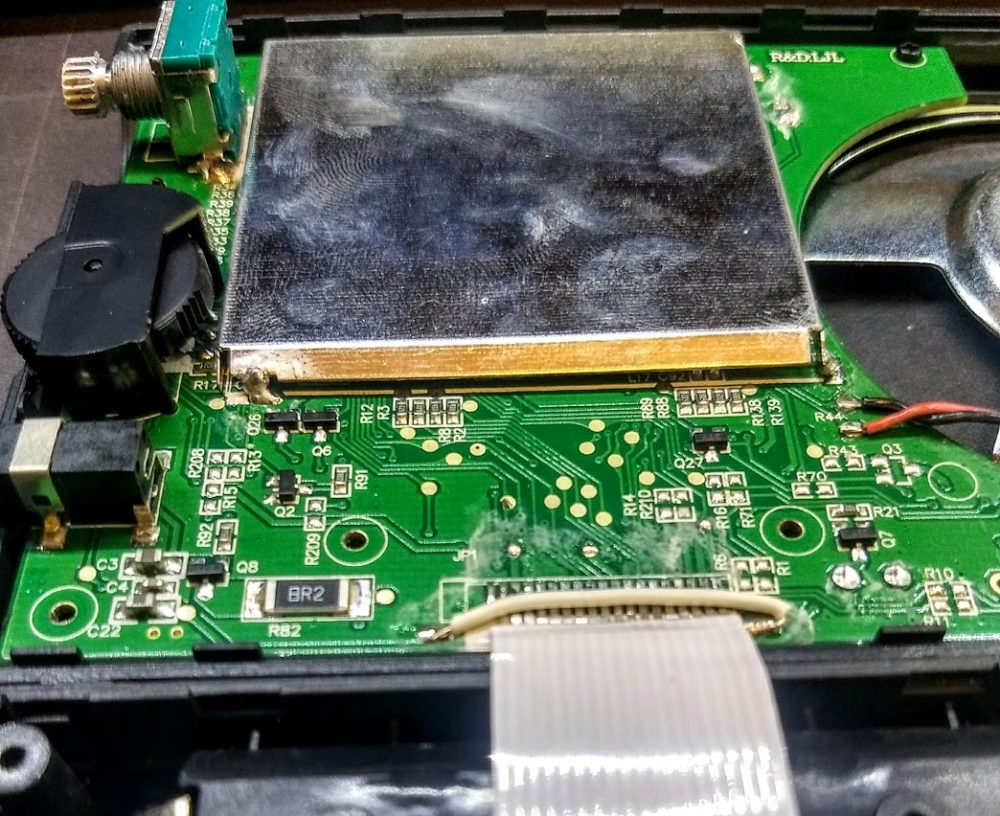
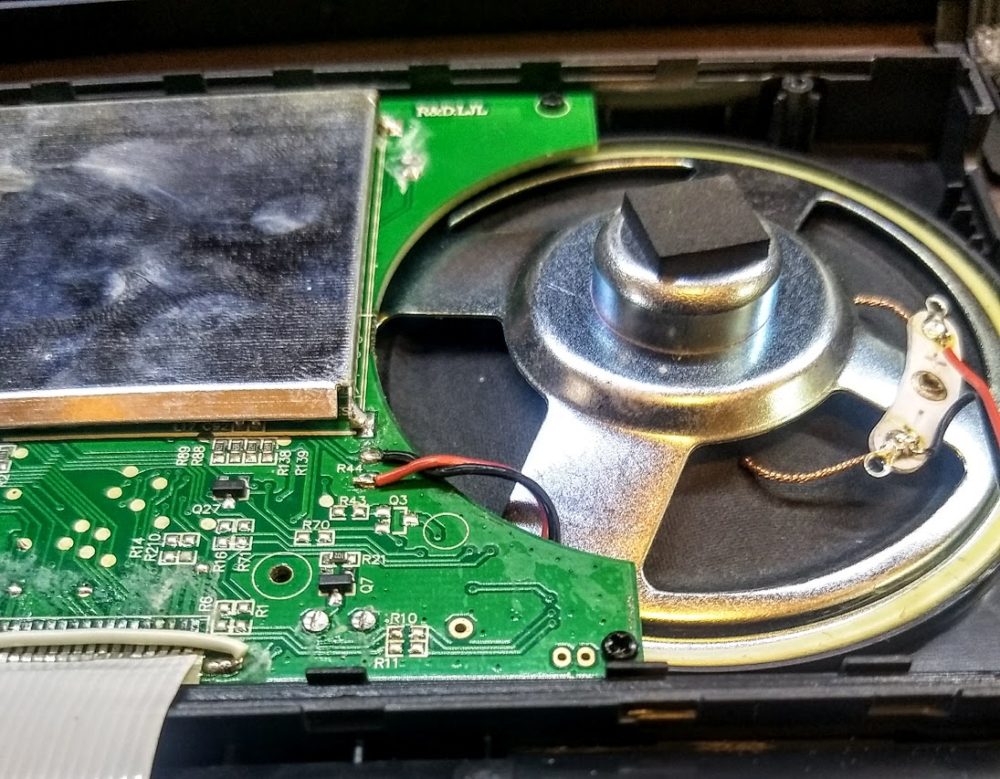
Several readers have requested “under the hood” photos of each radio, to compare internal designs. This morning, I had a few minutes to crack open each radio and take a few shots. Note that I didn’t pull off the circuit boards from the chassis or try to take a look behind shielding. I have yet to do proper performance comparison tests with these radios and didn’t want to accidentally compromise one (especially since the XHDATA D-808 is getting complicated to purchase here in the US).
Inside the XHDATA D-808
Opening the D-808 requires pulling off the encoder knob and removing a total of six small screws. Note that one of the screws is located in the battery compartment. Click photos to enlarge:
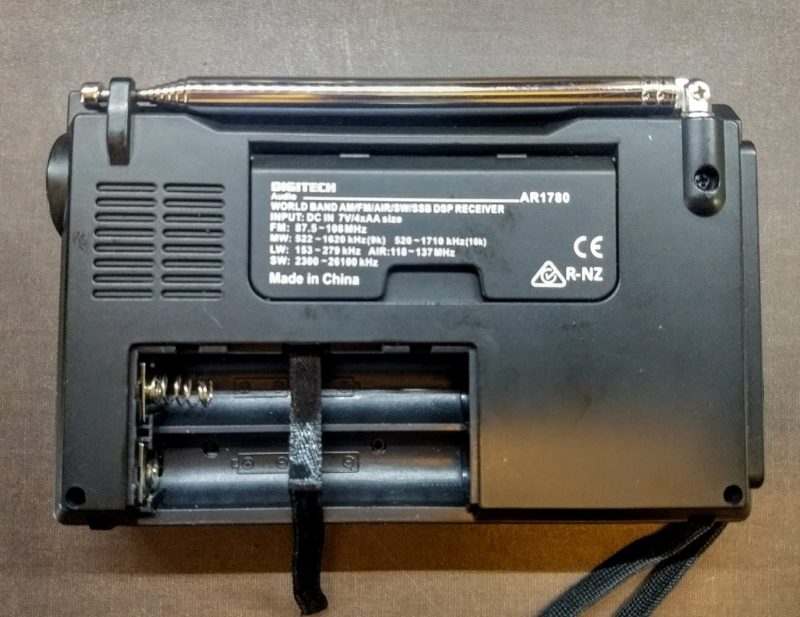
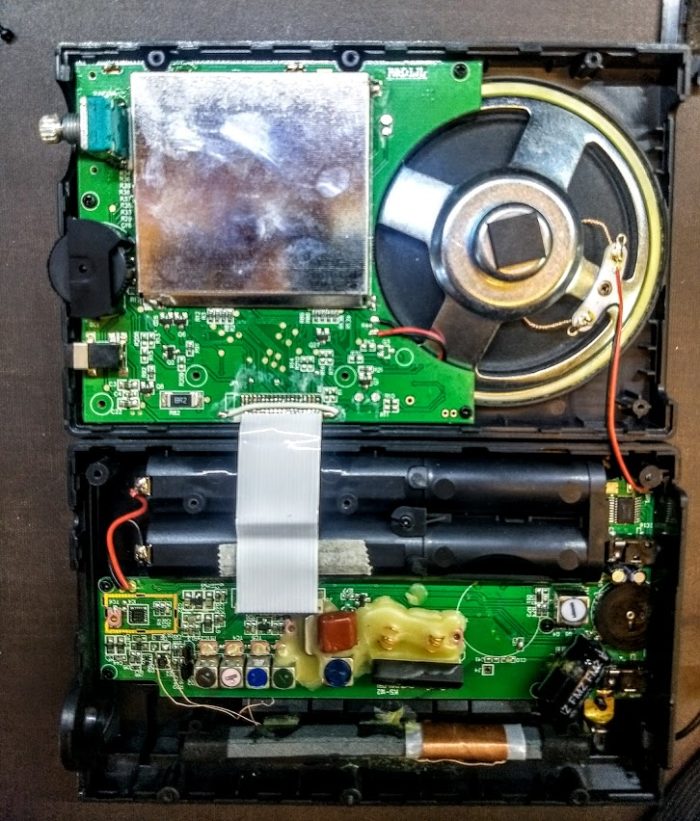
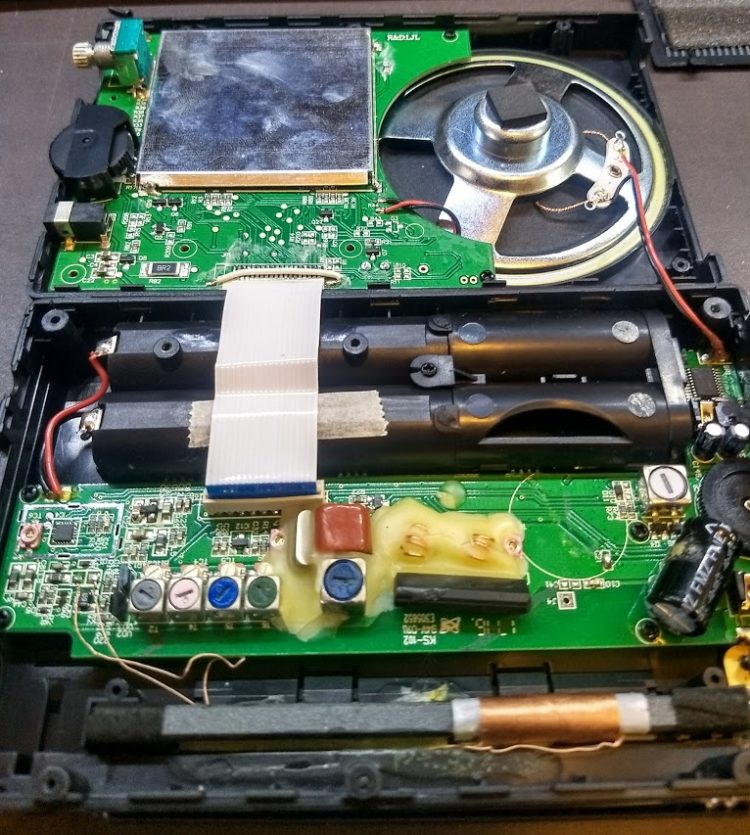
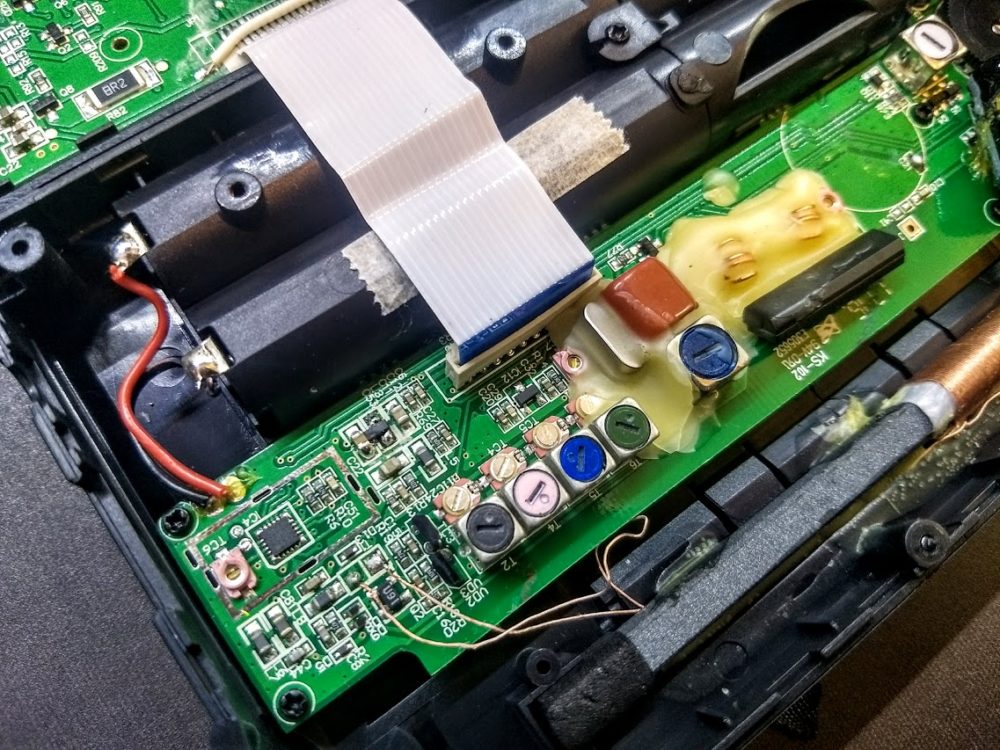
Inside the Digitech AR-1780
Opening the AR-1780 requires pulling off the encoder knob (not an easy task on my unit) and removing a total of seven small screws. Note that two of the screws are located in the battery compartment. Click photos to enlarge:

 In my original article 10 days ago, I set up a SWLing Post reader poll to let you give your opinion on which shortwave recordings within four pairs of audio files provided the most intelligible result. The recordings were intentionally noisy, low-level signals to help us discover–through critical listening to the files–if there is a clear favorite between the AirSpy HF+ or the Elad FDM-S2 receivers. Of course, there were only four pairs of recordings…not a very large sample size.