Shortwave listening and everything radio including reviews, broadcasting, ham radio, field operation, DXing, maker kits, travel, emergency gear, events, and more
Many thanks to SWLing Post contributor, Garcia (PU3HAG), who writes:
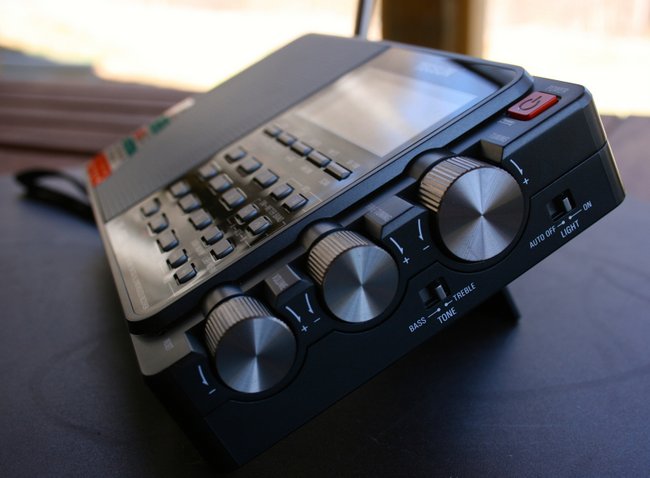
Not sure if you noticed this before, for me it was a glad surprise how well the sleep timer works on Tecsun PL-880.
To use the sleep timer, you press the power button for a about 2s-3s until you see the timer, using the tuning knob you can choose several options between 1 and 120 minutes.
Neat finding #1: the timer settings is kept between power cycles. So, you only have to set it once (in some radios, you need to set the timer for each use).
Neat finding #2: when using the timer, you would expect – as every other radio – the radio to shut off immediately along with ‘pop’ on the headphones. This is not the case with PL-880. When the timer kicks in, the radio gently fades out the audio for 20s-30s and then shuts off. No pops to hear. Amazing.
That is brilliant! I never use the sleep timer on the PL-880, but perhaps I will now. As you state, most sleep timers simply turn off the radio without warning and include an audio pop–not great if you’re wearing headphones and trying to sleep. Very happy to hear the PL-880 slowly fades. Happy dreams!
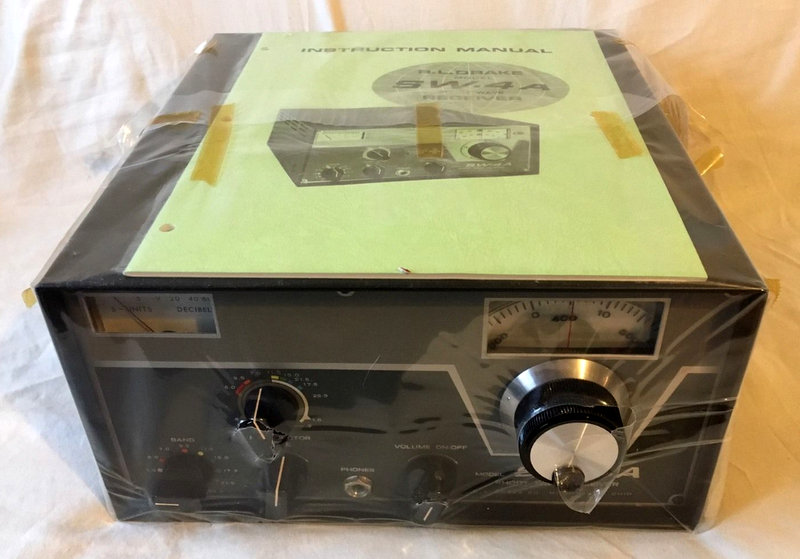
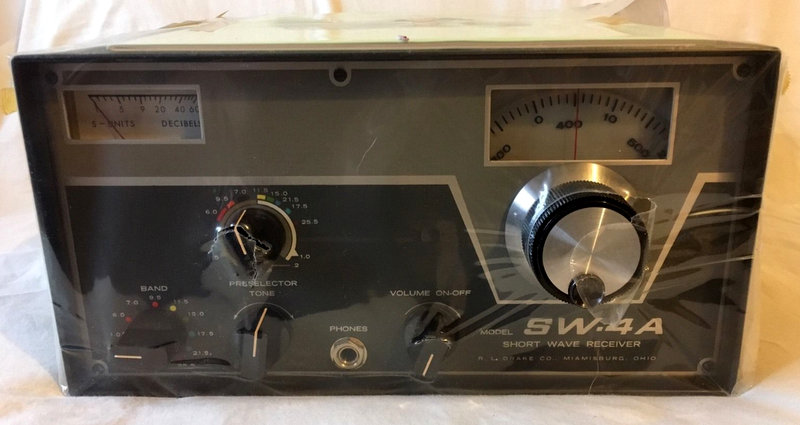
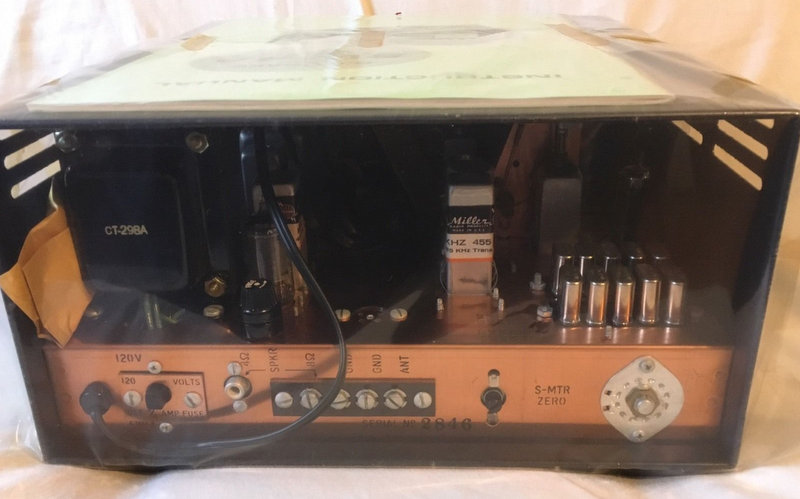
Many thanks to SWLing Post contributors Eric McFadden (WD8RIF) and Randy Moore (KS4L) who share a link to this rare find on eBay: a New Old Stock (NOS) Drake SW4A.
New in original box and packing, R.L. Drake Short Wave Receiver – model SW.4A. With manual. Old stock, never used. Stored in a safe/dry place.
Being sold AS-IS!
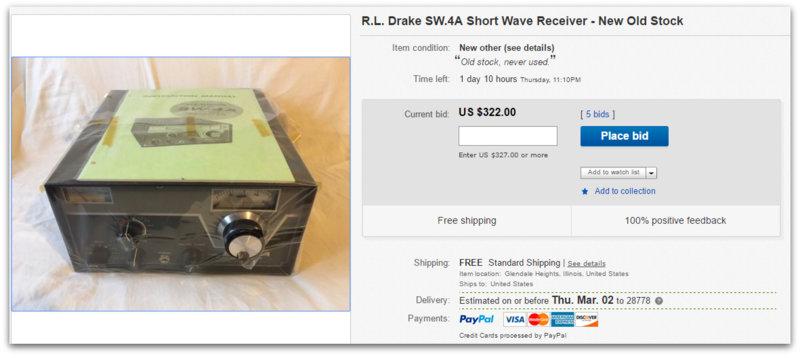
The seller doesn’t have a deep history on eBay, but 100% positive feedback.
I fully expect this price to rise way beyond a figure I could appropriate, but I would certainly love to purchase it. I know this: I wouldn’t leave it in the box for long. After carefully checking it and bringing the voltage up slowly, I would put it on the air. What a beautiful receiver.
At time of posting, the price was $322 US (free shipping) with one day, 10 hours to go. Click here to view.
An opportunity for people who are looking for this very rare receiver.
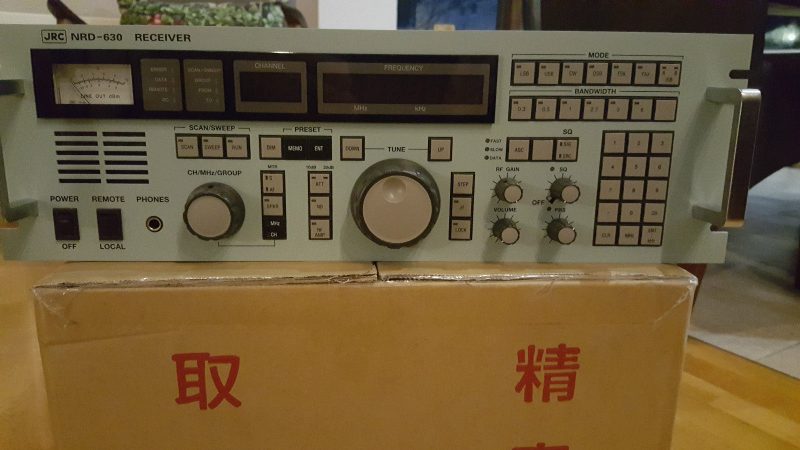
This is just the sort of receiver Dan Robinson could have in his collection! Looks like the NRD-630 might fetch a hefty price at auction, but I wonder if it’ll exceed the original price (which I’m sure was also hefty!)?
Thanks, Hans.
Any Post readers own the JRC NRD-630? Please comment!
RF filters are used (as the name implies) to filter/remove the frequencies you are not interested in and/or let frequencies you want pass . They come in lots of types. For example a band-pass filter lets the signals in a frequency range to pass through it and rejects/attenuates other frequencies. The opposite of band-pass filter is a band-reject or band-stop filter (also called a notch filter) which rejects/attenuates signals in a specific range and lets other frequencies get through the filter. Lots of different filters are used in SDRs and traditional radios. For example AM low-pass filters (only let frequencies lower than 1.7MHZ or so pass) or band-pass filters for various ham radio bands.
One of the popular use cases for a notch filter is in the FM broadcast range (88-108 MHZ in most parts of the world)
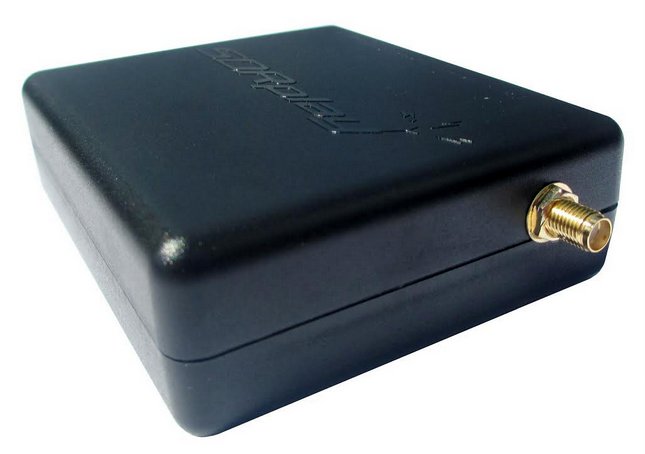
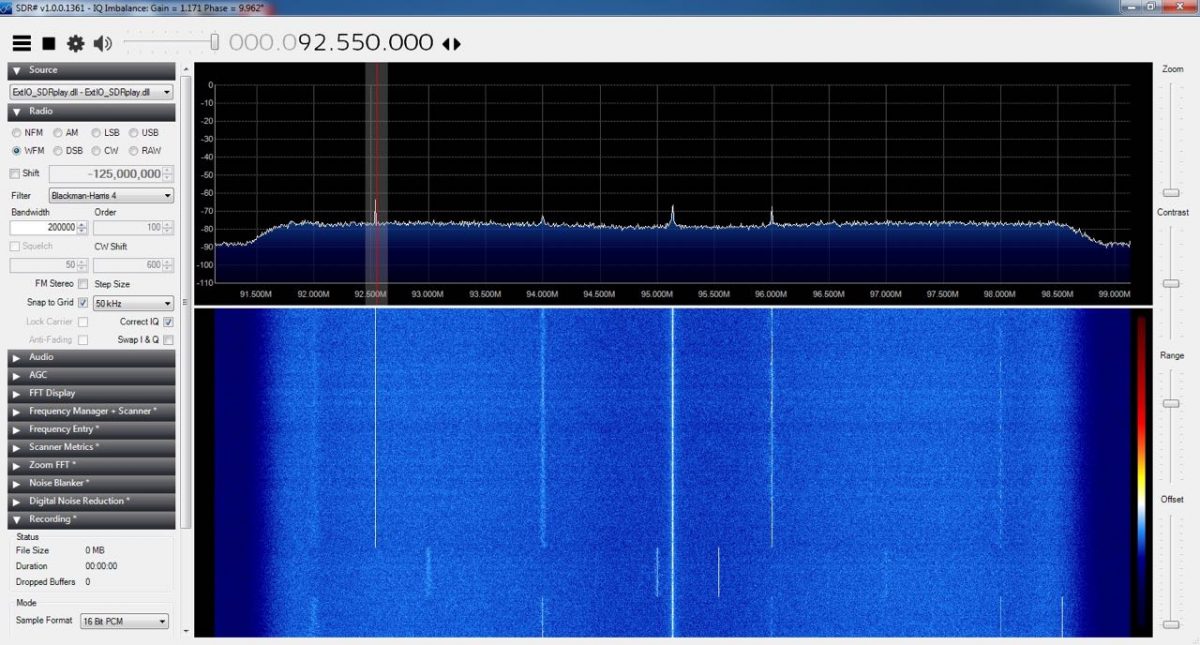
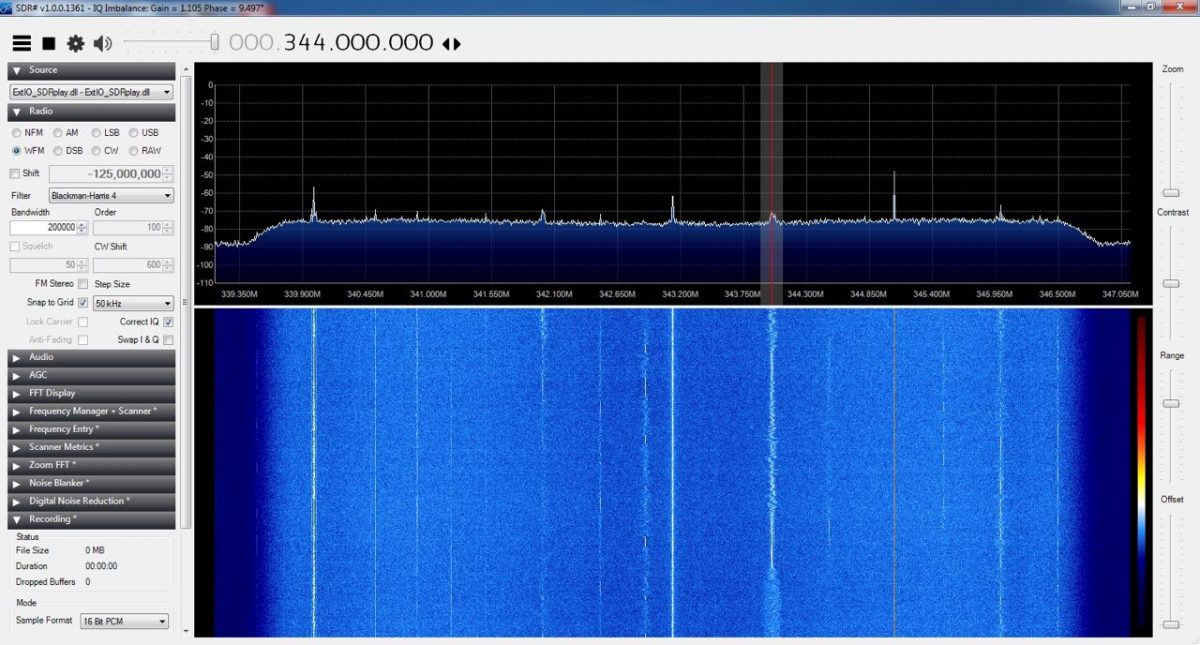
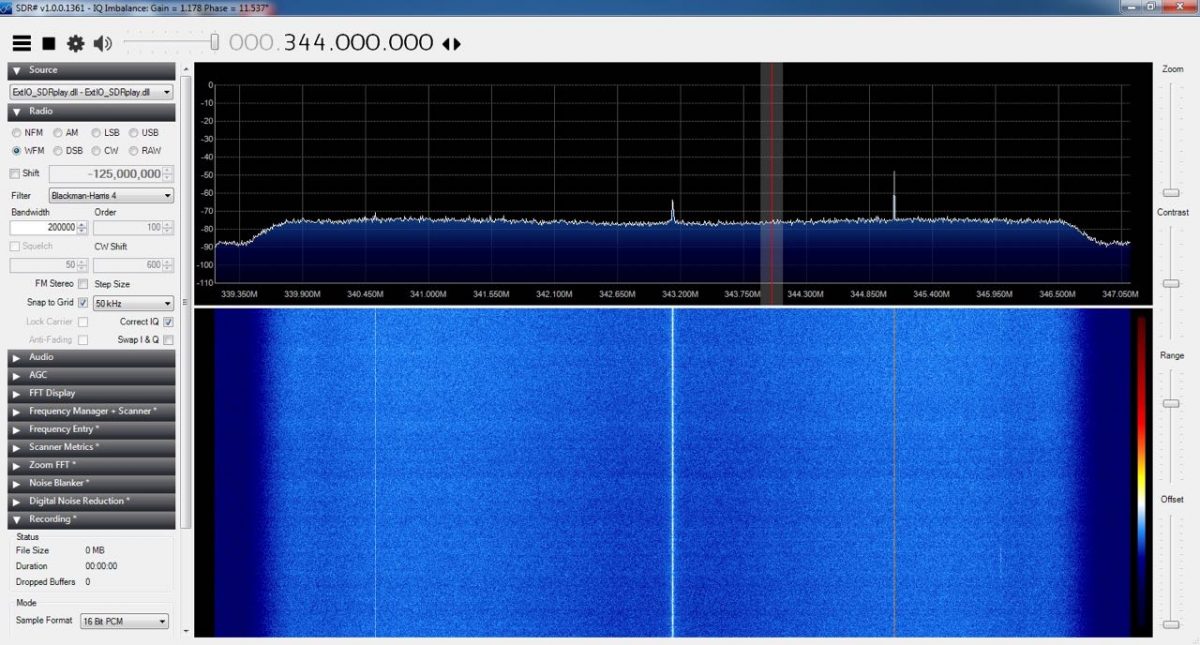
When you live near a powerful transmitter, it can affect the operation of your receiver in other near frequencies (or overload your receiver’s front-end), but I didn’t want the notch filter for this reason. I’ve got a SDRPlay RSP1 (among many other SDRs) which due to its architecture, has some images of FM band in the UHF range (for example in 330-350 MHZ). In fact they’re the images of the product of LO harmonics and FM frequencies.
You can temporarily move/shift the frequency by changing the LO frequency which does not remove them, but moves them around.
Another method to remove these images is using a band-stop filter.
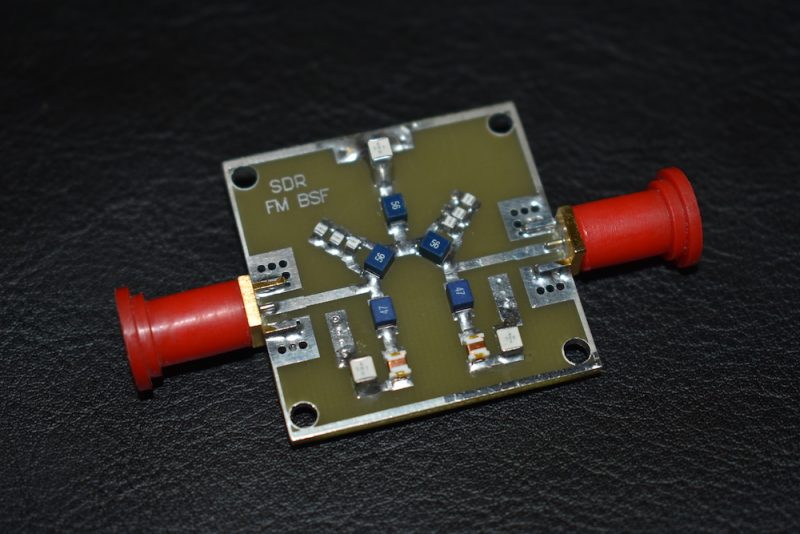
This is the filter I’m using (Thanks to my friend Amirhosein Hasanpur who designed and built it):
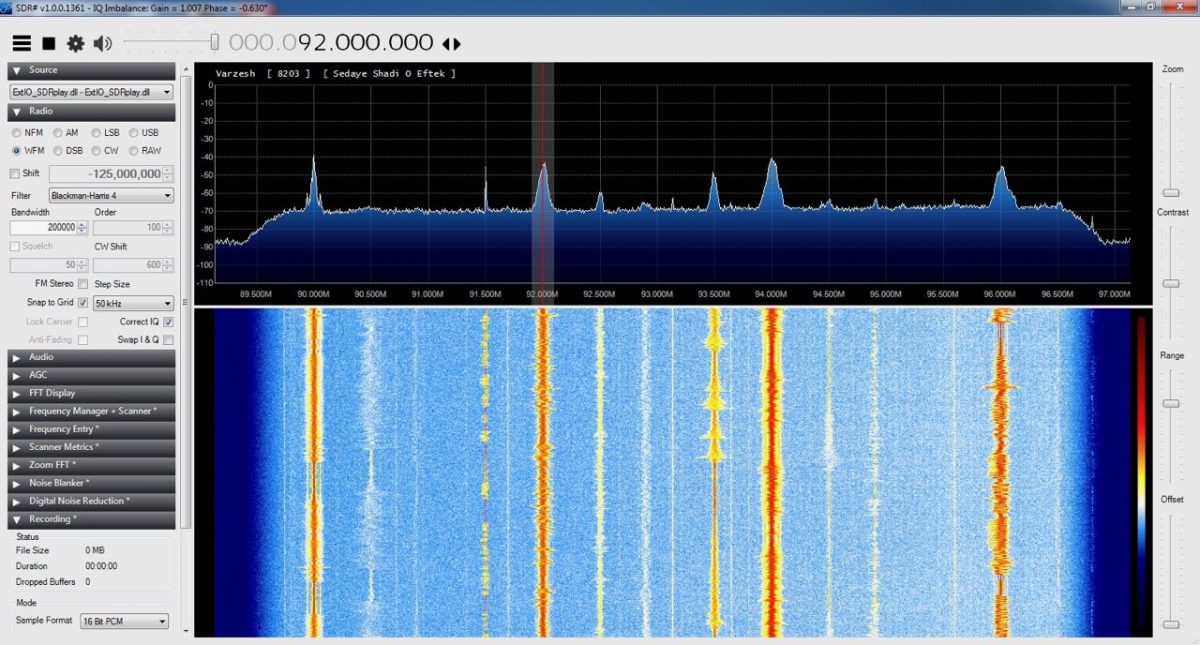
Here you can see the effect of using a FM notch filter on my SDRPlay RSP1:
FM, without filter:
FM, with filter:
UHF (images) without filter:
UHF (images) with filter:
Here’s a link to a Zip file containing the PCB (in Protel), schematics (pdf) and S Parameters (pdf):
Note: Like any other SDR test/review, the results depend on lots of different parameters (various gain values, LNA, antenna, software, etc). These pictures are captured with the same conditions just to show the effectiveness of this filter and your milage will definitely vary, but expect a similar outcome. If you live close to a powerful transmitter or use LNAs, you will receive some signals, even when using the filter.
Final note: this issue is solved in the newer version of SDRPlay (RSP2) : it has software-selectable notch filters for FM and MW broadcast frequencies.
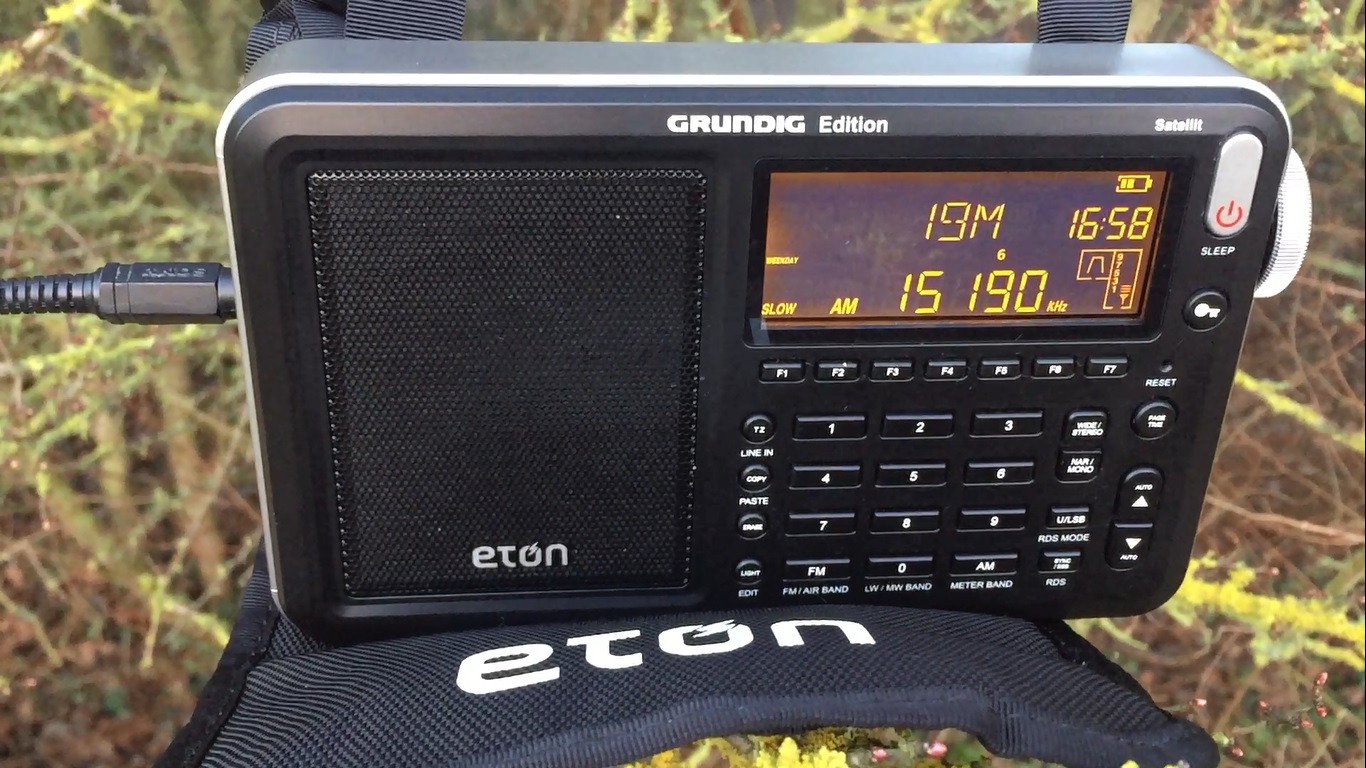
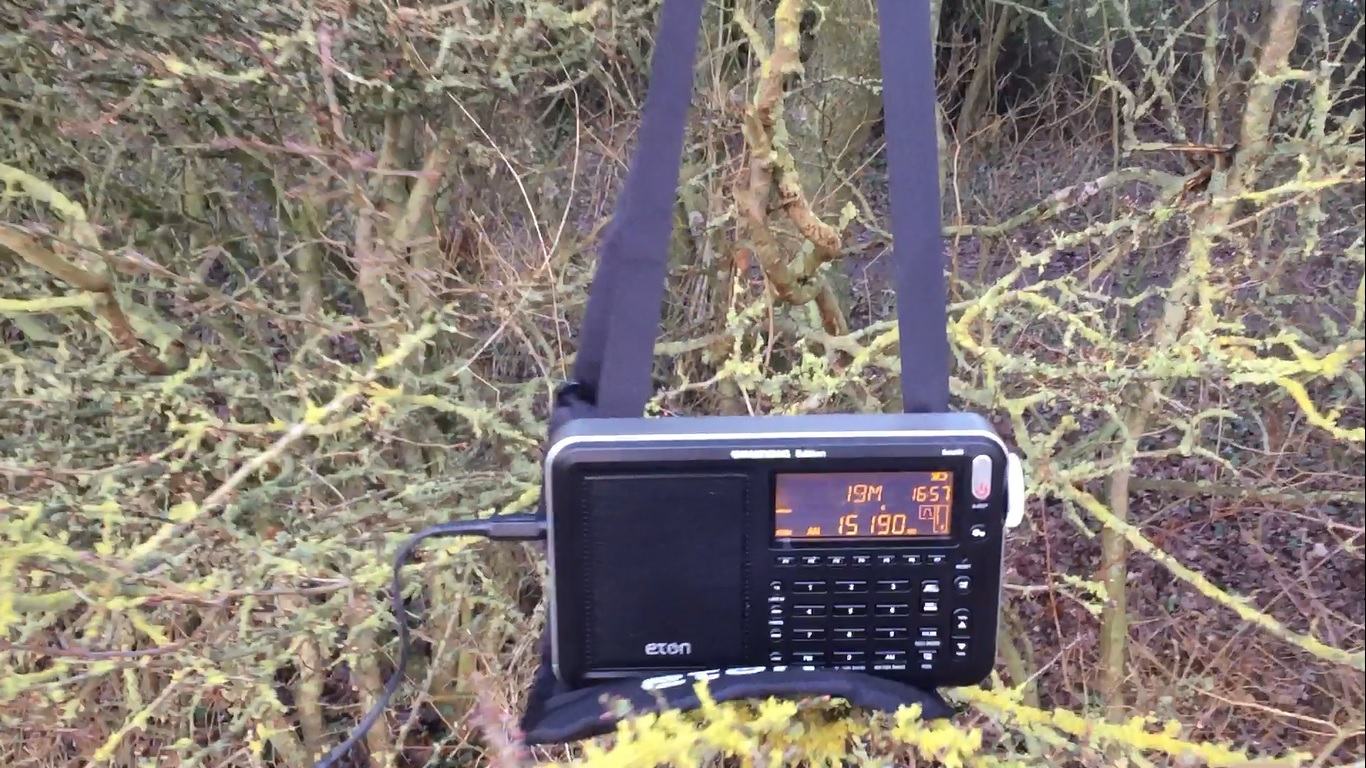
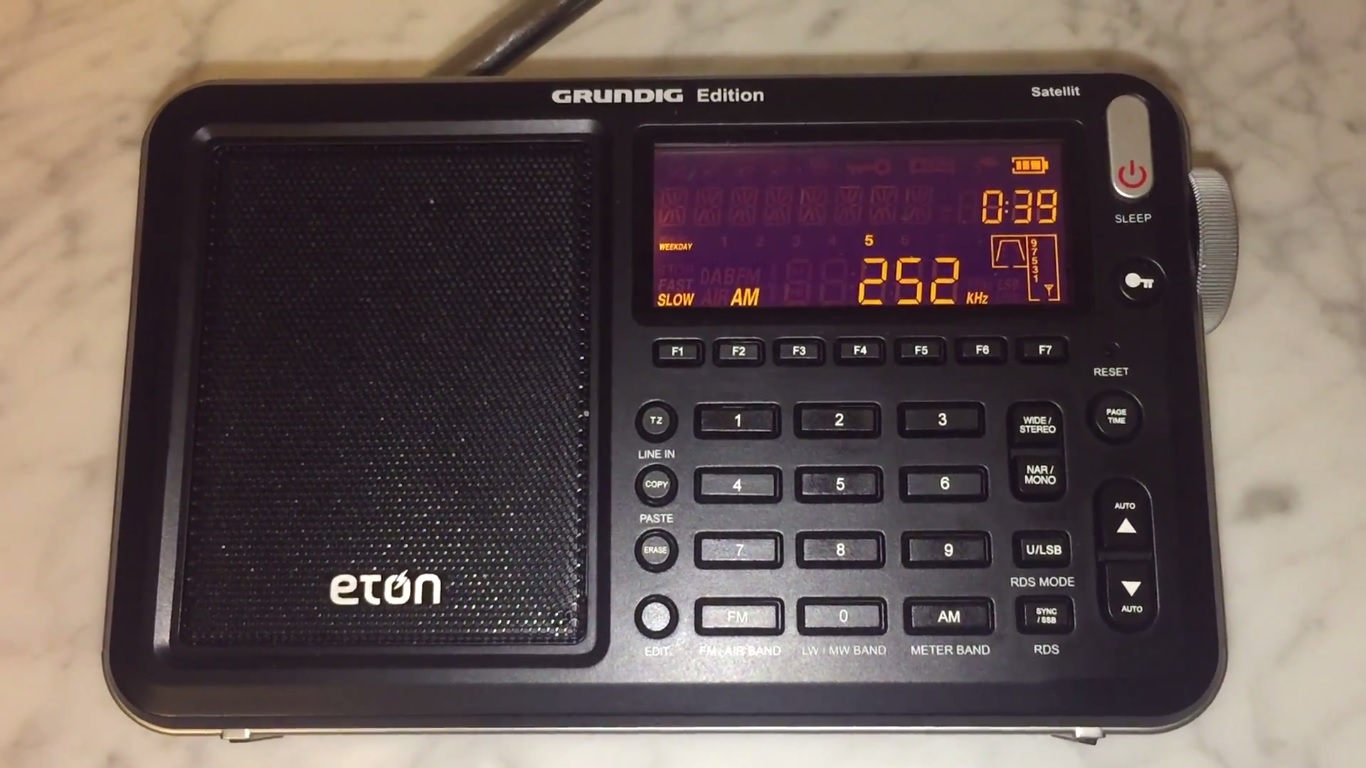
Hi there, it’s been about three weeks now since I started DXing with the Eton Satellit and I thought it time to post an updated review, based on my experiences thus far, along with some recent catches. Noting that other radio hobbyists with a strong presence online have been posting neutral to negative reviews on this receiver, I would just like to point out, perhaps rather obviously, that no receiver is perfect and just as importantly, the criteria on which a portable radio is judged will be different from user to user, based on their listening habits. I am almost exclusively engaged in DXing with the Satellit, whilst others will be listening on the broadcast bands on a more casual basis. I know that for some, the ultimate quality and finish of a product is as important as performance and they would make their physical assessment in a very detailed manner. I on the other hand focus mainly on performance and as regards quality, I’m reasonably satisfied if it doesn’t fall apart in my hands, straight out of the box! That actually happened – and it’s sort of where I draw the line 🙂 I guess the point is, I try to respect everyone’s opinion, irrespective as to whether we are in agreement or not and I believe that’s healthy for the future of our hobby.
Ok, back to the Satellit. Firstly, I am able to confirm that in terms of ultimate sensitivity, this portable is very close to my Sony ICF-2001D – one of the most highly regarded portables ever made. The delta in performance between the two is most perceptible on the weakest of fading signals that intermittently deliver audio with the Sony, but can’t be heard on the Eton. On stronger signals, my experience is that either radio might provide the strongest and or highest fidelity audio. I have a series of comparison videos already in the can, which will be uploaded to the Oxford Shortwave Log YouTube channel soon.
In terms of selectivity, the digital bandwidth filters work very well, although I note that even on the narrowest setting (2 kHz) when operating in a crowded band, adjacent channel QRM can occasionally still sound quite pronounced, as compared to my Sony ICF-SW55 or ICF-2001D receivers. As regards synchronous detection, this is more of a hit-and-miss affair. Subscribers to my channel might notice that in nearly all of my reception videos featuring the Eton Satellit, I have not engaged the SYNC. That isn’t to say it doesn’t work, however, even with selectable sidebands, the SYNC mode often appears to increase the overall signal amplitude and noise floor, without positively influencing the SNR. However, it’s interesting to note that signals on the Satellit in AM mode often almost match the ICF-2001D in SYNC mode, in terms of overall SNR. More on that to come.
There are a number of ways to tune the radio; manually using the tuning knob (and this has a decent feel/ resistance to it), direct frequency input which requires pressing the ‘AM’ button to engage, automatic search and access to 700 memory locations, via 100 screen pages. In the real world – and by that I mean ‘my world’ which is most often in the middle of a field, or the woods, all of the above tuning options are as ergonomic as most of my other portables. With regard to SSB reception, there are fast, slow and fine tuning options with a maximum resolution of 10 Hz and this works very well to reproduce natural sounding speech in LSB and USB modes. The tuning speed/fine options are engaged by pressing the tuning knob inwards towards the set – quite a neat idea. With SSB and SYNC there’s always a little pause whilst the electronics engage – a set of chevrons appear on the screen to indicate the receiver is actually doing something. It’s similar to the Sony ICF-SW77 where you effectively toggle between SYNC USB and LSB and wait for lock. Not an issue for me, but it might annoy some, particularly those who have experience with the ICF-2001D, where SYNC engagement is instantaneous, if the signal is of sufficient strength. A small point, but worth making.
So, overall, a brilliant little radio that in my opinion is completely worthy of the ‘Satellit’ branding, at least in terms of ultimate performance. As I mentioned previously, one of the most experienced DXers I know, with more than 3 decades of listening to the HF bands and an owner of a number of vintage Satellit receivers noted that the Eton Satellit outperformed them – and by some margin. To further demonstrate this, I have included links to recent reception videos. In particular, I copied three of the regional AIR stations with signal strength and clarity that had never previously been obtained. I also copied HM01, the Cuban Numbers Station for the first time on the 11 metre broadcast band, Sudan and Guinea on the 31 metre broadcast band (a whopping signal from Guinea) and Polski Radio 1 on longwave. I hope you find them interesting. Since featuring the Satellit on my channel, one of two of my subscribers have purchased this radio and thus far have been very happy indeed with it’s performance.
Ultimately, I have to strongly recommend this portable to anyone interested in DXing and in particular those that embark on DXpeditions. I just hope that should you decide to buy one, you receive an example that performs was well as mine. Embedded reception videos and text links follow below, In the mean time and until my next post, I wish you all great DX!
Clint Gouveia is the author of this post and a regular contributor to the SWLing Post. Clint actively publishes videos of his shortwave radio excursions on his YouTube channel: Oxford Shortwave Log. Clint is based in Oxfordshire, England.
Many thanks to SWLing Post contributor, Ashok Shankar Das, who shares the following guest post originally published on his blog SWLDAS:
International Radio Fair and World Radio Day
by Ashok Shankar Das
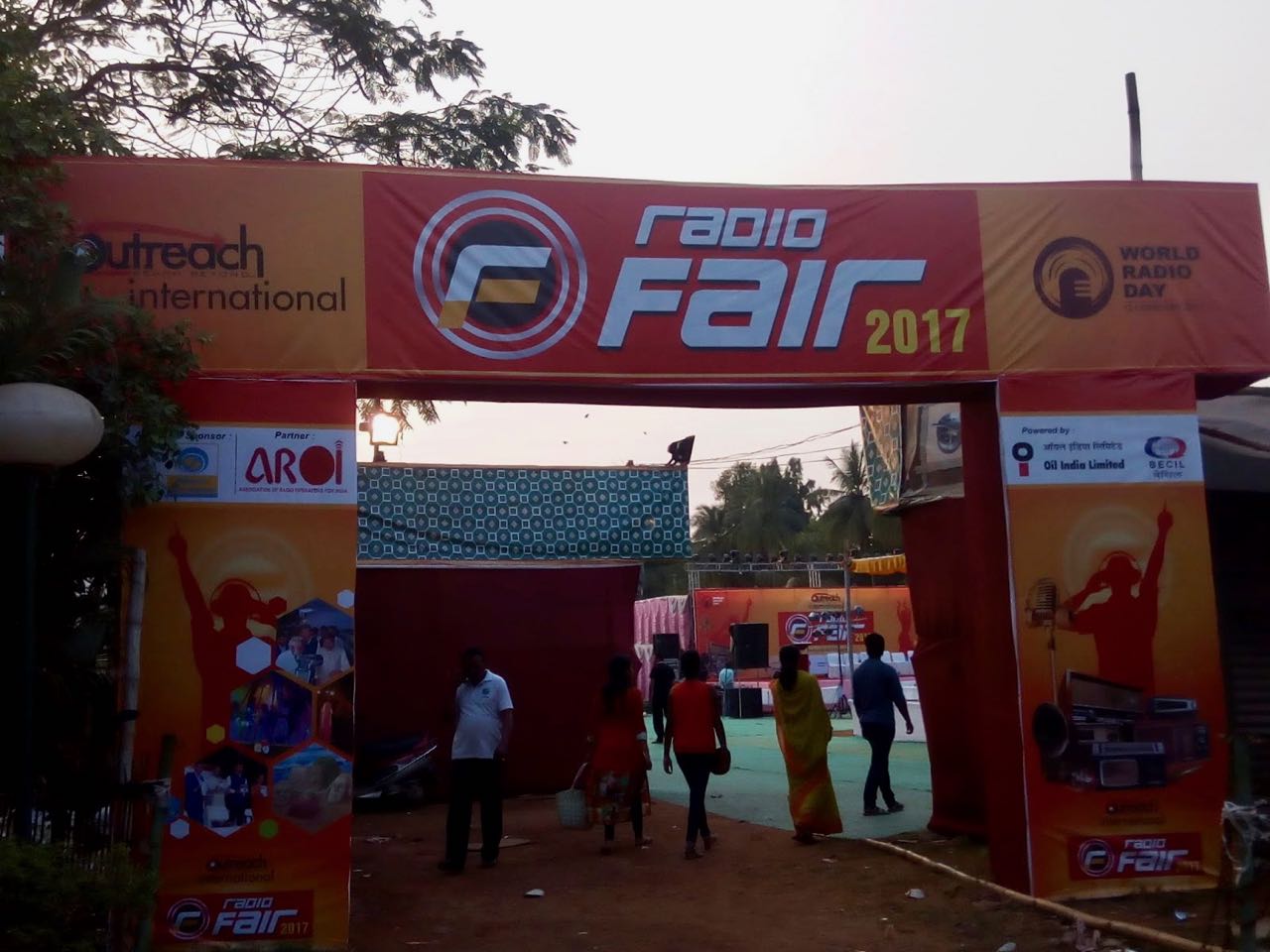
For last few years Outreach International used to organize a radio fair. This year too they organized “International Radio Fair 2017” at Bhubaneswar, Odisha. Besides other participants, Amateur Radio Society of Odisha (ARSO) participated in the fair too.
Main Attractions
The main attractions of this fair was HAM radio, vintage radio collection and radio related stamp collection.
International Radio Fair 2017 Bhubaneswar, Odisha.
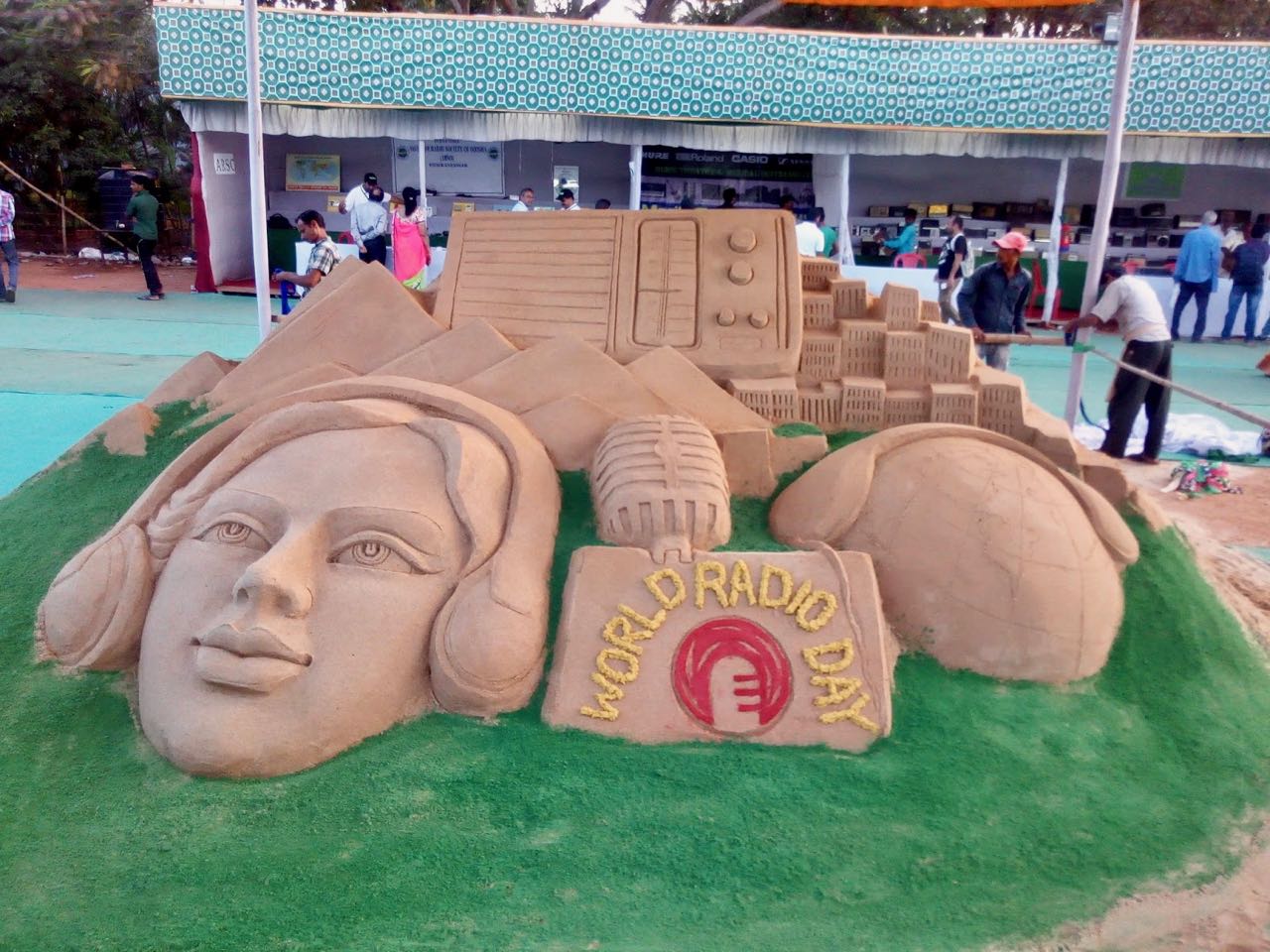
The Sand Art for World Radio Day in the venue
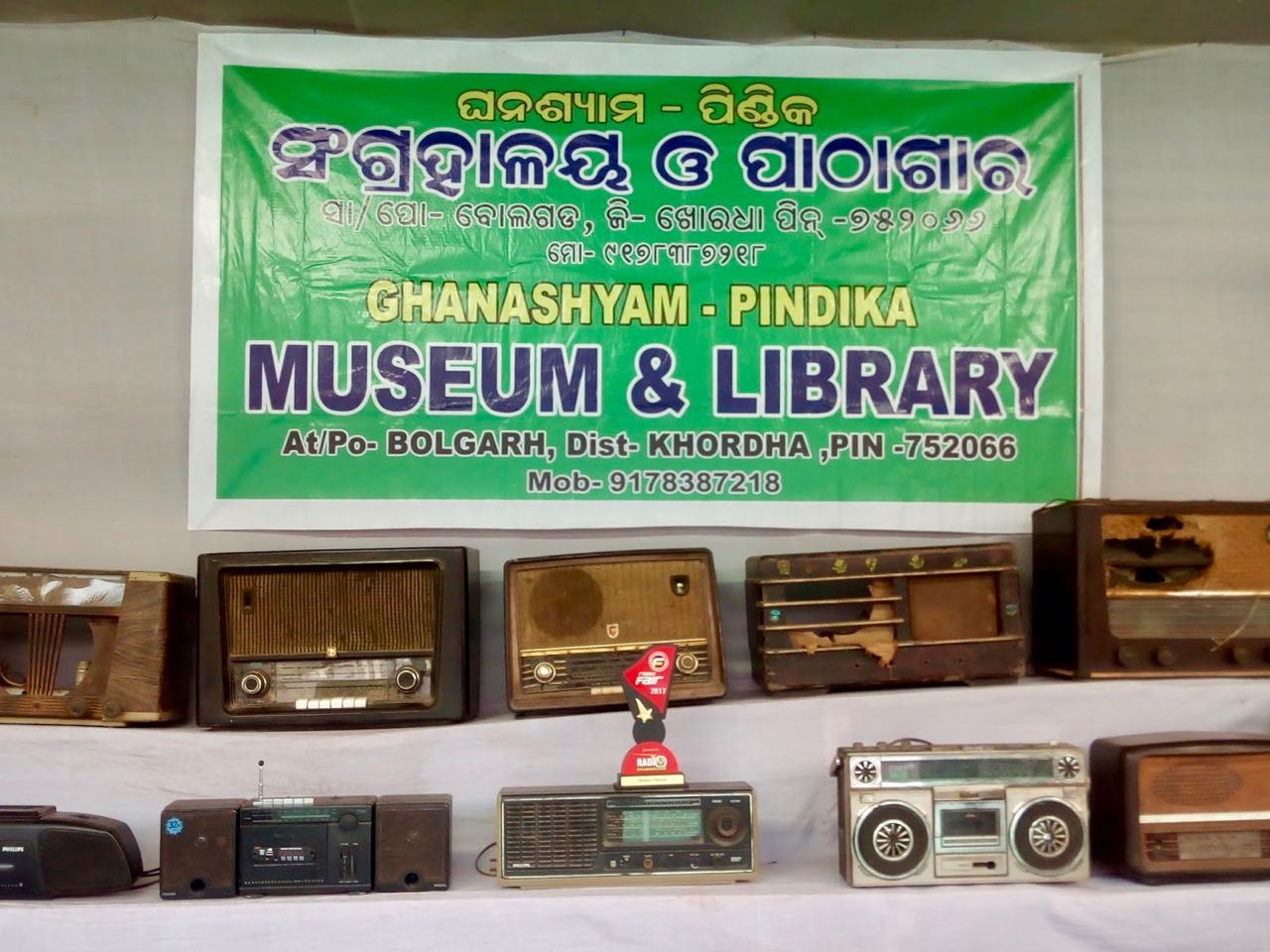
Vintage Radio collection
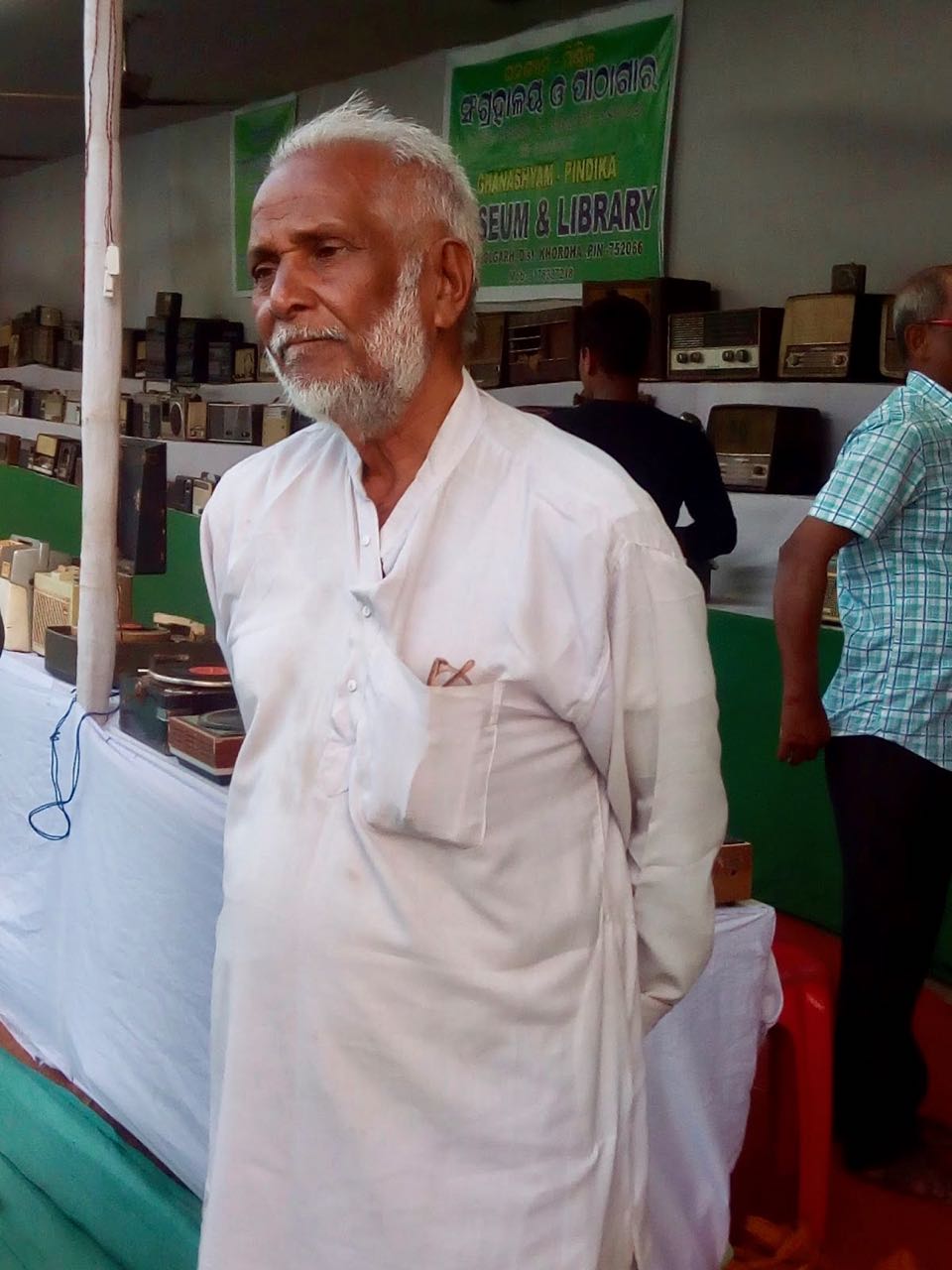
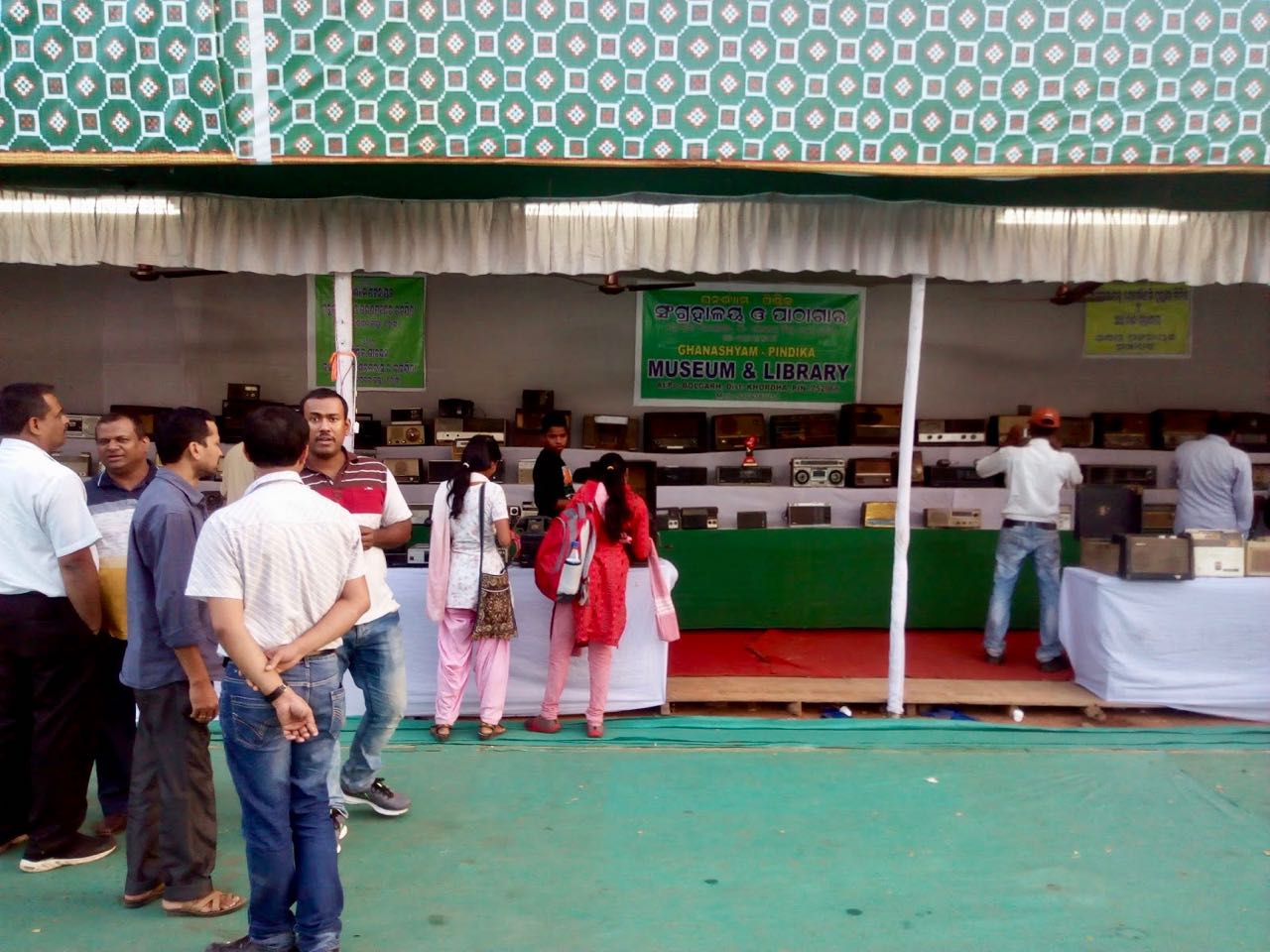
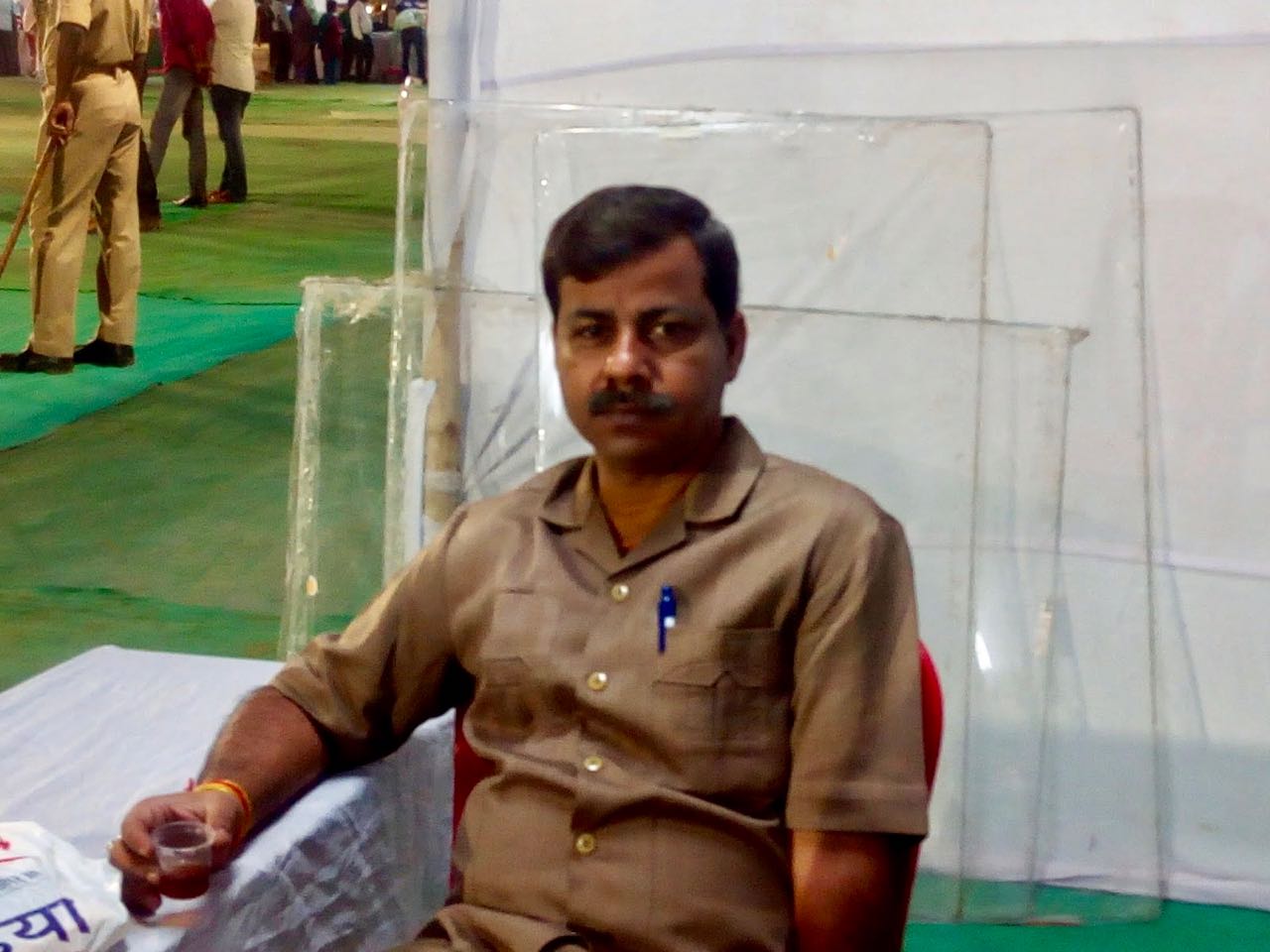
Mr. Ghanasyam collected several radios Most of them are vintage tube radios. Though they are non functional but for a museum it is very nice to see radios from my Grand fathers time. Around 500 to 600 radios were on display.
Mr. Ghanashyam in his 80s now a radio lover, I would say Radio Crazy man.
Vintage Radio Stall from a distance.
Few Radios with close-ups.
His collection includes several radios from Philips, Murphy, Bush and HMV to name a few…
Radio Philatelist
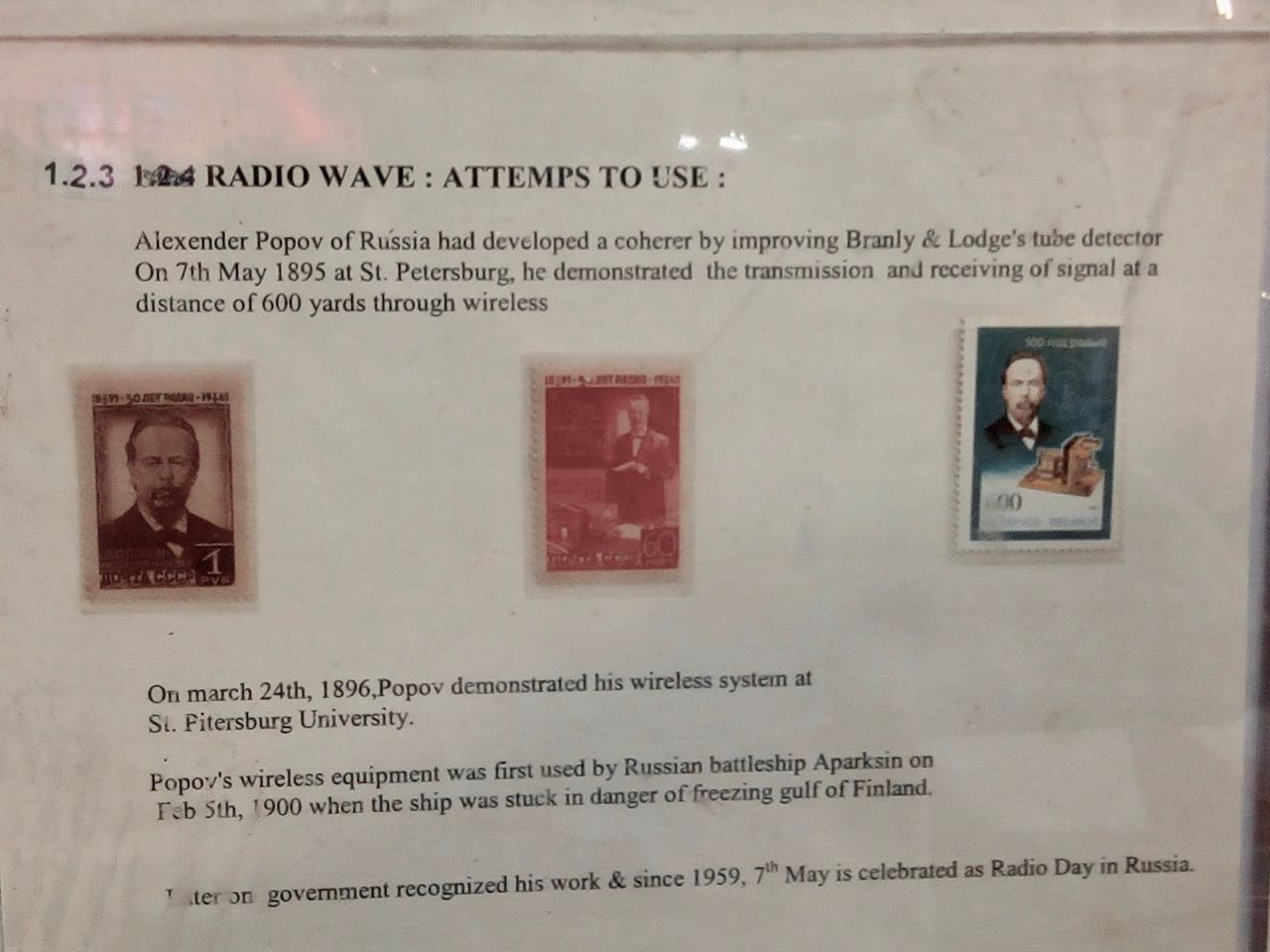
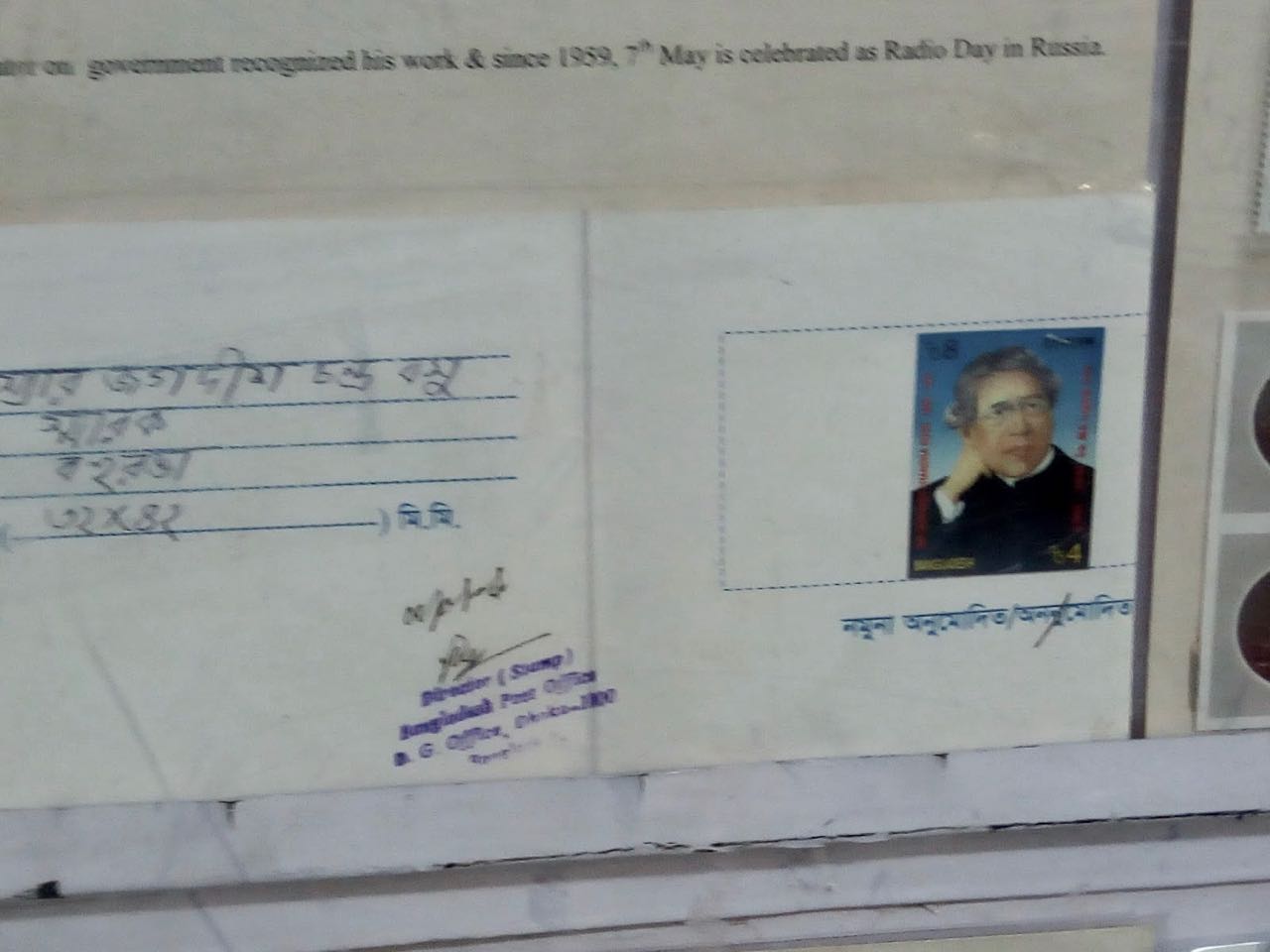
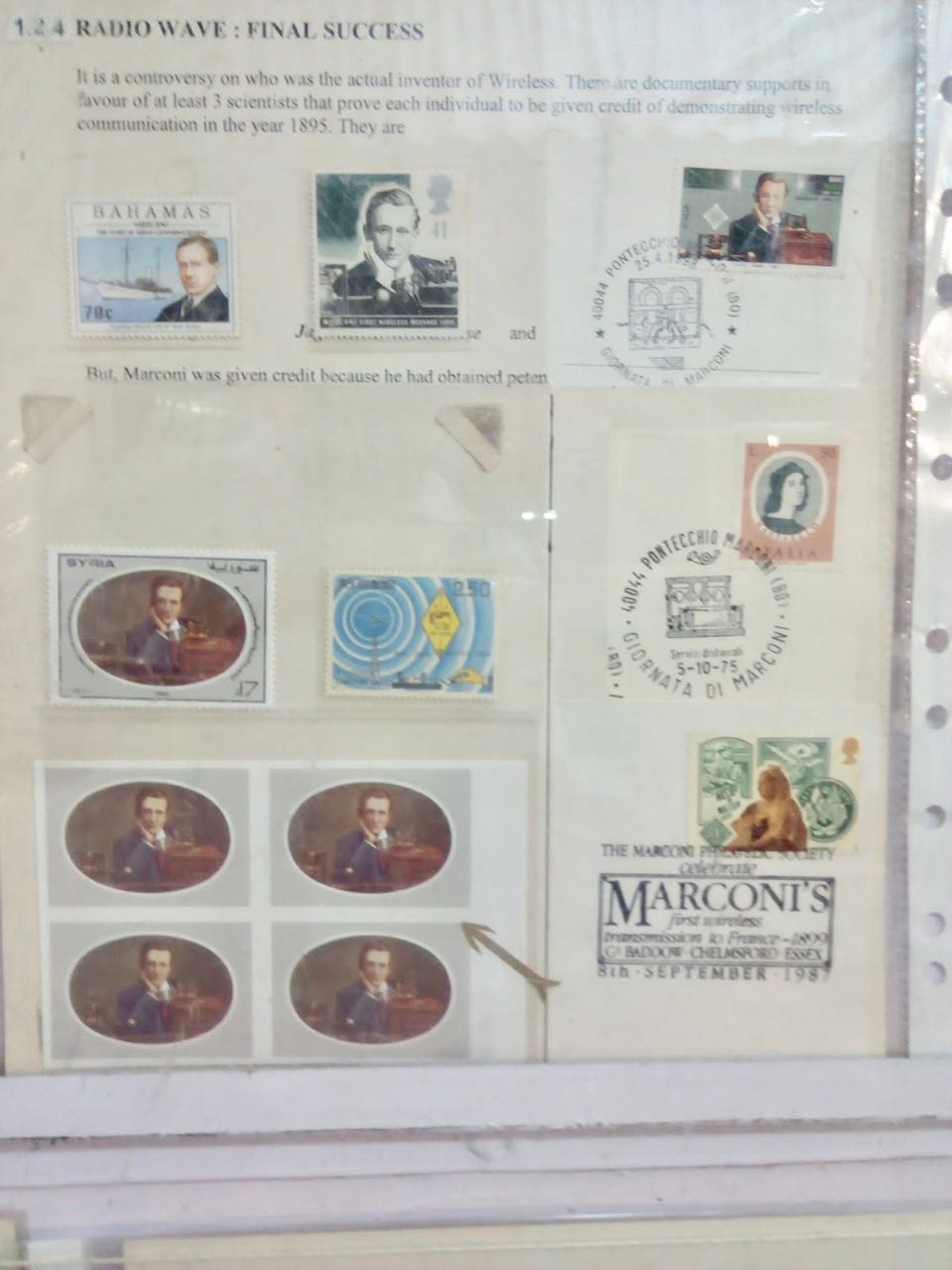
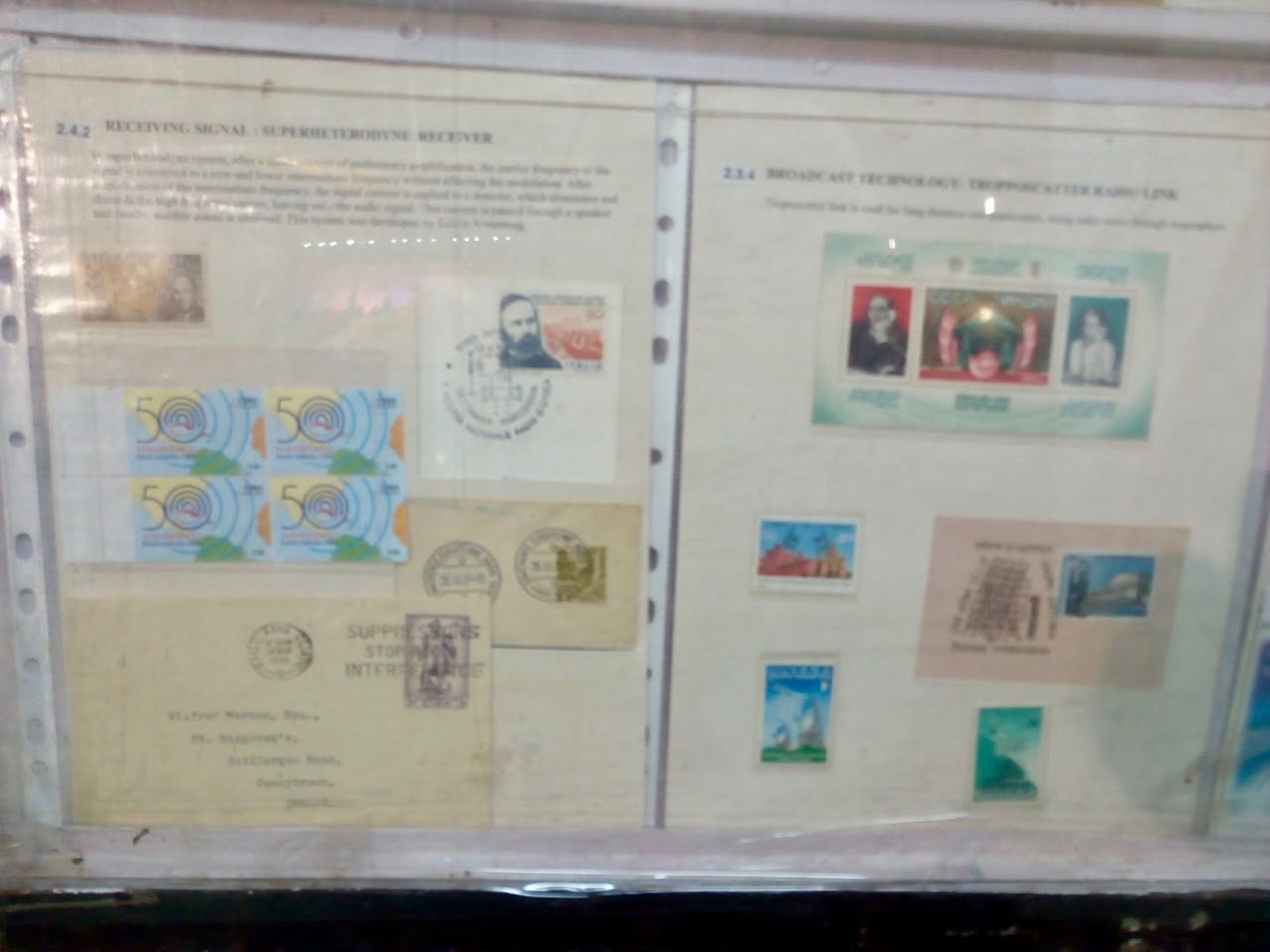
The other attraction is Philatelist Mr. Ashok Kumar Tiwari. his collection includes Radio inventors/researcher, development of radio, broadcast history, Emergency Communication and HAM radio. A very nice and exhaustive collection.
Alexander Popov
J.C Bose
G.Marconi
HAM radio related.
I could not put all the pictures of his collections, its huge…
Last but not the end…
The HAM radio stalls
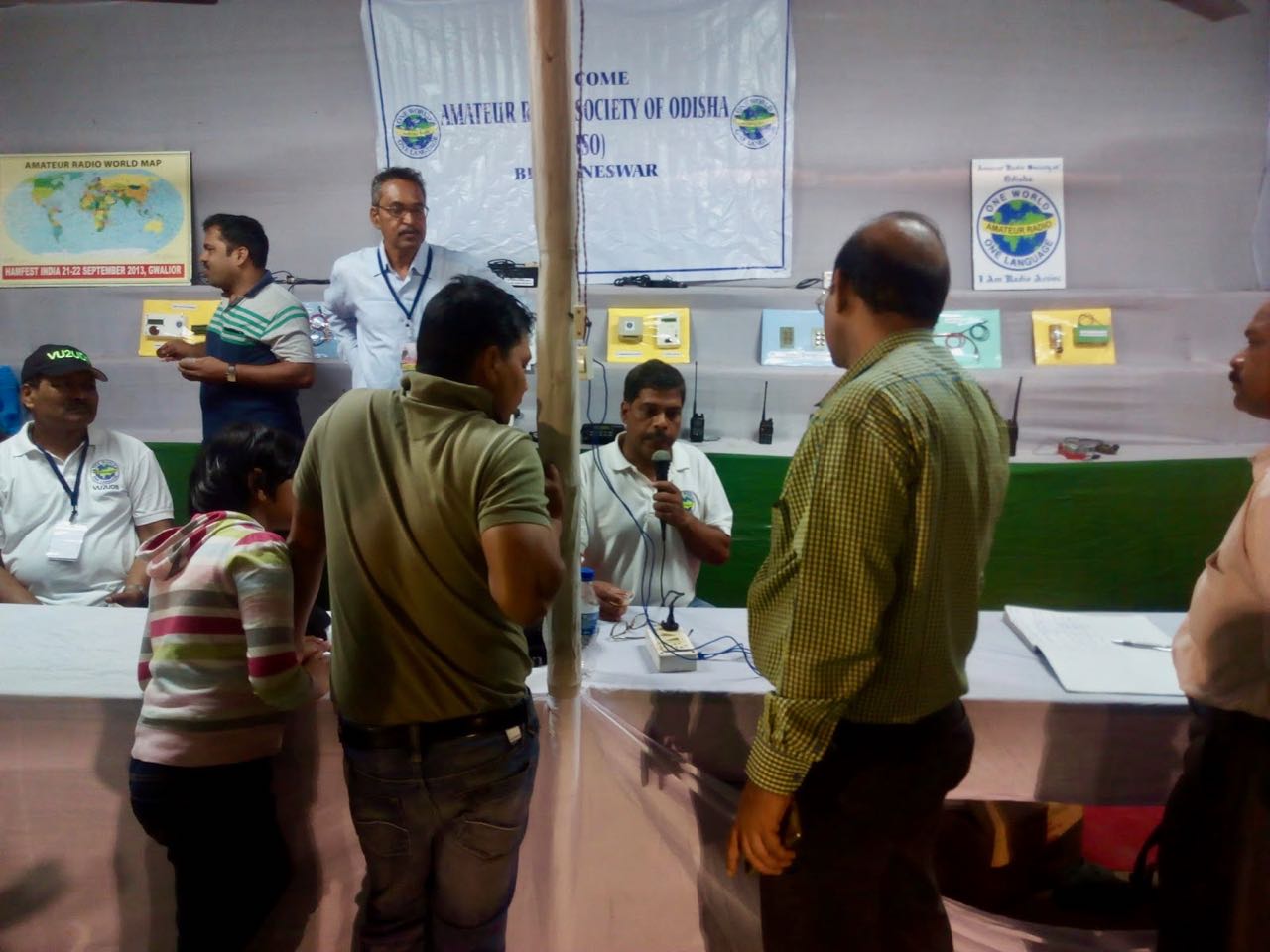
In this category ARSO Bhubaneswar and ARCCS from Kolkata put up their stalls. Evan they have made a special call-sign for this Event(AT0IRF). In ARCCS stall, they have displayed and try to promote ON-AIR and how to reach out more people. On the other hand ARSO team focused on HAM radio Homebrew and Radio concepts.
VU2PQS(sitting) VU3XUS and VU2AOR
VU2PQS describing About HAM radio
VU2ABG from Surat came to meet ARSO team.
Concluding remarks
Though it was a very nice initiative, participation should have been more. Though it is organized jointly by UNESCO no International participation seen. hope coming year these shortcomings are fulfilled.
Ashok, thanks so much for sharing your photos and comments from the International Radio Fair and World Radio Day in Bhubaneswar.

 Many thanks to SWLing Post contributor, Garcia (PU3HAG), who writes: