Shortwave listening and everything radio including reviews, broadcasting, ham radio, field operation, DXing, maker kits, travel, emergency gear, events, and more
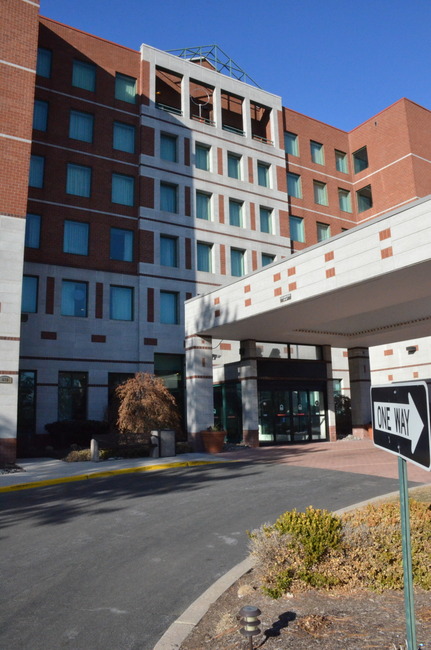
The DoubleTree hotel where the Winter SWL Fest is held. (Note the mag loop antenna on the top floor!)
This year, at the Winter SWL Fest, representatives from the Wave Farm recorded a number of Fest forums and events. Many thanks to David Goren who recently shared a link to these recordings on the Wave Farm’s website. For convenience, I’ve pasted a list of the recordings below which link directly to the Wavefarm archive:
Many thanks to SWLing Post contributor, Gary DeBock, who shares the following notes and recordings from an Ultralight DXpedition in Kona, Hawaii:
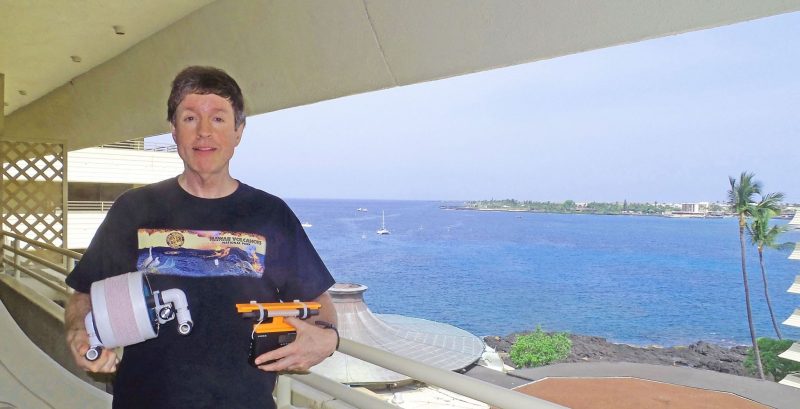
The Kona, Hawaii Ultralight Radio DXpedition was conducted from a sixth floor oceanfront motel room in the Royal Kona Resort Motel from April 9-12 (during an anniversary trip with my wife). A newly designed “airport friendly” 5 inch FSL antenna (designed to fit within hand-carry luggage, inside a plastic tote) and a 7.5 inch loopstick C.Crane Skywave Ultralight were used to track down and record Asian and South Pacific Medium Wave DX from such rare stations as 540-2AP (Apia, Samoa), 621-Tuvalu (Funafuti, Tuvalu) and 1440-Kiribati (Bairiki, Kiribati). Here are three extremely strong recording links for these exotic stations, including the daily sign off routines for 621-Tuvalu and 1440-Kiribati:
540 2AP Apia, Samoa Extremely strong Christian worship music (Samoan style) at 0931 UTC on April 9 (S9+ level)
621 Tuvalu Funafuti, Tuvalu Over 8 minutes of traditional island music at an S9 level, including the sign off routine (with national anthem) at 1000 UTC
1440 Kiribati Bairiki, Kiribati Over 7 minutes of traditional island music, station ID’s in English and the native language, and the national anthem (followed by a blistering 1000 Hz tone) at the 0936 UTC sign off– all at a strong level
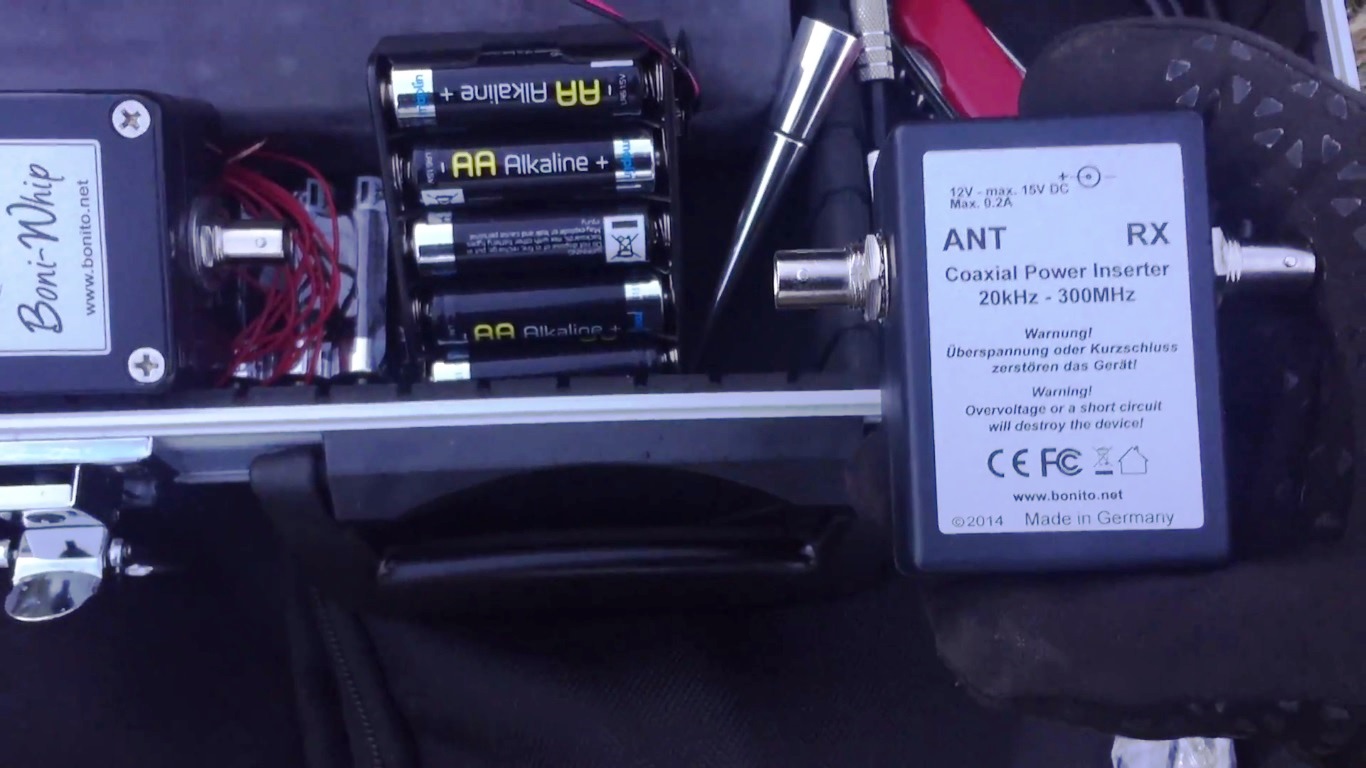
Hi there, if you’re a subscriber to the Oxford Shortwave Log YouTube channel, you will be aware that I have been using a Wellbrook ALA1530 H field antenna, for 15 months or so, with (at times) excellent results. A while back I was on the lookout for a second antenna, however at more than £250, I couldn’t justify purchasing a second Wellbrook. Ultimately I splashed out on the Bonito Boni whip E-field wideband active antenna (20 kHz to 300 MHz) and with a very compact form-factor suitable for DXpeditions/portable operation in general, the Boni whip definitely ticked all the boxes. Furthermore, with reasonable second and third order intercept points of +55 and +32.5 dBm respectively, the Boni whip, on paper at least, looked like a pretty good buy at around £100.
Initial testing at home confirmed, perhaps not surprisingly that the Boni whip could not match the SNR provided by the Wellbrook ALA1530 in a noisy, urban environment. However, less predictably, the Boni whip has proven to be a truly excellent antenna away from the ubiquitous blanket of ‘electrosmog’ at my QTH. Furthermore, it really is so compact, I simply leave it in the car in a small flight case, with a portable and connectors etc. for ad-hoc listening sessions. Since returning from my most recent trip to Brazil, I have had a chance to review my most recent catches with the Boni whip, some of which are realy pleasing and most definitely underline the excellent performance of this diminutive antenna. In particular, signals from Radio RB2 on 11935 kHz and Radio Aparecida on 11855 kHz, both low power Brazilian stations, are testament to how sensitive the Boni whip is in an electrically quiet environment. Check out also the quality of longwave signals from Poland and the Czech Republic – simply amazing for such a physically short antenna. Finally, there’s a personal first from Lusaka, Zambia, Voice of Hope Africa on 13680 kHz. All the more rewarding that this was actually copied in my work office!
I hope you found this article interesting. There are embedded reception videos below and text links for all, which will take you directly to the relevant video on the Oxford Shortwave Log YouTube channel. Thank you for reading/watching/listening and I wish you all excellent DX!
Clint Gouveia is the author of this post and a regular contributor to the SWLing Post. Clint actively publishes videos of his shortwave radio excursions on his YouTube channel: Oxford Shortwave Log. Clint is based in Oxfordshire, England.
Many thanks to SWLing Post contributor, Chris Johnson, for sharing the following guest post:
Shortwave Recordings from Kilimanjaro
by Chris Johnson
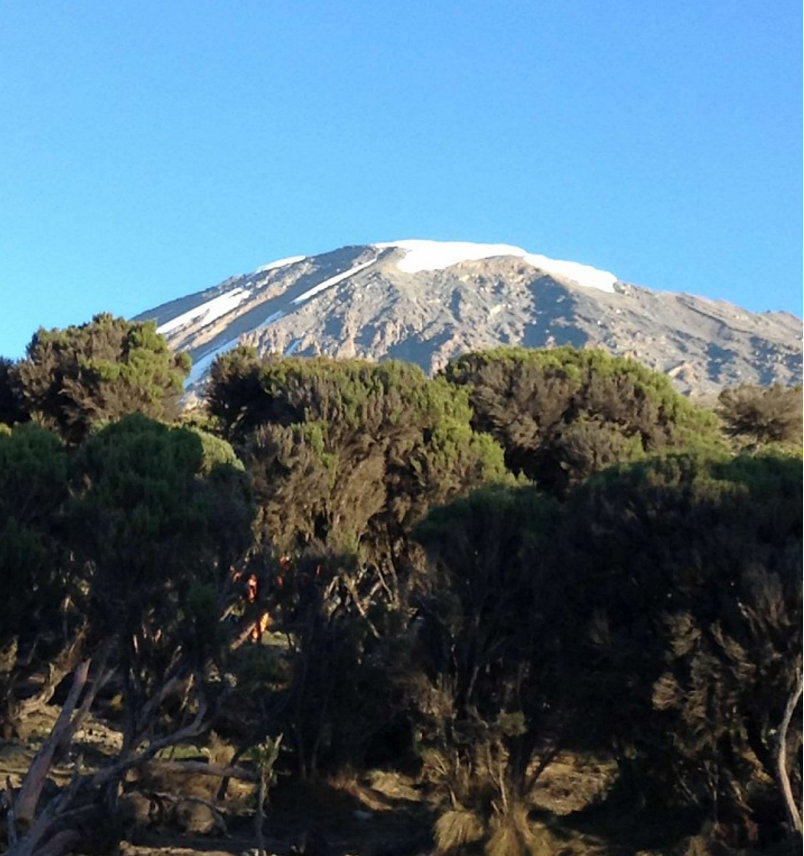
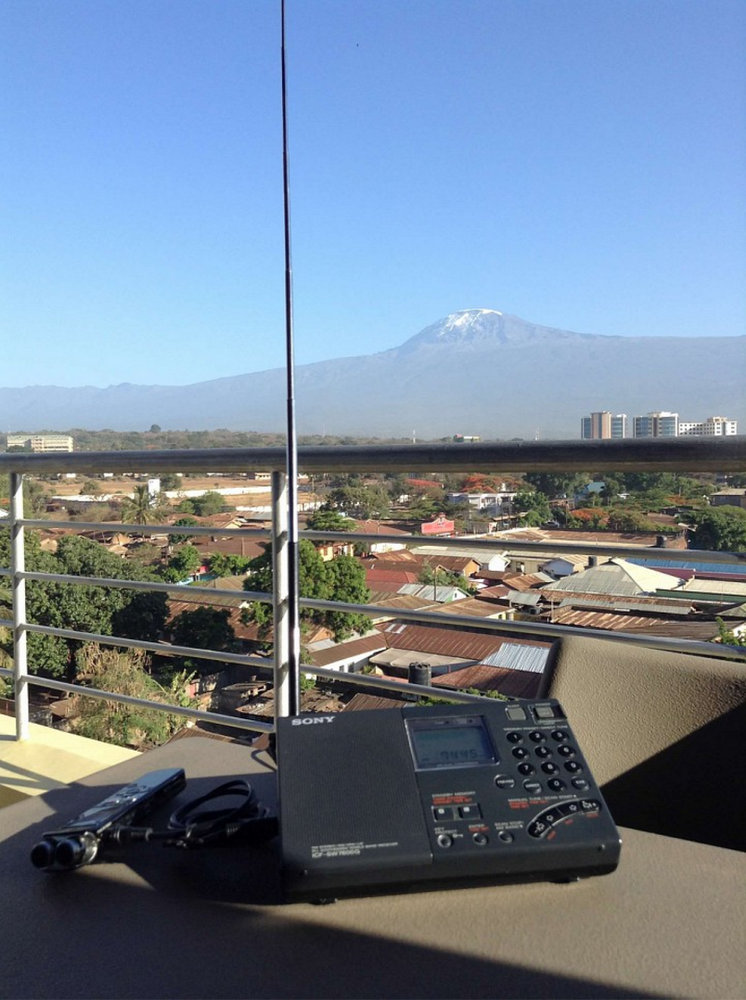
Last month, I took a trip of a lifetime to Tanzania Africa to Climb Mount Kilimanjaro: Africa’s highest point and the world’s highest free standing mountain. It is also known as the “Rooftop of Africa” its summit stands at 19,341 feet or 5895 meters.
With this high elevation I figured that I could pick up a multitude of shortwave signals that I would normally not receive at lower altitudes. So I packed my Sony ICF- SW7600G to capture recordings of various signals, some common, others not so common.
Each night I unpacked my radio and extended the reel-wire antenna and scanned the bands. I came across an assortment of stations that I normally do not hear back home in the USA, but some were quite familiar such as the BBC, Radio Romania, and DW which had Africa as their target. In some cases their broadcast was targeted for Asia.
Below is a map of our trek along the Lemosho route and the camps where we stayed are listed with the recordings and the elevation (in meters) of each camp. The higher we climbed, the signals received were sometimes stronger but the surrounding mountains also limited the reception of others. I did find that the bands were congested with signals from stations that spoke Arabic, Swahili and Chinese, not surprising considering my location. For the purpose of this blog I only included the English speaking stations except for a few.
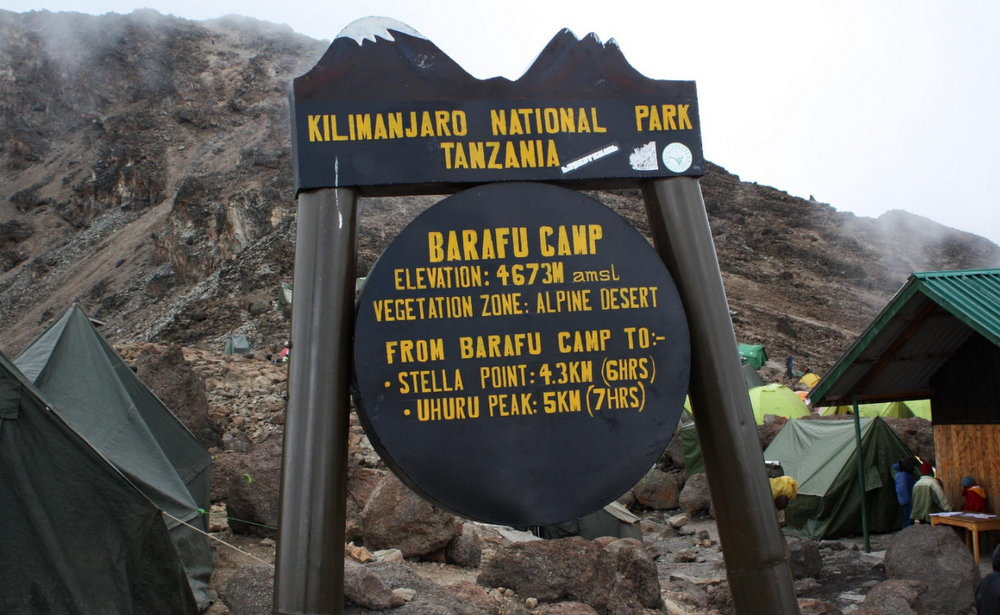
Unfortunately, the critical weight in our day packs was closely monitored and we could carry only the essentials on our climb from Barafu to the summit so I could not record at the summit of Uhuru Peak. Additionally, our time up there was limited to 15 minutes due to the lack of oxygen at that altitude. Below are selected recordings at each of the camps on the Lemosho route. Enjoy.
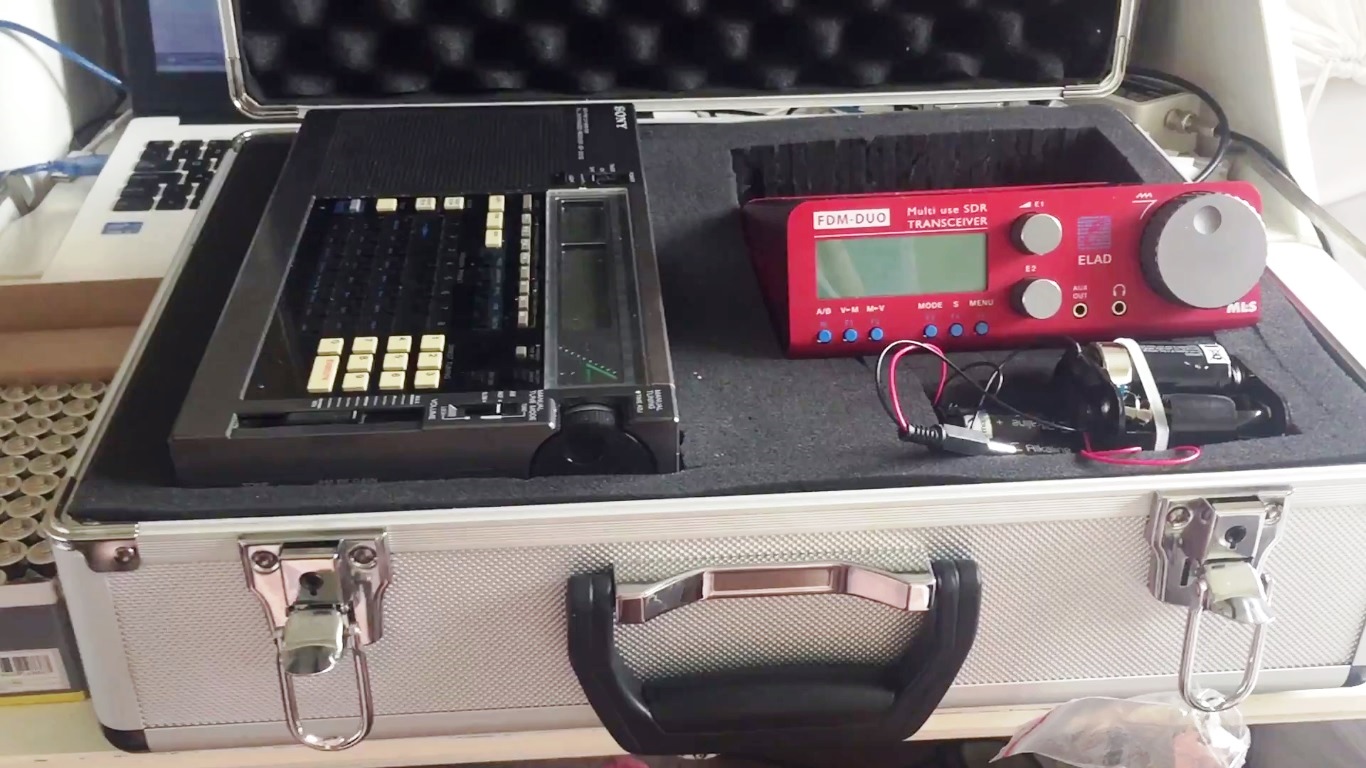
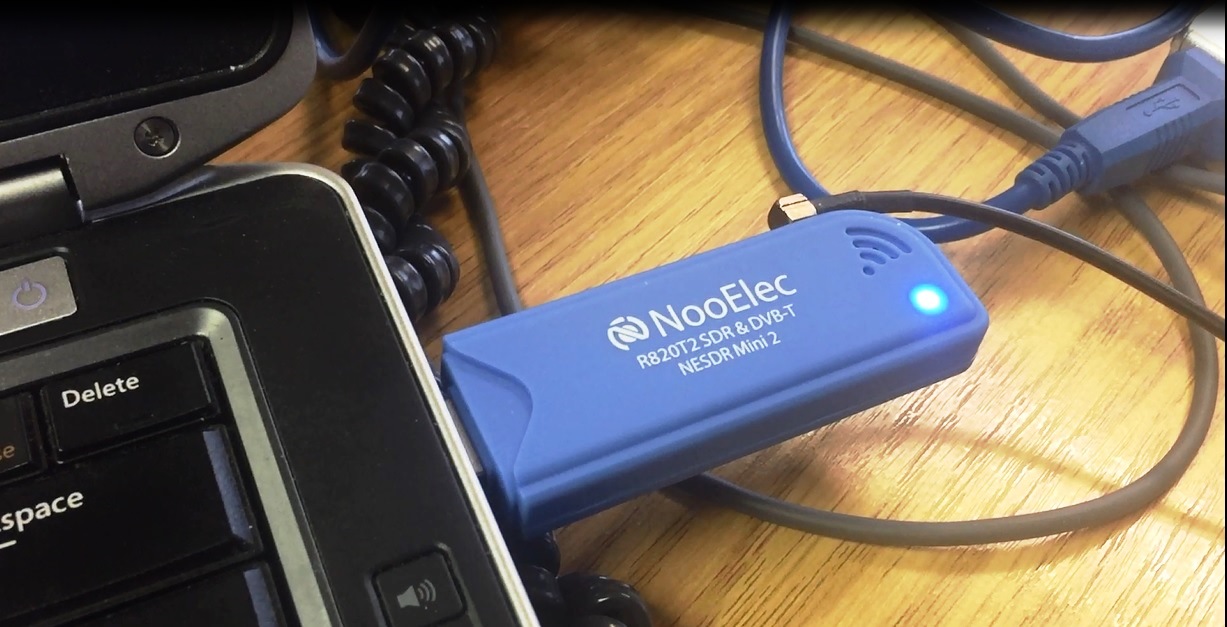
Hi there, I’ve been rather preoccupied of late, initially with the brilliant Tecsun PL-310ET and latterly with the even more brilliant Eton Satellit. However, in the background (as always), I’ve been trying to catch transatlantic medium wave DX. My listening schedule is broadly based on shortwave DXing during daylight hours – when I’m not at work of course, typically a Friday afternoon or at weekends – and always with a portable. Evenings usually start off with a tune around the tropical bands, followed by setting up the Elad FDM DUO to run some medium wave spectrum recordings overnight. In the past few days though, my daylight DXing has been bolstered by my NooElec RTL-SDR and ‘Ham it up’ upconverter. I bought the device over a year ago and after some initial exceitement, it quickly became quite obvious that I needed a reciever with a bit more ‘oomph’! However, it’s actually proving very useful to view signals on a spectrum, even when I’m conducting most or all of my listening on a different (i.e. higher performing) receiver. Ultimately, the RTL-SDR is always going to be a compromise, with relatively limited sensitivity, but because by it’s very nature it has excellent selectivity, overall it’s a reasonable performer. My particular RTL-SDR performs quite well if a decent antenna is employed with it, such as a longwire or the Wellbrook ALA1530 active loop.
Anyway, back to the medium wave DX. In the past month or two, I’ve copied a number of stations from North America, with really nice signals, including WRCR Rampano – New York, WFED Federal News Radio – Washington DC, WENE – Endicott and WUNR – Brookline from Newton, Mass. I’ve also recorded a lovely interval signal from RAI Radio 1, Milano and further European signals from Magyar Radio, Budapest and Radio Slovenija 1, from Ljubljana. During the past 18 months or so of DXing, I have been mostly ignoring signals coming into Oxford from the continent. However, that changed a little after I stumbled across the RAI Radio 1 interval signal, which complete with the rather rousing Italian National Anthem, inspired me to dig out some more European DX. I’m actually finding European DX quite rewarding, particularly because it feels new again – not surprising since I haven’t listened to Europeans on medium wave for any length of time since the 1980s. I hope you enjoy the reception videos – embedded video and text links follow below and I wish you all the very best DX.
Clint Gouveia is the author of this post and a regular contributor to the SWLing Post. Clint actively publishes videos of his shortwave radio excursions on his YouTube channel: Oxford Shortwave Log. Clint is based in Oxfordshire, England.
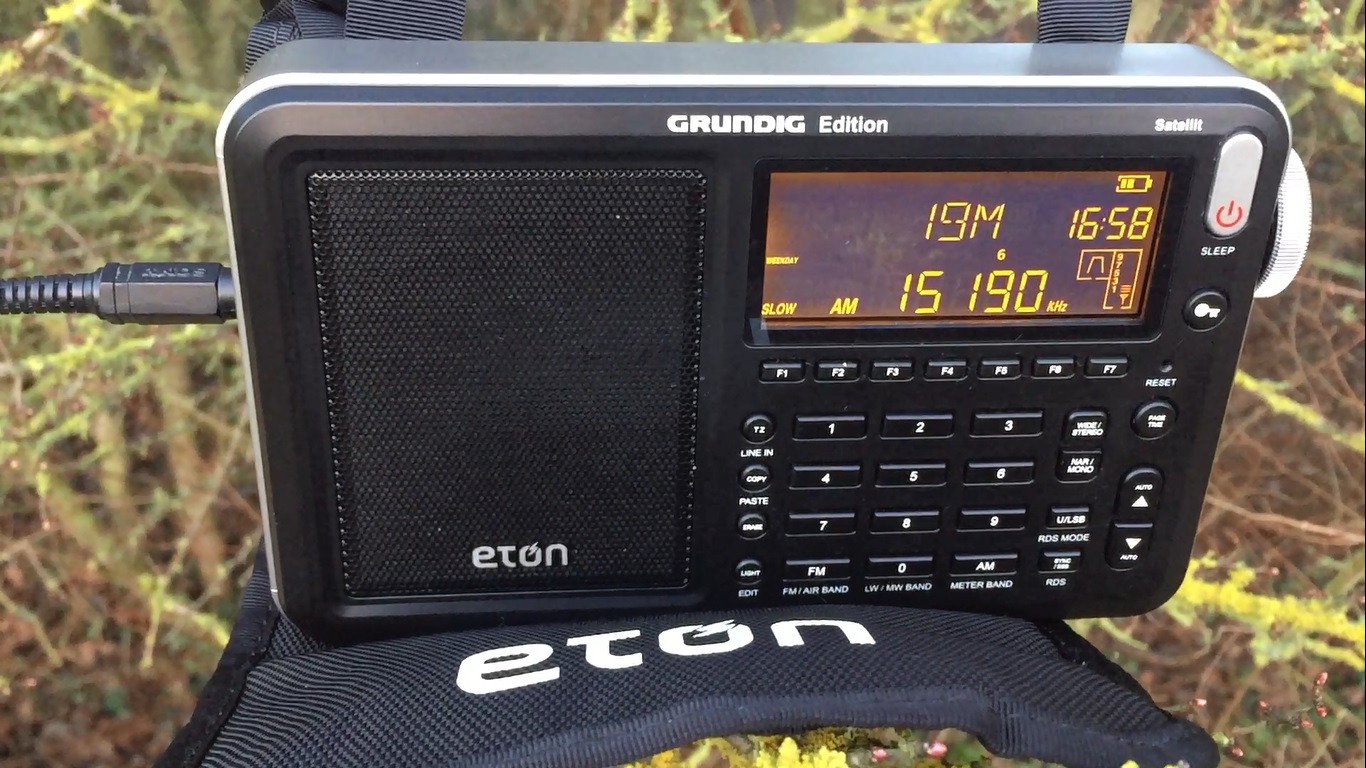
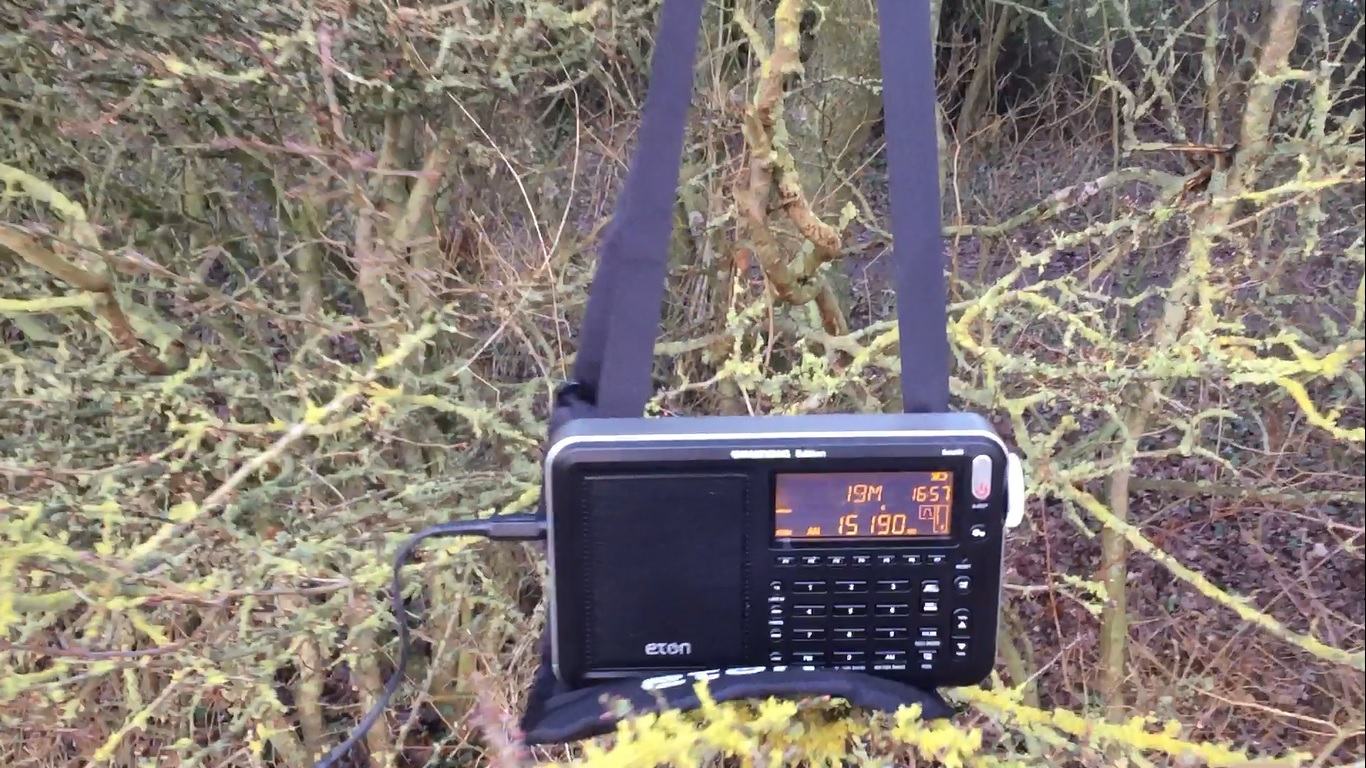
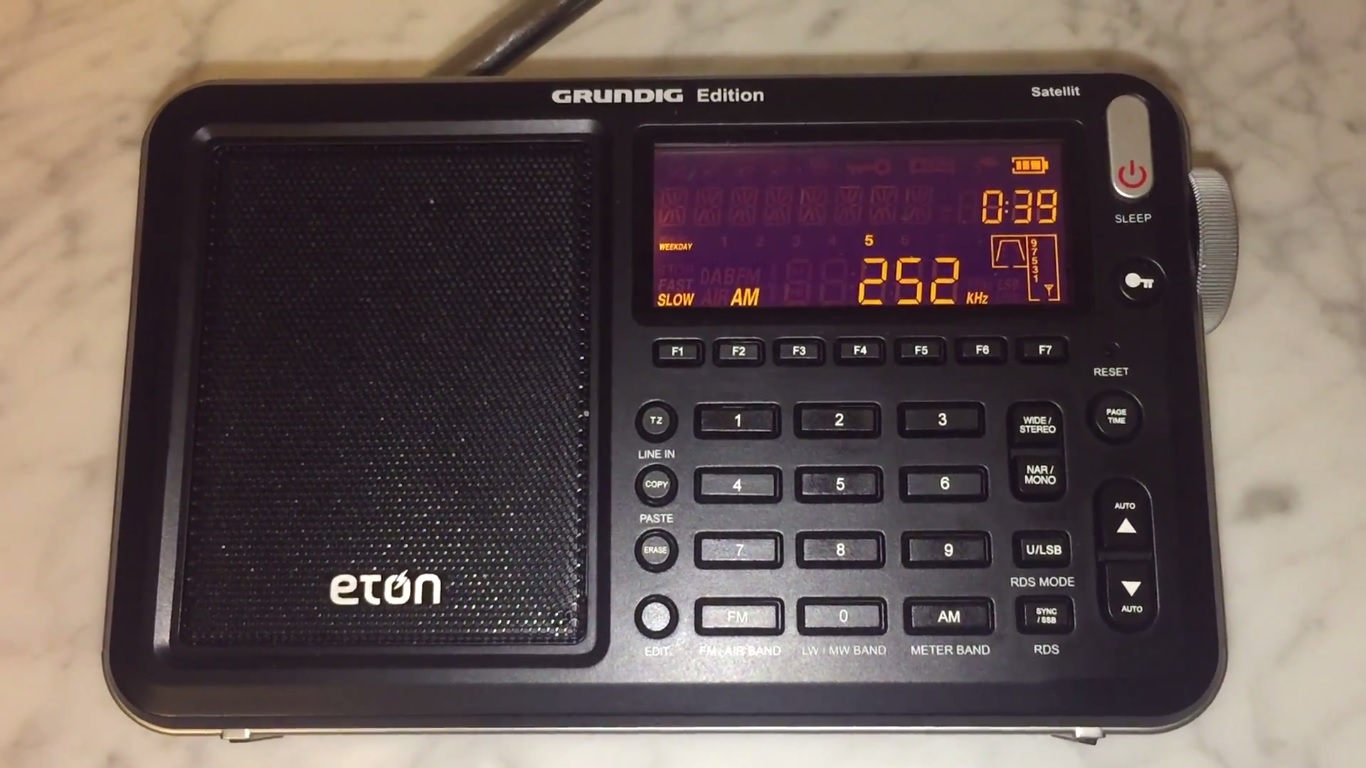
Hi there, it’s been about three weeks now since I started DXing with the Eton Satellit and I thought it time to post an updated review, based on my experiences thus far, along with some recent catches. Noting that other radio hobbyists with a strong presence online have been posting neutral to negative reviews on this receiver, I would just like to point out, perhaps rather obviously, that no receiver is perfect and just as importantly, the criteria on which a portable radio is judged will be different from user to user, based on their listening habits. I am almost exclusively engaged in DXing with the Satellit, whilst others will be listening on the broadcast bands on a more casual basis. I know that for some, the ultimate quality and finish of a product is as important as performance and they would make their physical assessment in a very detailed manner. I on the other hand focus mainly on performance and as regards quality, I’m reasonably satisfied if it doesn’t fall apart in my hands, straight out of the box! That actually happened – and it’s sort of where I draw the line 🙂 I guess the point is, I try to respect everyone’s opinion, irrespective as to whether we are in agreement or not and I believe that’s healthy for the future of our hobby.
Ok, back to the Satellit. Firstly, I am able to confirm that in terms of ultimate sensitivity, this portable is very close to my Sony ICF-2001D – one of the most highly regarded portables ever made. The delta in performance between the two is most perceptible on the weakest of fading signals that intermittently deliver audio with the Sony, but can’t be heard on the Eton. On stronger signals, my experience is that either radio might provide the strongest and or highest fidelity audio. I have a series of comparison videos already in the can, which will be uploaded to the Oxford Shortwave Log YouTube channel soon.
In terms of selectivity, the digital bandwidth filters work very well, although I note that even on the narrowest setting (2 kHz) when operating in a crowded band, adjacent channel QRM can occasionally still sound quite pronounced, as compared to my Sony ICF-SW55 or ICF-2001D receivers. As regards synchronous detection, this is more of a hit-and-miss affair. Subscribers to my channel might notice that in nearly all of my reception videos featuring the Eton Satellit, I have not engaged the SYNC. That isn’t to say it doesn’t work, however, even with selectable sidebands, the SYNC mode often appears to increase the overall signal amplitude and noise floor, without positively influencing the SNR. However, it’s interesting to note that signals on the Satellit in AM mode often almost match the ICF-2001D in SYNC mode, in terms of overall SNR. More on that to come.
There are a number of ways to tune the radio; manually using the tuning knob (and this has a decent feel/ resistance to it), direct frequency input which requires pressing the ‘AM’ button to engage, automatic search and access to 700 memory locations, via 100 screen pages. In the real world – and by that I mean ‘my world’ which is most often in the middle of a field, or the woods, all of the above tuning options are as ergonomic as most of my other portables. With regard to SSB reception, there are fast, slow and fine tuning options with a maximum resolution of 10 Hz and this works very well to reproduce natural sounding speech in LSB and USB modes. The tuning speed/fine options are engaged by pressing the tuning knob inwards towards the set – quite a neat idea. With SSB and SYNC there’s always a little pause whilst the electronics engage – a set of chevrons appear on the screen to indicate the receiver is actually doing something. It’s similar to the Sony ICF-SW77 where you effectively toggle between SYNC USB and LSB and wait for lock. Not an issue for me, but it might annoy some, particularly those who have experience with the ICF-2001D, where SYNC engagement is instantaneous, if the signal is of sufficient strength. A small point, but worth making.
So, overall, a brilliant little radio that in my opinion is completely worthy of the ‘Satellit’ branding, at least in terms of ultimate performance. As I mentioned previously, one of the most experienced DXers I know, with more than 3 decades of listening to the HF bands and an owner of a number of vintage Satellit receivers noted that the Eton Satellit outperformed them – and by some margin. To further demonstrate this, I have included links to recent reception videos. In particular, I copied three of the regional AIR stations with signal strength and clarity that had never previously been obtained. I also copied HM01, the Cuban Numbers Station for the first time on the 11 metre broadcast band, Sudan and Guinea on the 31 metre broadcast band (a whopping signal from Guinea) and Polski Radio 1 on longwave. I hope you find them interesting. Since featuring the Satellit on my channel, one of two of my subscribers have purchased this radio and thus far have been very happy indeed with it’s performance.
Ultimately, I have to strongly recommend this portable to anyone interested in DXing and in particular those that embark on DXpeditions. I just hope that should you decide to buy one, you receive an example that performs was well as mine. Embedded reception videos and text links follow below, In the mean time and until my next post, I wish you all great DX!
Clint Gouveia is the author of this post and a regular contributor to the SWLing Post. Clint actively publishes videos of his shortwave radio excursions on his YouTube channel: Oxford Shortwave Log. Clint is based in Oxfordshire, England.
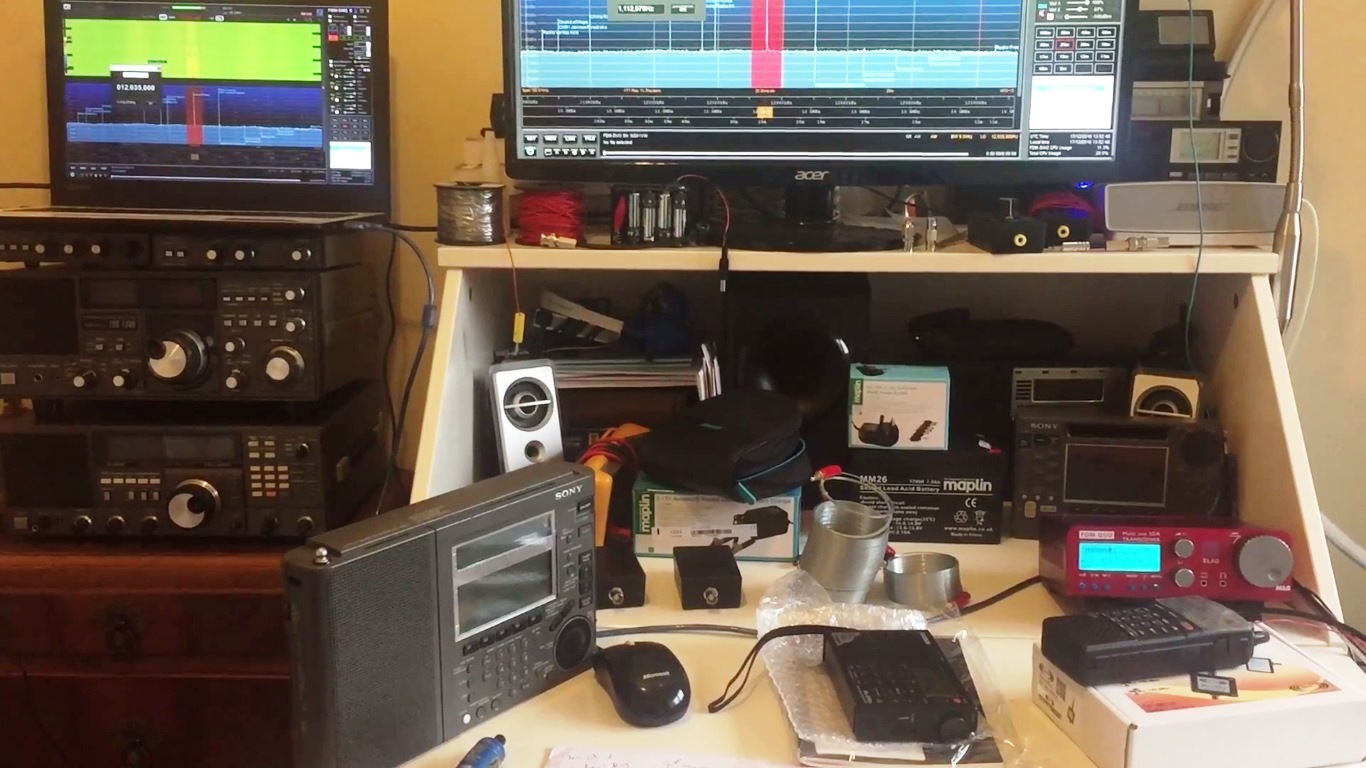
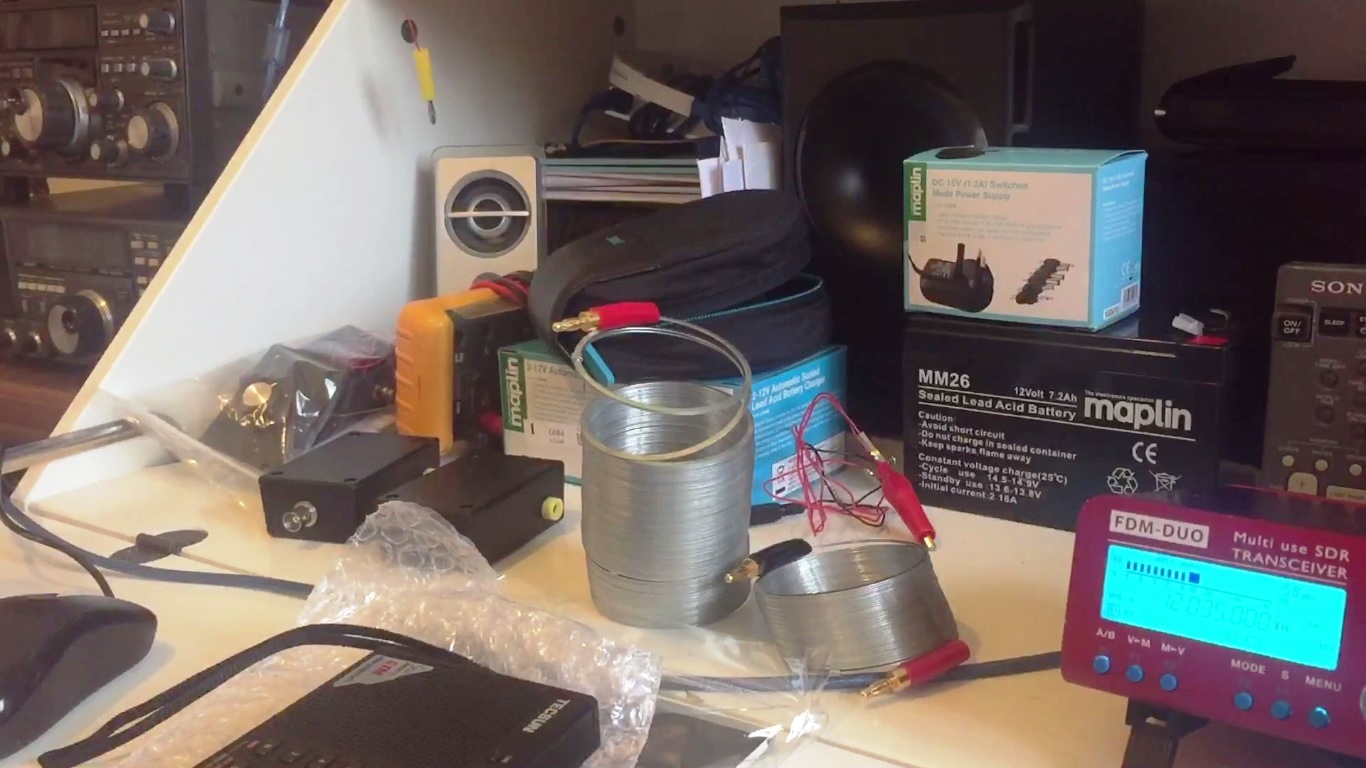
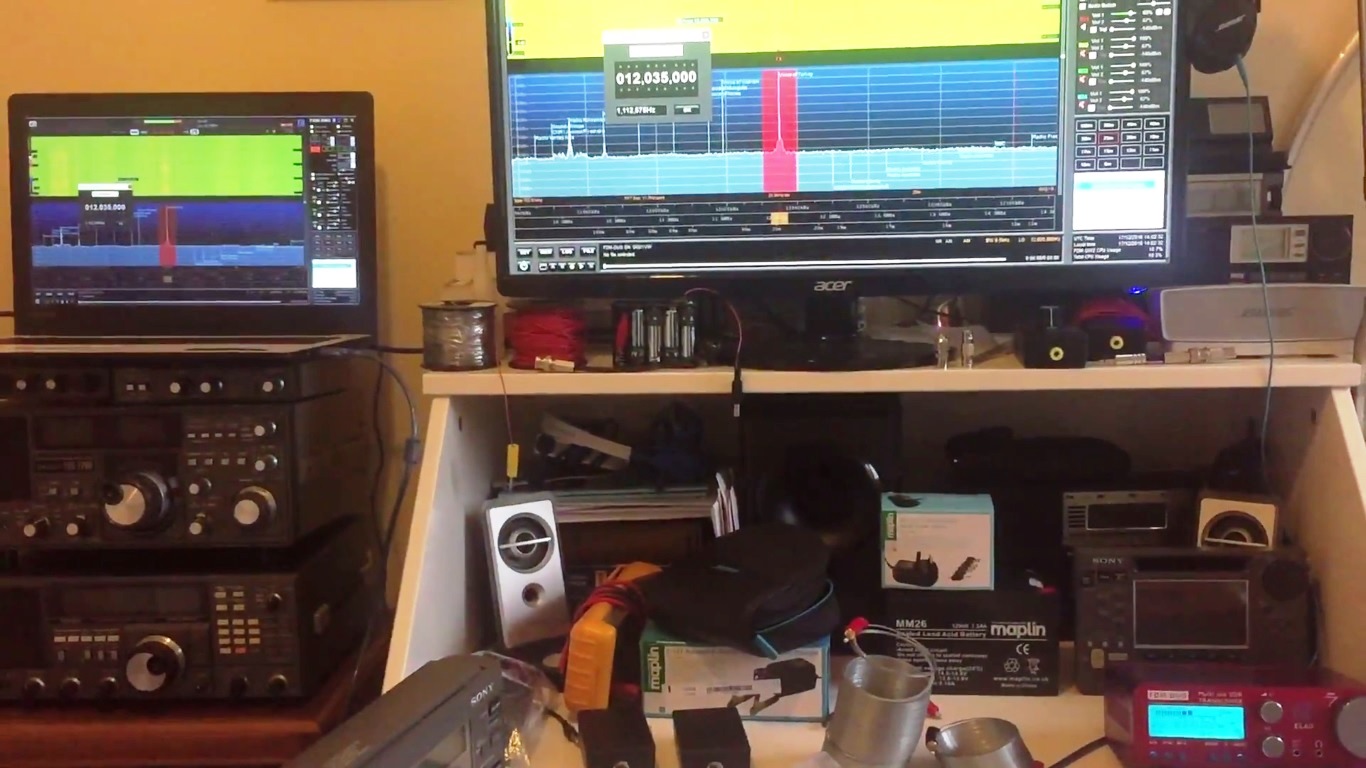
Someone recently described my shack in Oxford as ‘an impressive mess’…. and that really is just about the most positive comment I’ve ever received regarding my listening post! So, my apologies for displaying the mess in public, but in response to having been asked many times by subscribers to Oxford Shortwave Log to ‘share my shack’, here it is, well most of it at least, in all it’s unadulterated glory.
The primary reason however for this post is to share my most recent transatlantic medium wave catches using the brilliant Elad FDM DUO and Wellbrook ALA1530 magnetic loop antenna. This excellent combination continues to pull in really nice DX, although not so much very recently as propagation has been fairly rubbish. However, since early to mid December, the dynamic duo have managed to pull in a number of transatlantic medium wave signals, including Radio Rebelde, Cuba on (670 and 710 kHz), KVNS Texas, CHIN Radio, Toronto, WFED Washington DC, WWNN Health and Wealth Radio, Pompano Beach, Florida, and huge signals from WMEX Boston and WWKB Buffalo, New York. Embedded reception videos and text links follow below and in the mean time, I wish you all great DX!
Clint Gouveia is the author of this post and a regular contributor to the SWLing Post. Clint actively publishes videos of his shortwave radio excursions on his YouTube channel: Oxford Shortwave Log. Clint is based in Oxfordshire, England.