VORW Radio International broadcast this week

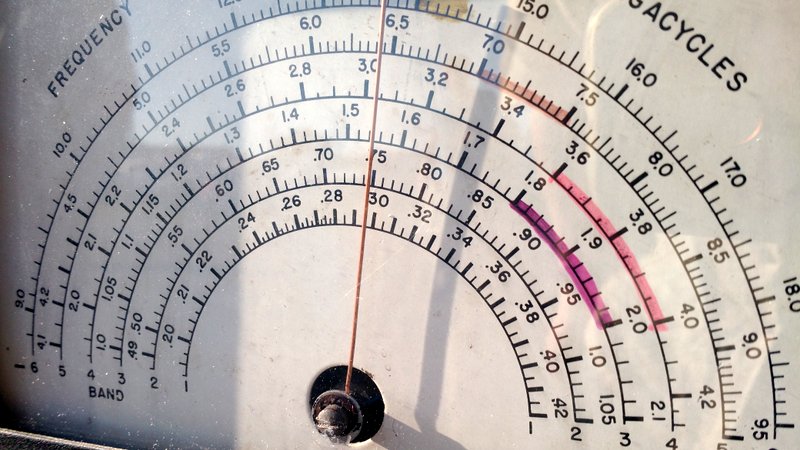
SX-99-Dial

Many thanks to SWLing Post reader, John, who hosts TheReportOfTheWeek channel on YouTube and writes:

Hello Thomas,

This is John from VORW Radio International and I wanted to let you know that I will be having a special shortwave broadcast on June 21st and 22nd. The broadcast will consist of talk and music and I hope to provide listeners in Europe, Asia and North America with a good time over the airwaves, with some good music!

The schedule for the transmission is as follows:

Tuesday June 21st

WBCQ – 7490 kHz – 8:00 PM – 9:00 PM Eastern 0000 – 0100 UTC – North America

Wednesday June 22nd

Shortwave Service (Via Armenia 100 kW) — 15780 kHz — 7:00 AM – 8:00 AM Eastern 1100 – 1200 UTC – Asia

Channel 292– 6070 kHz – 11:00 AM – 12:00 PM Eastern 1500 – 1600 UTC – Western, Central and Southern Europe.

Shortwave Service — 6005 kHz — 2:00 PM – 3:00 PM Eastern 1800 – 1900 UTC – Central Europe

Any reception reports will be met with an E-QSL card and can be sent to [email protected]

Thanks for letting us know about your broadcasts, John!

Antenna advice needed for field station

Paul Walker's listening post in Galena, Alaska.

Paul Walker’s listening post in Galena, Alaska.

I know you can’t cheat physics or RF and that magic pixie dust won’t work, but I’m hoping those with a little more technical expertise can help me solve an antenna dilemma.

I’m in the central interior region of Alaska and want to pick up Radio Vanuatu 7260 kHz a bit better. I also get a somewhat poor signal from them (they may not be running the full 10,000 watts) and I just want something a little better. My problem is that my set up can’t be permanent as I don’t technically have rights to the land I’m on; it’s somewhat public.

Paul-Wlaker-Listening-Post-2

I’ve looked at HF beam antennas and some of them can be huge, so that’s likely out of the question. I don’t think a 1/4 wave or 1/2 wave wire dipole would provide drastically better results then a longwire with a tuner, so I don’t want to waste the time and the effort.

Wellbrook-Paul-Walker-Galena-AK

I do have a Wellbrook ALA1530LNP and that’s somewhat directional. I also have a 225 foot long wire with an Emtech ZM2 tuner. The Wellbrook and ZM2 do OK.

I do have a Tripod and telescoping mast, so I can handle a beam antenna, it just cant be 30-40 feet! I have no problem carrying a beam antenna and tripod back across the street to my house at the end of a DX session.

Something directional would probably be what’s on order to make this work.  I am not going to cheap out on this, but I am certainly not spending $1000 on an antenna….. something in the $200 to $400 range would be fantastic. Returning stuff would be a hassle for me, so I can’t do that.. so I need to buy something that stands a good chance of working.

Am I stuck with my current set up and have no real better options based upon my limitations, is there someway I can make my set up better or is there some kind of antenna that’s directional which I can point right towards Vanuatu which will work that isn’t as big as a house and that doesn’t cost an arm, leg, kidney and foot?

Paul Walker is located in Galena, Alaska and is a regular contributor to the SWLing Post. Be sure to check out Paul’s YouTube channel and SoundCloud channel where everything he logs is recorded and posted. Click here to read his other contributions on the SWLing Post.

Ivan notes a used JRC NRD-525

The Japan Radio Company NRD 525 receiver. Photo: Universal Radio

The Japan Radio Company NRD 525 receiver. Photo: Universal Radio

Many thanks to SWLing Post reader, Ivan, who writes:

[U]niversal radio has a used NRD 525 for $699.

If I had the time to use it I would have picked it up already. These are so hard to come by and represent the best of the shortwave listening era.

I’ve never owned a JRC NRD-525, but I’ve heard good comments about the radio and its performance. The NRD-525 can be found in Universal Radio’s Used Radio List. No photo of the actual unit has been provided, but the condition is listed as “good.” Universal Radio is a trustworthy retailer, so used equipment can be purchase with confidence. Indeed, all of their used equipment (save items marked “as-is”) come with a 60 day limited warranty.

Jeff reviews the Sangean WR-2

Sangean-WR2

I’ve just learned that my buddy Jeff, over at the Herculodge, has reviewed the Sangean WR-2.

Jeff writes:

I haven’t had a Sangean WR-2 in a year because a year ago Southern Cal Edison fried all the electronics on our block doing unauthorized work. They had to pay tens of thousands of dollars to residents. I was paid about $400 for the loss of some of my electronics, including my Sangean WR-2.

[…]I decided to get my beloved black WR-2 back. This radio, which I first purchased in 2005, is one of those radios that marks my entry into being “radio-minded,” a guy who is very aware of the radio performance hierarchy.

Click here to read Jeff’s full review on the Herculodge.

SDRuno: SDRplay introduces a free native app for the RSP

(Source: SDRplay Press Release)

SDRplay-Logo

SDRplay is pleased to announce the official release of SDRuno for the RSP. SDRuno is the new name for the RSP compatible version of Studio1, the rights to which we obtained and announced on 28th April. SDRuno contains native support for the SDRplay RSP and no extra plugins are required. Third party hardware can also be supported via the ExtIO interface, but with reduced functionality.

SDRuno provides a rugged and flexible, high performance SDR receiver capability and boasts some excellent features:

  • Multiple ‘Virtual Receivers’ which allow for simultaneous reception and demodulation of different types of signals within the same receiver bandwidth.
  • A selectivity filter with an ultimate rejection greater than 140 dB.
  • A unique distortion-free double stage AGC with fully adjustable parameters.
  • Multiple notch filters with BW adjustable down to 1 Hz, Notch Lock feature.
  • A unique synchronous AM mode with selectable/adjustable sidebands, dedicated PLL input filter, and selectable PLL time constants.
  • SNR (stereo noise reduction), featuring a proprietary noise reduction algorithm for stereo broadcast.
  • AFC for FM signals.
  • Calibration for receiver frequency errors.

Over time, we plan to add many more features to SDRuno to enhance the user’s experience of this very powerful piece of software. This software runs on Windows and we don’t yet know how easy it will be to migrate it to other platforms but this is something we will be investigating.

SDRuno will be made freely available to all current and future users of the RSP – to download a copy – simply go to http://www.sdrplay.com/windows.html

Our support for SDRuno in no way lessens our commitment to support HDSDR, SDR Console, Cubic SDR or ANY other software solution where the authors are willing to work with us. We fully recognise that many people have strong preferences for particular pieces of software and we do not want to do anything to undermine the options that people have to use their favoured software packages. Indeed, our view is quite the opposite. Our objective remains aim to have our hardware platforms support any and every SDR package out there. This of course may not be possible, but it is our philosophy and part of the ethos of our company.

About Studio 1:

Studio1 was developed in Italy by SDR Applications S.a.s. and has hundreds of happy customers around the world. Studio 1 is known for its user friendly stylish GUI, CPU efficiency and advanced DSP capabilities, including features not available on other SDR software packages.

www.sdrapplications.it

About SDRplay:

SDRplay limited is a UK company and consists of a small group of engineers with strong connections to the UK Wireless semiconductor industry. SDRplay announced its first product, the RSP1 in August 2014

www.sdrplay.com
Email: [email protected]

Radio Botswana, 1987 Style

No seasoned shortwave DXer can forget one of the most distinctive interval signals ever–the “barnyard animals” which marked the beginning of the broadcast day of Radio Botswana, Gaborone, for decades.

On its long-time frequency of 4820 kHz, Botswana was an occasional catch for me from the Seattle USA area. I yearned for clearer, more reliable reception of this station and other Africans which my East Coast USA DXer pals enjoyed!

Zebras mingle with other animals at Chobe National Park, Botswana.

Zebras mingle with other animals at Chobe National Park, Botswana.

It was always fun–and a DXing challenge–to catch Radio Botswana’s interval signal and sign-on announcements, but it was typically mid winter for reception in Seattle. Propagation on 60 meters needed to be favorable to enjoy anything other than a weak, barely listenable signal. Imagine my surprise and excitement when on the evening of December 27, 1987 I came upon the following signal booming in on 4820 kHz, far, FAR better than any previous Botswana reception. Indeed, their signal that evening surpassed in clarity even the Papua New Guinea and Indonesian “regulars” I would hear on the tropical bands from the Northwest USA.


This recording begins with the famous barnyard animals interval, the beautiful Botswana national anthem (Fatshe leno la rona, or This is Our Land in English) and is followed by a full list of broadcasting frequencies and times in English and the (presumed) Setswana language. That information is followed by a flute instrumental version of the Christian hymn Beautiful Savior, which introduces a short devotional or scripture message. The 10 minute recording wraps up with an a cappella children’s choir.

Great Circle route from the Gaborone transmitter to Seattle receiver location.

Great Circle route from the Gaborone transmitter to Seattle receiver location.

My receiving setup for this 1987 recording was an ICOM IC-R70 and a 300 foot long random wire antenna. Such a long antenna is unusual for the middle of an urban area, but I took advantage of living in a 3rd floor apartment across from a small city park. One midweek day, while most folks were at work, I managed to string out this long antenna with very small diameter braided steel wire from the 3rd floor apartment balcony to a distant treetop. This “sloper” antenna had significant directivity to the northeast, which happens to be the bearing for many African stations heard from the Pacific Northwest USA. The small diameter wire was suspended so high that it was virtually invisible from ground level.

Antenna orientation for 1987 reception of Radio Botswana. I'm sure this urban location is plagued by QRM and radio frequency interference now in 2016! My ICOM IC-R70 receiver handled the strong signals from nearby MW & FM broadcasters surprisingly well with the addition of a Grove Tun3 Mini-tuner preselector.

Antenna orientation for 1987 reception of Radio Botswana. I’m sure this urban location is plagued by QRM and radio frequency interference now in 2016! My ICOM IC-R70 receiver handled the strong signals from nearby MW & FM broadcasters surprisingly well with the addition of a Grove Tun3 Mini-tuner preselector.

I continued to log Radio Botswana occasionally on 60 meters until the station eventually left the air (early 2000s I think), but I never heard them again with such a strong, clear signal as in late December 1987!

Guy Atkins is a Sr. Graphic Designer for T-Mobile and lives near Seattle, Washington.  He’s a regular contributor to the SWLing Post.