Shortwave listening and everything radio including reviews, broadcasting, ham radio, field operation, DXing, maker kits, travel, emergency gear, events, and more
Many thanks to SWLing Post contributor, Mark Fahey (our resident North Korea specialist) who shares the following comment regarding our recent post about the re-activation of the North Korean Numbers station:
The Pyongyang numbers (designated V15) have either become less regular or changed their schedule since March. Its been a few months since I have personally received them – but I also haven’t been specifically tuning in for them lately so maybe I have simply missed noticing a timing change.
If you want to find the North Korean numbers, they are read out in a block between songs within the regular programing of the Pyongyang Pangsong radio station.
The choice of music immediately before the number block seems to indicate which recipient agent the transmission is directed to.
For Agent 27 “We Will Go Together with a Song Of Joy” is played, whereas Agent 21’s song is “Spring of my Hometown.”
The announcements typically take between 5 to 10 minutes to read dependent on the number of digits passed. The transmission schedule is variable; in early 2017 the broadcast alternated with a cycle of one week on Thursday night at 12:45AM Pyongyang Time (1615 UTC) and the following week on Saturday night at 11:45PM Pyongyang Time (1515 UTC).??
Pyongyang Pangsong can be heard on these shortwave band frequencies (it is also on MF & FM on the Korean peninsular):
3250 kHz, Pyongyang 100KW Transmitter
3320 kHz, Pyongyang 50KW Transmitter
6400 kHz, Kanggye 50KW Transmitter
Mark followed up this morning with a off-air recording of V15 on 3250kHz. Mark comments, “I will leave the decrypted message content to your imagination!”
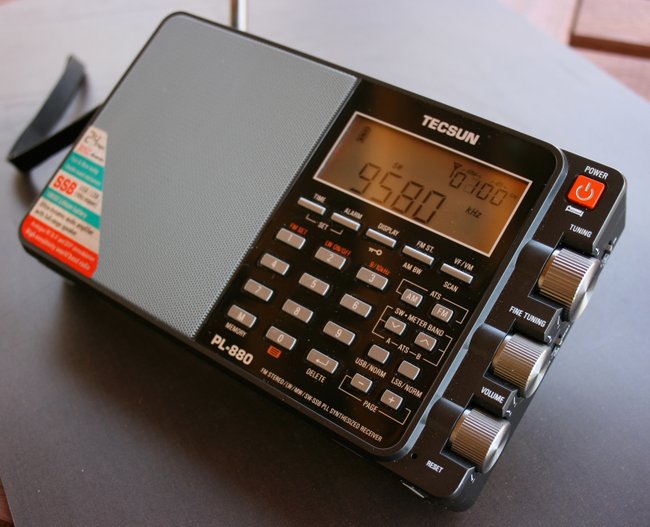
This morning, I woke up, tuned to 9,580 kHz and all I heard was static.
Other than when the Shepparton transmitting station has been silenced for maintenance in the past, 9,580 kHz is one of the most reliable frequencies I’ve ever know on shortwave. Radio Australia has met me there every morning I’ve listened since I was eight years old.
I feel like I’ve lost a dear friend and certainly a staple source of news on shortwave radio. I know I’m not alone–a number of readers have shared similar sentiments this morning.
Archiving Radio Australia’s final days on the air
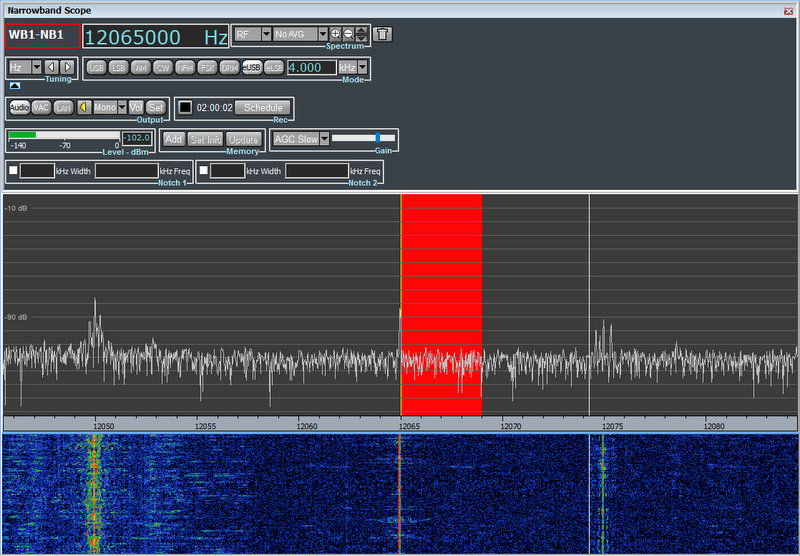
Listening to Radio Australia on 12,065 kHz with the Titan SDR Pro.
Since the beginning of the year, a few of us have been making a concerted effort to thoroughly archive Radio Australia’s final days on the air. Mark Fahey, London Shortwave, Richard Langley, Rob Wagner and I (to name a few) have been making both audio and/or spectrum recordings.
At 0100 UTC on January 31, 2017, we heard the “Waltzing Matilda” interval signal for one last time. As I understand it, the crew at the Shepparton site left the transmitter on a few extra seconds extra so their famous interval signal would be, in essence, the final sign-off.
Due to propagation and the time of day when the shut down happened, I was unable to make a recording, so I’m pleased others could.
Mark compares shortwave and satellite feeds
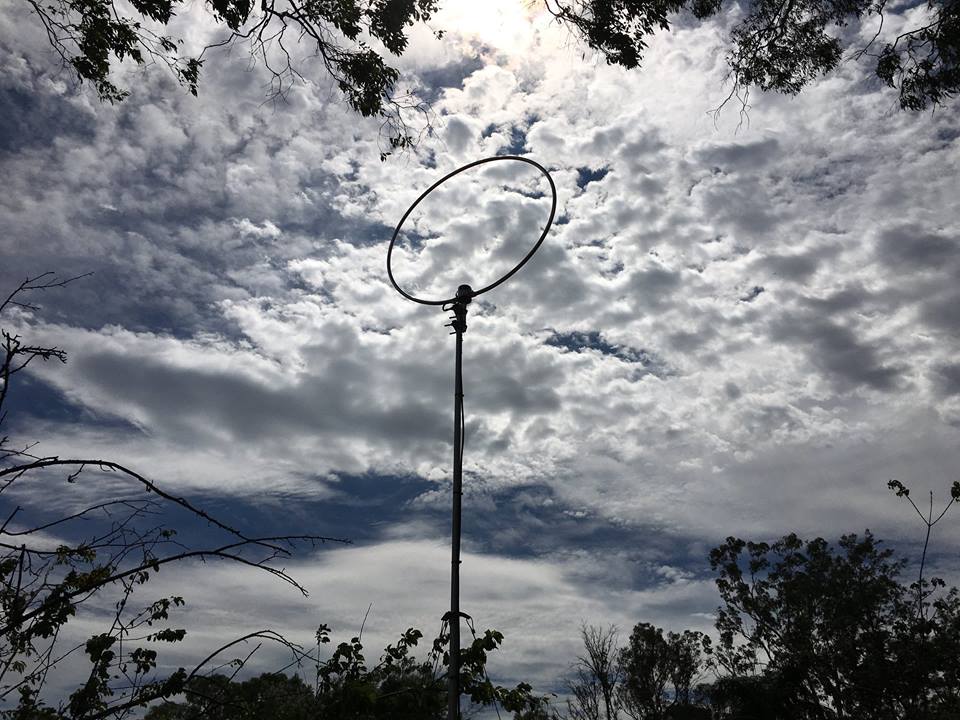
Mark Fahey’s Wellbrook Mag Loop antenna.
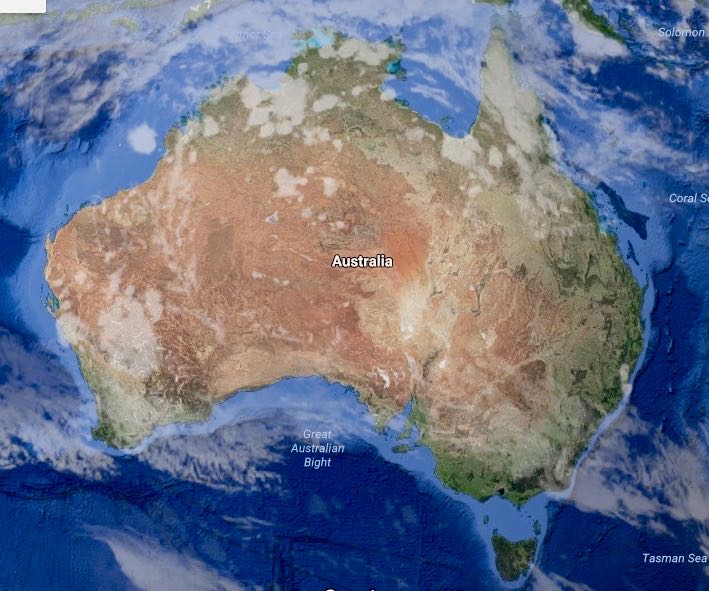
I’m grateful to friend and contributor, Mark Fahey, who lives near Sydney, Australia, and was also able to record the final moments of Radio Australia as well. Mark recorded the shortwave service and RA satellite feed simultaneously.
Mark shares the following recordings and notes:
Recording 1
This is RA’s final few minutes on shortwave – it was recorded on 17840kHz.
The file picks up the regular program ending, then into a Promo for RA “Pacific Beat” (a Pacific current affairs program), then the classic RA Interval Signal then the transmitter clicks off and the void is heard.
The file starts at exactly the same time as the first file, but in this example we are monitoring the Network Feed from Intelsat 18 at 180.0 degrees east (above the equator right on the international date line). This satellite feed is the way Radio Australia gets to the network of FM Transmitters they have scatted around the Pacific Region (which is why they feel they don’t need shortwave anymore for – most populated areas of Radio Australia’s target area now is covered by a network of Radio Australia FM transmitters).
Some differences to the first file – Radio Australia is produced in FM quality stereo, though of course DXers only ever heard it in shortwave quality mono. So this network feed is in stereo and has a wider dynamic range that what DXer’s are familiar with from Radio Australia. At the end of the Pacific Beat Promo, Radio Australia goes straight into News, the closing of the shortwave service was not an event that would have been noticed for the typical listeners of RA who now listen via FM in Pacific capitals and major towns.
Thank you Mark for your comparison–I’ve never heard RA so clearly. Only you would’ve thought to simultaneously record the satellite feed! It gives the moment that much more context.
A number of SWLing Post contributors have been sharing recordings this morning. I will plan to collect these and put them on the Shortwave Archive in the near future.
Rest assured: if Xenophon’s legislation gains traction, we will post updates!
No doubt, Radio New Zealand International’s shortwave service has just become that much more important in remote Pacific Islands. Click here to view RNZI’s schedule.
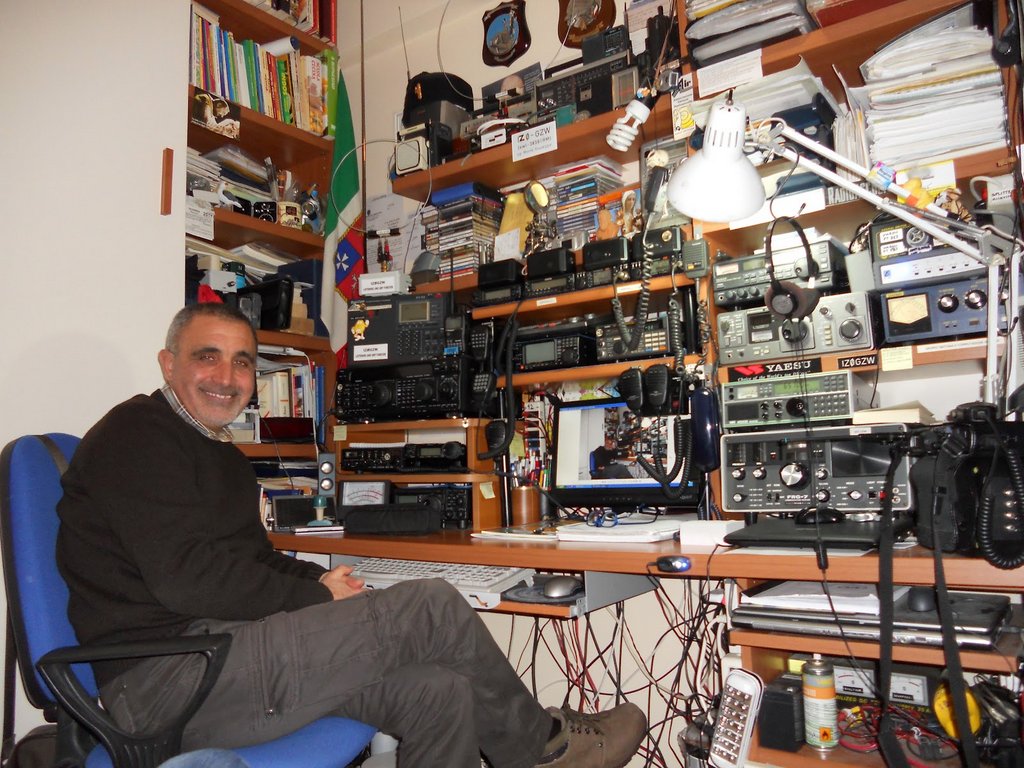
The current listening post and ham radio shack of Giuseppe Morlè (IZ0GZW) from Ponza Island, Italy.
Many thanks to SWLing Post contributor, Giuseppe Morlè (IZ0GZW), who shares the following short recordings of Radio St. Helena day in 2006 and 2009. These recordings were made from his home on Ponza Island, Italy using the Yaesu FRG-7 and FRG-100 and a 30 meter length of wire antenna:
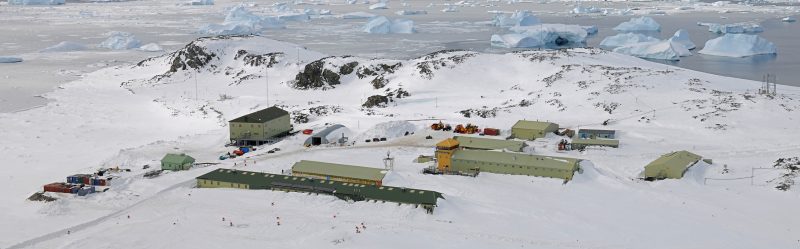
Rothera Research Station, Adelaide Island, Antarctica (Image Source: British Antarctic Survey)
Post readers: I need your help!
SWLing Post reader Andy Webster (G7UHN) is searching for an off-air recording of the BBC Midwinter Broadcast to Antarctica from the year 2009.
Andy has a very personal connection to this particular broadcast because he was the wintering communications engineer at Rothera Research Station in 2009. One of his fondest memories was listening to the BBC Midwinter broadcast while he and his colleagues were huddled around the station’s Skanti TRP 8750 marine transceiver. Andy would like a proper off-air recording of the broadcast to share with his family and friends–so they can hear what the broadcast sounded like over shortwave radio.
If you happen to have an off-air recording of the 2009 Midwinter broadcast, could you please contact me or comment on this post?
Not only will we share the recording with Andy, but we would also like to post it to the Shortwave Radio Audio Archive. Thank you in advance!
Not the strongest I ever hear them, but a good solid clean nearly noise and nearly fade free signal.
That’s an impressive signal, Paul, especially considering the fact that propagation conditions have been somewhat shaky as of late. Thanks for sharing!
Hi there, I thought I would share some DX catches, all of which are rarely reported in Europe and yet I was fortunate enough to catch in Oxford UK, using a couple of different set-ups. The first is Radio Chaski Red Integridad from Urubamba Cusco, Peru, heard using an Elad FDM DUO and Wellbrook ALA1530 active loop antenna (indoors). The two subsequent receptions originate from Brazil; Radio 9 de Julho, Sao Paulo and Radio Transmundial,Santa-maria Camobi, both of which were caught using the venerable Sony ICF-2001D portable receiver and my 200 metre longwire antenna. In all three cases, persistence was necessary whilst optimum conditions of propagation aligned with my listening schedule at home and my less frequent, but regular DX’peditions.
I am soon to deploy a 200 metre Beverage with adjustable termination resistance for nulling ‘rearward’ signals and matching transformers suitable for 75 and 50 Ohm receiver antenna inputs. I hope this will further improve my reception capability on both the MW and SW bands. Another post specific to that project is in the pipeline, but in the meantime, thanks for reading/ watching and I wish you all very good DX.
Clint Gouveia is the author of this post and a regular contributor to the SWLing Post. Clint actively publishes videos of his shortwave radio excursions on his YouTube channel: Oxford Shortwave Log. Clint is based in Oxfordshire, England.
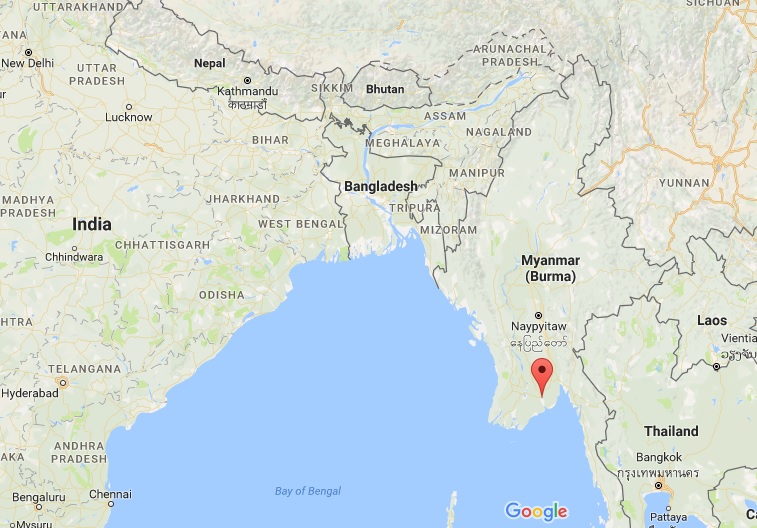
Hi there, I thought some of the readers of SWLing post might be interested in my reception of Mayanmar Radio, Yangon, during a late-night DX’pedition in Oxfordshire, UK. I managed to catch them on 5985 and 7200 kHz; the latter was a personal first and perhaps further confirmation that my 200 metre longwire is contributing in a positive way to my mobile listening post. Subscribers and regular visitors to Oxford Shortwave Log on YouTube will know that I am forever trying to push the performance of my vintage portables to the limit of what’s possible, in the hope that I might hear something very exotic. it’s happened once or twice and thus worth all the effort in the small hours. Thanks for watching/ listening.
Clint Gouveia is the author of this post and a regular contributor to the SWLing Post. Clint actively publishes videos of his shortwave radio excursions on his YouTube channel: Oxford Shortwave Log. Clint is based in Oxfordshire, England.
Please support this website by adding us to your whitelist in your ad blocker. Ads are what helps us bring you premium content! Thank you!

 Many thanks to SWLing Post contributor, Mark Fahey (our resident North Korea specialist) who shares the following comment regarding our recent post about the re-activation of the North Korean Numbers station:
If you want to find the North Korean numbers, they are read out in a block between songs within the regular programing of the Pyongyang Pangsong radio station.