Shortwave listening and everything radio including reviews, broadcasting, ham radio, field operation, DXing, maker kits, travel, emergency gear, events, and more
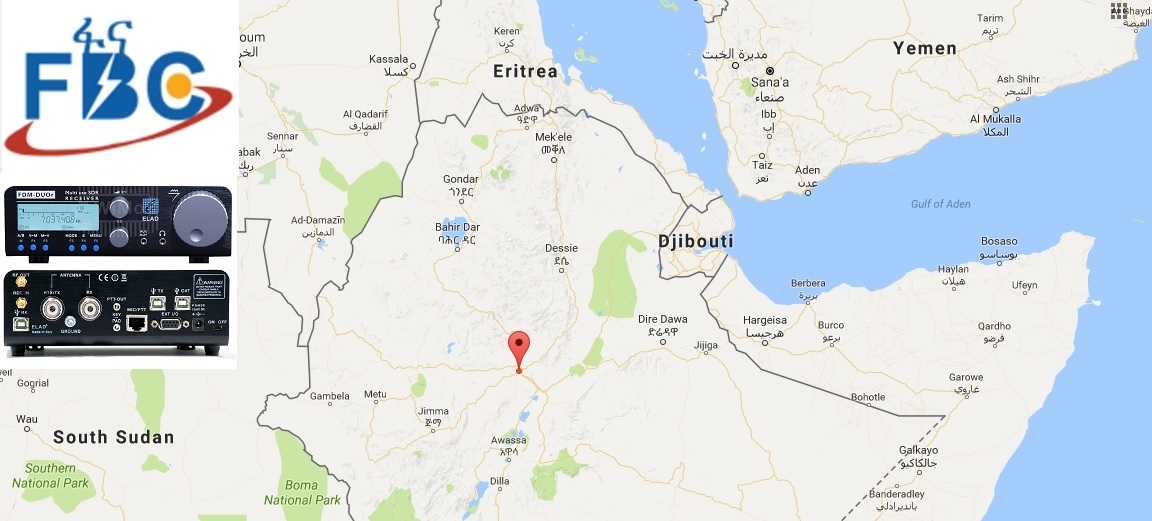
The Elad FDM DUO makes for a fantastic receiver, in both standalone mode and via the FDM-SW2 software. Thus far it has been demonstrating this by outperforming the Sony ICF-2001D in many of my reception tests using an experimental longwire antenna. Bear in mind that whilst this might not be such a surprise, the Elad without the FDM-SW2 software driving it has no SYNC, which is often invaluable for Tropical Band DXing. To make the point further, here is a wonderfully clear signal from Ethiopia, with, in my experience at least, exceptional signal-to-noise.
My 200 metre longwire is still very much a work in progress. I am in the process of building a termination resistance box, receiver-end termination suitable for high and low impedance inputs and earthing straps for metre-long copper pipes that will remain in-situ. When I have completed these tasks, I will record a video because I know some of you are interested in the details. For now though, it just remains an experiment – 200 metres of wire and very late nights/ early mornings! Recorded at the ‘DX woods’ in Oxford UK at 03:23 hrs UTC on 31/07/16. Thanks for watching.
Clint Gouveia is the author of this post and a regular contributor to the SWLing Post. Clint actively publishes videos of his shortwave radio excursions on his YouTube channel: Oxford Shortwave Log. Clint is based in Oxfordshire, England.
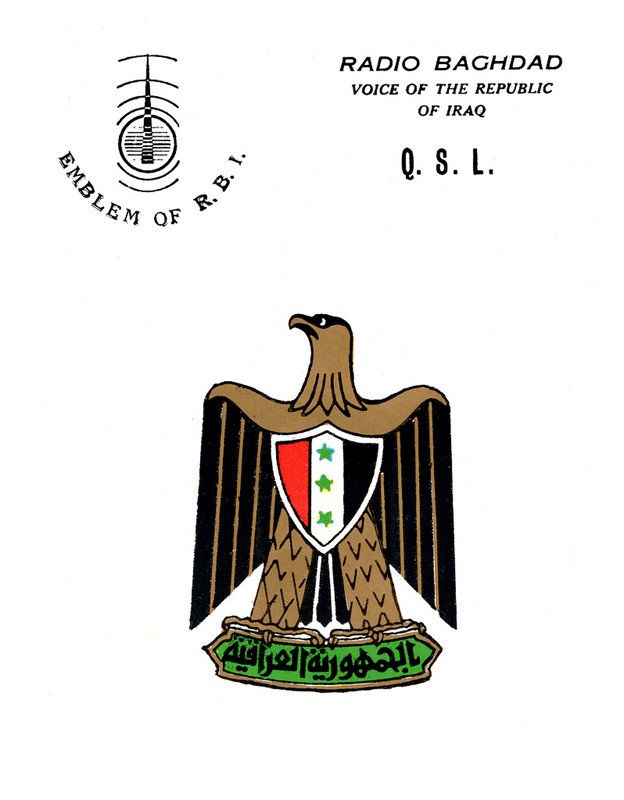
Many thanks to SWLing Post contributor, Al Quaglieri, who shares the following recording, QSL (above) and notes:
Here’s a nice recording I made of the first 13 minutes of Radio Baghdad’s English broadcast one day around August 8, 1990. It begins with some music and then there’s a newscast. For a couple of months, I sent such recordings down the phone line to CBS News in New York, who were eager to hear them. This, alas, is the only one I kept. Hard to believe it was nearly 26 years ago.
My how that does bring back memories! Thank you for sharing this excellent recording, Al!
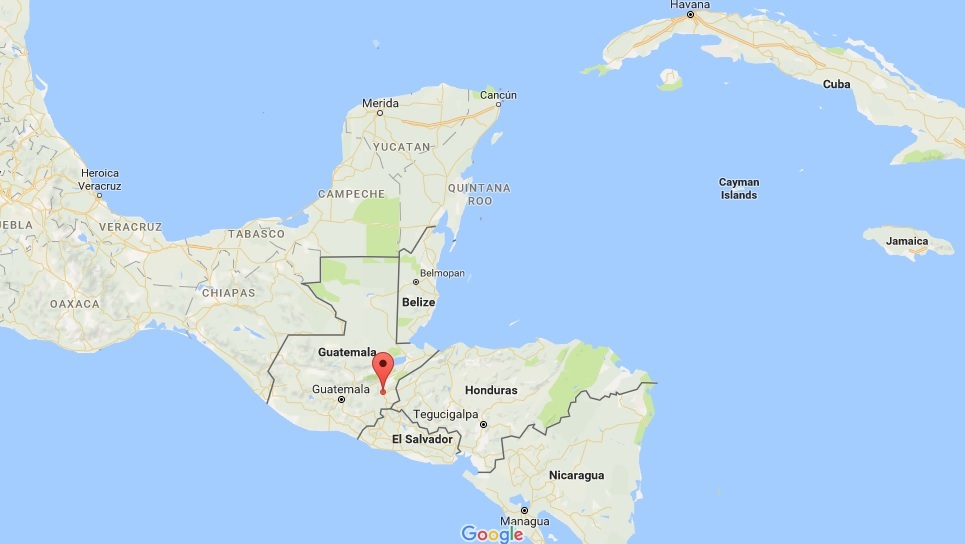
Radio Verdad, Chiquimula, Guatemala is quite a regular catch at home, however, their modulation is nearly always weak as the carrier struggles to lift above the ubiquitous blanket of local QRM. Another issue with hearing this station is the digital utility signal just above 4055 kHz, thus requiring LSB reception to reject the adjacent noise.
This particular recording of Radio Verdad was taken during a DX’pedition using the 200 metre longwire and is unprecedented in signal strength and clarity – in my personal experience. With fully discernible audio both the Elad FDM DUO and Sony ICF-2001D receivers perform very well with my experimental 200 metre antenna. I should point out that the audio from the Sony is significantly louder because the speaker on the Elad is puny, to say the least. However, the reception on the Elad sounds to me at least, superior to the Sony in terms of SNR, which is everything in Tropical Band DXing. As usual, I welcome your comments. Recorded in Oxford UK on 31/07/18 at 03:31 hrs UTC. Thanks for watching.
Clint Gouveia is the author of this post and a regular contributor to the SWLing Post. Clint actively publishes videos of his shortwave radio excursions on his YouTube channel: Oxford Shortwave Log. Clint is based in Oxfordshire, England.
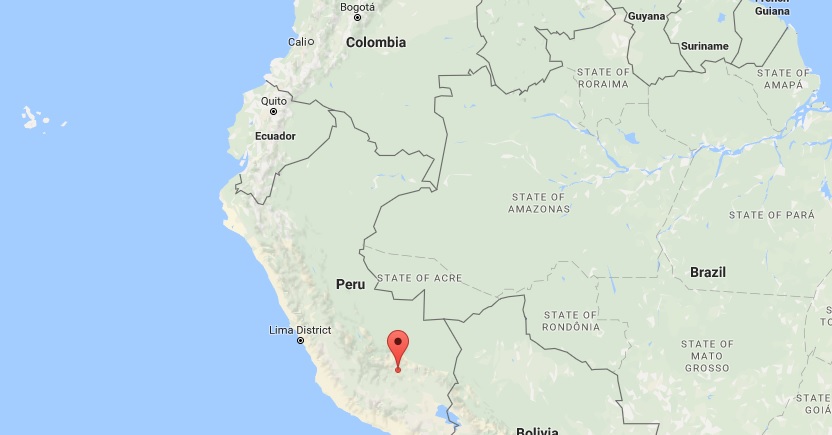
Hi there, I thought I would share my first reception of Radio Tawantinsuyo, from Cusco, Peru, recorded during the inaugural test of my 200 metre longwire antenna. Of course this particular reception could be coincidence, but a very welcome catch in any case. Once again, the Sony ICF-2001D performs very well with this large antenna, but as on previous occasions, the rule is always to ‘choose your battles well’ targeting weak DX signals in uncrowded areas of the Tropical Band and elsewhere on shortwave. More details on the longwire antenna to follow in another post. Recorded at the ‘DX woods’ in Oxfordshire, UK on 31/07/16 at 00:27 hrs UTC. Thanks for watching.
Clint Gouveia is the author of this post and a regular contributor to the SWLing Post. Clint actively publishes videos of his shortwave radio excursions on his YouTube channel: Oxford Shortwave Log. Clint is based in Oxfordshire, England.
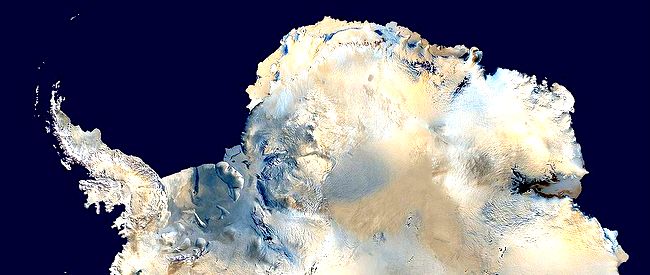
On Tuesday, 21 June 2016, the BBC World Service officially transmitted the 2016 BBC Antarctic Midwinter Broadcast–an international radio broadcast intended for a small group of scientists, technicians, and support staff who work for the British Antarctic Survey.
This is one of my favorite annual broadcasts, and I endeavor to listen every year. Once again, the SWLing Post called upon readers to make a short recording of the broadcast from their locale.
Below are the entries, roughly organized by continent and country/region, including reader’s photos if provided. I had planned to post these recordings by Sunday, but my travels interfered and I discovered an additional ten recordings in my inbox! (If I’ve somehow missed including your entry, please contact me; I’ll amend this post.)
So, without further ado….
The 2016 BBC Antarctic Midwinter Broadcast Recordings
Australia
SWL (Shortwave Listener):Rob Wagner Location: Mt Evelyn, Victoria, Australia Notes: [A] 12 minute video record of the broadcast that also demonstrates some tuning techniques and DSP facilities on the Yaesu FTDX3000. You can view the video below or by clicking here:
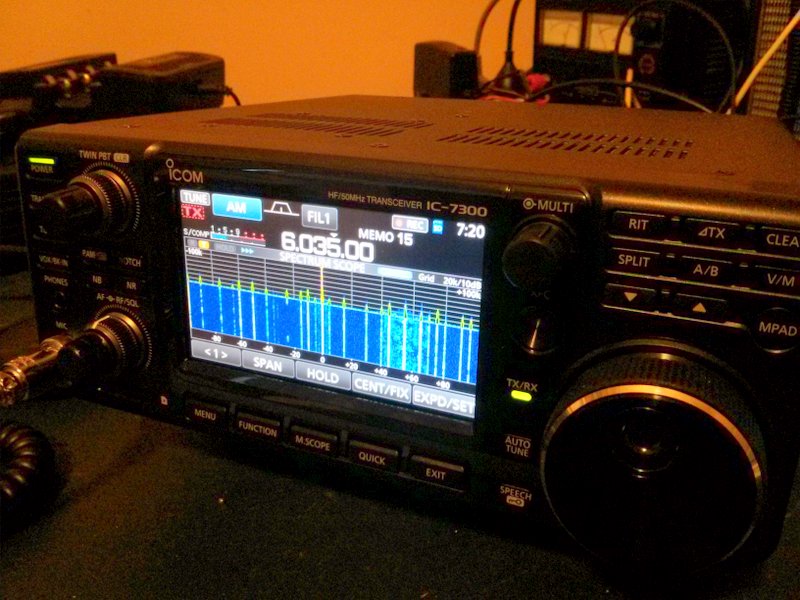
Paul’s Icom IC-7300 tuned to the BBC Midwinter broadcast.
SWL: Paul Philbrook Location: Adelaide, South Australia Notes: Here are a couple of recordings from this mornings broadcast. Just had a quick listen before heading off to work and recorded these two with the IC-7300. Radio: Icom IC-7300 Aerial: Multi-band loaded dipole. 5985 Khz strength 5 readable, 6035 Khz strength 8 good readability, 7360 Khz no copy.
Click here to download recording 1 and recording 2, or simply listen via the embedded players below:
New Zealand
SWL: Bryan Clark Location: Mangawhai, New Zealand Notes: Listening in New Zealand, reception was not as good as last year.
Here are short audio files of the 3 frequencies. I used an EWE antenna aimed southeast, that is across South America, for the best signals. Receiver is a WinRadio Excalibur Pro SDR.
SWL: Christoph Ratzer Location: Salzburg, Austria Notes: Here my complete recording for you. Received at my remote station http://remotedx.wordpress.com in Salzburg, WinRadio G33 Excalibur PRO, Delta loop antenna with Bonito ML052 amplifier.
SWL: Willy Andersen Location: Soeborg, Denmark Notes: Here is my recording from 7360kHz on June 21. 2016. Very strong and clean signal. Vy 73 de Willy, OZ4ZT
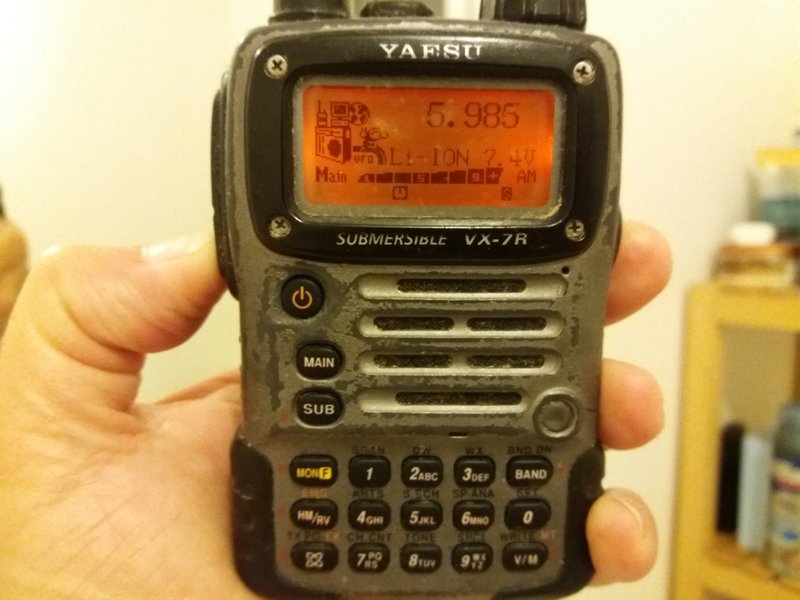
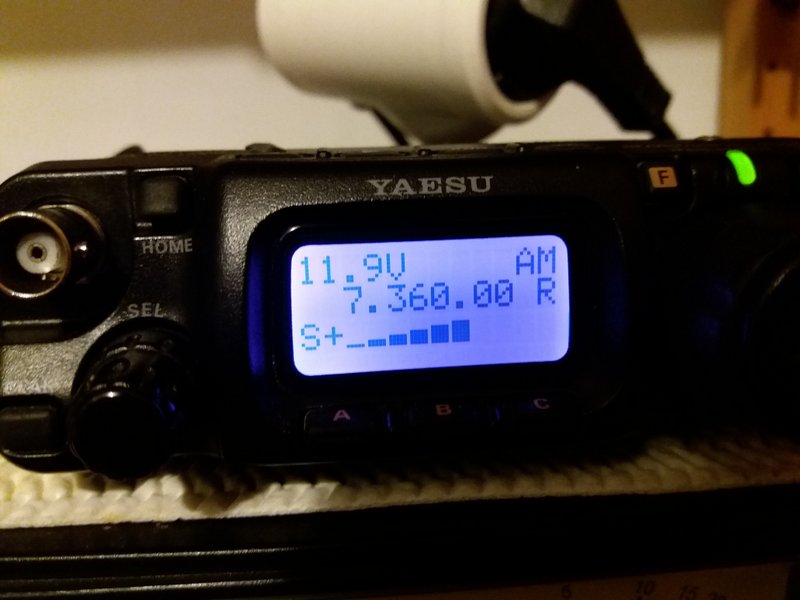
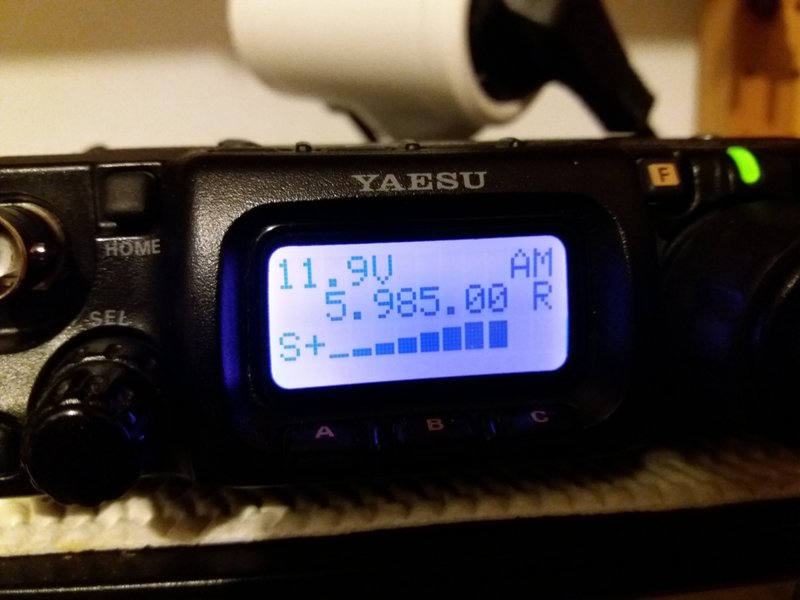
SWL: Philippe Location: L’Hôpital-Camfrout, France (few km south of Brest) Notes: Very good conditions here, good sound. Equipment: Yaesu FT817ND + V inverted antenna and Yaesu Vx7r + original antenna (little stick on the radio). On both radios, reception: 59 / 59+
SWL: Alan Location: County Kildare, Ireland Notes: 5,985 kHz Woofferton. Distance: 280km. Recorded from County Kildare, Ireland
with an Icom-718 and 20m Random wire on an Olympus vn-741pc.
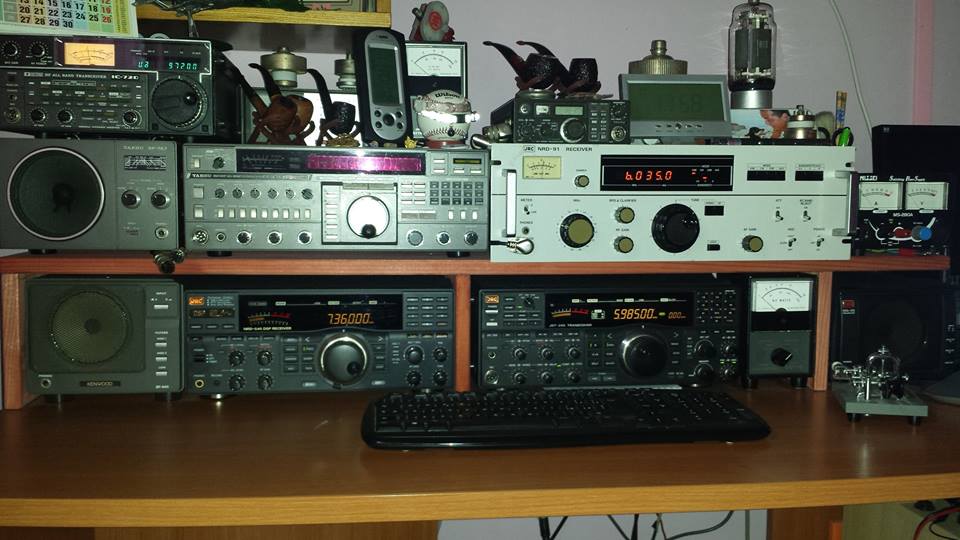
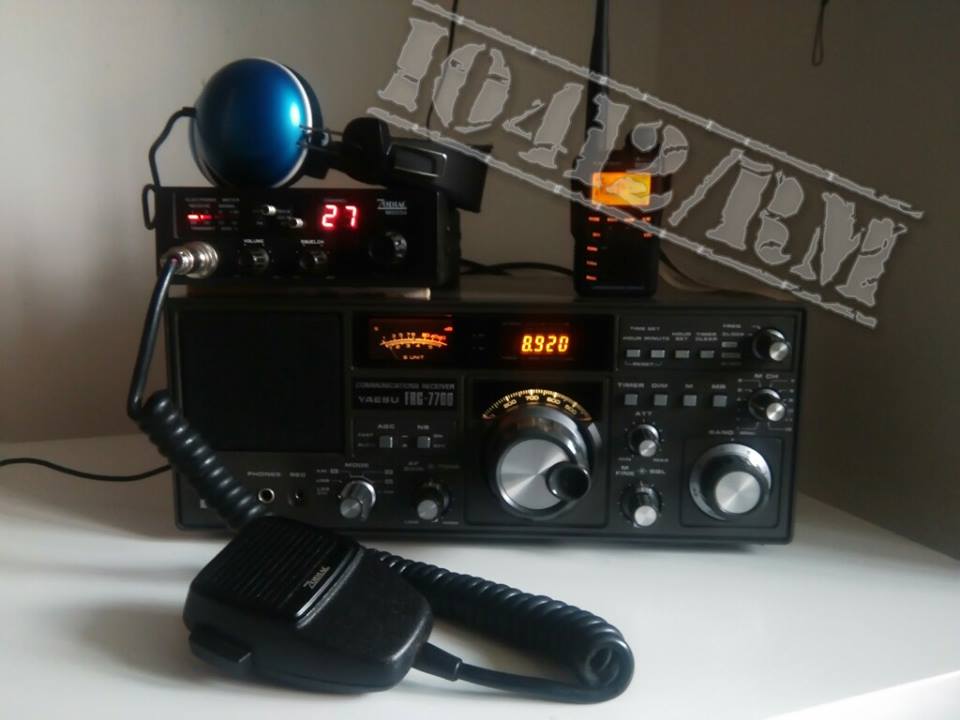
SWL: Renato Feuli (IK0OZK) Location: Valentano, Italy Notes: Woofferton at 5.895 Khz AM
Time UTC 21.33
Signal Report R/S R5 S 9+15 Db Very Good signal and audio
Equipement:
RTX JRC 245 and Windom antenna
To Ascension at 7.360 Khz AM
Time UTC 21.33
Signal Report R/S R5 S 9+10 Db Very Good Signal and audio
Equipement:
Receiver JRC NRD 545 Dsp and Long-Wire antenna
To Dhabayya at 6.035 Khz AM
Time UTC 21.38
Signal Report R/S R3 S 4/5 Low Signal and many QRM and QSB
Equipement:
Receiver JRC NRD 91 and Long-Wire antenna
SWL: Joseph Location: Ponza island, Italy Notes: I am Joseph in Ponza island, Italy, with pleasure I send you a video of the Antarctic Midwinter 2016 recorded yesterday night with my old smartphone … great about the 5985 and 7360 frequencies, very poor reception on 6035, I used the 3 receivers Yaesu vr5000 connected on a discone antenna “Midland full band”, AOR ar 3030 and Kenwood R1000 on antenna “Mini Whip”.
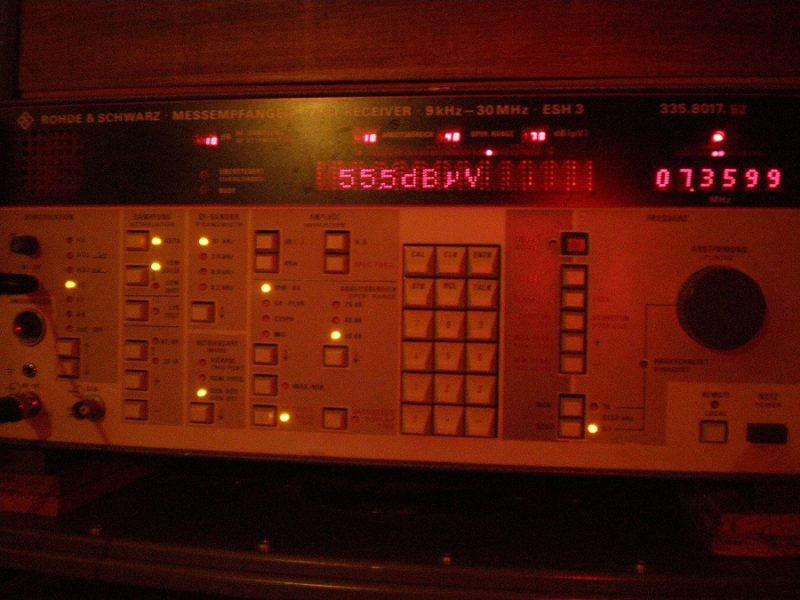
SWL: Davide Borroni Location: Saronno, Italy Notes: 21 June 2016 at 2130-2200 UTC on 7360 KHZ AM. I listened to the BBC broadcast with SINPO 54444. I listened to beautiful music and talk. Thanks for show ! I used my R&S ESH3 (see above) with my magnetic loop 2 meter diameter antenna.
SWL: Andrea Borgnino Location: Rome, Italy Notes: BBC Antarctic Midwinter Broadcast 2016 – 5985 khz 21/6/2016 recorded in Roma Italy. Click here to listen on SoundCloud.
SWL: Jordan Heyburn Location: Northern Ireland Notes:
BBC World Service Special Broadcast to Antarctica 5985khz received in Northern Ireland using a SDR Play RSP & Wellbrook ALA1530LN Active Loop Antenna. Click here to view on YouTube.
Poland
SWL: Chris Ditrich Location: Poland Notes: Reception on 5985 kHz and 7360 kHz was very good 59 – 58, however reception on 6035 kHz was not that good, signal was there but not much readable
SWL: Dmitry Elagin Location: Saratov, Russia Notes: I accepted BBC Antarctic Midwinter Broadcast in Saratov, Russia. I made video record by means of my SDRPlay.
SWL: Chris Inwood Location: Conrwall, England Notes: [R]ecorded on 5.985 MHz. This frequency was by far the best quality. I was able to copy 7.365 here but there was slight QSB and some interference from an adjacent broadcaster HCJB. 6.035 was not heard at all neither was 9.720 MHz. Very best wishes and thanks, I always look forward to my email.
SWL: Mark Hirst Location: Basingstoke, Hampshire Notes: Thanks for alerting shortwave listeners to the British Antarctic Survey broadcast. It felt very poignant listening to a broadcast aimed at such a small number of people, with the voices of their loved ones being launched around the world.
I was able to record the broadcast from only 100 miles away from the Woofferton transmitter, so needless to say the quality and strength was very good. I imagine hearing that broadcast buried in the noise from far away with those happy birthday songs and best wishes must have been very emotional for its intended audience.
My recording location was Basingstoke, Hampshire in the UK – locator IO91LH 20HH
[Note that Mark also recorded the full 30 minute broadcast which you can download by clicking here.]
SWL: Dean Allison Location: Bedlington, Northumberland, England Notes: I have attached an audio file of the BBC transmission to Antarctica. My location is Bedlington, Northumberland, England, about 100 feet above sea level, using a Kenwood R5000 receiver and a 30 feet longwire antenna about 12 feet off the ground. This was the 5985 kHz transmission.
SWL: Jerry Rhys Location: Surrey, England Notes: Attached are two recordings of today’s BBC Antarctic Broadcast made between
2130 and 2150z. The first recording was made using AM mode with 8 kHz bandwidth on 5985 then 7360, followed by 6035. The second recording was made using SAM mode with 10 kHz bandwidth on 7360, 6035, and 5985.
The best signal was on 5985, 7360 was weak but readable, on 6035 I could detect a carrier and occasional modulation – on this frequency there was also interference from a digital transmission on 6037. Nothing heard on 9720.
I was using a RF Space SDR-IQ Receiver, and a Wellbrook ALA1530S Loop
Antenna installed in my loft. Many thanks for the SWLing Post, always an enjoyable read!
SWL: Alan (G4TMV) Location: northern England Notes: Reception of this special broadcast was excellent here in northern England on 5985 kHz. It was an enjoyable broadcast again, but Babcock weren’t wasting any electricity on it, it came on and went off again almost spot on 2130 and 2200!
SWL: Dom B Location: Newcastle Under Lyme, England Notes: I live streamed the midwinter broadcast on my Tecsun PL-380 from my location in Newcastle Under Lyme in the UK
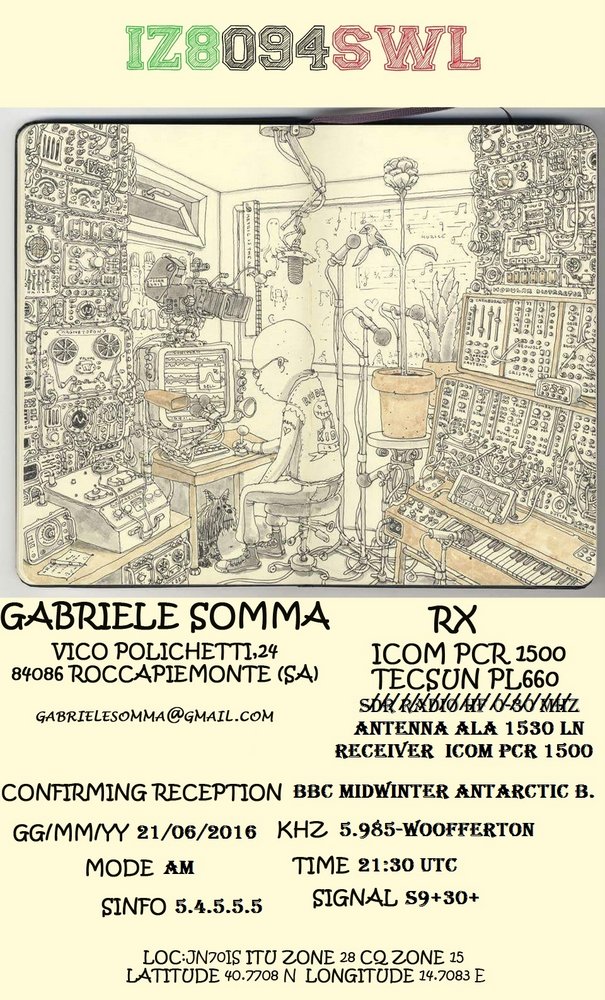
SWL: Lawrence Beedle Location: Manchester, England Notes: Here is my recording of the mid winter broadcast by the BBC 21st June 2016. Tecsun PL660 telescopic aerial, indoors, sat at kitchen table in a house in Manchester, England, UK. 5985khz good reception. 6035 kHz not as strong, 7360 kHz no reception. Recorded on iPhone next to speaker on radio. 36 seconds.
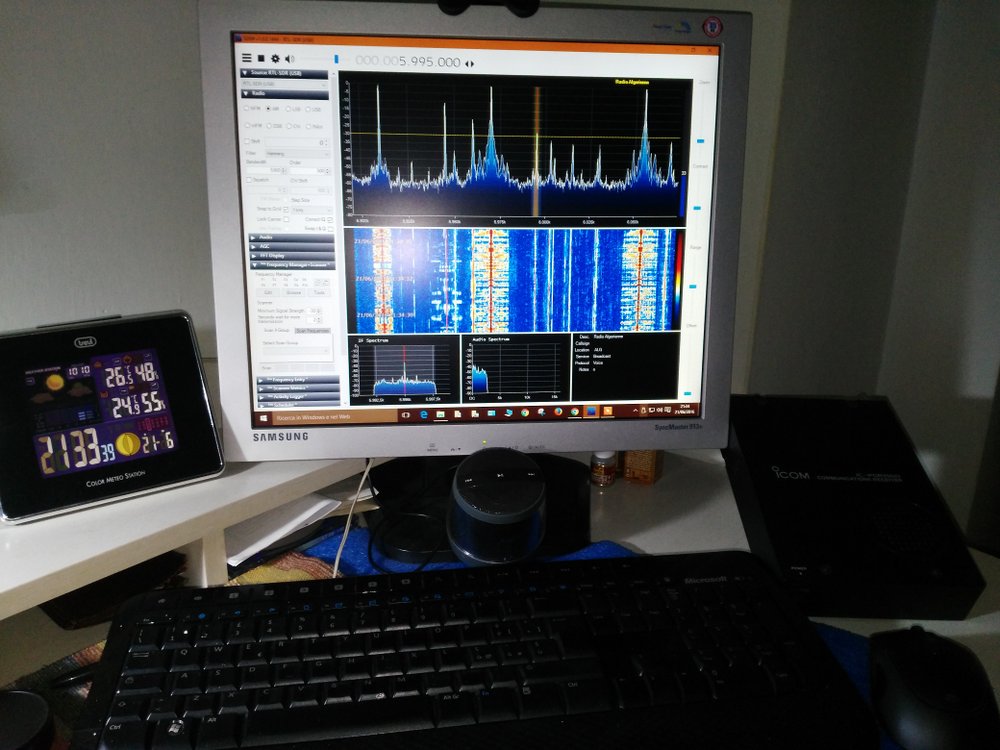
SWL: David Mappin Location: Filey, England Notes: Just thought I would let you know how I got on with the BBC WS broadcast to Antarctica. I used my Icom IC-R75 receiver and a Wellbrook ALA1530 inside the house. 5985 kHz was very strong with me here on the east coast of the UK (NVIS propagation?). Nothing heard on 6035 or 9720 but a weak signal on 7360. Attached (above) is a photograph of my listening post. This is a link to a YouTube video of the start of the broadcast. My very best regards and thank you for your excellent website.
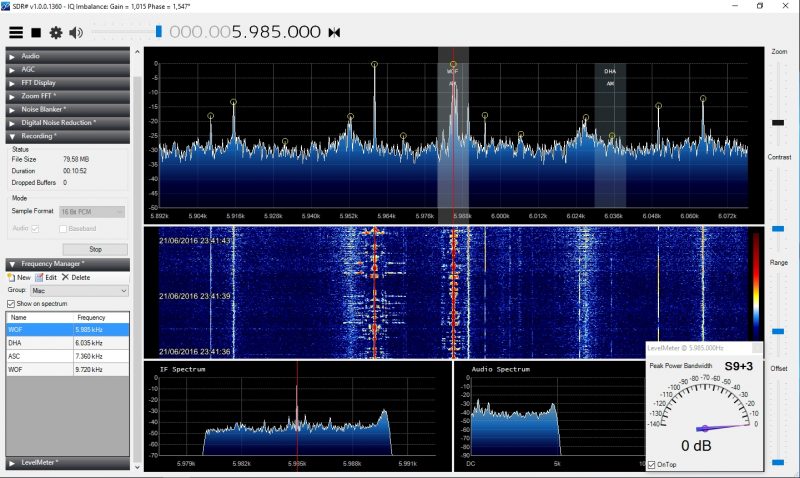
A screenshot from Cap’s Elad FDM-S1 SDR.
SWL: Cap Location: N.W. Scotland Notes: Here is my attempt last night with SDR screenshot attached, Elad FDM-S1 with homebrew mini Mag Loop (<250mm dia) sitting on my bookcase. No doubt there will be better signals/recordings than mine as the signal was really strong from WOF and considering my setup is 100% indoors, it came out ok. External antennas don’t last here as I am by the sea and regular 100mph+ storms in the winter is too much hassle.
SWL: Richard Langley Location: New Brunswick Notes: Tecsun PL-880 receiver with a Tecsun AN-03L 7-metre wire antenna in AM mode with 5.0 kHz RF filtering at the back of my yard. The photo [of Richard’s outdoor portable listening post] was taken during some other recordings last year.
Click here to listen to Richard’s recording, or simply use the embedded player below:
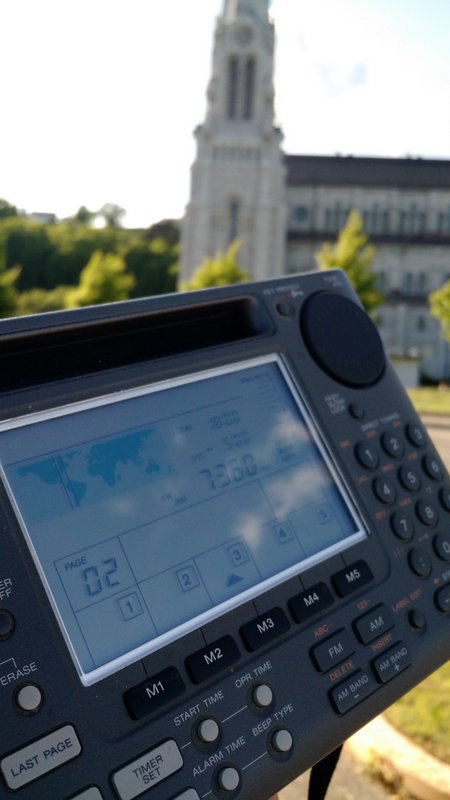
SWL: Thomas Witherspoon Location: Saint-Anne-de-Beaupré, Québec Notes: I traveled to an RFI quite spot in the parking lot of the Basilica in St.-Anne-de-Beaupré, Québec. Click here to read a full post about my set-up and conditions. Note that I used a Sony ICF-SW55 receiver (above), perched on top of my vehicle and tuned to 7360 kHz.
SWL: Dan Hawkins Location: Davis, California Notes:Here is my YouTube video. I’m using both the Sangean and Hammarlund receivers to hunt down the BBC Midwinter Antarctic Broadcast. Probably a somewhat different result than on most of the videos, but probably typical of West Coast propagation at these frequencies and times.
SWL: Nace Magner Location: Bowling Green, Kentucky Notes: Please find attached a video of my reception of the BBC broadcast. Unfortunately, a thunderstorm passed through about 10 minutes prior to the video and the audio is dominated by lightning-related crashes. However, the BBC signal can be heard periodically. My location was on a university campus in Bowling Green, Kentucky, which is about 50 miles north of Nashville, Tennessee. I received the signal using a Tecsun PL-660 and its whip antenna. I enjoy the SWLing site. Best regards, Nace Magner (KW4LY)
Once again, many thanks to all of you who submitted your recordings of the BBC Midwinter Broadcast! We’ll be sharing this post with both the British Antarctic Survey and the BBC World Service. And to all of you, from the SWLing Post: Happy Midwinter! Happy Summer/Winter Solstice!
No seasoned shortwave DXer can forget one of the most distinctive interval signals ever–the “barnyard animals” which marked the beginning of the broadcast day of Radio Botswana, Gaborone, for decades.
On its long-time frequency of 4820 kHz, Botswana was an occasional catch for me from the Seattle USA area. I yearned for clearer, more reliable reception of this station and other Africans which my East Coast USA DXer pals enjoyed!
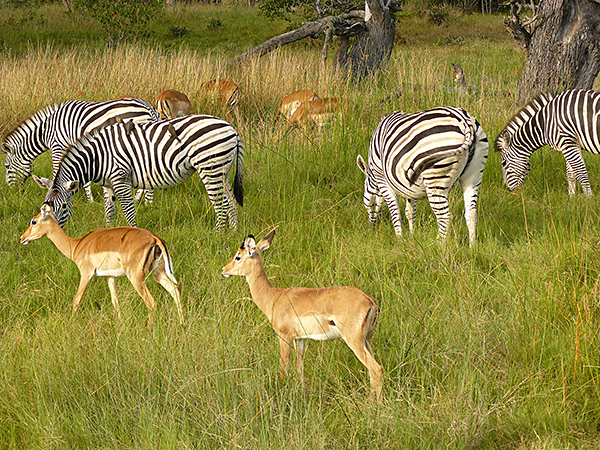
Zebras mingle with other animals at Chobe National Park, Botswana.
It was always fun–and a DXing challenge–to catch Radio Botswana’s interval signal and sign-on announcements, but it was typically mid winter for reception in Seattle. Propagation on 60 meters needed to be favorable to enjoy anything other than a weak, barely listenable signal. Imagine my surprise and excitement when on the evening of December 27, 1987 I came upon the following signal booming in on 4820 kHz, far, FAR better than any previous Botswana reception. Indeed, their signal that evening surpassed in clarity even the Papua New Guinea and Indonesian “regulars” I would hear on the tropical bands from the Northwest USA.
This recording begins with the famous barnyard animals interval, the beautiful Botswana national anthem (Fatshe leno la rona, or This is Our Land in English) and is followed by a full list of broadcasting frequencies and times in English and the (presumed) Setswana language. That information is followed by a flute instrumental version of the Christian hymn Beautiful Savior, which introduces a short devotional or scripture message. The 10 minute recording wraps up with an a cappella children’s choir.
Great Circle route from the Gaborone transmitter to Seattle receiver location.
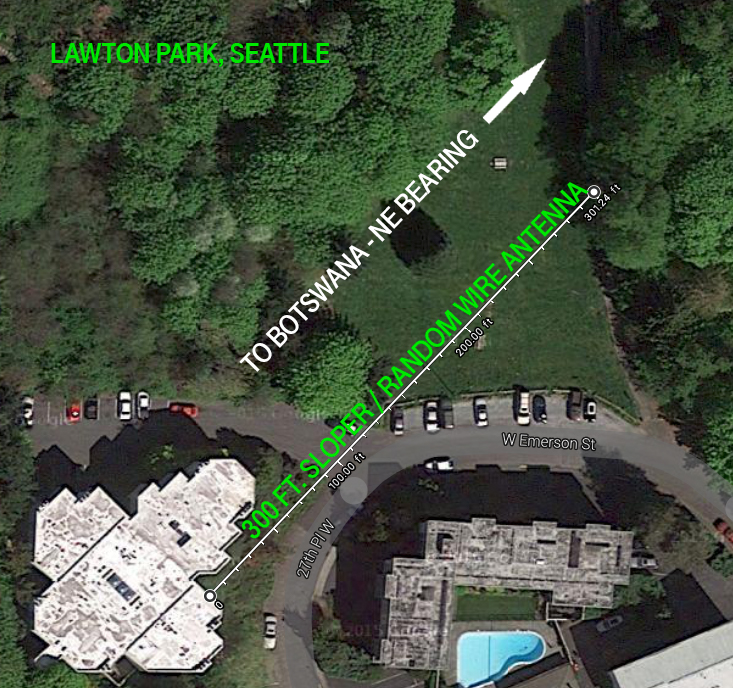
My receiving setup for this 1987 recording was an ICOM IC-R70 and a 300 foot long random wire antenna. Such a long antenna is unusual for the middle of an urban area, but I took advantage of living in a 3rd floor apartment across from a small city park. One midweek day, while most folks were at work, I managed to string out this long antenna with very small diameter braided steel wire from the 3rd floor apartment balcony to a distant treetop. This “sloper” antenna had significant directivity to the northeast, which happens to be the bearing for many African stations heard from the Pacific Northwest USA. The small diameter wire was suspended so high that it was virtually invisible from ground level.
Antenna orientation for 1987 reception of Radio Botswana. I’m sure this urban location is plagued by QRM and radio frequency interference now in 2016! My ICOM IC-R70 receiver handled the strong signals from nearby MW & FM broadcasters surprisingly well with the addition of a Grove Tun3 Mini-tuner preselector.
I continued to log Radio Botswana occasionally on 60 meters until the station eventually left the air (early 2000s I think), but I never heard them again with such a strong, clear signal as in late December 1987!
Guy Atkins is a Sr. Graphic Designer for T-Mobile and lives near Seattle, Washington. He’s a regular contributor to the SWLing Post.
We’ve just posted yet another excellent recording by Tom Laskowski to the Shortwave Radio Audio Archive. I thought a number of Post readers might appreciate this one.
Tom notes:
KNLS – Anchor Point, Alaska, from what I believe is a test transmission on August 1, 1983. According to Wikipedia, KNLS signed on the air July 23, 1983. The program consists of the sign-on ID in English and Russian then is mostly a mix of Big Band music. This recording is 31 minutes long.
Tom’s receiver was a Sony ICF-2001 and he started recording at 09:00 UTC on 11.820 MHz. His location, at the time, was South Bend, Indiana (USA).

 The Elad FDM DUO makes for a fantastic receiver, in both standalone mode and via the FDM-SW2 software. Thus far it has been demonstrating this by outperforming the Sony ICF-2001D in many of my reception tests using an experimental longwire antenna. Bear in mind that whilst this might not be such a surprise, the Elad without the FDM-SW2 software driving it has no SYNC, which is often invaluable for Tropical Band DXing. To make the point further, here is a wonderfully clear signal from Ethiopia, with, in my experience at least, exceptional signal-to-noise.