Tag Archives: Reviews

Mike’s review of the Commando R-777 self-powered shortwave radio

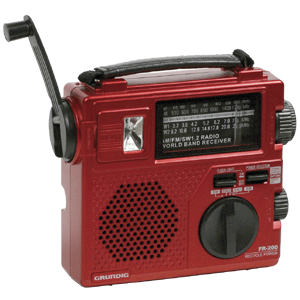
The Commando R-777 Self-Powered Digital World Band Radio

The Commando R-777 Self-Powered Digital World Band Radio

Mike Kitchen, a volunteer at Ears To Our World, purchases and tests radios for us. Mike does an excellent job evaluating radios and simply keeping tabs on newly introduced self-powered products.

Mike has kindly allowed me to share the assesment he sent of the Commando R-777; a radio that, performance-wise, leaves something to be desired.

Mike writes:

This thing is pretty awful, in an ugly/cute way. FM mode works quite nicely. In AM mode, LCD screen shows as much as 8 KHz off of actual frequency. SW1 and SW2 modes failed to detect anything on the shortwave bands.  The WWV time signal on 10MHz, 15MHz and 20MHz was no joy.

Steady charging with crank handle for 2 minutes provided 20 minutes of low volume listening time.

From a depleted battery pack, one minute of cranking/charging will keep LED bulb lit for about 10 minutes of usable light, then dim light for few more minutes. [As a point of comparison, the Grundig FR200 could provide almost an hour of light from one minute of cranking.]

The carry handle makes for a good grip while cranking what is described as the “Shakeable Generator” handle.

This radio has roots from the Grundig FR-200, being same dimension and weight.  This R-777 had a sturdy feel to it. The charging handle feels very much like any other FR-200’s while one is cranking, except this R-777 is much quieter.  None of the funky whining sounds as with older versions.

I’m going to keep this R-777, as a reminder of how a good idea can be half heartedly attempted, resulting in such a poor product.

Still on the market as the Tecsun Green 88, this little self-powered radio packs a big punch.

Still on the market as the Tecsun Green 88, the Grundig FR-200 is one of the best sel-powered radios I’ve ever tested.

I believe Mike and I both miss the Grundig FR-200.

With that said, we still have the Tecsun Green-88 available on eBay; a radio almost identical to the FR200.

You can click here to search eBay for the Tecsun Green-88 or the Commando R-777.

Mike, thanks for sharing your mini review!

Review of the Elecraft KX3: world-class transceiver, superb shortwave receiver

I originally wrote this review for Monitoring Times Magazine, May 2013 issue (pages 56-57). The review that follows has been expanded and includes updates.

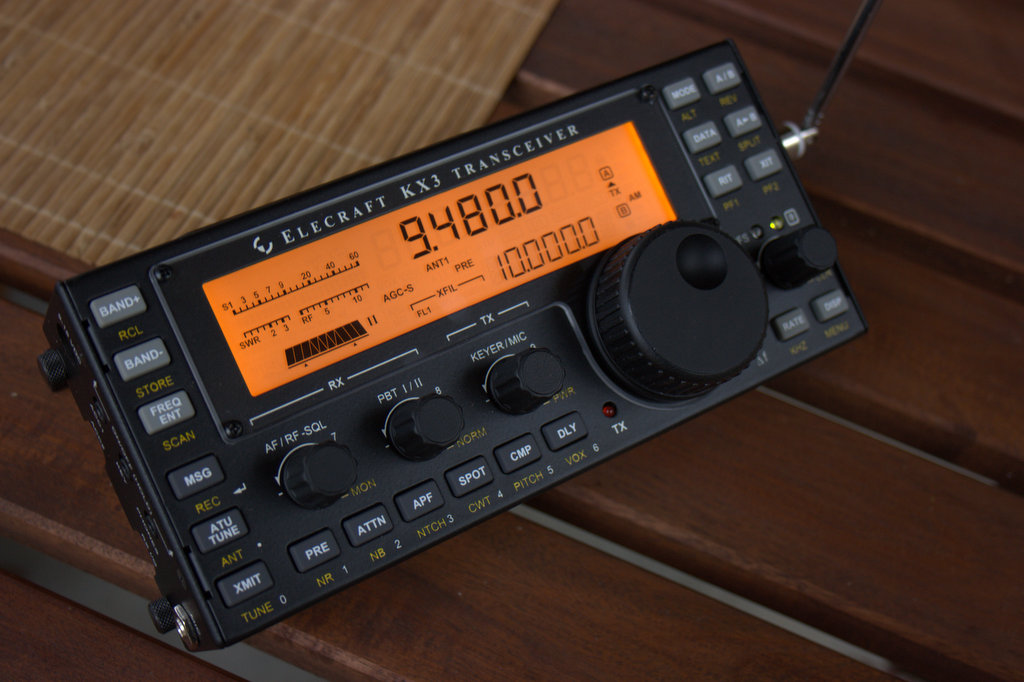
The Elecraft KX3 Transceiver (Click to enlarge)

The Elecraft KX3 Transceiver (Click to enlarge)

You may have noticed that in the past few years, while more and more software defined radios (SDRs) are appearing on the market, fewer and fewer traditional tabletop shortwave receivers are being introduced. Most of the receivers in production, meanwhile, are quite mature, having been in production for years. For those of us who still have an appreciation for the traditional front panel, tuning knob, and portability of an all-in-one tabletop receiver, perhaps we should look to the active ham radio transceiver market.

Introducing the Elecraft KX3

Besides being an avid SWLer (ShortWave Listener, for the newbies out there), I’m also a ham radio operator (callsign: K4SWL). But if you’re not a ham, you may not be familiar with the innovative, US-based radio designer and manufacturer, Elecraft. First of all, note that “US-based” adjective: this is an increasingly rare phenomenon in the world of radio production, and it deserves a word of praise up front. Elecraft started life as a kit manufacturer, focusing on QRP ham-band-only radio transceivers that were effective, affordable, and maintained a very high level of performance. Their K1, KX1 and K2 transceivers are legendary, and I’ve had the good fortune to own them all at some point along the way. Their K3, introduced in 2008, became a benchmark transceiver and still tops the charts in performance; it’s truly a choice DXpeditioner’s radio.

In 2011, Elecraft introduced the KX3–a portable SDR transceiver with a full-featured knob-and-button user interface that doesn’t require connection to a computer to operate. At the Dayton Hamvention, the KX3 instantly drew crowds, as it was unlike any other transceiver on the market. I was there, and like others in the crowds around the Elecraft booth, I was eager to try out this full-featured transceiver, especially upon learning that even the basic, no-options model has a general coverage receiver. A ham transceiver with “general coverage,” incidentally, means that its receiver is not limited to the ham bands only; these receivers typically receive between 100 kHz and 30 MHz (i.e., the full shortwave radio spectrum). That morning at the Hamvention, I quickly made my way to one of Elecraft’s owners, Wayne Burdick, to ask him,“Would the KX3 make for a good shortwave radio receiver?” Wayne’s prompt response: “Yes.”

That was enough for me: more than ever, I simply couldn’t wait to get within reach of a KX3. Why? I love to travel and take radio along, but I’ve always had to haul separate transceivers and receivers for my separate-but-related hobbies: 1) ham radio and 2) SWLing. Perhaps the KX3 would suit both purposes? I was hopeful. If this was true, with a KX3, I could have a full-featured QRP transceiver and a shortwave receiver in one…and a portable one at that. Ideal!

I just had to get my hands on one to find out.

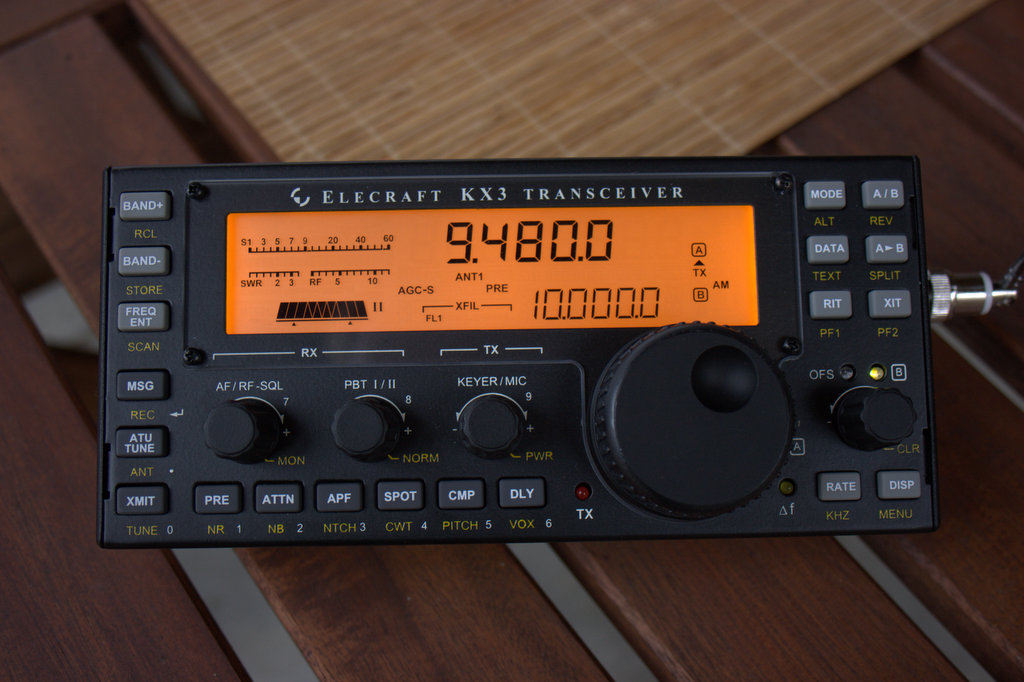
(Click to enlarge)

(Click to enlarge)

A closer look

Though the KX3 was introduced in the summer of 2011, it didn’t start shipping until a few months later, and there was a backlog of orders for it. Fortunately, my good buddy, Dave Anderson (K4SV), was among the first purchasers of the KX3, and he was generous enough (and trusted me enough!) to let me borrow it.

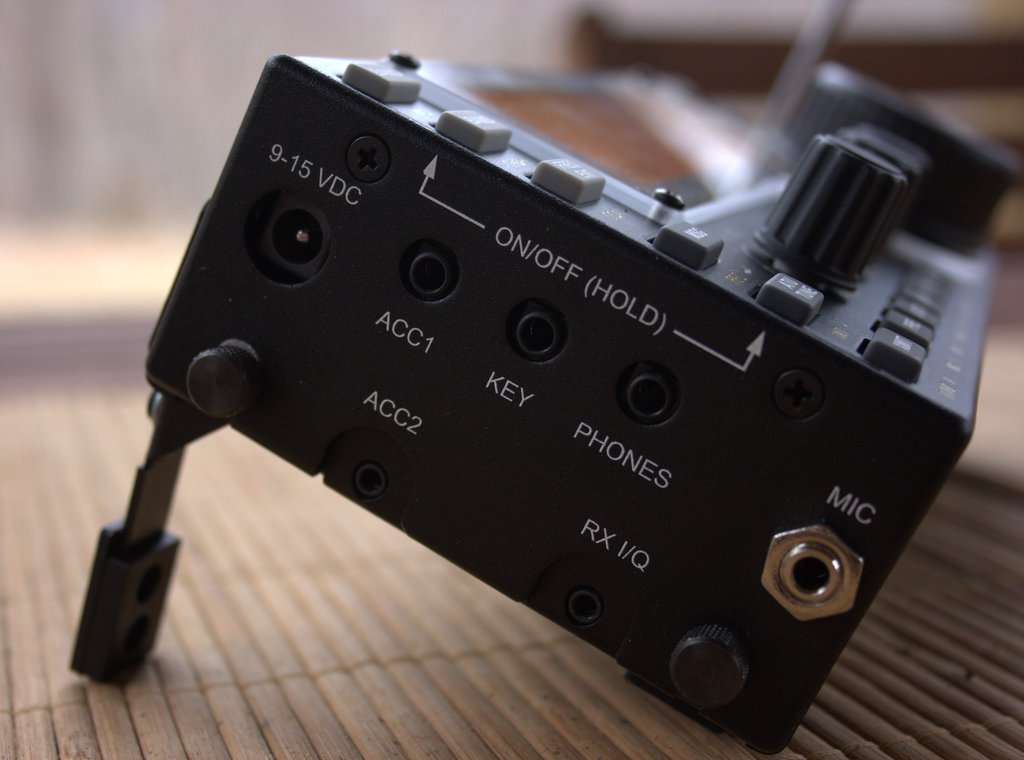
At first glance, the KX3 resembles just the faceplate of a tabletop radio: it has a large tuning knob, wide, clear amber backlit display, and a traditional set of function buttons and multi-function knobs…but not much else. Or so it appears, as there’s no bulky chassis. Connections for microphones, DC power, headphones, IQ out, key and PC interface are located on the left side panel of the radio, while the RF connection (a female BNC) is on the right side panel. The KX3 has built-in folding feet, quite sturdy, that allow the radio to be tilted at a comfortable angle for tabletop operation.

To best evaluate the KX3, I’ll first discuss some of the features that would interest a ham radio operator, then focus on those best suited to the SWLer.

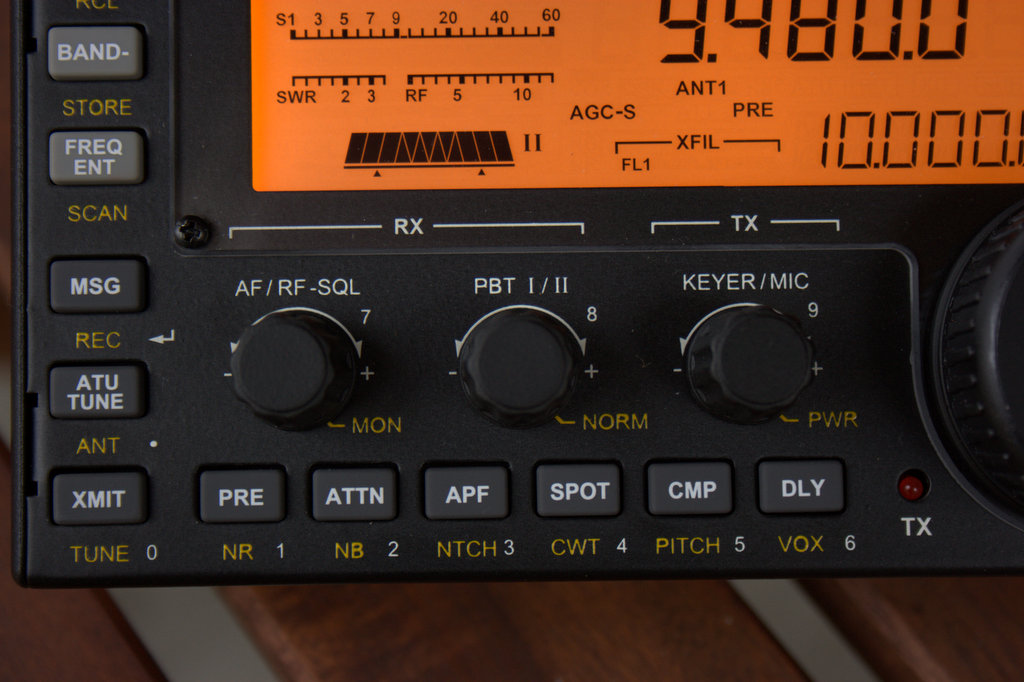
There is a hidden keypad for direct frequency entry (notice the numbers printed next to the multi-function knobs and buttons?)

There is a hidden keypad for direct frequency entry (notice the numbers printed next to the multi-function knobs and buttons?)

Everything for the Ham

If you’re a ham, you’ll love the feature set on the KX3. It must be one of the most comprehensive set on any radio I’ve ever used. At a bare-bones level, meaning without adding any options, the basic KX3 is truly an all-in-one QRP transceiver.

Of course, it will function on any mode: USB, LSB, CW, data, AM and FM. The output power is adjustable from 0 to 10 Watts. You can easily adjust the DSP filters, AF, RF, passband, and notch all from dedicated buttons and knobs. It even has a memory keyers for both CW and voice.

You say you prefer digital modes? Not only will the KX3 natively decode RTTY and PSK31 and display the scrolling text on the display, but you can also send RTTY and PSK31 without a PC. How? Simply set the appropriate data mode and use your key to tap out your message in CW. Though you will hear the CW side tone, the KX3 will transform your code into RTTY or PSK-31, and send. Hypothetically, armed with only a KX3, you could run a RTTY contest from the field with no computer. Remarkable.

The variable DSP filtering is most impressive and the KX3’s ability to block adjacent signals is benchmarked. Indeed, if you look at Sherwood Engineering’s receiver test data rankings (http://www.sherweng.com/table.html), which are sorted by third-order dynamic range (narrow spacing), the KX3 is second only to the Hilberling PT-8000A, an $18,000 transceiver.

With the installation of the $170 optional internal automatic antenna tuner (the KXAT3), you will be able to tune most any wire antenna on the go, with no need to carry an external ATU.

In short, for the ham, the KX3 offers a cornucopia of features, too numerous to list here; but I can at least tell you that I discover something new on this radio almost every day and continue to be amazed by the features on this transceiver, especially considering that it costs only $1000 ($900 in no-solder modular kit form).

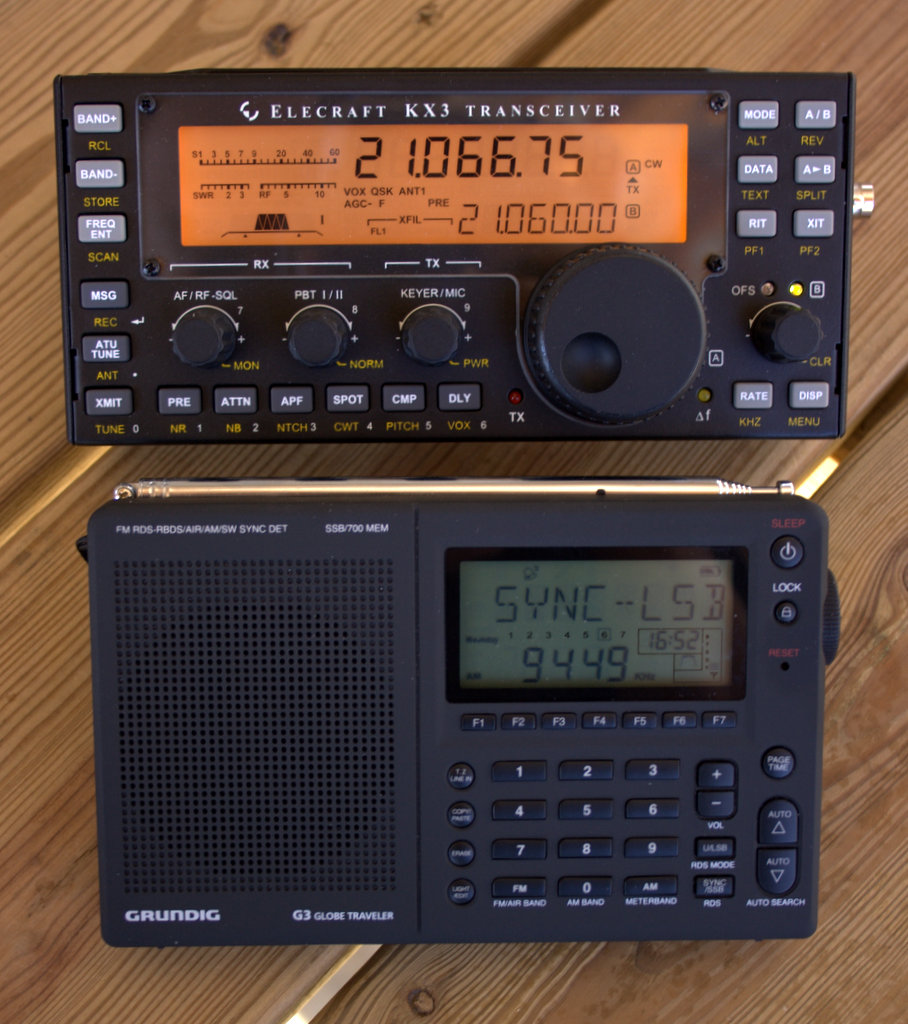
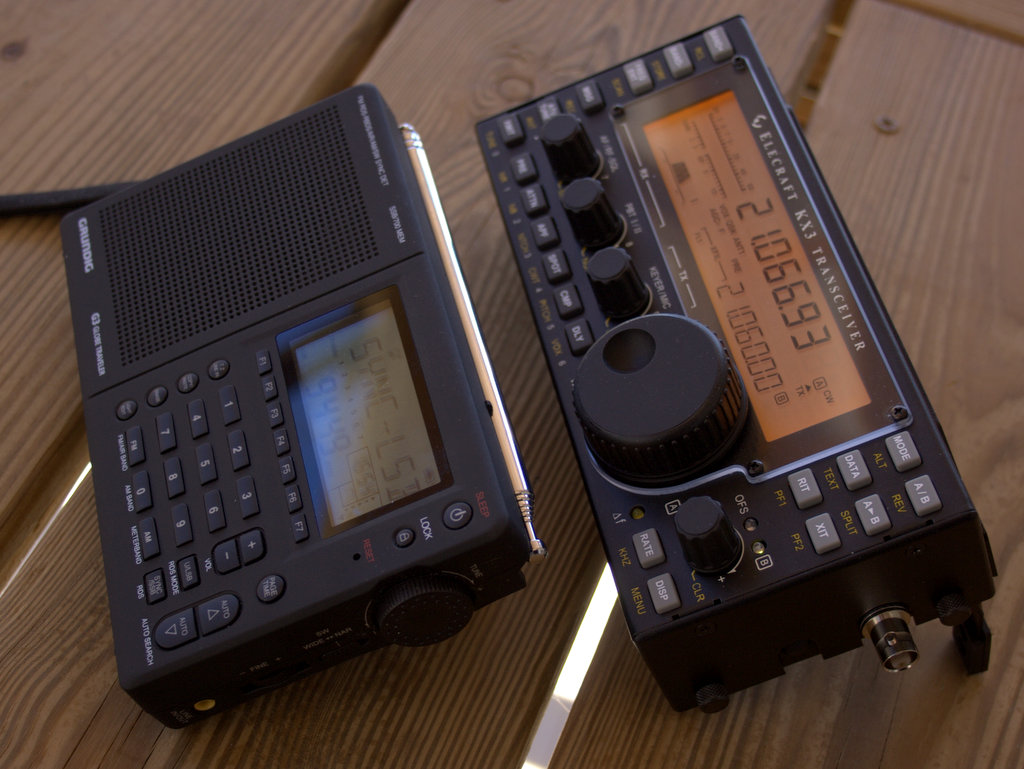
The Elecraft KX3 is built for travel and portability--here we compare its size with the Grundig G3

The Elecraft KX3 is built for travel and portability–here we compare its size with the Grundig G3

For the SWLer

We’ve talked about the KX3 as a ham radio transceiver, but how does it stack up if your primary interest is to just sit back and listen to broadcasts? Short answer: Very, very well.

The KX3 is loaded with features that would please even the most discriminating DXer.

First, on the faceplate, the KX3 has a multi-function knob that controls both the AF and RF gains. It’s very simple to use, even though I’m not a fan of switching between the AF/RF gain controls on the same knob. AF gain is what most of us refer to as a volume control and many dedicated shortwave receivers lack an RF gain control even though it’s a vital tool for broadcast listening in noisy conditions. By default, the KX3 RF gain is set to zero; turning the RF pot counter-clockwise will decrease RF gain.

Grundig G3 (left), Elecraft KX3 (right)

Grundig G3 (left), Elecraft KX3 (right)

The KX3 also has three different preamp settings, which are useful for amplifying weak stations, as well as an attenuator for local or strong broadcasters. The KX3 has passband and notch filtering, and an auto-notch function that effectively deals with heterodynes from nearby carriers. The KX3 also has DSP noise-reduction (NR) for noisy band conditions (or to help a signal “pop” out from the noise) and noise blanking (NB) for local RFI.

Many automatic gain control (AGC) parameters are adjustable, too, so they can be tweaked for AM fading and weak-signal DXing. The fact is, the KX3 has more built-in receiver controls than the dedicated tabletop shortwave receivers I’ve owned.

Audio

Left side panel of the Elecraft KX3 (click to enlarge)

Left side panel of the Elecraft KX3 (click to enlarge)

To be clear, however, there is one negative in the architecture of the KX3 when viewed through the eyes of an SWLer. The KX3 is designed around the amateur radio operator and AM bandwidth is narrower than you will find on most dedicated tabletop shortwave receivers–indeed, a commonality on any general coverage ham transceiver. The KX3’s AM bandwidth can only be widened to 4.2 kHz–a figure that almost made me dismiss this radio’s SWLing abilities out of hand. I’m glad I didn’t let that spec stop me, though: I had read many a favorable comment from KX3 owners who used the radio to listen to the broadcast bands. Their comments on the audio were very positive, and for good reason.

What the KX3 lacks in wide bandwidth is made up for by the 32-bit floating point DSP architecture. I’m not sure how, but the KX3’s audio fidelity “sounds” much wider than 4.2 kHz. Indeed, I still have a difficult time believing that the filter is not closer to 7-8 kHz in width. When using headphones or amplified speakers, the bass response rivals some of my tube receivers. There are even adjustable 8-band equalizer settings for audio to improve this even further.

In addition, Elecraft has unique audio effects available in the audio effects menu. One I’ve found very valuable in broadcast listening is called “delay,” a stereo simulation effect that broadens the mono sound in such a way that the audio sounds even richer.

Memories, scanning and tuning

The KX3 has 100 general-purpose VFO A/B memories with optional alpha numeric labels. It also supports channel-hopping or scanning within any number of labeled memory groups. Auto scan is simple and works in both muted and (my favorite) non-muted, or continuous, modes.

The KX3 can also use the “K3 Memory” application from Elecraft’s K3 transceiver, which allows for longer labels and the instant selection of desired memories from a PC. The “K3 memory” application is a free software download on Elecraft’s website.

The tuning knob on the KX3 is substantial and of good quality. It’s only slightly smaller than the tuning knob on my Alinco DX-R8T, so it’s a substantial knob, which is helpful to big (or buttery) fingers. The drag can be easily adjusted with a supplied hex wrench. The tuning rate can be adjusted to .5 kHz increments, allowing you to quickly tune through the band. The small multi-function knob next to the main tuning knob can also be set for a 1 kHz rate.

At first glance, you might not realize that the KX3 has a direct frequency-entry keypad. Check out the photo, however [MAKE REFERENCE TO POSITION ON PAGE]. The buttons and multi-function knobs in the lower left quadrant of the KX3 double as number pad, decimal point, and an “enter” button for a keypad. I thought this a bit odd at first, but now find I use this all the time.

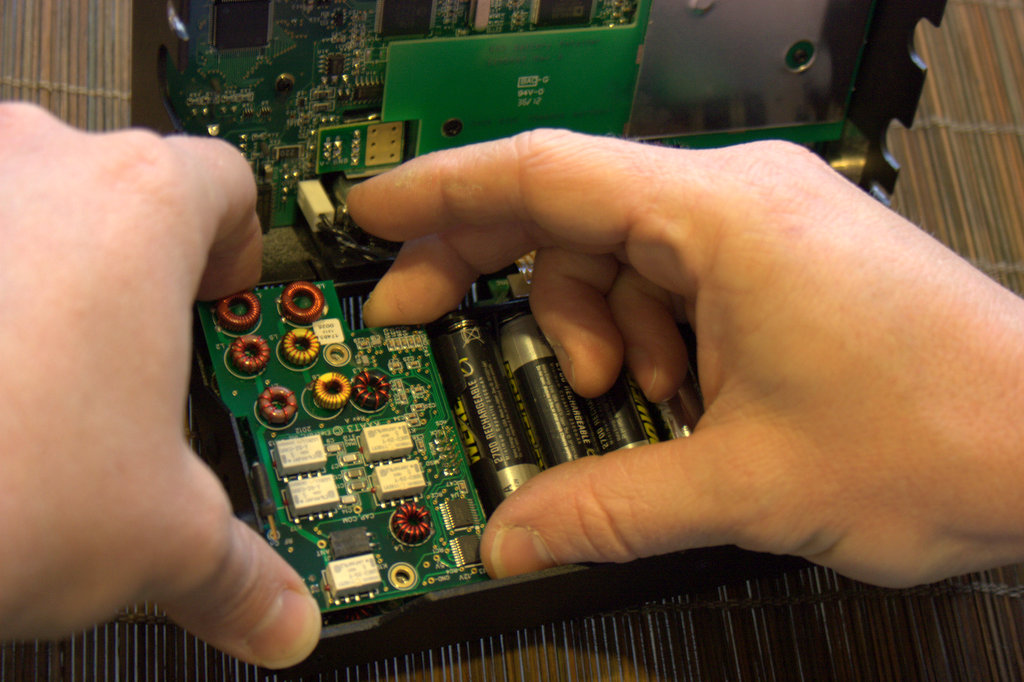
Installing the optional ATU is very simple and requires no special tools or soldering

Installing the optional ATU is very simple and requires no special tools or soldering

Optional ATU: Worth the Cost

As I mentioned earlier, the optional automatic antenna tuner, the KXAT3, makes a lot of sense for the ham who operates portable. If you are a licensed amateur radio operator, the ATU can be a powerful tool for matching random length, or multi-band antennas to your desired broadcast band by tuning to a nearby ham band frequency. The L and C parameters of the tuner can be manually adjusted to optimize without transmitting. The user can select one of 8 L’s or one of 8 C’s parameters in the ATU MD menu entry. When an L is selected, C is set to 0, and vice-versa. However, it is not presently possible to select combinations of L and C to achieve a closer resonance. Still, selecting an L or C value in this way will provide a useful increase in gain.

In addition, if you like medium wave (MW) DXing, the ATU comes with MW (AM broadcast band) filtering that tracks the VFO, somewhat improving image rejection between 300-1,000 kHz. I have tested the KX3 on medium wave both with and without the ATU installed and find that it certainly improves rejection.

To be clear though, sensitivity decreases as you tune below 1,500 kHz. Elecraft informed me that it was necessary because the KX3 uses PIN diodes in its T/R switch, and the signal must be high-pass filtered to avoid IP2 problems with the diodes. When you tune through the 300-1200 kHz range (or so) you will certainly notice the loss of sensitivity. Elecraft also noted that selectivity in the AM broadcast band was not a major design criteria, so in this band the 160 meter low pass filter is used. This is not ideal from a harmonic rejection standpoint, and there will be some 3rd and 5th-harmonic images from strong stations. Adding the ATU helps with this. However, adding the ATU doesn’t generally improve sensitivity in this range.

The ATU is very easy to install–almost “plug and play” (see photo).

Oh, yes–and it’s an SDR, too!

As if the KX3 didn’t do just about everything, it also has a quadrature down-sampling mixer compatible with PC-based SDR (software-defined radio) applications. This means, via a shielded stereo audio patch cable and a supplied USB control cable, you can connect the KX3 to your PC and use a freeware SDR application like HDSDR to turn your KX3 into a proper software-defined receiver.

SDR functionality is limited to receiver functionality, and depending on the bandwidth and sampling rate, will be dependent on the quality of your sound card. The true benefit is the ability to see a wide–48 kHz or more–chunk of spectrum.

Summary

Every radio has its pros and cons. When I begin a review of a radio, I take notes from the very beginning so that I don’t forget some of my initial impressions. Here is the list I formed over the time I’ve spent evaluating the KX3. Note that I created this list with the shortwave listener in mind, not necessarily the ham radio operator.

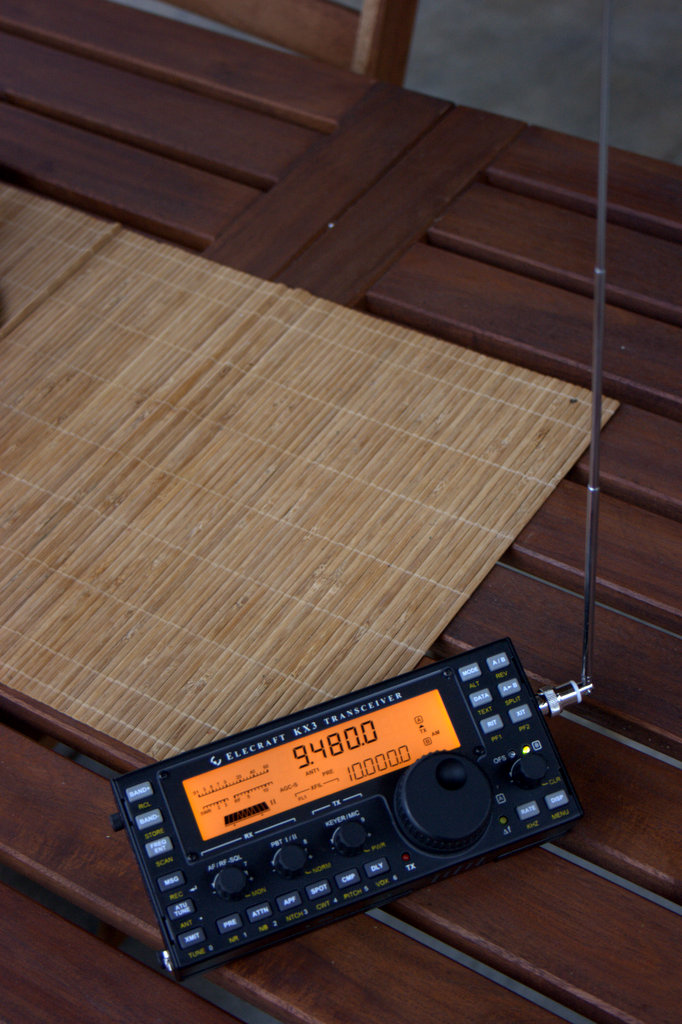
I even had some success SWLing using an inexpensive whip antenna (attached via BNC).

I even had some success SWLing using an inexpensive whip antenna (attached via BNC).

Pros:

  • World class, benchmarked receiver performance powered by high-performance 32-bit floating-point DSP
  • Rich, full audio fidelity on AM despite limited bandwidth (see con)
  • AF and effective RF gain controls
  • Adjustable filters (no optional roofing filters needed for SWLing)
  • Superb sensitivity and selectivity; outperforming even my WinRadio Excalibur with weak signal DXing
  • Very low noise floor
  • Auto-notch, which helps eliminate annoying heterodynes, even in AM
  • Internal ATU option brings improved MW image rejection (see MW con) and hams have the ability to tune a random length antenna
  • Natively decode (170 Hz) 60-WPM RTTY and display it right on the KX3’s VFO B display, which is alphanumeric
  • Battery operation via 8 AA batteries
  • Lightweight
  • Dedicated headphone jack
  • For non-ham radio operators, the transceiver can be disabled and re-activated once you have a license with a simple hardware adjustment. No need to fear accidental transmission
  • For hams, or those who plan to become one, the KX3 is a QRP transceiver in the top of its class

Cons:

  • AM bandwidth limited to 4.2 kHz (see pro)
  • Hand mic connector is the less standard 3.5 mm audio plug
  • Built-in speaker is small with limited volume and fidelity–only intended as a back-up when headphones or external powered speakers are unavailable
  • AA batteries fit a bit tightly in internal holder and can present a challenge to remove
  • Medium wave reception is mediocre at best, but with the optional ATU, is improved though slightly better image rejection (see ATU pro)
  • Very slight audio whine (similar to a faint heterodyne sound) heard in some zero beat AM stations; may be fixed in future firmware update
  • No AM sync detector (AMS)

Did I buy one? Confession time

I must admit, I was appreciating my buddy Dave’s KX3 very much. Maybe too much…

I have three hobbies: shortwave radio listening, ham radio, and traveling. After using the KX3 for a few hours, I knew it would be my perfect companion. Not only is it a top-notch amateur radio transceiver, its also an excellent shortwave radio receiver. It’s portable, but also makes an excellent tabletop radio. It’s an all-in-one radio, but can also double as an SDR when connected to a PC.

So, is the KX3’s broadcast audio fidelity as good as a purpose-built broadcast receiver like the legendary Drake R8B? Not quite. But I would argue that its ability to receive weak signals would give even a Drake a run for its money. I have to admit, the KX3 receiver outperforms my Alinco DX-R8T in every respect. Even though the AM bandwidth is limited to 4.2 kHz, I think the audio also sounds better than my Alinco and any of my portable radios with wider bandwidth.

The Elecraft KX3 Transceiver (Click to enlarge)

My Elecraft KX3 Transceiver (Click to enlarge)

Needless to say, I bought one. It was only fair to Dave, who needed to discover for himself what his loaned-out rig could do.

The KX3 is a game changer for me. Though I’ve always carried portable transceivers in my travels, I’ve also had to carry a separate tabletop receiver and an SDR or portable radio for my SWLing. No more. Moreover, I like the broadcast audio on the KX3 well enough to record and archive shortwave broadcasts, which I frequently do for my blog, The SWLing Post and The Shortwave Radio Audio Archive. In my shack, I’m even considering purchasing Elecraft’s 100 watt amplifier and doing away with my 100 watt tabletop transceiver.

As for support? No worries there. I’ve been an Elecraft customer for years and I can tell you that they believe in and stand behind their products. I purchased with confidence.

I encourage you to try on the KX3 as well. It may very well be all the radio you’ll ever need.

A review of the Tecsun R-2010D shortwave radio

The Tecsun R-2010D (click to enlarge)

The Tecsun R-2010D (click to enlarge)

SiLabs DSP chips are now in the bulk of the newest portable shortwave radios on the market. And it’s no wonder: these small chips offer more features and improved performance, when properly implemented. Manufacturers love them, of course, because these little chips allow them to produce radios at a much lower cost–some of which they pass on to the consumer–for widening their profit margins.

While there are a few other mechanically-tuned DSP portables on the market–the Degen DE321, DE32, Kchibo KK-9803, to name a few–the Tecsun R-2010D stands apart in that it has a digital frequency display. Tecsun was able to achieve this by building the R-2010D around the SiLabs Si484X chip set. The Degen and Kchibo models actually use the Silicon Labs Si4831/35-B30, which lack a provision for digital display.

Tecsun first announced this receiver three years ago with the model number R-2010. Since then, I have received a lot of questions about this particular radio, so when I first heard that the R-2010D was available for purchase, I ordered one immediately from Anon on eBay.

Unpacking

I received the R-2010D in less than two weeks via airmail from Hong Kong. It was packed in a padded envelope, and while the postal service wasn’t terribly gentle with the package (the R-2010D’s box had damaged corners) the radio inside was perfectly fine.

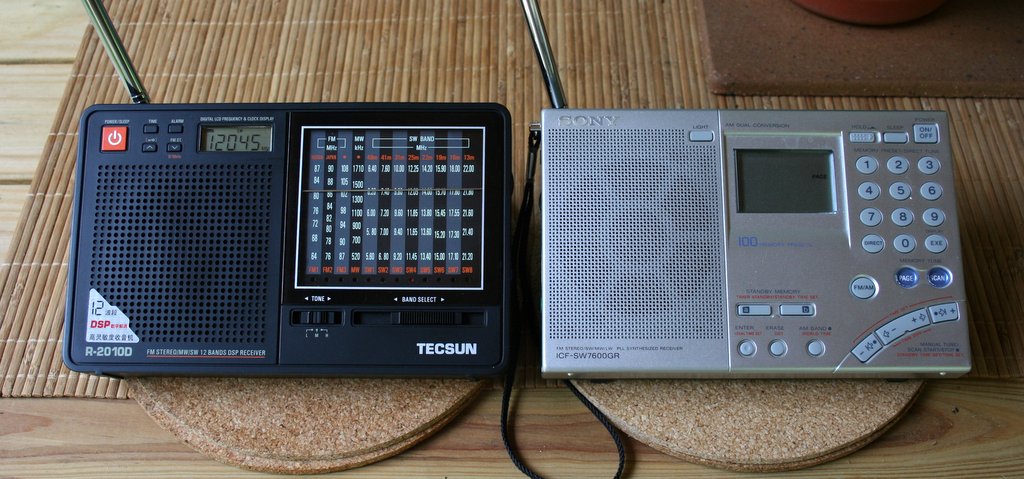
The Tecsun R-2010D compared with my Sony ICF-SW7600GR (click to enlarge)

The Tecsun R-2010D compared with my Sony ICF-SW7600GR (click to enlarge)

My first surprise after pulling the R-2010D from its box was the discovery that it was much bigger than I thought it would be. I had assumed it would only be marginally bigger than the Degen models listed above; instead, it’s almost identical in size to my Sony ICF-SW7600GR (one of my largest true portables).

Immediately, without even turning the radio on, I noticed that Tecsun had put more thought behind the R-2010D mechanics and ergonomics than either Degen and Kchibo had in their comparable models.

First of all, the larger size means that the analog display is relatively large. One of the problems with the smaller portables is the difficulty in reliably tuning in a station on a tiny analog dial. With the larger dial, I could tell the R-2010D would be easier to tune accurately.

The telescopic whip antenna is another strong point. Like pricier portables, it is fairly robust, long, and fully rotatable. This is a welcome departure from many portables I’ve seen lately that have puny, fixed-position telescoping antennas. I was even further shocked to notice a dedicated FM & shortwave antenna jack on the left side of the unit. Wow.

(click to enlarge)

(click to enlarge)

My R-2010D also came with a nice carrying bag and a pair of headphones. While it lacked a set of Ni-MH rechargeable batteries (which can be charged internally), I was pleased with Tecsun’s choice of AA batteries instead of the thin Ni-MH proprietary battery pack the Degen models use. I’m one radio listener that is content having a slightly larger radio in exchange for powering my receiver with standard AA cells. Plus, I have a large collection of Ni-MH AA batteries and a charging station specifically for use in my portables (and you should, too–check out my previous post on the topic).

Performance

I’ve had the R-2010D on the air for a few days, and have formed some initial impressions. I may follow up in the near future with corrections or further observations [spoiler alert: especially since there are serious issues with this model] but I feel pretty confident about my assessment, even with only a few days on the air.

First, let’s talk about the positives…

What a difference a digital display makes

(click to enlarge)

(click to enlarge)

One commonality in all my previous reviews of mechanically-tuned DSP radios is the quirkiness of a precise 5 kHz stepped digital tuner with a vague mechanical analog display as interface. The combination, especially with a little muting between frequencies, makes for a band-scanning chore.

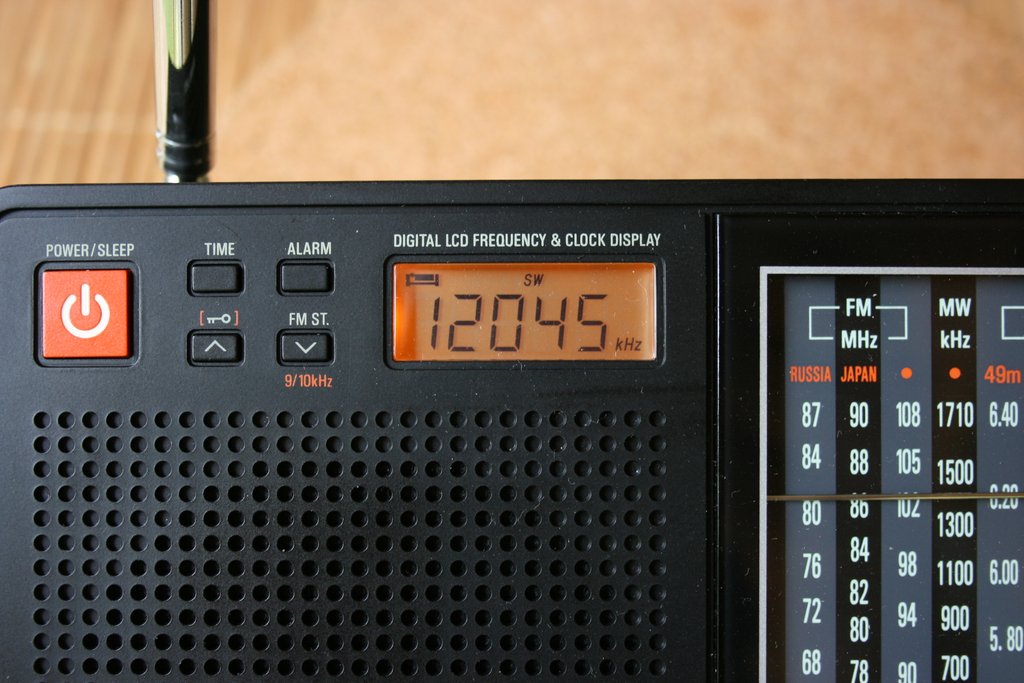
I’m willing to bet that Tecsun realized this weakness and this is the reason they redesigned the radio around the Silicon Labs Si484X (sources tell me when Tecsun first announced the R-2010, they had planned to use the Silicon Labs Si4831 chipset). The Si484X chip allows the R-2010D to offer a precise digital frequency display next to the analog dial. Nice touch; you can accurately confirm your frequency! Secondly, the R-2010D analog dial is large, making the space between tuning steps more broad and therefore easier to find.

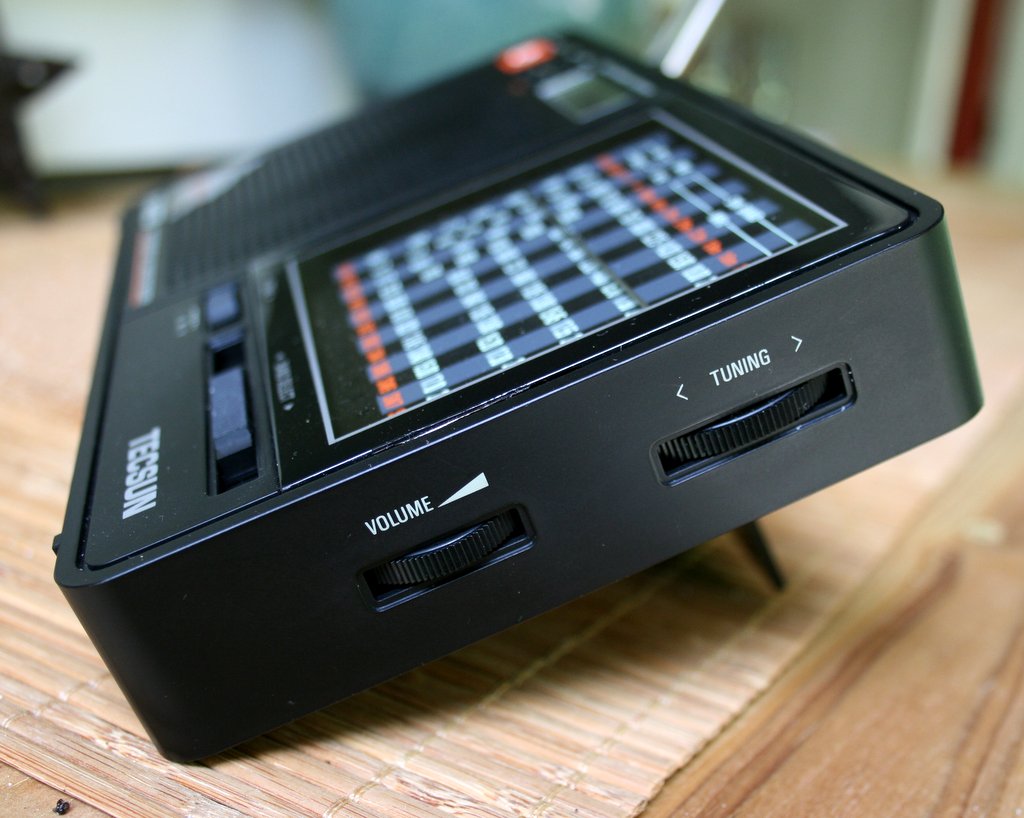
In fact, the Tecsun excels in the tuning category. While there is some noticeable muting between frequency changes, it’s not as distracting as other models listed above. Additionally, the tuning wheel itself is silky-smooth to operate, much like higher-quality Sony and Grundig analog portables of the past. There is no lag time or “play” in my R-2010D’s dial. Another nice touch: the tuning needle is thin, making it much easier to precisely place the needle on your target frequency (you can then fine-tune with the digital display).

Audio

(click to enlarge)

(click to enlarge)

Another strong point, of course, is audio fidelity. Being a larger portable means that the R-2010D has a larger front-facing speaker. Audio from the internal speaker is actually better than my Sony ICF-SW7600GR offers.

Even better, the R-2010D has a three position tone control switch (low, medium, high). I find that for AM listening, the low position seems to strike the right balance, especially during summer conditions when high-pitched static crashes and pops are ever-present. On the FM band, I find that I keep the tone control set to medium. The high position is rather high and I find that I personally don’t use this tone position.

FM performance

While still on the topic of clear positives, I can say that the FM performance of the R-2010D is above average. It can easily receive my benchmark distant NPR station with little static or fading. I can also hear all of my local FM stations with ease. Any distortion or noise seems to be very low on the FM band.

Shortwave performance

I’ve spent the bulk of my R-2010D listening time on the shortwave bands. The following are my observations:

Sensitivity: great

In terms of sensitivity, the R-2010D is great; very acceptable for a radio in the $40 US price group. I can hear stations with it that I cannot hear on my other mechanically-tuned DSP radios and, indeed, it seems to have sensitivity on par with my Tecsun PL-380. The PL-380 has a slight edge on the R-2010D, but only noticeable with the weakest stations. In fact, what probably gives the PL-380 an edge is its automatic gain control, which does a much better job of handling weak signal stations than that of the R-2010D. The R-2010D is not, however, as sensitive as my Sony ICF-SW7600GR (a radio three times the cost of the R-2010D).

Selectivity: unfortunately, terrible

In my opinion, the biggest failing of the Tecsun R-2010D is its very poor selectivity.

The second time I turned the R-2010D on, I tuned it to the morning broadcast of Radio Australia on 9,580 kHz. If you’re a regular here at the SWLing Post, you’ve probably heard one of the many recordings I’ve made of RA on 9,580; it has a blowtorch signal into eastern North America.

Here’s what happened: I tuned the R-2010D to 9,580 kHz, only to hear China Radio International (CRI)–with beautiful fidelity, I might add. At first, I thought that perhaps the Radio Australia signal had gone off the air. I checked my WinRadio Excalibur SDR, however, and saw that the Radio Australia signal was one of the strongest in my 30 MHz bandwidth display. It was being broadcast with its usual strength out of Shepparton. CRI, though, had a blowtorch signal as well on 9,700 kHz; only 10 kHz away. The CRI broadcast might have been ever so slightly stronger than the RA signal.

For some reason, the R-2010D could only detect the CRI signal; there was not even a trace of Radio Australia. I began to wonder if the R-2010D had poor alignment, so I tuned to other stations on the air, but found they were basically showing as broadcasting on frequency; alignment wasn’t the issue.

I grabbed a few other radios that were handy for comparison, and made quick recordings. Here is what I heard:

The Degen DE32 was being battered by the CRI signal, but I could still hear Radio Australia:

The Degen DE321 had better reception than the DE32:

The Sony ICF-SW7600GR could detect the Radio Australia signal with little problem (and without the antenna fully extended):

The Tecsun R-2010D, while tuned on 9,580, could only detect 9,570 kHz:

The Tecsun PL-380 (no recording) could hear RA almost as well as the Sony.

Upon further listening, I believe the selectivity may be poor in general, but it’s made worse by the fact that the only bandwidth setting is (obviously) rather wide. I came to this conclusion tuning through bands and locating another CRI blow-torch signal on 13,740 kHz. I could get a full tuning lock (indicated on the digital display) anywhere from 13,735 to 13,745 kHz. I could hear CRI, though, anywhere from 13,725 to 13, 755 kHz; a full 25 kHz spread! This explains why the R-2010D could not discern between two strong signals spaced only 10 kHz from each other.

This complete lack of selectivity means that I simply cannot recommend the R-2010D for purchase. It’s most unfortunate, as Tecsun is known for quality products and the best DSP-based shortwave radios.  

For what it’s worth, I am going to forward this review to both the eBay seller and a contact at Tecsun. I feel like if the default bandwidth were narrowed even somewhat, it could help the R-2010D cope with adjacent signals much better. This could be a simple firmware adjustment, or worse case, a flaw in the receiver design.

(click to enlarge)

(click to enlarge)

Medium Wave

I find medium wave (AM broadcast band to us here in North America) to be mediocre; very similar to my experience with the Degen DE32 and DE321. I had no luck with weak MW stations at night. Probably a combination of poor selectivity and an over-active AGC circuit created a bumpy, wishy-washy experience on the air. While I could hear booming clear channel stations at night, the receiver had a hard time coping with adjacent signals–even strong stations sounded periodically garbled. During the daytime, however, I could easily receive my few local AM stations.

Unfortunately, I cannot recommend the R-2010D for medium wave radio enthusiasts.

Summary

Below, I’ve tabulated the pros and cons from the moment I took the DR-2010D out of the box. Note that this list takes into account the $38 price level of this radio:

Pros:

  • Smooth tuning mechanism
  • Adequately sized analog dial
  • Sturdy construction
  • Good audio from internal speaker
  • Tone controls
  • FM sensitivity good
  • Simple: you might only need to reference the owner’s manual to set alarm/clock features
  • Nice, wide flip-out back stand
  • Line-in ability
  • Antenna jack

Cons:

  • Very poor selectivity on shortwave and on mediumwave
  • AGC circuit struggles with weak AM stations
  • Poor MW sensitivity
(click to enlarge)

(click to enlarge)

Conclusion

When I first pulled the R-2010D out of its box, I was most impressed. Tecsun had obviously thought through the mechanical engineering of this radio: smooth tuning mechanism, large accurate analog dial, small digital readout, beefy telescopic antenna, nice back stand, and overall quality “feel.” And audio, via the internal speaker, is brilliant: robust and room-filling.

What Tecsun engineers put into the mechanical engineering, they left out of the receiver design. When you tune the R-2010D to a strong, isolated shortwave signal, it sounds great.

However, the lack of selectivity is simply crippling on the shortwave and medium wave bands.

Note that this review is only based on the particular Tecsun R-2010D I received (ser# 41420130600006). Should I test another–just in case this is limited to my particular unit, which I regret is highly unlikely–I will instantly update this review. Tecsun, in my opinion, is a good company, so I trust they will take some notice. Until then, I would wait to purchase the Tecsun R-2010D.

I will also update this page with any response I receive from Tecsun. Meanwhile, if you purchased a Tecsun R-2010D as well, please share your thoughts in the comments section.

No-Spoiler Review: “The Numbers Station” with John Cusack and Malin Akerman (no spoilers)

The-Numbers-Station-PosterThe following is a no-spoiler review, as I assume many of you may be waiting for the film to hit the big screen, and I wouldn’t want to reveal any cinematic surprises.

We first mentioned The Numbers Station back in late 2011 –and admittedly, I was eager to see public attention drawn to this public-yet-covert shortwave communications medium that’s still in existence today. Indeed, it’s no wonder that a numbers station became the subject of a film; the subject is truly mysterious. Only a few days ago, while describing numbers stations to a visiting friend who had never heard of them, I played a recording of a numbers station that I made last year–her initial response upon hearing the recording was, in her words, that she experienced “chills” running up her spine.

But what is a numbers station?

Numbers stations, for those of you not familiar with them, are shortwave radio broadcasts that contain only strings of what seem to be random numbers.  In truth, these numbers are encrypted messages for operatives in the field (otherwise known as secret agents). The operatives tune in the station with a simple shortwave radio, then decode the message with a one-time decryption key.  Once the message has been deciphered, the message pads are immediately burnt or destroyed (or, at least, they’re meant to be…).  Oddly, even though this is a very public communication which anyone with a shortwave radio can hear, only one or two individuals will likely ever decode the message.  Such messages have been known to exist in a variety of languages at least since the time of the Cold War, but strangely did not conclude with the Cold War’s supposed end–they are ongoing even today. (Click here to check out our other numbers station posts.)

John Cusack as Emerson (Photo: Image Entertainment)

John Cusack as Emerson (Photo: Image Entertainment)

The Movie

In the movie The Numbers Station, John Cusack’s character, Emerson, is a seasoned field operative–a “black-ops” agent–who faces a life-changing dilemma in the field which places his career in jeopardy.  In an attempt to give Emerson some time to reconcile his emotions, his leader (Liam Cunningham) assigns him to what should be a simple, routine assignment: to protect Catherine (Malin Akerman), a cryptologist who broadcasts at a rural remote numbers station in the UK.

Things go terribly wrong when the station is compromised and Cusack finds himself again facing the same dilemma that sent him to this assignment in the first place: whether to  “retire” his asset (namely, Catherine) in order to fulfill his duty, by cutting off loose ends? Or will his conscience–and tenuous friendship with Catherine–take him in another direction? It’s a difficult ethical dilemma, one Emerson has been attempting to avoid.

Malin Ackerman as Catherine (Photo: Image Entertainment)

Malin Akerman as Catherine (Photo: Image Entertainment)

I’ve seen a number of John Cusack films over the years, and while he’s an extraordinary talent, The Numbers Station unfortunately doesn’t quite allow us to see his full range as an actor simply because his character, Emerson, is stoic and quite introspective. But the chemistry between Emerson and Catherine is complex and tense, and one can’t help but believe he cares deeply for her.

On the action front, The Numbers Station is a much greater success:  pacing is good, with a few moments to collect your breath; still, there’s always looming conflict. The bulk of the film is set in a dimly lit, underground bunker-come-numbers station, and there are actually very few shoot-’em-out scenes, yet the tension and suspense are constant.

I won’t comment on how the plot resolves, but I can say that if you like dark films with tension, moral decisions, action, and intrigue, this is well worth watching.  I enjoyed it.

Moreover, if you love shortwave radio, and are intrigued by numbers stations, you will be pleased to discover that this film treats the concept with due respect and more accuracy than I would have anticipated.

(Photo: Image Entertainment)

(Photo: Image Entertainment)

How accurate is The Numbers Station?

While those who write about numbers stations have presumably never worked for one, there’s an existing body of knowledge out there built on thousands of hours of listening, cataloging stations and even court documents from cases involving spies.  This gives us a fairly accurate idea of the true nature of numbers stations.

Likely inaccuracies

  • Though it is possible, I have never heard of a numbers station which has a live voice behind the microphone, reading numbers; these would most likely be advance-recorded or computer generated.
  • In the film, Malin Akerman’s character, Catherine, only seems to read a string of numbers for a matter of seconds, not minutes; in reality, this would take much more time.
  • I heard no preamble of numbers to ID the correct decipher key.

And yet…likely accuracies

  • In the film, under standard operating conditions, no one at the station knows the nature of the messages being broadcast–this reflects a probable fact about such stations.
  • The numbers station is located in a rural and remote part of the UK, a convincing setting for a numbers station (though some may broadcast from major broadcasting sites).
  • Once the station has been compromised, Cusack’s character explains in some detail how numbers stations work on the operative’s end; this description is very true to what is known or believed of actual numbers stations.

So, should you see it?

I anticipate that most any shortwave radio enthusiast will enjoy The Numbers Station. As a non-movie-reviewer–in other words, as a regular joe public movie-goer–I give it 8 stars out of 10.  Go ahead!

Click here for show times and on-demand viewing.

If you’ve seen The Numbers Station, please comment below.

Videos: The Numbers Station Trailer and Featurettes

The official trailer:

Video Clip 1: The Assignment

Video Clip 2: We need that cypher

Featurette

A review of the Degen DE1129 portable shortwave radio

My Degen DE1129 as tested (Click to enlarge)

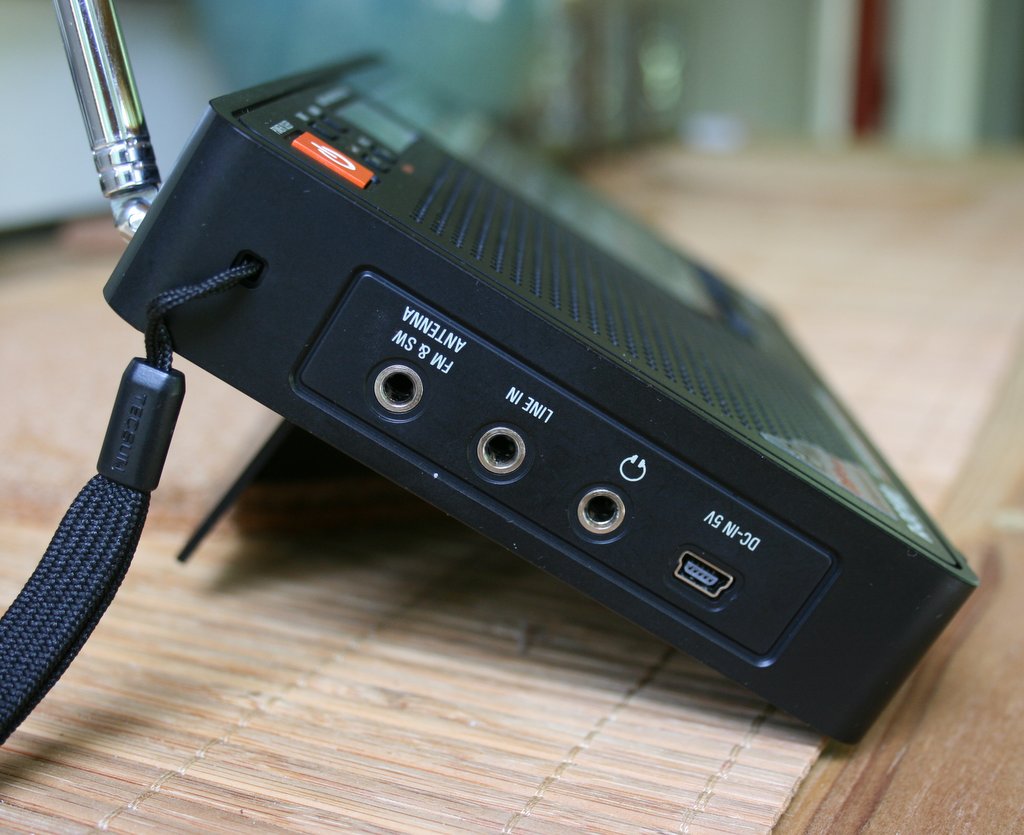
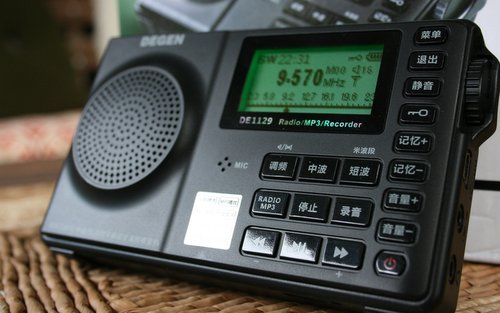
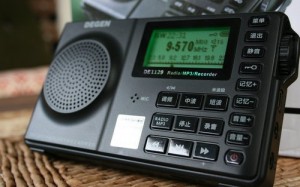
The Degen DE1129 is the latest compact, full-featured, DSP-based, AM/FM shortwave radio from Chinese manufacturer, Degen.  It’s available from TecsunRadio.com at $100 US, shipped. I received my sample radio last week, and published my initial impressionsof the unit. Since then, I’ve had time to put this tiny radio through its paces and learn the functions of the various buttons labeled in Chinese, which I don’t read. In the following review, we’ll study the positive characteristics–and the drawbacks–of this little radio.

Getting started:  the unit

I’ll begin by discussing some of the positive attributes of this radio. First, it should be noted that the DE1129 I have reviewed is one of the first to be produced, and as such, it currently has 18 buttons screen-printed in Chinese. Last week, Degen announced that they will be producing an English version, and (importantly) adding a number pad for keying in frequencies directly (see photo above). I have confirmed this via the manufacturer’s retailer. It will require squeezing a lot of buttons into a very small area, but I imagine this alteration will be easy enough, and probably remain functional even for those with larger fingers.
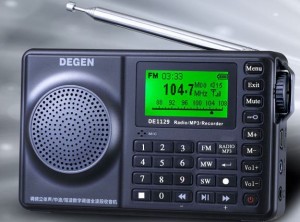
Degen has confirmed that they intend to produce a DE1129 with a number pad and English print in the future (Click to enlarge, Photo: Degen)

On the topic of buttons, those on the DE1129 are easy to push and have a very tactile response–very much like those on the Tecsun PL-380 and PL-390. I don’t expect these buttons are likely to be compressed accidentally if the radio is in your pocket, but just in case, there is a number lock button (with a key icon) that will further protect the radio.

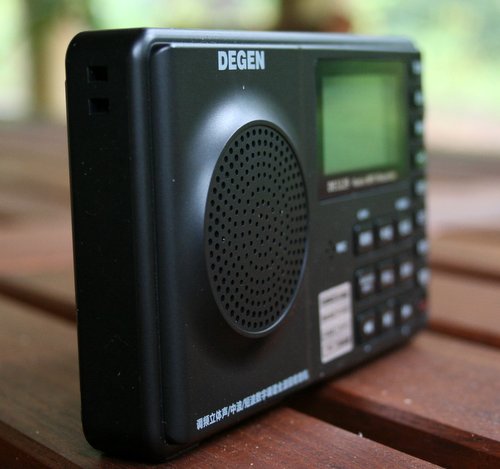
The body of the radio is made of a hard, smooth plastic–without a rubberized coating–and seems durable enough. The speaker is not exactly flush-mounted. Instead, it protrudes from the rest of the body by about 1/4  inch. At first, I thought this quite odd, but I’m fairly sure this was in order to accommodate a larger speaker than it otherwise would have had.

For more on the DE1129 unit itself, be sure to read my initial impressions, which go into greater detail.
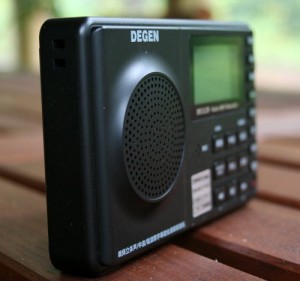
This little speaker packs a punch!

Audio

The audio from the built-in speaker is impressive–in fact, this is possibly the best feature of this little radio.  Just the other day, I was able to listen to an NPR FM station, with the volume turned up, as I cooked a meal; typically, I wouldn’t be able to hear a radio this small while doing other things–the output would be tinny with too much emphasis on the treble end of the audio, and the sound lost in all but a quiet room. However, the DE1129 speaker offers just enough bass to keep the audio (especially on FM, or from a quality digital audio file) comparatively rich and full. In essence, it sounds like a larger radio. Though the speaker lacks a bit of mid-range, the overall experience of listening to AM is quite pleasant, while FM is exceptional.

Digital Audio Player/Recorder
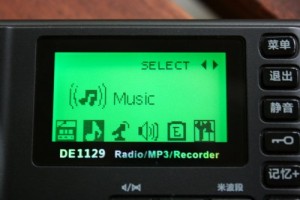
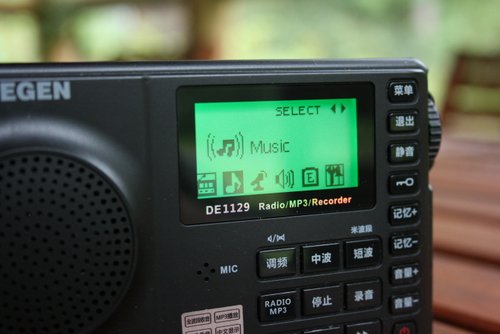
The “Music” mode will allow you to play pre-recorded MP3 files

With several of their latest DSP radios, Degen has added digital audio recording and playback features.  The DE1129 is no exception, and offers the following capabilities:

  • Records from a built-in microphone
  • Records directly from the radio while playing
  • Plays any MP3 formatted audio files
  • Offers many standard music playback options, like repeat, shuffle, etc.
  • Provides expandable memory via the insertion of a micro SD card into the radio, has 4GB of storage built-in

Perhaps the handiest feature is the fact that you can connect the Degen DE1129 to a PC, via supplied (standard) USB to miniUSB, for file transfer and maintenance. In my case, no additional software was needed for recognition of the DE1129 by my Windows 7 PC, which simply interpreted the radio as a storage device.
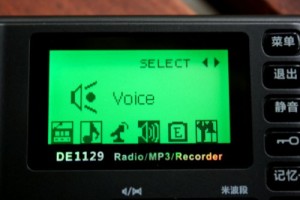
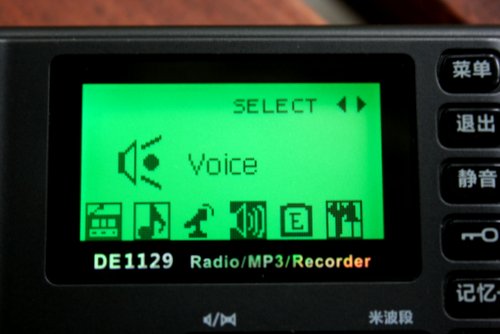
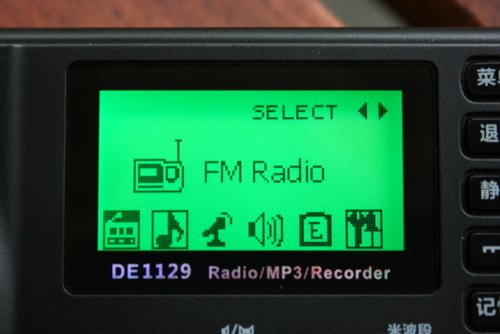
The “Voice” mode must be used to playback any recordings you make with the DE1129

NOTE: The DE1129 divides recordings into two different categories: “Music” or “Voice.”  “Music” is basically any MP3 file that is stored in the root directory of the radio (when viewed on your PC). “Voice,” on the other hand, is stored in the “Voice” folder on the radio and is accessible only via the radio’s “Voice” mode. I could not find a way, for example, to record music on the FM radio and save it in the “Music” category–I believe anything that is recorded on the radio itself will be filed under “Voice.” Of course, you can connect the radio to your PC, then manually drag the files from the “Voice” folder into the root directory to have access within the “Music” mode. If you actually used the built-in microphone to make a live recording, it will also be saved under “Voice.”

My DE1129 came with two preloaded MP3s–a Kenny G song and a Chinese pop song. I added a few of my own choices and, again, was favorably impressed with audio fidelity from its tiny speaker.

Recording from the radio, however, was a different story…

First of all, a note of caution: I know that some of the DE1129’s predecessors had  quality issues, when users tried recording from the radio without setting the volume to a very precise level.  I assume that’s the reason why, when you record from the radio, the DE1129 auto-adjusts the volume level to a rather specific setting. Therefore, while the radio is recording, you cannot adjust the volume. This wouldn’t be a problem, save the fact that the volume level it sets is rather loud. The first time I tried recording from the radio, I was using in-ear, noise-cancelling headphones; the radio rapidly shot the volume level up to such a level that I had to jerk the phones out of my ears to protect them. In many situations, I find the volume level via the built-in speaker a little loud, as well. You will not be able to discreetly record your favorite show during church or while eating dinner with the in-laws! During recording, I believe this radio adjusts the volume to 20.

Oddly, while recording, the DE1129 will allow you to engage the mute function–it even shows you the audio muted icon–but it has no effect on the audio level, whatsoever.
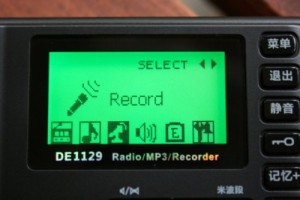
The “Record” mode is only used to record via the tiny built-in microphone–quality is quite good for voice

There are two levels of quality when recording: 129K or 96Kbps. Regardless of the setting, I find that there is a loss of quality when recording via the built-in recorder, though perhaps slightly less than with previous Degen models. When I recorded a stong FM station at 129K, I notice at least a 20% degradation in audio quality. The recorded audio sounds slightly muffled and garbled, more like an MP3 recording made at 48 Kbps. There was a noticeable lack of the higher and lower tones which make the DE1129’s internal speaker otherwise sound quite crisp.

There is a less noticable difference in audio quality while recording AM radio (whether shortwave or medium wave/AM). No doubt, this is due to the fact that AM radio lacks the higher and lower audio characteristics and general fidelity of FM radio.  While AM recording quality is acceptable and content is intelligible, for playing back a recorded program, it certainly leaves a lot of room for improvement. As with FM recordings, AM recording sounds muffled.

I would not recommend purchasing the Degen DE1129 if you’re seeking an all-in-one unit to record quality radio on-the-go. If you can settle for a mediocre recording, and you don’t mind the fact that while you’re recording, the radio will be playing at fairly high volume, then this may be a useful feature.

Radio performance
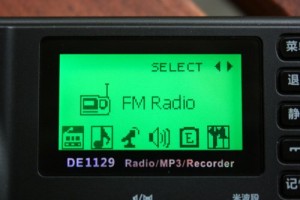
The “FM Radio” mode is actually the mode for all radio bands, including shortwave and medium wave

While I spent the bulk of my time testing the DE1129 on the shortwave and AM/MW bands, I will cover all three bands in order of performance, starting with the best.

FM

The Degen DE1129 is an excellent FM radio. In my tests, it received both strong and weak stations with relative ease and compared very favorably to my Eton S350DL, which I routinely use for receiving weaker FM stations in my area. Again, FM sounds great via the DE1129’s built-in speaker, providing nearly room-filling sound from a very tiny package.
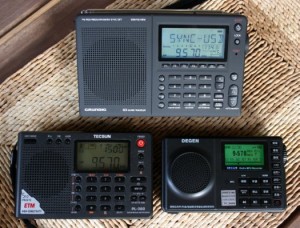
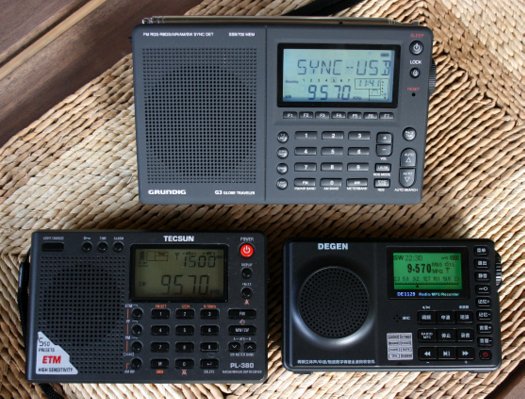
The DE1129 (lower right), with its competitors, the Grundig G3 (top) and Tecsun PL-380 (lower left)

Shortwave

I always spend the bulk of my radio review time on the shortwave bands, of course, and to test the DE1129, I pitted it against my trusty Tecsun PL-380 and Grundig G3. Note, however, that neither the G3 nor the PL-380 have recording capabilities.

Sensitivity

First, the good news. Shortwave sensitivity, in general, is fairly good on the Degen DE1129. With it, I was able to hear most of the weaker stations that were received by the PL-380 and G3. I believe adding a length of wire to the antenna with an alligator clip–as there is no external antenna jack–could slightly improve performance. I may test this further. Again, since the radio lacks a fold-out stand and the telescopic antenna cannot rotate, attaching a wire to the antenna will be less than practical, as this will tip the radio over.

But unfortunately, the DE1129 suffers from several shortcomings that make it the clear loser against its two similarly-priced competitors. Note that I mentioned a few of these problems in my initial impressions post. Here is more detail, by function:
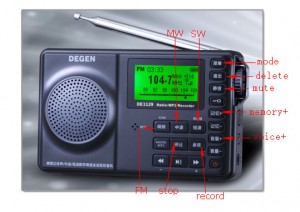
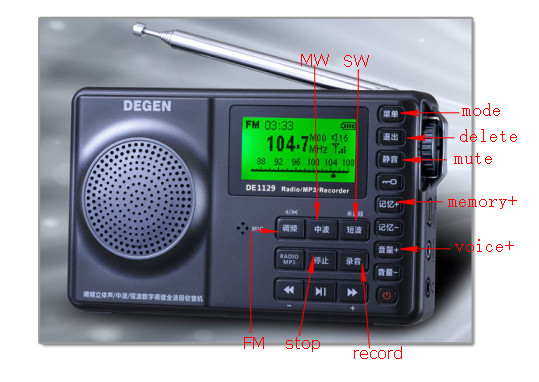
This image, with English translations for the keys on my DE1129, helped me identify each button’s function. Since there aren’t many buttons, I found that only after a few minutes of using the radio, I no longer needed to reference it. Click to enlarge

AGC (Automatic Gain Control)

The pre-defined AGC level is simply inadequate for comfortable shortwave radio listening of weaker signals. As mentioned above, though the radio has the sensitivity to detect the weak signals that its competitors can readily detect, the AGC gets in the way of comfortable listening. It creates a sort of pumping effect on weak stations, and truly seems to be “all or nothing:” at times, the radio’s signal will pop into clarity, then back into obscurity–obviously, it does not handle fading very well. The G3, in contrast, even without the sync detector engaged, did a much better job.

Bandwidth

The bandwidth is fixed–non-adjustable–on the DE1129. It is adequate for general shortwave broadcast listening, but a little too wide when you have two strong stations crowded together. Several times, adjacent broadcasts would bleed into the broadcast I was monitoring. I would expect even some rudimentary bandwidth control on a radio in the $100 US price category; the G3 (at $99) has wide/narrow, and the PL-380 (at $60 US) actually can be adjusted in 1 kHz increments from 6 kHz down to 1 kHz.

Single-Side Band

The DE1129 does NOT have SSB, thus would be useless for monitoring ham radio traffic, or listening to pirate radio stations in SSB, for example. The similarly-priced Grundig G3 does, of course, have SSB.

Shortwave can only be tuned in 5 kHz steps

Frequency steps

Unfortunately, the DE1129 has fixed frequency steps at 5 kHz; you cannot adjust it to be more or less.  In comparison, both the PL-380 and G3 can be adjusted down to 1 kHz steps.

Since the DE1129 mutes between frequency changes, it creates a “chuffing” sound while band scanning or tuning much like the PL-380. The Grundig G3, in contrast, tunes with smooth, continuous sound–much like an analog radio.

Tuning Speed

I normally don’t bother commenting on tuning speed, but I find that band scanning on the DE1129 leaves something to be desired. It’s rather arduous.
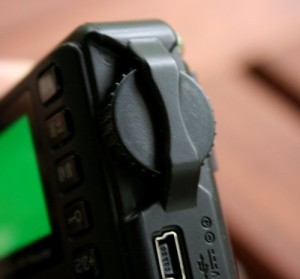
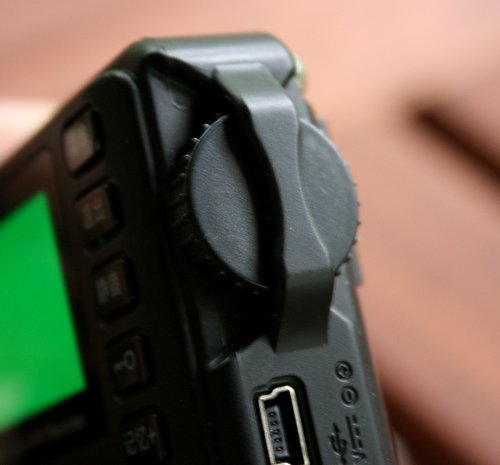
The DE1129’s hard plastic band covering the tuning wheel may protect it if dropped, but it’s also in the way of your thumb for easy tuning on the side

The tuning speed is not adaptive. Meaning, if I turn the tuning dial faster, it doesn’t increase the speed of tuning. This is very frustrating, especially since the model I reviewed does not have direct frequency entry via a number keypad. If I want to move from 5800 kHz to 6100 kHz, it takes a lot of tuning to get me there!

If I were stuck with the DE1129 as my only shortwave radio, I would be forced to fill its memory bank with all of my favorite frequencies, just to make tuning easier.

The DE1129 does have two different ways to navigate the shortwave spectrum:

  • By pressing the “Shortwave” button repeatedly, the DE1129 will move you from one SW meter band to the next highest. This is the only practical way of tuning.
  • The other way, (practical only if you want to listen to something outside of the normal broadcast meter bands) is to manually tune the entire SW spectrum (2.3 – 23 MHz) in 5kHz increments. Since the tuning rate is rather slow, this is a cumbersome process to say the least. To make it go a little faster, you could allocate memory locations, say at 3, 4, 5, 6 MHz etc. to make points (or bookmarks) from which you could tune.

Noise

My observation is that the radio’s internal processor and/or display seem to inject noise into the DE1129. This is especially noticeable on medium wave (see below).

While testing the radio against the G3 and PL-380, I even noticed that I could hear the (tuning) encoder noise of the DE1129, emanating from it, and even from other radios operating within two feet of it. Each tuning increment (via the tuning wheel) would produce a clicking sound in the audio of not only the DE1129, but even more noticably in that of other radios. The DE1129 is obviously generating a little RF noise of its own.

SW Summary

At $100 US, the DE1129 is simply not a good value for those interested in shortwave radio performance. Perhaps if it were in the $40-50 category, my expectations would be lower, and it might meet them at this price point. At the very least, a wide/narrow bandwidth control and the ability to speed up/slow down tuning speed would make this a more pleasant  and functional radio.  The sloppy AGC alone, though, would still keep me from recommending the DE1129 as a good shortwave radio.

AM/Medium Wave

On the positive side, the DE1129 can be used in any ITU region as the user can specify either 9kHz or 10 kHz spacing, although there is no option for choosing frequency steps less than 9 kHz.

How well does the DE1129 perform on medium wave? Not so well, I’m afraid–it’s mediocre at best. Medium wave suffers from many of the same problems as shortwave (described above), including the fact that the DE1129’s AGC (Auto Gain Control) simply cannot handle the up-and-down nature of weak AM stations.

Ticks like a clock?

Perhaps worst of all, though, is a “ticking” sound that plagues this Degen’s audio on the medium wave band. Spaced almost at second intervals, this “ticking” sound is present most anytime I listened to an AM broadcast. It was less noticeable in robust local broadcasts, but was still there, nonetheless. Recording a broadcast only seemed to make it more noticeable.

Unfortunately, if you purchase the DE1129 to listen to medium wave, you are likely to be disappointed.
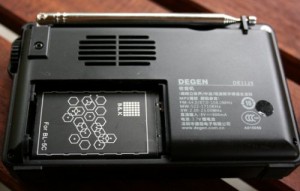
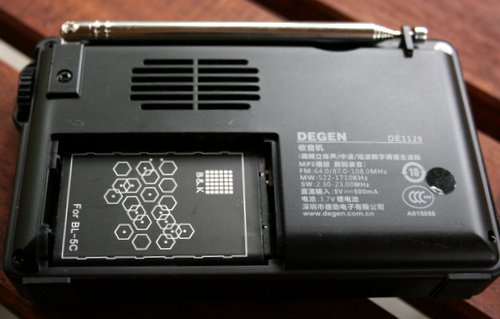
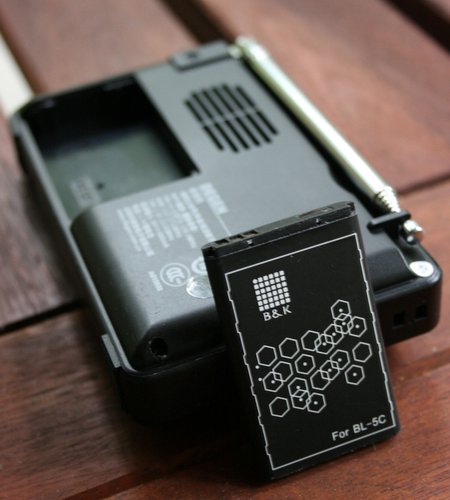
The DE1129’s thin rechargeable pack fits neatly into the battery compartment on the back of the unit

Battery

As mentioned in my initial impressions, the DE1129 operates on a slim 3.7V 850 mAh Li Ion battery pack. Unlike most other shortwave portables on the market (but similar to the Grundig G2 and Degen DE1128), it does not operate on AA batteries.

No doubt, the slender battery pack allows for the compact form factor of the DE1129. In my testing, I found that the battery life is very good. Indeed, I have not needed to re-charge the battery even though I’ve played the radio for many hours in testing. I cannot speak to the overall longevity of the battery pack, however.

While I’m sure these battery packs are convenient, I still prefer the traditional AA battery.  If this battery pack wears out, I will have to order a replacement, whereas most portable radios only require the ubiquitous AA cell.

Stacking up the pros and cons
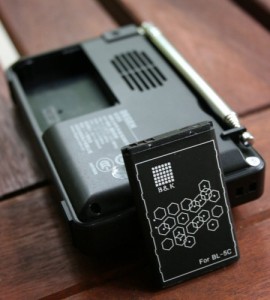
The rechargeable battery pack is very slim

Every radio has positive and negative attributes, and the DE1129 is no exception. Alas, in this case–especially since I’m reviewing this with a focus on shortwave and radio performance–the negatives outnumber the positives.

Pros:

  • Audio from built in speaker is superb for size (see con)
  • Sturdy, smooth plastic body (see con)
  • Perfect small size for travel
  • Strong FM radio performance
  • Ability to record either via built-in microphone or directly from radio (see cons)
  • One-button recording from any radio band
  • Crisp, easy to read backlit display
  • MP3 playback and functionality
  • Simple interface via supplied USB cable to both charge the radio and add/maintain recordings and MP3s
  • MW frequency steps can be adjusted between 9/10 kHz
  • Up to 32 GB of additional storage via micro SD card
  • Built-in microphone recordings of voice notes are excellent

Cons:

  • DE1129 plastic body lacks a back-stand and telescopic antenna cannot rotate
  • Shortwave performance is mediocre, AGC can’t handle weak signals and QSB
  • Mediumwave performance is poor, AGC flounders on weak signals, and most of the MW band is plagued with a ticking noise
  • Bandwidth cannot be changed and is too wide for crowded SW broadcast conditions
  • No direct frequency entry (though Degen plans to add this very soon!)
  • No complete (stand-alone) charging adapter; USB cable only, to plug into PC or wall-mounted USB charger
  • Tuning rate is fixed on SW at 5 kHz and not adaptive if you turn the dial faster
  • 4 or 5 second delay when turning radio on
  • Additional delays in response when changing frequency, mode, band and starting/ending a recording
  • Protective tuning knob strap prevents thumb tuning
  • While recording from radio, the volume level will spike loudly and cannot be changed or muted regardless if using built-in speaker or headphones
  • Recorded radio audio suffers from compression and is significantly degraded from the original broadcast–less noticeable on SW and MW/AM
  • No external antenna jack
  • No English manual (at time of this review, though I imagine this will be forthcoming)
  • In the current firmware version, the radio mode is displayed as “FM Radio” in the menu selection, though this mode covers all radio bands
  • There are no backlight options or modes that I could find–if you touch a control or move the frequency, the display will remain backlit for only about 10 seconds (please comment if you know how to change this)

Summary
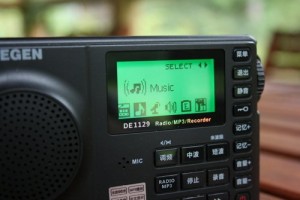
I really should have started this review with the following disclaimer: it is possible that there is functionality to this radio, and adjustments that can be made to it, that I have yet to discover.  To my knowledge, I have toured and tried every menu option and explored every possibility with the radio’s settings.  However, since this is an early production unit and all of the instructions are in Chinese, I could easily have missed something. Future firmware updates and the forthcoming numeric keypad could also change my opinion of the DE1129.

With that said, I can freely comment on my experience:

If you are looking for a very compact radio with good FM reception, with MP3 recording and playback, with a compact form factor and a wonderful built-in speaker, you may want to consider the Degen DE1129 in your search.

If you are seeking a good shortwave or mediumwave radio, however, I would look elsewhere.

Overall, I feel like the DE1129 has much room for improvement, and I hope Degen is listening and will make firmware upgrades to quickly address some of my criticisms above. It’s as if  the DE1129 was built around the MP3/FM functionality and shortwave/mediumwave was simply an add-on, a bonus feature. I would never use the DE1129 for shortwave DXing, and certainly not for mediumwave DXing. The fact that the radio receives noise from its CPU–especially the ticking sound on MW–makes me believe that it was not thoroughly tested before production.
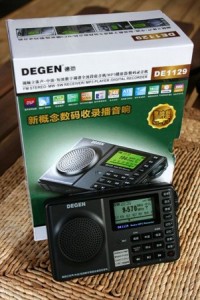
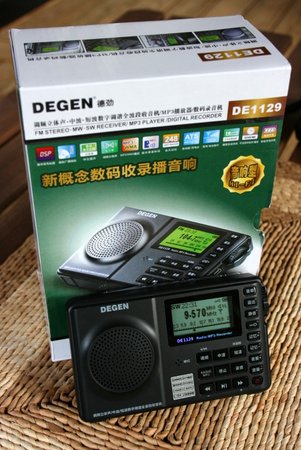
The Degen DE1129 & box (Click to enlarge)

For the price point (currently $100 US, shipped from the manufacturer), I simply expect better performance. In my tests, the Grundig G3 and Tecsun PL-380 outperformed the DE1129 in every respect on shortwave and mediumwave.

TecsunRadio.com provided a sample unit for this review and I paid for DHL shipping.  I can say that I’ve been very pleased with customer service at TecsunRadio.com. Since they are in a different time zone, and English is their second language, communication was slow, but they answered my many questions.

To my knowledge, the Degen DE1129 is only available from TecsunRadio.com and can be purchased for $80 US plus $20 shipping internationally.

Throw away AC adapters, invest in rechargeables

I receive a lot of emails from readers and listeners who are new to shortwave radio. The bulk of the emails I receive ask for advice about which radio to pick for travel, for home, or for work. A lot of emails, however, are from listeners who wish to improve the performance of their portable radios.

One of the first things I suggest–especially if they’re hearing a lot of interference noise on the radio–is simply to unplug the AC adapter (a.k.a., “wall wart”) and run the portable off batteries. Why?  Quite often, those wall warts are injecting a lot of noise into your receiver. Find it hard to believe?  Give it a try!

Not all rechargeable batteries are created equal. Choose name-brand, higher quality cells. Dollar store batteries lack longevity and capacity.

Solution: Rechargeable batteries

I get so annoyed with noisy wall warts, that I simply never use them. Instead, some time ago I started investing in rechargeable batteries.  Though one pays a bit more for them (than for alkaline batteries) initially, they can be recharged hundreds of times, and thus last for years.

You can buy rechargeable batteries nearly anywhere these days, and the price has dropped significantly over the past few years, even for name-brand batteries.

It’s worth noting that I’ve bought rechargeable batteries at radio hamfests or dollar stores that were as cheap as $1US per AA cell. Big mistake–not only do these ultra-cheap batteries not hold a charge for long, but they also wear out more quickly. Instead, stick with name brand rechargeables, like Energizer, Duracell, RadioShack, or (my personal favorite) Powerex.

About 85% of the shortwave portables I own are powered by AA cells, the remaining 20% off of AAA’s (you’ll find that I gripe about the ones that use AAA’s, by the way). When I buy a new portable–one that I plan to keep after reviewing on SWLing.com–I invest in twice the number of rechargeable batteries that the portable holds. For example, my Sony ICF-SW7600GR operates on 4 AA cells, thus I bought a pack of 8 cells for its operation. That way, I can always have an extra set of charged batteries available when I deplete those in the unit.

There are three main types of rechargeables available: NiCd (nickel cadmium), Lithium Ion, and NiMH (nickel-metal hydride). Without going into too much detail, I recommend NiMH batteries–they offer the best bang for the buck, are widely available, and with correct care, do not easily develop a memory effect.

A few tips for making NiMH rechargeables last longer

NiMH batteries are fairly fool-proof, but there are some simple rules of thumb you should follow to insure that they provide years of service:

  • Never mix old and new rechargeables
  • Never mix LiIon and NiMH cells
  • Nickel-based cells, such as our NiMH’s need to be fully discharged occasionally, else the batteries lose capacity over time in a phenomenon known as the “memory effect.” Once my radio has depleted its current set of batteries, I’ll often pop them into a flashlight to deplete them even further before recharging.
  • Label your batteries with a piece of colored tape or  a marker to note the purchase date on the cell–that way, you’ll easily keep like batteries together and charged in sync.
Chargers

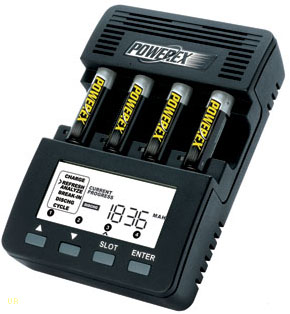
The Maha MHC9000 is pricey, and you will need the manual to operate it, but it's a very high-quality battery charger and conditioner. I have brought nearly dead NiMH batteries back to life with this wonderful machine.

Like batteries, not all chargers are created equal. You should opt for a higher-quality, NIMH-specific charger. Ideally, since most radios require 3-4 batteries at a time, purchase a charger that will hold at least 4 batteries.

Personally, I’ve found it helpful to own three chargers: one for rapidly charging batteries (the Maha MH-C401FS-4), one for conditioning and charging batteries (the Maha MH-C9000) and one that is solar powered (which I use only in a pinch).

You can see that I’m very fond of the Maha brand battery chargers, though there are other good chargers on the market. Maha receives high praise from many amateur radio operators, and I’ve had excellent luck with them, too. What I especially like about the Maha/Powerex company is that they focus all of their innovation in the area of batteries and charging systems for a wide variety of uses.

Throw away the wall warts!

Have I convinced you yet? Don’t even bother unpacking the AC adapter that comes with your radio!  You don’t really need it.  “But wait,” you may be thinking, “my radio has a built-in battery charger, so don’t I need my AC adapter?” Even if your radio has a built-in battery charging function, it’s probably very basic and should only be used if you have no other option. Many of these are prone to over- or under-charge batteries, and take hours to complete this relatively simple task.

Trust me:  your portable shortwave reciever will perform at its best when powered by quiet, rechargeable NiMH batteries charged properly with a good-quality charger. Try it, and hear for yourself.