Shortwave listening and everything radio including reviews, broadcasting, ham radio, field operation, DXing, maker kits, travel, emergency gear, events, and more
As Radio Australia cuts shortwave services, RNZI becomes the voice of the Pacific
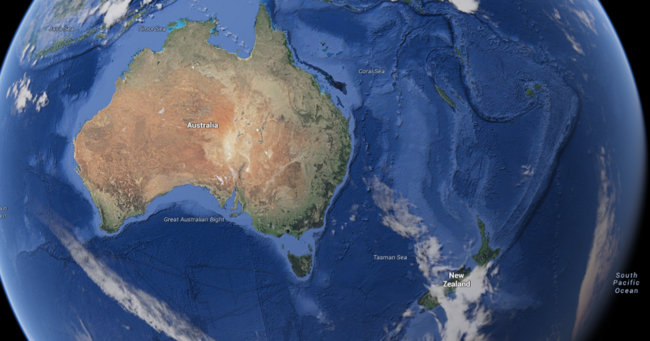
Radio New Zealand International (RNZI) continues to serve people across the Pacific region, delivering essential day to day news and information and providing a vital lifeline in times of natural disaster, as Radio Australia closes its international shortwave transmission service to Papua New Guinea and the Pacific.
Emphasising the importance of RNZI’s 25-year relationship with New Zealand’s Pacific neighbours, RNZ CEO, Paul Thompson said: “Remote parts of Papua New Guinea, Solomon Islands and Vanuatu who may be feeling the loss of the ABC can rest assured RNZI will continue to provide independent, timely and accurate news, information and weather warnings as well as entertainment to its Pacific listeners.”
Australian Broadcasting Corporation’s decision to switch off its shortwave services as a money saving measure has already drawn criticism and protests from a number of groups in Australia.
The Bill would require the ABC to restore its shortwave transmission services, following the announcement by the ABC in December 2016 that it would end its shortwave transmission service in the Northern Territory and to international audiences from 31 January 2017.
Australian Broadcasting Corporation Amendment (Restoring Shortwave Radio) Bill 2017
On 16 February 2017, the Senate referred the Australian Broadcasting Corporation Amendment (Restoring Shortwave Radio) Bill 2017 to the Senate Environment and Communications Legislation Committee for inquiry and report by 10 May 2017.
The bill seeks to restore shortwave transmission services to the Northern Territory and international audiences.
Committee Secretariat contact:
Committee Secretary
Senate Standing Committees on Environment and Communications
PO Box 6100
Parliament House
Canberra ACT 2600
The ABC’s managing director, Michelle Guthrie, has told Senate estimates she believes it is not her job to lobby government for more funding for the broadcaster but to work within the budget she is given.
Under questioning at a fiery Senate estimates committee, Guthrie revealed she saw her role as a manager rather than an advocate for more funding, a marked difference from her predecessor Mark Scott who was a consistent lobbyist for additional funding and critic of government cuts.
“On my second day in the job I was handed down the triennial funding in the May budget and as far as I’m concerned we operate within that three-year funding envelope,” Guthrie said.
Asked repeatedly if she believed it was her role to seek more funding to fulfil the ABC’s charter she said no because her focus was on providing content and operating efficiently.
[…]“I think what you’re asking is reasonably hypothetical. We are operating within the government’s funding envelope and making decisions on audience behaviour and technological advancement.”
She also refused to concede that anyone other than the 15 people who called the ABC to complain, or the 51 who gave submissions to a Senate committee, had been affected by the decision to scrap the shortwave radio service.
She appeared before a Senate estimates committee on Tuesday, answering questions about the decision to end the broadcasting of local radio through shortwave channels in the Northern Territory and Pacific region. The decision was been widely criticised, including by all major parties.
Guthrie was unable to provide evidence of prior consultation on the decision and claimed the ABC was not the official emergency broadcaster.
Asked by Greens senator Scott Ludlam about the “extraordinary cuts” to Radio National features, religion and music, Guthrie dismissed his premise, saying: “I wouldn’t characterise taking three music programs away from RN as an extraordinary decision.”[…]
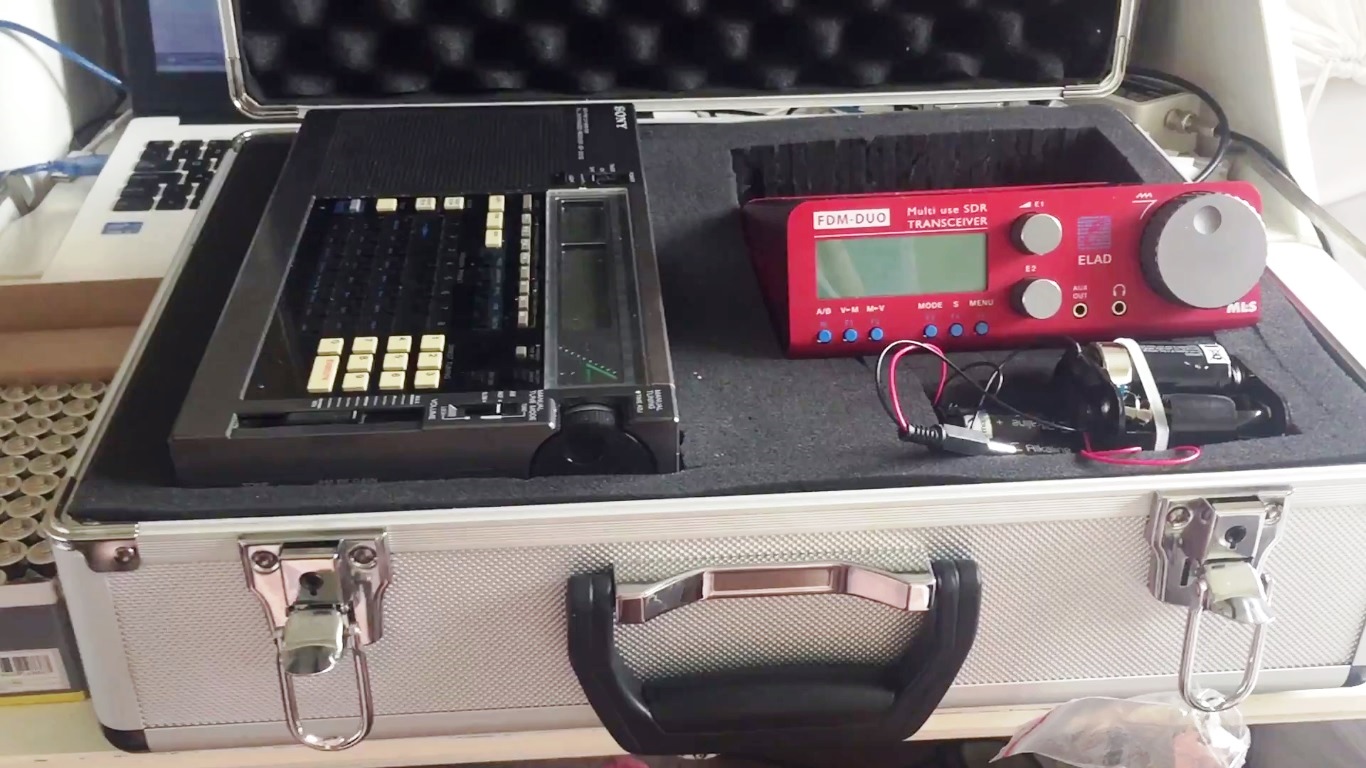
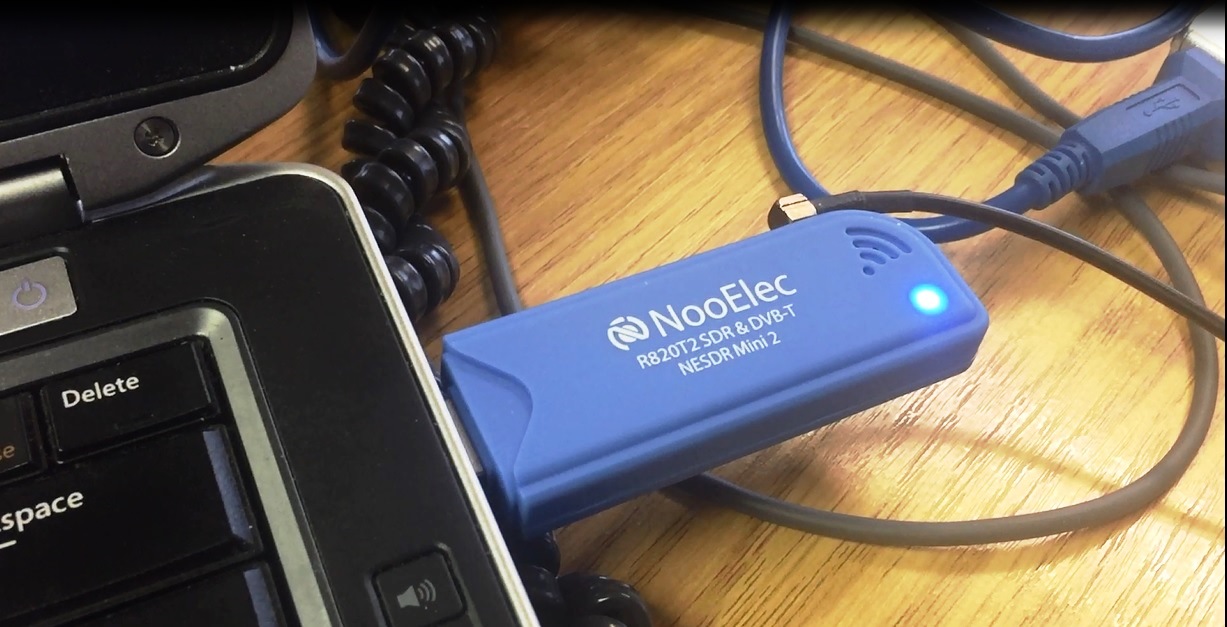
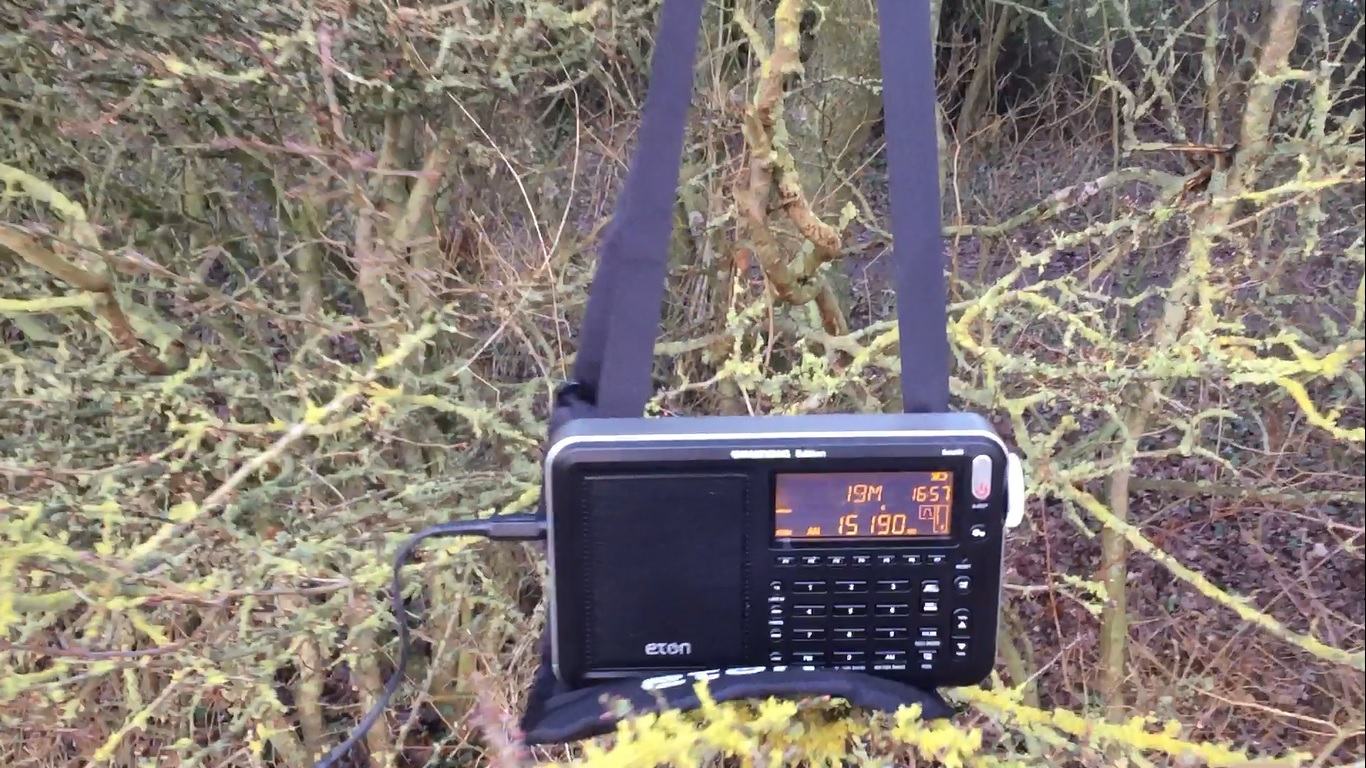
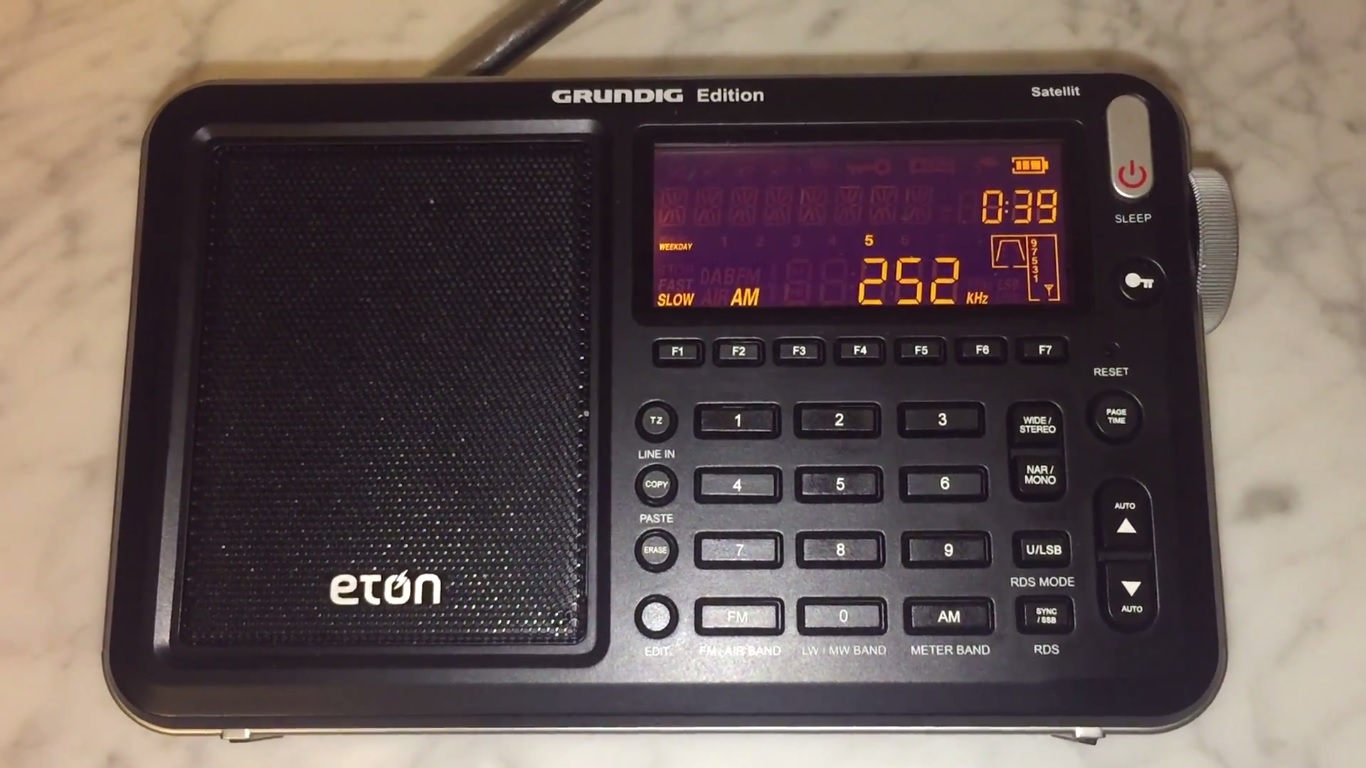
Hi there, I’ve been rather preoccupied of late, initially with the brilliant Tecsun PL-310ET and latterly with the even more brilliant Eton Satellit. However, in the background (as always), I’ve been trying to catch transatlantic medium wave DX. My listening schedule is broadly based on shortwave DXing during daylight hours – when I’m not at work of course, typically a Friday afternoon or at weekends – and always with a portable. Evenings usually start off with a tune around the tropical bands, followed by setting up the Elad FDM DUO to run some medium wave spectrum recordings overnight. In the past few days though, my daylight DXing has been bolstered by my NooElec RTL-SDR and ‘Ham it up’ upconverter. I bought the device over a year ago and after some initial exceitement, it quickly became quite obvious that I needed a reciever with a bit more ‘oomph’! However, it’s actually proving very useful to view signals on a spectrum, even when I’m conducting most or all of my listening on a different (i.e. higher performing) receiver. Ultimately, the RTL-SDR is always going to be a compromise, with relatively limited sensitivity, but because by it’s very nature it has excellent selectivity, overall it’s a reasonable performer. My particular RTL-SDR performs quite well if a decent antenna is employed with it, such as a longwire or the Wellbrook ALA1530 active loop.
Anyway, back to the medium wave DX. In the past month or two, I’ve copied a number of stations from North America, with really nice signals, including WRCR Rampano – New York, WFED Federal News Radio – Washington DC, WENE – Endicott and WUNR – Brookline from Newton, Mass. I’ve also recorded a lovely interval signal from RAI Radio 1, Milano and further European signals from Magyar Radio, Budapest and Radio Slovenija 1, from Ljubljana. During the past 18 months or so of DXing, I have been mostly ignoring signals coming into Oxford from the continent. However, that changed a little after I stumbled across the RAI Radio 1 interval signal, which complete with the rather rousing Italian National Anthem, inspired me to dig out some more European DX. I’m actually finding European DX quite rewarding, particularly because it feels new again – not surprising since I haven’t listened to Europeans on medium wave for any length of time since the 1980s. I hope you enjoy the reception videos – embedded video and text links follow below and I wish you all the very best DX.
Clint Gouveia is the author of this post and a regular contributor to the SWLing Post. Clint actively publishes videos of his shortwave radio excursions on his YouTube channel: Oxford Shortwave Log. Clint is based in Oxfordshire, England.
Many thanks to SWLing Post contributor, Richard Langley, who shares the following comment regarding the timeline for Nick Xenophon’s bill to reinstate ABC shortwave services:
Don’t hold your breath on it coming back soon, if indeed it does. Here is the link to the bill:
The proposed amendment to the Australian Broadcasting Corporation Act 1983 states:
(1) The Corporation must maintain 3 domestic shortwave radio transmission services for the Northern Territory which:
(a) cover the same areas of the Northern Territory as the Corporation’s shortwave radio transmission services covered on 30 January 2017; and
(b) broadcast the proximate local radio service.
(2) The Corporation must maintain an international shortwave radio transmission service for Papua New Guinea and parts of the Pacific which:
(a) uses at least 3 transmitters; and
(b) broadcasts the Corporation’s international service; and
(c) broadcasts programs in languages appropriate for the countries to which they are broadcast.
The bill has had second reading in the Senate and has now been referred to committee (Senate Environment and Communications Legislation Committee). Their report is due on 10 May 2017!
If it successfully passes the committee stage, it then has third reading in the Senate after which it goes to the House of Representatives and so on.
A long process.
Many thanks, Richard. I suppose the upshot of this is it will give Australians plenty of time to persistently urge their representatives to support the bill.
For it to gain traction, Australian listeners must speak out now!
The shortwave broadcast station which beamed Radio Australia to the Pacific from Shepparton could be coming back online.
Senator Nick Xenophon (Source: Twitter)
South Australian senator Nick Xenophon earlier this week introduced a bill to parliament, which if passed would force the ABC to bring back shortwave broadcasts.
[…]Senator Xenophon criticised the decision, which was made by ABC management and not the Federal Government, labelling it shortsighted.
‘‘The response to the shortwave cut-off demonstrates the woeful inadequacy of the ABC’s consultation process,’’ Senator Xenophon said.
‘‘Not only have we heard from many rural Australians concerned about the decision, our near neighbours such as Vanuatu and Papua New Guinea have also voiced serious concerns.’’
[…]‘‘The cost-cutting decision will save $1.9million a year — a tiny fraction of the ABC’s $1billion-plus annual budget,’’ he said.[…]
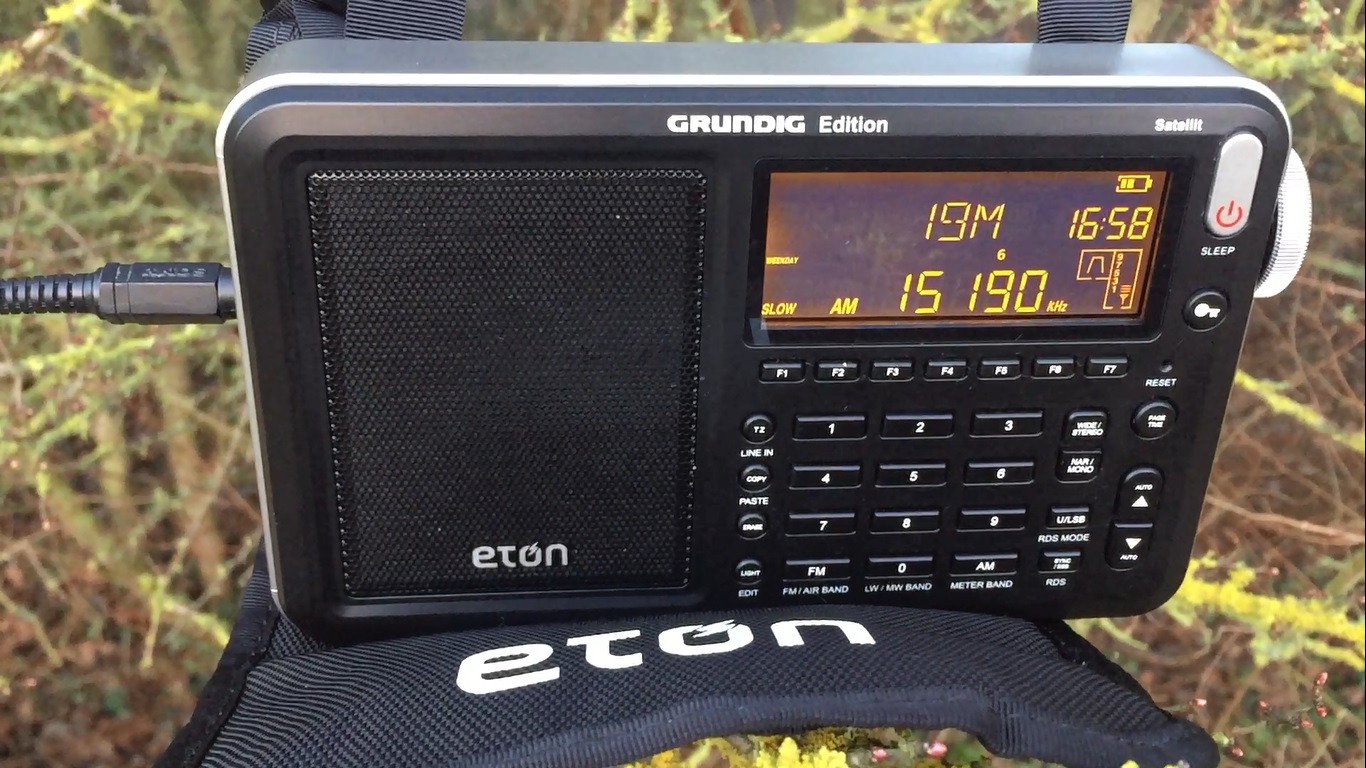
Hi there, it’s been about three weeks now since I started DXing with the Eton Satellit and I thought it time to post an updated review, based on my experiences thus far, along with some recent catches. Noting that other radio hobbyists with a strong presence online have been posting neutral to negative reviews on this receiver, I would just like to point out, perhaps rather obviously, that no receiver is perfect and just as importantly, the criteria on which a portable radio is judged will be different from user to user, based on their listening habits. I am almost exclusively engaged in DXing with the Satellit, whilst others will be listening on the broadcast bands on a more casual basis. I know that for some, the ultimate quality and finish of a product is as important as performance and they would make their physical assessment in a very detailed manner. I on the other hand focus mainly on performance and as regards quality, I’m reasonably satisfied if it doesn’t fall apart in my hands, straight out of the box! That actually happened – and it’s sort of where I draw the line 🙂 I guess the point is, I try to respect everyone’s opinion, irrespective as to whether we are in agreement or not and I believe that’s healthy for the future of our hobby.
Ok, back to the Satellit. Firstly, I am able to confirm that in terms of ultimate sensitivity, this portable is very close to my Sony ICF-2001D – one of the most highly regarded portables ever made. The delta in performance between the two is most perceptible on the weakest of fading signals that intermittently deliver audio with the Sony, but can’t be heard on the Eton. On stronger signals, my experience is that either radio might provide the strongest and or highest fidelity audio. I have a series of comparison videos already in the can, which will be uploaded to the Oxford Shortwave Log YouTube channel soon.
In terms of selectivity, the digital bandwidth filters work very well, although I note that even on the narrowest setting (2 kHz) when operating in a crowded band, adjacent channel QRM can occasionally still sound quite pronounced, as compared to my Sony ICF-SW55 or ICF-2001D receivers. As regards synchronous detection, this is more of a hit-and-miss affair. Subscribers to my channel might notice that in nearly all of my reception videos featuring the Eton Satellit, I have not engaged the SYNC. That isn’t to say it doesn’t work, however, even with selectable sidebands, the SYNC mode often appears to increase the overall signal amplitude and noise floor, without positively influencing the SNR. However, it’s interesting to note that signals on the Satellit in AM mode often almost match the ICF-2001D in SYNC mode, in terms of overall SNR. More on that to come.
There are a number of ways to tune the radio; manually using the tuning knob (and this has a decent feel/ resistance to it), direct frequency input which requires pressing the ‘AM’ button to engage, automatic search and access to 700 memory locations, via 100 screen pages. In the real world – and by that I mean ‘my world’ which is most often in the middle of a field, or the woods, all of the above tuning options are as ergonomic as most of my other portables. With regard to SSB reception, there are fast, slow and fine tuning options with a maximum resolution of 10 Hz and this works very well to reproduce natural sounding speech in LSB and USB modes. The tuning speed/fine options are engaged by pressing the tuning knob inwards towards the set – quite a neat idea. With SSB and SYNC there’s always a little pause whilst the electronics engage – a set of chevrons appear on the screen to indicate the receiver is actually doing something. It’s similar to the Sony ICF-SW77 where you effectively toggle between SYNC USB and LSB and wait for lock. Not an issue for me, but it might annoy some, particularly those who have experience with the ICF-2001D, where SYNC engagement is instantaneous, if the signal is of sufficient strength. A small point, but worth making.
So, overall, a brilliant little radio that in my opinion is completely worthy of the ‘Satellit’ branding, at least in terms of ultimate performance. As I mentioned previously, one of the most experienced DXers I know, with more than 3 decades of listening to the HF bands and an owner of a number of vintage Satellit receivers noted that the Eton Satellit outperformed them – and by some margin. To further demonstrate this, I have included links to recent reception videos. In particular, I copied three of the regional AIR stations with signal strength and clarity that had never previously been obtained. I also copied HM01, the Cuban Numbers Station for the first time on the 11 metre broadcast band, Sudan and Guinea on the 31 metre broadcast band (a whopping signal from Guinea) and Polski Radio 1 on longwave. I hope you find them interesting. Since featuring the Satellit on my channel, one of two of my subscribers have purchased this radio and thus far have been very happy indeed with it’s performance.
Ultimately, I have to strongly recommend this portable to anyone interested in DXing and in particular those that embark on DXpeditions. I just hope that should you decide to buy one, you receive an example that performs was well as mine. Embedded reception videos and text links follow below, In the mean time and until my next post, I wish you all great DX!
Clint Gouveia is the author of this post and a regular contributor to the SWLing Post. Clint actively publishes videos of his shortwave radio excursions on his YouTube channel: Oxford Shortwave Log. Clint is based in Oxfordshire, England.