Category Archives: Radios

Buyer Beware: Dan shows us how to spot a scam on eBay

Many thanks to SWLing Post contributor, Dan Robinson, who writes:

This is an example of a classic scam — and these are usually seen involving
Watkins-Johnson 8711/A receivers.

The seller puts a photo of what appears to be a good condition WJ up,
with additional photos. But often these photos are faked or taken from
other ended Ebay auctions.

The description is usually, as with this item, in blue letters noting
the item is available only for immediate sale, and not for auction,
despite the fact that the auction is — an AUCTION and has a
starting price.

I make it my business to reports items like this to eBay and eBay has
a pretty good record of recognizing scams and removes them.

I think it’s important to point out these items to SWLing readers to
help avoid people being ripped off.

No doubt!  Thank you so much for sharing this, Dan. I didn’t realize scams like this were prevalent on eBay.

I’m willing to bet this scammer’s plan is to get you to outside the boundaries of eBay’s protection as soon as possible, luring you with a believable bargain price. This is why they ask for you to message them instead of bidding.

In my opinion, eBay is one of the safest sites for online purchases, but it is certainly not void of scammers. Remember the proverb, “If it sounds too good to be true, it probably is!”

Thanks again, Dan!

DK’s Barn Find: A GE Super Radio II

My good friend, David Korchin (K2WNW), has a knack for finding diamonds in the rough.

He’s been known to find a radio that needs TLC, take it home and restore a bit of its former glory. He’s had some amazing luck in the past.

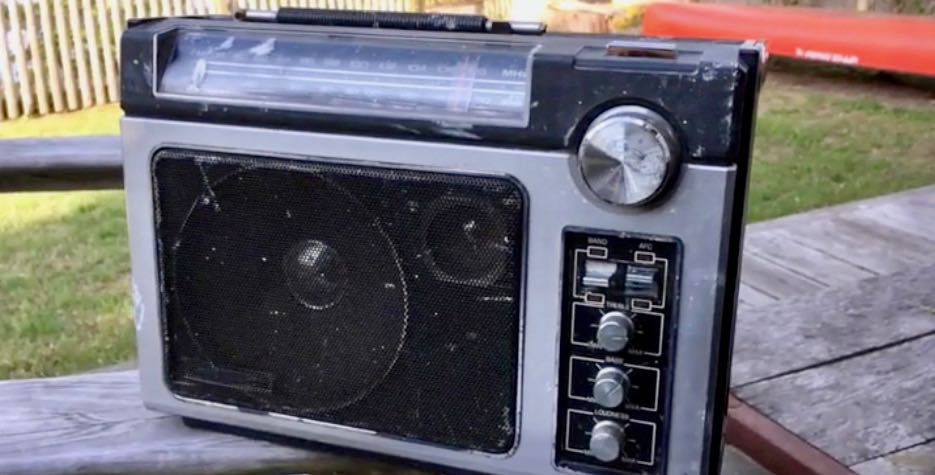
Recently, DK sent a video of of his recent acquisition: a beat-up GE Super Radio II he purchased for two dollars. This radio will win no beauty contests, but it still plays well.

Check out DK’s video:

Click here to view on YouTube.

Many thanks, DK, for allowing me to post this video. It goes to show you that you should never pass up an opportunity to adopt a Super Radio. Even if the telescopic antenna is all but missing, the internal ferrite bar is where the money is!

Play on!

Back from Xenia: My 2017 Hamvention spoils

I’m finally back from a week of travels which included the 2017 Hamvention held a the Greene County Fairgrounds in Xenia, Ohio.

As an inside exhibitor, I was quite busy at Hamvention–indeed, my voice is only now recovering.

I did manage to sneak away from our table on several occasions to visit with vendors, friends, and check out new innovations (thanks to ETOW volunteers Eric McFadden, Miles McFadden and Robert Gulley!). I also attended the NPOTA (National Parks On The Air) forum on Sunday.

This year, I posted hundreds of photos of the event here on the SWLing Post: both inside exhibits and flea market booths.

I’ve also already started a re-cap/review of the 2017 Hamvention which I plan to post in the next few days. Stay tuned.

In the meantime, though, a number of readers have asked what I brought home from the Hamvention. Though I had no intention to buy stuff this year–seriously–I did manage to come home with a few treasures.

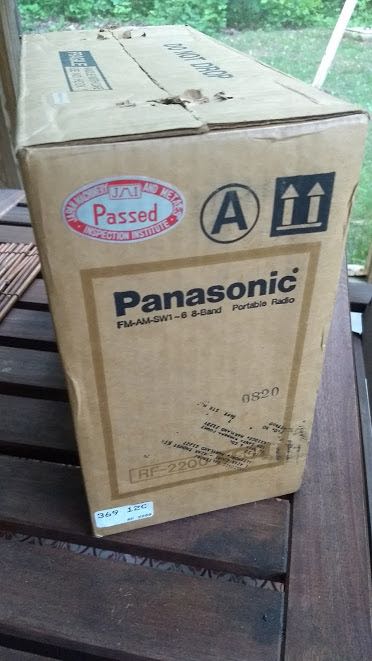
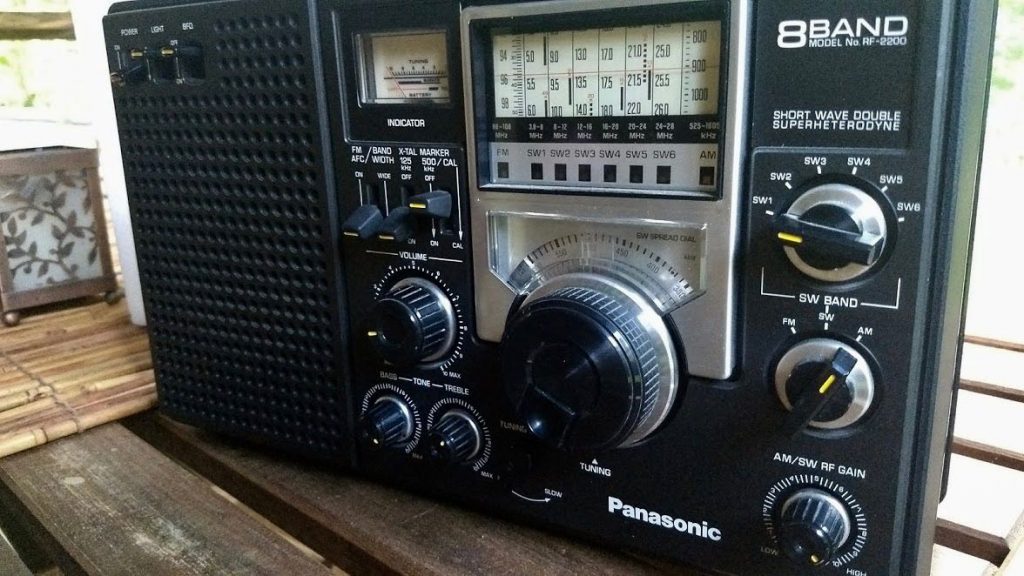
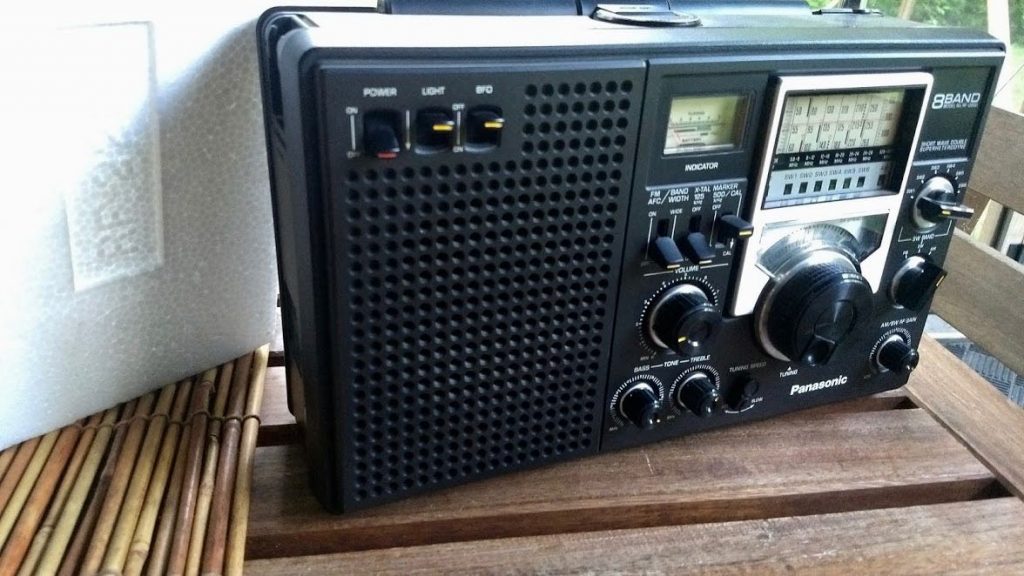
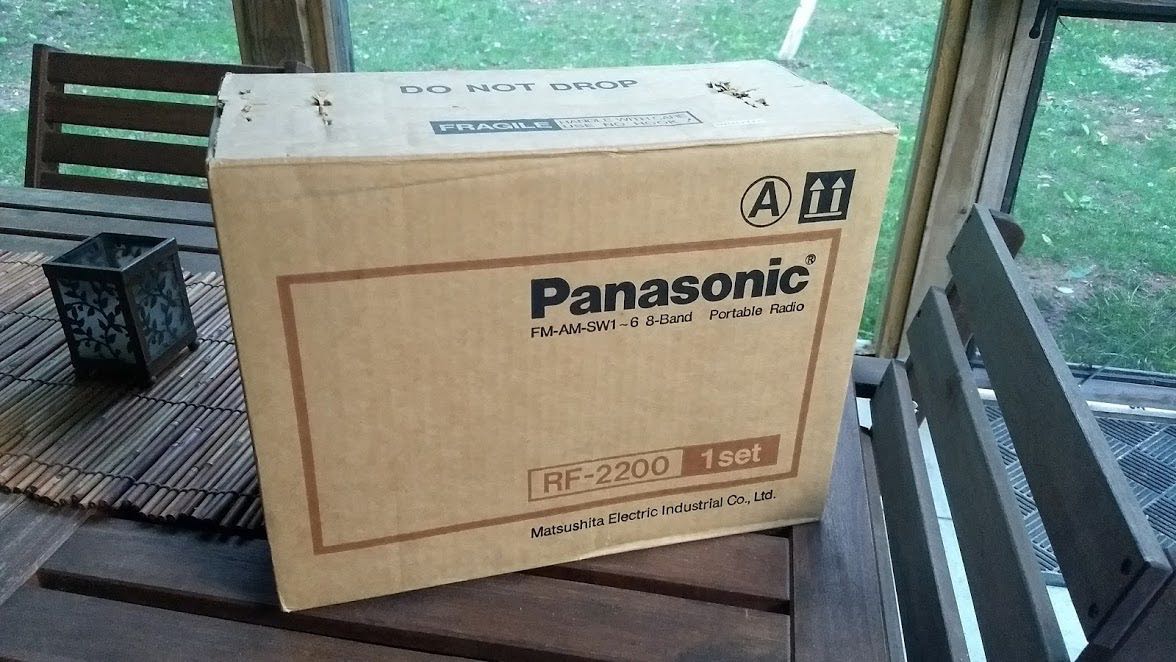
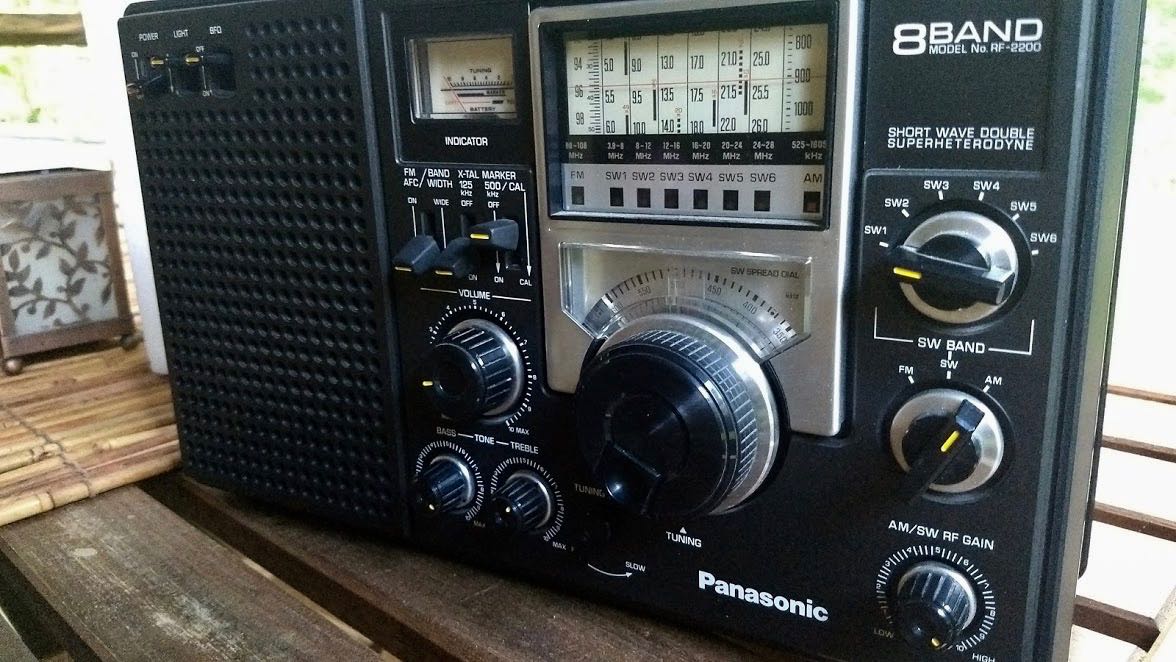
Panasonic RF-2200
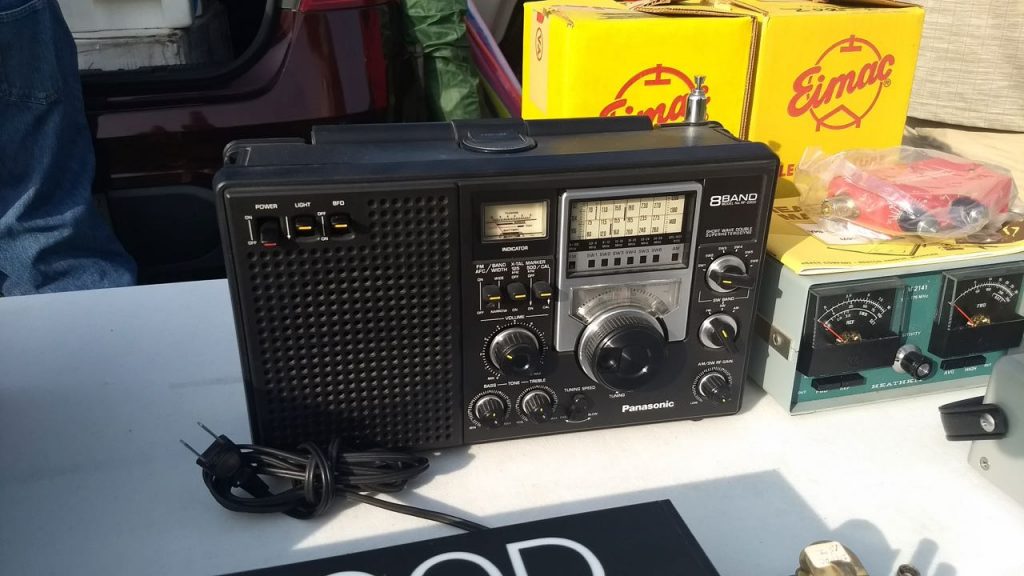
If you’ve been reading the SWLing Post for a while, you’ll know I’m a big fan of the ‘2200. On the shortwaves, it’s a great performer even though the analog tuning can be a bit squirrelly.

Where it really shines is on mediumwave, though. It’s easily the best AM portable I own.

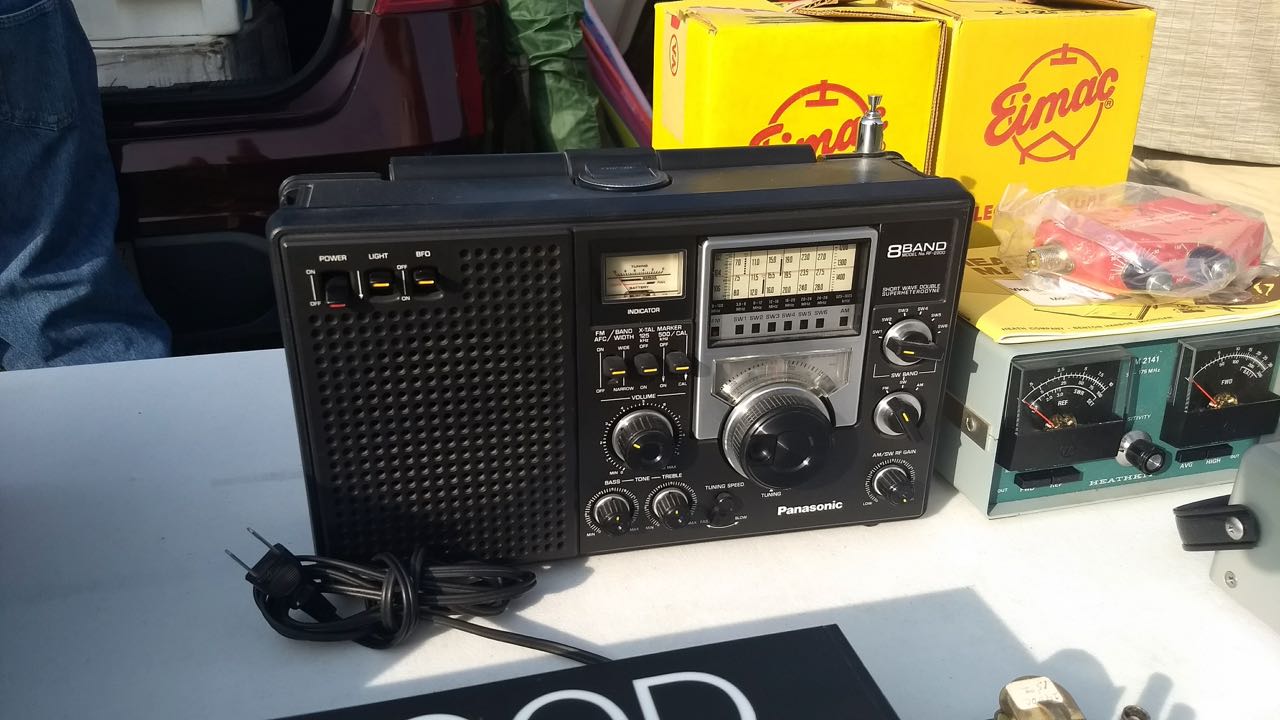
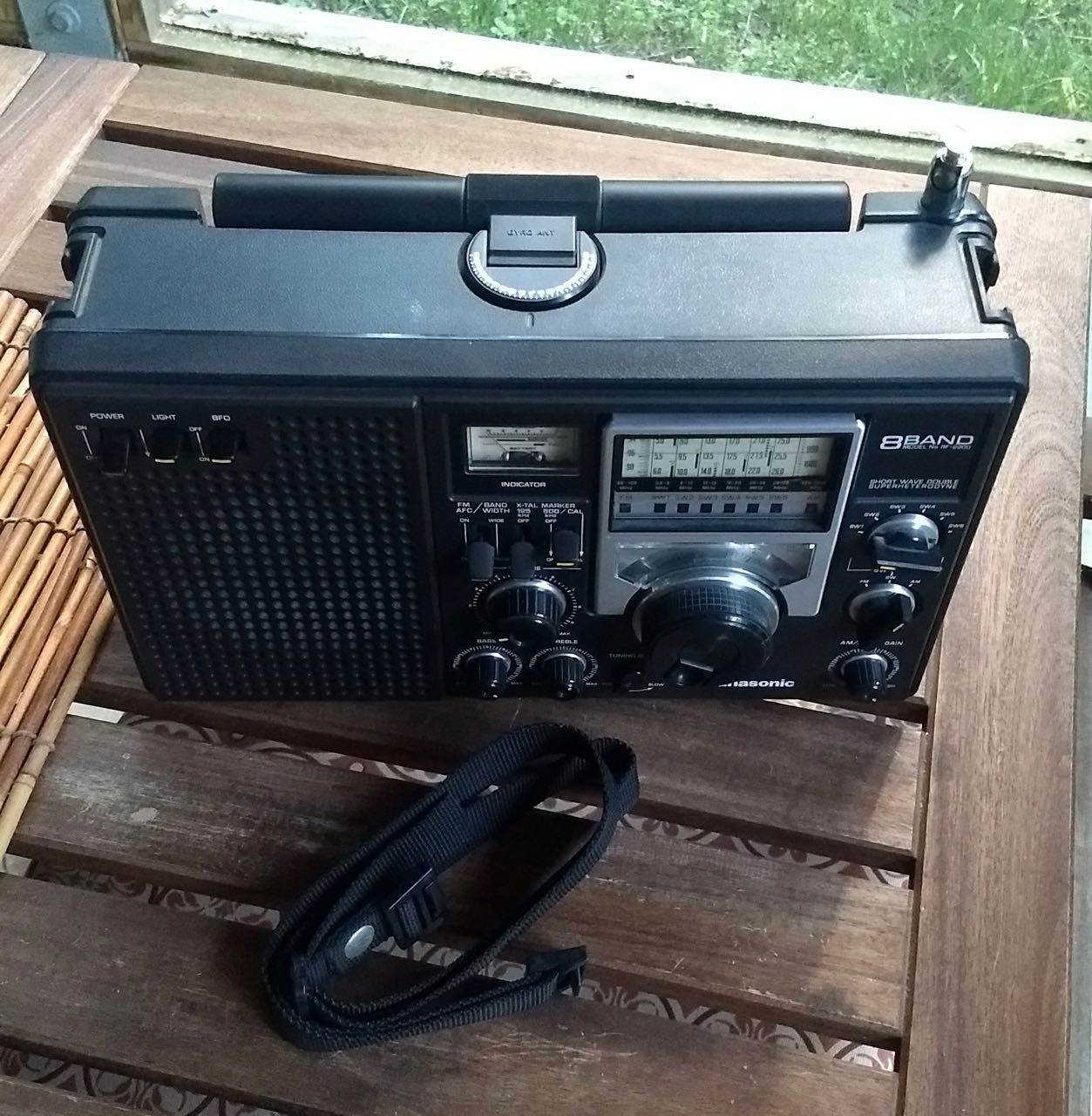
My buddy, Eric (WD8RIF), pointed out this RF-2200 (see photo above) in the flea market. Since I already own an RF-2200, I had no intention of buying one.

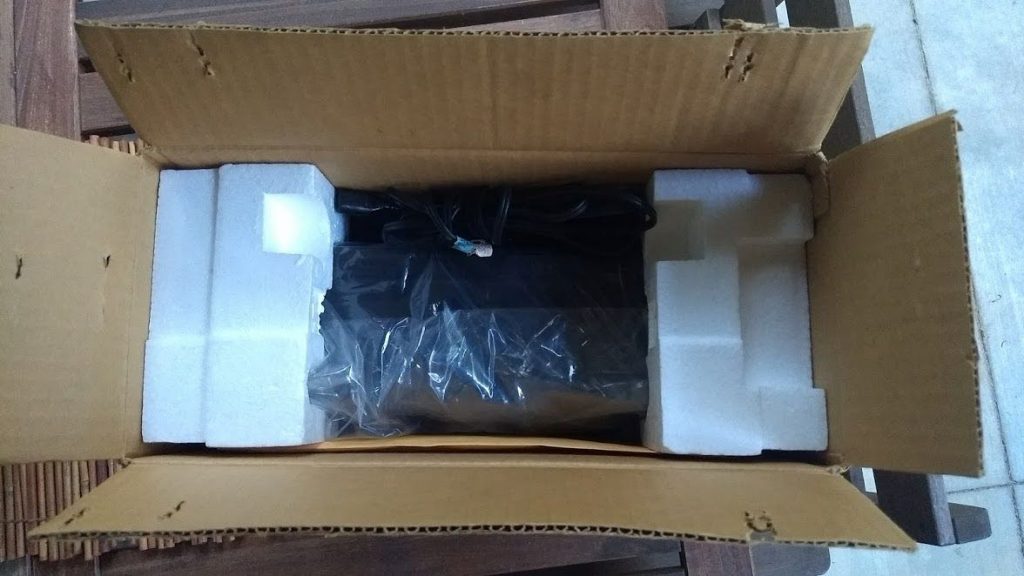
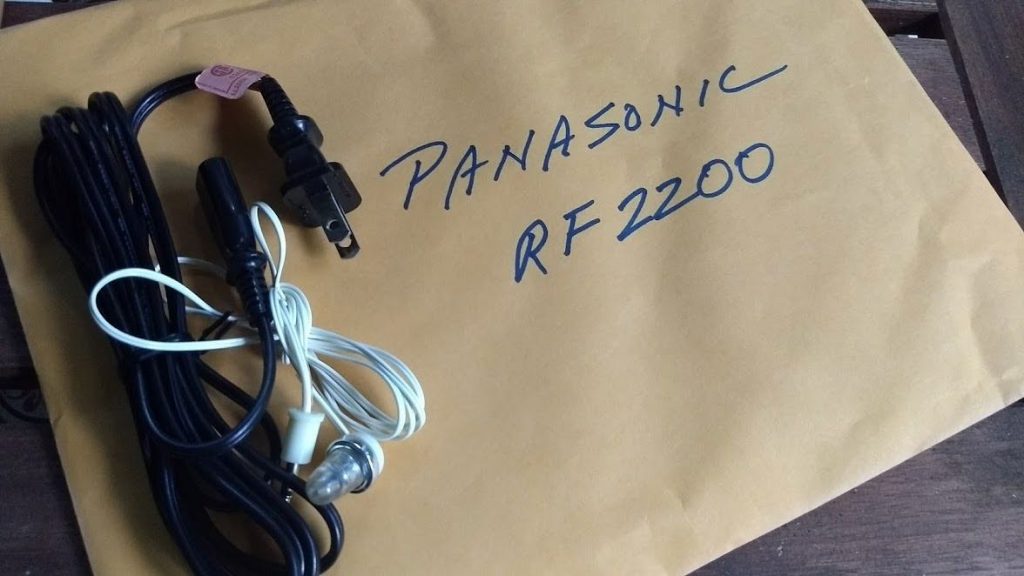
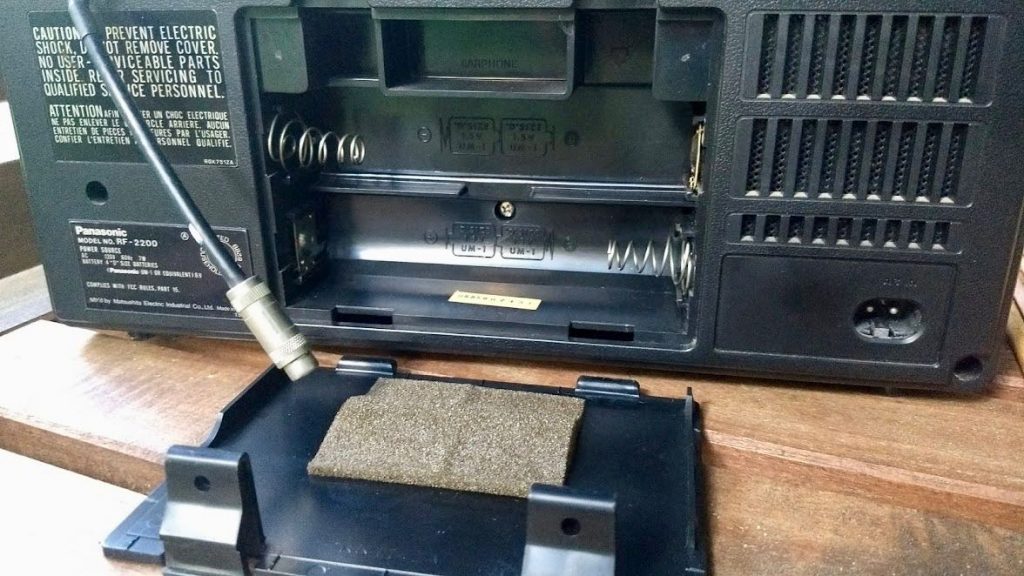
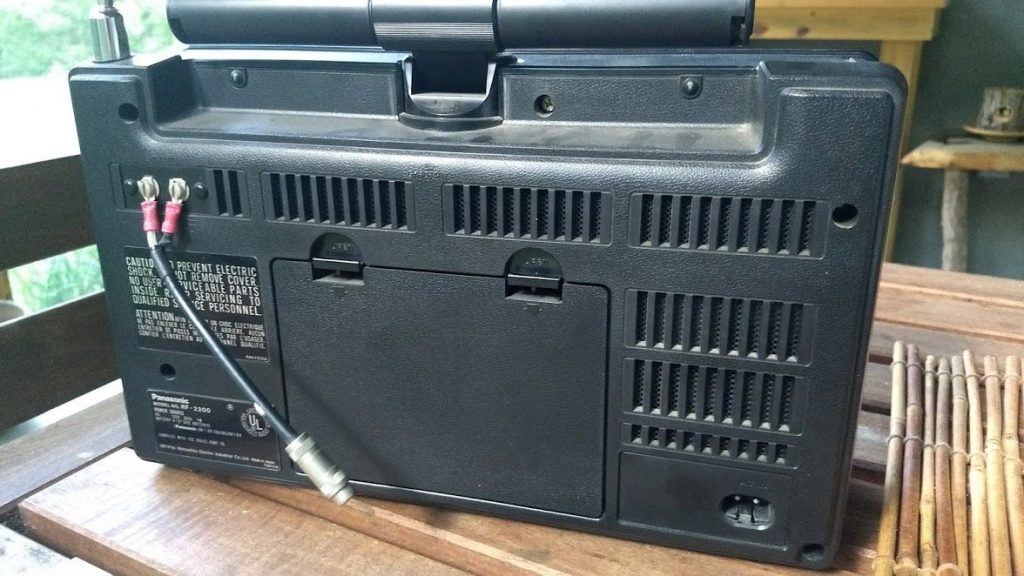
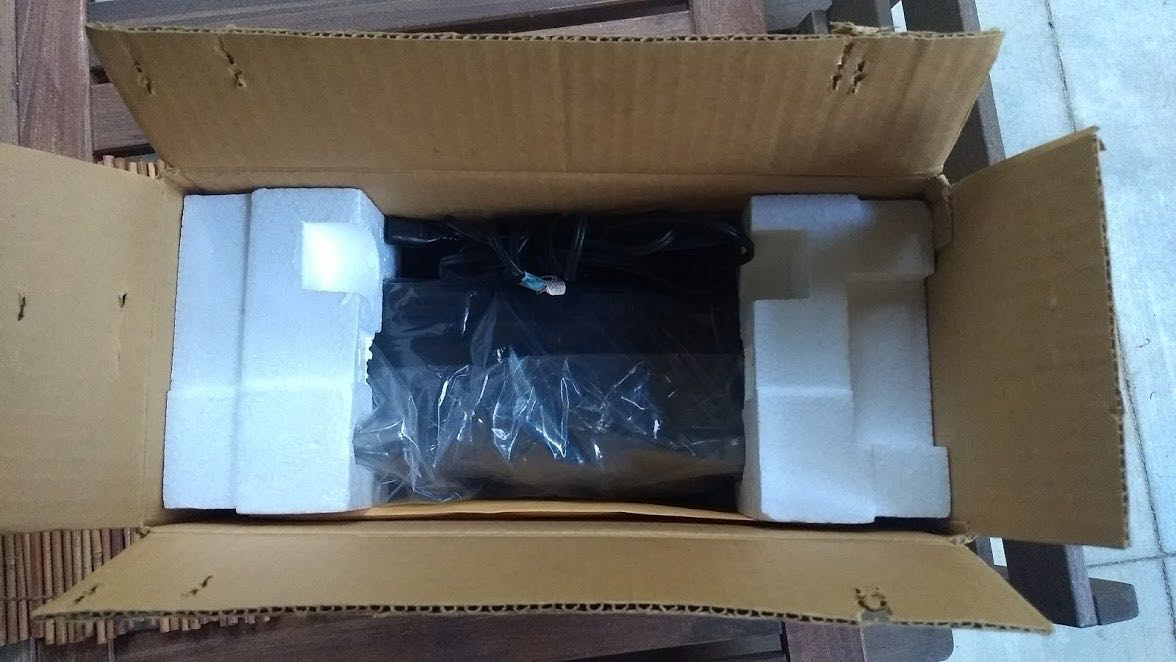
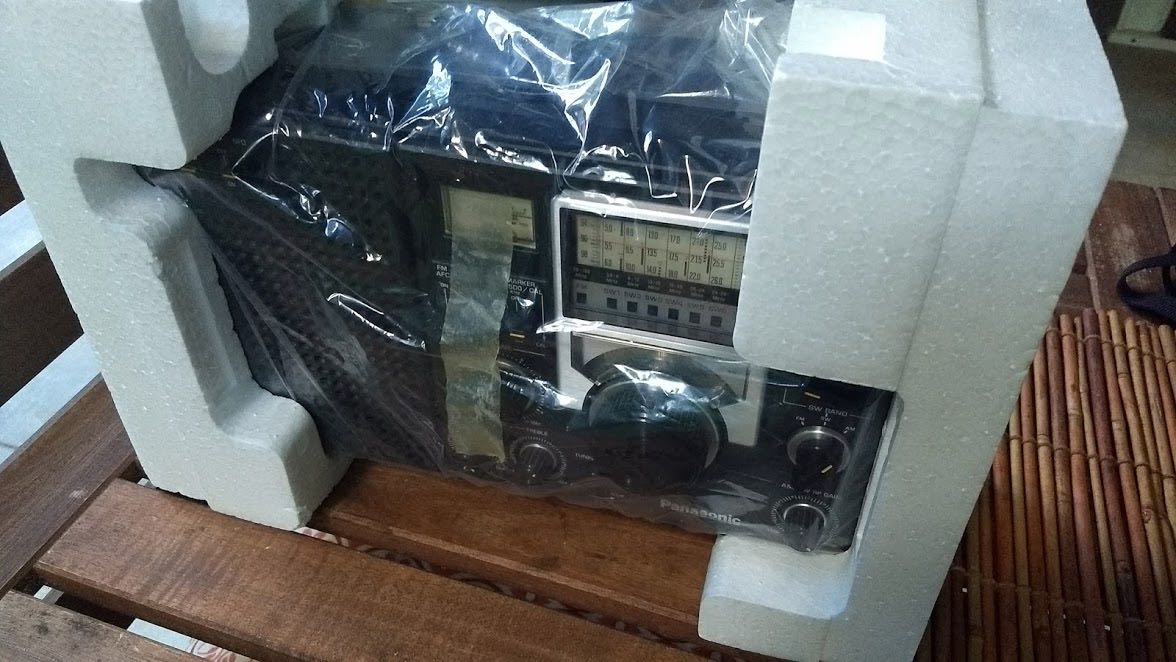
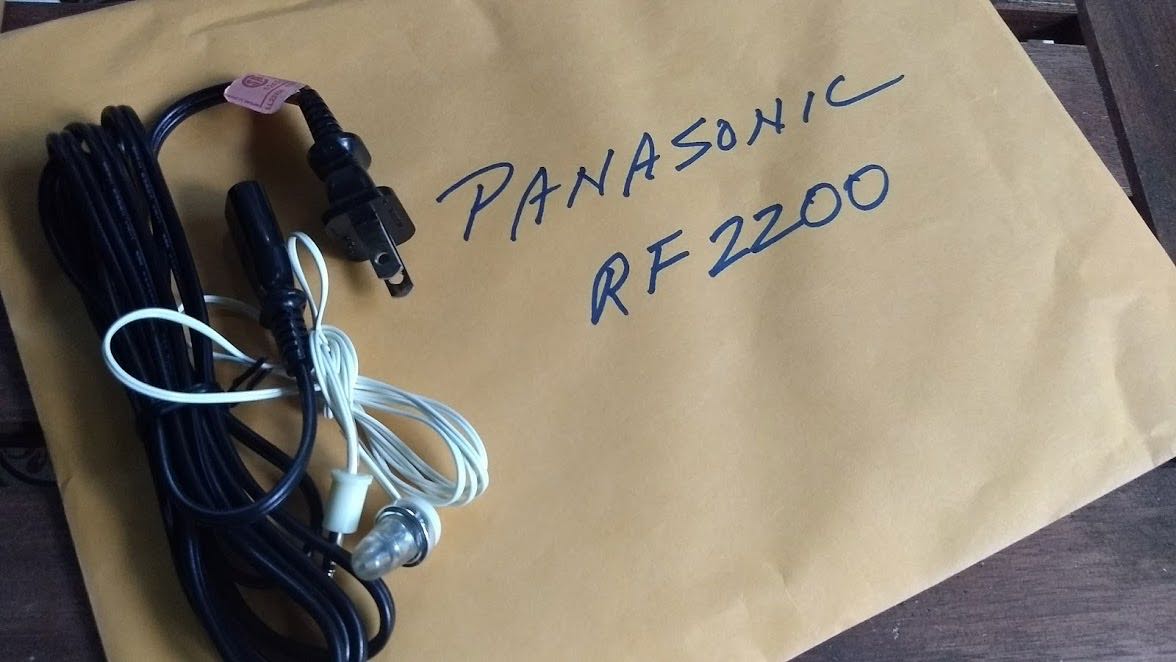
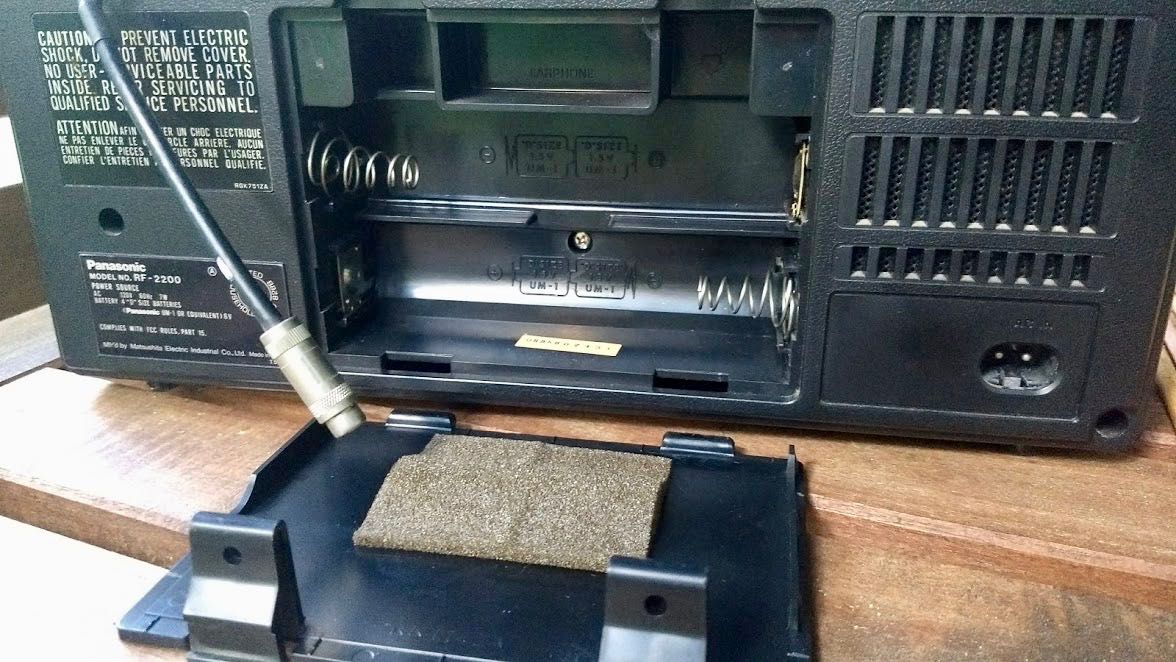
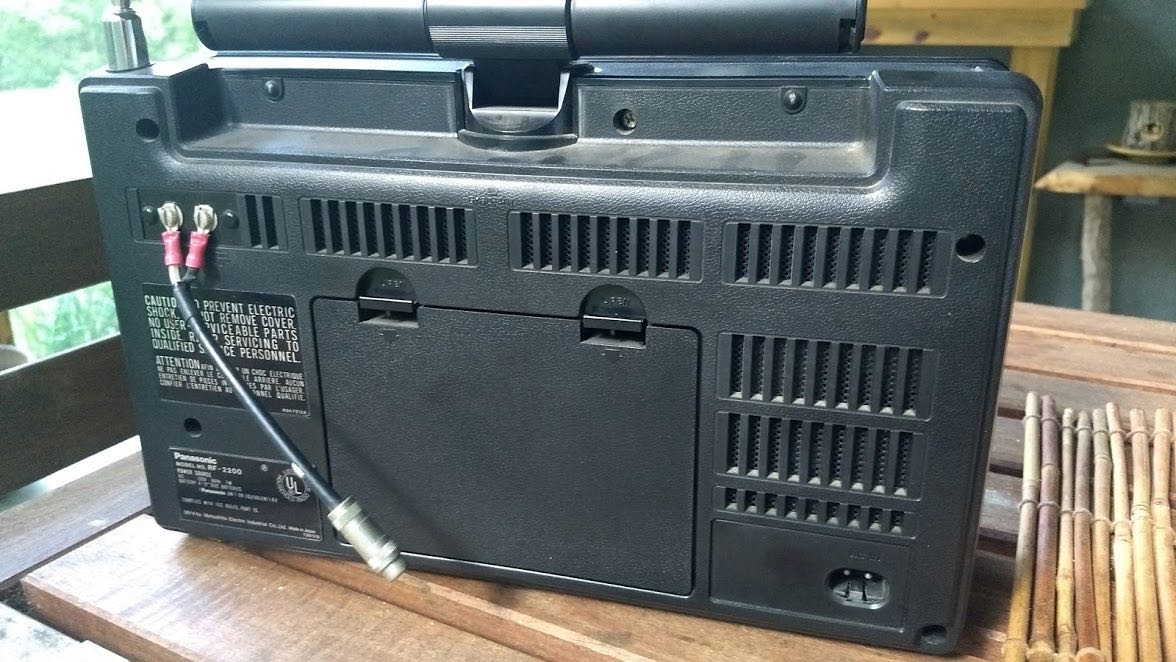
While taking a photo of it, the seller started telling giving me details. He said he’d never used batteries in it, and only used a small external wire antenna connected on the back (his homebrew connector was still attached). He then mentioned that he also had the original box, manuals, accessories and packing materials.

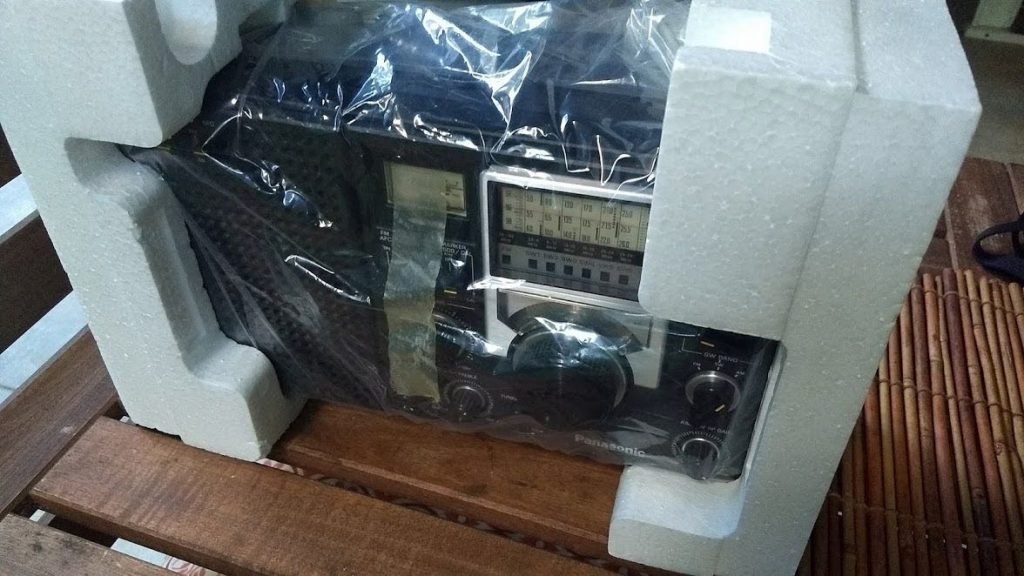
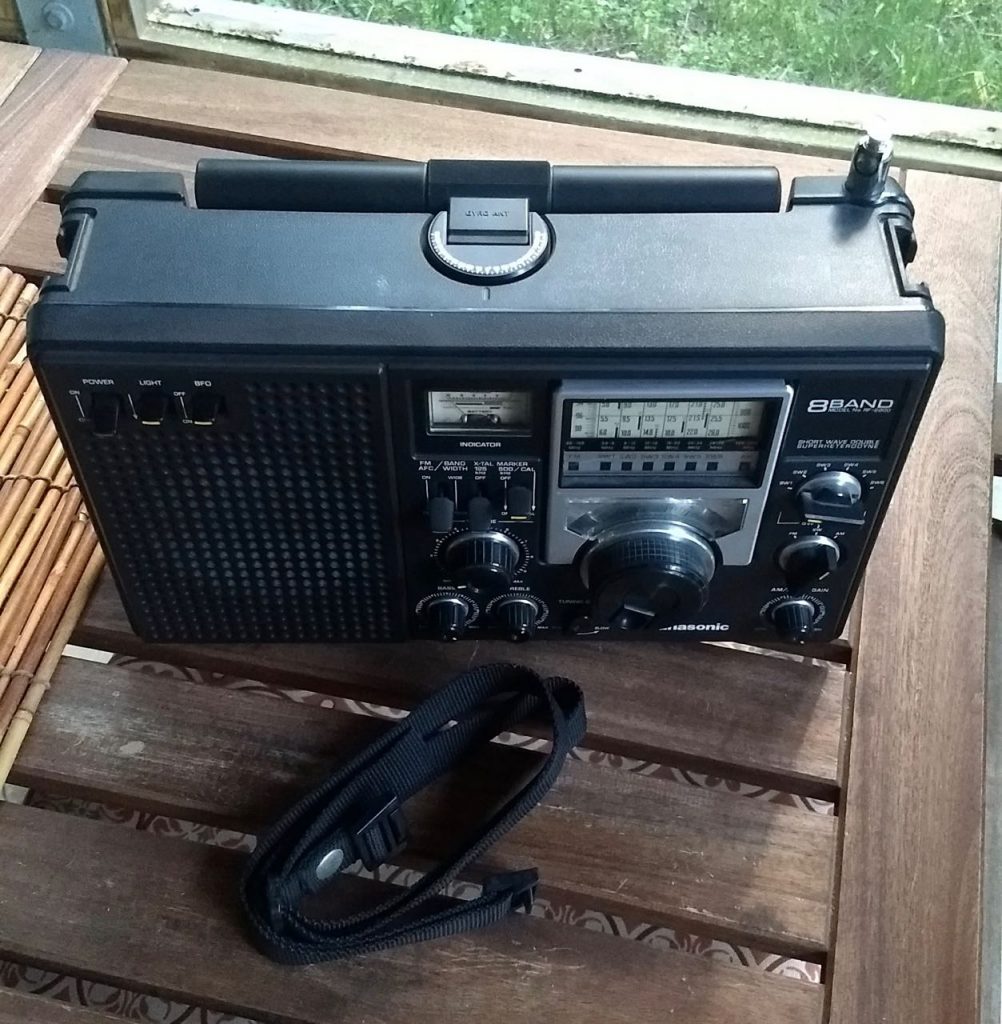
I put my camera phone away and picked it up to take a closer look. It had obviously been taken care of over the years. The battery compartment was immaculate and the telescoping whip didn’t have any bends or missing sections–it was straight, clean and original.

Out of curiosity, I asked how much he wanted for it.

He wanted $70.

Sold!

With absolutely no hesitation, I reached for my wallet. Sure, I’ve already got an RF-2200, but one can never have too many RF-2200s. Right?

I took a few photos of the RF-2200 this morning:
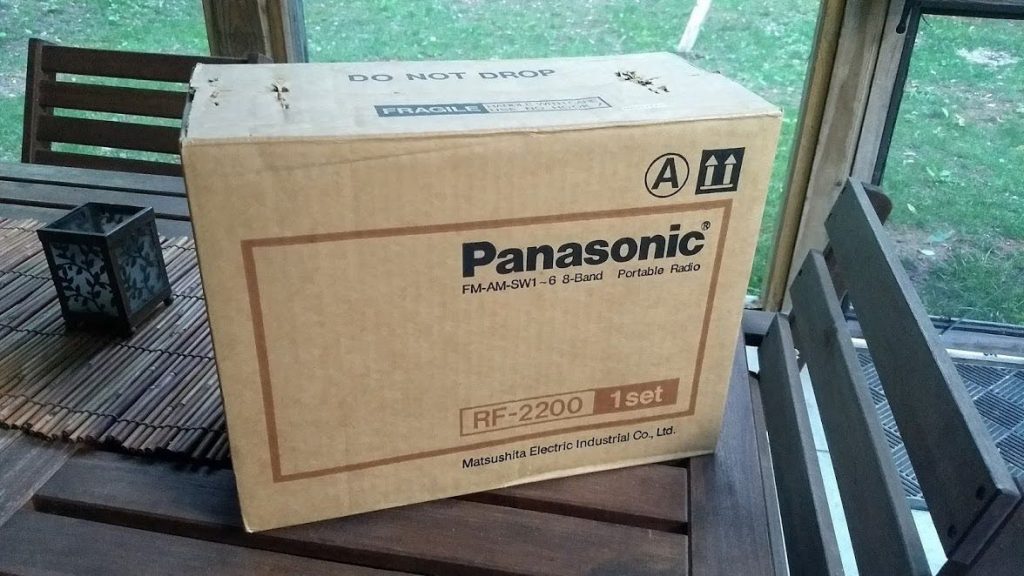
Without a doubt, this was my exciting 2017 flea market find. .

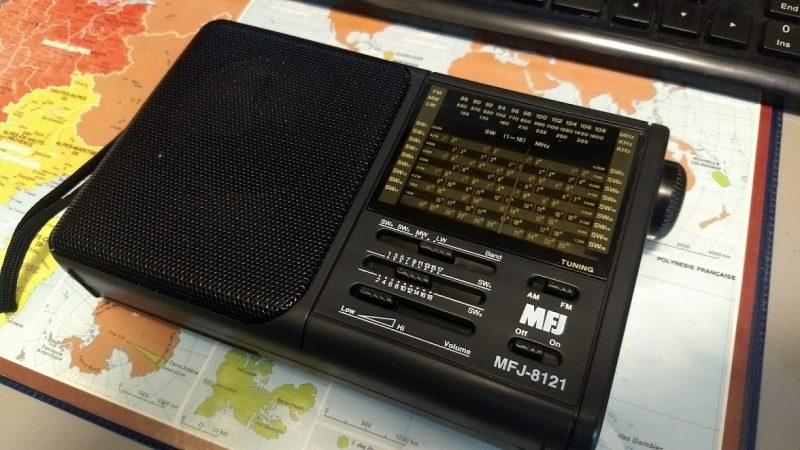
MFJ-8121 Analog Shortwave Portable
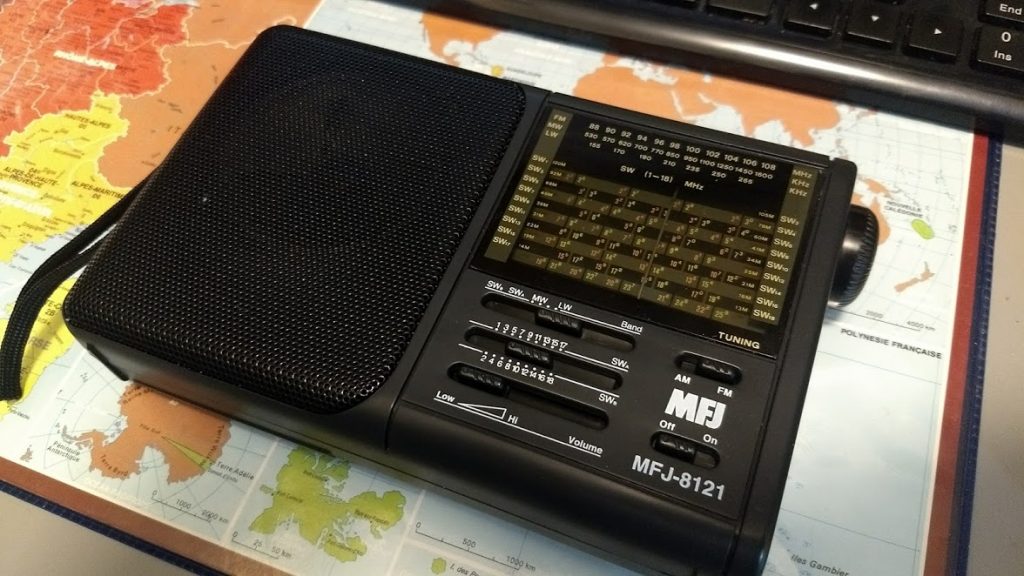
While browsing the inside exhibits late afternoon on Saturday, I spotted this analog portable from MFJ Enterprises.

In truth, I didn’t realize MFJ even had a shortwave portable in their product line.
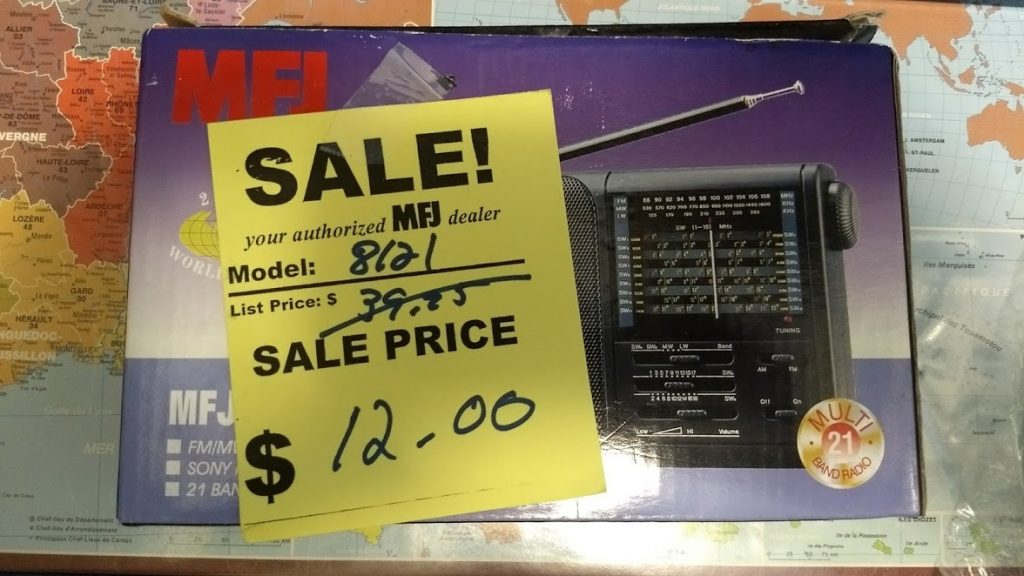
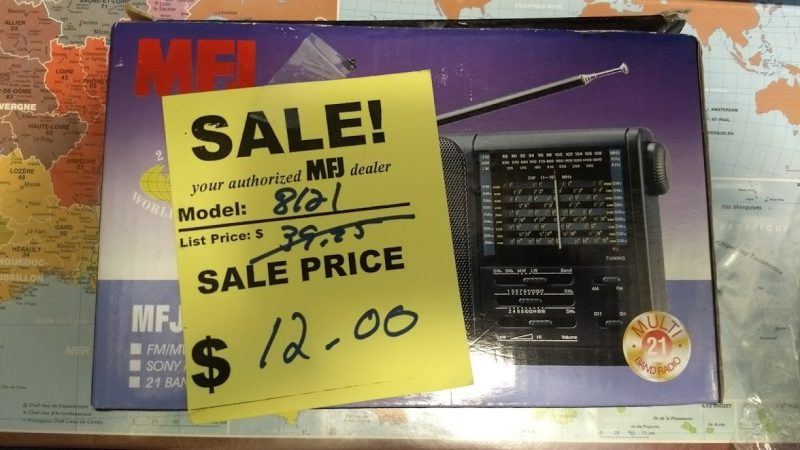
This particular unit was on the clearance table and was labeled as a “factory second.” The sales person told me it was likely due to the damaged box (the unit inside had no visible blemishes).

At $12, I decided to purchase it.

You see, I get a lot of requests from readers asking for recommendations of simple analog portables. I thought I might eventually review this MFJ unit.

Last night, I popped some AA batteries in the radio and, sadly, it produced no audio. The tuning indicator works, but the speaker doesn’t even produce a hiss. I suspect this is the real reason it was being sold on the clearance table.

I might contact MFJ and let them know about this, or I might simply pop the radio open and see if it’s a broken connection.

HamSource flashlight
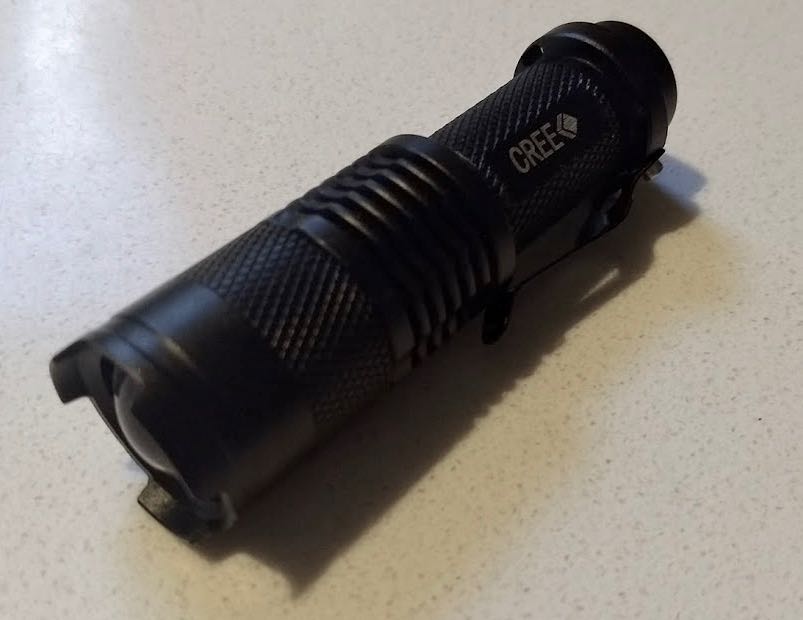
And finally–while not a terribly exciting purchase–I did also pick up this CREE LED flashlight at the Ham Source booth. It’s small, bright and runs on one AA battery. It has three settings: high, low and flashing. It appears to be very durable and the beam can be focused. For eight bucks, it’s the perfect flashlight to live in my new Tom Bihn Synapse 25 backpack.

That’s all, folks!

Looking back, I’m quite impressed with my self-control. I really didn’t want to return home with any new finds. If anything, I’m trying to downsize right now.

But a Panasonic RF-2200?  I always have room for another FR-2200!

Post readers: Have you acquired any flea market finds recently?  Please comment!

2017 Hamvention photos: Friday Flea Market

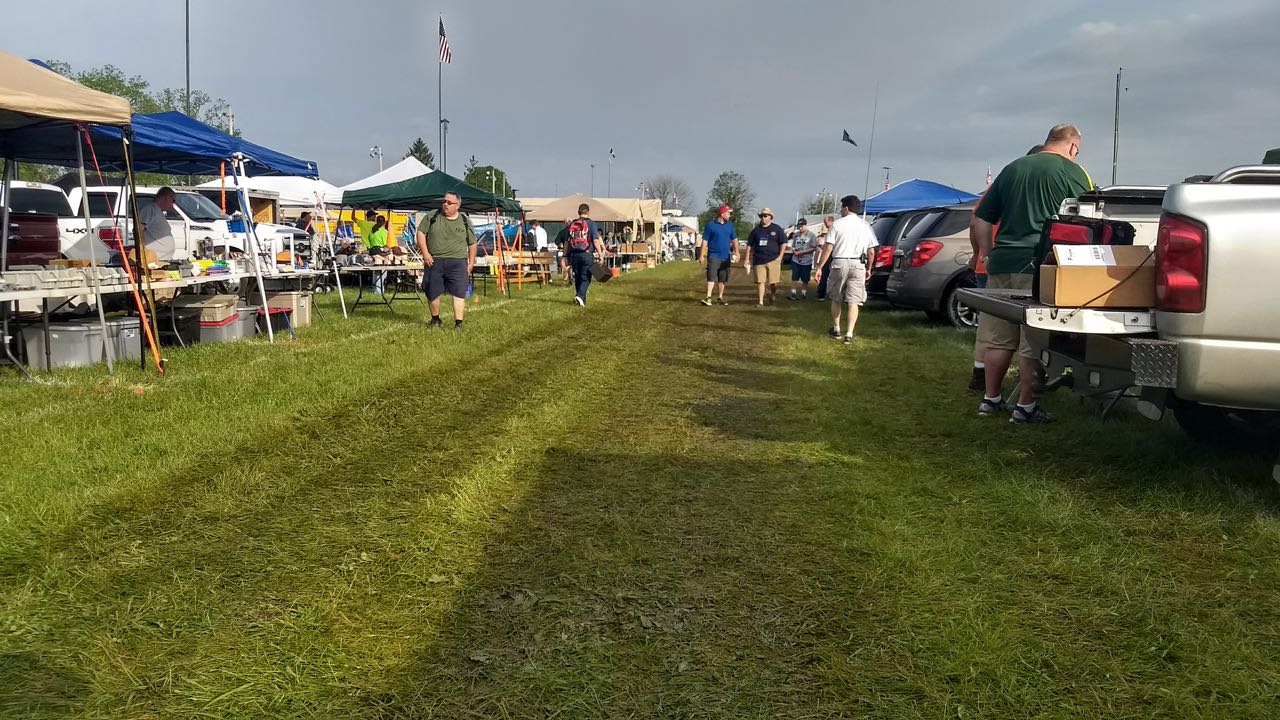
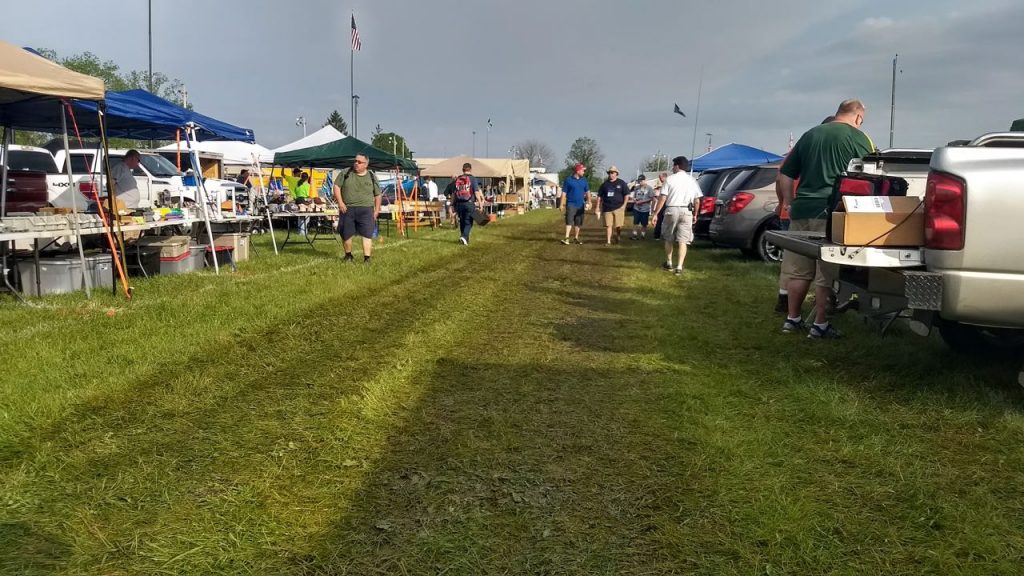
We had a rather long day here at the 2017 Hamvention, but we had a fantastic time. It was especially fun meeting so many SWLing Post readers and contributors in person! Thank you for stopping by our booth at 6508.

Below, I’ve posted well over one hundred photos I took at the Hamvention Flea Market this morning. Click on the thumbnail to expand each photo. I’ve tried to include price tags when available! I plan to post inside exhibit photos tomorrow.

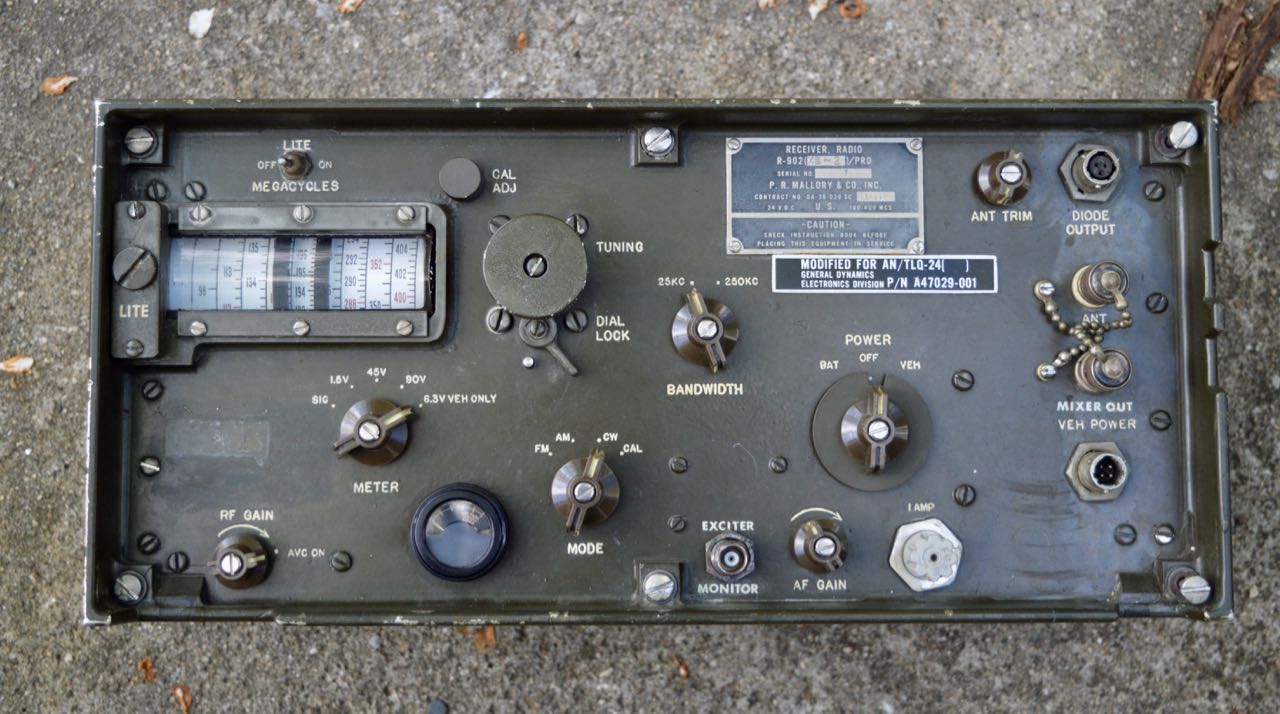
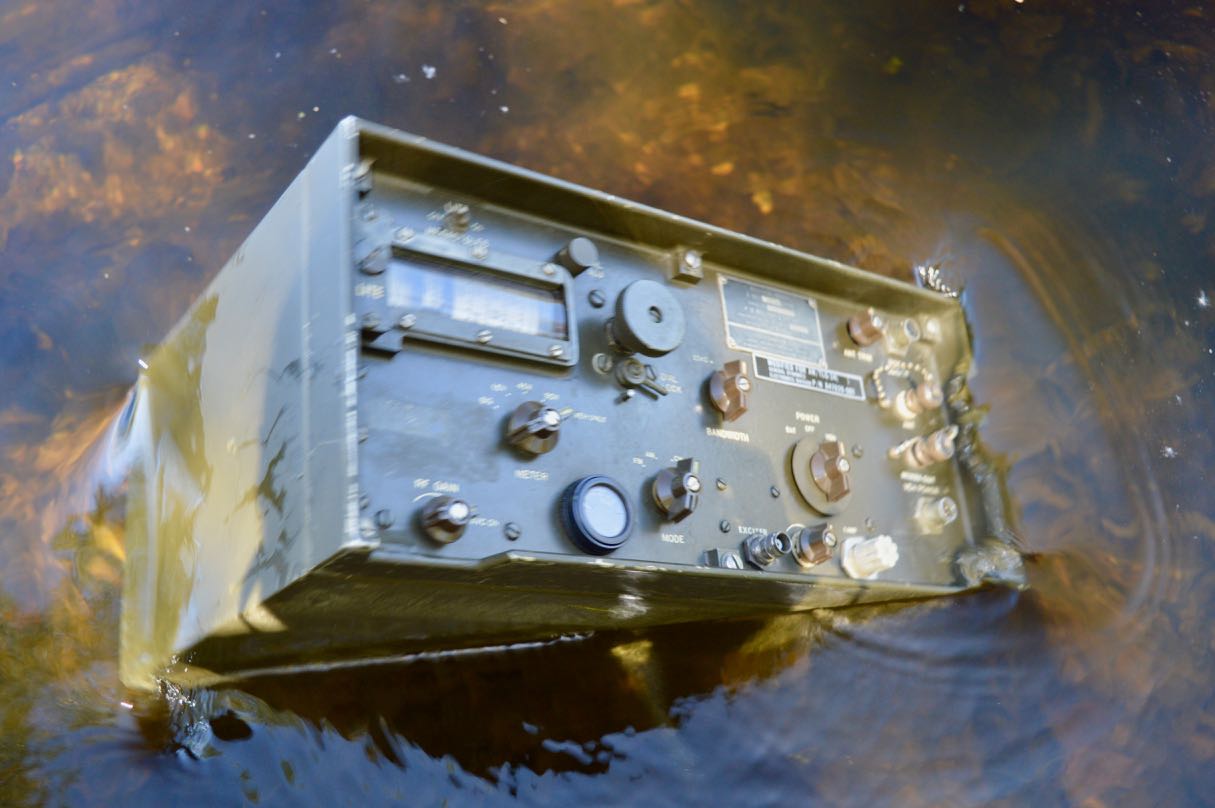
The R-902 (XE-2)/PRD: Ed’s flea market mystery radio

Many thanks to SWLing Post contributor, Edward Ganshirt, who writes:

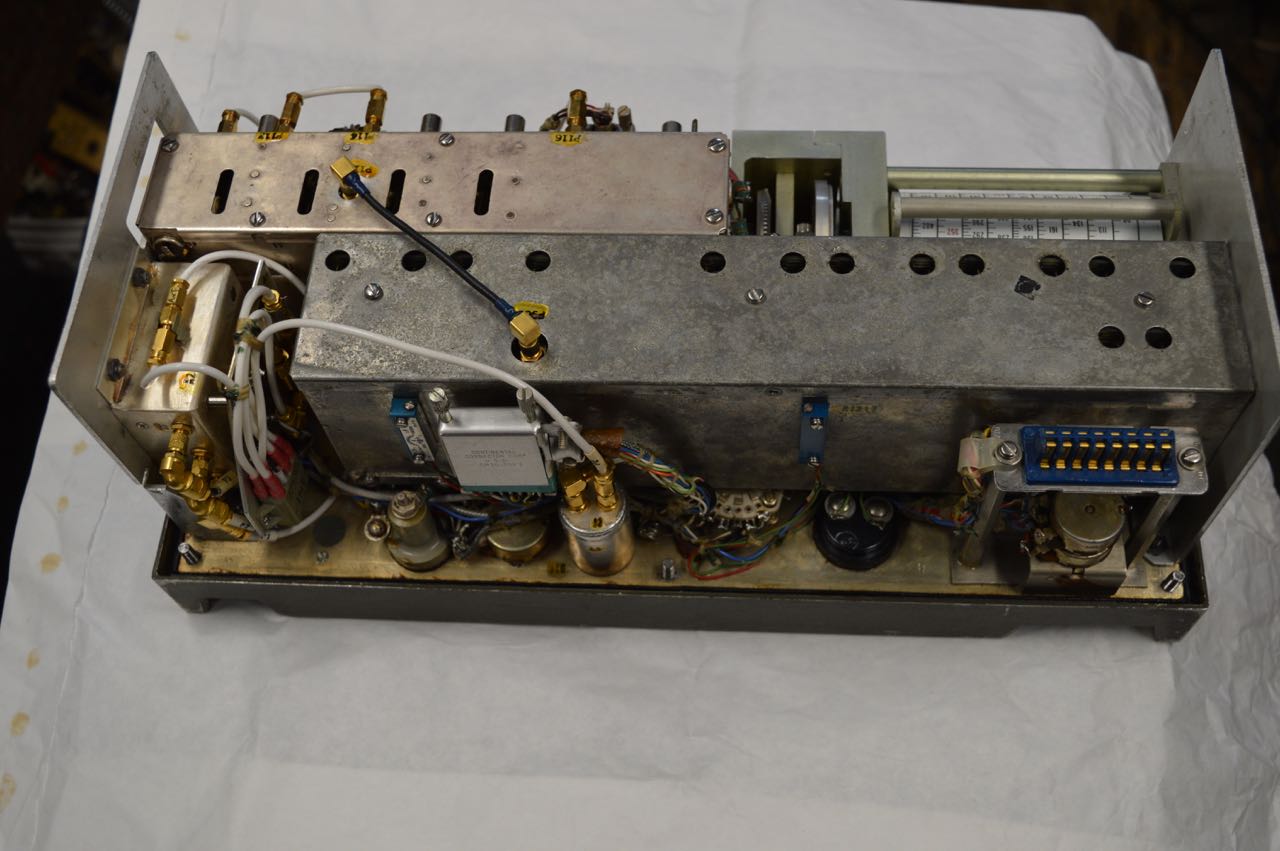
This radio followed me home from a flea market and I am trying to find out what it’s mission was.

I think it is a surveillance radio from the Vietnam era because of it’s low serial number #7 R-902 (XE-2)/PRD.

I can’t seem to find anything on it. It tunes from 96 to 404 MHz FM AM CW is battery powered and is totally waterproof (this would be the radio to take white water rafting) .

I would like a schematic or manual for it.

Does anyone in SWL world know anything about it?

Wow! I’m afraid I would have taken that heavy metal home with me too, Edward! And it’s waterproof? What a bonus! 🙂 Actually, I imagine since it’s waterproof, the internals are likely well-preserved.

Post readers: If you can shed some light on this model R-902, please comment. If you have a service manual or schematic, I’m sure Ed would appreciate a link/copy!

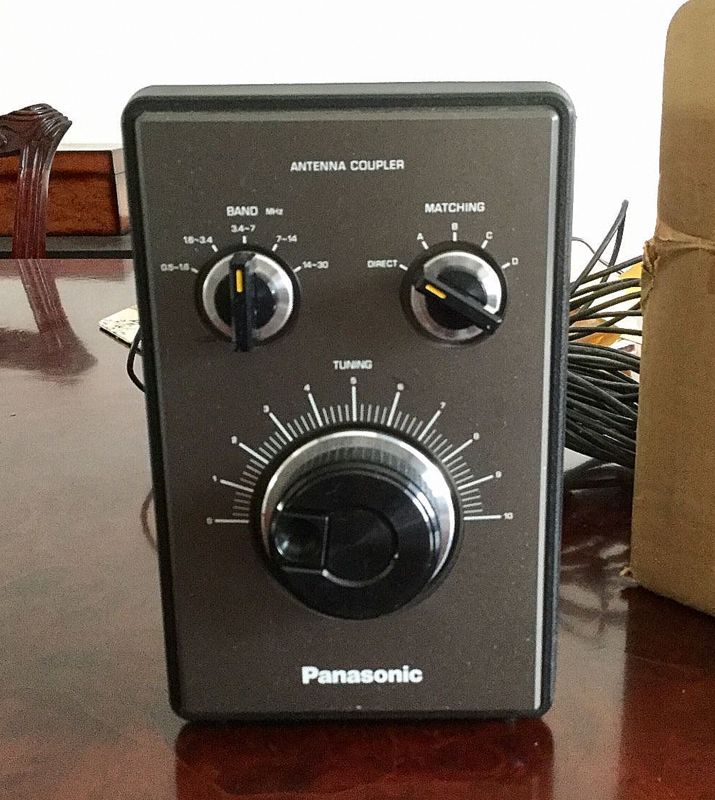
Panasonic RD-9820 on eBay

Many thanks to SWLing Post contributor, Mario Filippi, who shares an eBay link to this Panasonic RD-9820–the matching antenna coupler for the Panasonic RF-2200. Mario notes that RF-2200 owners might take note as the auction price is on a more reasonable trajectory than ones have in past auctions. This 9820 also includes the box.

Thanks for the tip, Mario!

Click here to view on eBay.

Soviet Era Radio: Dennis reviews the Shoroh R-326 receiver

Many thanks to SWLing Post contributor, Dennis Kalinichenko, who shares the following review:

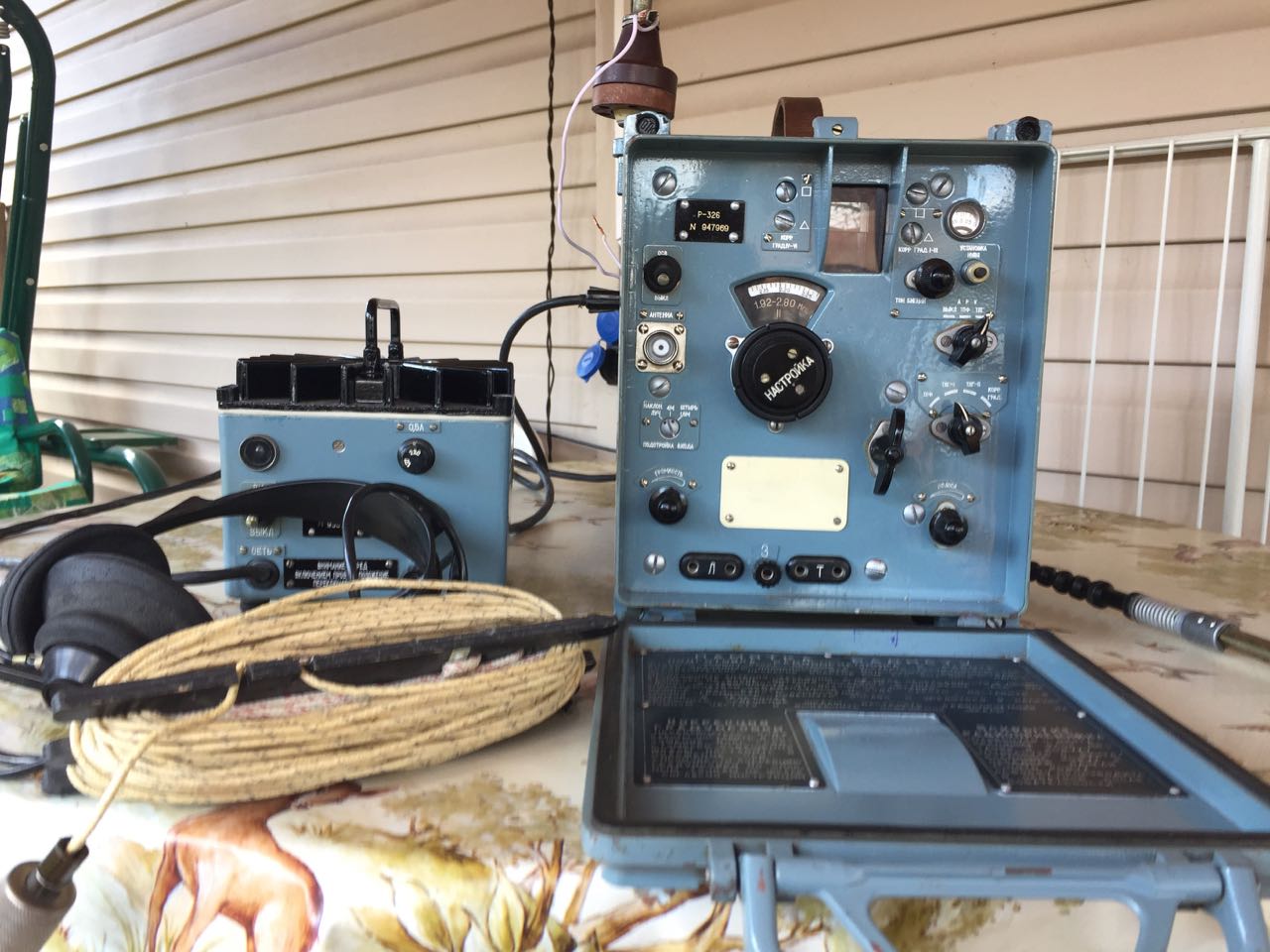
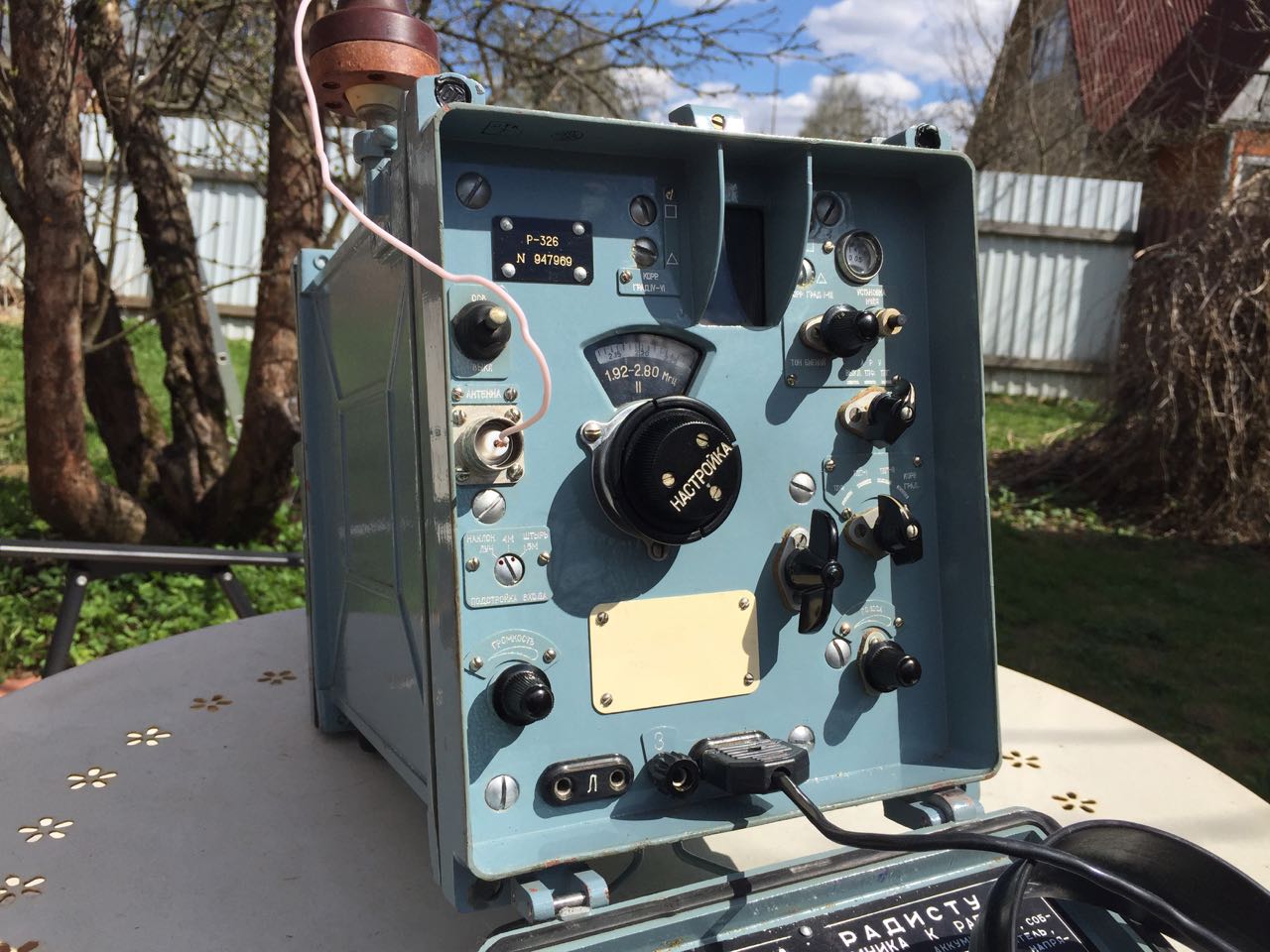
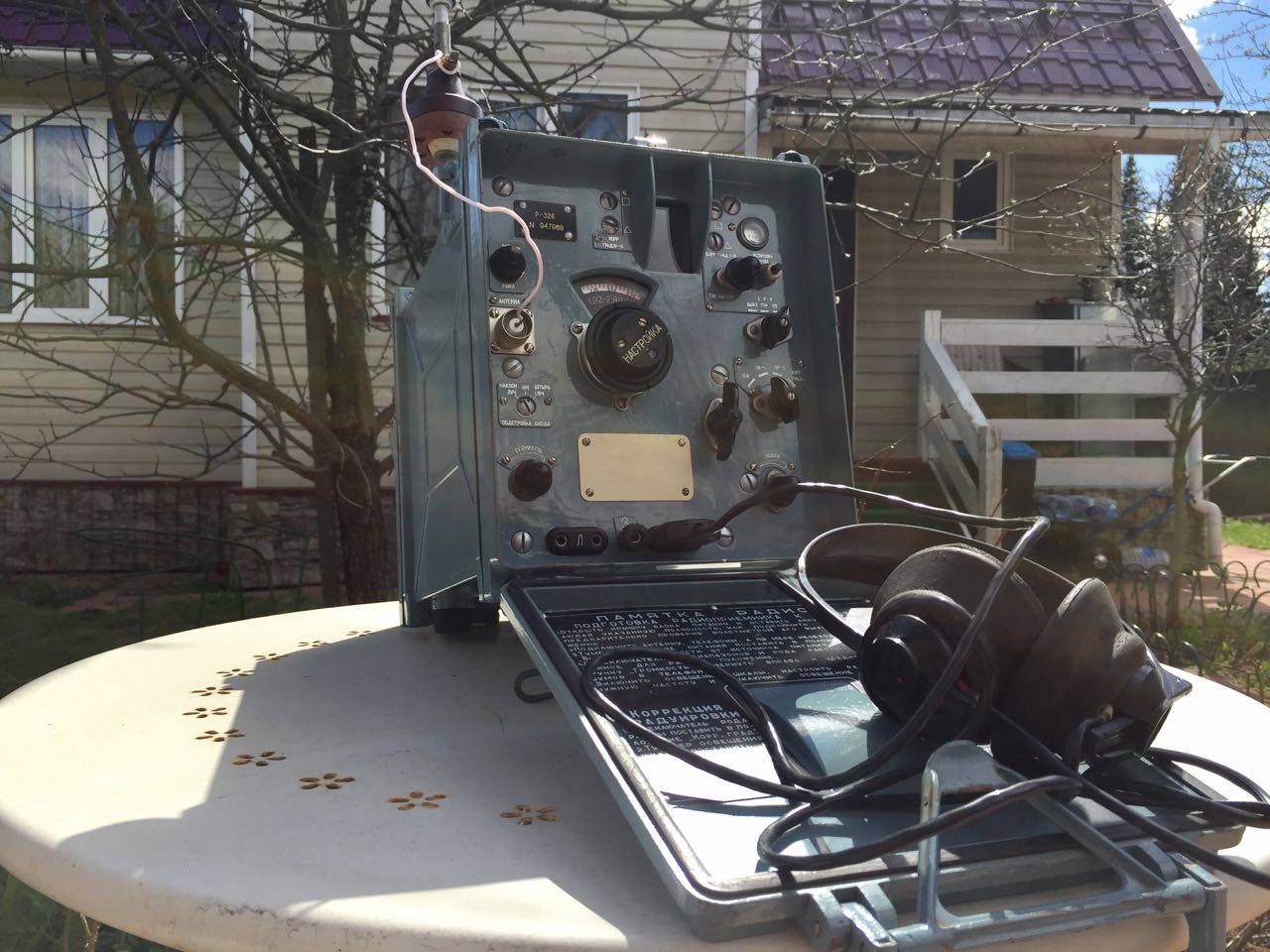
The Shoroh R-326 military radio

by Dennis Kalinichenko

I believe the piece of Soviet military equipment I recently bought to my collection would be interesting to all readers and contributors.

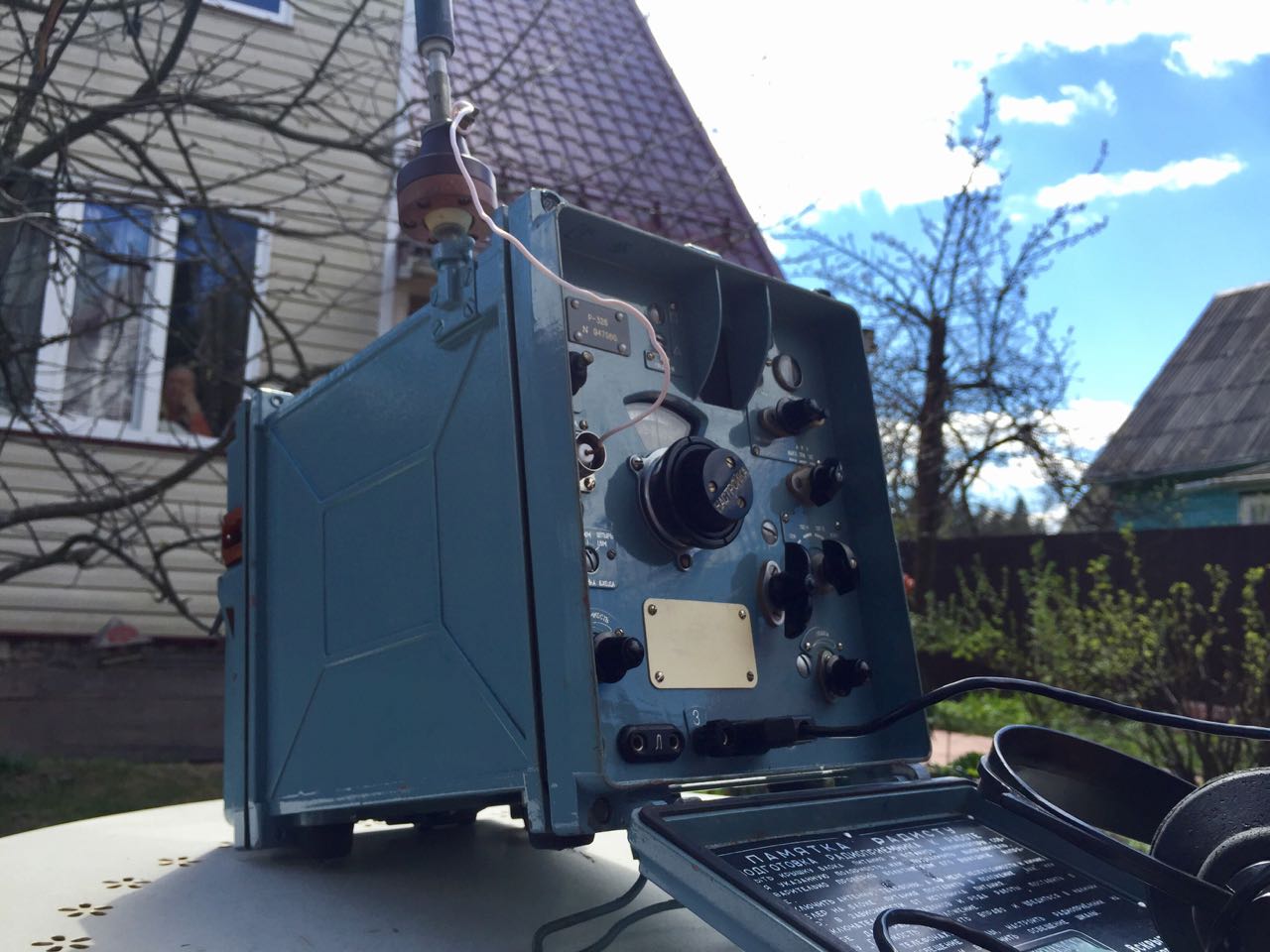
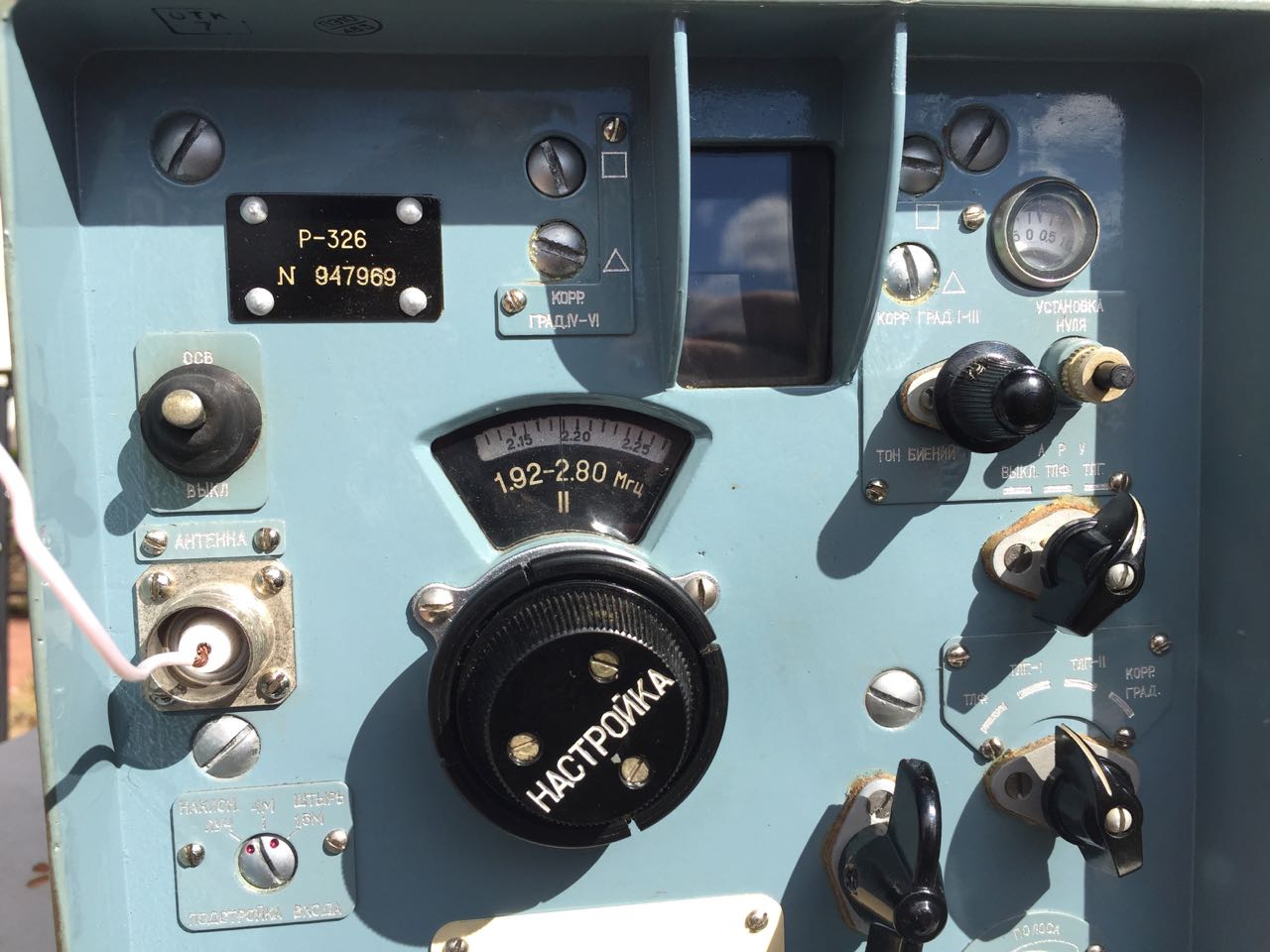
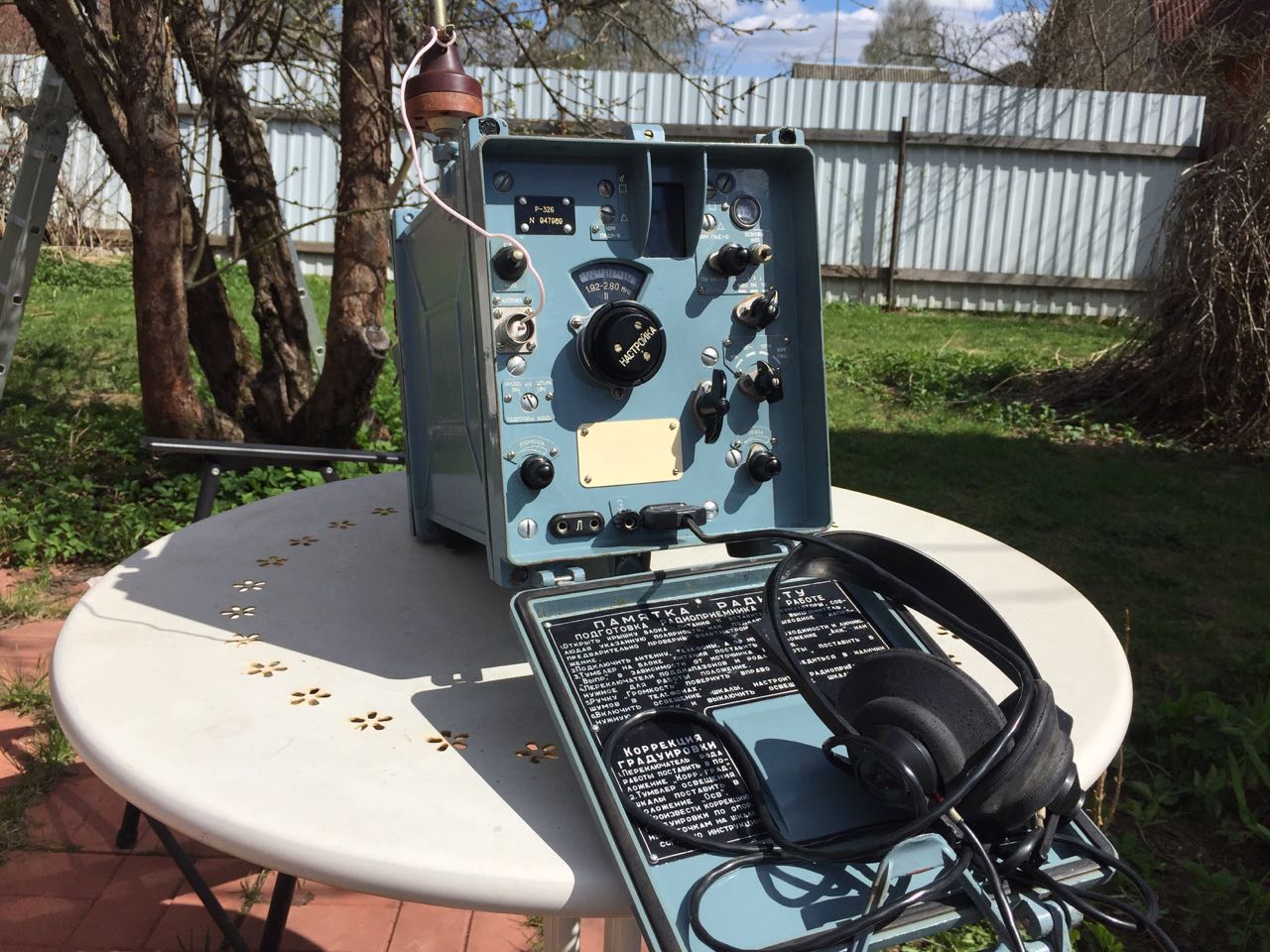
This is the R-326 “Shoroh” (“Rustle”) general coverage military tube shortwave radio receiver. These were produced decades ago, back in 1963. These portable receivers were in active military use in the Soviet Army until the early 2000s, when the R-326 was finally discontinued . Today, this set is no more a spy secret, but a great collector’s item and also a good receiver for home use.

My set cost me about $150 US, which is rather expensive for this radio. The R-326 was plentiful in the local market in 90-s, right after the fall of the Soviet Union, very cheap and popular between radio amateurs, but nowadays this radio has become more and more rare, so the price rises up.

My R-326 arrived from Khabarovsk city, the Russian Far East, where, I believe, for many years it was on duty in some of the Soviet radio intelligence and defense forces division.
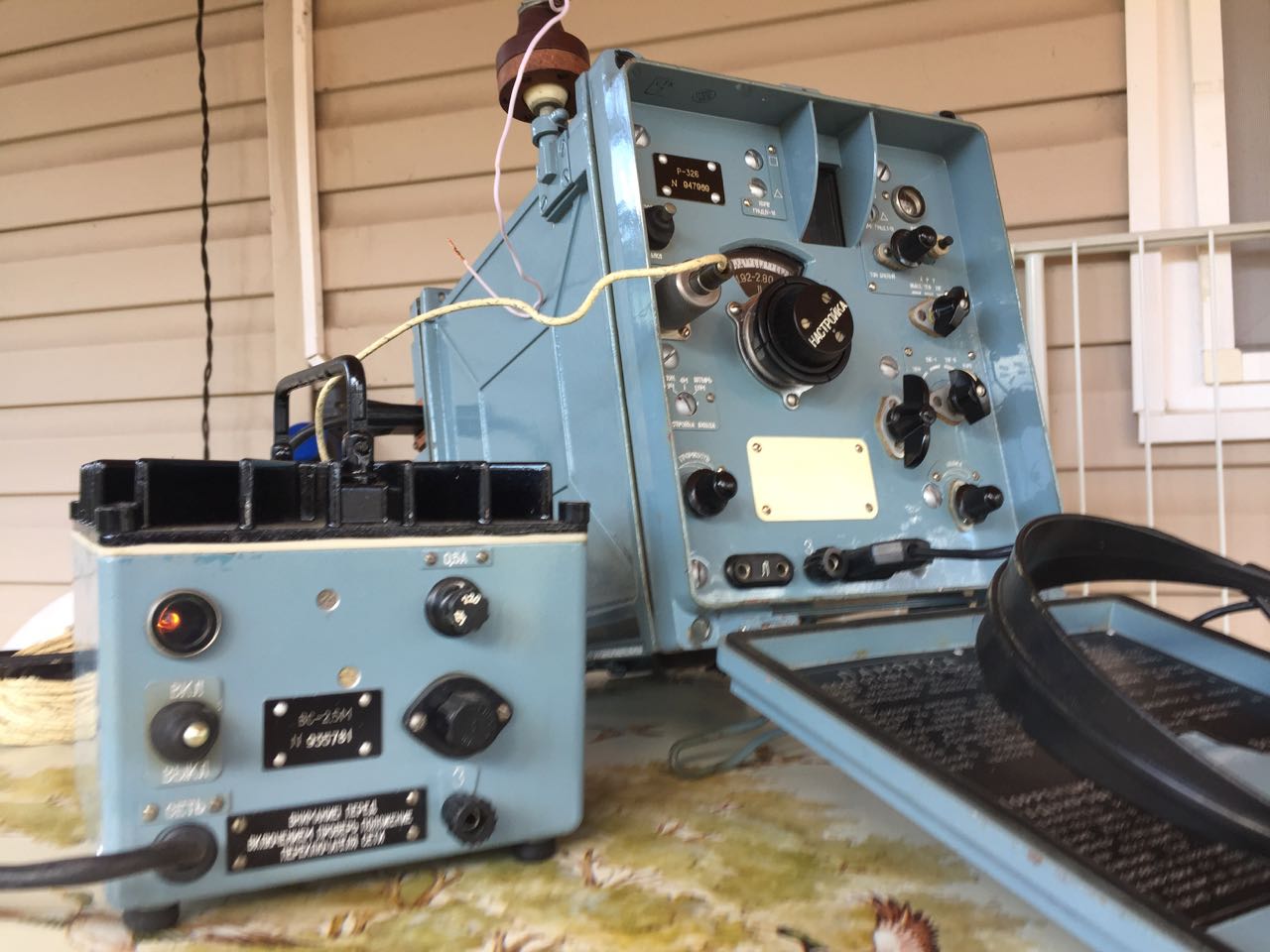
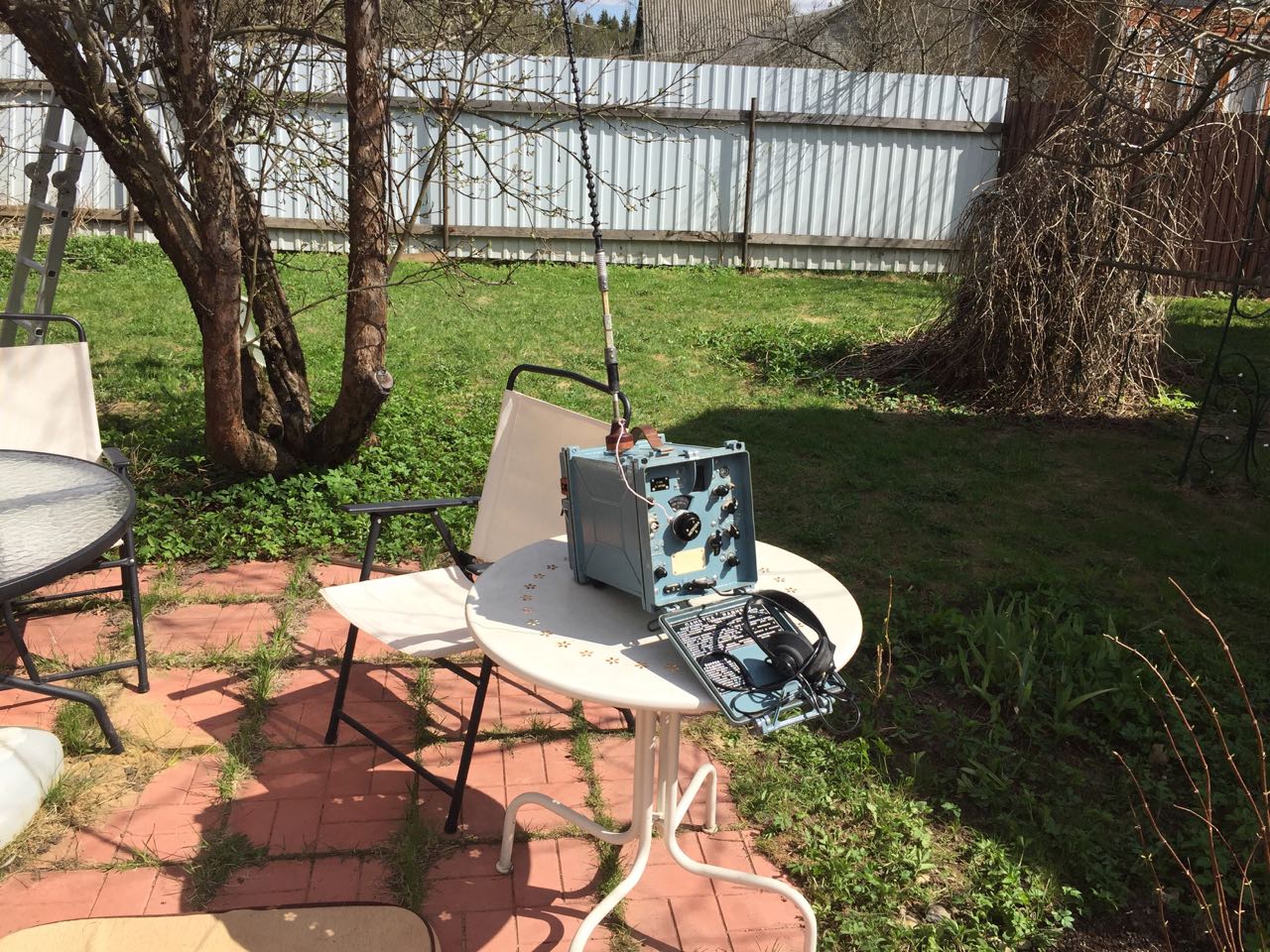
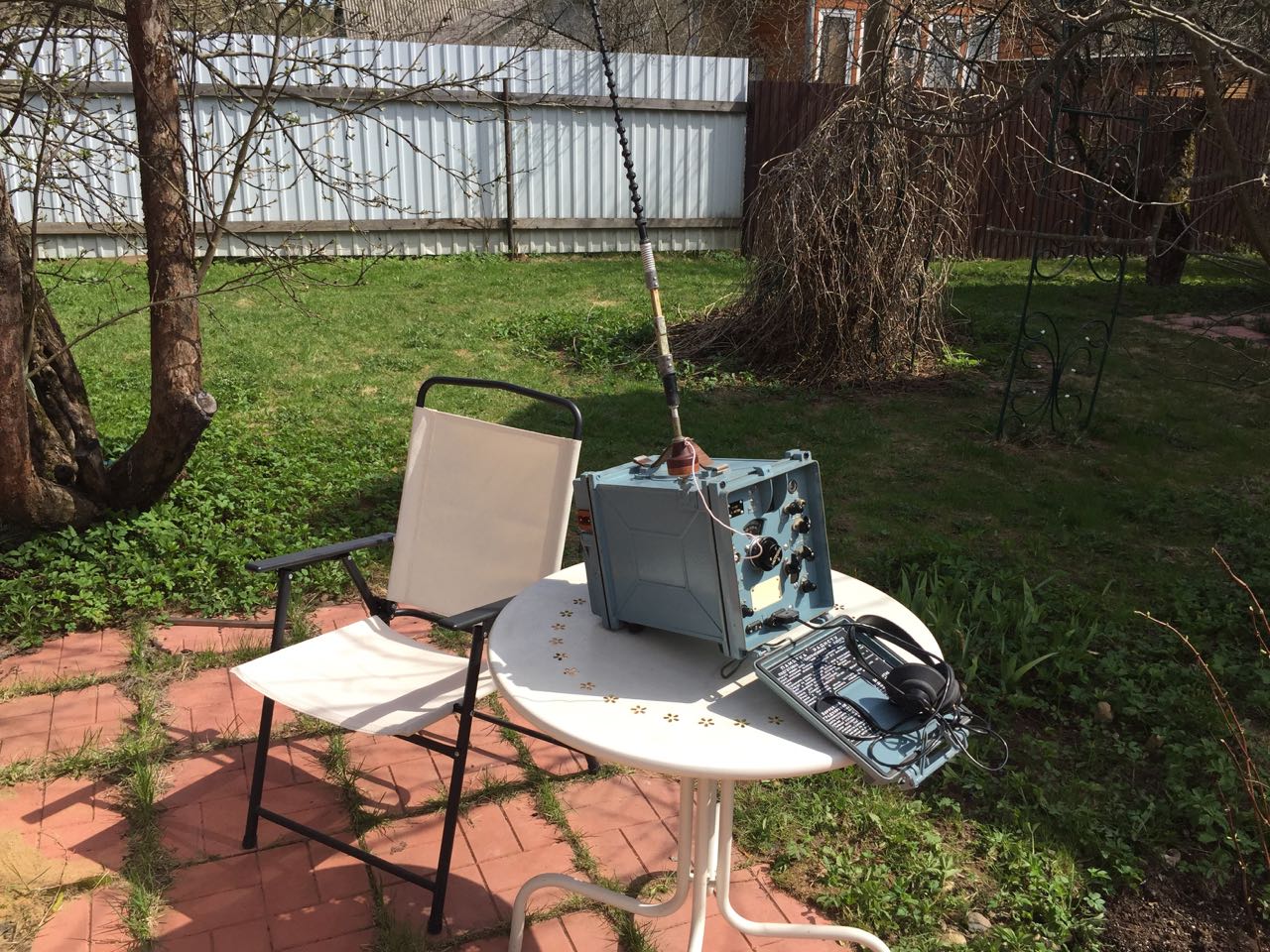
The set includes the radio itself, original military 100 ohm headphones, original rectifier box for 2,5 V output, 12 meter long wire antenna on a reel, the 1,5 meter famous “Kulikov” mini-whip antenna, the isolator for placing it on top of the radio and some minor accessories.

Originally, the R-326 radio came with two batteries–1,25 V each–for field use, but mine are totally drained and need to be serviced, so I haven’t used them so far.

The radio is a light-weight, only 33 lbs, which is a real minimum for Soviet military equipment–the famous R-250 radio’s weight is up to 220 lbs–so, in comparison, this unit is really portable. You can easily put it in your car using the attached leather handle and take it with you on a weekend trip. No other military radio can be so “travel-friendly”; this is one of the reasons it was so popular in the ham radio and SWL communities.

The case is made out of steel and looks so solid you may want to use it as a nutcracker. And you can! In no way could you harm the box constructed to resist nuclear attacks. It is waterproof and sealed–so I can be confident that no previous owner has ever tried to solder something in the guts.

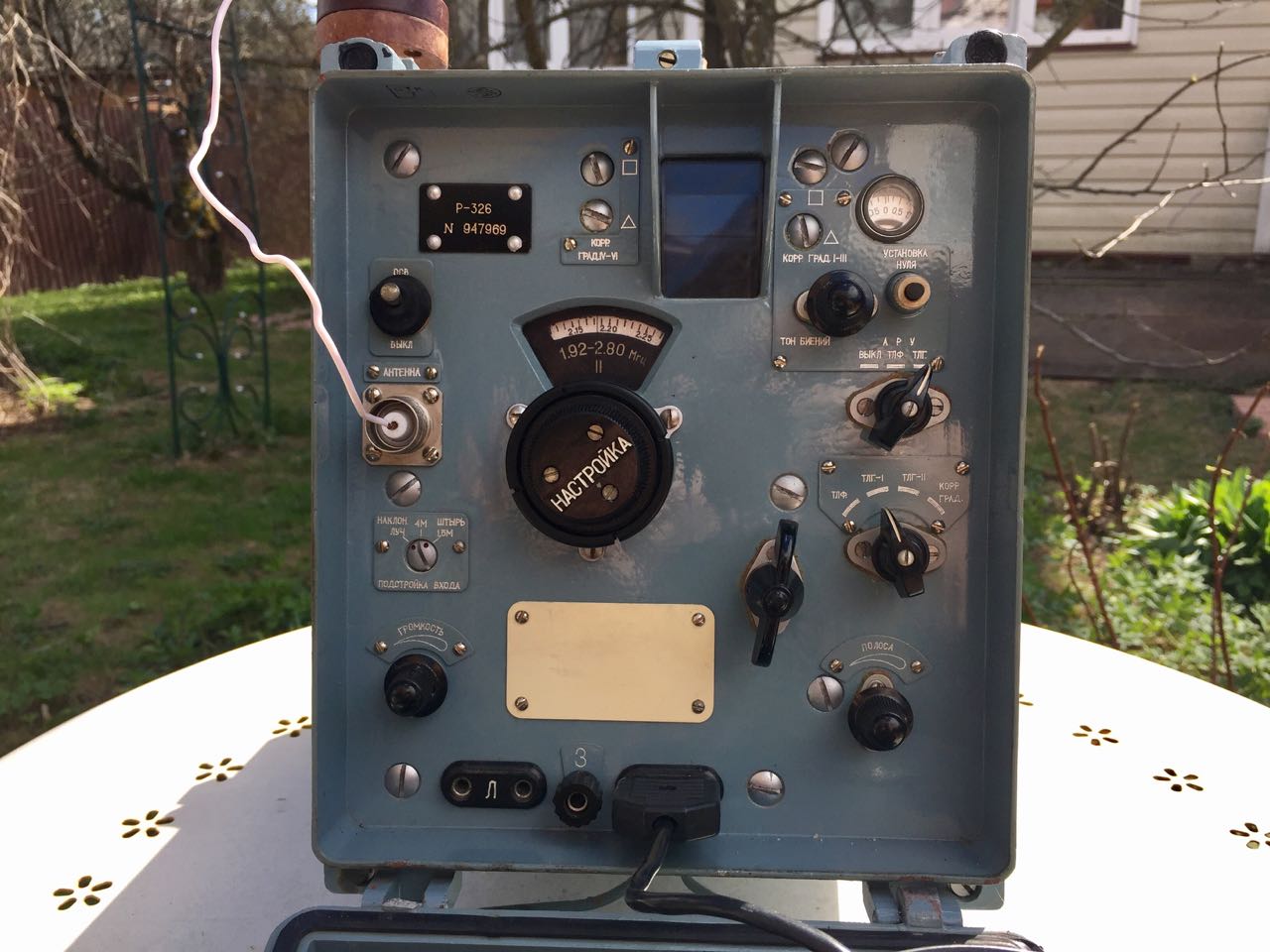
The radio is a super heterodyne containing 19 (!) special mini tubes and covering 6 SW bands, from 1 to 20 MHz. It works in both AM and SSB (CW) modes, having an on-board adjustable bandwidth control from 300 Hz to 6 kHz.

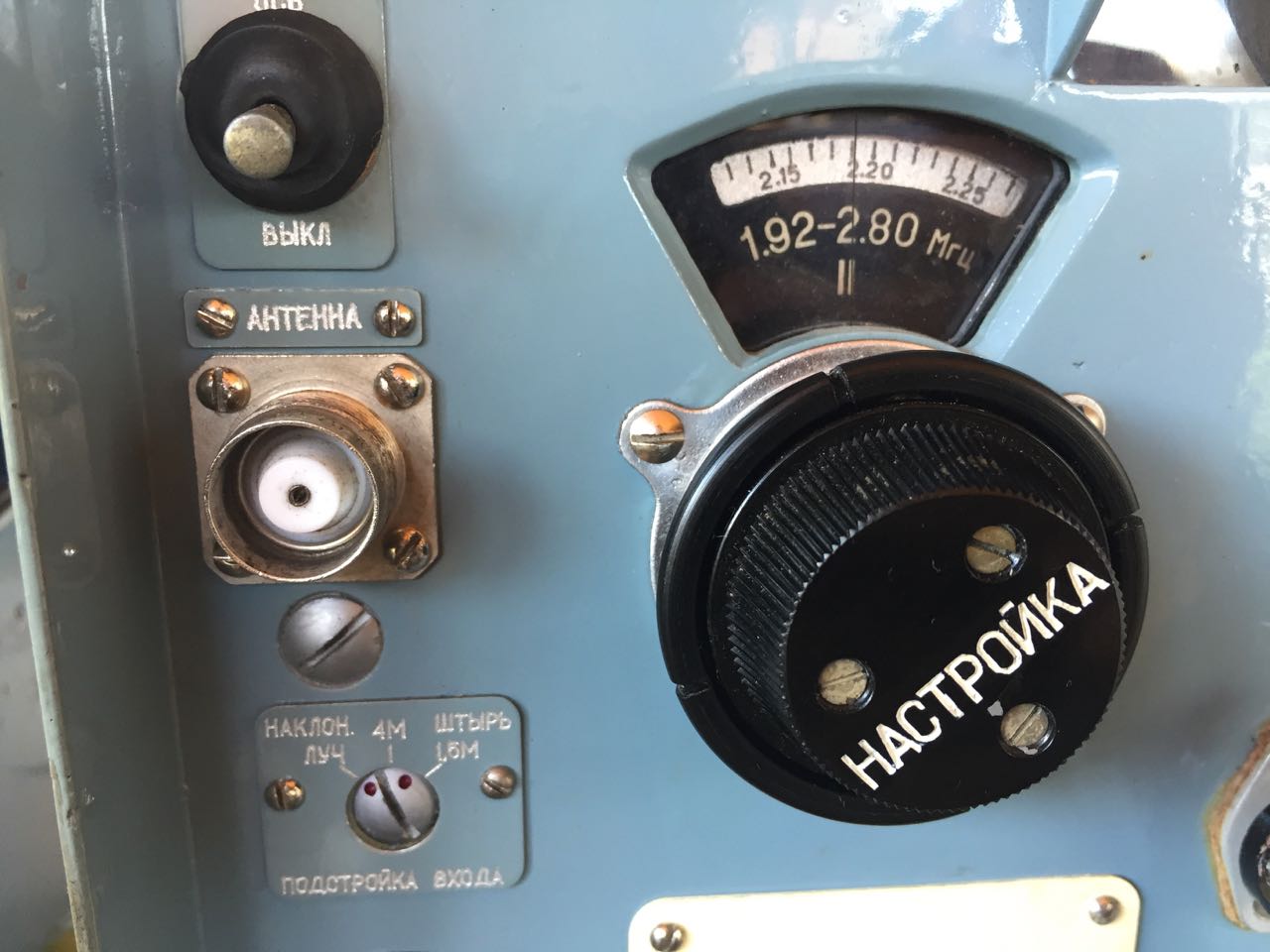
On the front panel, there are two scales: one is rough/coarse, and above is the precise one, a so-called photoscale, which may be adjusted to match real radio-frequency using the four screws near the sun protection visor. With this scale, you don’t actually need a digital readout. It also has a BFO control with a zero setting, adjustable AGC levels for AM and CW, and adjusting screw for matching the antenna input, as marked for 12 m long wire, 1,5 m and 4 m whip.

The radio has no built-in speaker. Instead, there are two output sockets on the front panel, for 100 ohm headphones and 600 ohm line-out.

The power consumption is very low for s tube radio, the rig needs only 1,4 A at 2.5 volts DC (including the lightscale). I use the original power transformer (transistor rectifier) and therefore switch the unit into the 220 AC outlet.

The sensitivity of the radio is extremely high and equals some modern transceivers. The selectivity is also impressive. No doubt it was really great for 1960s. But there’s negative side as well: the radio easily overloads even from the outdoor long wire antennas. The best fit is the “Kulikov” mini-whip that you can see in the photos.

When you switch on the radio, you hear noise, the level of which seems high, so you lower the volume down. Yes, the radio is sensitive and a bit noisy. But thanks to the tubes it sounds really amazing in the headphones. The SSB ham operator’s voice is warm and very clear.
The tuning is very smooth, being actually 2-speed: outer wheel is for fast tuning, inner wheel for precise tune.

It’s absolutely obvious that nowadays a simple Degen or Tecsun may be more useful than this old and heavy unit with big and tough knobs and switches. But what a pleasure sitting in front of this perfect tube radio at night, with the headphones on, turning the huge tuning wheels, looking into the moving dim scale, listening into distant voices and rustles, feeling yourself a Cold War times operator near the rig.

Isn’t this experience priceless?

Indeed the experience is priceless, Dennis! Better yet, your R-326 now has an owner that will keep it in working order and enjoy it on a regular basis. I personally believe keeping these vintage rigs on the air is one way to preserve, and experience first hand, a little of our collective radio history.

Thank you so much for sharing your review and excellent photos of the R-326!

Post readers: If, like Dennis, you have a vintage radio you would like to showcase/review here on the SWLing Post, please consider submitting your story and photos. Being a huge fan of vintage radio, I truly enjoy reading through and publishing your reviews.  I know many other readers feel the same!