Category Archives: Radios

Travelling and DXing with the Bonito MegActive MA305 antenna


Ok, so officially it wasn’t a DXpedition; it was a well needed vacation in the sun after several hectic months of work, some of which involved travel to slightly more exotic locations. However, these days, I view any travel, whether it be for business or pleasure as a ‘DXpedition’ opportunity! Some of you might remember that I purchased a Bonito Boni Whip at the beginning of 2017 because (a) I needed another antenna and (b) a second Wellbrook loop felt like too much of an extravagance. They’re excellent antennas for sure, but at around £300, I couldn’t justify buying another. Thus, for about a third of the price I bought the Boni Whip. It proved to be an excellent choice – very compact and so perfect for my regular DXpeditions, quick to set up and capable of really excellent DX. There are many videos on the Oxford Shortwave Log YouTube channel that are testament to this. I wrote a couple of articles, published here on the SWLing Post which were seen by Dennis Walter of Bonito, who subsequently contacted me and offered to send over their MegActive MA305 E-field antenna for testing. Dennis made it crystal-clear that I was to ‘do my own thing’…test the antenna in any way I saw fit and publish my findings so DXers/radio enthusiasts could learn more about the capabilities of the antenna – from another DXer. I was happy to agree to this arrangement and the MegActive MA305 duly arrived, complete with two lengths of (bayonet BNC terminated) high quality H-155 coaxial cable.
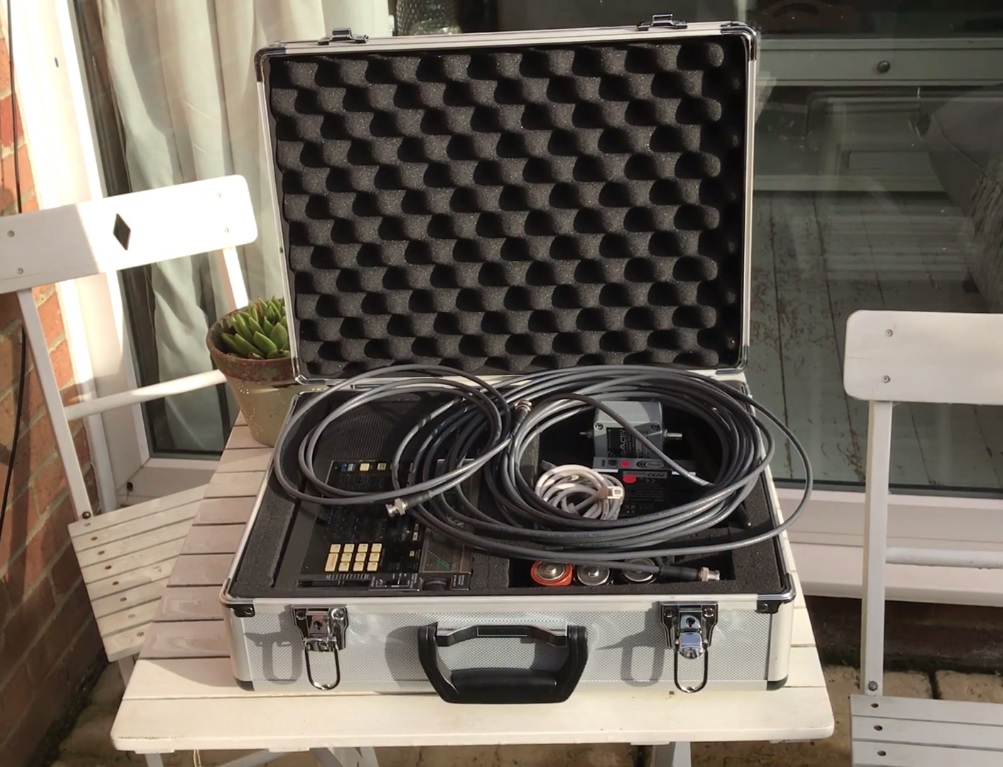
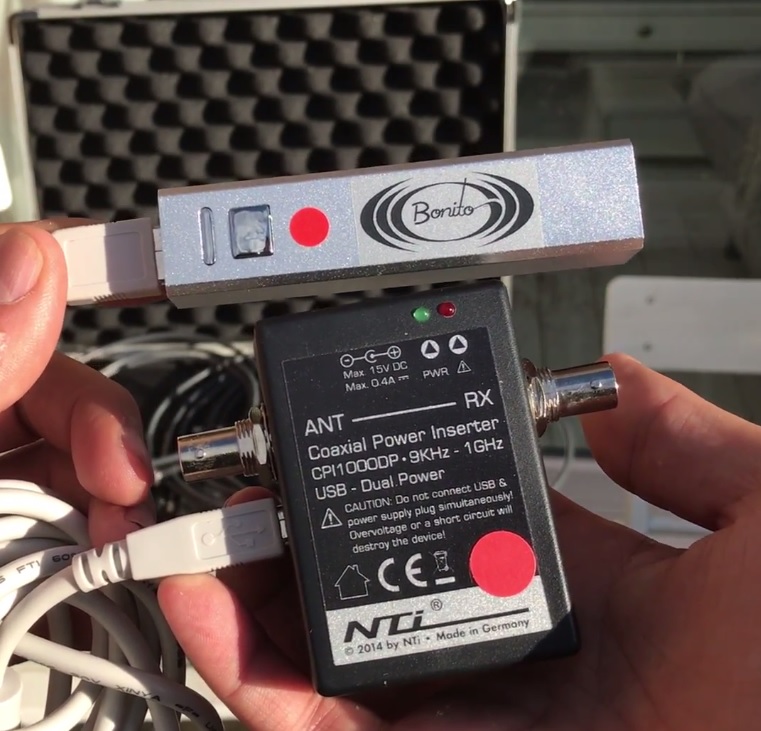
 My portable Dxing kit with MA305 antenna                 The MA305 power inserter and USB power ‘brick’

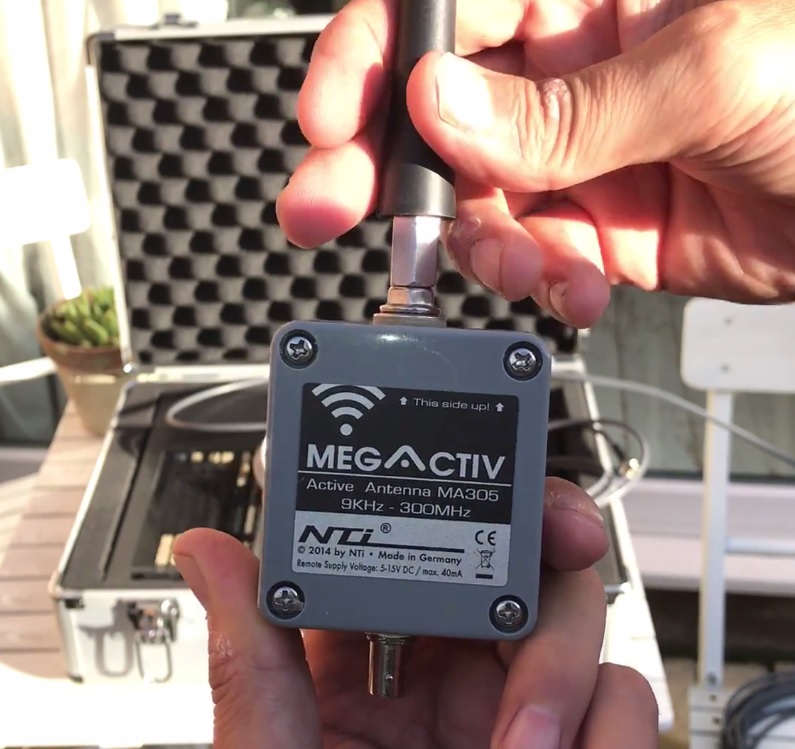
The specifications of the MegActive MA305 are very similar to the Boni Whip; they both offer a Gain of +3 dBs, second and third order intercept points of greater than +30 and +50 dB respectively and both tune to 300 MHz. The MA305 is supplied with a longer radiating element and tunes down to 9 KHz (versus the 20 kHz lower limit for the Boni Whip). Obviously this isn’t a specification that is going to concern most radio enthusiasts; both offer fantastically wide operating bandwidths. The way in which these antennas do differ quite significantly however, is in how they are powered. The Boni Whip operates from 12 to 15 V, whilst the MA305 operates from 5 to 15 V. Bonito’s design philosophy regarding this feature is based on the increasing difficulty in procuring reasonably priced analogue external plug-in power supplies (they are no longer allowed to be produced due to power consumption restrictions).

Interestingly, when the power supply for my Wellbrook ALA1530 packed up, I called them to purchase a replacement and was told they only have limited stocks remaining. Thus, a solution for powering active antennas with a suitable low-noise supply is an issue that needs resolving. The guys at Bonito figured a USB power source was suitably quiet and with USB ‘power bricks’ almost ubiquitous these days for charging mobile phones and other portable electronic devices on-the-go, the idea could be applied to their active antennas. The result is the MegActive MA305, designed to operate at 5 Volts with no loss of performance. As a DXer who probably spends more time listening on DXpeditions than I do in my shack at home, the USB power solution was perfect. I myself often carry a cheap Chromebook laptop to use as an additional power source for my camera phone when I’m DXing, so Bonito’s design approach resonated with me completely.
 

Travelling with the MegActive MA305

Ok, so the MA305 is very compact and very light indeed – perfect for a trip to Crete! However, I know from many conversations with my YouTube friends and followers that some of us feel a slight sense of trepidation carrying shortwave radios and antenna systems on board flights, be they national or international. I myself wasn’t really concerned other than if my bag got pulled from the X-ray machine, there’s often quite a long wait whilst the security staff work through the queue of luggage requiring er…human intervention! Predictably, my rucksack did get pulled and I waited patiently until it was my turn to explain the contents! Looking back on this retrospectively, it’s hardly surprising. Other than the usual holiday paraphernalia, my rucksack contained:

  • A 10.0 metre length of H-155 coaxial cable
  • A 1.0 metre length of H-155 coaxial cable
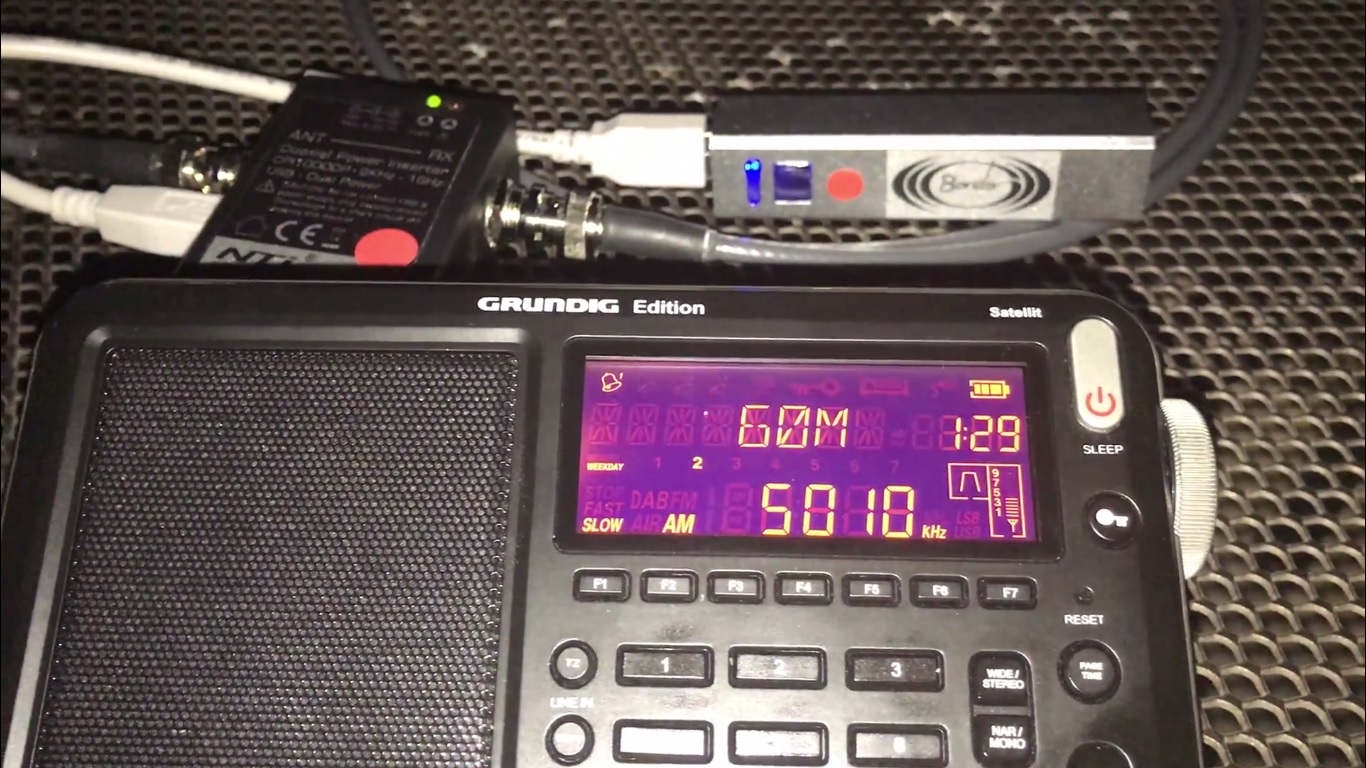
  • Eton Satellit receiver
  • MA305 Coaxial Power Inserter
  • MA305 Antenna Amplifier
  • Bonito USB ‘Power Brick’
  • Bonito USB Power Cable
  • NooElec RTL-SDR dongle
  • NooElect ‘Ham It Up’ upconverter
  • Various screened cables and connectors
  • 10 metres of equipment wire

I explained to the (friendly) security chap that I was a shortwave radio hobbyist and identified the various pieces of equipment for him, as he removed them from my rucksack. He confirmed my X-ray had ‘lit up’ (in blue as it happens) with metallic/electronic items and was even kind enough to swivel his monitor to show me the mess of items strewn across the screen – just as I had thrown them all into my rucksack! However, after quickly swabbing some of the items, he said all was fine and hoped that I enjoyed my holiday and listening. Service with a smile at Gatwick Airport – and I was on my way. My outbound experience got me thinking whether it would be possible to pack my DXing kit in such a way that it wouldn’t alarm airport security. Thus, for the trip home, I packed all of my cables into my (checked-in) suitcase. I figured it would be obvious there was no security risk associated with cables alone. I then packed my RTL-SDR, upconverter and all of the MS305 components very neatly into a single box and put that in my carry-on rucksack. Now, some might argue that security measures at Heraklion International Airport in Crete differ a little from London Gatwick, but I observed staff at the X-ray machine very carefully monitoring every piece of luggage passing through it – including my own and I passed straight through without a problem. All I did was take my laptop out as usual, and put it in a separate tray. Job done.

DXing with the MegActive MA305
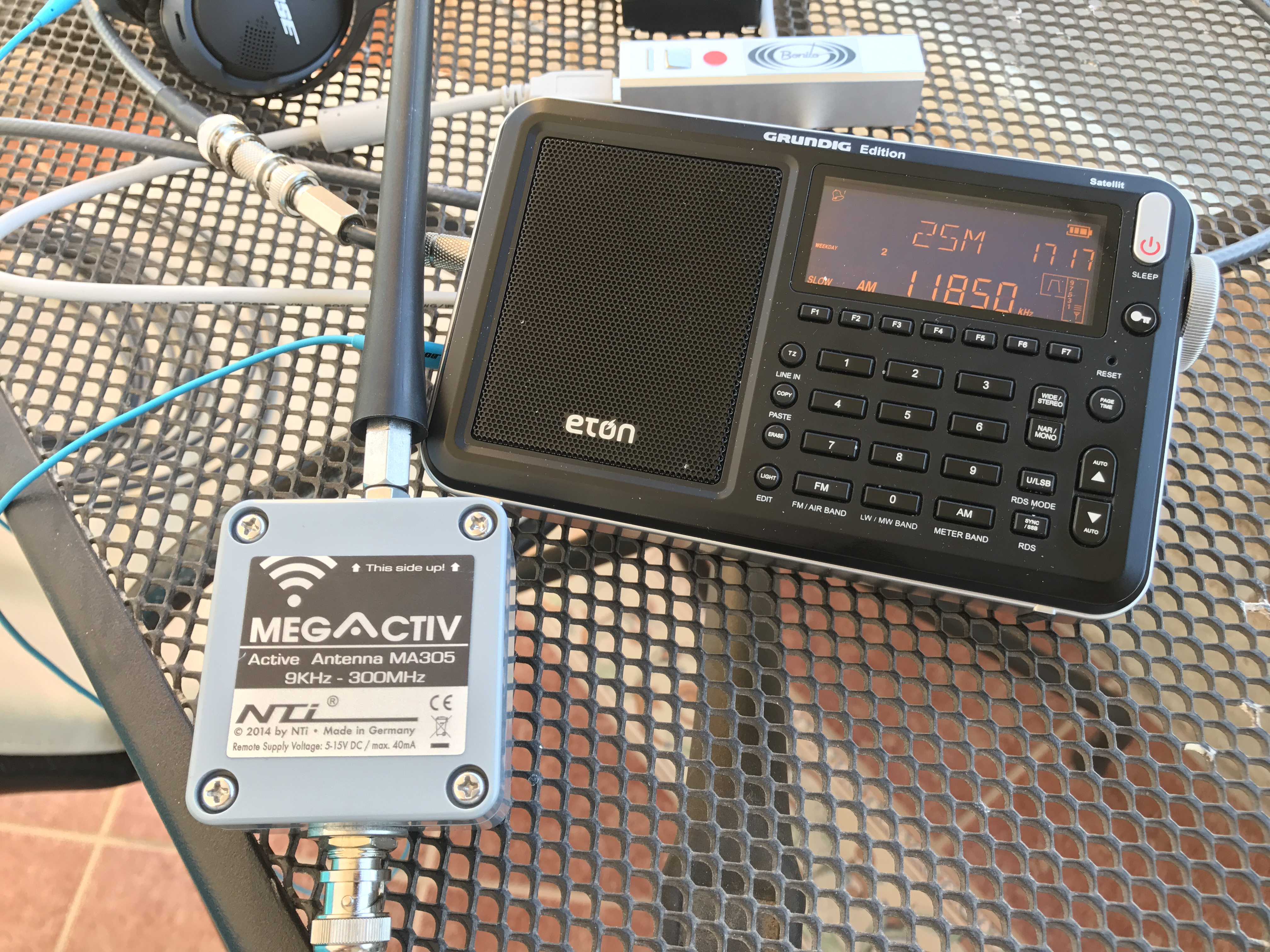
                                      My listening post in Crete, with the brilliant Eton Satellit receiver

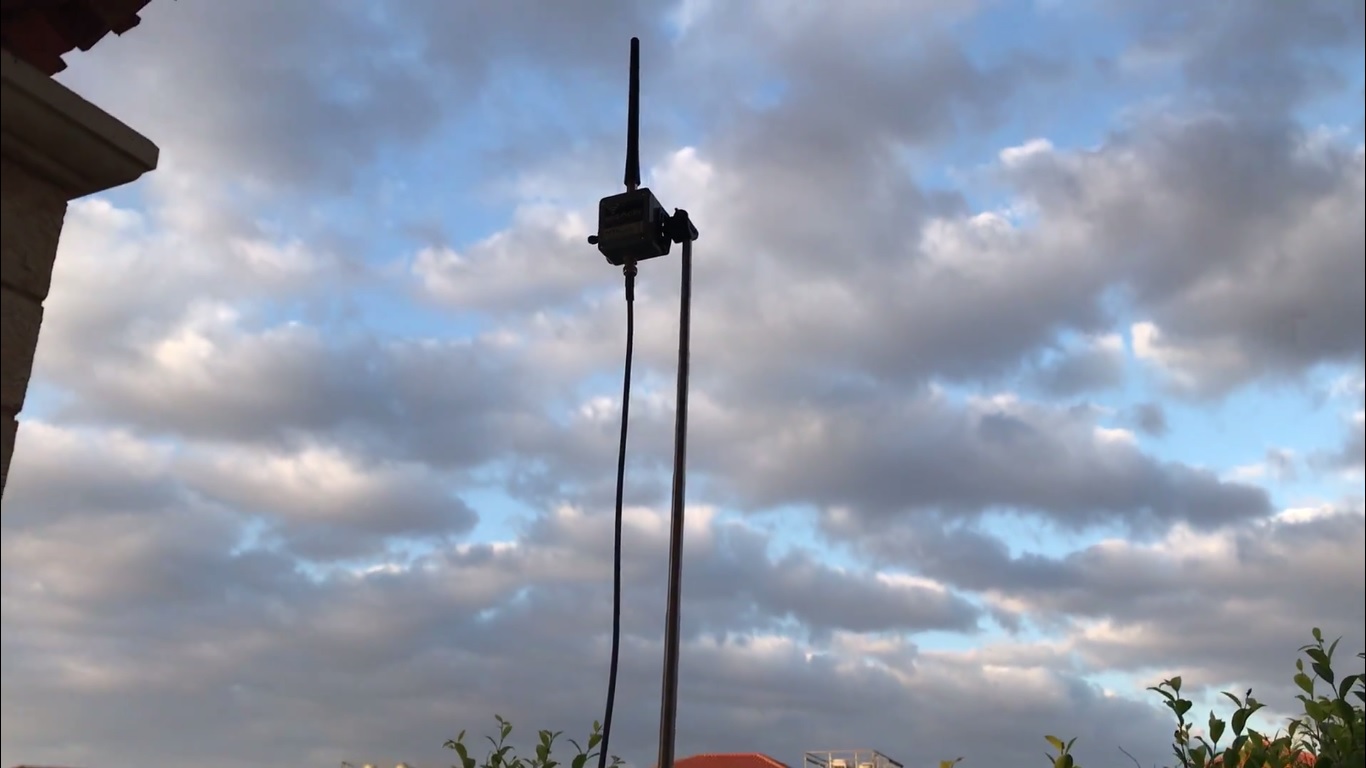
My apartment in Crete was on the second floor and a large balcony provided a decent outdoor location for DXing. As regards electrical noise, the location was much quieter than my shack at home, but it certainly wasn’t perfect, thus a good test of the MA305 in a real-world pseudo-urban environment. in an attempt to improve SNR, I bought a cheap ‘Selfie Stick’ and some tape and managed to construct a mount for the amplifier, increasing the overall height above ground by about 1.5 metres and displacing the radiating element an additional 2 metres thereabouts from the building. I’m not sure whether it made much difference, but it seemed like the sensible thing to do for less than 10 Euros.

During my week-long stay, I managed to fit in several listening sessions and copied some really excellent DX from this ultra-compact, USB-powered set up. In fact, the MA305 coupled to the Eton Satellit performed so well, I managed to copy a number of personal firsts, including CRI on 7295 kHz, via their relay in Bamako, Mali, The Voice of Beibu Radio on 5050 kHz, Nanning, XSL ‘Slot Machine’ on 6251 kHz USB, Ichihara, Japan, S32 ‘The Squeaky Wheel’ on 3828 kHz and NHK World Radio Japan, 11910 kHz. I also copied RTM Wai/Limbang FM on 11665 kHz from Kajang, Myanmar Radio on 5985 kHz and AIR Bhopal on 4810 kHz, amongst others – all of which I would certainly consider to be difficult catches in Europe. To hear them with an 18 cm antenna felt pretty special. African shortwave stations were also very well represented and I managed to copy a number of them including Radio Hargeysa on 7120 kHz, Voice of Tigray Revolution on 59150 kHz, Radio Oromiya on 6030 kHz, Radio Fana on 6110 kHz, Radio Ethiopia on 7235 kHz, Radio Sonder Grense on 3320 kHz and Radio Guinée on 9650 kHz. I expected to hear all of these stations, except for Radio Guinée, which is farther away from Crete than the UK. So, all-in-all an excellent result.
Despite hearing a lot of excellent DX whilst in Crete, there is one signal I copied, which more than any other, demonstrates the DXing credentials of the MA305 – and Eton Satellit for that matter. In the early hours of the morning (00:59 hrs UTC) I copied and recorded Radio Tarma from Peru on 4775 kHz. With a TX power of 1 kW, this is a very difficult station to hear in Western Europe, even with a longwire. To catch this station in Crete, at all, was incredible on an ultra-compact set-up. It was at this point during the trip that I realised E-field antennas really do work superbly well for hard-core DXers on the move. It inspired me to conduct further tests back home in the Oxfordshire countryside, where electrical noise is absent. This I did a few days ago, with some quite amazing results on the Tropical Band. More on that to come in my next post. In the meantime, please find text links and embedded videos for selected reception recordings, below. Many more recordings are available on the Oxford Shortwave Log YouTube channel and please don’t hesitate to contact me if you require further information on the MA305 or the Eton Satellit. Thanks for reading/watching/listening and I wish you all excellent DX.


Personal firsts

Click here to view on Oxford Shortwave Log


Click here to view on Oxford Shortwave Log


Click here to view on Oxford Shortwave Log


Click here to view on Oxford Shortwave Log


Click here to view on Oxford Shortwave Log


Radio Tarma, Peru, 4775 kHz

Click here to view on Oxford Shortwave Log


Other notable catches

Click here to watch on Oxford Shortwave Log

Click here to watch on Oxford Shortwave Log

Click here to watch on Oxford Shortwave Log

Click here to watch on Oxford Shortwave Log


Clint Gouveia is the author of this post and a regular contributor to the SWLing Post. Clint actively publishes videos of his shortwave radio excursions on his YouTube channel: Oxford Shortwave Log. Clint is based in Oxfordshire, England.

2017 Hamvention photos: Saturday Flea Market

While looking through photos I had backed up on my laptop, I discovered a set I took at the Hamvention Flea Market on Saturday morning (May 20, 2017). I’ve gotten tremendous positive feedback from the photos I posted of Hamvention Setup, the Friday Flea Market and Inside Exhibits, so I thought I’d post these as well.

Below, you’ll find 84 additional flea market photos. Click on the thumbnail to expand each photo. I’ve tried to include price tags when possible. I’m sure some of these items are also featured in my Friday flea market photo album. Enjoy:

KiwiSDR network updates include native HF FAX

Many thanks to SWLing Post contributor, Mark Fahey, who writes:

Lots happening with KiwiSDR – there are now over 130 live 0-30MHz fully controllable SDRs scatted around the world some in really interesting locations. Using Kiwi’s around the world is like being able to go on a exotic DXpedition any time.

Here (attached graphic) is a map of the current locations, you can see the live status of online receivers here:

http://rx.linkfanel.net

and as a list of receivers here:

http://kiwisdr.com/public/

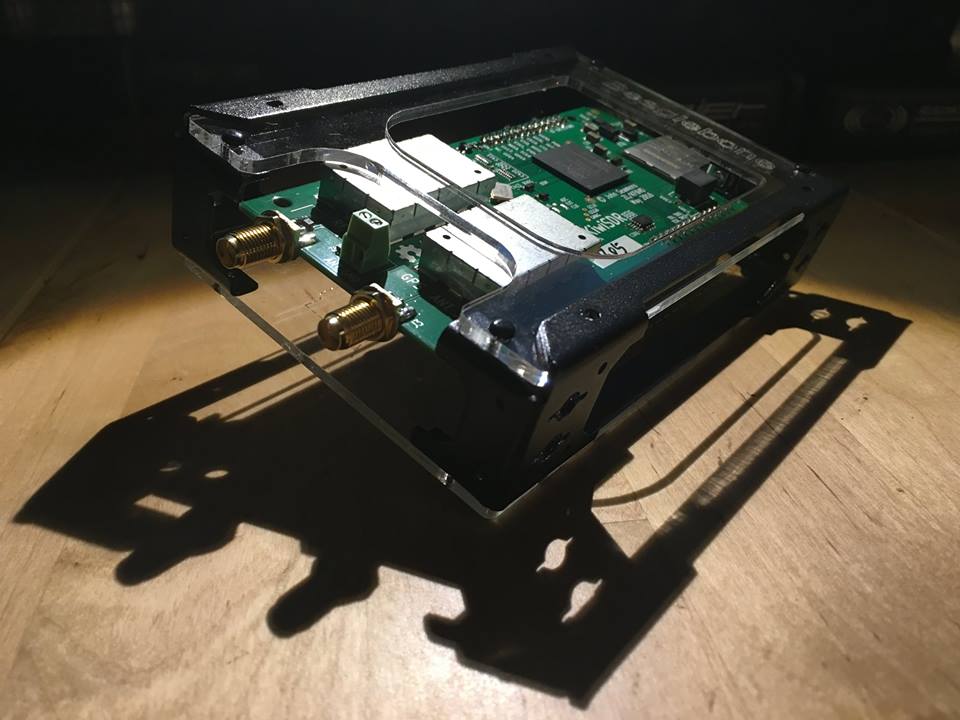
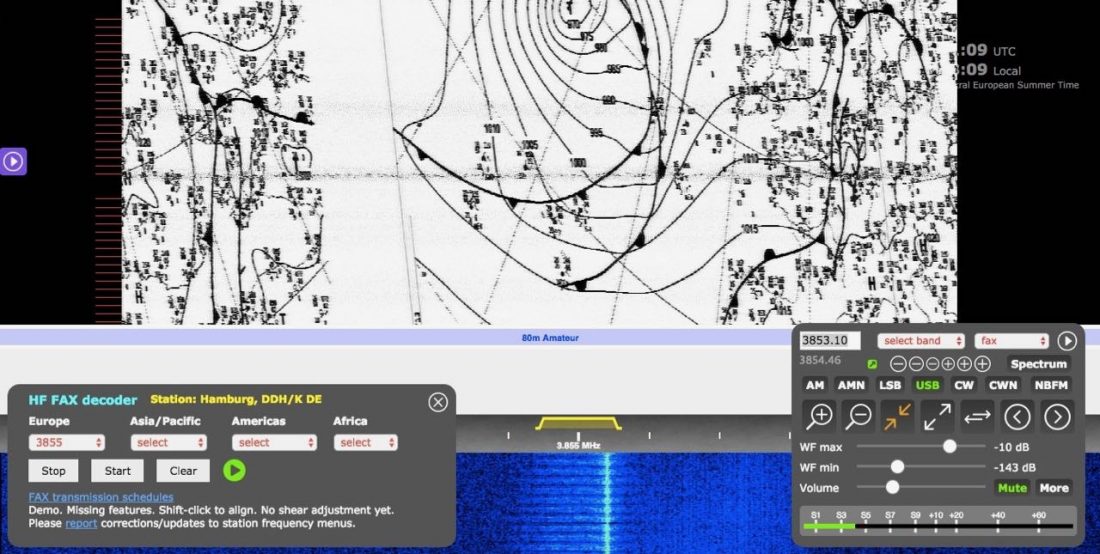
KiwiSDRs now include HF Fax reception natively, just select Fax in the Extension menu, select the part of the world you are interested in and the Kiwi will tune the weather fax frequency and receive the weather fax all natively (no extra software needed) – too easy!

Lots more great things happening.

Here is the latest news…

http://www.kiwisdr.com/#id-31-may-17

Cheers,
Mark

Thank you for the update, Mark! I had no idea the KiwiSDR app had an HF Fax extension. After reading your message, I loaded a KiwiSDR session in Europe and used the Fax feature. It couldn’t have been easier. The screen grab (above) came from my first attempt.

The KiwiSDR network is truly amazing. I use it all the time–especially if there’s an important broadcast happening and I can’t easily receive it at home or while traveling. As an example, during the recent French elections, I listened to results roll in on France Inter mediumwave from a KiwiSDR in Italy. It felt like being there.

My one feature request would be that the KiwiSDR app include some form of native broadcast recording like the WebSDR at U Twente.

Many thanks for the update, Mark!

Click here to read about Mark’s KiwiSDR installation.

Would you like to host your own KiwiSDR?

The whole system only costs $299 US. The KiwiSDR site has a list of distributors around the world.

Amazon has units in stock at $299 US shipped.

I would have purchased a KiwiSDR ages ago–during their Kickstarter campaign–if I only had the Internet bandwidth at home to support it. My Internet speeds are likely lower than anyone else here in the SWLing Post community. One of the compromises living in a relatively remote spot with no RFI. 🙂

RadioShack auction includes a number of shortwave radios

Many thanks to SWLing Post contributor, Kim Elliott, who shares a link to this RadioShack auction:

UBid Estate & Auction Services LLC

ICONIC RADIOSHACK MEMORABILIA AUCTION
From humble beginnings in Boston in 1921, over the past 95 years RadioShack established itself as a globally recognized leader and the go to retailer for consumer electronics. RadioShack has always been known as the place for answers to the American public’s technology and electronics questions. “You’ve got questions, we’ve got answers.”

Over the years, RadioShack introduced consumers to exciting and affordable gadgets and electronics that have become household items. As we cleaned out our historic archives in Fort Worth, Texas, we uncovered a cache of iconic memorabilia in 12 huge safes, including: unused original TRS-80 Microcomputers, Realistic Transistor Radios, Tandy computer software games, original brick cell phones and so much more. We all remember coming into RadioShack whether it was for the battery-of-the-month, new walkie-talkies, or to check out the newest RC toy cars. Now we reintroduce many of those nostalgic items and more with our rolling online memorabilia auction.

Click here to view the auction items.

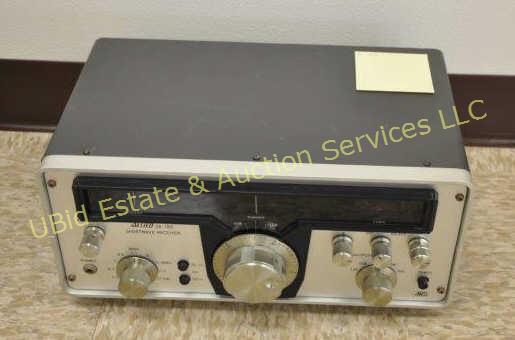
Allied Shortwave Receiver

I must admit, it would be fun to own a few of these new-in-box/unused RS items. Besides the shortwave radio offerings, I used to drool over the TRS-80 systems.

I still own my original Tandy Color Computer 2 (the “Co Co 2”). Someday, I plan to hook it up and show my kids what a proper volatile memory meant–turn it off and the memory is wiped clean! I remember how revolutionary the cassette tape was–it changed my world!

No doubt, these RS offerings will fetch top dollar. Even though it’s still early in the auction, many items already have a rather high price and all of them have a soft closing:

“The closing time of this lot will be extended by 2 minutes if a bid is placed on this lot in the last 2 minutes.”

Most, if not all, of these auctions end on July 3, 2017. I doubt I’ll bid on anything…still…I’m enjoying the stroll down memory lane.

The best transceiver for a new ham and seasoned SWL?

The Yaesu FT-890: One of many general coverage HF transceivers spotted in the 2017 Hamvention flea market.

Many thanks to SWLing Post reader, Joe, who writes:

I’ve been practicing for my Technician ham radio license here in the US and am ready for the test. I’m already looking at HF transceivers even though I don’t have my General license yet.

Here’s what’s important to me:

  • I will still do a lot of SW DX
  • Something that has at least decent audio
  • Something that isn’t too too huge; though I’m a little flexible on size
  • I need something that has a receiver that handles weak DX well

I’d be comfortable spending $500 any day all day no problem. Anything higher than that and I’d really have to think it’s an investment in my radio future.

Thanks for your question, Joe, and allowing me to post it here for comment as this is one I’m frequently asked.

First of all, congratulations on studying for and taking your ham radio license exam! I’m a ham and absolutely love the radio privileges my license provides.

At the same time, I’m still more of an SWL than a ham–meaning, I spend way more time chasing SWL DX than doing on-air ham operations.

With that said, I always seek radios that will serve me well as both a ham and SWL, if possible.

My humble advice

If we stick with your $500 budget strictly, then we’re certainly looking at used transceivers. That’s okay–there are many good ones on the market!

I posted the following review of general coverage transceivers a few years ago. The info in it is still very much accurate in the used market. I would suggest you give it a good review as it goes into more detail about the ins and outs of your first transceiver and the importance of leaving budget to purchase a good power supply:

The best general coverage transceivers for shortwave listening

Click here to read the full review.

 If you’re willing to spend a bit more than $500…

I’m a big fan of the Elecraft KX3 and Elecraft KX2. I have both and use them frequently.

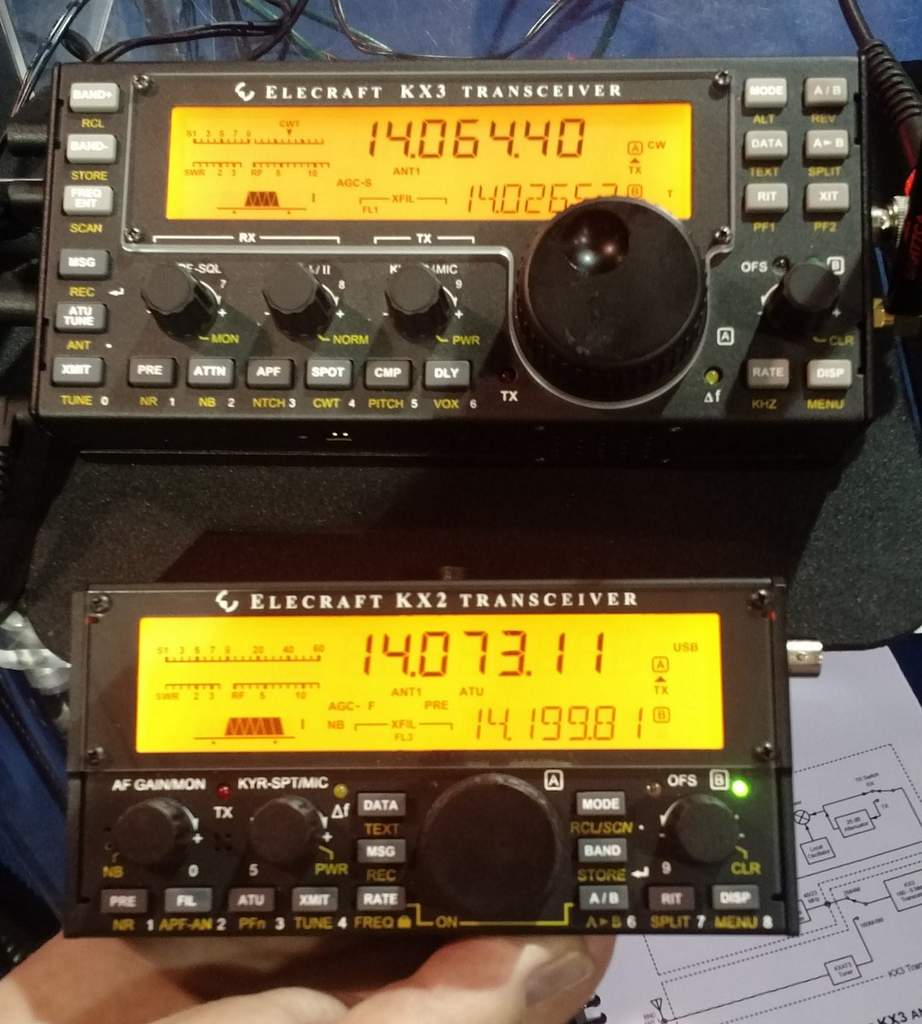
Comparing the size of the Elecraft KX3 (top) and KX2 (bottom) at Elecraft’s Dayton Hamvention booth.

You can find the KX3 used for $700-900 (depending on options). The bare-bones model of the KX2 can be purchased new from Elecraft for $749.

Of course, something to keep in mind about the Elecraft KX series transceiver is that output power is limited to 12-15 watts. Some of the general coverage transceivers mentioned in our review have a much higher 100 watt output power.

Additionally, the audio fidelity (via the internal speaker) is not as good as many other general coverage transceivers. Audio amplification is not as powerful, because both transceivers are designed to operate on a small battery pack (a major plus in my world because I love field-portable rigs).

Since I do 90% of my radio work with headphones, audio amplification is not a problem for me and I’m quite please with both KX line transceivers. Many KX series owners purchase external amplified speakers to improve audio.

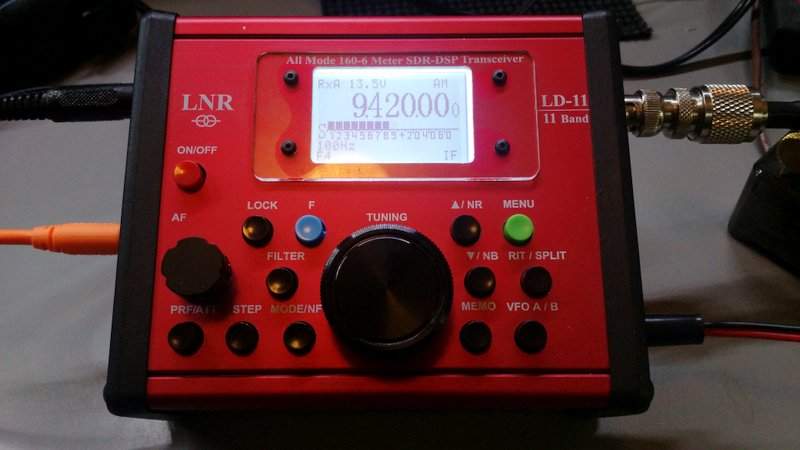
The LnR LD-11 tuned to the Voice of Greece.

While we’re looking at QRP transceivers, I would also recommend the LnR Precision LD-11. Its broadcast afidelity is even better (via headphones) than the KX2/KX3 since the AM filter can be widened to an impressive 9.6 kHz. It’s a top-notch transceiver and can be purchased new for $780 US. Click here to check out my full review of the LD-11.

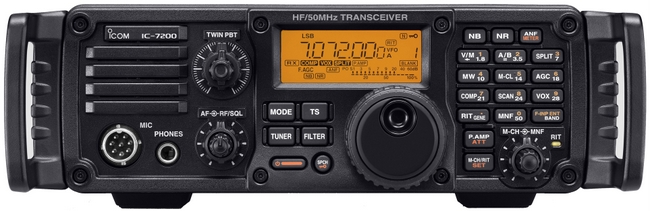
The Icom IC-7200

Of course, as I mention in the general coverage transceiver review, the Icom IC-7200 is also a gem of a transceiver.

Keep in mind, the ‘7200 was such a popular radio that after Icom discontinued the model in January of 2016–due to overwhelming customer demand–they re-introduced it earlier this year. No kidding.

New, the IC-7200 is about $879 US, but they can be found used closer to the $650 – 750 mark. A very good value in my book. In fact, I’m very tempted to buy one as my 100 watt “shack and field” rig. It’s way more user-friendly on Field Day than my Elecraft K2/100 and, in many ways,  a better option than purchasing an Elecraft amp for my KX3/KX2.

Any other good suggestions?

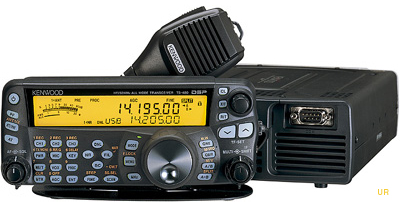
The Kenwood TS-480SAT is full-featured, small, and has a detachable face plate. A very good general coverage transceiver.

There are hundreds of HF transceivers on the new/used market. I’m sure I’ve missed some excellent options in this post and my general coverage transceiver review.

Please comment with your favorite dual-purpose Ham Radio/SWLing rig. Tell us why you love it!

Video: EB3DYW’s Homebrewed regenerative receiver

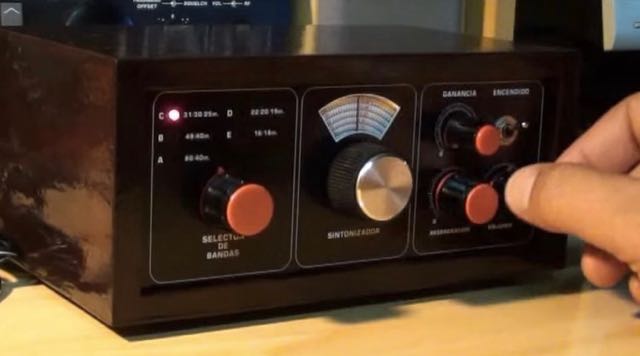
While browsing a videos on YouTube, I stumbled across this demonstration of a brilliant little homebrewed regen receiver by Javier Guillaumet (EB3DYW):

Click here to view on YouTube.

What a beautiful little receiver!

Though I’ve build a number of receiver kits, I’ve never built one from scratch. Someday, I will muster up the courage and do so, though!

If you like home-grow regen receivers, you must check out Dave Richards’s Sproutie II regen receiver as well. A true work of art!

Post readers: Do you have any homebrew projects to share? Please comment!

Surviving a nuclear disaster: “Go in, stay in, tune in”

There are so many reasons having a reliable radio at the ready is a good idea.

We radio geeks get it.

This morning, an item from Business Insider UK appeared in my news feed. The focus of the article was what not to do after a hypothetical nuclear detonation. Researchers discovered that the knee-jerk reaction from most would be to get in their car and drive away from the affected area as quickly as possible. Turns out, this is about the worst thing you can do because vehicles are such poor insulators from deadly nuclear fallout.

Here’s what’s recommend instead, according to Brooke Buddemeier, a health physicist and radiation expert at Lawrence Livermore National Laboratory:

“Your best shot at survival after a nuclear disaster is to get into some sort of “robust structure” as quickly as possible and stay there, Buddemeier said. He’s a fan of the mantra “go in, stay in, tune in.”

“Get inside … and get to the center of that building. If you happen to have access to below-ground areas, getting below ground is great,” he said. “Stay in 12 to 24 hours.”

The reason to wait is that levels of gamma and other radiation fall off exponentially after a nuclear blast as “hot” radioisotopes decay into more stable atoms and pose less of a danger. This slowly shrinks the dangerous fallout zone — the area where high-altitude winds have dropped fission products.

(Instead of staying put, however, a recent study also suggested that moving to a stronger shelter or basement may not be a bad idea if you had ducked into a flimsy one.)

Finally, tune in.

“Try to use whatever communication tools you have,” Buddemeier said, adding that a hand-cranked radio is a good object to keep at work and home, since emergency providers would be broadcasting instructions, tracking the fallout cloud, and identifying where any safe corridors for escape could be.”

Read the full article at Business Insider UK.

Regardless of the scenario, a preparedness kit should always include radio. Mobile phones have limited utility when the network infrastructure is disrupted or overloaded. TVs aren’t practical or portable.

Radios are a simple way of main-lining life-saving information during disasters.

But again, we radio geeks get it!