Shortwave listening and everything radio including reviews, broadcasting, ham radio, field operation, DXing, maker kits, travel, emergency gear, events, and more
Hi there, I thought some of the readers of SWLing post might be interested in my reception of Mayanmar Radio, Yangon, during a late-night DX’pedition in Oxfordshire, UK. I managed to catch them on 5985 and 7200 kHz; the latter was a personal first and perhaps further confirmation that my 200 metre longwire is contributing in a positive way to my mobile listening post. Subscribers and regular visitors to Oxford Shortwave Log on YouTube will know that I am forever trying to push the performance of my vintage portables to the limit of what’s possible, in the hope that I might hear something very exotic. it’s happened once or twice and thus worth all the effort in the small hours. Thanks for watching/ listening.
Clint Gouveia is the author of this post and a regular contributor to the SWLing Post. Clint actively publishes videos of his shortwave radio excursions on his YouTube channel: Oxford Shortwave Log. Clint is based in Oxfordshire, England.
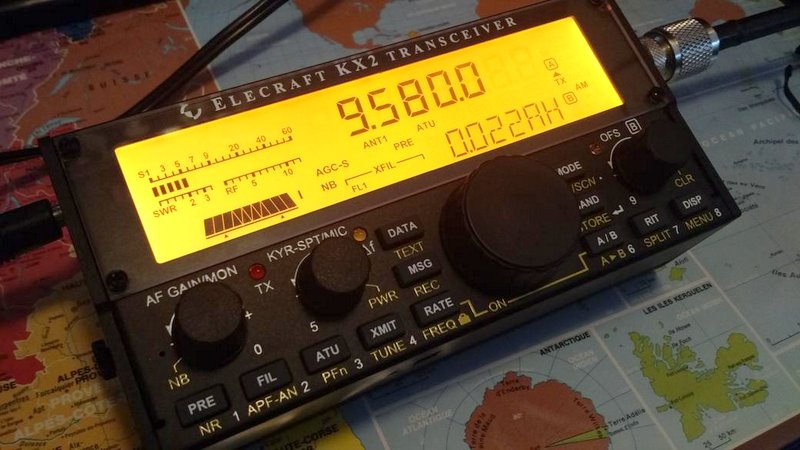
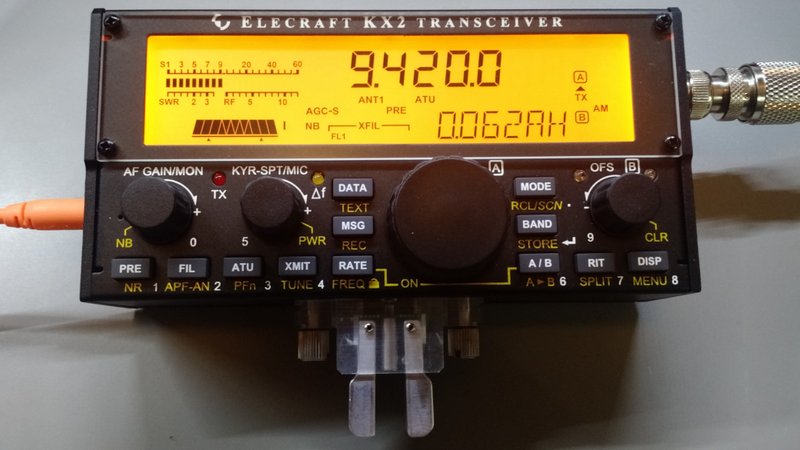
My new Elecraft KX2 tuned to Radio Australia this morning.
I’ve only had my Elecraft KX2 since Monday evening and have been so busy, I’ve only had an hour or so to tinker with this pocket transceiver. Monday evening, before putting it on the air, I updated the KX2 firmware to the latest Beta release which includes the new AM mode.
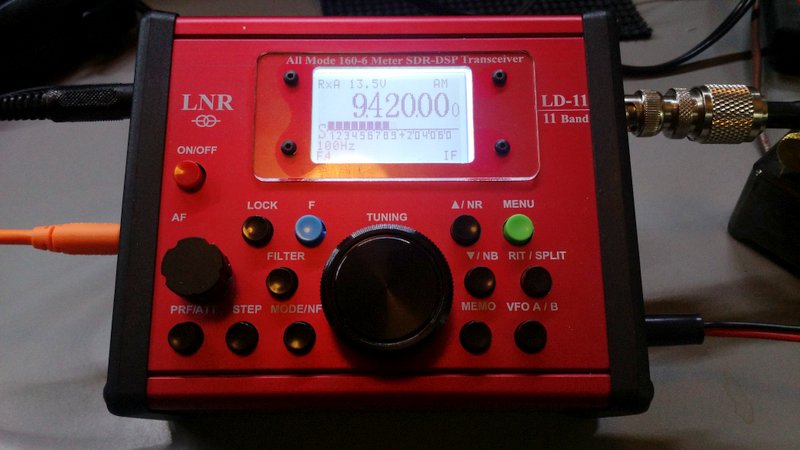
I’ve had so many questions from readers about the KX2’s AM audio already, I thought I’d do a quick comparison with the LNR Precision LD-11.
I set the LD-11 to a bandwidth of 9.6 kHz, and the KX2 to 5 kHz: their widest AM filter settings. Keep in mind, this is not an apples-to-apples comparison, but it does showcase each radio’s potential AM audio fidelity.
I tuned both rigs to the Voice of Greece last night on 9420 kHz around 00:30 UTC. VOG’s signal was strong into North America.
I made the following recordings with my Zoom H2N digital recorder, by feeding in-line audio patched from each radio’s headphone jack. I tried to balance the audio levels between the two rigs.
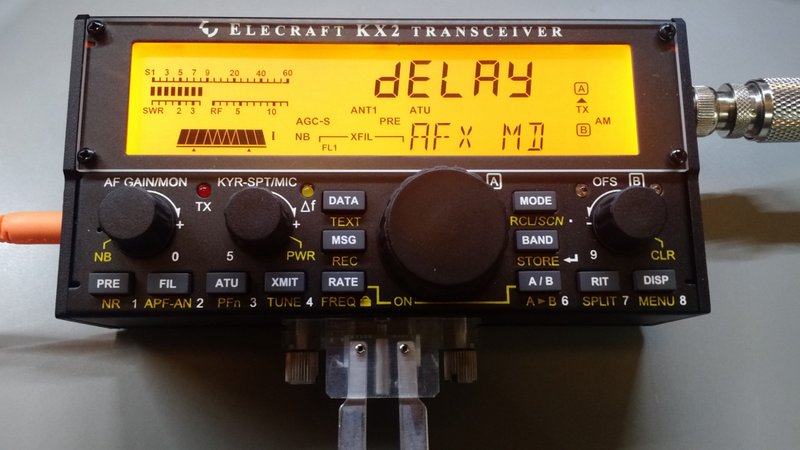
Note: Some Elecraft radios have an audio effects mode which includes a “delay” function. Elecraft describes it as “a quasi-stereo effect intended to provide depth and space to the received audio.” On an AM broadcast signal, it makes it sound wider and gives it almost a stereo depth.
I think the results from both radios are impressive. Since the LD-11’s bandwidth can be widened to 9.6 kHz, strong signals like this one sound pretty amazing. In truth, I actually prefer a filter width of about 8.2 kHz on strong signals, but VOG was wide enough to justify 9.6 kHz. I believe the LD-11 would rival many dedicated tabletop receivers.
The Elecraft KX2, in normal audio mode, sounds flatter and narrower than the LD-11 of course, but still very pleasant! In the KX2’s “delay” audio mode, the signal sounds much wider than 5 kHz, though the effect adds a little graininess to the audio. That’s okay, though–I love having the “delay” audio option in my tool bag.
Here’s what amazes me as an SWL and ham radio operator: both of these QRP transceivers offer excellent HF broadcast listening opportunities.
Please comment! Which audio sample do you prefer? Do you like the “delay” audio effect on the KX2? Keep in mind this is only one comparison and doesn’t address sensitivity or selectivity.
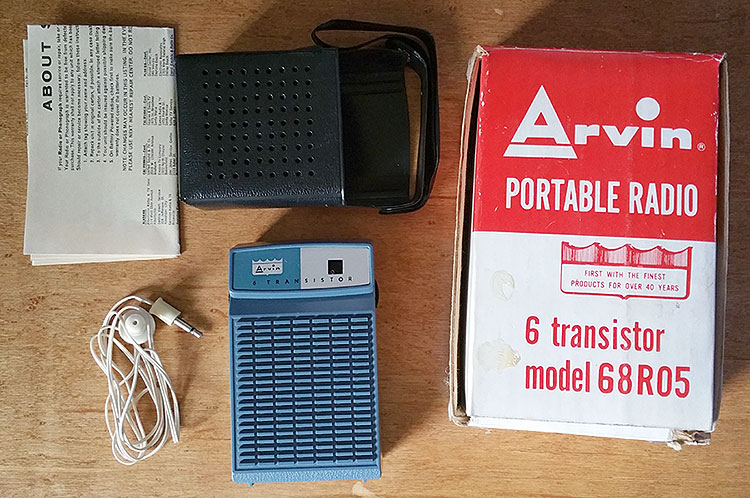
Attached is a pic of a like-new transistor radio from 1967 [see above].
Remember the days when they bragged about how many transistors a gadget contained?! Sort of like bragging about RAM or clock speed today I guess.
That’s a cute little Arvin radio, John!
You’re right, too–radio manufacturers used to boast transistor compliment like nothing else. Crosley, Zenith and RCA did the same thing–boasting tube/valve numbers–in their 1930s consoles as well. Thanks for sharing the photo of your pocket radio!
Hi there, I thought I would share some Brazilian shortwave catches with you, obtained using my Sony ICF-2001D receiver and 200 metre experimental longwire. The first is Radio Bandeirantes, Sao Paolo on 9645.4 kHz. This is a station that I’ve only heard once or twice previously, but was received with excellent signal clarity and strength recently, using my deployable longwire antenna. I would rate this station as moderately difficult to receive with reasonable discernibility. The second is Radio Novo Tempo from Campo Grande, on 4894.9 kHz. This station I would rate as difficult to hear with discernible audio. The key is always signal-to-noise, thus moving yourself out of the ubiquitous blanket of QRM most modern environments endure will usually achieve this and of course coupled with sufficient space outdoors to erect a larger antenna will hopefully also improve signal strength. My final video on this post is Radio Nacional Brazilia on 6180 kHz. I would regard this station as quite easy to hear well; their effective TX power towards Europe is around 2 MW, however, outdoors, this station can literally boom in, with what might be perceived as local-AM signal strength. I hope you enjoy watching the videos and seeing/ hearing what’s possible with a modest set-up. As for the Sony ICF-2001D? Well the design is more than 30 years old, but in my opinion at least, still one of the very best portable shortwave receivers ever manufactured. Thanks and 73.
Clint Gouveia is the author of this post and a regular contributor to the SWLing Post. Clint actively publishes videos of his shortwave radio excursions on his YouTube channel: Oxford Shortwave Log. Clint is based in Oxfordshire, England.
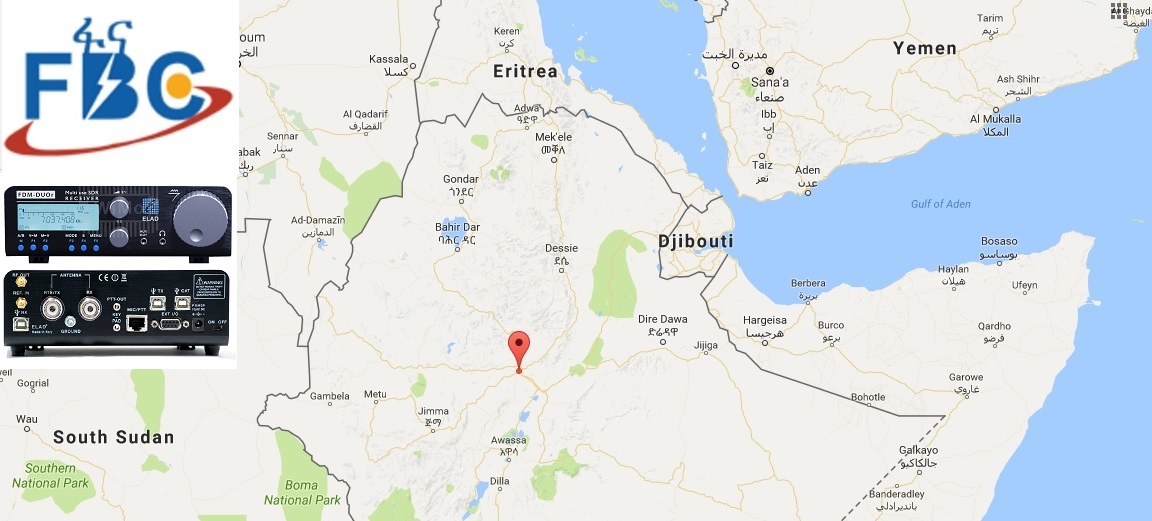
The Elad FDM DUO makes for a fantastic receiver, in both standalone mode and via the FDM-SW2 software. Thus far it has been demonstrating this by outperforming the Sony ICF-2001D in many of my reception tests using an experimental longwire antenna. Bear in mind that whilst this might not be such a surprise, the Elad without the FDM-SW2 software driving it has no SYNC, which is often invaluable for Tropical Band DXing. To make the point further, here is a wonderfully clear signal from Ethiopia, with, in my experience at least, exceptional signal-to-noise.
My 200 metre longwire is still very much a work in progress. I am in the process of building a termination resistance box, receiver-end termination suitable for high and low impedance inputs and earthing straps for metre-long copper pipes that will remain in-situ. When I have completed these tasks, I will record a video because I know some of you are interested in the details. For now though, it just remains an experiment – 200 metres of wire and very late nights/ early mornings! Recorded at the ‘DX woods’ in Oxford UK at 03:23 hrs UTC on 31/07/16. Thanks for watching.
Clint Gouveia is the author of this post and a regular contributor to the SWLing Post. Clint actively publishes videos of his shortwave radio excursions on his YouTube channel: Oxford Shortwave Log. Clint is based in Oxfordshire, England.
Many thanks to SWLing Post contributor, Dave Zantow (N9EWO), who shares the following info about Icom’s announcements at the Tokyo Ham Fair:
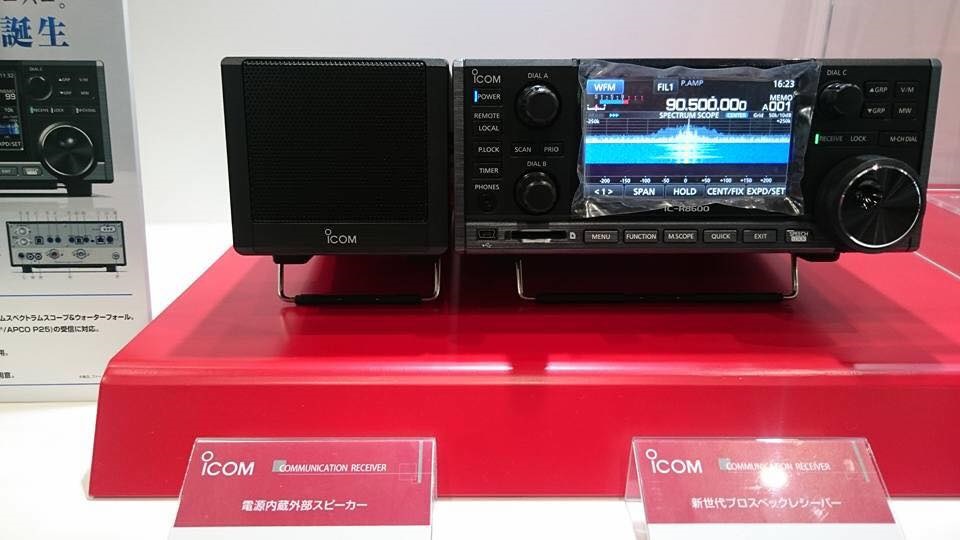
Well the cat is now really out of the bag now !! Icom announced 2 new RECEIVERS at the Tokyo 2016 JARL Ham Fair.
We can almost say for certain that the new IC-R8600 is a SDR based design.
[…]The new IC-R30 handheld probably is SDR too, but not sure yet. Pretty large bugger (no real good picture as of of me typing this). Will it be able to do at least P25 Phase one?
I’ll admit it: I was a little surprised to hear that Icom had announced new receivers. I’m happy to see that it’s an IC-R8500 replacement/update. I love the touch screen color display.
I also very much like the idea of a handheld wideband–possible SDR–receiver. I did a little extra digging and found the most concrete details about the new models on Icom UK’s website:
After an online teaser campaign featuring silhouettes of mystery radio models, the secret is out and Icom Inc. has shown the very first samples of the IC-7610, IC-R8600, IC-R30 and ID-51 PLUS2 to the public at the Tokyo Ham Fair 2016 (August 20-21, 2016). Details are relatively scarce but here are the basic details we have so far on these models.
The new IC-7610 (Photo: Icom UK)
IC-7610 HF/50MHz Transceiver (Base Station)
The IC-7610 is the successor to the IC-7600 and will be a dual-watch capable HF+50MHz 100W base station with built-in antenna tuner. The LCD will be touch screen and you will be able to connect an external display.
IC-R8600 Wideband Receiver (Base Station)
The IC-R8600 replaces the IC-R8500 wideband receiver and will feature the technology incorporated into Icom’s best selling IC-7300. The IC-R8600 will be able to receive a wide frequency range from 0.01-3000MHz frequency in analogue and various digital modes (D-STAR, P25, NXDN and dPMR). The IC-R8600 will feature a larger 4.3 inch touch screen display which will feature fast moving spectrum scope and waterfall display.
IC-R30 Communications Receiver (Handheld)
The IC-R30 is the successor to the popular IC-R20 compact handheld receiver. The IC-R30 can listen to two signals under certain conditions (analogue + analogue or analogue + digital). The IC-R30 will be able to decode D-STAR, P25, NXDN and dPMR digital (conventional) modes.
ID-51 PLUS2 Dual Band D-STAR Digital Transceiver (Handheld)
The ID-51 PLUS2 handportable is a special edition model which will come in several colours/patterns. The new ‘Terminal Mode’ and ‘Access Point Modes’ enable you to make D-STAR calls through the Internet, even from areas where no D-STAR repeater is accessible.
More details will be available nearer to each product’s launch. There are currently no details about pricing and availability.
Stay tuned to this website and our social media pages for further announcements.
I can’t wait to learn what the price point will be for the IC-R8600. I hope it’s at least in-line with the IC-7300 or (its predecessor) the IC-R8500. I also hope that, perhaps, the new IC-R30 will have full-mode HF capabilities.
We’ll post news about these new rigs as it becomes available–so will Dave Zantow. Stay tuned!
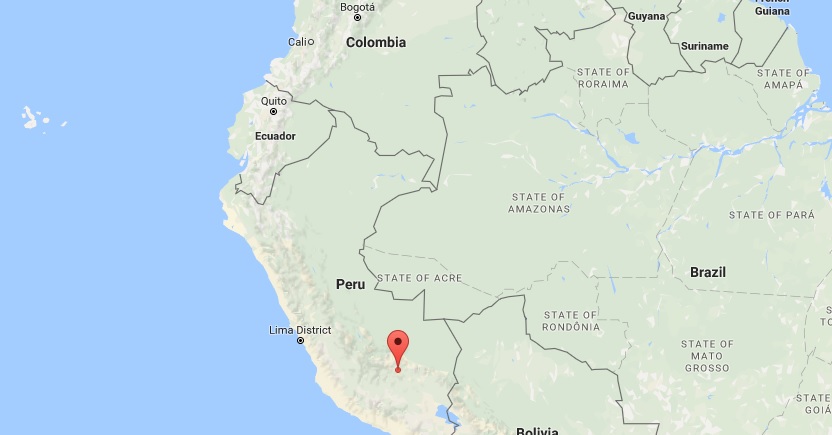
Hi there, I thought I would share my first reception of Radio Tawantinsuyo, from Cusco, Peru, recorded during the inaugural test of my 200 metre longwire antenna. Of course this particular reception could be coincidence, but a very welcome catch in any case. Once again, the Sony ICF-2001D performs very well with this large antenna, but as on previous occasions, the rule is always to ‘choose your battles well’ targeting weak DX signals in uncrowded areas of the Tropical Band and elsewhere on shortwave. More details on the longwire antenna to follow in another post. Recorded at the ‘DX woods’ in Oxfordshire, UK on 31/07/16 at 00:27 hrs UTC. Thanks for watching.
Clint Gouveia is the author of this post and a regular contributor to the SWLing Post. Clint actively publishes videos of his shortwave radio excursions on his YouTube channel: Oxford Shortwave Log. Clint is based in Oxfordshire, England.
 Hi there, I thought I would share some Brazilian shortwave catches with you, obtained using my Sony ICF-2001D receiver and 200 metre experimental longwire. The first is Radio Bandeirantes, Sao Paolo on 9645.4 kHz. This is a station that I’ve only heard once or twice previously, but was received with excellent signal clarity and strength recently, using my deployable longwire antenna. I would rate this station as moderately difficult to receive with reasonable discernibility. The second is Radio Novo Tempo from Campo Grande, on 4894.9 kHz. This station I would rate as difficult to hear with discernible audio. The key is always signal-to-noise, thus moving yourself out of the ubiquitous blanket of QRM most modern environments endure will usually achieve this and of course coupled with sufficient space outdoors to erect a larger antenna will hopefully also improve signal strength. My final video on this post is Radio Nacional Brazilia on 6180 kHz. I would regard this station as quite easy to hear well; their effective TX power towards Europe is around 2 MW, however, outdoors, this station can literally boom in, with what might be perceived as local-AM signal strength. I hope you enjoy watching the videos and seeing/ hearing what’s possible with a modest set-up. As for the Sony ICF-2001D? Well the design is more than 30 years old, but in my opinion at least, still one of the very best portable shortwave receivers ever manufactured. Thanks and 73.