Shortwave listening and everything radio including reviews, broadcasting, ham radio, field operation, DXing, maker kits, travel, emergency gear, events, and more
I’ve mentioned many times before what a joy it is to curate the Shortwave Radio Audio Archive (SRAA). Sometimes I’m sent recordings that evoke a flood of memories. SRAA contributor, Tom Laskowski, just submitted another such recording.
Tom included the following notes with his Radio RSA – Voice of South Africa recording:
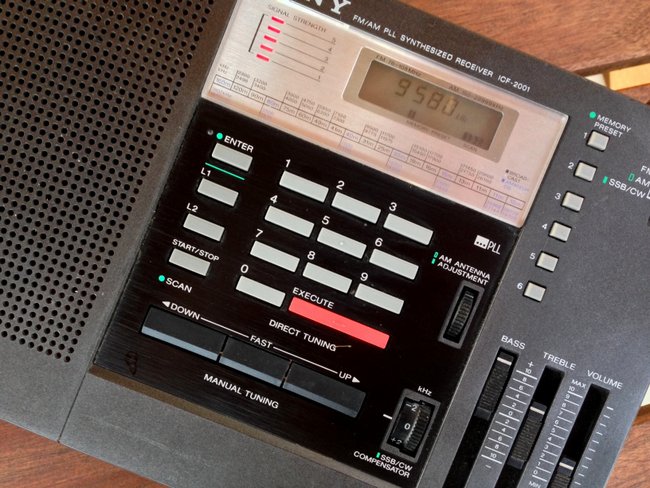
Every Saturday night during the early 1980s [in South Bend, Indiana] I would regularly tune to 9580 kHz at 0200 to listen to Radio RSA (Channel Africa as it is now known) to hear DX Corner, their regular DX program.
This episode from March 14, 1982 was a look at a brand new hot radio, the Sony ICF-2001.
The audio isn’t great but should be listenable. I think this was recorded using my new Realistic DX-302. Enjoy:
One of the joys of running the Shortwave Radio Audio Archive (SRAA) is that, over time, more and more people have become aware of it and submit recordings they’ve had in their private collections for decades.
Quite often, SRAA off-air recordings were originally made on reel-to-reel or cassette tapes which degrade with time. When SRAA contributors take the time to digitize these recordings, and share them via the SRAA, they put these collections in the hands of hundreds of archivists. We’re grateful each time we receive one of these shortwave or mediumwave/AM recordings.
You can imagine my excitement when I received the following message from one of our newest contributors, Colin Anderton:
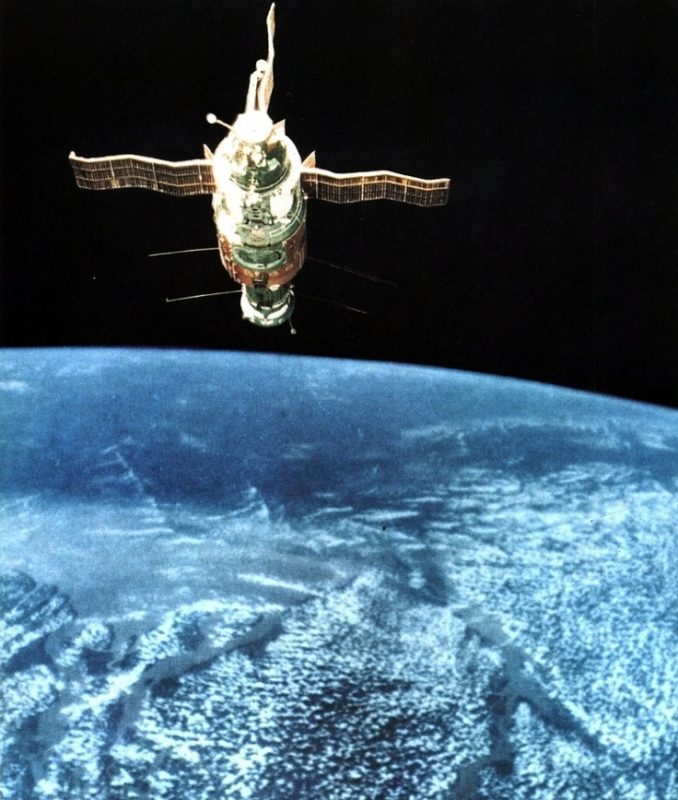
“As a space flight nut, I have many recordings from the 1970s from Radio Moscow. They used to broadcast on the medium wave, and I used to record the news bulletins during some of the space flights. In particular, there was a period between December 1977 and March 1978 when Soviet cosmonauts first lived aboard the Salyut 6 space station. I recorded each days’ news reports on the flights, and also some additional items about them.”
Colin’s recordings are amazing. Here’s a sample from December 10, 1977:
We’ve started publishing Colin’s recordings on the archive at regular intervals.
Interestingly, I discovered that Colin also has a website dedicated to NASA highlight recordings from the space age. Several months ago, he spent a considerable amount of time making the public domain series more listenable–removing voice-actuated recorder noises, tape clicks, etc.
Colin has made his collection of re-engineered NASA recordings free to download on his website. If you download and enjoy his recordings, consider dropping him a donation. If you’re into spaceflight like I am, you’ll certainly enjoy this collection:
Hi there, the garden at my house is pretty small and as a consequence, I am very limited in terms of what antennas I can usefully employ. You can’t position anything further than about 10 metres from the brickwork and to compound this, we are surrounded on all sides by neighbours in close proximity. All very nice people, but all very noisy – electrically speaking lol. I simply can’t get far enough away from these sources of electrical noise to achieve excellent SNR.
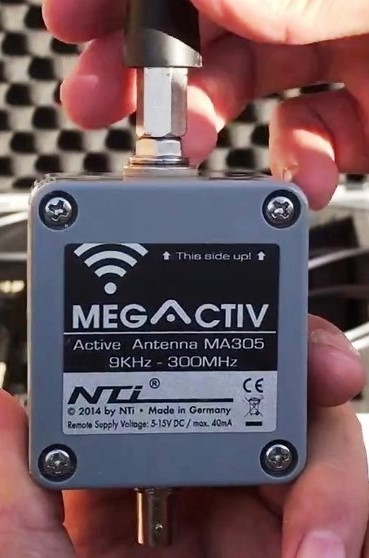
The solution to my problem was ultimately a Wellbrook ALA1530 magnetic loop, but prior to that I used an end-fed random wire, the performance of which deteriorated as the months went by as the ubiquitous blanked of local QRM continued to increase. Eventually, I was forced outdoors, well away from my town – effectively catalysing my forays into the Oxfordshire countryside on DXpeditions. That first experience of listening to the radio on shortwave, in the absence of any QRM was enlightening to say the least and of course, subsequently, DXpeditions have become a mainstay of my listening activities. However, despite enjoying some great DX successes out in the woods, one has to be realistic about how often it’s possible to leave the house just to listen to the radio. This led me to the purchase of the Wellbrook ALA1530 magnetic loop. It proved to be a triumph of electrical noise mitigation and an absolute necessity in copying transatlantic medium wave signals in such a noisy and compact space. A total game-changer. The brilliant performance of the Wellbrook eventually led to me purchase a second, cheaper active antenna; the E-field Bonito Boni Whip and in turn, that purchase led me to the MegActive MA305, kindly supplied by Bonito themselves for objective testing.
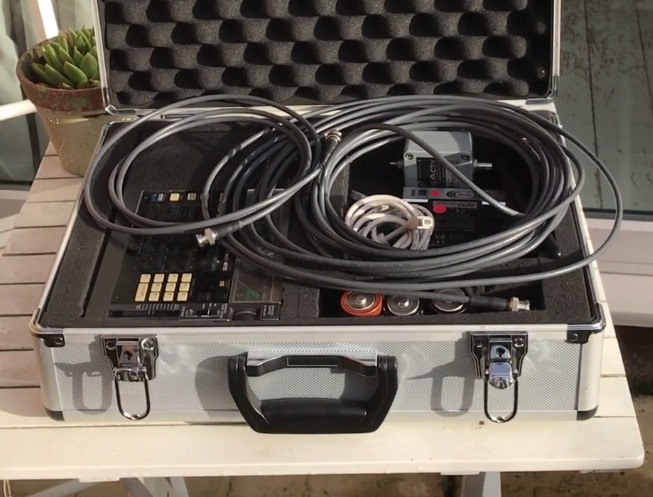
Have DXing kit, will travel…everything you need in a small flight case…
You might remember my initial tests at home confirmed, as expected, that E-field antennas don’t work well in electrically noisy environments (except at LW frequencies in my experience) but outdoors, away from noise, they are superb. I have a number of reception videos on my YouTube channel – Oxford Shortwave Log which clearly demonstrate identical performance of the Bonito MegActive MA305 antenna and Wellbrook ALA1530 magnetic loop out in the woods. So, what if you’ve got a large garden in a suburban area that allows you to be just far enough from sources of electrical noise…how much of a difference does it make to the noise floor of your receiving equipment? Can E-field antennas such at the Bonito MegActive MA305 do the job? Furthermore, how well does a random wire work in a larger garden?
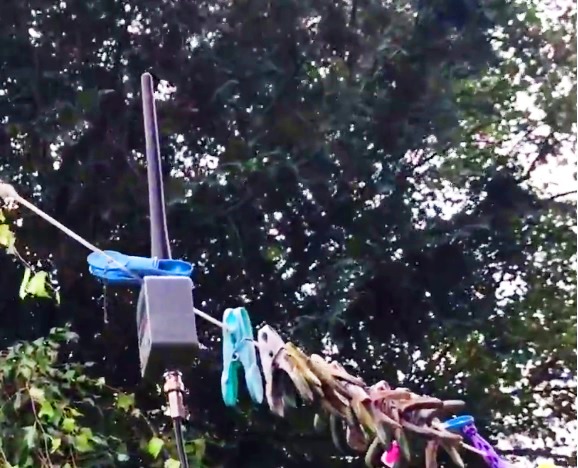
My MegActive MA305 antenna system for mobile DXing…and another use for a washing line…
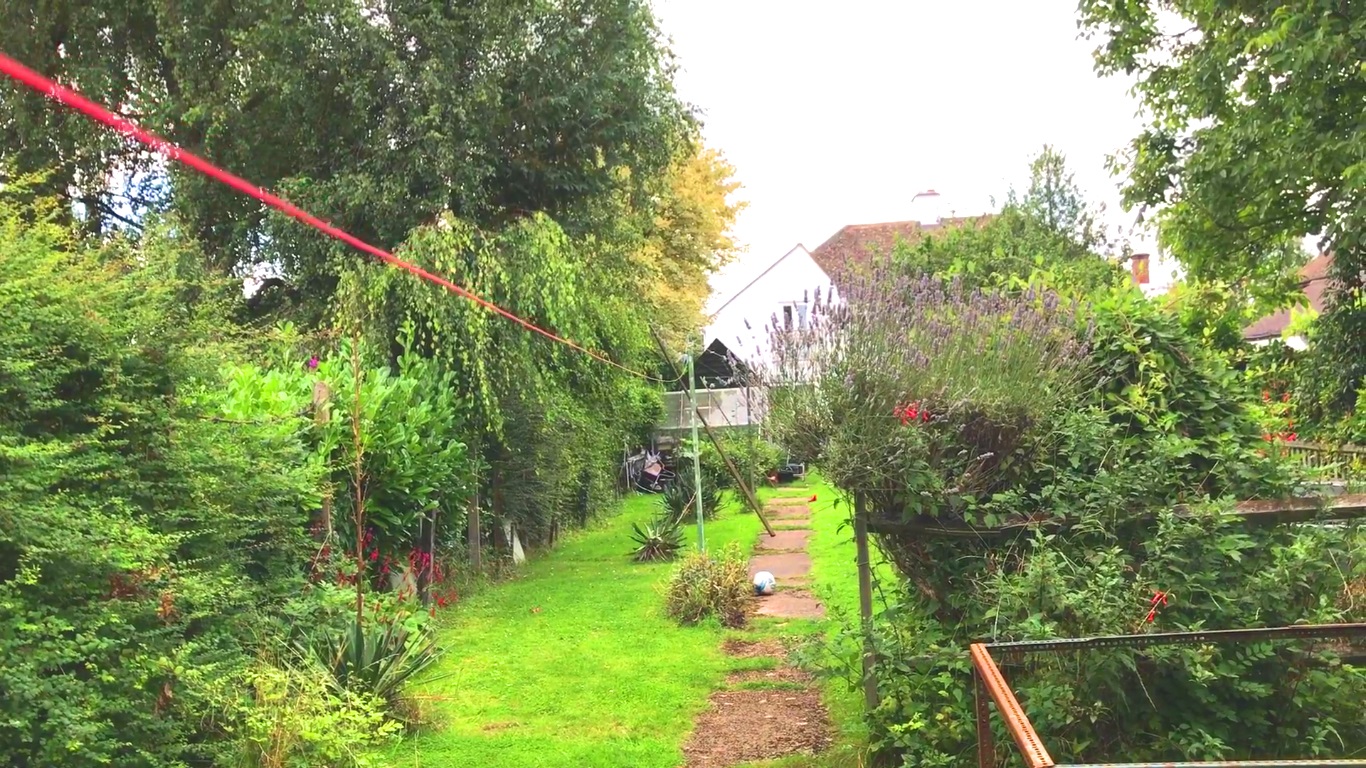
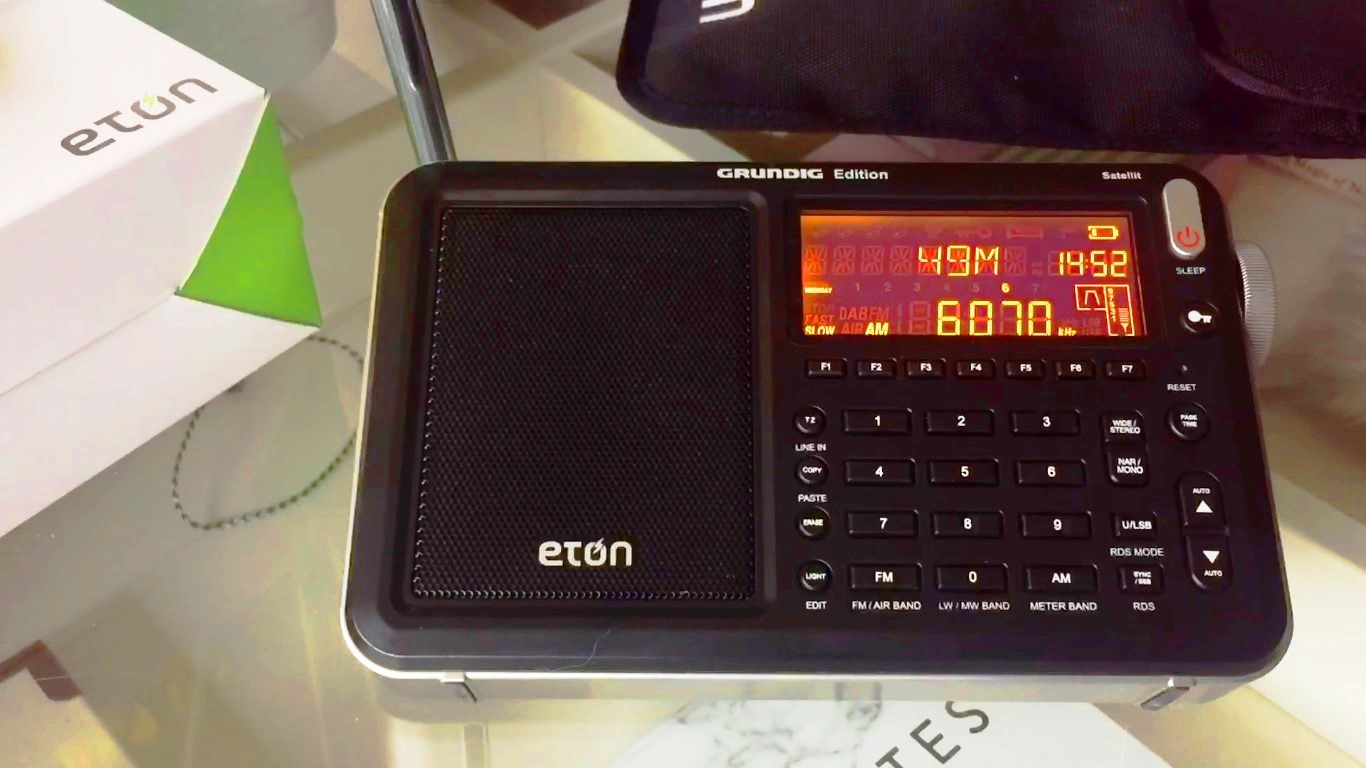
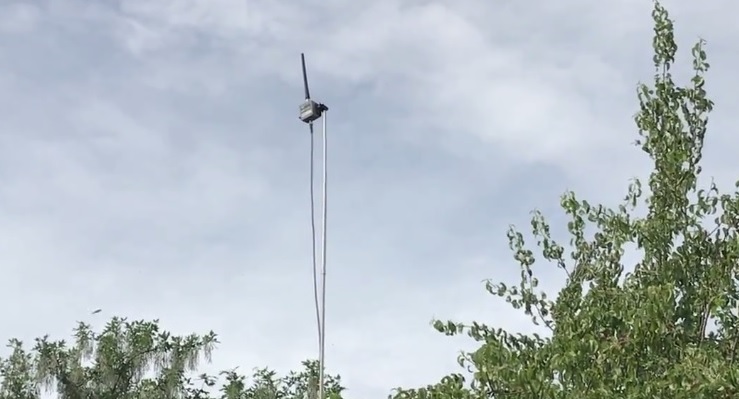
I was fortunate enough to know someone who owns a house with a large garden, quite close to my QTH (a 10 minute walk) and who was more than willing to let me set up my DXing equipment and sit around until the early hours of the morning, listening to and recording various signals on my Eton Satellit. In preparation, I set up the Bonito MegActive MA305 antenna and hung the radiating element on the washing line – sounds ridiculous but actually worked very well, placing it about 2.5 metres above the ground. I also set up a 40 metre longwire, which at its closest point, was still approximately 25 metres from the house, and 30 metres from the neighbours. This post will focus on the performance of the MA305; a subsequent post will detail the performance of the longwire.
The large garden I ‘borrowed’ for my DXing session with the Bonito MegActive MA305 antenna
Suffice to say, the MegActive MA305 performed admirably during my first listening session. In the middle of the afternoon I copied a very strong signal from The Voice of Korea around 15:44 hrs UTC on the 25 metre broadcast band, followed at 17:10 hrs UTC with a superb signal from The Voice of the Broad Masses 2, Eritrea, on the 40 metre ham band. Later on in the evening I copied Radio Mail with excellent modulation, CHU Canada with voice announcements (almost impossible at home), Myanmar Radio with an untypically strong signal and XEPPM Radio Educación from Mexico City with a signal I would normally expect on a DXpedition-proper with a large antenna.
My conclusions to this experiment are simply that E-field antennas can work in a suburban environment, if you are able to site them far enough away from adjacent sources of electrical noise. I don’t have empirical data on this, however, I can confirm that 10 metres proximity is too close at my QTH and 30 metres is sufficiently far away at this test location. One has to assume the houses nearby are similarly equipped to mine with electrical appliances that generate electrical noise. Thus, if you’re interested in a very well-priced, compact antenna and you live in an urban or suburban environment with access to a large garden/ outdoor space, an E-field Boni Whip or MegActive MA305 might well be suitable – and you’ll have a superb portable antenna for those listening sessions away from home!
Finally, I should mention the Eton Satellit. Much-maligned in certain quarters when it was first introduced into the market, it continues to demonstrate superb DXing credentials. I won’t forget some words of wisdom from a friend of mine and fellow DXer, with more than 3 decades of experience in listening to the bands on HF. He told me that Judging from his own experience with some of the original Grundig Satellit models of the 1980s and early 90s (namely the 400, 500 and 700) he was quite sure that the Eton Satellit is a considerably better DX performer than those vintage sets, that offered great sound for casual listening to international broadcasters, but didn’t perform too convincingly on weak DX signals. The Eton Satellit has been a revelation and I’m pleased to have played a small part in turning around the rather widely held view that it was less than worthy of the Satellit branding.
Fresh out of the box, the Eton Satellit has surpassed all my expectations…
Please find embedded reception videos below and text links to the Oxford Shortwave Log YouTube channel. My next post on this subject will cover the performance of a 40 metre longwire in this large garden environment. Thank you for reading/watching/listening and I wish you all great DX!
Clint Gouveia is the author of this post and a regular contributor to the SWLing Post. Clint actively publishes videos of his shortwave radio excursions on his YouTube channel: Oxford Shortwave Log. Clint is based in Oxfordshire, England.
Many thanks to SWLing Post contributor, TomL, for sharing the following guest post:
August 21, 2017: Individual Recordings of MW During Totality
by TomL
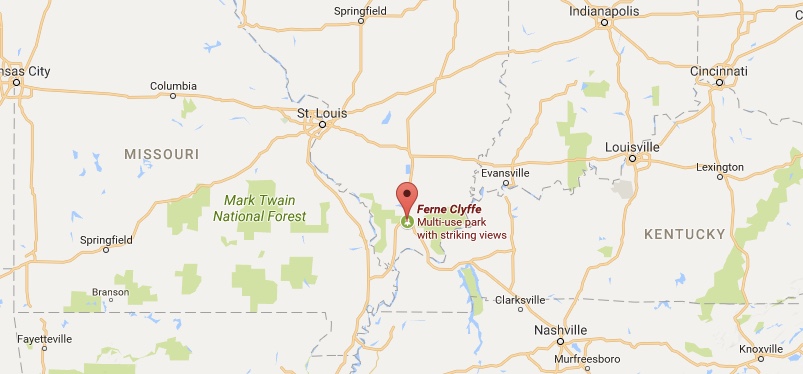
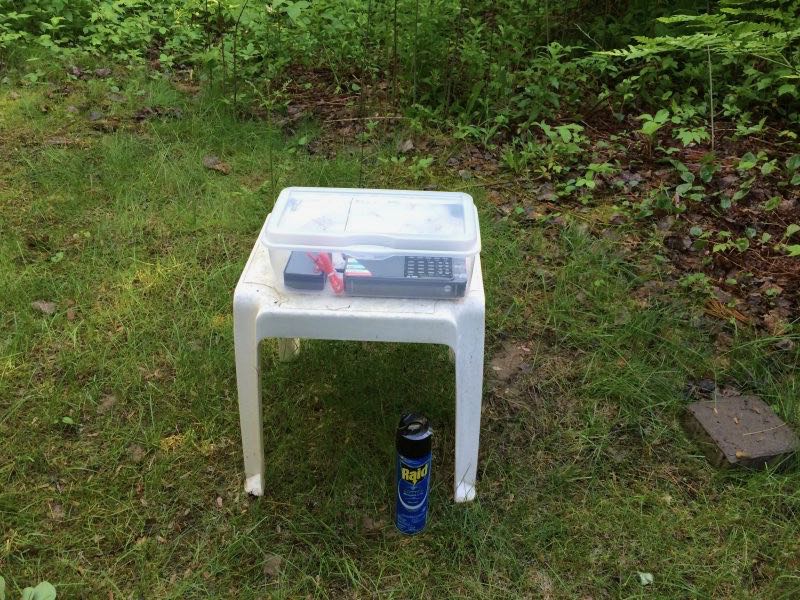
I setup flimsy “Backpack Shack” loop antenna and preselector to my Sony ICF-2010 to listen to any propagation of MW signals as each transmitter experienced Totality. My location was a picnic area facing southwest with only a small hill to the east at Ferne Clyffe State Park near Goreville, IL.
I did not bring a DSP radio and computer which would have been better in hindsight. My observations were generally as follows:
Anything west of my location, except for local St. Louis stations were not identifiable.
Noise levels were somewhat elevated because of thunderstorms that had just moved through the area during the evening.
Anything east of my location experienced dramatic increases in signal along the path of totality.
Since large signal increases were seen with the Umbra moving AWAY from me, it would be more beneficial to use a DSP receiver with good outdoor antenna than a single frequency radio and preselector like my setup. The loop antenna sitting on a picnic table acted great and was usable to get strongest signal for each station.
It is still unknown why I could not identify any stations west of me with the Umbra moving TOWARDS my location and needs further study. I thought I heard KTWO in Casper WY, but upon listening to the recording, it was a male announcer buried in the noise and unintelligible.
A transmitter being IN the path of Totality has a better chance of lasting longer with a strong signal than one that is just outside of Totality. Compare behavior of WSB vs. WBT.
If this happens again, make sure to make multiple hotel reservations and cancel the ones not needed. Traffic was horrible and had to stay in a hotel half way from home and I aggravated an achillies heel problem in the stop and go traffic (YUK).
So, it was quite disappointing to not hear anything special west of my location. As Totality neared my site, I just left the radio tuned to KNOX for the people around me to hear. Its signal did become about 25% stronger and near the end of the recording you can hear other weaker stations trying to break in.
As soon as totality was over, and my picture taking was done, I returned to the radio and found 1510 khz WLAC Nashville, TN was moderately strong! And this was seconds after their Totality had already ended. A baseline reading beforehand showed this station coming in very very faintly. Subjective SINPO rating beforehand=15452, just after Totality=34433.
The next surprise was tuning to 750 WSB Atlanta GA was BOOMING in! They were very clever and had no announcers. Instead they were playing snippets of songs about sun, moon, dark themes. Very entertaining! Baseline beforehand was just moderate noise, no signals. During recording, SINPO=55444 with propagation getting slightly worse near the end of the recording.
Final surprise was 1110 WBT Charlotte, NC, which was not in the path of Totality but just north of it also booming in but not as strongly. Also, near the end of the recording, the signal dropped off very sharply, unlike the WSB signal which stayed strong throughout the 5+ minute recording. Baseline beforehand was low noise and no signals. During recording, SINPO=43434 at 14:40 ET, then approximately 1½ minutes after their maximum eclipse (14:43 ET), SINPO=33423, then at 14:46 ET a SINPO=22422 with another unidentified station breaking through playing a Johnny Cash song.
Tom, thank you for taking the time to share your recordings and listening experiences with us! Snagging a daytime MW broadcast from the Atlanta, GA and Charlotte, NC regions is most impressive. I reckon they were about 400-500 miles (as the crow flies) from your Ferne Clyffe, IL location.
Sounds like you had an amazing experience, despite the stop-and-go traffic!
Many thanks to SWLing Post reader “J JA” who shares the following video/recording of a Babcock test transmission on 11,815 kHz with his Tecsun PL-310ET:
Hi there, you might remember my post from last month focussing on the Bonito MegActive MA305 E-field antenna, kindly supplied to me for testing, by Bonito themselves. That post was essentially a report on my experiences travelling to Crete with the MA305, navigating through security at London Gatwick and Heraklion airports (mostly with relative ease), but more importantly, how well it worked with the equally excellent Eton Satellit portable receiver. Whilst in Crete I managed to copy a number of personal firsts, including CRI on 7295 kHz, via their relay in Bamako, Mali, The Voice of Beibu Radio on 5050 kHz, Nanning, XSL ‘Slot Machine’ on 6251 kHz USB, Ichihara, Japan, S32 ‘The Squeaky Wheel’ on 3828 kHz and NHK World Radio Japan, 11910 kHz. I also copied RTM Wai/Limbang FM on 11665 kHz from Kajang, Myanmar Radio on 5985 kHz and AIR Bhopal on 4810 kHz, amongst others – all of which I would certainly consider to be difficult catches in Europe.
The USB-powered MegActive MA305 is perfect for DXing on the move…
Despite excellent all-round results from the ultra-portable USB powered MA305, there was one signal I copied, which more than any other, demonstrated the DXing credentials of this antenna; Radio Tarma from Peru on 4775 kHz. With a TX power of 1 kW, this is a very difficult station to hear in Western Europe, even with a longwire. To catch this station in Crete, with a 22 cm antenna was incredible and it was at that point during my trip that I realised E-field antennas really can work superbly well for hard-core DXers on the move.
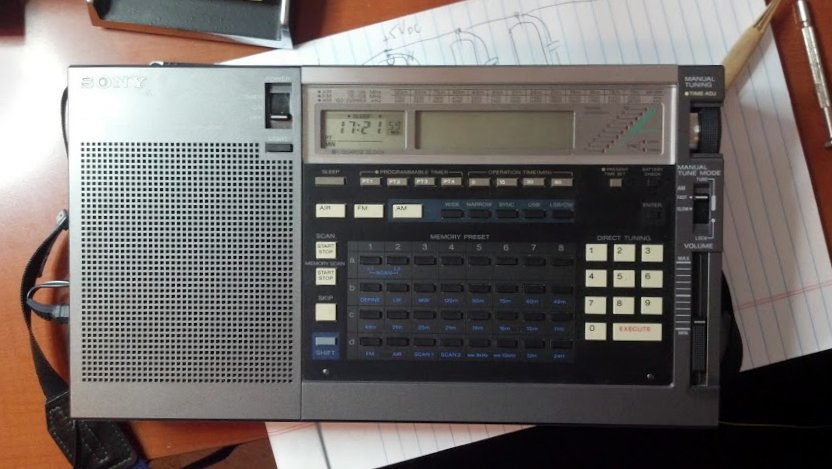
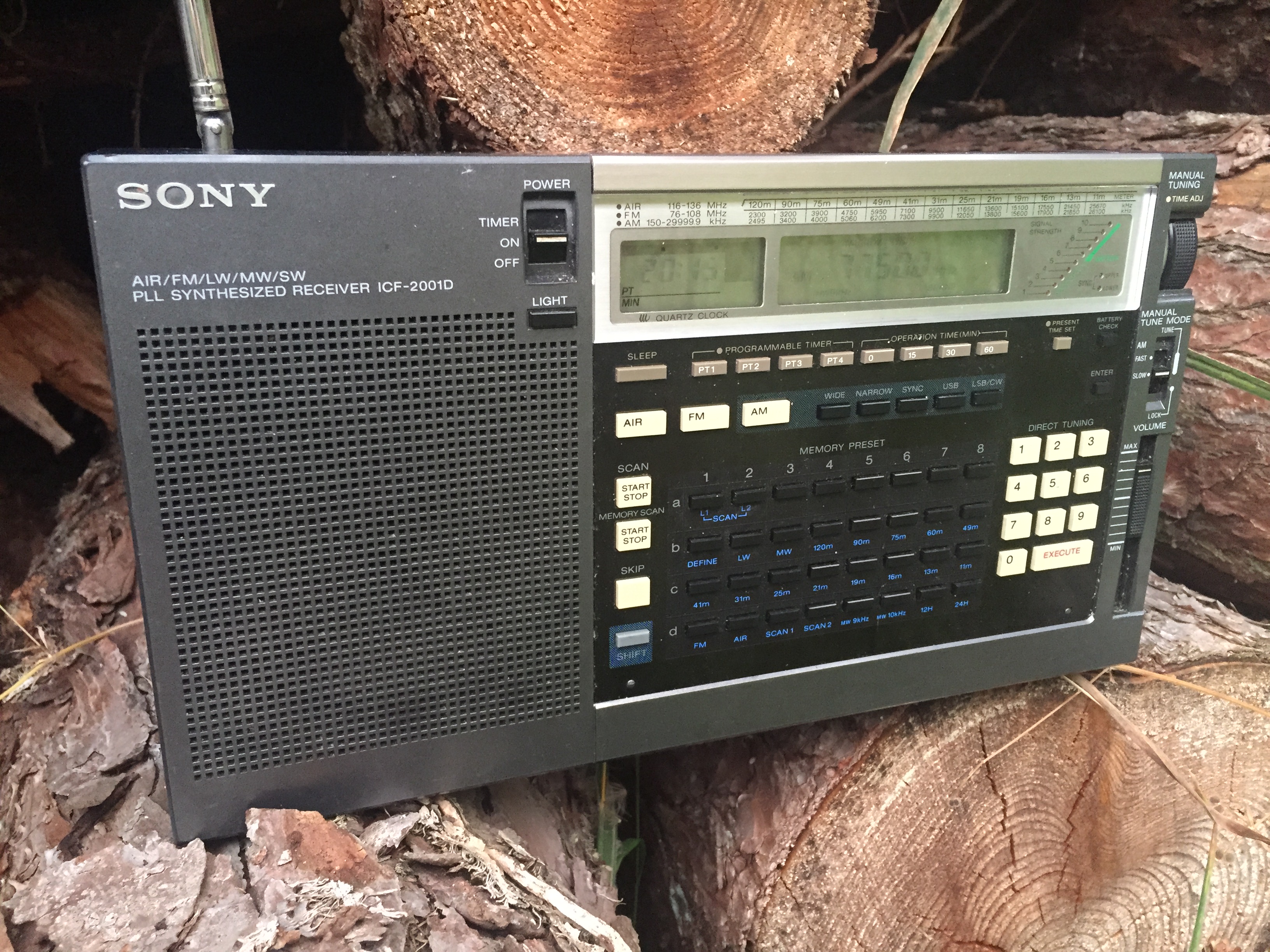
Upon my return to Oxford, I immediately started thinking about a DXpedition to the local woods I use for what I consider serious DXing. For obvious reasons, E-field antennas require an electrically quiet environment to ensure maximum SNR performance. In noisy environments, these types of antennas amplify the signal of interest and the background ‘electro-smog’, thus increasing signal levels but critically, not signal-to-noise. Fortunately, the Oxfordshire wood I have been using for a couple of years is only a 10 minute drive from my QTH as I sort of live in the countryside anyway and the QRM levels there are just about zero. Now, given that this was essentially an experiment to determine the best possible performance from the MA305, I decided to use my best portable radio. It was quite tempting to pack up the Elad FDM DUO which running on a home-brew battery pack has proven itself to be my best (pseudo) portable radio. However, this is supposed to be a real-world test and in this type of scenario, DXpeditions with the Bonito antenna are much more likely to be undertaken with a portable radio. For these reasons I decided to conduct the test with the venerable Sony ICF-2001D. Having proven to be a superb receiver over many, many dxpeditions (check out the evidence on my YouTube Channel Oxford Shortwave Log) and still regarded by DXers as one of the best ever portable radios – possibly the best – it was the obvious choice.
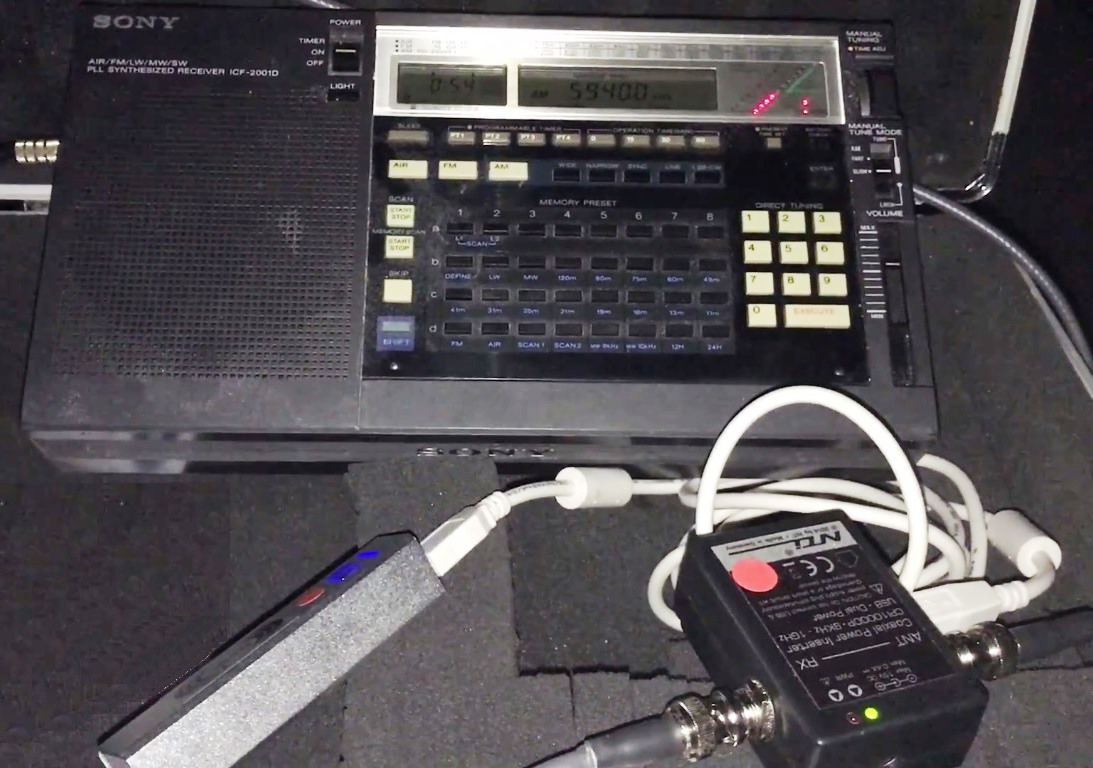
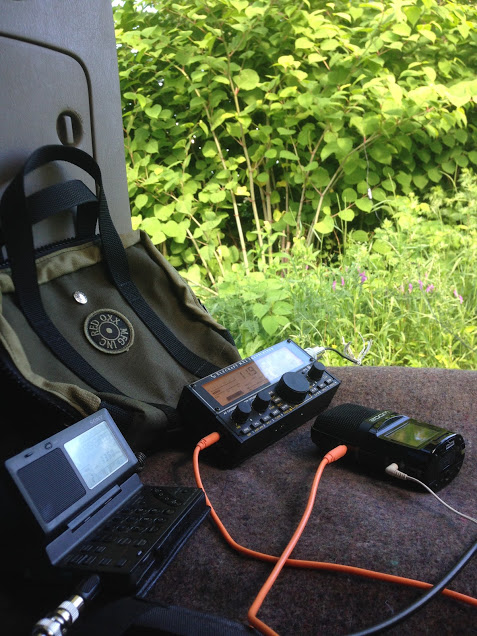
My portable DXing kit comprising the Bonito MegActive MA305 antenna and the Sony ICF-2001D…a bit of a legend in DXing circles…
I ventured out in early June around 23:00 hrs BST (22:00 hrs UTC), parked the car on the edge of the wood and proceeded to set up my cheap camera tripod, slightly modified to accept a 2 metre-long stainless steel tube, into which a slightly thinner 1 metre tube was mounted, topped off with my partially disassembled ‘Selfie Stick’ – which made it back from Crete lol. The antenna was set up in less than 5 minutes and approximately 4 metres above the ground – much quicker and easier than de-spooling 100 metres of wire! With fresh batteries in the Sony and the MA305 powered up using the USB power brick supplied by Bonito, I was ready to start listening. Almost immediately I heard and recorded a personal first; Lao National Radio, Laos, signing on 6130 kHz, with an excellent signal. Hearing them in the UK was only made possible by the annual two week shut down of the PBS Xizang transmitter in Lhasa, Tibet, but hey, I’ll take it. A brilliant start to my listening session.
Over the next two hours I was amazed at what could be heard using this 22 cm amplified antenna. Bearing in mind I have spent many hours at the woods previously, listening via various 100 metre longwires and a 200 metre Beverage, my expectations were, I thought, realistic in that the MA305 coupled to the Sony would catch some very good DX. However, I did believe there might be an absence of at least some of the more exotic low power stations on the Tropical Band – afterall the MA305 is a very short antenna. Clearly I was wrong, because what transpired during the session surpassed anything I thought possible with this set-up. A list of reception videos follows below and further below, a selection of embedded videos. Some of the entries on this list simply stunned me at the time. Rádio Educação Rural for starters is such an incredibly difficult signal to hear in Europe, even with a very large antenna. Thus, to hear them on an ultra-compact set-up felt very special. Radio Mali is another station that is very difficult to catch with any modulation, except on a large antenna and yet there they were – at the first time of trying. Similarly, Rádio Nacional de Angola and Alcaravan Radio are exotics that at best deliver very weak audio – and most of the time no audio. Furthermore, the signals from Emisoras Pio XII, Myanmar Radio and Rádio Clube do Pará were verging on what I would call superb…I’d never heard anything like it previously except via 100 (or more) metres of wire.
The ICF-2001D and MegActive MA305 Rádio Educação Rural transmitter site in Tefé, Brazil
So what’s next? Well it would certainly be an interesting experiment to compare the performance of the MegActive antenna with the Wellbrook ALA1530 active loop in a similar environment. I have used the Wellbrook on DXpeditions several times, with often excellent results, however, it’s not designed to be portable and if SNR performance could be demonstrated as similar between these two products, given a very favourable price delta, the Bonito antenna would add up to be a very compelling purchase decision. More on that to come. In the meantime, thank you very much for reading/watching/listening and I wish you all excellent DX.
Please click on the links below for the reception videos on the Oxford Shortwave Log YouTube channel.
Selected embedded reception videos from the list above:
Clint Gouveia is the author of this post and a regular contributor to the SWLing Post. Clint actively publishes videos of his shortwave radio excursions on his YouTube channel: Oxford Shortwave Log. Clint is based in Oxfordshire, England.
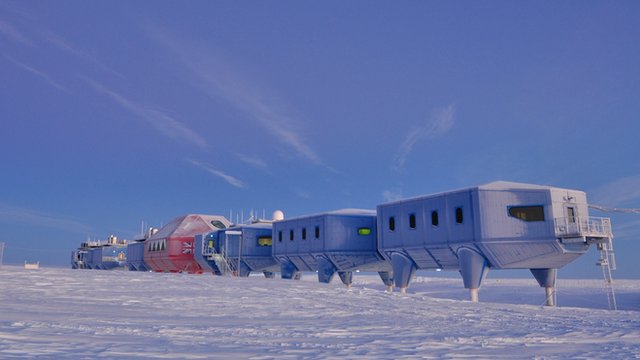
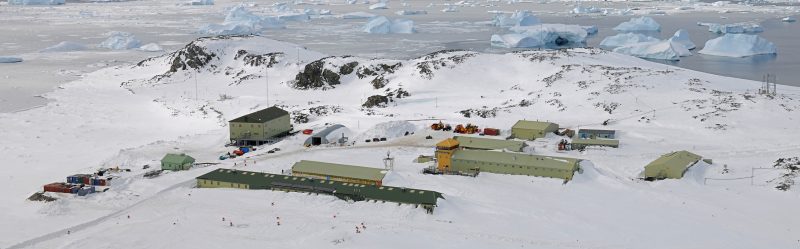
Halley VI: The British Antarctic Survey’s new base (Source: British Antarctic Survey)
On Wednesday, 21 June 2017, the BBC World Service officially transmitted the 2017 BBC Antarctic Midwinter Broadcast–an international radio broadcast intended for a small group of scientists, technicians, and support staff who work for the British Antarctic Survey.
This is one of my favorite annual broadcasts, and I endeavor to listen every year. Once again, the SWLing Post called upon readers to make a short recording of the broadcast from their locale.
Below are the entries, roughly organized by continent and country/region, including reader’s photos if provided. If I’ve somehow missed including your entry, please contact me; I’ll amend this post.
So, without further ado….
The 2017 BBC Antarctic Midwinter Broadcast Recordings
Europe
Denmark
SWL: Willy, OZ4ZT Location: Copenhagen, Denmark Notes: Here is a short recording of BBC AMB on 5985kHz. It was recorded using the IC 7300’s internal record function. Antenna used was a dipole for 7MHz.
SWL: Klaus Boecker Location: JN49AC in Germany Notes: Attached please find the link to my reception Video of the 2017 Midwinter broadcast. and a photo. Just failed the first seconds, because I’ve muted my headphones and was wondering why I couldn’t hear anything. Hihi.
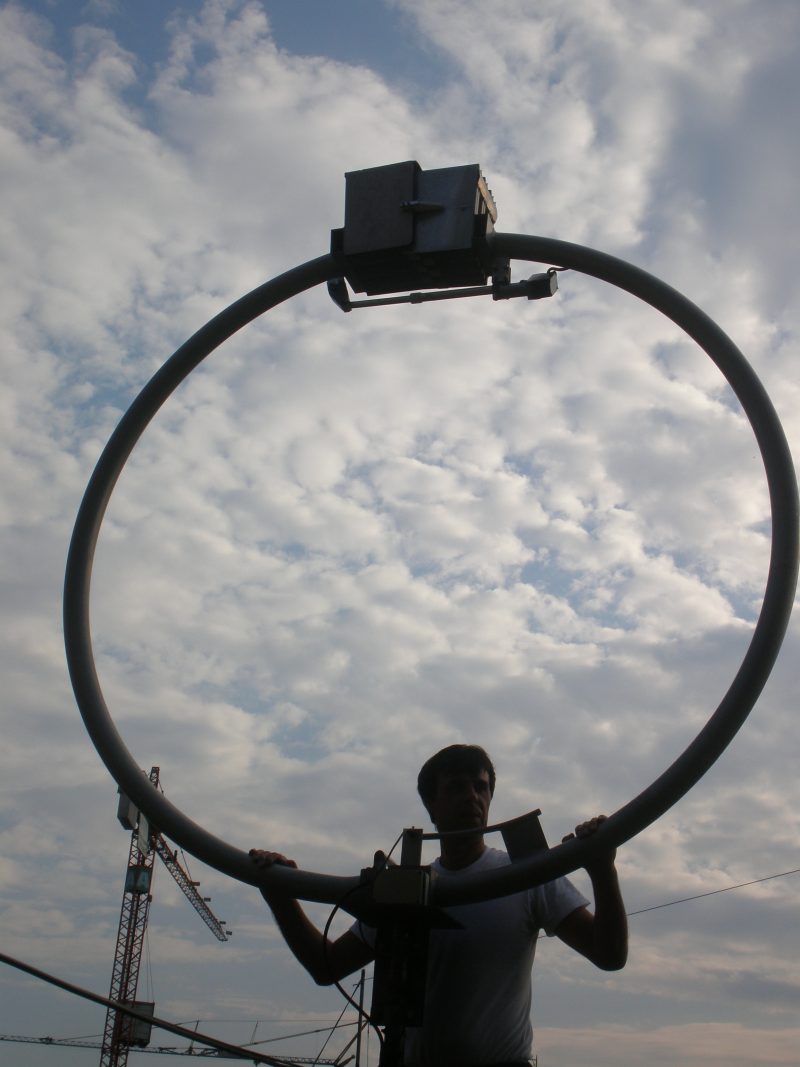
For the reception, I used my good, old Kenwood R1000 and my homebrewed mag-loop.
Recorded via soundcard and processed with Audacity. The Video later on is done with the NCH VideoPad Software.
SWL: Tony Roper Location: Ruhpolding, Germany Notes: 2017 BBC Antarctic Midwinter Broadcast being received on my Tecsun PL-660 whilst in Ruhpolding, Germany. Antenna was just the supplied wire hanging vertically from the window. Wasn’t expecting much due to the surrounding hills but was pleased to pick up the Ascension transmitter.
SWL: Daniele Forleo Location: Puglia, Italy Notes: This is my recording of the midwinter Antarctic broadcast, recorded in Puglia (Southern Italy) with Tecsun PL-660 with Its whip antenna.
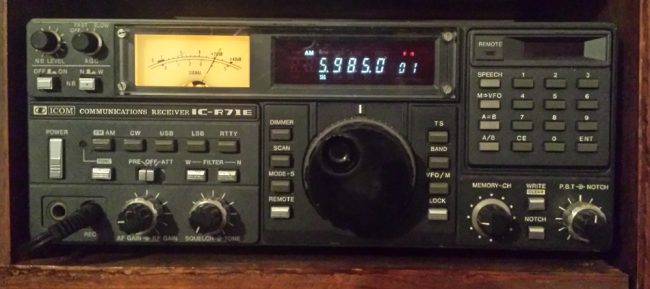
SWL: Marc Vittorini Location: Turin, Italy Notes: Even this year I had the pleasure of listening the BBC ANTARCTIC MIDWINTER BROADCAST TRANSMISSION and I send you the listening report.
My name: Marc Vittorini
Loc: Favria (Turin) – Italy – JN35UH
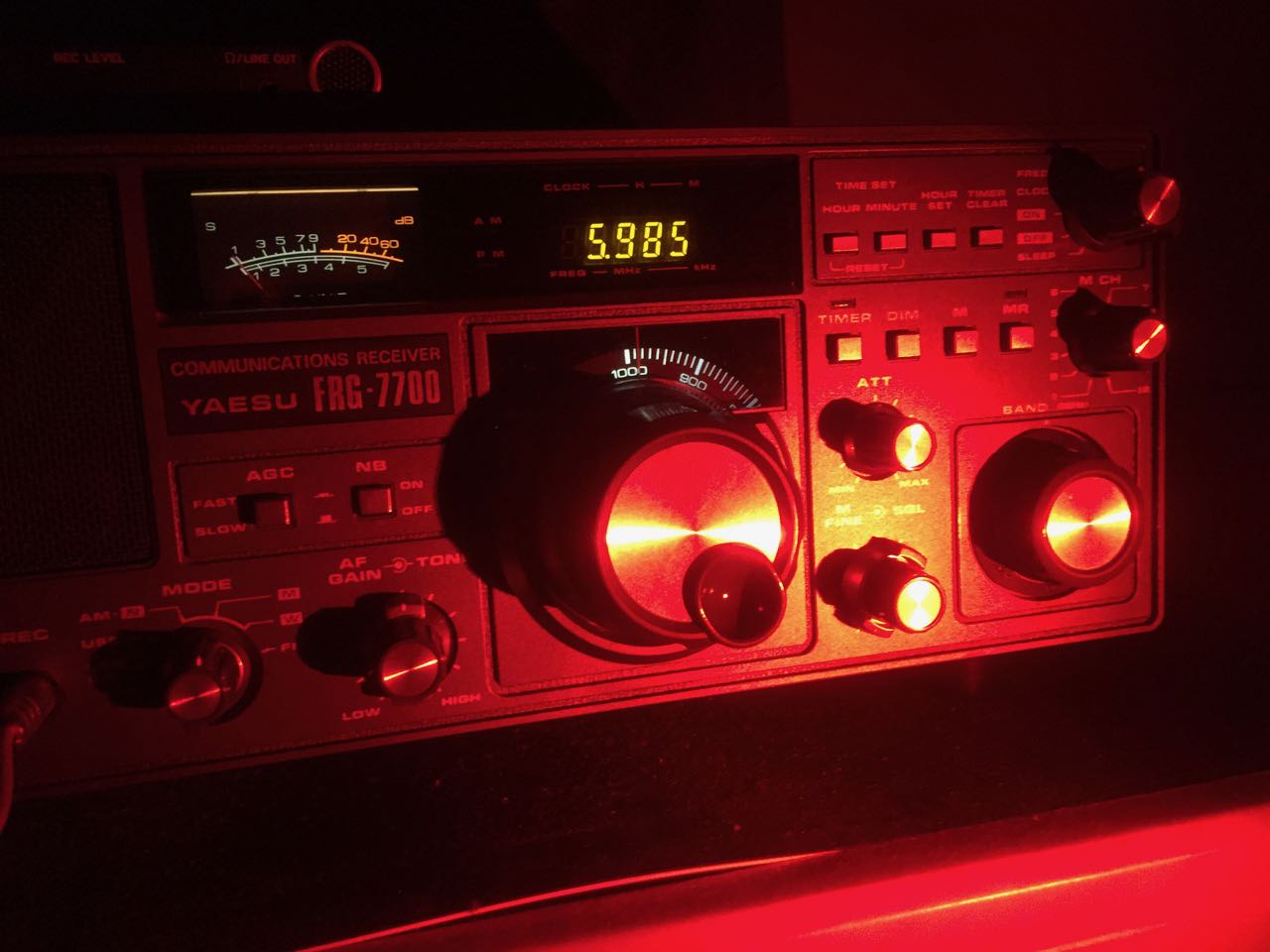
Rx: Icom IC-R71E
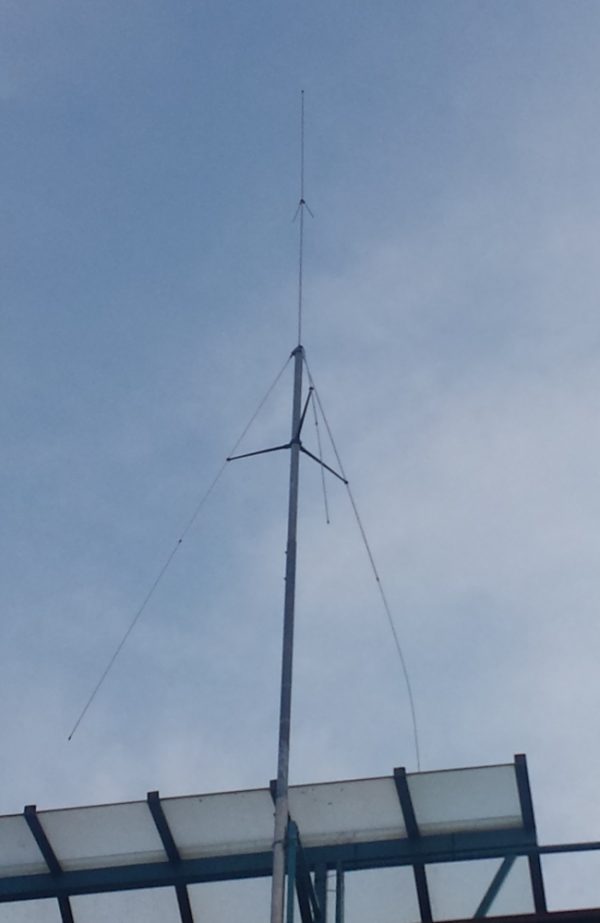
Ant: Midland Skylab
Freq: 5985 kHz
Time: 2330-2400 utc
Signal: 9+20 with fading
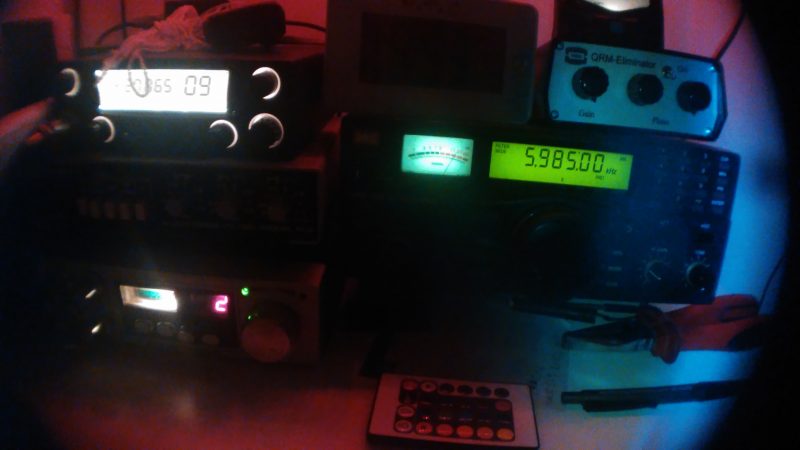
I attach the recording of the first minute of the transmission received and also pictures of my receiver (during reception) and my antenna.
Unfortunately the first 20 seconds of recording are disturbed by noise due to an error in connection between receiver and recorder.
SWL: Giuseppe Morlè iz0gzw Location: Formia, Italy Notes: I used the Tecsun PL-660 with its telescopic antenna and only on Dhabbayya frequency 6035 I had a bit of difficulty. I’m on my home balcony in Formia, Center Italy, Tyrrenian sea.
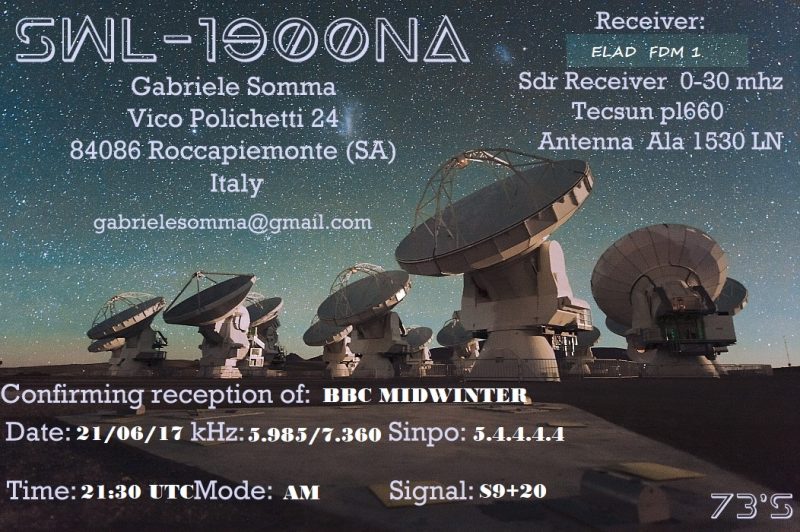
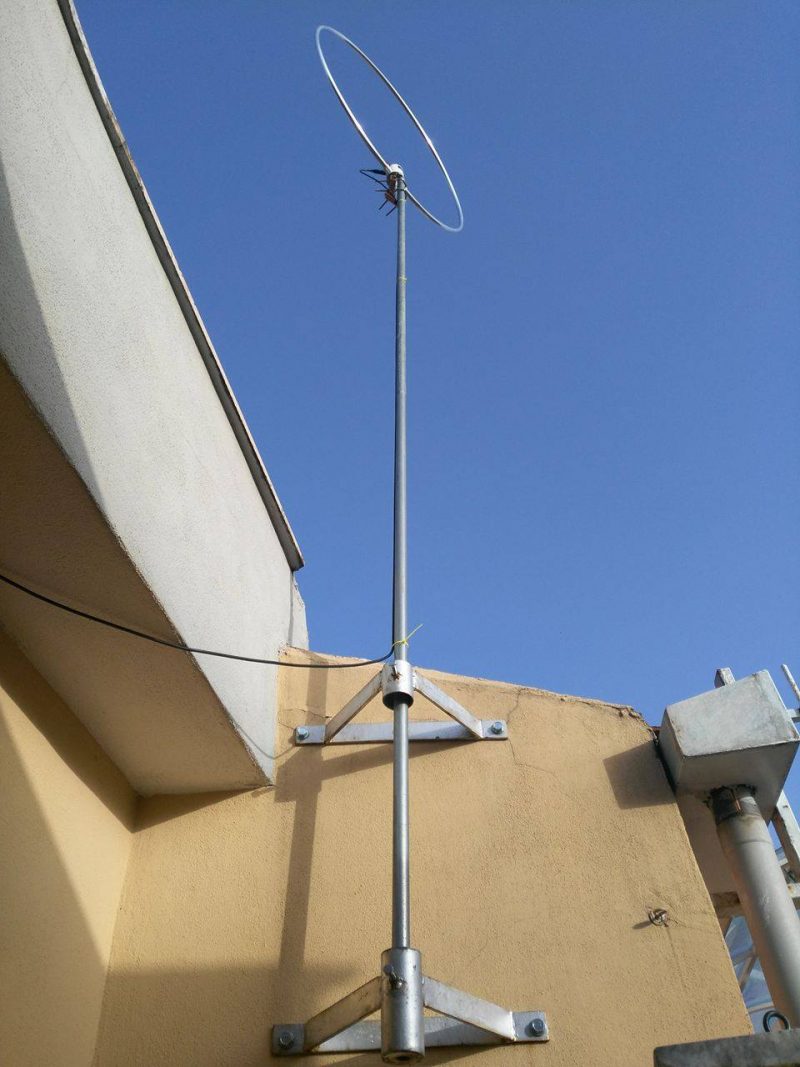
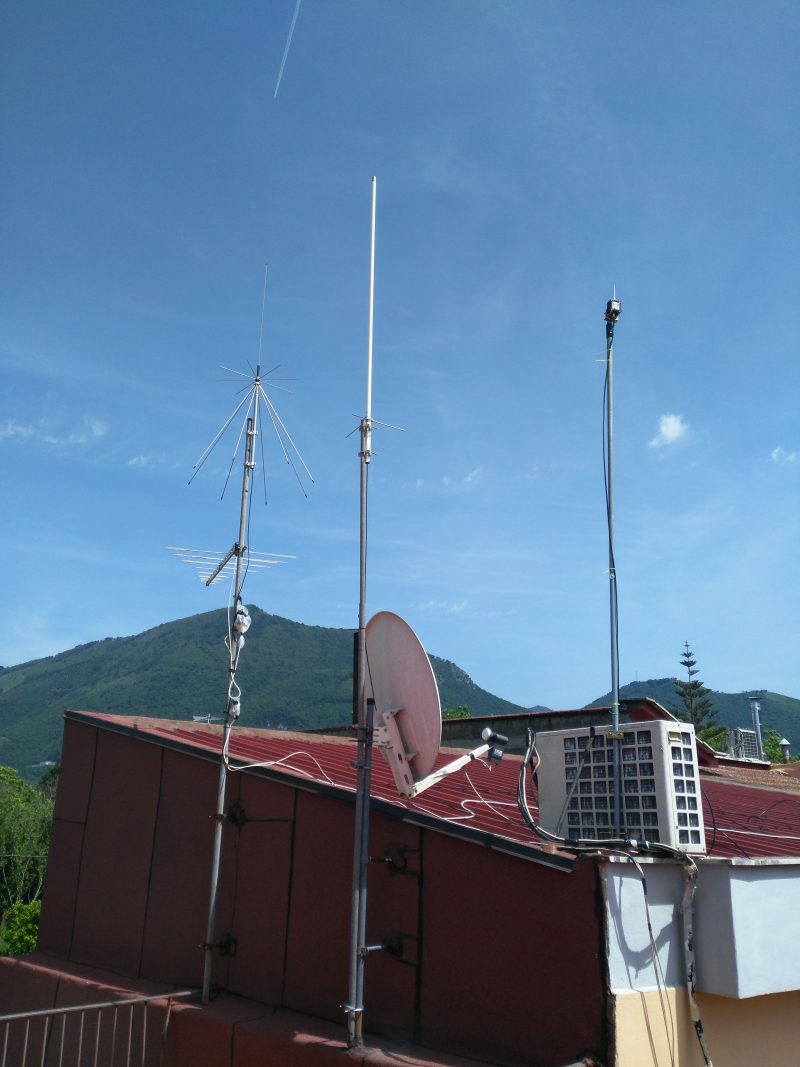
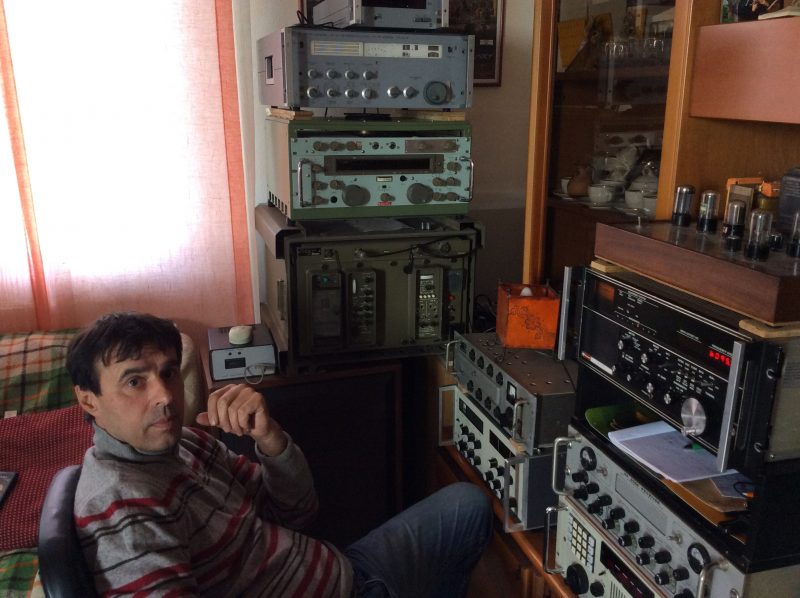
SWL: Grabriele Sommas Location: Roccapiemonte, Italy Notes: Below is a video of my MIDWINTER reception–I listened to the 5,985 and 7,360 frequencies. Included are photos of my shack and antennas:
SWL: Andrea Coloru (IW3IAB) Location: Italy (locator JN55XI) Notes: I used an AOR 1500 with a long wire antenna (about 40 meters). My QTH locator is JN55XI and best frequency was 5985 kHz. There was light overlap by an RTTY station but reception was loud and clear. Other frequencies were bad, too much fading or unreadable.
SWL: Davide Borroni Location: Saronno, Italy Notes: I listened BBC Midwinter with SINPO 34333 on 6035 kHz AM Thanks for show !
I use my Hallicrafters receiver R45 ARR7 and Siemens E401 , magnetic loop antenna:
Davide with his Siemens E401 magnetic loop antenna.
I was curious to listen this transmission and Wednesday I tried to receive it with a little Tecsun PL-300wt and its antenna. My QTH is impossible for electric noise (I live in a flat on a bank with alarm, neon, and so on) but I listened the transmission on 6035 khz SINPO 24131 (quite inaudible), on 7360 kHz SINPO 34232 so I’ve listen on 5985 kHz SINPO 44333 (in record attached with ID), I’ve listen transmission from 21:30 to 21:50.
SWL: Renato IK0OZK Location: Marta, Italy Notes: Signal Report: S 9+10 to Woofferton at 5.985 Khz and Ascension on 7.360 Khz, S 5-7 to Dhabayya on 6.035 kHz. QTH: Marta VT Italy Grid: jn52xm
SWL: Cap Tux Location: Scotland Notes: BBC World Service Antarctic Midwinter Broadcast 2017. Cerys Matthews (Catatonia) presents music requests and special messages to the staff at the British Antarctic Survey, broadcasting in English, June 21 2017, 2130-2200 GMT on 5985 kHz (transmitter power of 300kW, transmitter location: Woofferton, UK).
Recorded with an SDRPlay RSP2 using SDRuno and a homebrew passive Mag Loop.
SWL: Ayrshire, Scotland Location: Scotland Notes:
Tonight I rushed home from work in time to hear the broadcast. Signals were good at my QTH in Scotland, even though we had thunder storms to the East of Scotland.
I made several (shaky) videos on my smart phone. As you will see from the videos, my receivers are more of the classic/old type, but reception was good with my home made antennas.
Details of my receivers, antennas and location are on the youtube videos.
I have posted one of reception from Wooferton on 5985 kHz Am, and one of
reception from Ascension on 7360 kHz AM.
I also heard Dhabayya with a good readable signal, but the first two were the best signals best with me.
SWL: Mark Hirst Location: Basingstoke, England Notes: Please find enclosed a short extract from yesterday’s broadcast, plus a picture of the radio used just before the programme started. Again it was so interesting to hear a broadcast aimed to such a small audience with heartfelt messages from their friends and family.
SWL: Rawad Hamwi Location: Turaif – Northern Borders Province – Saudi Arabia Notes:
[Wednesday] I tried listening to the BBC Antarctica Midwinter Broadcast (for the first time) from northern Saudi Arabia and really I enjoy it so much! All the 3 frequencies were loud and clear but the most audible one was 5985 kHz
I filmed the entire 30 min broadcast and the video is uploaded on YouTube
Here are some details I included in the video description
Date/Time: 21/6/2017@21:30 UTC | 22/6/2017@00:30 Arabia Standard Time (UTC+3)
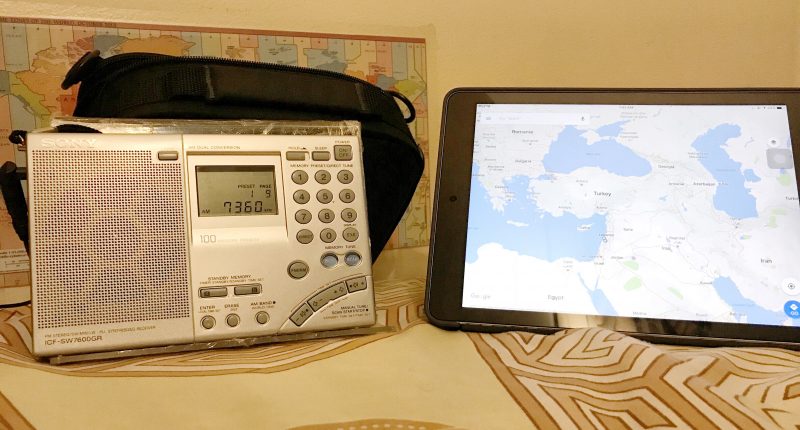
Frequencies: 7360 kHz – 6035 kHz – 5985 kHz
Receiver: Sony ICF 7600GR
Antenna: 30 LM Longwire Antenna
Location: Turaif – Northern Borders Province – Saudi Arabia
North America
Canada
SWL: Richard Langley Location: New Brunswick Notes:
I had good luck with recording the BAS broadcast both here and using the U. Twente receiver. Attached are two two-minute clips, one from the start of each recording. Also attached [above] is a photo of the “listening post” at the back of my yard.
The Elecraft KX2 which I hooked up to a NASA PA 30 multi-band compact wire antenna that I suspended in a tree.
None of the frequencies used for the Midwinter broadcast were ideal for my location and time of day (after all, these broadcasts target Antarctica!) but last year I did successfully receive the 41 meter band broadcast.
The KX2/NASA PA 30 provided the best reception results, but sadly the recording turned out quite poor due to an incorrect setting on my Zoom H2N digital recorder.
Fortunately, I did make the following video of my Sony ICF-SW100 in action:
SWL: Ed McCorry (KI4QDE) Location: North Carolina Notes: Attached are 2 audio clips of the broadcast. Both on 7360 from Ascension.
I could not hear anything on the other frequencies.
SWL: Nace Magner Location: Bowling Green, Kentucky Notes: I listened to the signal on 7360 kHz from the back porch of my home in Bowling Green, KY. I used a 35′ end-fed external antenna located about 20′ up in a tree. I received a similar quality signal using the external antenna with a Kaito 1103 radio. I also received the signal on the Kaito using only its whip, although the signal was substantially weaker.
Thank you for your excellent work on the SWLing Post.
SWL: Jon Pott Location: Michigan Notes: My first attempt at catching the Midwinter broadcast; I wasn’t expecting to pick up anything at all, but the Ascension Island location came through well enough that I could positively identify it when I compared to BBC’s recorded broadcast.
Recording of my reception (the beginning of the recording corresponds approximately to the 4:00 mark in the BBC recording below).
Location was western Michigan in the U.S.
42°46’40” N
86°03’48” W
Elevation: Approx. 212m ASL
SWL: David Iurescia (LW4DAF) Location: Argentina Notes: I’m sending you the first seconds of the BBC Antarctic Midwinter Broadcast, using a Yaesu FT 840 and a half wave dipole, 30 Km south from Buenos Aires. It is on 7360 Khz. It had good signal, but too much noise here.
Rothera Research Station, Adelaide Island, Antarctica (Image Source: British Antarctic Survey)
Once again, many thanks to all of you who submitted your recordings of the BBC Midwinter Broadcast!
We’ll be sharing this post with both the British Antarctic Survey and the BBC World Service. And to all of you, from the SWLing Post: Happy Midwinter! Happy Summer/Winter Solstice!