Category Archives: Guest Posts

Guest Post: A Visit to Radio Tarma


Many thanks to SWLing Post contributor, Don Moore–author of  Following Ghosts in Northern Peru–for the following guest post:


A Visit To Radio Tarma

By Don Moore

(Note: A more extensive set of photos from Radio Tarma, and other Peruvian radio stations, can be found at Don’s website. The website also contains details of the Peruvian travelogue book he recently wrote and published.)

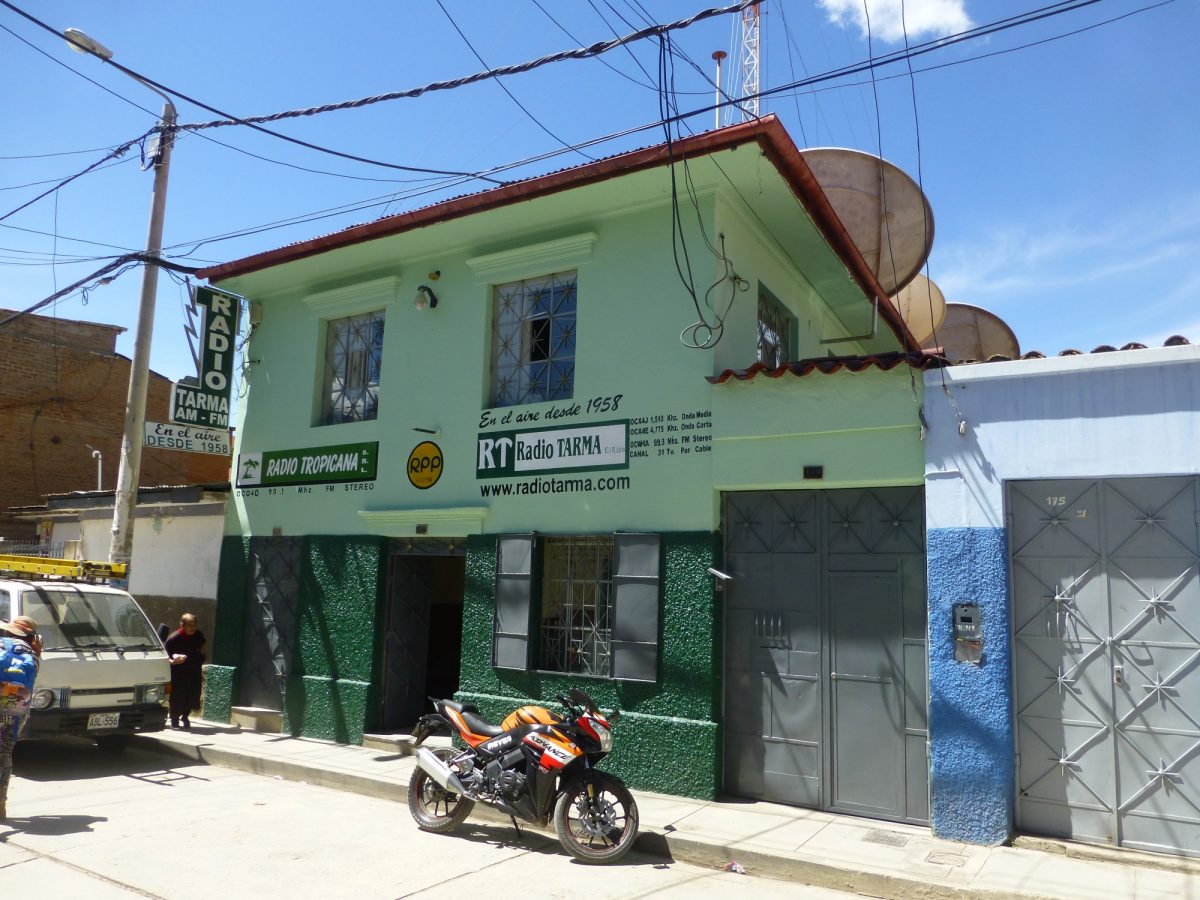
Radio Tarma building

Shortwave stations in South America are few and far-between these days, but those of us who have been tuning the bands for a few decades remember the days when the tropical bands were filled with Latin American broadcasters from dozens of scattered mountain and jungle towns. One such place was Tarma, a picturesque but chilly city of about 50,000 nestled in a narrow valley in the central Peruvian Andes at 3,000 meters above sea level. Tarma has been an important commercial center since colonial times and archaeological findings indicate that the region was heavily populated long before the Spanish came. Today it sits at the junction of two major trade routes, so it continues to be a bustling place.
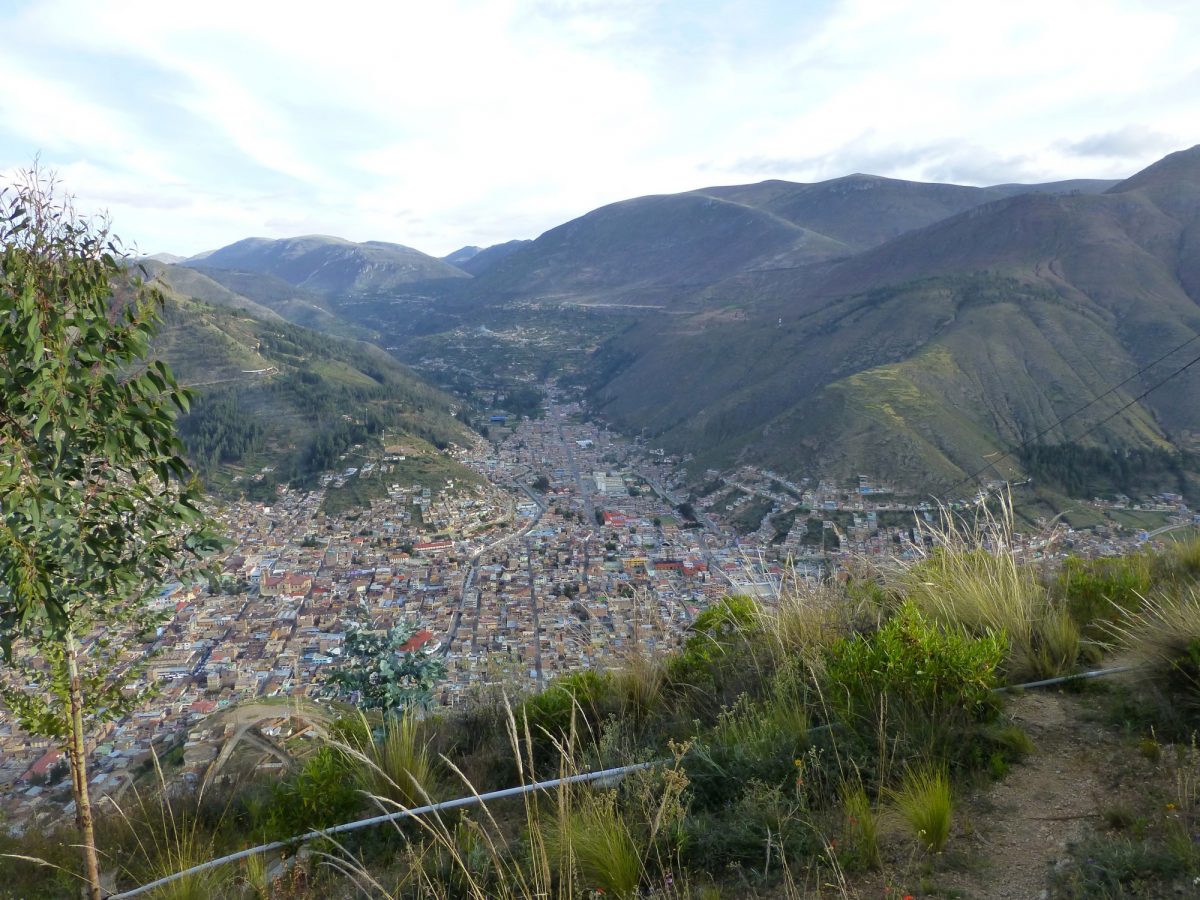
View of northern Tarma from the Radio Tarma transmitter site

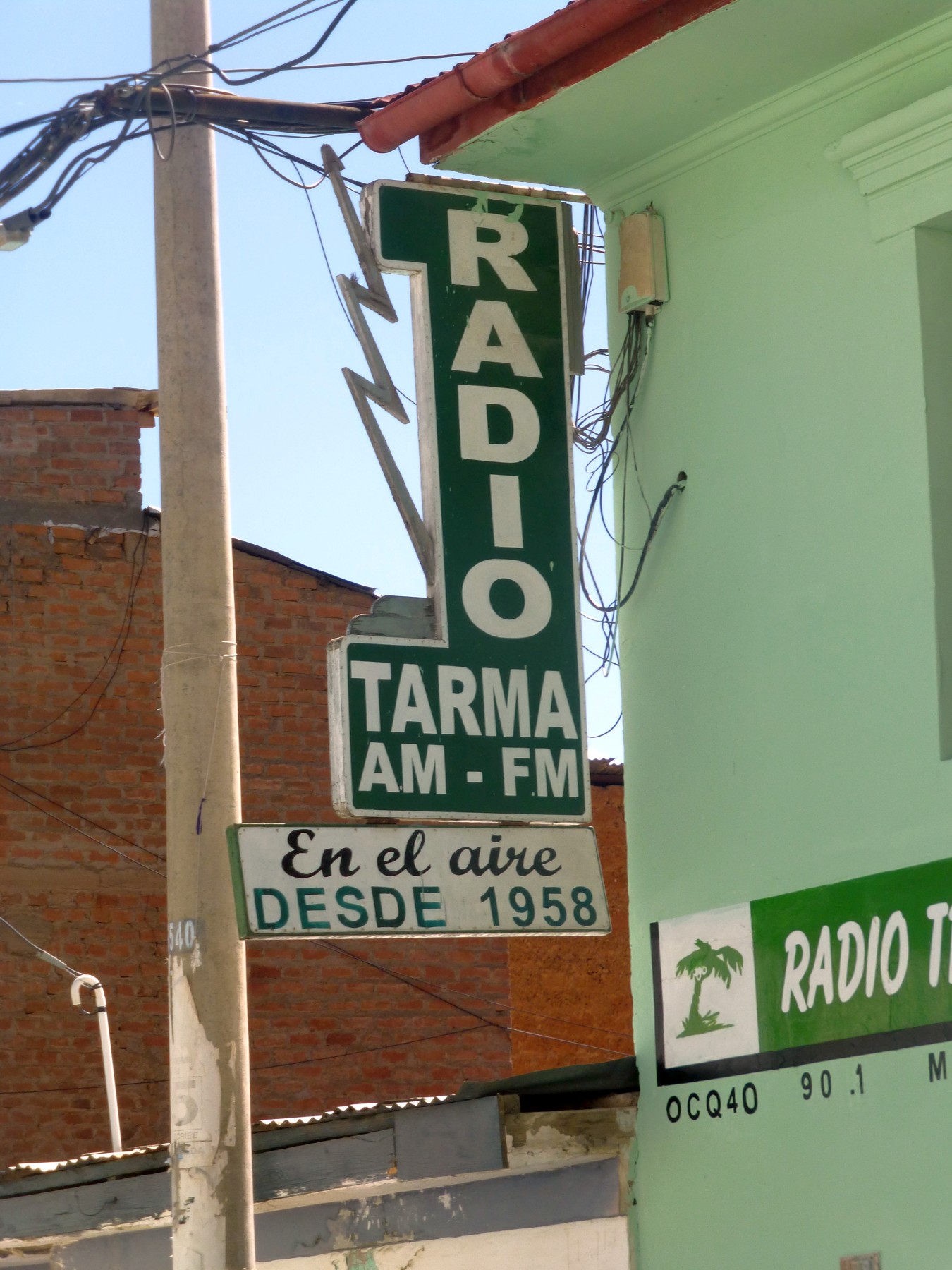
While wandering around central Peru in April 2018, I made a point of stopping in Tarma so as to visit the town’s namesake broadcaster, Radio Tarma, one of the few Peruvian stations still on shortwave. Radio Tarma’s frequency of 4775 kHz has been a fixture on the sixty meter band for over four decades. What I didn’t know was that this would turn out to be the best of the over one hundred Latin American station visits that I have made in my travels.
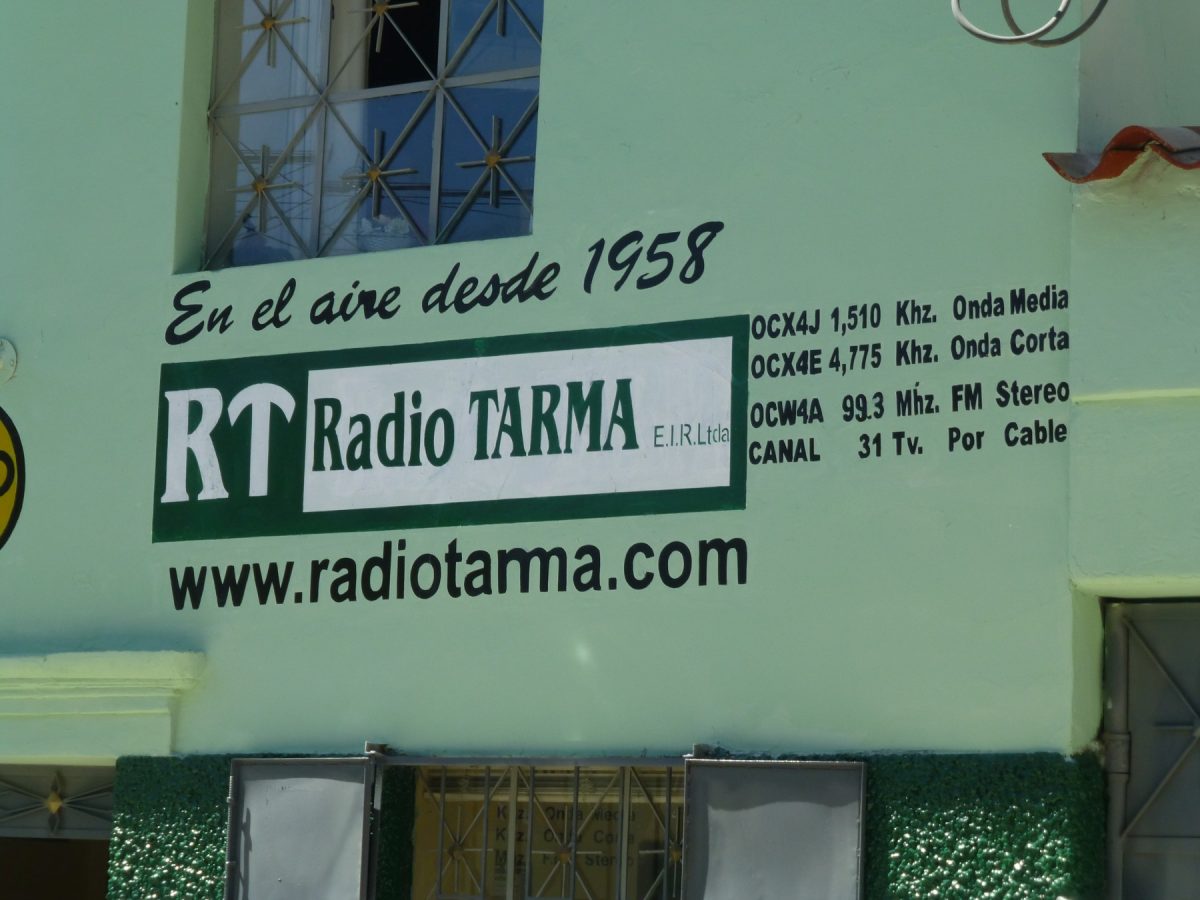
Radio Tarma Frequencies

When I first stopped by on Monday afternoon, everyone was busy and no one had time for a visiting gringo. By chance I had arrived on the station’s sixtieth anniversary and they were preparing for a big celebration that night. I was invited to come back in the evening when there would be a huge street party with live music. That evening I got to talk to several members of the station staff and was introduced to owner-manager Mario Monterverde, who invited me to come back for a tour in two days after the celebrations and ceremonies were over.
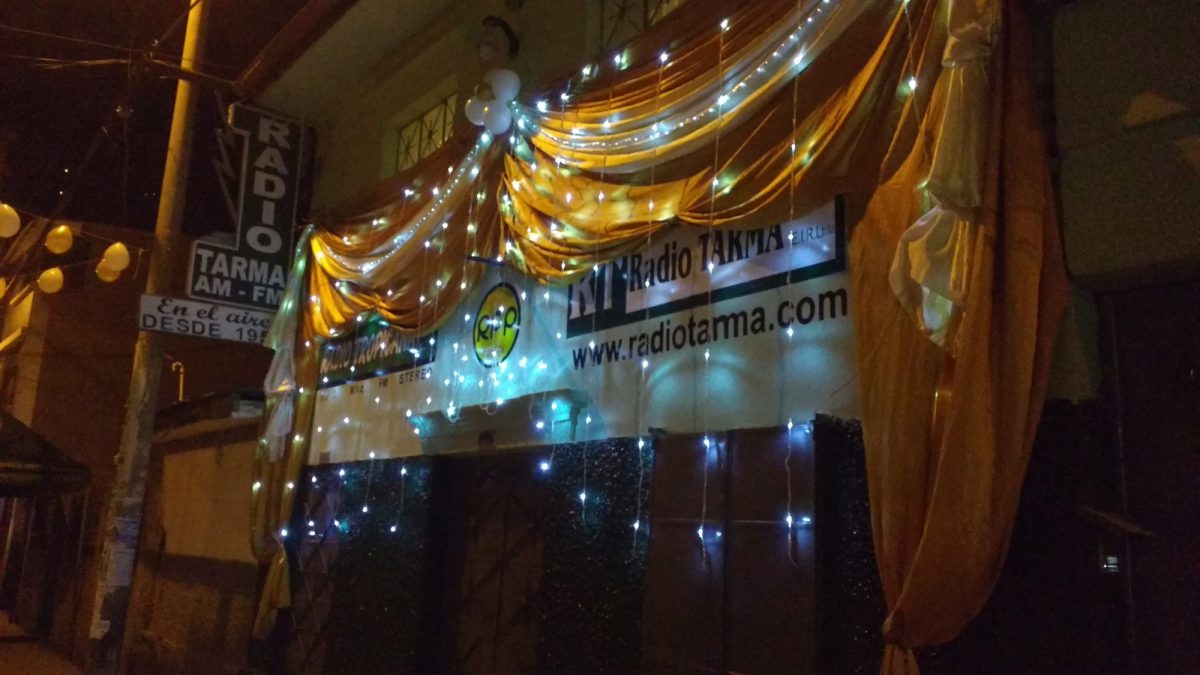
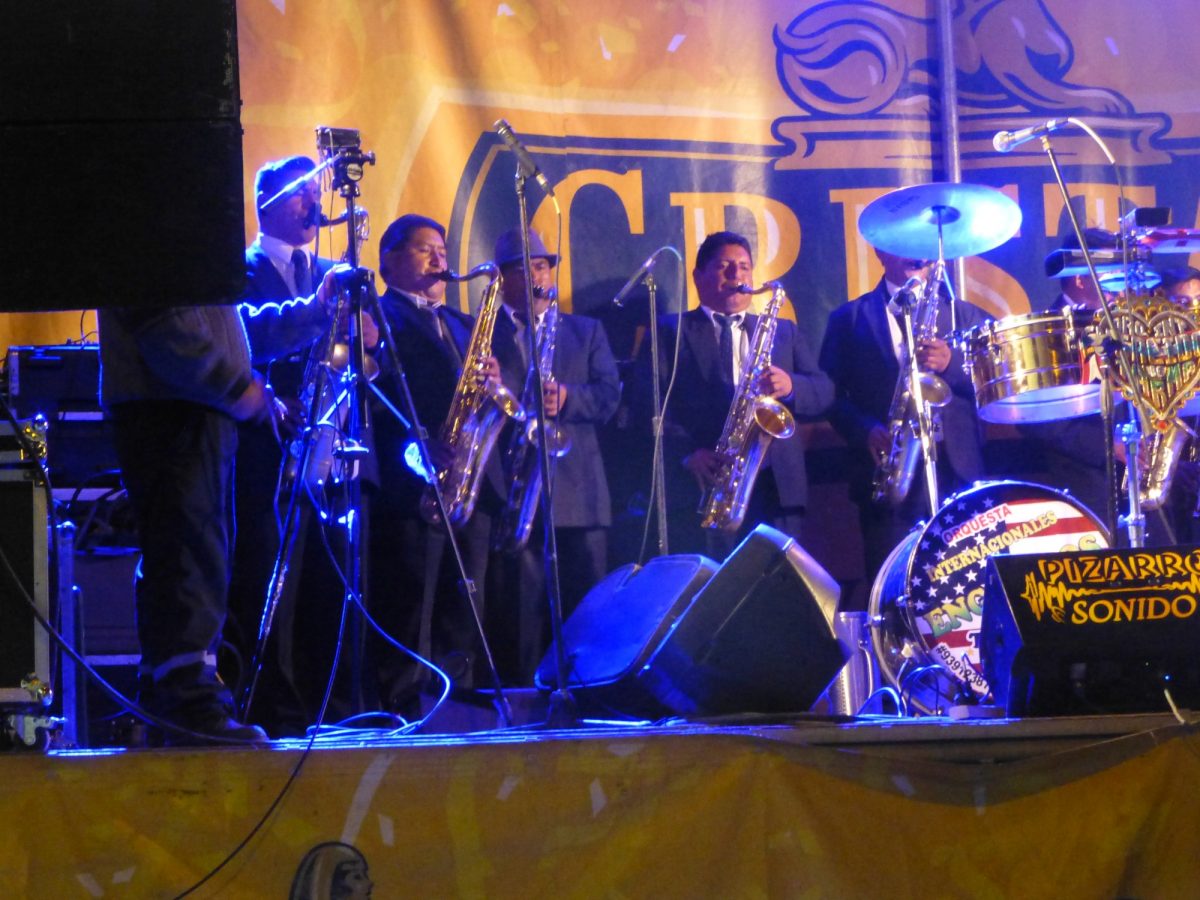
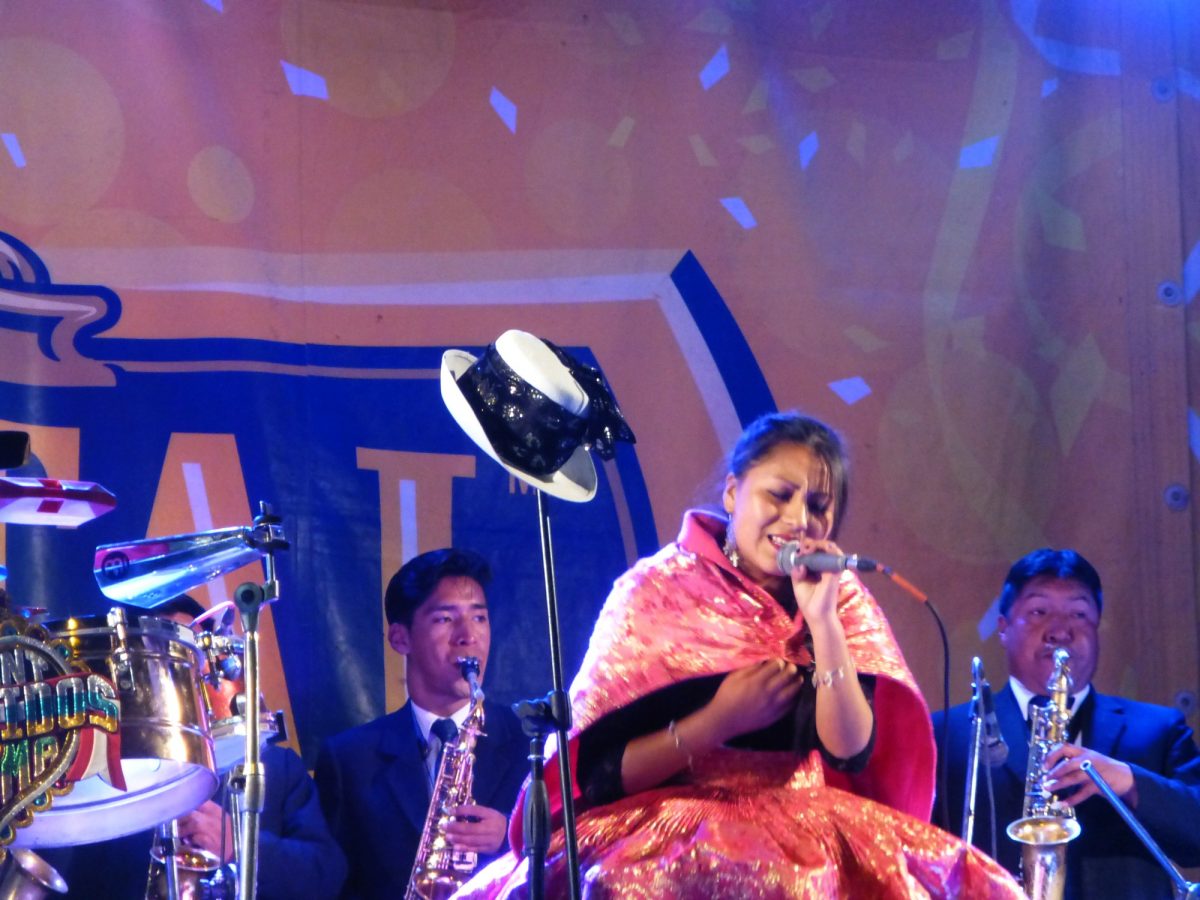
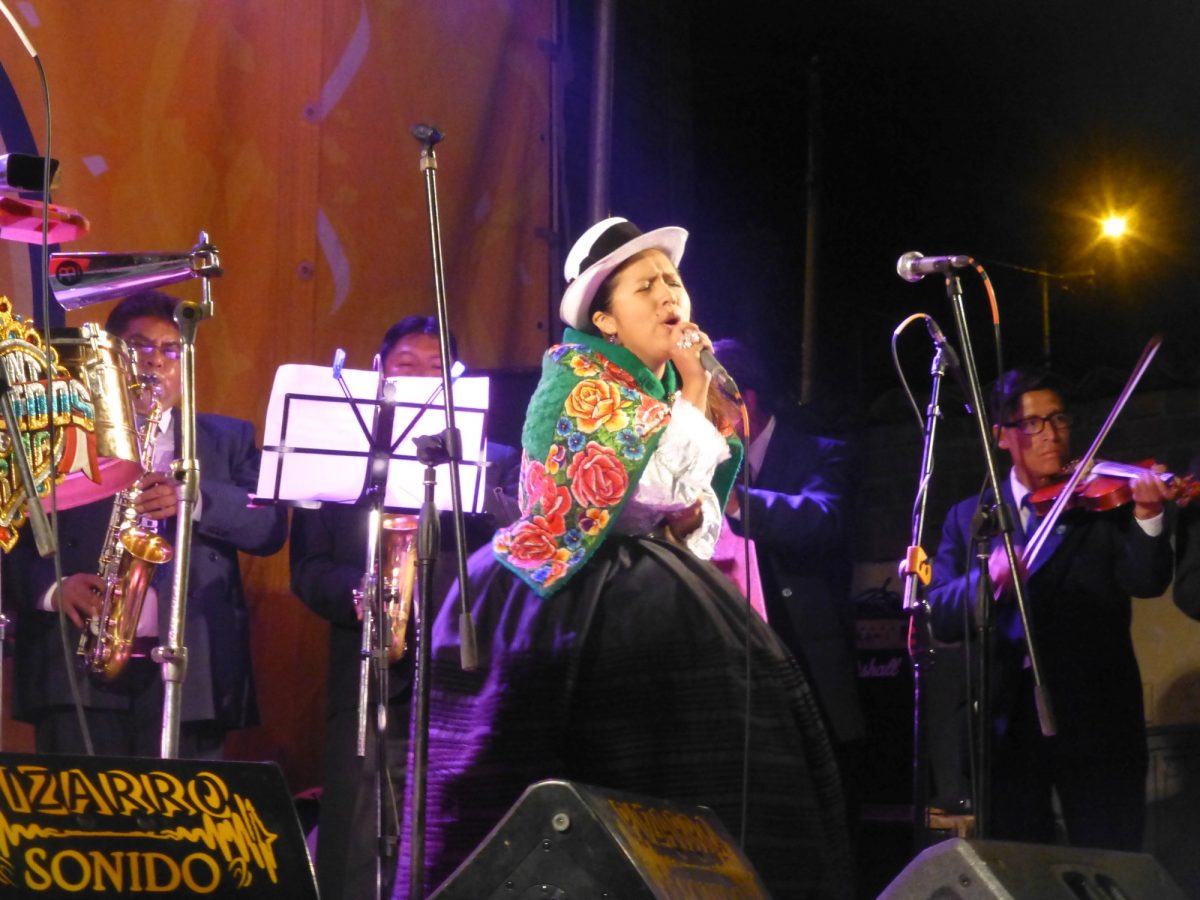
Radio Tarma’s 60th Anniversary Party
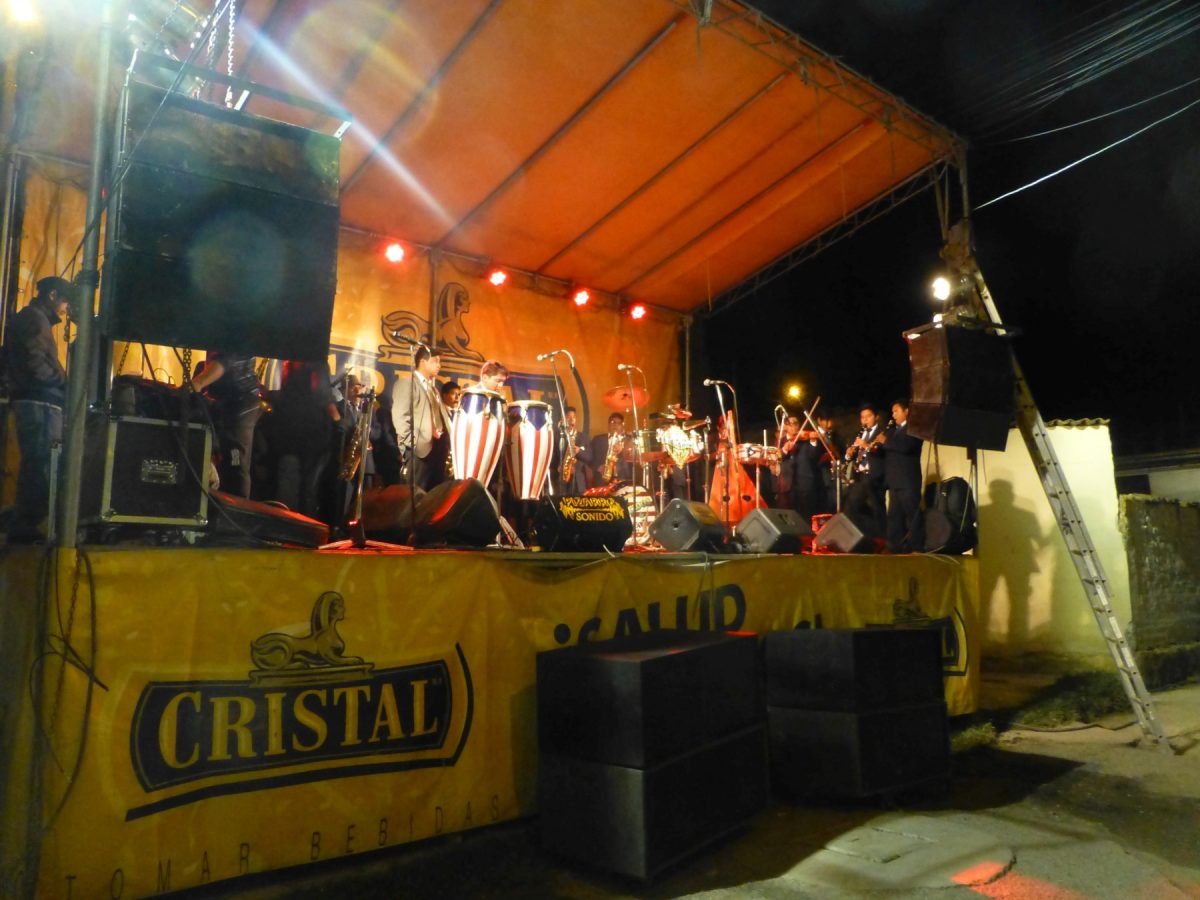
The Radio Tarma Party Band
Radio Tarma Owner/Manager Mario Monteverde

The reason for Radio Tarma’s continued presence on the sixty meter band is Mario Monteverde, Radio Tarma’s energetic owner-manager.
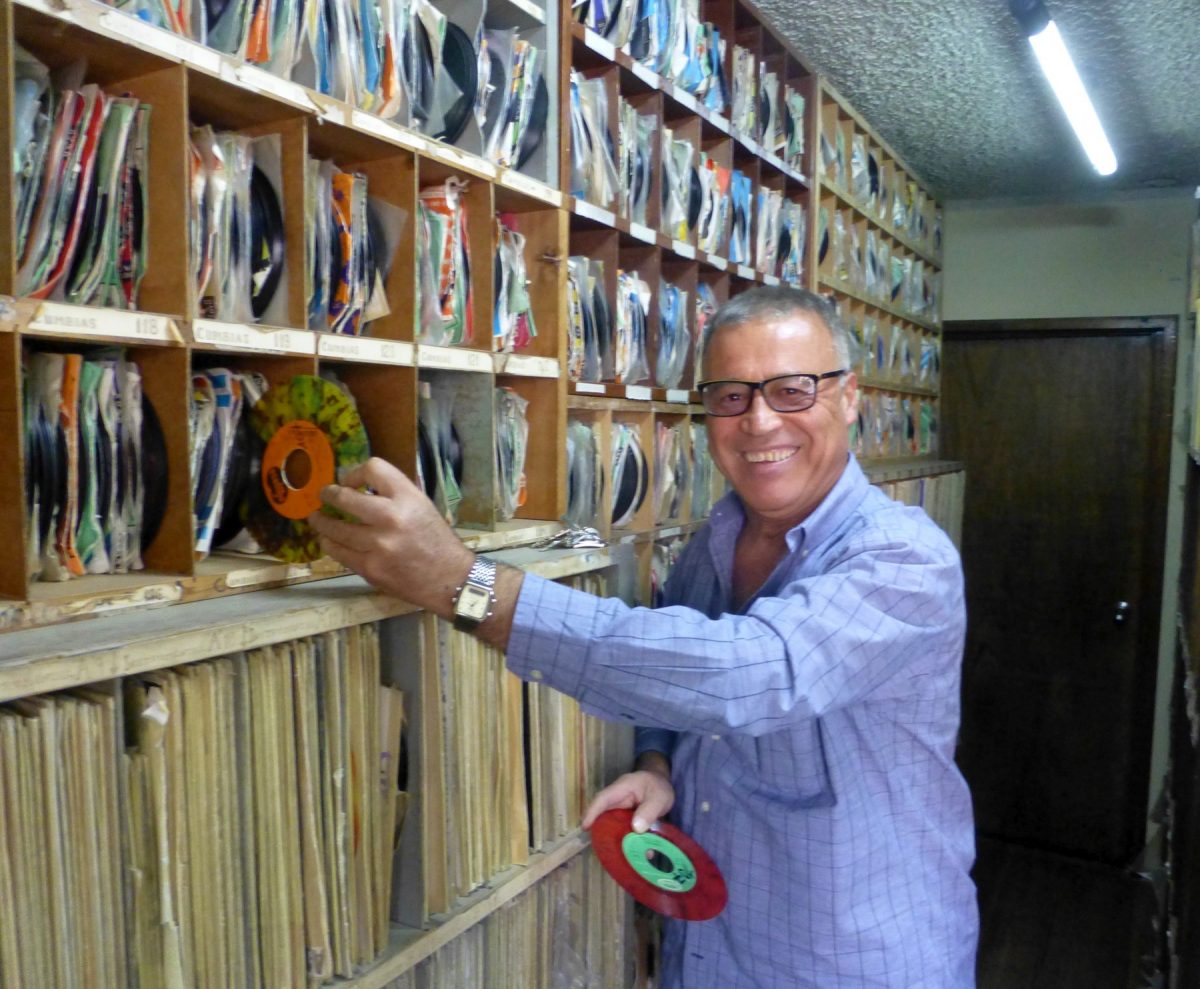
Mario Monteverde in the old record library.

Running radio stations is his passion, and that includes reaching distant listeners on shortwave. Don Mario remembers what shortwave used to be like in Peru and he can rattle off station names and frequencies from past and present as good as any serious DXer. We spend a lot of time talking about stations I used to hear and the ones that I visited in my 1985 trip to Peru. We mostly talk in Spanish, although he speaks English well. He studied in Lima and later in the United States for several months. In the 1980s, he lived in San Francisco for a year while working as a DJ at a Spanish language FM station.

Don Mario thinks that it’s unfortunate that there is so little use of shortwave in Peru today, but other radio station owners think he is crazy to continue to use shortwave. The only listeners to shortwave in Peru are peasants in jungle settlements and remote mountain valleys. That may be a suitable audience for a religious broadcaster, but these listeners have no value to commercial stations, such as Radio Tarma, as they are mostly outside the money economy and of no interest to advertisers. But Don Mario doesn’t care and so Radio Tarma continues to broadcast on shortwave several hours every morning and evening for whoever might happen to tune in.
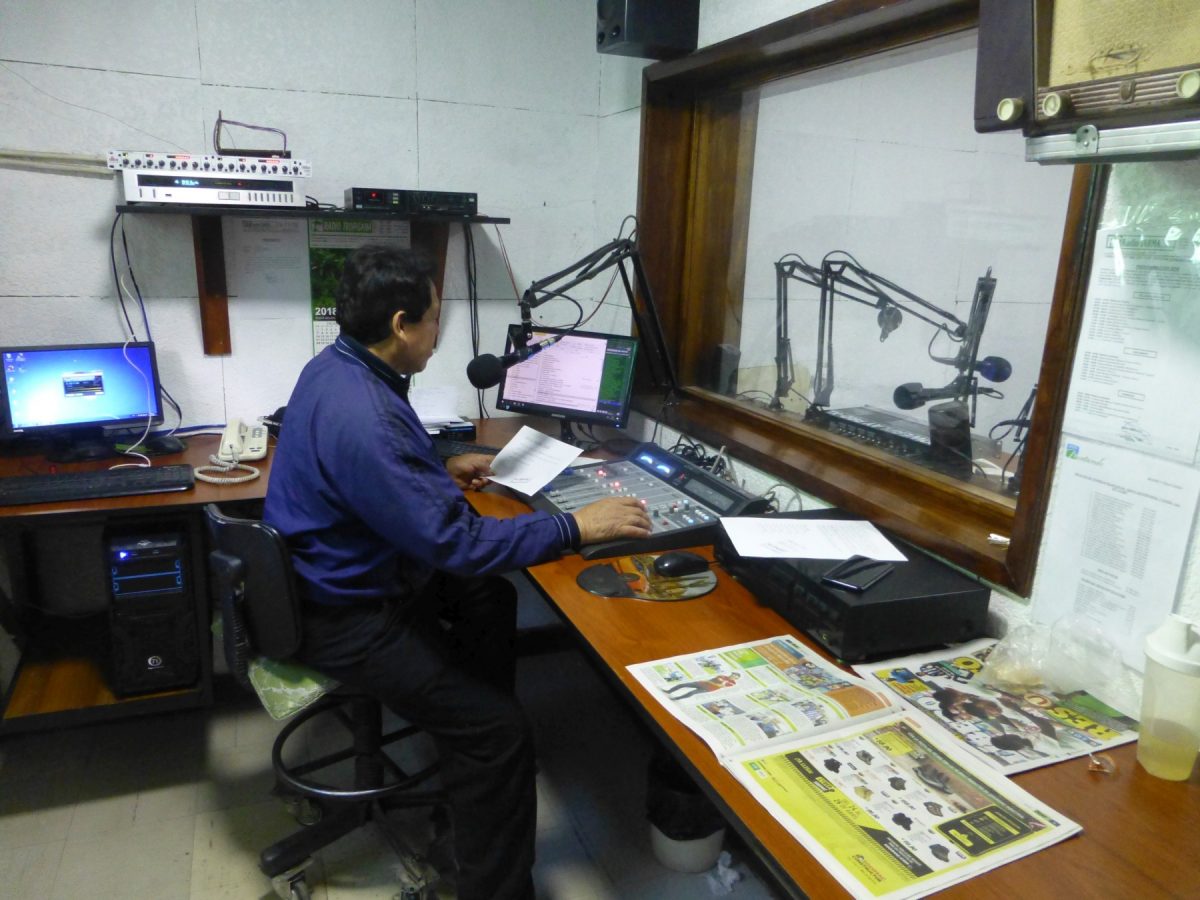
Studio for Radio Tarma

And, Radio Tarma can afford to broadcast as it sees fit. Don Mario’s Grupo Monteverde is one of the most professionally run and profitable communications companies that I have visited in Peru. In addition to Radio Tarma (on MW, FM, and SW), the company operates two television stations in Tarma, the local cable network, the local FM repeater for Radio Programas del Peru (Peru’s radio news network), and Radio Tropicana, a chain of FM music stations in Tarma and three nearby towns.

(Click here to open video in separate window.)

Founded in 1958 by Mario’s father, Radio Tarma was the first radio station in this city. Using two homemade 500 watt transmitters, the station initially broadcast on both medium wave and 6045 kHz shortwave, but the shortwave went off the air after about a year. Then in 1978, Mario’s father dusted off the old shortwave transmitter and applied for a new license. He was granted 4770 kHz, but that was soon changed to 4775 kHz, where Radio Tarma has been ever since. In the past four decades, Radio Tarma has been logged by thousands of DXers all over the world and, although it’s hard to believe, when I visited Tarma in April 2018 they were still using that original 500 watt transmitter that Mario’s father built sixty years before. However, a new one-thousand watt solid state transmitter was currently in Lima being tested by the Ministry of Transport and Communications. It should be on the air by now.
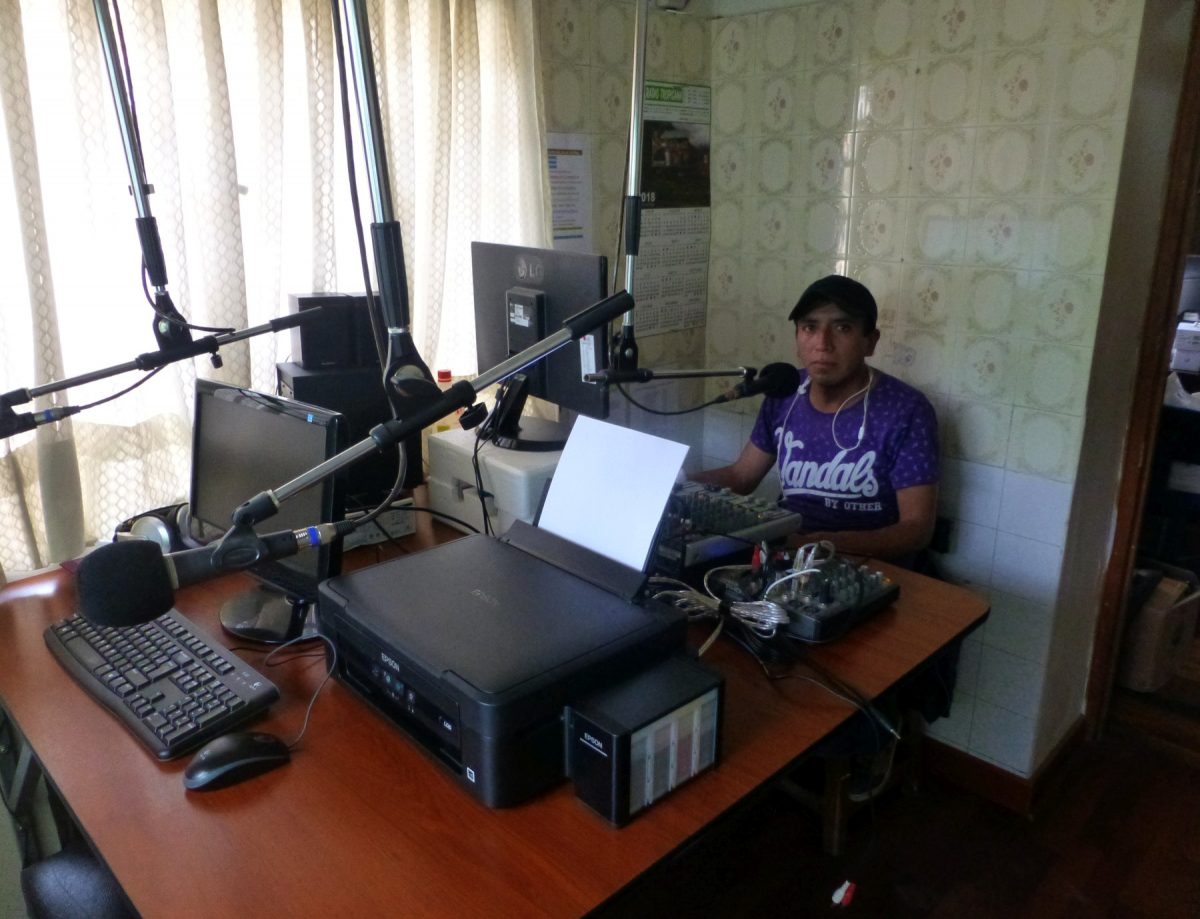
Studio for Radio Tropicana’s Tarma station

Don Mario starts by giving me a tour of the station building and its well-equipped offices and studios. He shows me the closet where the transmitter for the studio-to-transmitter-site link is and then takes me  upstairs to the record library. Radio Tarma has one of the largest and oldest collections of vinyl records in the Peruvian Andes and includes numerous rare recordings. Many of the disks are EPs, or extended-play, which was once a very common format in the Andes. These records are the size of a 45 but recorded at 33 rpm so that there are two songs on each side. Don Mario keeps the records for their value but they aren’t used on the air anymore as Radio Tarma and its sister stations are all fully computerized. When there’s time they work on digitizing the better historical recordings from their collection.

Radio Tarma mountaintop transmitter site

After seeing the studio, we get in Don Mario’s four-wheel drive SUV for the trip up a steep and winding dirt road that leads to the mountaintop transmitter site. For most of the station’s history, Radio Tarma broadcast from a field on the north side of town.
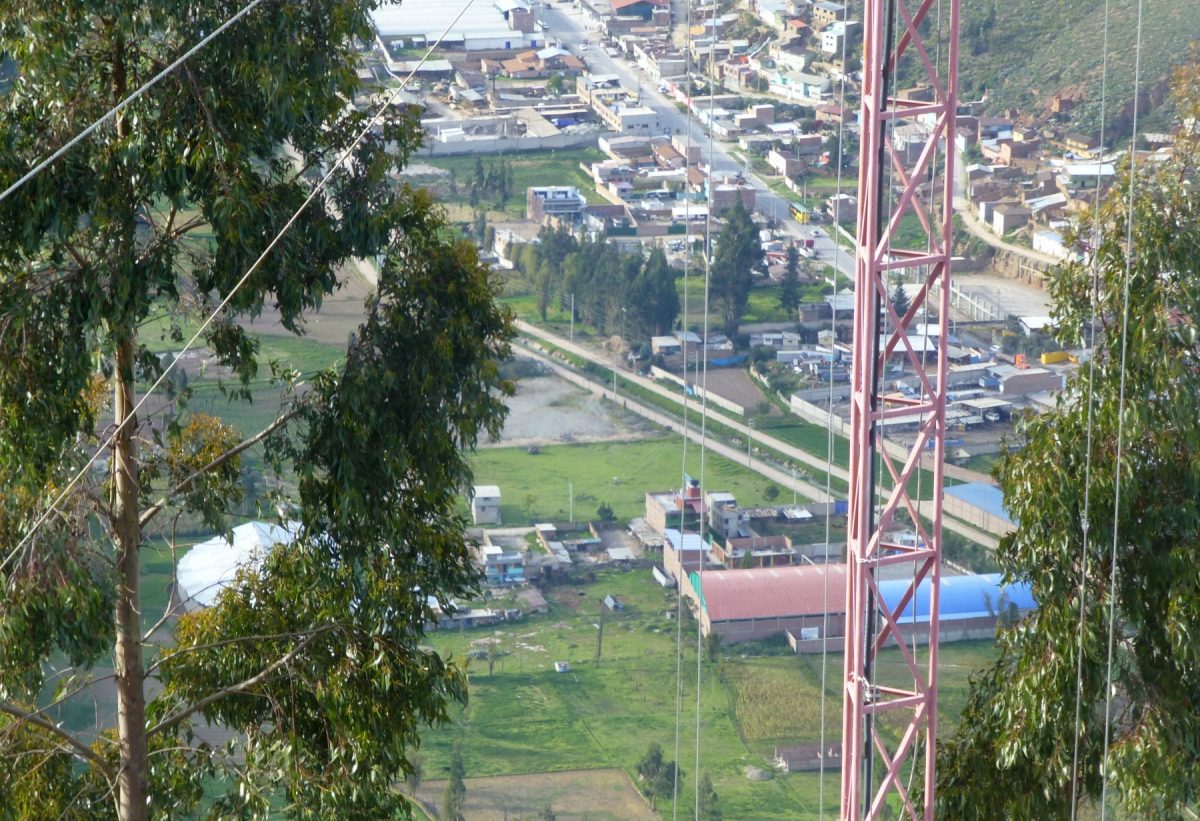
Radio Tarma’s pre-2012 transmitter site was in the large field in the center of this photograph.

Then in 2010 Don Mario decided to modernize by buying a modern 3000 watt solid-state transmitter for the medium wave frequency and by building a modern transmitter facility on a ridge overlooking town. The new site, which was inaugurated in 2012, is at 3,600 meters elevation (over 600 meters higher than Tarma) and located about 1.5 kilometers south of the old site. (If you’ve logged Radio Tarma both before and after 2012, I think it’s fair to count these as two different transmitter sites.)
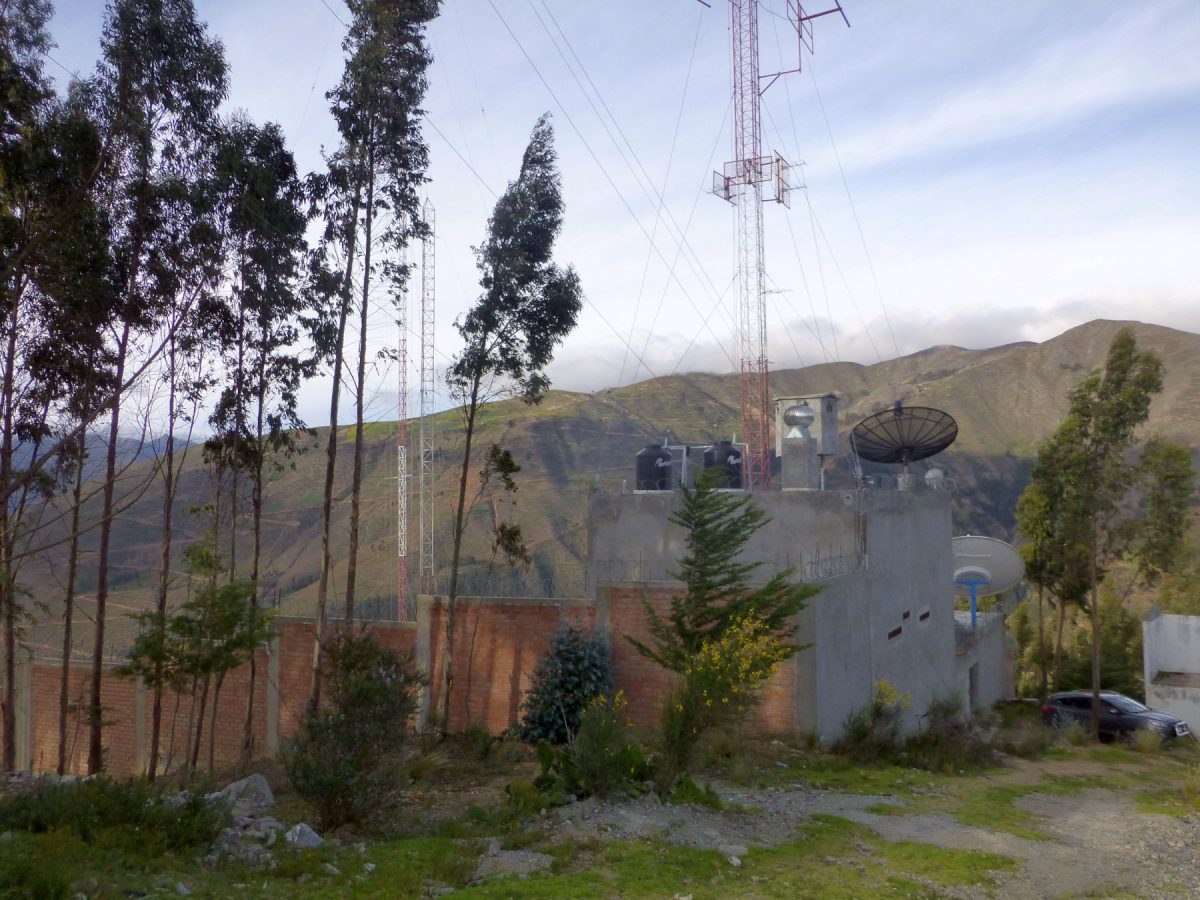
Radio Tarma’s mountaintop transmitter plant.
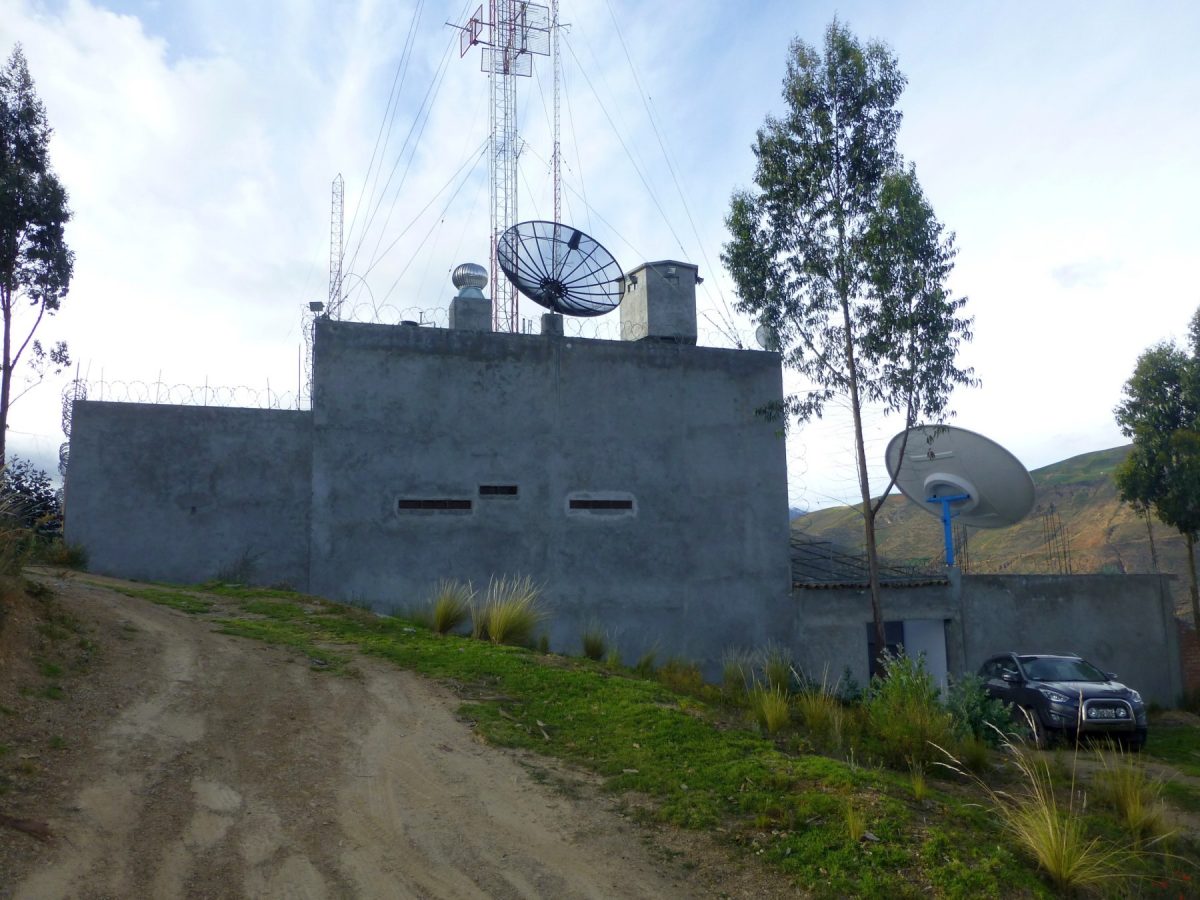
Another view of Radio Tarma’s mountaintop transmitter plant.
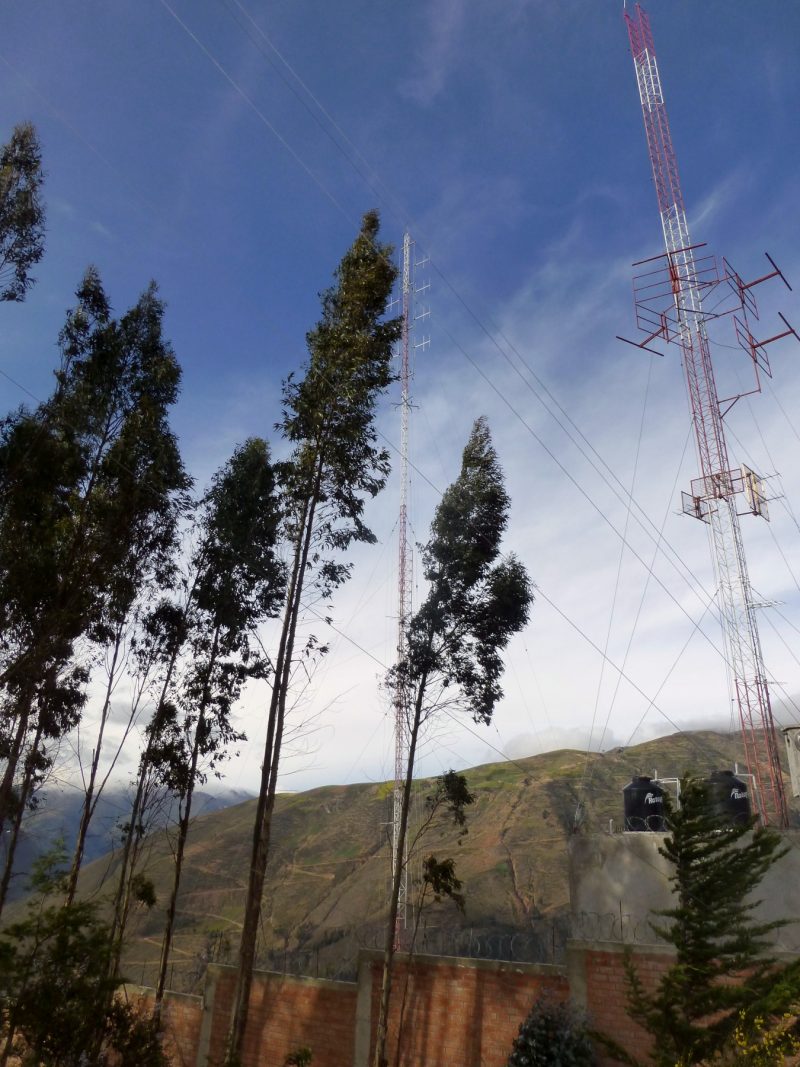
Radio Tarma MW and FM masts

The transmitters and antennas for all the Grupo Monteverde stations in Tarma (MW, FM, SW, and TV) are housed in the gray fortress-like cement building covered with a jungle of antennas and satellite dishes, for both receiving and transmitting. All of Peru’s main cellular services have towers nearby, as do several other FM and TV stations in Tarma, but Radio Tarma has the best location, right at the end of the ridge overlooking all of the town. For shortwave, Radio Tarma uses a dipole antenna strung between two masts.
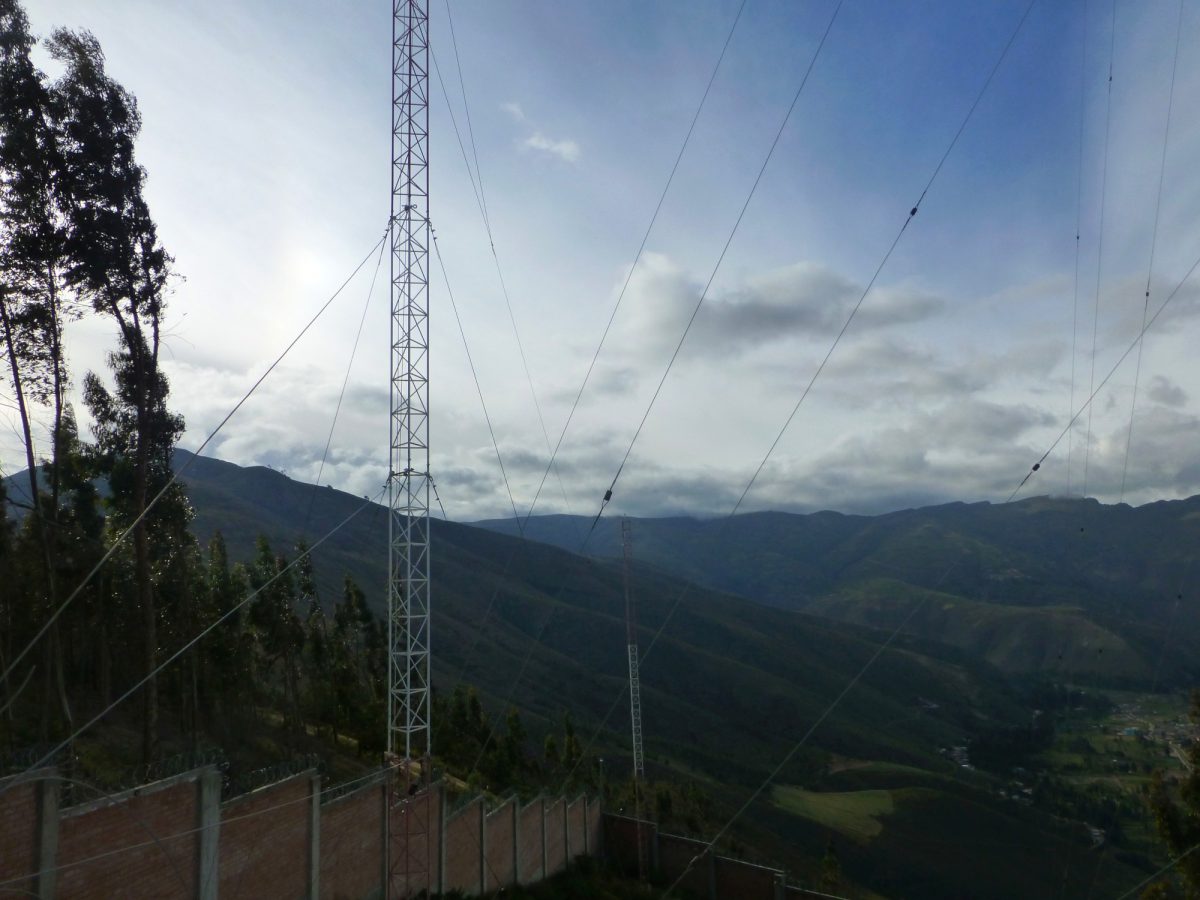
Radio Tarma’s shortwave dipole

The transmitters and other technical equipment are all housed in a large room that takes up most of the first floor of the building. Upstairs there is a small apartment, complete with a living room and kitchen, for the technician who lives here plus another small apartment where Don Mario comes to stay when he feels like escaping to the quiet mountaintop for a night or two.
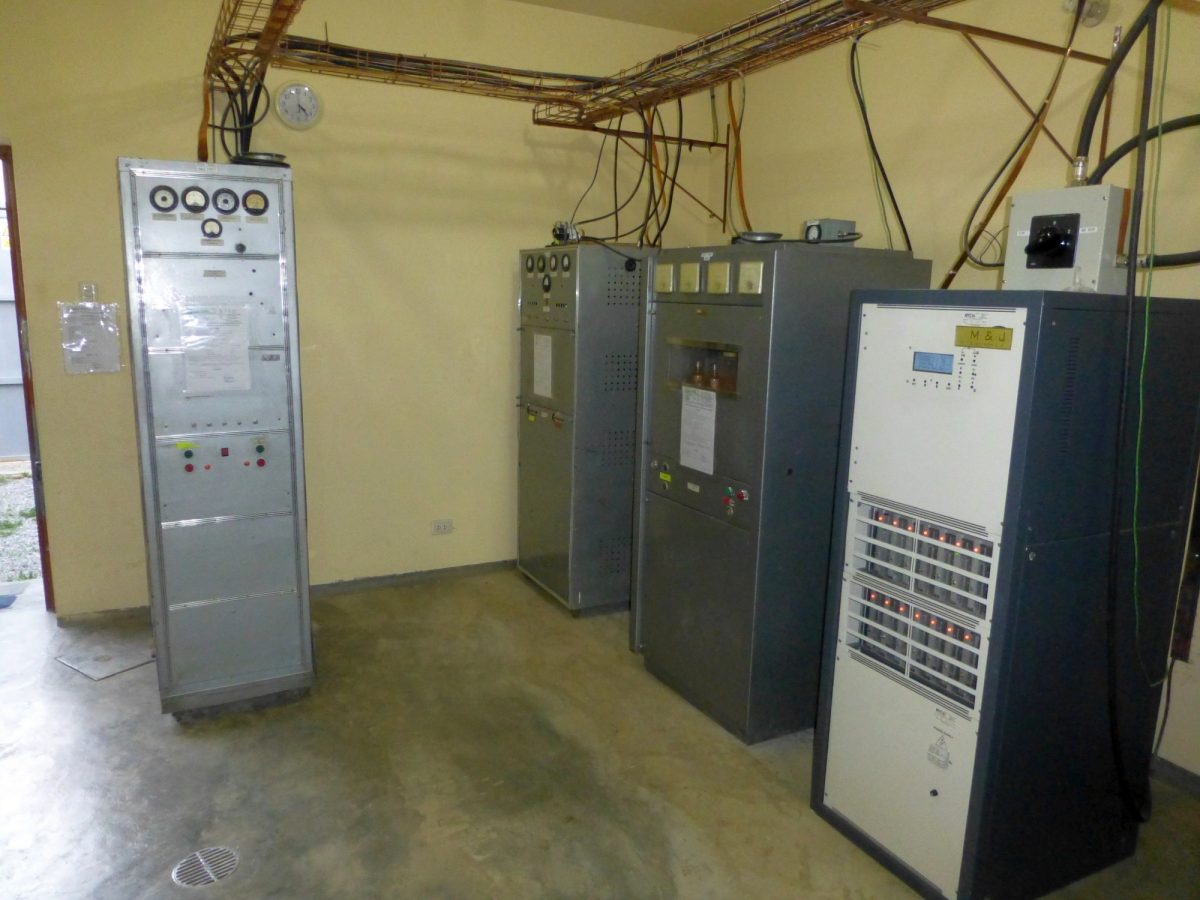
Radio Tarma SW and three MW transmitters
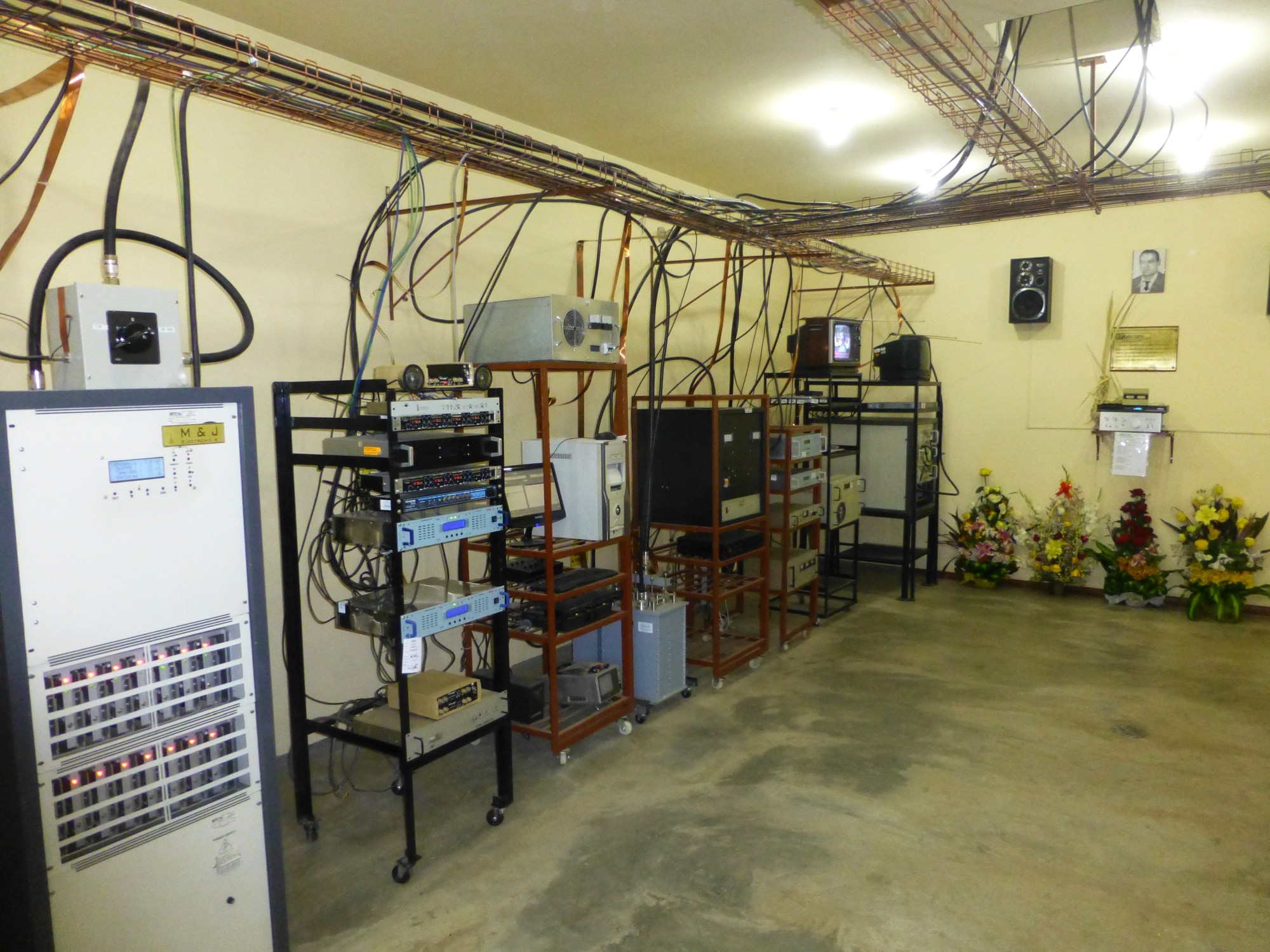
Radio Tarma transmitter room

Don Mario takes pride in showing me the original 500 watt medium wave and shortwave transmitters that his father made. Normally the shortwave service is shut down for several hours in midday when the frequency won’t propagate, but he turns on the transmitter so that I can see the tubes come to life. The three medium wave transmitters – the original 500 watt one, its 1978 1000 watt replacement, and the new 300 watt solid-state one – are lined up against the wall adjacent to the shortwave transmitter.
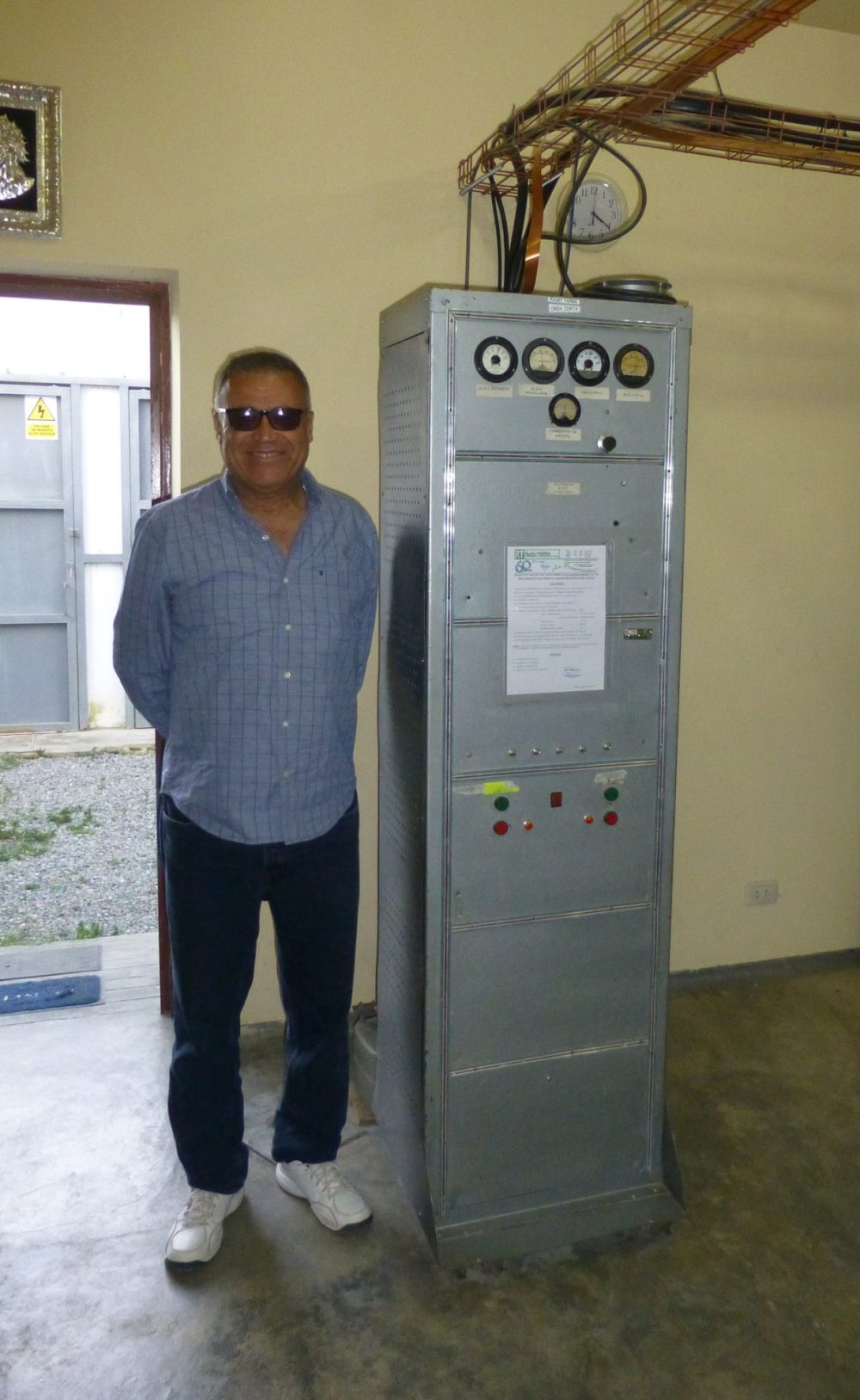
Mario Monteverde and Radio Tarma’s original 500 watt shortwave transmitter
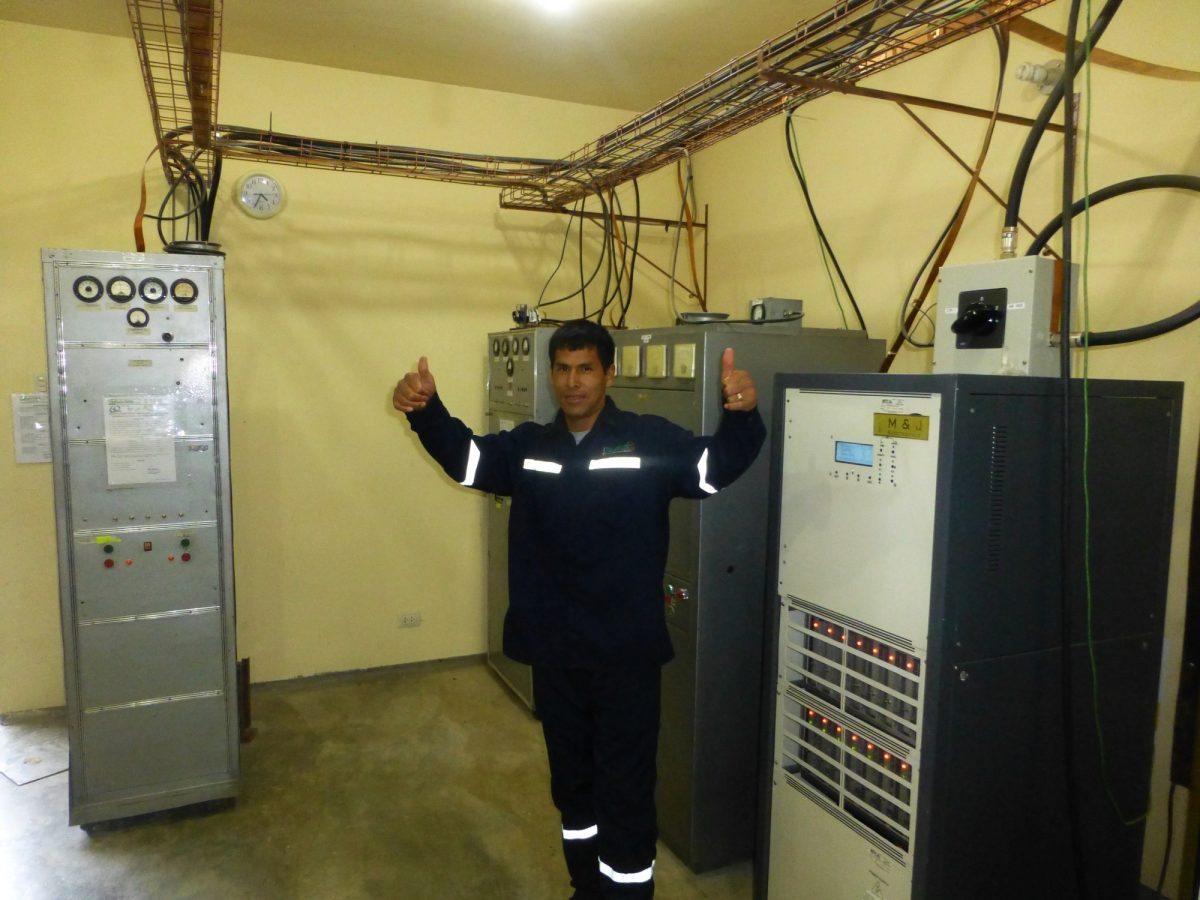
Alfonso, transmitter operator at Radio Tarma

Don Mario tells me that the two older medium wave transmitters are regularly maintained so that they could be used at a moment’s notice if needed. He then proceeds to show me that he means just what he says, and shuts down the solid-state transmitter. Once that’s down, he powers up the original Radio Tarma MW transmitter that his father made, and we watch the old tubes light up. Then when it’s operating fully, he turns his father’s transmitter off and switches on the 1978 transmitter for a few minutes before finally returning the signal to full power on the new transmitter. One wonders just what his listeners thought was happening with all this on-and-off transmitting on a beautiful sunny day barely a cloud in the sky!
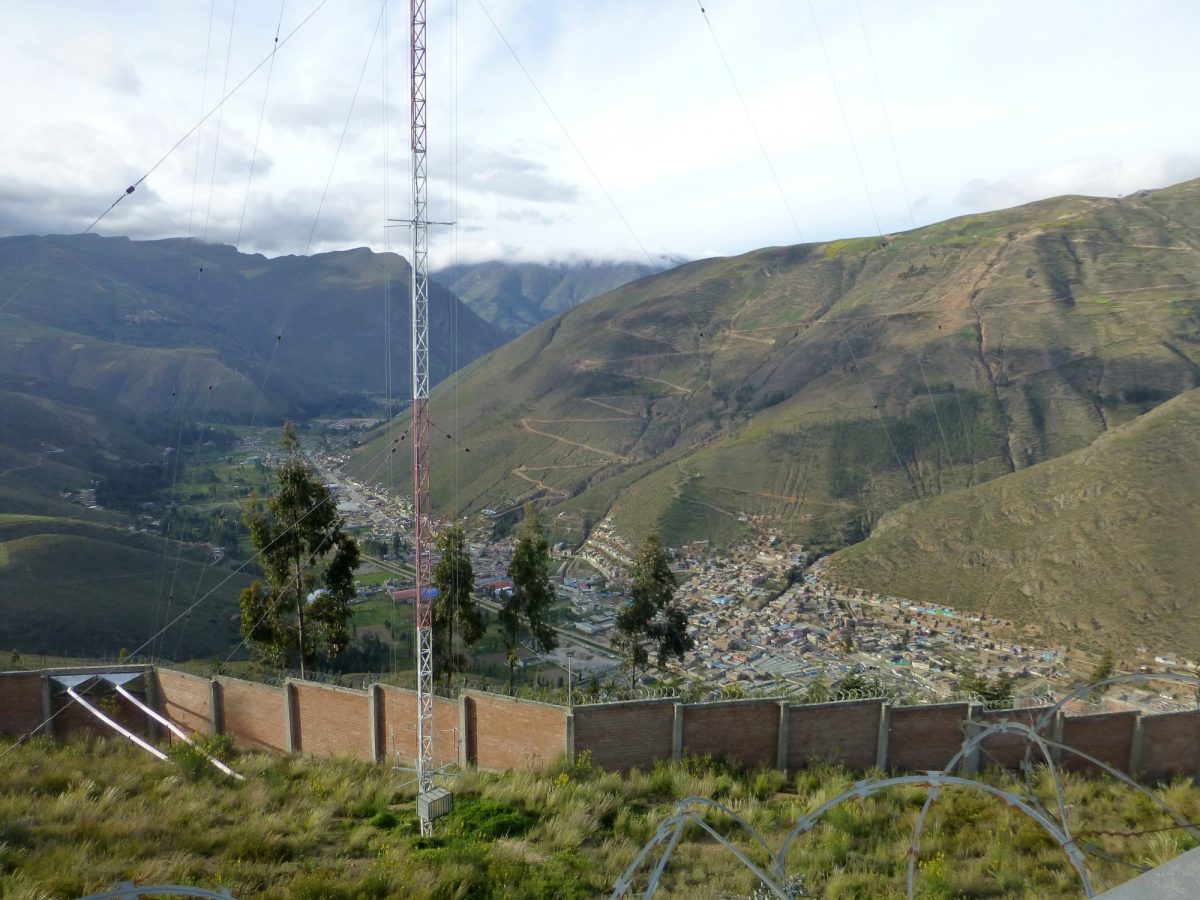
View of southern Tarma from the transmitter site

Radio Tarma and the Grupo Monteverde are a model operation for radio in smaller cities in the Peruvian Andes. Getting to know both the city and the station was one of the highlights of a seven-month journey through the northern Andes in South America.
Don Mario’s father built the foundation and Don Mario turned Radio Tarma and its sister stations into the small but professional media group that they are. He’s now in his mid-sixties and plans to run the radio operations for several more years. But he is beginning to think of the future. He never married and has no children, his siblings live in Spain and Lima, and all his nieces and nephews are in the United States. It’s not likely that anyone in the family would return to Tarma to run a radio station. He is investigating options of how to set up the corporation so that Radio Tarma and its sister stations would continue as locally-owned and operated radio broadcasters. Whatever he works out, let’s hope it includes a commitment to continue broadcasting on shortwave for many years to come!

If shortwave conditions aren’t the best, you can always listen to Radio Tarma on the web.


Wow–Don, this was amazing. Thank you for taking us on a tour of the amazing Radio Tarma! What a special station to encounter during your travels!

Post Readers: If you like the photos Don included in this guest post, you’ll enjoy browsing even more on Don’s Radio Tarma page

Check out other radio travel photos’ on Don’s Peru DX Photos Page.

Don’s new book, Following Ghosts in Northern Peru: In the Footsteps of 19th Century Travelers on the old Moyobamba Route is available in Kindle and print formats via Amazon.

Purchasing through this Amazon link supports both the author and the SWLing Post. 
Guest Post: Report from the 2019 Henry’s Island DXpediton

Many thanks to SWLing Post contributor, Sandipan Basu Mallick (VU3JXD), for sharing the following guest post:


Henry’s Island DXpediton 2019

World Radio day is observed by the UNESCO on 13th February every year. This year is the 8th year world day being celebrated with theme “celebrate radio and how it shapes our lives”.  In recent times there has been a sea change in radio listening and radio broadcasting. More and more radio broadcasters are shifting to FM which radiate over a small distances and require low power transmitters. Medium wave broadcasting and shortwave broadcasting which is used to reach audience over larger distances is gradually becoming less important with the growth of internet connectivity. Broadcasters are increasingly streaming their content over the internet to reach their audience via the PC, Laptop and now via the mobile phone.

DXing is the hobby of listening to the faraway and distant signals and the hobbyist are called DXers. DXers would switch on their radio set, connect it to the piece of wire which is the antenna and turn the dial to search and listen to the far away and sometimes feeble radio signals. For these radio enthusiasts challenge is becoming greater. The big names of yesteryear such as BBC, Voice of America, Radio Moscow and Deutsche Welle, the German radio are all gradually shifting their content from shortwave broadcasting to the internet. Now with data connectivity to the mobile phone available to everyone, the shortwave broadcasters find a more reliable and popular route to reach their audience through the internet rather than troublesome “bounce” through the ionosphere. Then with the rise of household electrical devices which radiate “radio noise” such as the LED bulb or the TV, the radio signals from distant lands have to rise over this local noise to reach the ear of the audience.

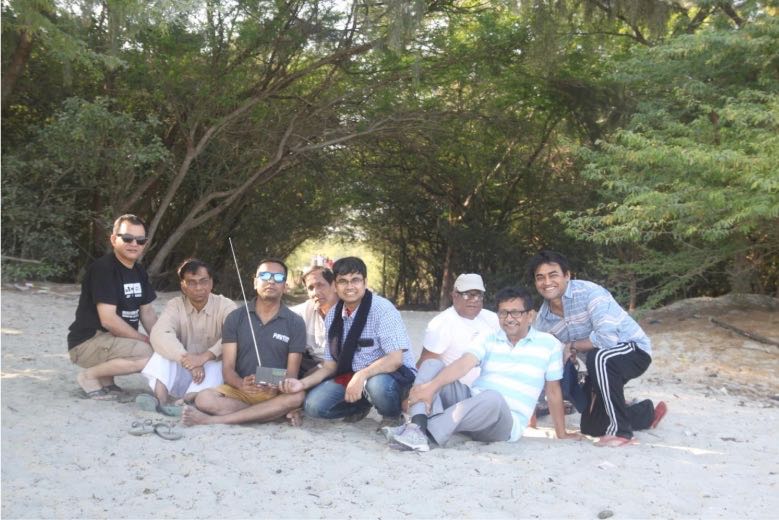
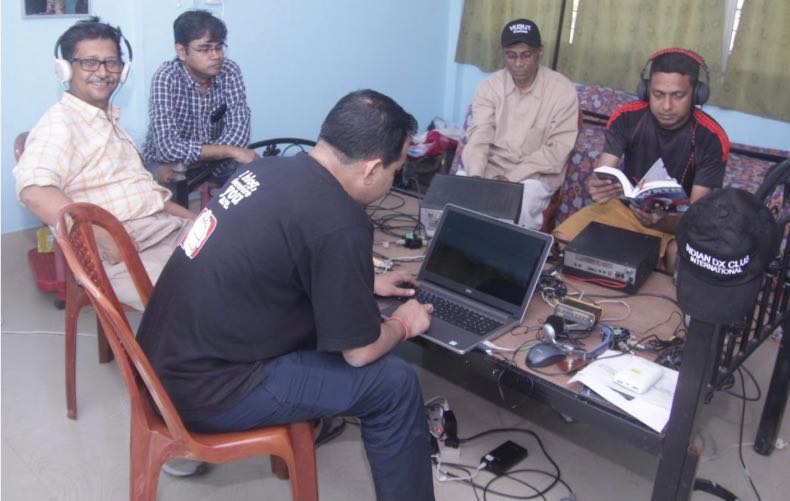
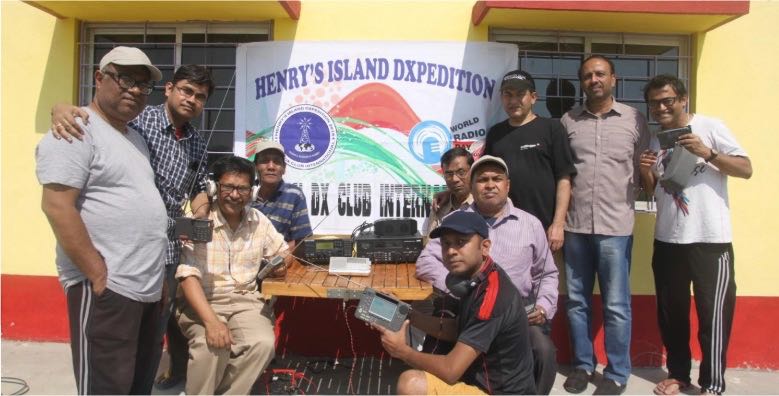
That is why a band of radio enthusiasts from all over India have travelled to the listening camp set up at a resort in Henry Island at Bakkhali in the state of West Bengal, India. This year the listening camp ran from 10th – 13th Feb, which celebrated World Radio Day and the hobby of radio. The dedicated radio enthusiasts who have been drawn into this radio listening camp, are drawn from different parts of country varying from New Delhi to Tripura. Kolkata the home of the Indian DX club International (www.idxci.in), has been promoting the hobby since 1980 has naturally most participants in this camp. They were very upbeat while worldwide radio enthusiasts have to cope up with bad news for the hobby. In the last few years, stations after stations have closed down and so have iconic radio clubs like Danish Short Wave Club and periodicals like Monitoring Times. Broadcasting mega corporations like VOA and DW have reduced their presence in the airwaves to a faint whisper compared to their former roar.

Sandipan Basu Mallick (VU3JXD) with Dr Supratik Sanatani (VU2IFB)

Sandipan Baus Mallick (VU3JXD), who is the principal in organizing this year’s DXpedition from IDXCI says that the appeal of radio is still there among the various age groups. These camps are set up in remote locations, which enable the radio enthusiast to come together with likeminded people to exchange ideas and experiment with their equipments and brush up their skills with conventional radio. People from various races of life participated in this years camp.

Among the participants Sudipto Ghose (VU2UT) who just retired from a job with the Ministry of Finance is drawn by the technical part of the hobby and toys with new radio receivers and accessories such as antennas and preamplifiers.

C K Raman (VU3DJQ) from Delhi whose job incidentally involved professionally monitoring broadcast stations, has narrowed his interest down to the medium wave stations and the tropical band stations such as stations from Brazil, Colombia and Indonesia and has come down looking for such exotic signals.

Suvendu Das (SWL), who professionally managed ship communications has suddenly become interested in the hobby of broadcast band listening.

Pradip Kundu (SWL) of Tripura who after retiring as a Principal has more time to pursue his childhood passion and is an avid QSL collector.

Babul Gupta (VU3ZBG) an interior designer still spends time to seek those rare signals at the wee hours and has to his credit listening to some of the most rare to hear stations from India such as Cross Radio, an evangelist radio station broadcasting from the Carribean.

Alokesh Gupta (VU3BSE) has flown in from Delhi for the radio camp is an avid enthusiast who also served to coordinate the Listeners association of Radio Taiwan and runs the website radioactivity.org which disseminates information related to radio broadcasting.

Kallol Nath (SWL) is among the newest entrants in the DXer squad. Armed with XH Data D-808 receiver, he logged a number of pirate stations on the MW band.

For Sandipan, a marketing professional worked to set up this camp and bring together radio enthusiast from various parts of India. He is also drawn by the technical aspects of the hobby and can flaunt many a radio gear just like his friend Debanjan Chakraborty (VU3DCH) who is a radio collector and has radio sets.

Accompanying them is Eye Surgeon Dr Supratik Sanatani (VU2IFB), who has key interest in home brewing various radio equipment, and a veteran in DXpedition also came together explore the airwaves from the Bay of Bengal.

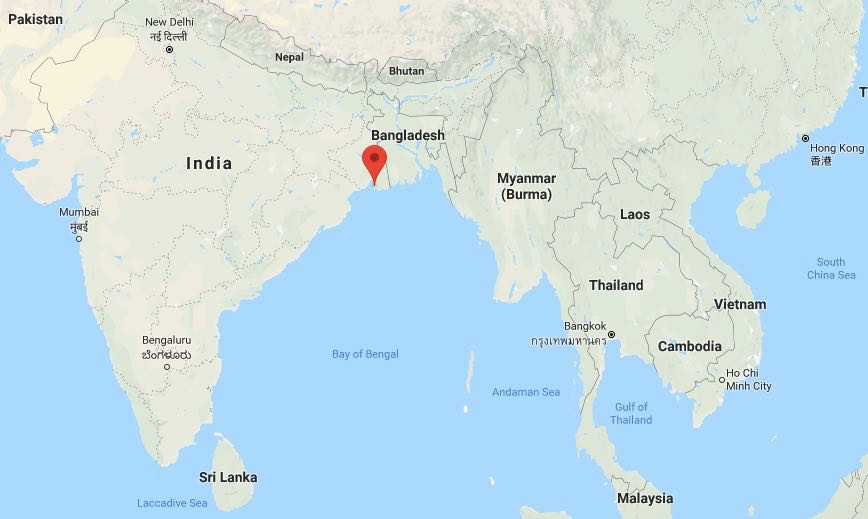
Henry’s Island marked with a red location pin.

Henry’s Island is at the tip of the Bay of Bengal which for the radio listener gives a good opportunity to hear distant signals from Australia, New Zealand, Oceania, Indonesian archipelago and Papua New Guiniea.

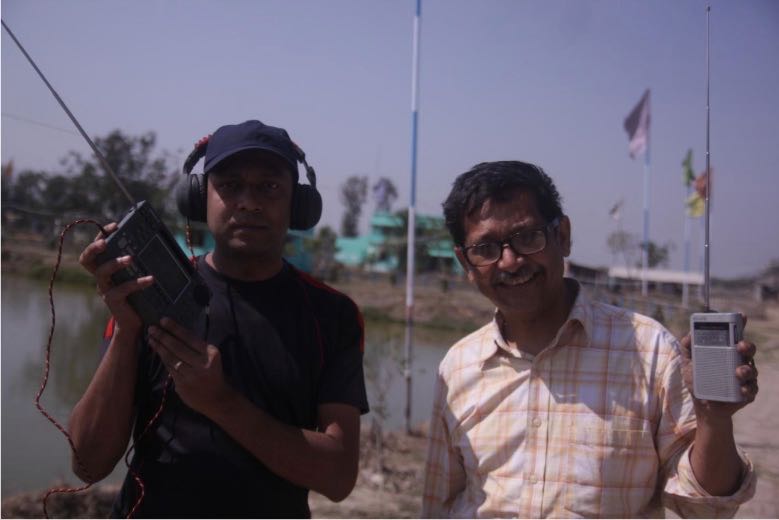
DXpeditioners strung long wire antennas aimed in their favorite direction and then connect their modern digital radio receivers to try to catch the feeble signals from exotic radio stations. During their whole night listening sessions, some would exclaim at 2.30 am that the Phillipines medium wave station was opening with a greeting its local audience in the local language Tagalog–or someone might simply record the Maldivian medium wave station from Male ending its transmission with their national anthem. The fisheries ground also has the advantage of low noise from electrical devices. To run away from local noise, the hobbyist might even have to pitch a tent in the middle of nowhere and use their advanced radio receivers with battery power.

What is the pinnacle of success? Just like the bird watcher catching a glimpse of the rare migratory bird, for the DXers it is the thrill of listening to exotic signals such as from the American Forces Military Base at Diego Garcia to the barely audible Papua New Guinean station from Port Moresby. Then there are others like that Peruvian station Radio Tarma with excited football commentary which comes through to India only during a short window in the very early morning before day break and only on few days in a year. Even though the 11 year old solar sunspot cycle which influences radio transmission, is at its favorable “ low”, we can still confirm that DXing as a hobby is still alive and kicking!!!

DXers in Action


Thank you so much for sharing this report, Sandipan! It appears that you not only enjoyed some excellent DX on Henry’s Island, but you also strengthened friendships that will last a lifetime. Well done!


Do you enjoy the SWLing Post?

Please consider supporting us via Patreon or our Coffee Fund!

Your support makes articles like this one possible. Thank you!

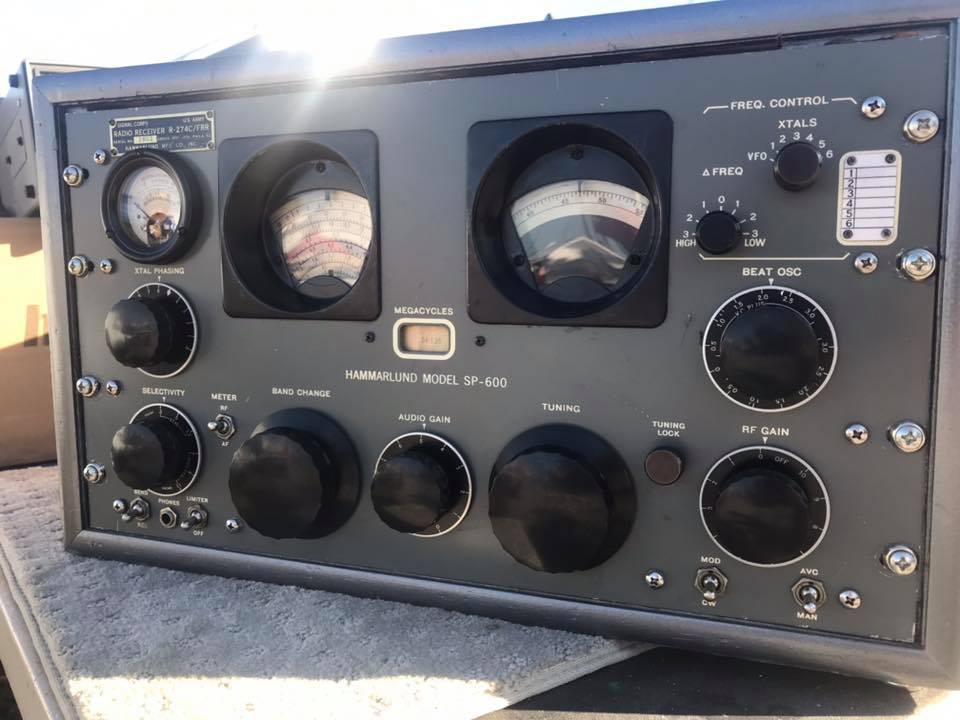
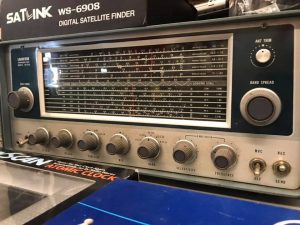
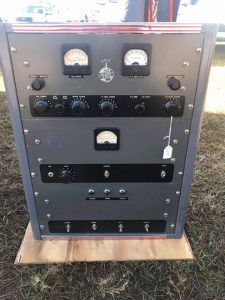
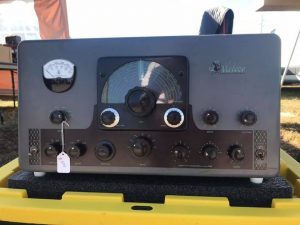
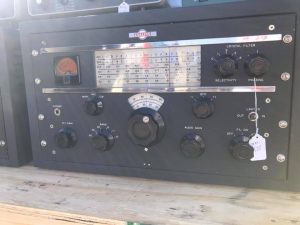
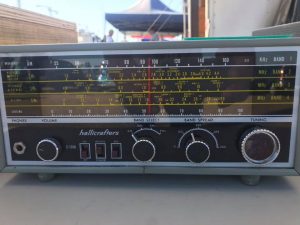
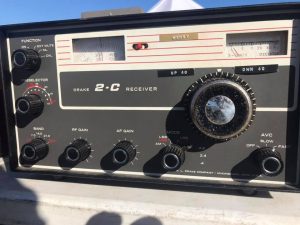
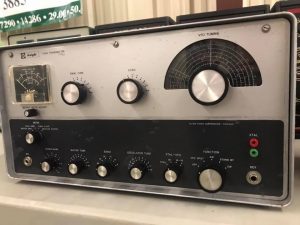
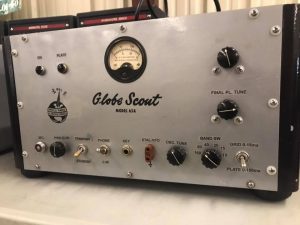
2019 Orlando Hamcation Flea Market Photos

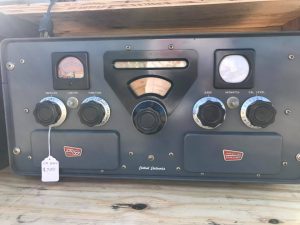
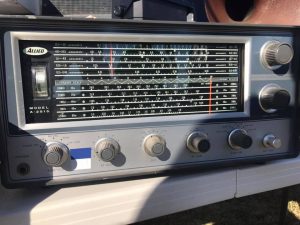
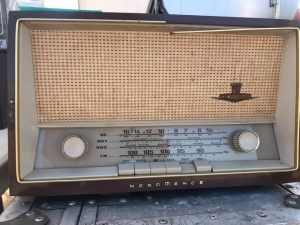
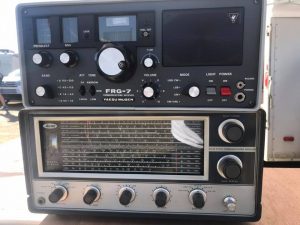
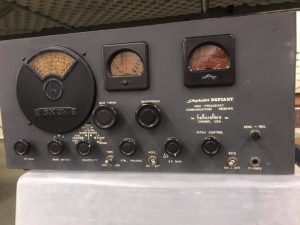
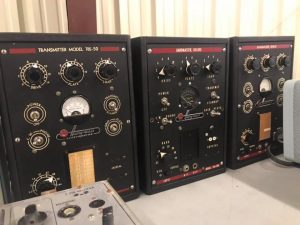
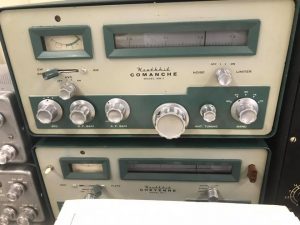
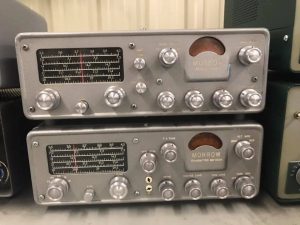
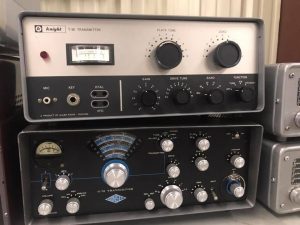
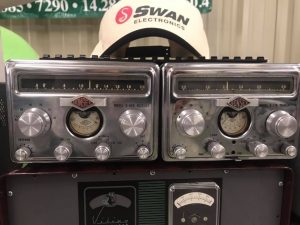
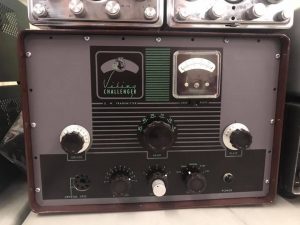
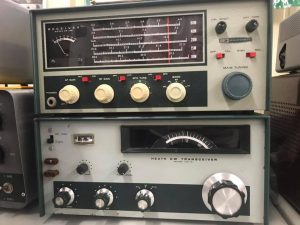
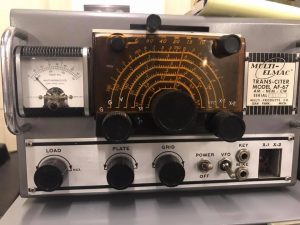
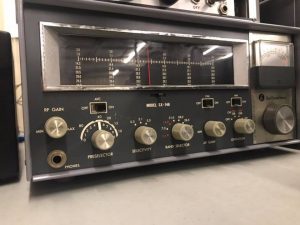
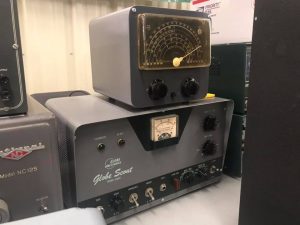
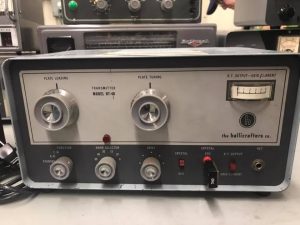
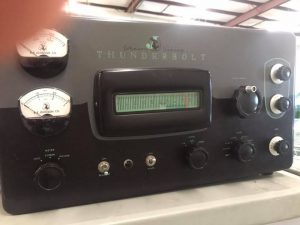
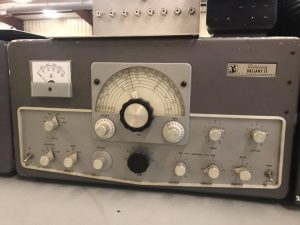
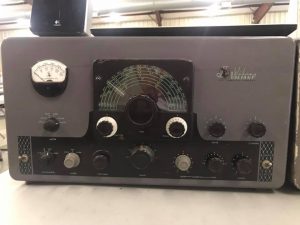
Many thanks to SWLing Post contributor, Rich Nowak, who kindly shares photos from the Orlando Hamcation Flea Market.

Click on each image to enlarge:

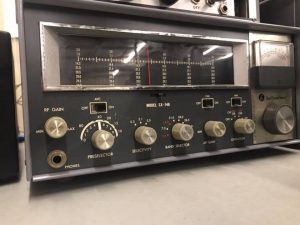
What an impressive amount of vintage radios! I’m planning to attend Hamcation next year (2020)–now I know I’ll need to bring my truck to haul back all of the boat anchors! 🙂

Thank you for sharing these, Rich!

Book review by Dave Porter: The History of Rugby Radio Station

Many thanks to SWLing Post contributor, Dave Porter (G4OYX), who shares the following:

Enclosed is a book review of a recent one published in the UK.

Click here to download PDF copy of review.

I wrote it for Signal the quarterly journal of the Vintage Military Amateur Radio Society.

I also write a column in Signal called Tricks of the Trade and many of those are here:

https://www.bbceng.info/Technical%20Reviews/tott/tott.htm

There is more about the Rugby book in article ToTT for Signal issue 50.

Thanks so much for sharing this, Dave! Sounds like a fascinating read!

I should also note that you can feel good about your purchase of this book as all proceeds benefit the Air ambulance. Click here to purchase.

Sony ICF-SW100: Whip vs. DE31MS active vs. Sony AN-LP1

Click here to view on YouTube.

Guest Post by: Troy Riedel

It’s been a while since I posted a video on my YouTube Channel (but I’ve gotten the urge to make several more videos as I’ve been recently comparing my equipment – 16 portable receivers & many antennas).

I try to tune in to Radio Prague via WRMI on many weekday East Coast USA mornings from 1300-1325 UTC. Yesterday I encountered bad propagation but today was much better.  The video linked to this post is from today – 30JAN2019 recorded around 1310 UTC.

[Sorry, no tripod for this one]

People often ask, “are amplified antennas helpful” – as evidenced by this post from Thomas from a few years ago.

Without repeating the debate, just take a look at this one example.  As stated, reception was pretty good today off the little whip – but – there is an improvement using an amplified antenna.  My question: is there a difference between the two amplified antennas?  And if so, is the difference worth the price?

My TG34 is a clone of the DE31MS – purchased from Tquchina Radio & Component (ebay user: Tao Qu … they used to have an eBay store “Sino Radios” if I recall, but they stopped selling on eBay when the Post started cracking down on shipment of batteries – I actually exchanged an email with a frustrated Tao Qu when they closed the store).

I paid about $21 if I recall for my TG34 (the DE31MS is available today on eBay for as little as $17.28).  I paid over $100 for the Sony AN-LP1 (out of production now and can be listed for as high as $300 on eBay).  So … $21 versus “over $100”.  Is there a difference – and if so – is it 5x the difference – 5x better?!

You be the judge.

P.S. Just a quick slightly over 1-minute video recorded inside my house (sitting in my breakfast nook) … typically “okay” reception but not my usual Listening Post.
Guest Post: A visit to Tokyo’s Akihabara district

Many thanks to SWLing Post contributor and word traveler, Chris Johnson, who shares the following:

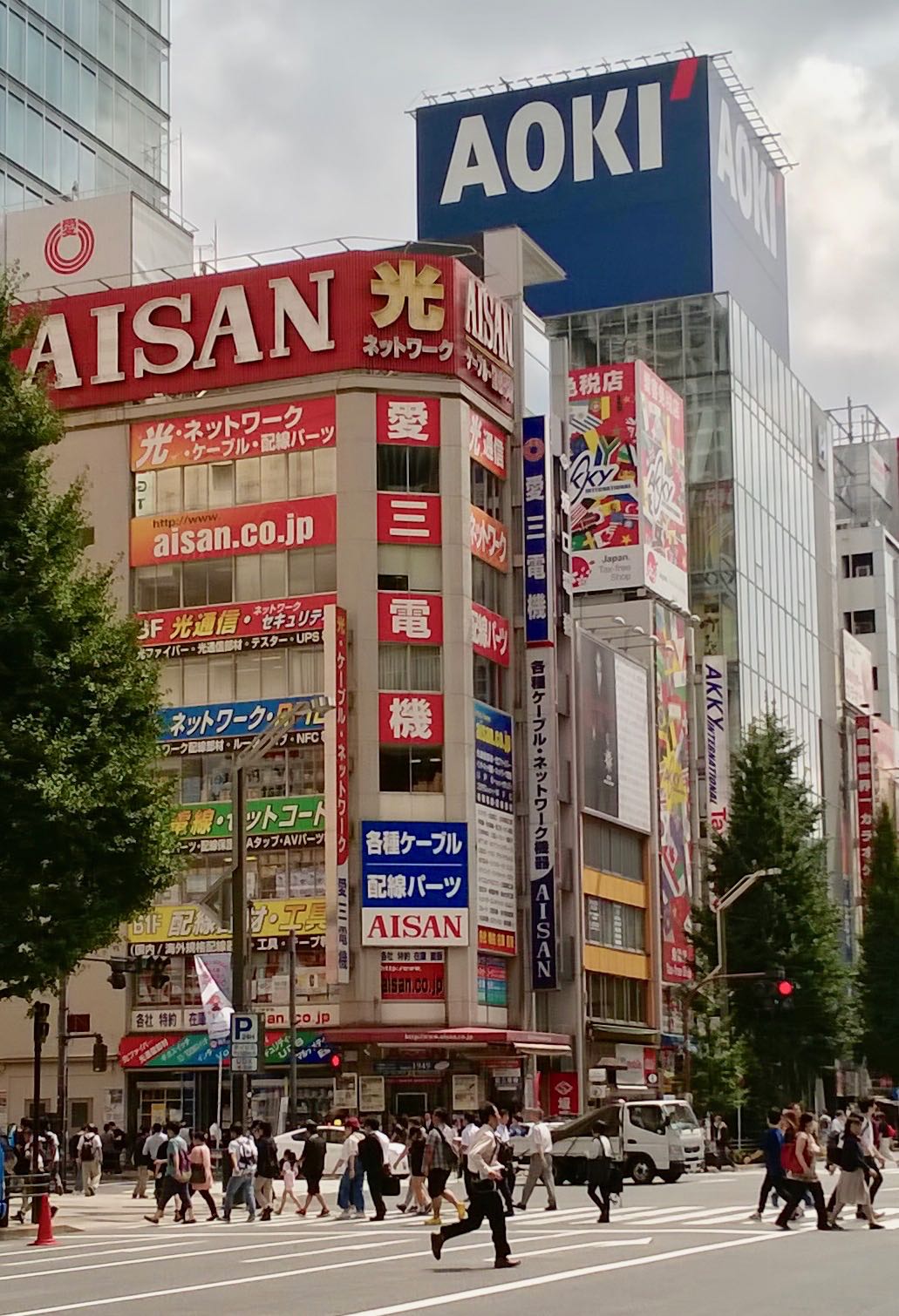
This past year while traveling for business in Japan I decided to explore a district within the city limits of Tokyo known as Akihabara or better known to locals as the “Electronics District”.
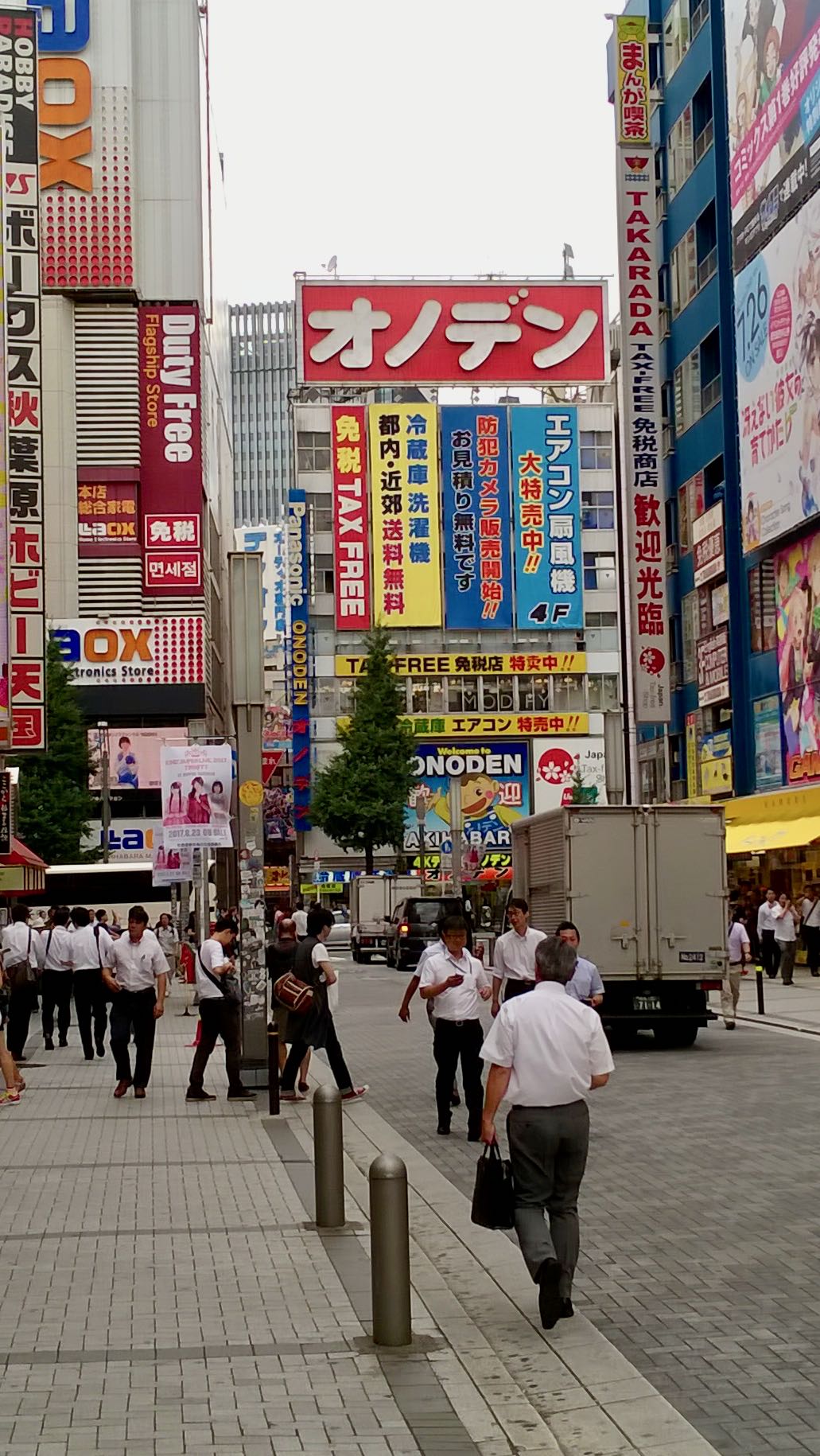
After jumping off the train I found my senses bombarded by a cacophony of sounds and enough neon from the street to the sky to put your senses into overload. The streets were crowded and the stores were filled with every modern electronic device known to man.

Click here to watch video.

My imagination ran wild, I started wondering what this place would have been like in the 1970’s when some of the most cutting edge electronics were CB radios or shortwave receivers, the different brands, models etc… Perhaps some of that still existed here so I started wandering the streets and found more of the same you would find in a big box store but multiplied by 10, overwhelming.

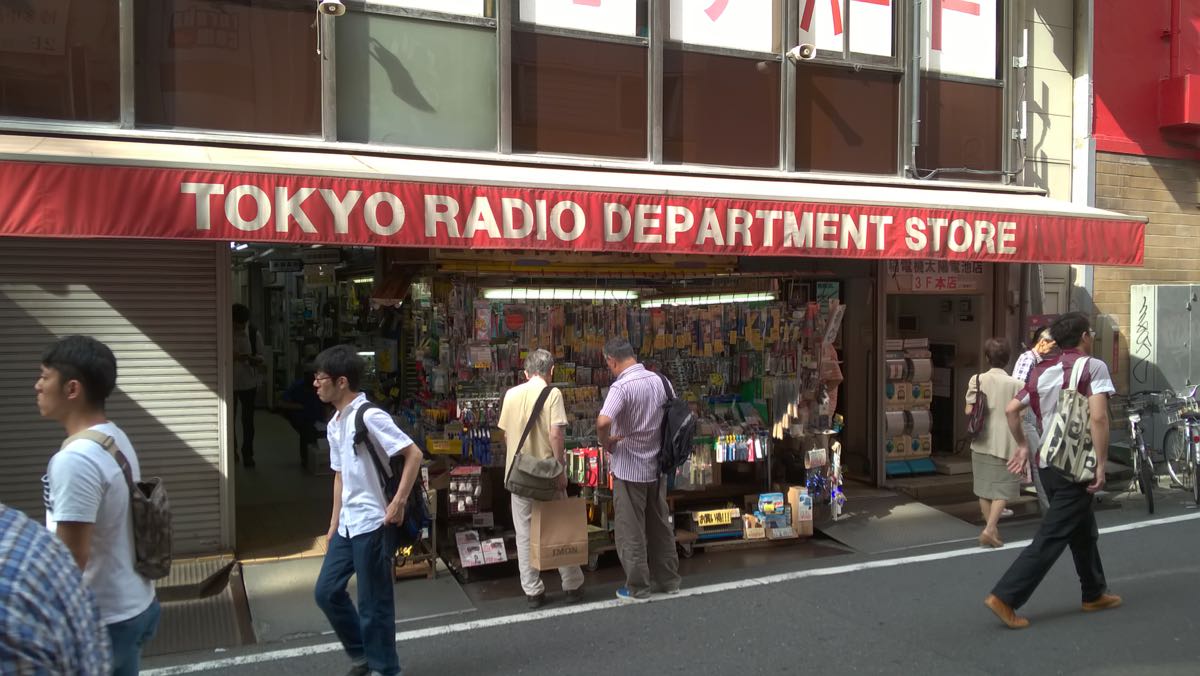
Just when I was ready to give up the search I turned the corner down a side street and discovered a red awning with “Tokyo Radio Department Store” emblazoned on it, I felt like I discovered a lost treasure amongst the modernity.

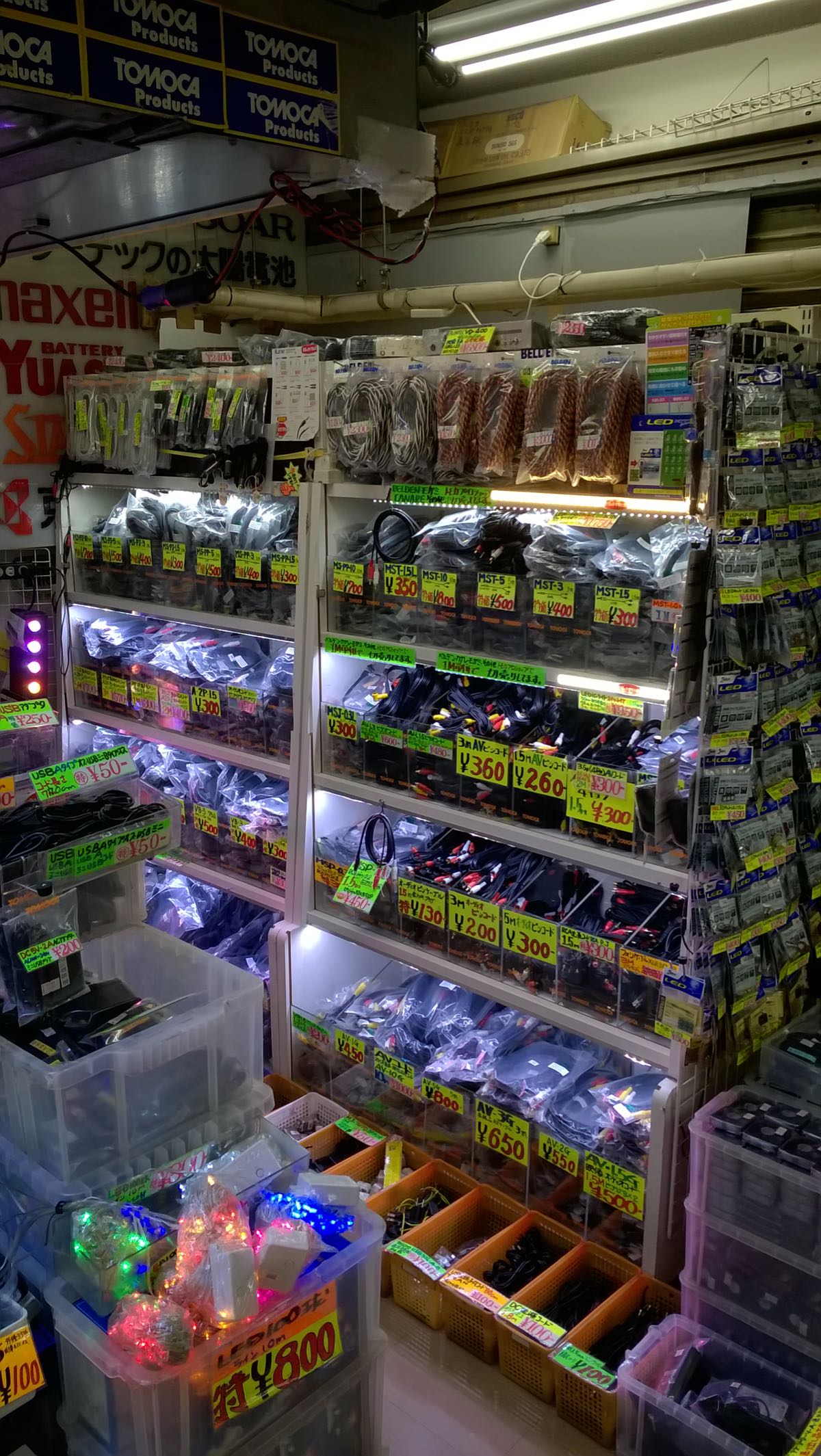
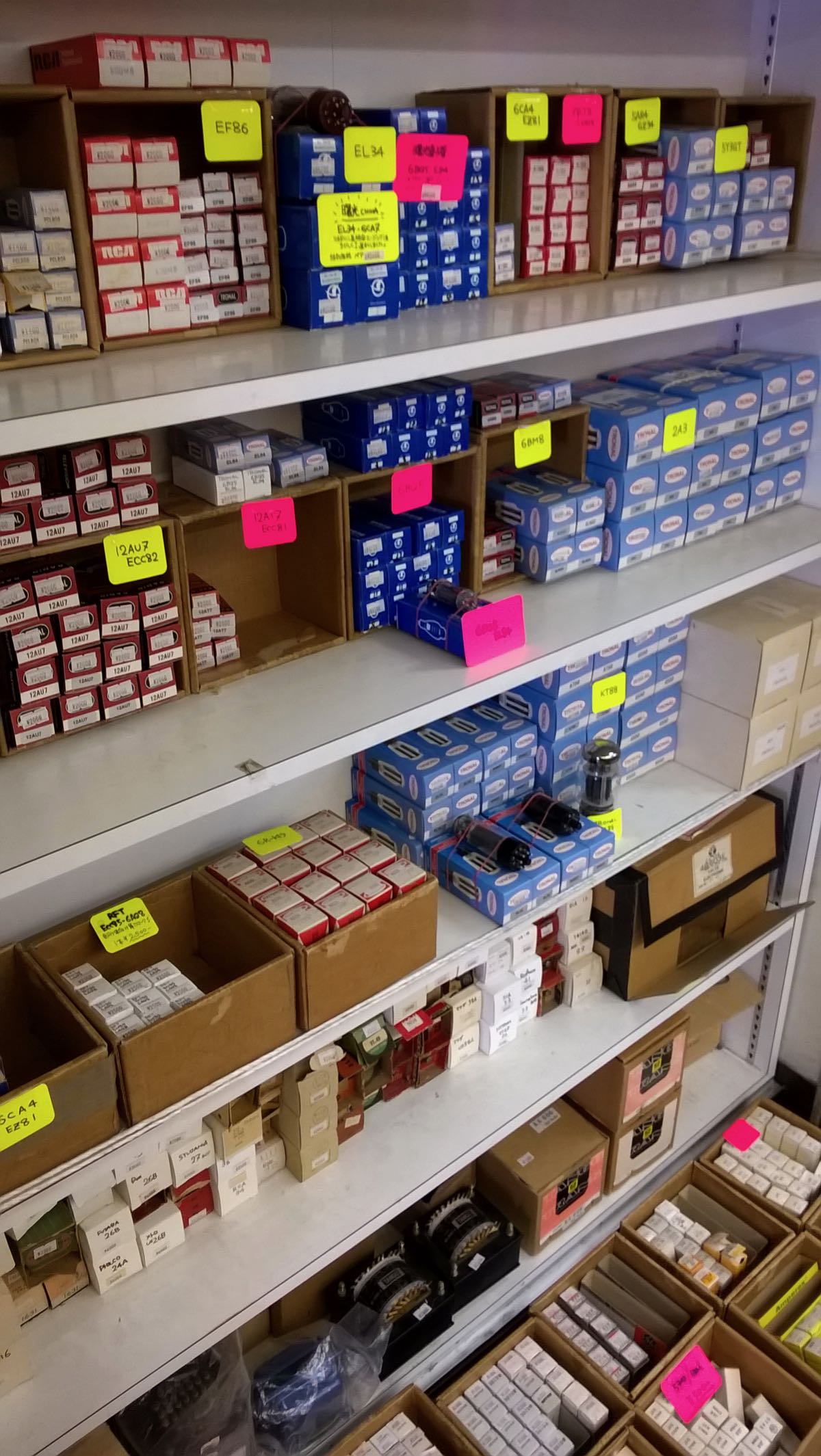
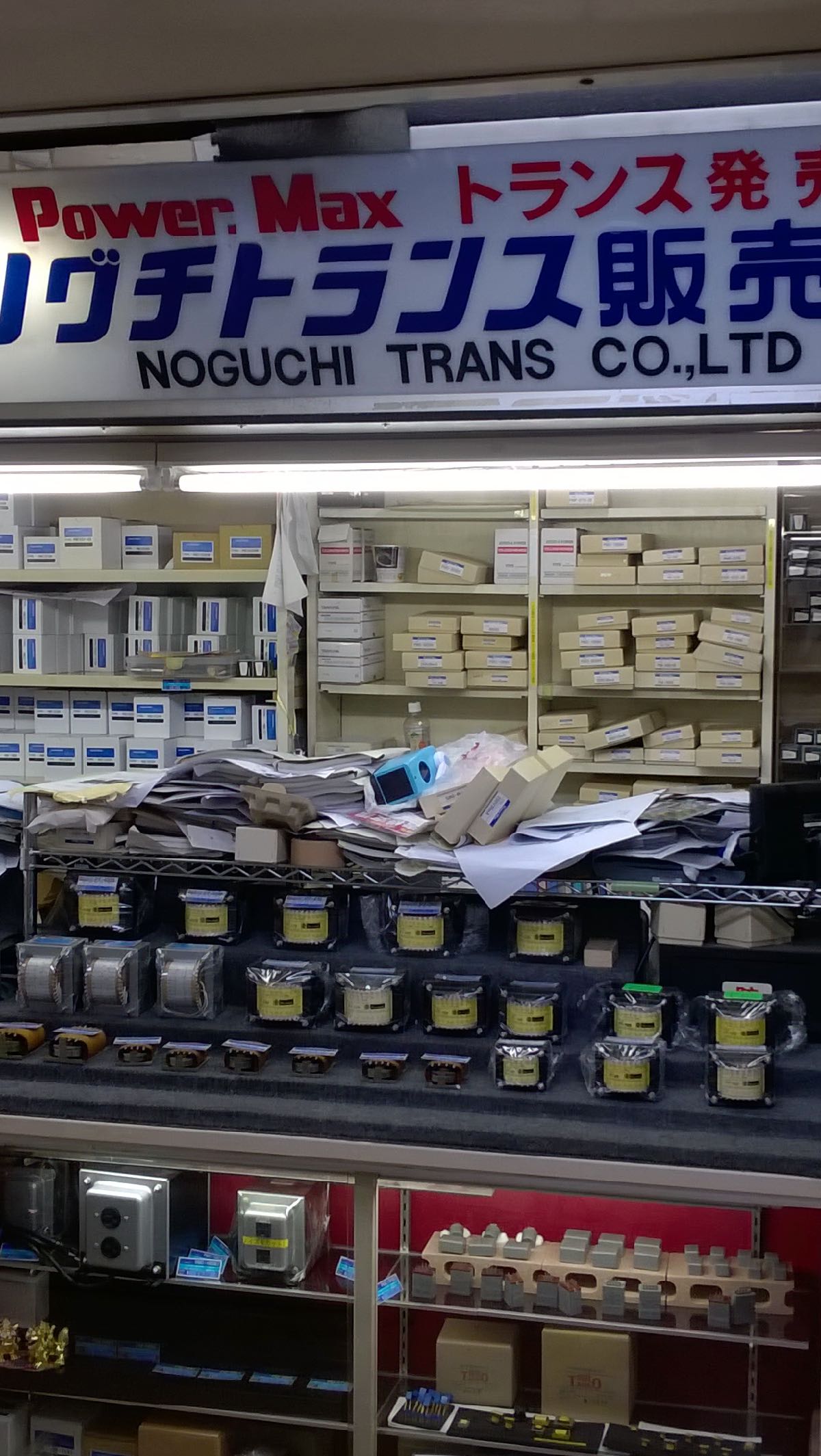
I walked through the main entrance and was immediately drawn down a maze of narrow corridors that were staffed with small stores and stalls that sold electronic parts both popular and obscure, it was incredible. That was just the first floor with 3 more above to discover, I thought to myself if I ever wanted to build a transmitter this is the one place in the world where you could shop and find all the parts you need.

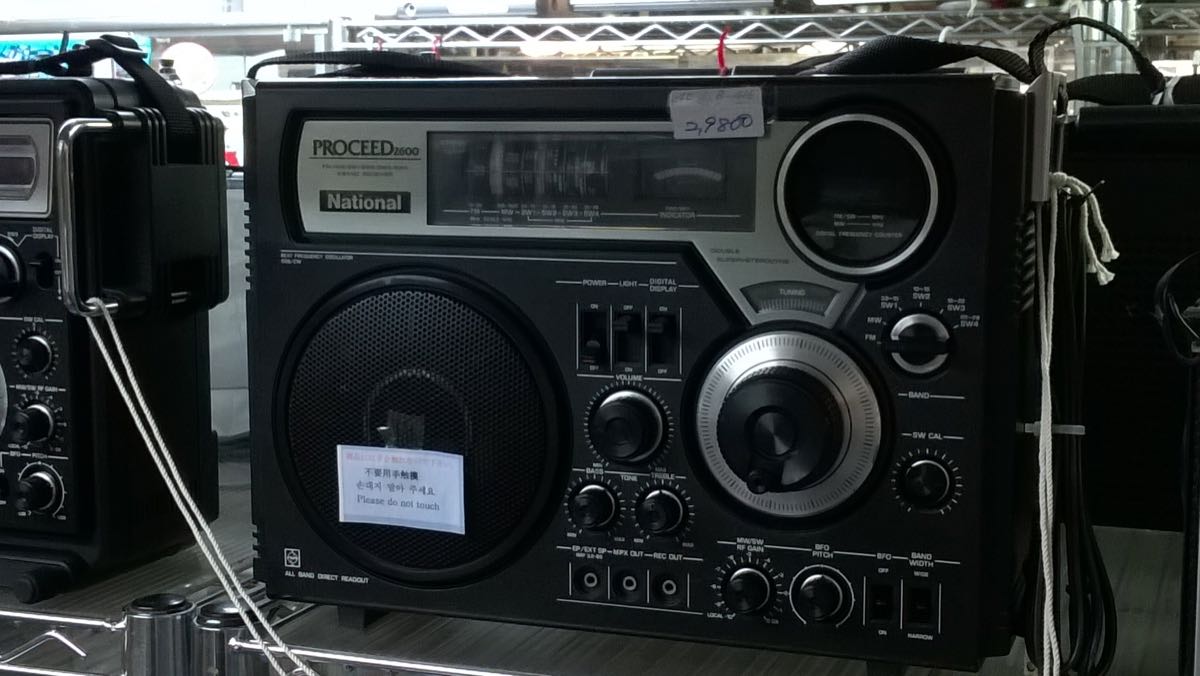
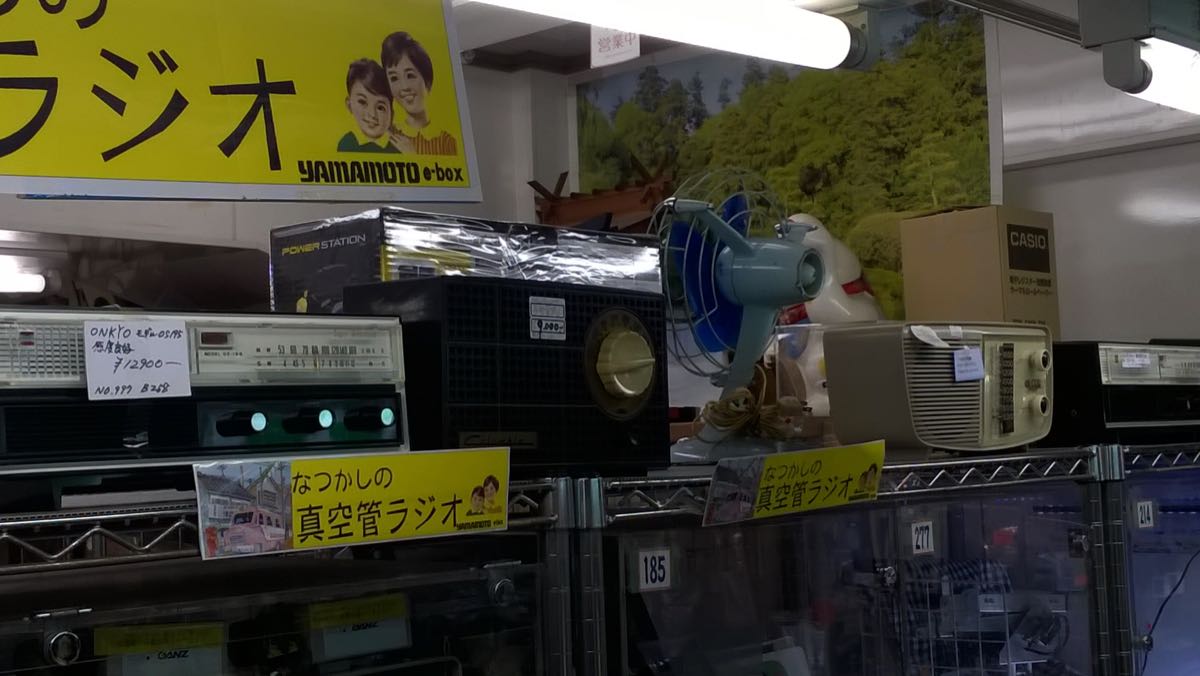
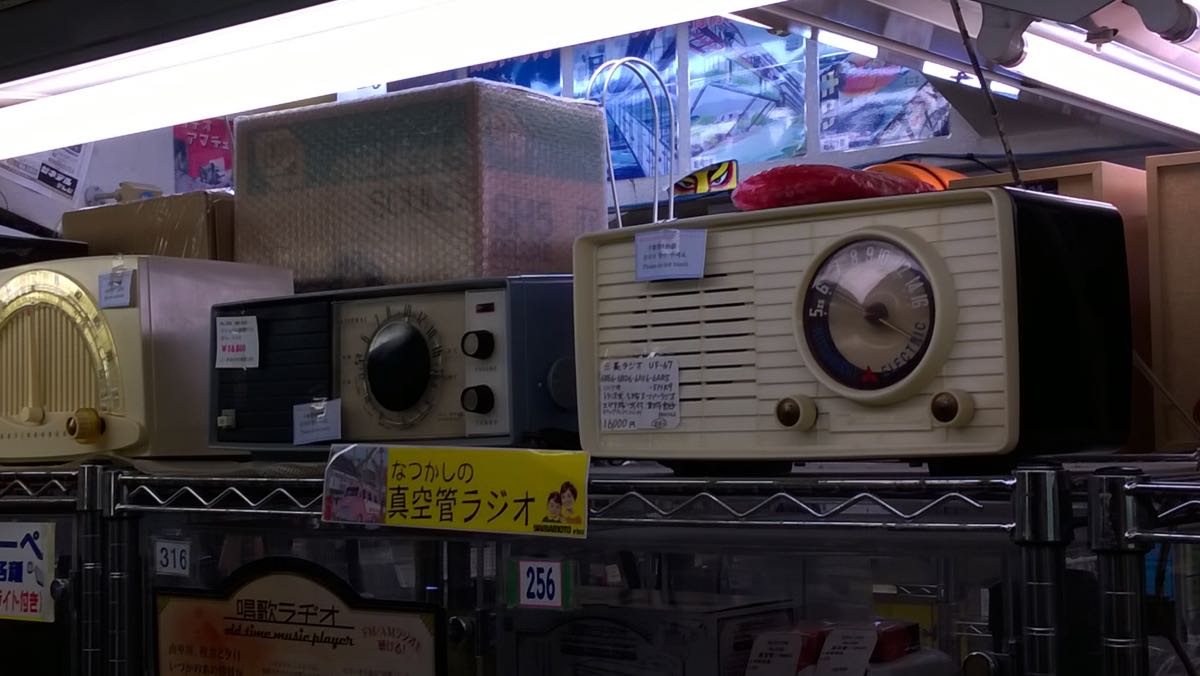
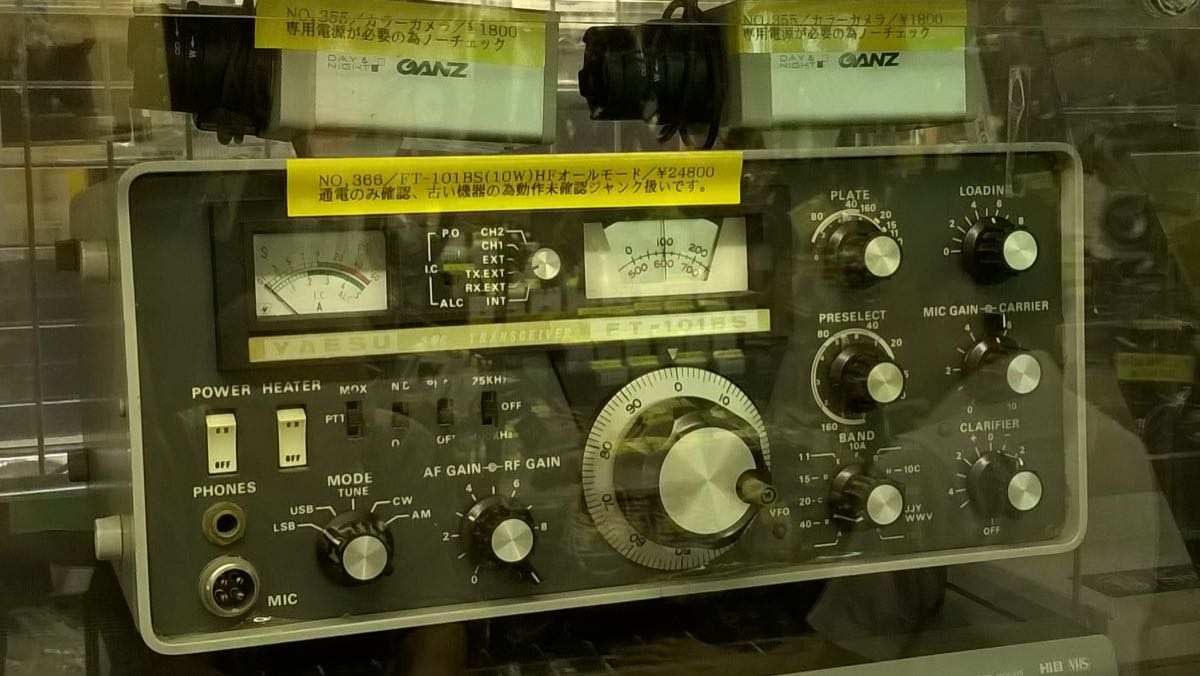
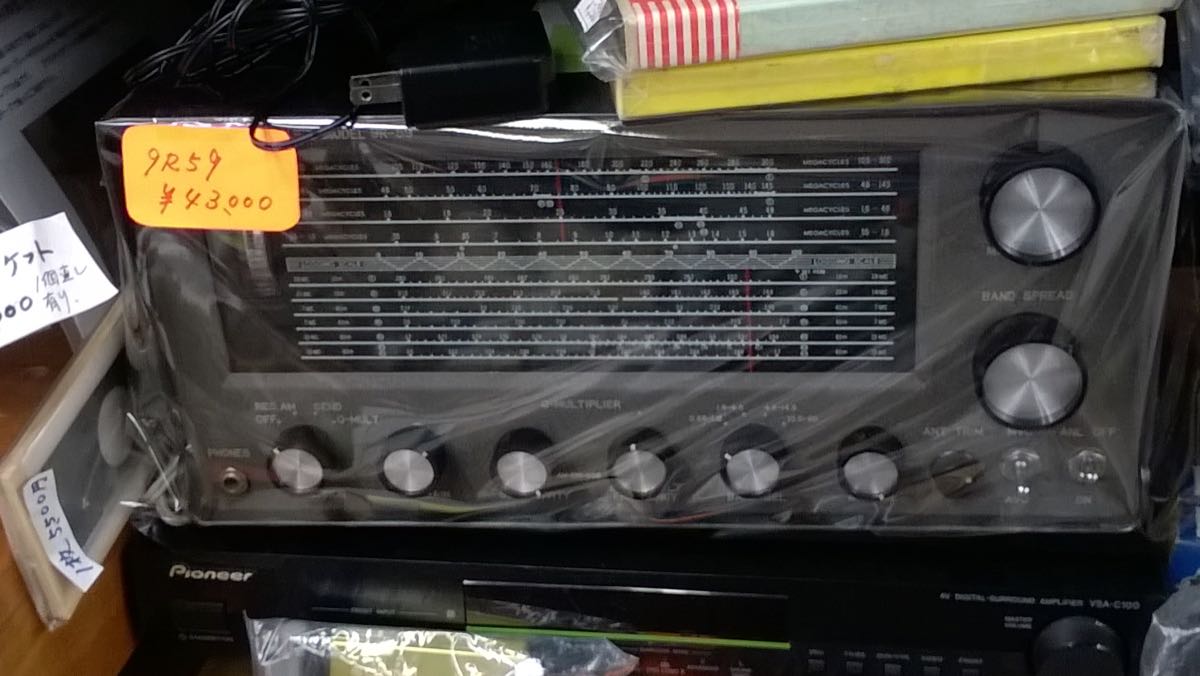
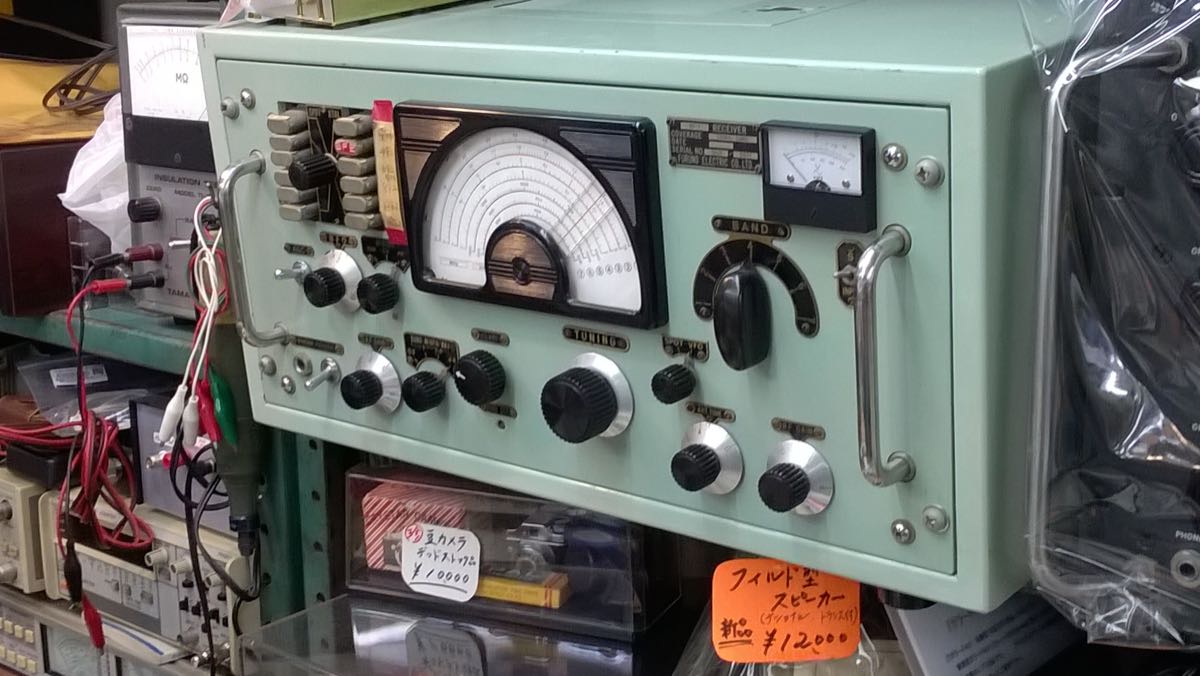
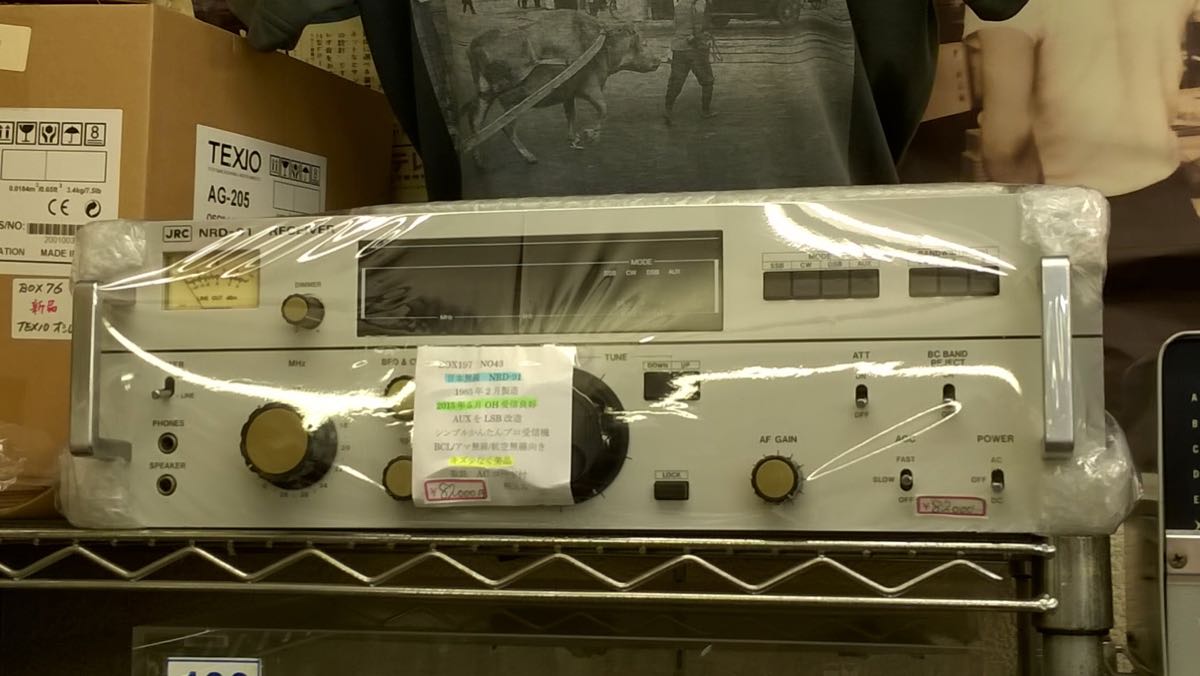
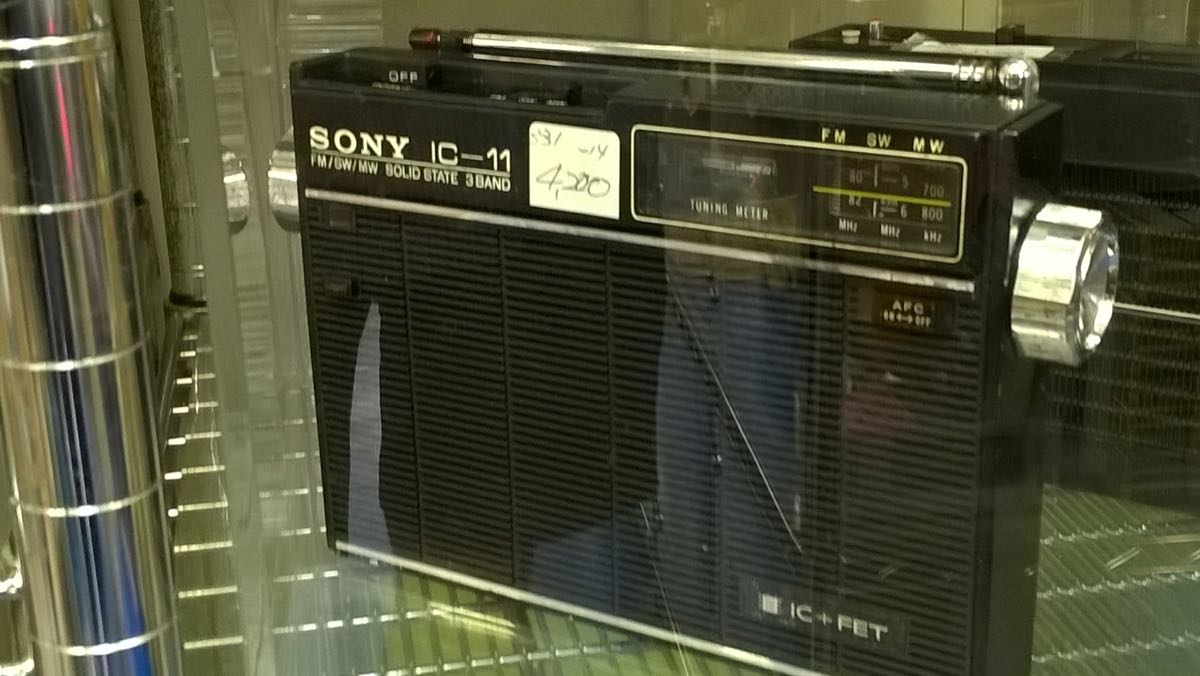
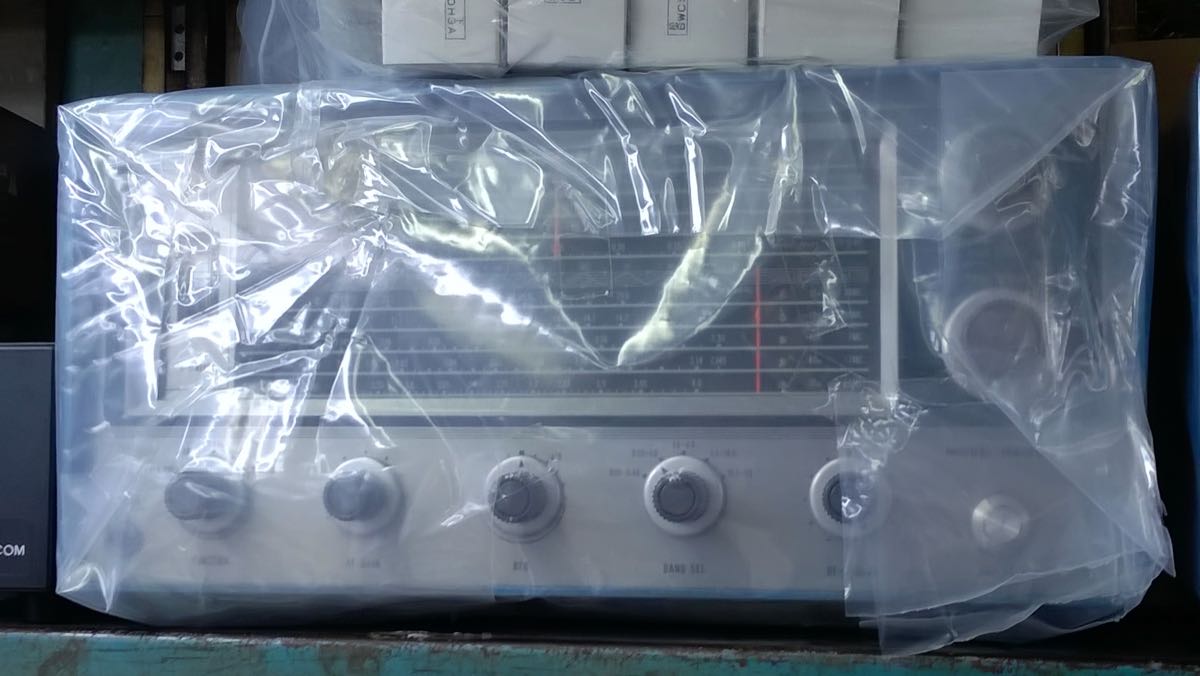
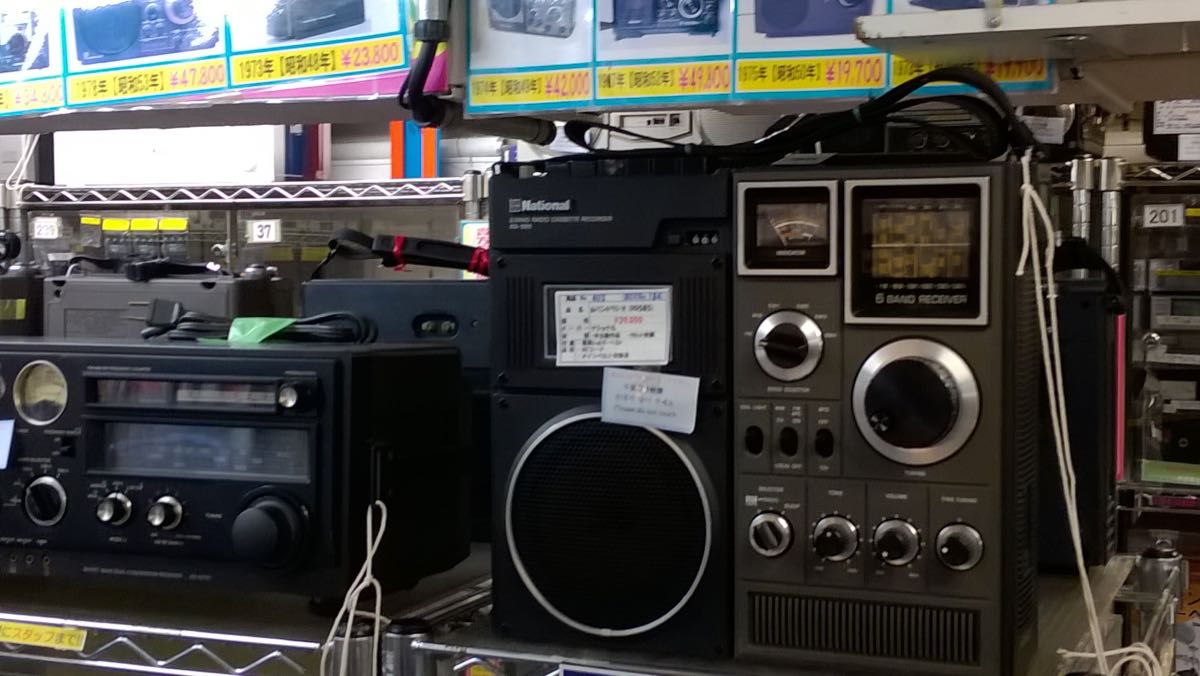
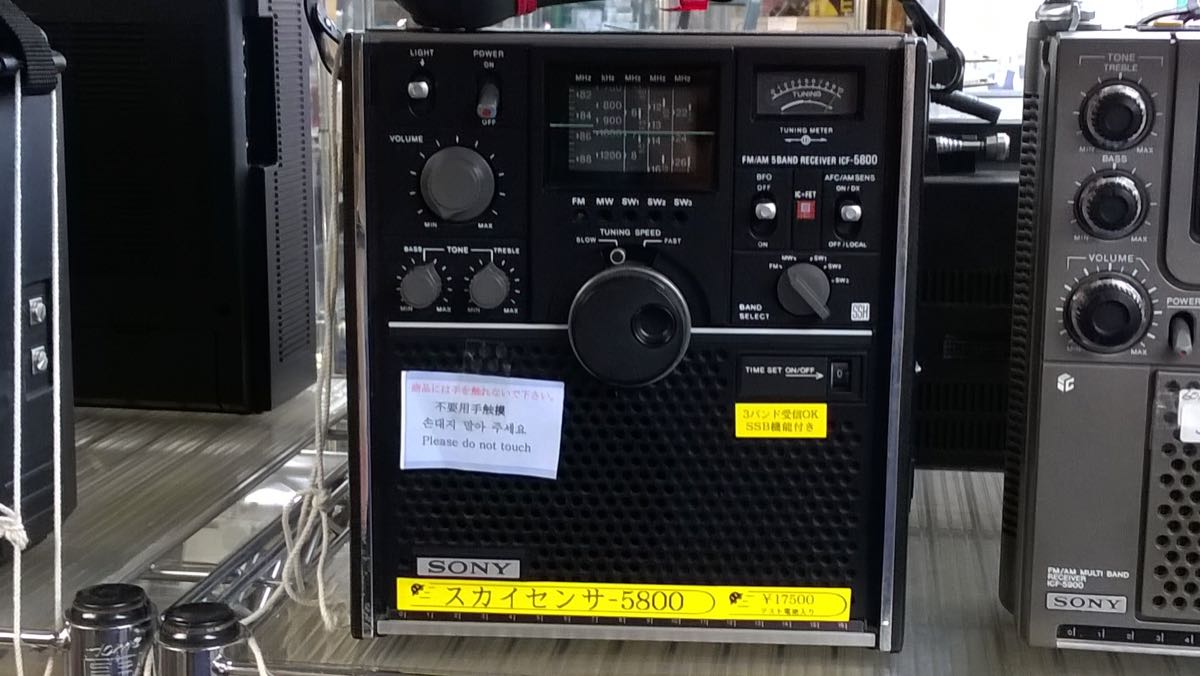
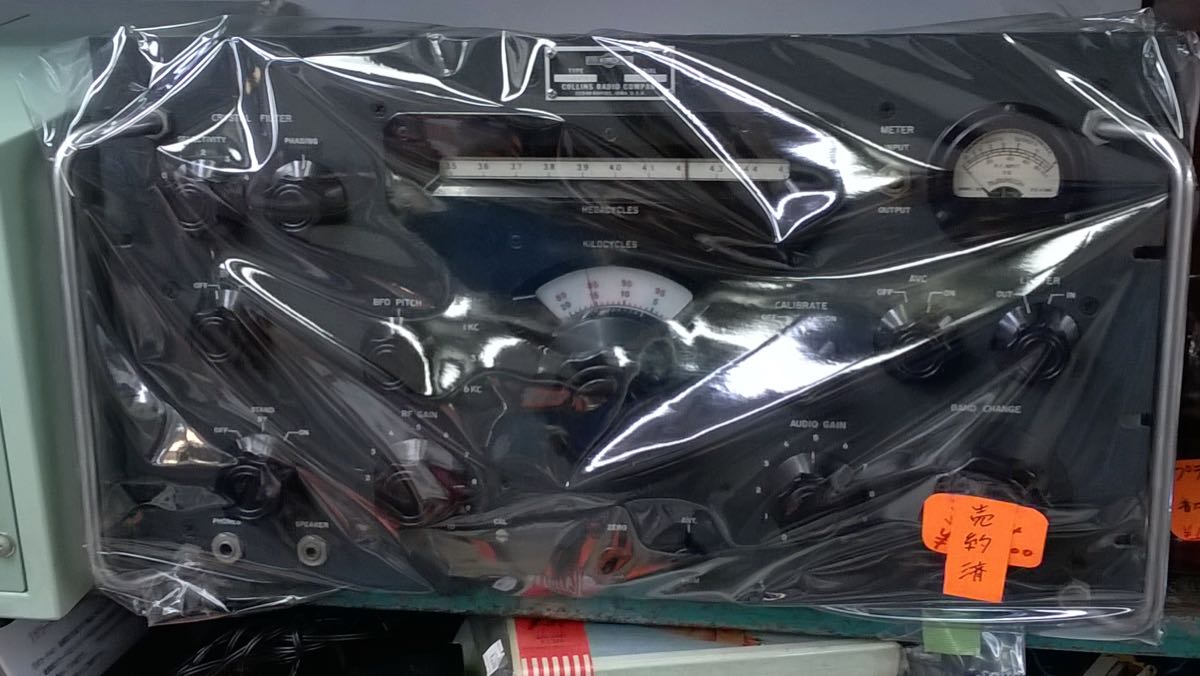
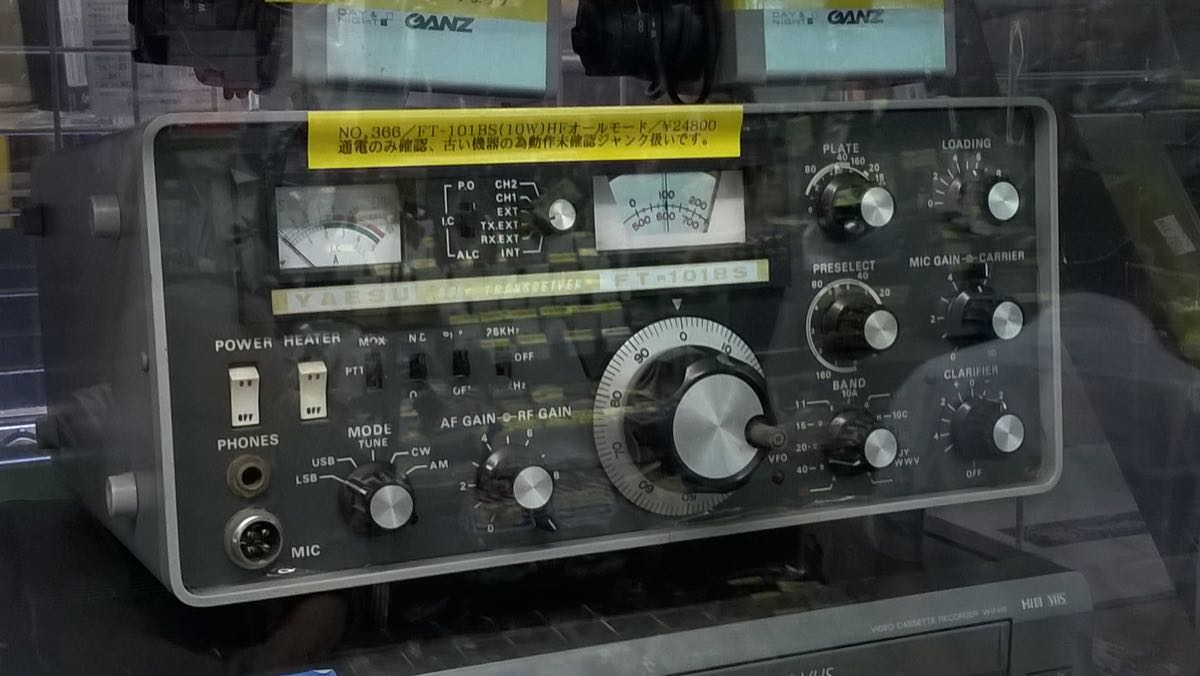
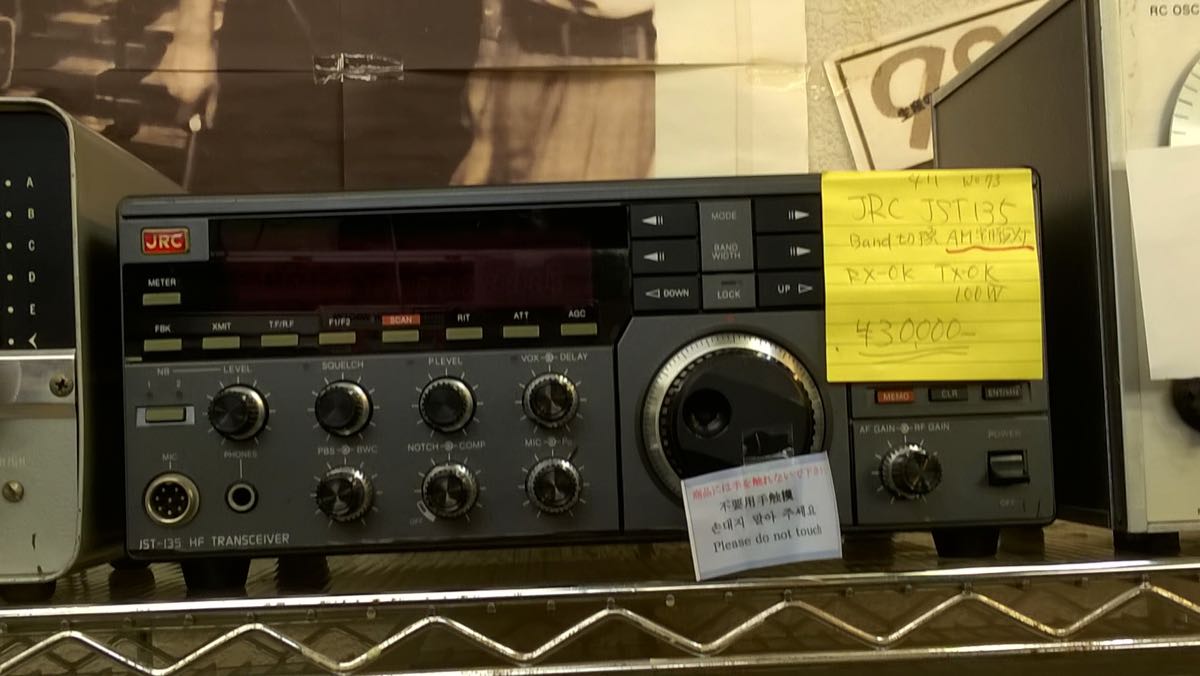
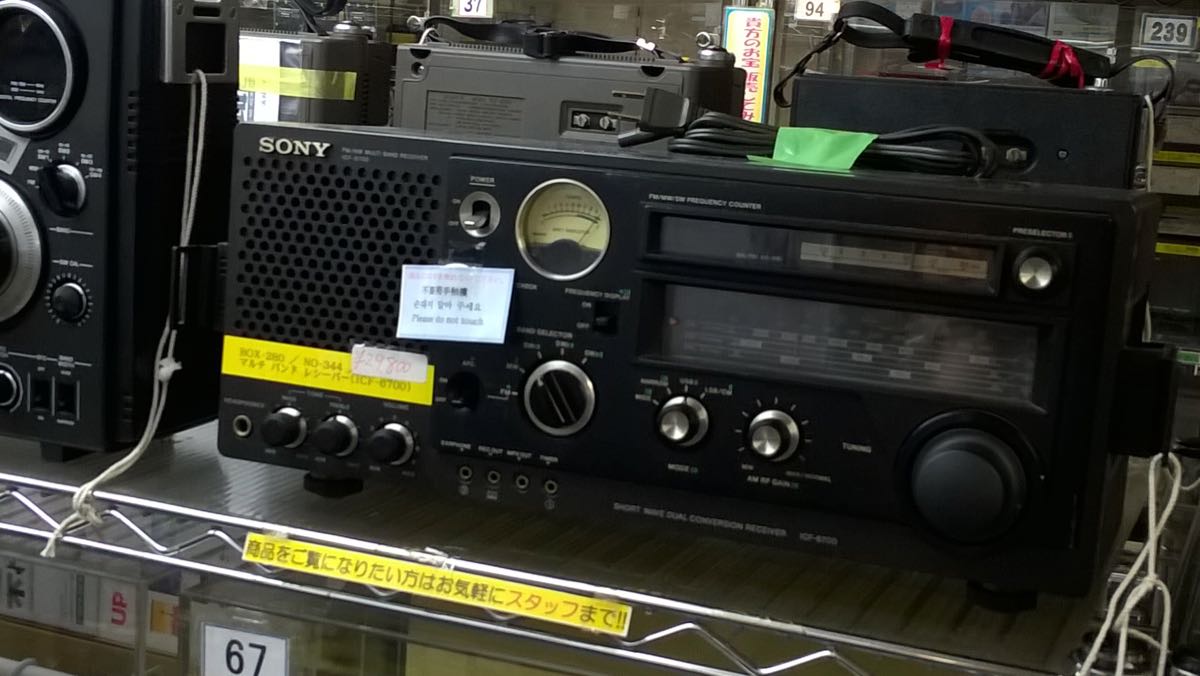
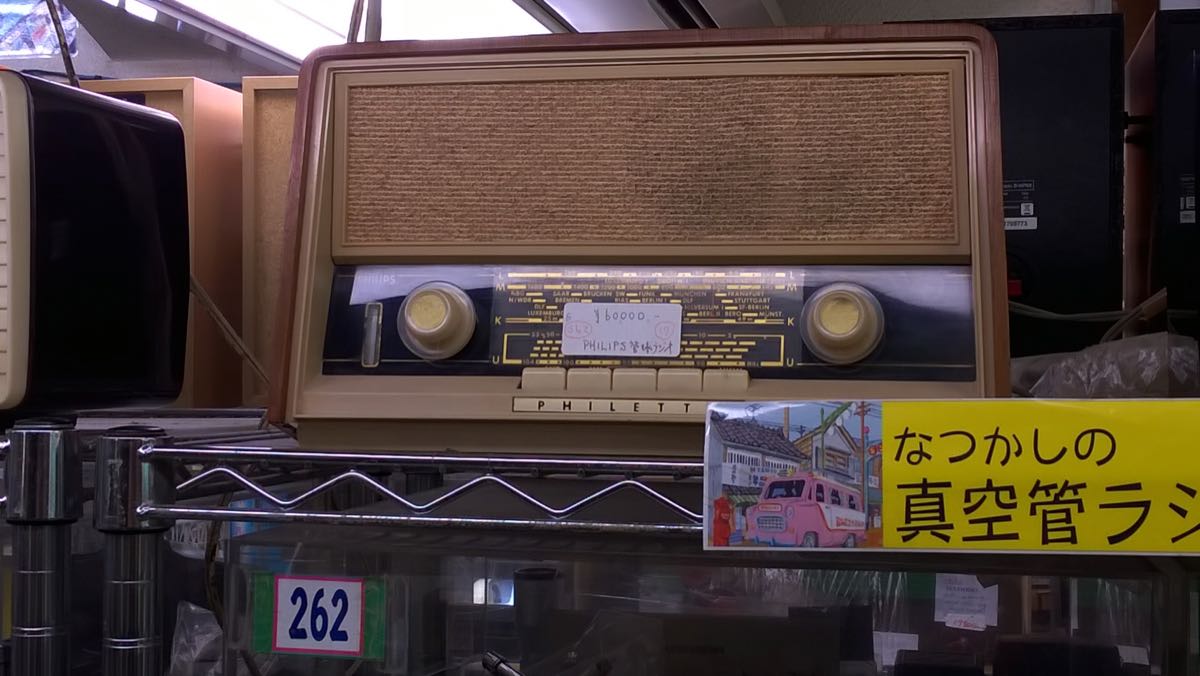
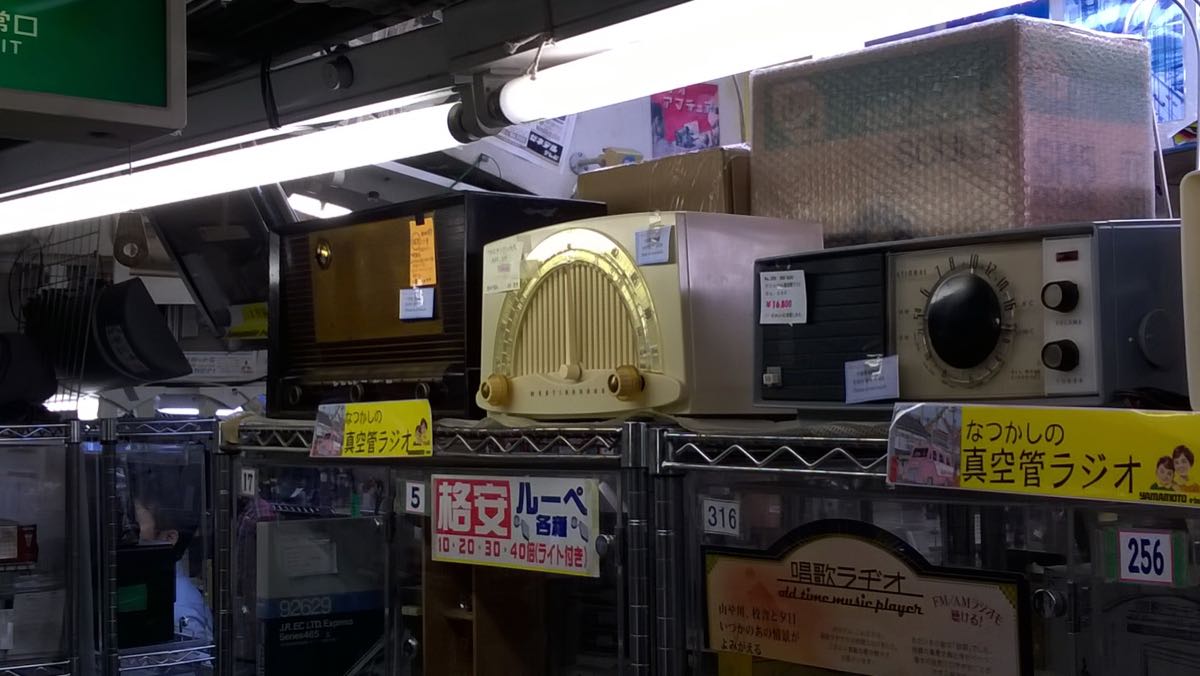
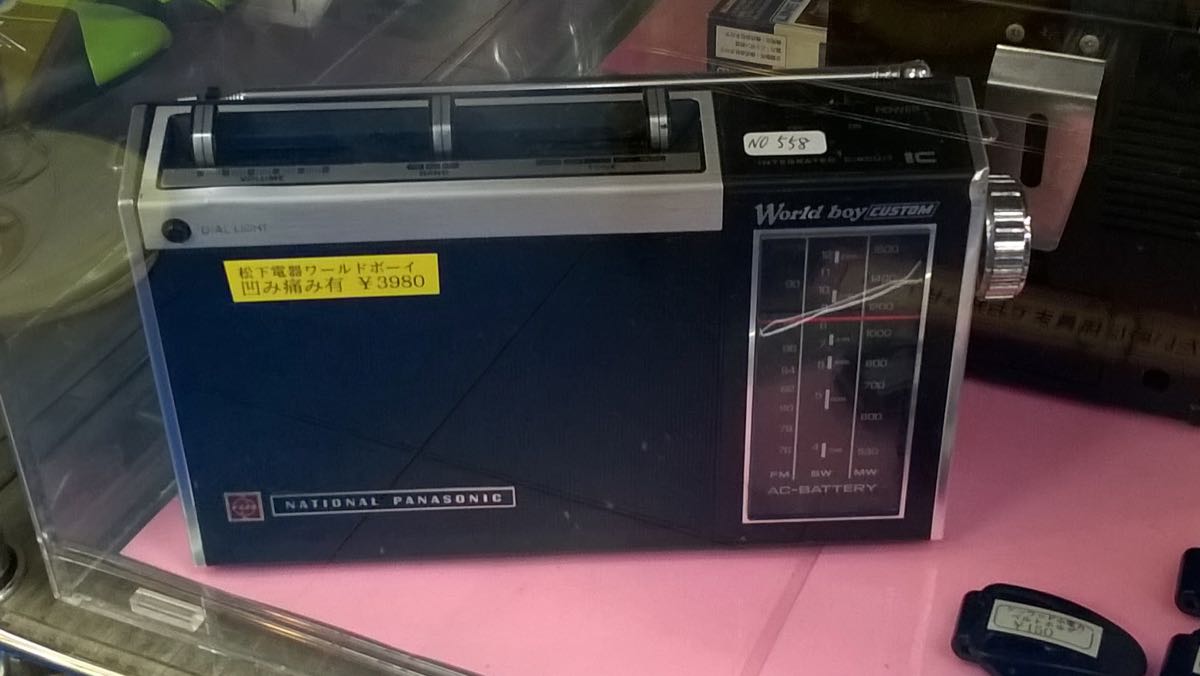
As I ventured up the narrow stairs to the floors above once again I felt like I found a treasure of gold, before me were shelves and displays crammed full of radios, some I haven’t seen in many years and some from the recent past .

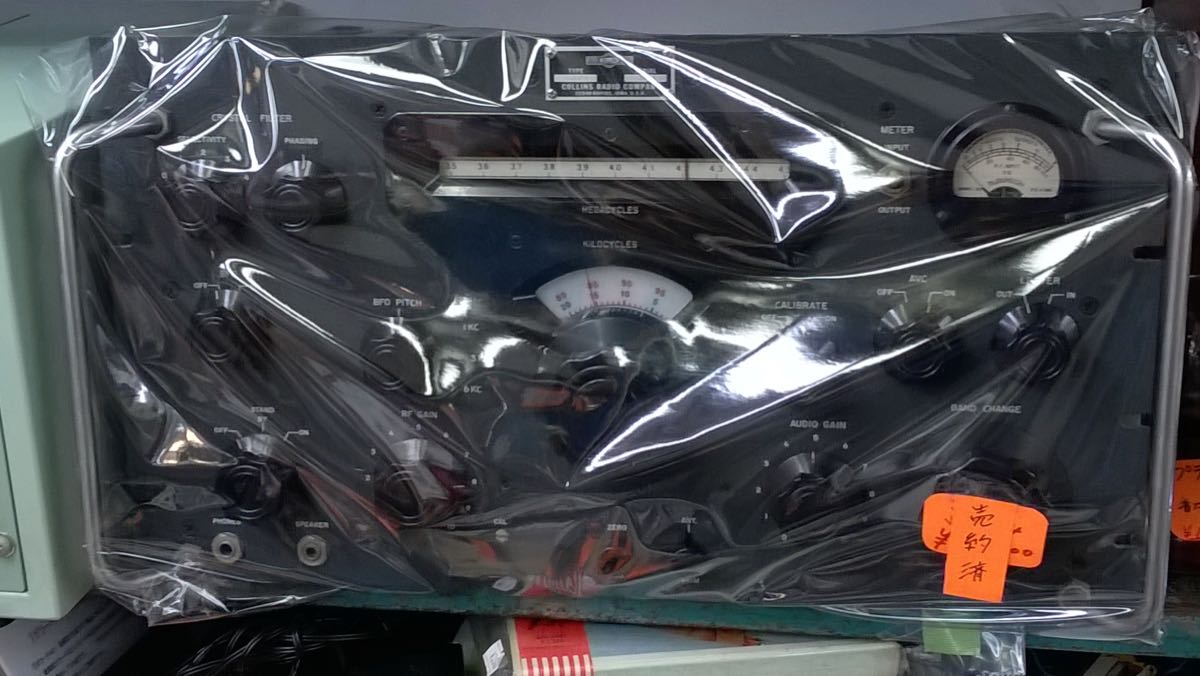
This was like a Hamfest and eBay together under one roof. Truly incredible as you will see in the pictures below. I couldn’t get close to some of the ones wrapped in plastic but maybe a sharp eyed enthusiast can Identify them. I highly recommend anyone traveling to this part of Asia to check out this hidden gem you will not be disappointed.


Thank you so much for sharing this photo tour, Chris! I mean…WOW! There are so many radio gems here. I see some classic solid-state receivers, ham radio transceivers and even valve gear I’ve never seen before. Amazing!

Thank you for taking the time to share your tour of the Akihabara district of Tokyo!

Post readers: Please comment if you’ve ever visited the Akihabara district or any other “Radio Row” districts in the world. please consider sharing your photos!

Do you enjoy the SWLing Post?

Please consider supporting us via Patreon or our Coffee Fund!

Your support makes articles like this one possible. Thank you!

Ultra-Rare DX: Logging Radio Kahuzi in the DRC

Many thanks to SWLing Post contributor, Dan Robinson, who shares the following guest post:


In these days of declining activity on the shortwave bands, we don’t often enjoy the experience of hearing what we might still call “rare” stations.  The new year brought an exception.

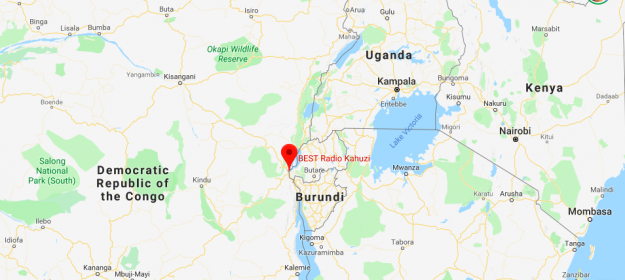
On January 1st, 2019 I was tuning around the 48 meter band, which is largely populated by European pirate stations, utilities, and weather stations, when I heard a station on 6,210.20 khz.  It was very distinct in that it sounded like an African station — music, with a male DJ/MC and religious songs.

What immediately came to mind was the religious station calling itself Radio Kahuzi, which is in Bukavu, Democratic Republic of Congo.

The station has been heard by DX’ers in a number of countries since the mid-2000’s and because it’s management is based in the U.S. it is possible to obtain a QSL verification.

Radio Kahuzi also has Twitter and Facebook channels, making it easier to communicate with station managers and staff, and has this blog site: http://radiokahuzi.blogspot.com/

As a You Tube video shows the station has been on the air since the early 1990s:

Click here to view on YouTube.

On January 1st, RK was heard from about 1730 to 1747 UTC when it shut down, playing what Richard McDonald, one of the station’s founders, says were musical pieces that are specific to RK.

On January 2nd, 2019 the station was heard again via Europe-based SDRs, signing off at approximately 1811 UTC.

Here is McDonald’s response to my report (which included an mp3) from January 1st, in which he notes that he even went so far as to give the main station announcer, Gregoire, my name and asked him to mention me in the station’s broadcast:

“I just shared with Gregoire that you had sent a recording of the last minutes of his closing musical sign-off if Radio Kahuzi and he agreed to greet you by name this evening and several days in several languages including English.

You got him saying his name at 5:54 into your recording yesterday,and the ID sign off Mountain Blue-Grass Music was unique to Best Radio Kahuzi in Bukavu!

Barbara Smith will be happy to send the QSL Card and info about us and our National Director and his family situation in case you have any suggestions

Powering off here!  Our power cuts off with SNEL often — I just lost a longer reply to you !
But Keep Looking UP !    And Keep On Keeping ON !

Richard & Kathy McDonald”

By the way, according to Wikipedia, SNEL stands for Société nationale d’électricité “the national electricity company of the Democratic Republic of the Congo. Its head office building is located in the district of La Gombe in the capital city, Kinshasa. SNEL operates the Inga Dam facility on the Congo River, and also operates thermal power plants.”

A very interesting page containing the history of Radio Kahuzi, with information about the McDonalds, is at: http://www.besi.org/

As of the time of this writing, it’s unclear to me whether the extended broadcast times of Radio Kahuzi will be continued or if this was a one shot deal linked to the new year — we may have some clarification on this in coming days.

Here’s a video of my January 1st, 2019 reception of Radio Kahuzi:

Click here to view on YouTube.

For now, I am quite pleased to join the group of about 63 DX’ers around the world (that number comes from a link on the RK website called “Shortwave Listeners” that lists SWLs who have heard and contacted the station).

Though it is highly unlikely that Radio Kahuzi will be heard anytime soon in the United States (the station’s schedules shows it being active from 8 AM to 8 PM Bukavu time) at least using U.S.-based radios, whether SDR or traditional receivers, it’s nice to know that there is still a station out there (with 800 watts!) that is a real DX target!


Wow! What a fantastic catch, Dan! Thank you for sharing your catch and, especially, shedding light on this rare DX. 

Post Readers: Please comment if you’ve logged and/or confirmed Radio Kahuzi.