Category Archives: Radios

Como Audio Solo and Duet: How to add and organize Internet radio stations

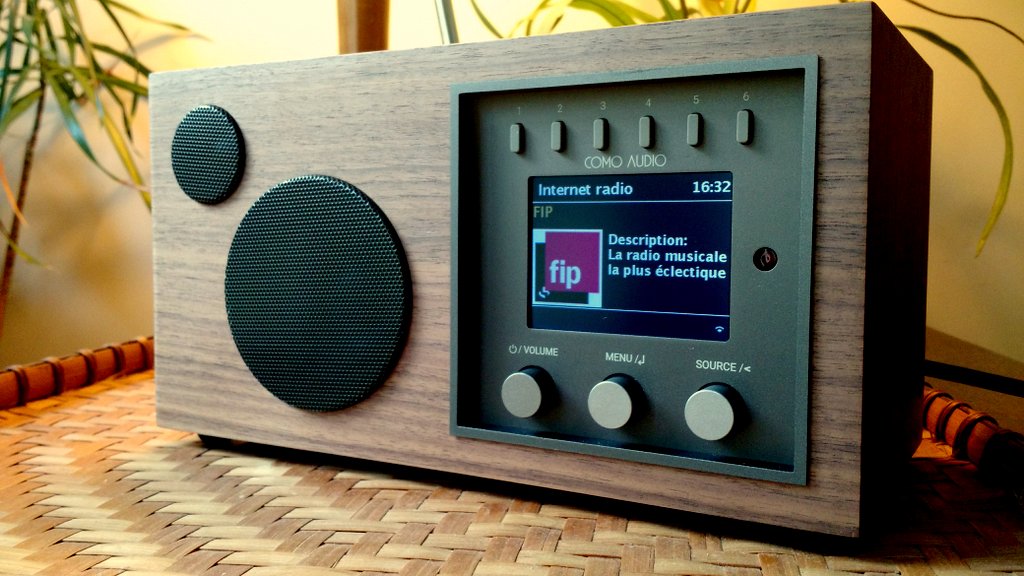
como-audio-solo-close-up

This weekend, I received the Como Audio Solo that I backed in a summer Kickstarter campaign. I’m pleased the Solo not only met delivery expectations, but I’m happy with the overall quality of this radio. I will post a preliminary review soon.

One of the main reasons I purchased the Solo was to use and review it as a WiFi radio. In the Kickstarter campaign, Como Audio didn’t give details about the radio station aggregator the Solo or Duetto would use (click here to read a primer about aggregators).  I contacted Como Audio asking for more information and received a reply from Tom DeVesto himself:

Hi Thomas.
Very sorry for the delayed reply.
[…]Our products use Vtuner for the Internet radio stations and Podcasts.

I was a little bummed to have received this information because I’ve heard very little praise for vTuner among WiFi radio enthusiasts.

To make a long story short, I spent a lot of time trying to figure out a way to pair my Solo with the vTuner aggregator. The owner’s manual has no information about using the aggregator nor how to manage and organize stored stations. The only help Como has published thus far is a short video which shows how to add favorites via the radio itself–not via a web portal.

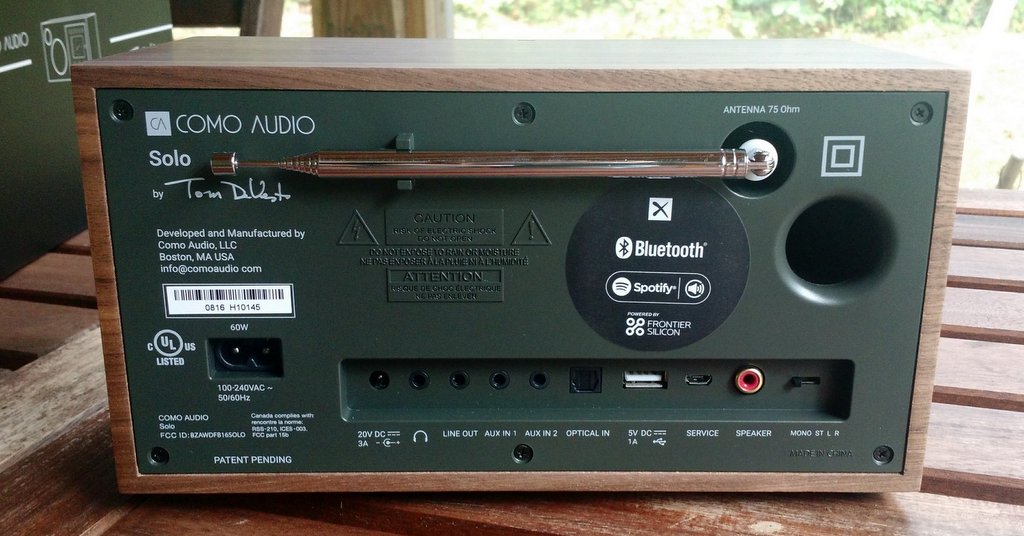
When taking a closer look at the back panel of the Solo, though, I noticed a Frontier Silicon logo.

como-audio-solo-back

Wait…what?

My Sangean WFR-28 uses the Frontier Silicon aggregator! This explains why the Solo’s WiFI radio interface looks exactly like that of my WFR-28!

Obviously, somewhere along the way, Como Audio changed aggregators. I’m not at all disappointed as I give Frontier Silicon positive marks in the WFR-28 review.

Via Frontier Silicon, you can pair your Como Audio radio to the aggregator database, thus allowing much easier control of memories and station categories through their Radio Portal page!  Since this isn’t documented (yet) by Como Audio, here’s how you can easily pair the two:

How to pair your Como Audio device with Frontier Silicon

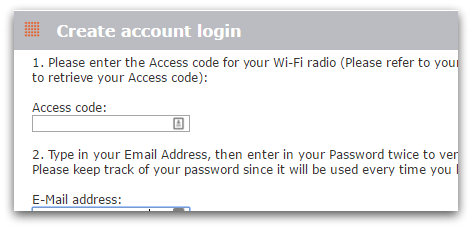
  1. First, if you don’t already have an account with Frontier Silicon, you’ll need to create one by clicking here.fullscreen-capture-1032016-112429-pm
  2. The form firsts asks for your “Access code” before you enter any other credentials. Here’s how to find the access code from your Como Audio device:
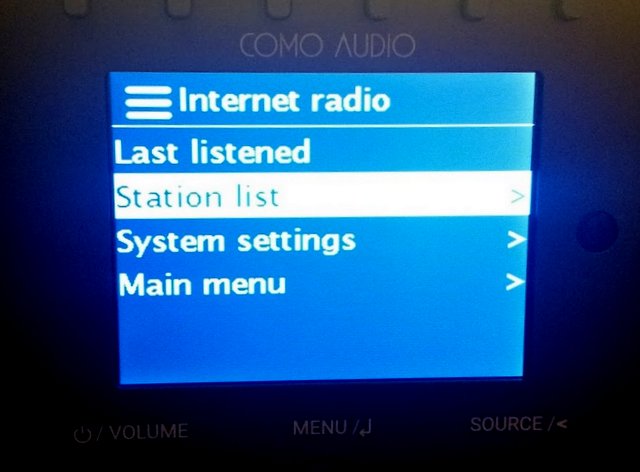
    1. From the Main Menu on your radio, select ‘Internet radio’ as the source
    2. Select “Station list”img_20161003_202200751
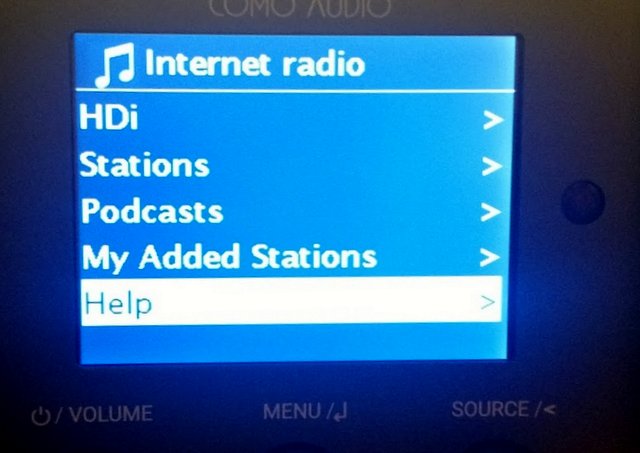
    3. Select the “Help” directoryimg_20161003_202218488
    4. Select the “Get access code” itemimg_20161003_202227970
  3. The access code is 7 digits long–simply enter it in the dialog box on the Frontier Silicon web page and proceed with creating your account.

If you already have a Frontier Silicon account…

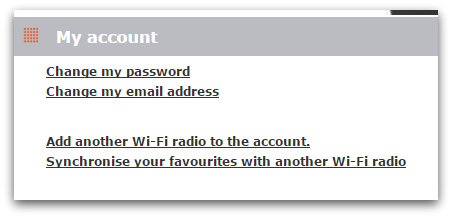
  1. Login to My Account > My Preferences page, then click Add another Wi-Fi radio to the account.fullscreen-capture-1032016-110249-pm
  2. Next, you’ll need to enter the Access code for your Como Audio device. Here are the steps you take to find your unique access code (see images above–same process):
    1. From the Main Menu on your radio, select ‘Internet radio’,
    2. Select “Station list”
    3. Select the “Help” directory
    4. Select the “Get access code” item
  3. The access code is 7 digits long, simply add it in the Access Code field on the Frontier Silicon web page.

Start searching and organizing

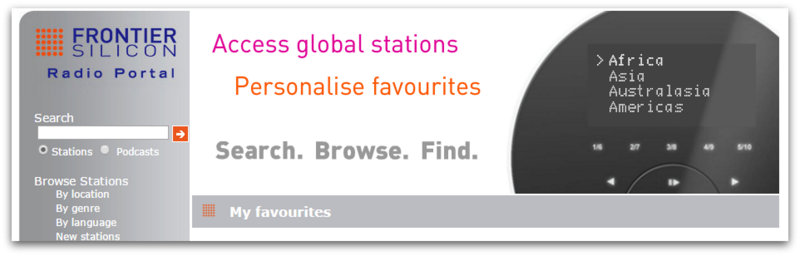
fullscreen-capture-1042016-11713-am

Once your radio is paired, managing station memories is very easy via the Frontier Silicon Radio Portal

Preliminary review soon

I’ve been testing the Como Solo and plan to post a preliminary review soon. Follow the Como Audio tag for updates!

Mark’s multi-user SDR is now online

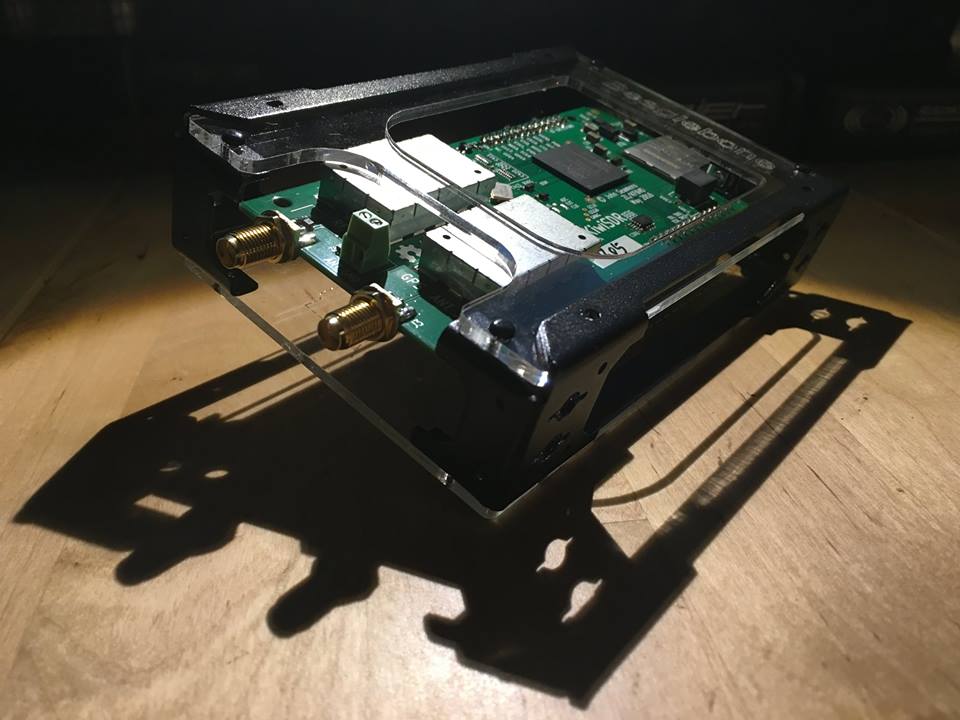
mark-fahey-beagle-kiwi-sdr

SWLing Post contributor, Mark Fahey, has just announced that his new Beaglebone-powered KiwiSDR receiver is online.  Mark notes:

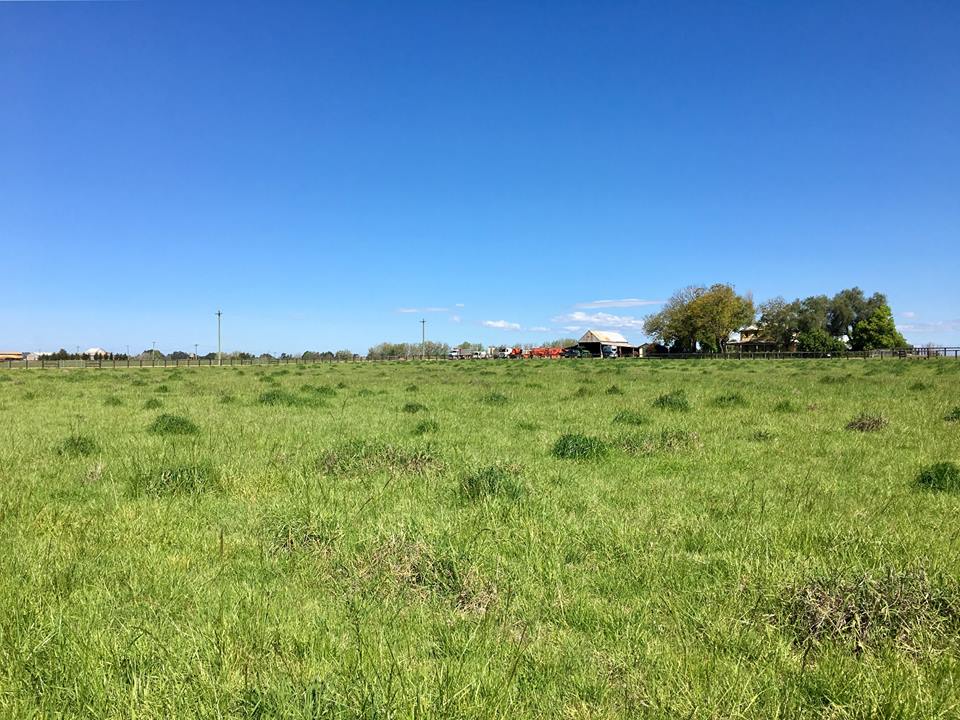
Please try out my multi-user 0-30MHz SDR[.] The test system is operating from my monitoring station at Freemans Reach in south east Australia (near Sydney).

fahey-qth

Freemans Reach, Australia

[…]The test system is fully self contained and self operating. The antenna (ALA1530S+) we are using is a magnetic loop with an impedance tracking amplifier designed and manufactured by Wellbrook Communications, Llanwrth Wells in Wales. The receiver and CPU is the result of the Kickstarter funded project “KiwiSDR” which was conceived and designed by John Seamons ex Pixar and Lucas Films.

[…]You can use Chrome, Microsoft Edge, Safari, Firefox – but Internet Explorer is not supported at this stage. Tune in on this URL…

http://mediaexplorer.ddns.net:8073/

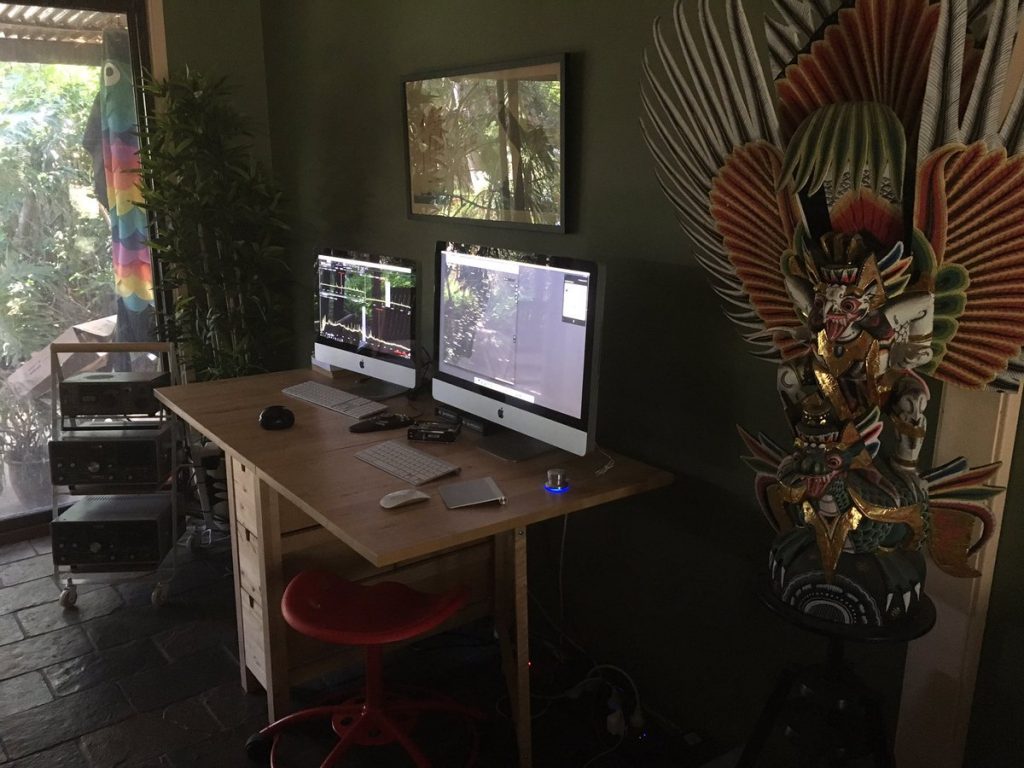
mark-fahey-shack

Mark’s radio shack.

[Four] simultaneous users are supported with totally independent tuning and control

Mark's Wellbrook antenna

Mark’s Wellbrook ALA1530S+ antenna

Many thanks for sharing your KiwiSDR, Mark! Though demand has been quite high, I have managed to claim one of the four user seats on Mark’s SDR and “listen like a local.”

Mark: you’ve done a great job making a proper listening post for your remote listeners. The KiwiSDR/Wellbrook ALA1530S+ combo is performing admirably!

Click here to use Mark’s KiwiSDR.

Rare Hitachi KW-WSI WorldSpace Receiver on Ebay

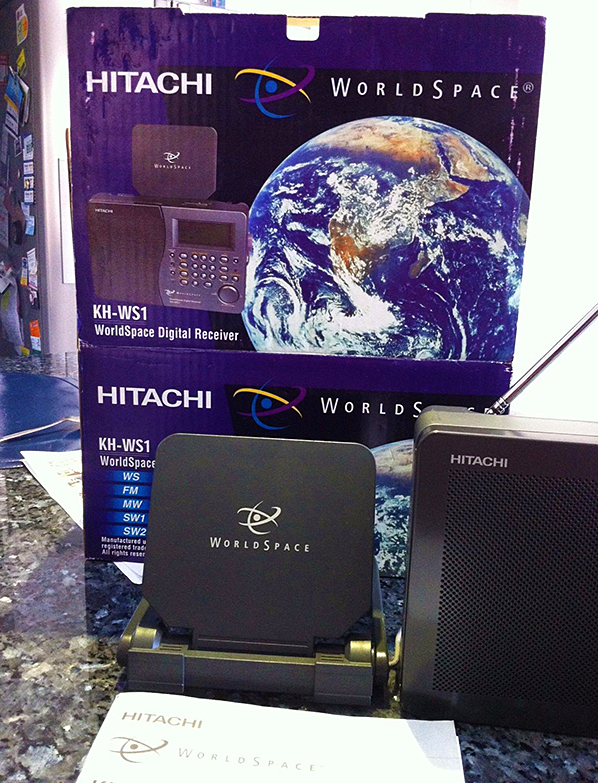
This is the first and only “WorldSpace” satellite receiver I’ve seen on Ebay, currently offered at a $175 Buy-It-Now price from a seller in Australia:

http://www.ebay.com/itm/HITACHI-KW-WSI-DIGITAL-RECEIVER-WS-FM-MW-SW1-SW2-/282192383263

The radio is listed as in excellent condition with the original box and literature. Besides the long-gone WorldSpace satellite frequencies, the radio covers medium wave, FM, and most of the shortwave range. A brief PDF data sheet for the radio gives a description of features and operations.

hitachi-kw-wsi

Wikipedia describes this radio’s satellite service as 1worldspace, formerly known as ‘WorldSpace’, is a defunct satellite radio network that in its heyday provided service to over 170,000 subscribers in eastern and southern Africa, the Middle East, and much of Asia with 96% coming from India. It was profitable in India, with 450,000 subscribers.

I wonder if the Hitachi KW-WSI is a reasonable performer for shortwave listening? Does anyone know any technical details of this receiver?

Guy Atkins is a Sr. Graphic Designer for T-Mobile and lives near Seattle, Washington.  He’s a regular contributor to the SWLing Post.

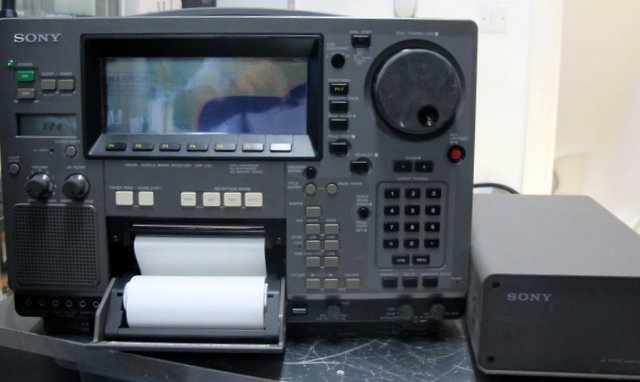
eBay Sighting: Sony CRF-V21

sony-crf-v21-001

Many thanks to SWLing Post contributor, London Shortwave, who shared a link to this Sony CRF-V21 on eBay:

Click here to view on eBay UK.

I’m sure a Sony collector will eventually snag this rig. Thought the listing mentions no shipping outside the UK, the Seller states otherwise:

“[I]f you don’t live in uk you can arrange a courier at your own cost”

Do any SWLing Post readers own the CRF-V21? Please comment!

The Sony ICF-SW100: a miniture DX marvel, never likely to be repeated

sw100s

Hi there, I’ve owned my Sony ICF-SW100S for about a year now and in that time it has demonstrated a level of performance way beyond my expectations. Notwithstanding it’s incredibly small size (about the same as a packet of cigarettes, give-or-take), the DX results I have obtained with it are simply incredible. A fully featured ultra-portable receiver, complete with synchronous detection, selectable side bands, SSB, CW and coupled with sensitivity that has my (wonderful) Sony ICF-SW55 beat – and knocks on the door of the legendary ICF2001D. I simply can’t recommend it highly enough. Plug in some headphones or connect an external speaker such as the Bose SoundLink Mini 2 and you effectively have table-top receiver performance and audio in a very compact package.

Originally introduced into the market in 1993 and discontinued in 2005, this little radio covers the broadcast FM band from 76 to 108 MHz and AM from 150 to 29999 kHz, continuously. There are numerous other features that I won’t list here as they’re available on the web, but suffice to say, this (now vintage) ultra-portable DXer’s box of tricks is likely never to be repeated. They are available on eBay and prices remain robust for a radio that will be one to two decades old. Of course there’s also the issue on the first generation models with the ribbon cable connecting the lid of the set with the LCD display etc. to the base, which would fracture after some time, but this was rectified in later models with a notch cut out of the hinge to reduce the stress on the cable – see photo. They are also repairable and in fact I believe Thomas has a posting on here detailing how the ribbon cable on his example was replaced. In my opinion, this receiver is worth the hassle of a repair, because it’s quite simply unique.

Below are selected reception videos from my youtube channel Oxford Shortwave Log using the Sony ICF-SW100, which I believe epitomise the performance of this great little portable. Thanks for watching/ listening.


Direct link to reception video on Oxford Shortwave Log YouTube channel

Direct link to reception video on Oxford Shortwave Log youTube channel

Direct link to reception video on Oxford Shortwave Log Youtube channel

Direct link to reception video on Oxford Shortwave Log YouTube channel

Direct link to reception video on Oxford Shortwave Log YouTube channel

Direct Link to reception video on Oxford Shortwave Log reception video

Direct link to reception video on Oxford Shortwave Log YouTube channel

Direct link to reception video on Oxford Shortwave Log YouTube channel

Clint Gouveia is the author of this post and a regular contributor to the SWLing Post. Clint actively publishes videos of his shortwave radio excursions on his YouTube channel: Oxford Shortwave Log. Clint is based in Oxfordshire, England.

Medium wave DX logs: WMEX, CFRB, CJBC, WNYC, WARV, WRCA, WWRU received in Oxford, UK

elad
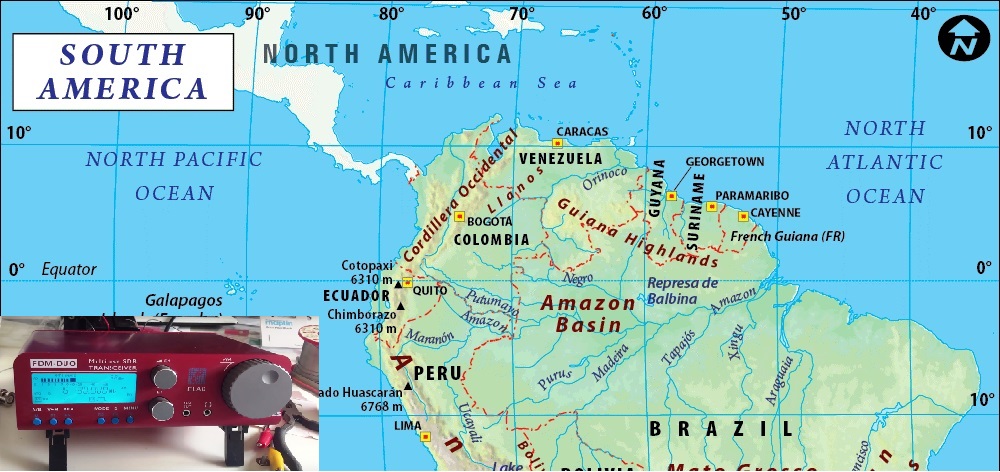
north-america-map
Hi there, here is a selection of North American medium wave stations logged in Oxford UK, over the past couple of weeks using the Elad FDM DUO and Wellbrook ALA1530 active loop antenna (indoors).  A quick list of stations logged follows below – with URL links which will take you directly to the respective reception video on the Oxford Shortwave Log YouTube channel. Embedded reception videos follow further below.  A subsequent posting will follow detailing some South American stations logged recently on medium wave, using the same Elad/Wellbrook set-up. Thanks for watching/ listening and I wish you all great DX.


Medium wave DX: WMEX Boston Talk Radio 1510 KHz, wonderful signal


Medium wave DX: CFRB Newstalk 1010 Toronto 1010 kHz, with clear ID


Medium wave DX: CJBC Toronto 860 kHz, French language network of CBC


1000th video! Medium wave DX: WNYC 820 kHz, New York Public Radio (presumed)


Medium wave DX: WARV 1590 kHz, Warwick, Rhode Island, USA


Medium wave DX: WRCA 1330 kHz, Waltham Massachusetts, clear ID


Medium wave DX: WWRU Jersey City 1660 kHz, New Jersey, clear ID

Clint Gouveia is the author of this post and a regular contributor to the SWLing Post. Clint actively publishes videos of his shortwave radio excursions on his YouTube channel: Oxford Shortwave Log. Clint is based in Oxfordshire, England.

Now in the shack: A Yaesu Musen FRG-7

p5290002

Photo sent by Shawn.

In late May, as I was packing for two months of travel in Canada, I received a message from long-time SWLing Post reader, Shawn Aiken.  Shawn was seeking the right home for his Yaesu FRG-7 and Hallicrafters S-38 receivers.

p5290001

I was very interested–especially in the FRG-7. Many SWL friends (Robert Gulley and Mike Hansgen, to name just a couple) love their FRG-7s. I’d been waiting for the right opportunity to snag one at a local hamfest. I’m also a Hallicrafters fan and love the front panel design of the S-38 series: so classy.

I asked Shawn how much he’d like for the receivers–I was very much interested.

Not only would he not accept payment, but he insisted on paying the shipping as well. I felt apprehensive about accepting such a generous gift. Shawn replied:

“Although I understand your reticence, Thomas, just count this as one of the perks of the job that you’ve undertaken and, from what I can tell from a distance, taken on and done well.”

That statement made my day. Thanks, Shawn!

yaesu-frg-7

The FRG-7 now sits in my shack and I’m learning my way around its unique tuning mechanism. It’s a beauty, too: I love the utilitarian front panel and dials/controls.

Other than needing a little DeOxit on some of the pots and switches, it works beautifully!

I’ve been so busy since returning from Canada, I haven’t had the FRG-7 on the air much. That’ll all change, though, as my Fall/Winter listening season kicks in. I’m already looking forward to it.

Thanks again, Shawn! I’ll make sure both of these radios have a good home here in my shack!

Readers: Do you have a Yaesu FRG-7? Any tips/tricks? Please comment!