Shortwave listening and everything radio including reviews, broadcasting, ham radio, field operation, DXing, maker kits, travel, emergency gear, events, and more
Radio Verdad, Chiquimula, Guatemala is quite a regular catch at home, however, their modulation is nearly always weak as the carrier struggles to lift above the ubiquitous blanket of local QRM. Another issue with hearing this station is the digital utility signal just above 4055 kHz, thus requiring LSB reception to reject the adjacent noise.
This particular recording of Radio Verdad was taken during a DX’pedition using the 200 metre longwire and is unprecedented in signal strength and clarity – in my personal experience. With fully discernible audio both the Elad FDM DUO and Sony ICF-2001D receivers perform very well with my experimental 200 metre antenna. I should point out that the audio from the Sony is significantly louder because the speaker on the Elad is puny, to say the least. However, the reception on the Elad sounds to me at least, superior to the Sony in terms of SNR, which is everything in Tropical Band DXing. As usual, I welcome your comments. Recorded in Oxford UK on 31/07/18 at 03:31 hrs UTC. Thanks for watching.
Clint Gouveia is the author of this post and a regular contributor to the SWLing Post. Clint actively publishes videos of his shortwave radio excursions on his YouTube channel: Oxford Shortwave Log. Clint is based in Oxfordshire, England.
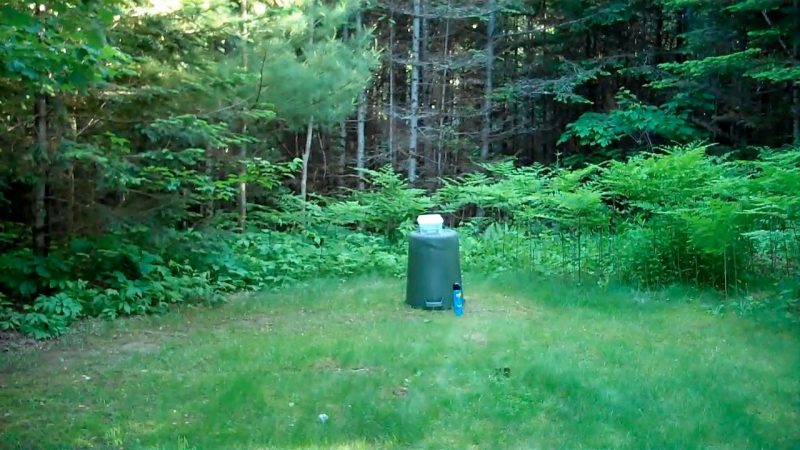
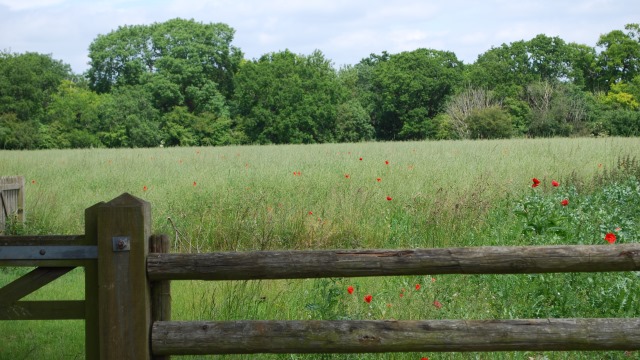
A view looking toward Oxford Shortwave Log DX’pedition territory; a wood in rural Oxfordshire
Regular viewers of my youtube channel will know that I spend much of my shortwave listening time out in an Oxfordshire wood where QRM is negligable and Tropical Band stations can be heard with, at times, unprecidented signal-to-noise. Regular viewers will also be aware that I enjoy experimenting with different antenna set-ups, particularly pushing the boundaries with longwires coupled to portables. Having applied my rather modest practical skills, I constructed a 200 metre deployable 200 metre longwire antenna and finally got around to testing it, with my Elad FDM DUO and Sony ICF-2001D. There are a number of reception videos still to be uploaded to the Oxford Shortwave Log youtube channel, howvever, the immediate information and entertainment of SWLing Post readers, I have included two here. 🙂
The first is the more commonly heard Emisoras Pio XII from Boliva on 5952.5 kHz using the Sony and the second, the much more rarely reported Radio Chaski from Peru on 5979.9 kHz using the Elad. Both reception videos were very encouraging. In fact, I would go so far as to say they demonstrated excellent reception witihin the framework of their respective contexts. Emisoras Pio XII was almost booming with unprecidented signal strength and clarity, whilst Radio Chaski was heard with discernible audio. Neither station had been received as well at my QTH or the woods, previously.
I hope this gives other DXers ‘food for thought’ with regard to experimenting with antennas and perhaps more importantly, making significant improvements to SNR by removing themselves from the ubiquitous blanket of QRM generated by all of those devices at home that are intrinsic to modern life. Thanks for watching. 73.
Clint Gouveia is the author of this post and a regular contributor to the SWLing Post. Clint actively publishes videos of his shortwave radio excursions on his YouTube channel: Oxford Shortwave Log. Clint is based in Oxfordshire, England.
As is my typical style, I’ll do some DX’ing for weeks, if not a month or more before I sit down and write out logs. I focus on logging and recording first, then writing reports later as I’m worried i’ll miss something on the dials.
I have a few good ones this time around, like usual. Lets get on with the logs!
There are a few good ones here, including The Voice of Mongolia 12035 kHz, Vivdh Bharati on 9870 kHz and others along with some usuals.
2850 kHz, 3250 kHz & 3320 kHz, The Voice of Korea via Pyongyang to North Korea and the Far East in Korean on August 2, 2016 from 1623 to 1627UTC. The tropical band signals of VoK are somewhat rare and kind of weak during the summer but much more regular and stronger in the winter. This time around, 2850 kHz is the strongest with a woman singing in Korean. The signal is weak but easy to understand despite the noise. 3250 kHz and 3320 kHz both featured a man talking, 3250 had a song shortly after my recording began. 3560 kHz wasn’t heard on this date, but it was heard back on July 23, 2016 at 1502UTC with a pretty weak signal, full of noise, yet music was definately heard above the buzzing!
4885 kHz, Echo of Hope to North Korea in Korean on July 28, 2016 at 1623UTC. Their other frequencies always seem to be jammed but I’ve not heard this Anti North Korean station have it’s 4885 kHz signal jammed. It’s a pretty good signal, clean, clear, fairly steady with only some light fading. Audio here: https://www.youtube.com/watch?v=sgZUOjZaQPE
5020 kHz, Solomon Islands Broadcasting Corporation via Honiara to the Solomon Islands on August 1, 2016 at 0953UTC. The SIBC is here just about nightly and at least very poor levels. The signal on this night with local music is fair but with a good amount of fading and noise. Audio here: https://www.youtube.com/watch?v=A67vQd04Uj0
5857 kHz “HLL Seoul” on July 28, 2016 at 1634UTC. A weather broadcasting station from Seoul, South Korea often with digital data but does have voice from time to time, I’ve heard both but never this clear. The voice isn’t usually this clear or loud. Audio here: https://www.youtube.com/watch?v=a5eICMqMCaQ
7280 kHz, The Voice of Vietnam in Russian via Hanoi to Europe on July 26, 2016 at 1639UTC. A poor signal with lots of fading, static and noise and possibly some interference as well. A man was heard talking in Russian. Audio here: https://www.youtube.com/watch?v=h7nt1J0QGWQ
9390 kHz, Radio Thailand World Service in English via Udon Thani on July 23, 2016 at 1955UTC. Radio Thailand is here from time to time and while it may be strong sometimes, it’s usually a pretty fade-y signal. This signal would be on the high side of fair if it wasn’t for all the noise and fading. The recording starts off with what sounds like ad’s for a business marketed to english speaking ex pats and tourists. A sign off message then airs but the carrier doesn’t drop as far as I can tell before the German service starts at 2000UTC. Audio here: https://soundcloud.com/onairdjpaulwalker/radio-thailand-9390-july-23
9420 kHz, The Voice of Greece via Avlis to Europe. on August 1, 2016 at 2326UTC. The Voice of Greece is not heard here too often and when it is, it’s often a noise, static and fade-y ridden signal like this is with a woman talking, but about what, I don’t know. Audio here: https://www.youtube.com/watch?v=ul6kf5cdvho
9635 kHz, The Voice of Turkey in French via Emirler to Western Europe on July 23, 2016 at 2021UTC. The Voice of Turkey is pretty rare here, I can’t recall it paying a visit very often. The is about as good as I can recall hearing them here Despite the extreme noise, It is still a steady signal with a musical selection, a man talking and then a musical selection before the carrier is turned off. Audio here: https://www.youtube.com/watch?v=MMXlIHiDl7U
9735 kHz, Radio Taiwan International in Japanese via Paochung/Baujong to Japan on July 31, 2016 at 2258UTC. A man in Japanese mentioning Tapei, a short musical selection plays before a few beep tones and a carrier being cut. The signal is pretty steady and strong with some light fading, but still a listenable signal. Audio here: https://www.youtube.com/watch?v=-K6NVvrriwY
9790 kHz, Radio Romania International in English via Tiganesti to the Far East. The English service broadcast with a lady talking about a contest with the giveaway being a CD. Details are given how to enter the contest. The signal was somewhat weak but there was a moderate amount of nosie with some fading on the channel. I detected the 9760 kHz in english to Western Europe and I could hear audio, but nothing worthy of recording or logging it “officially”. 9790 kHz audio here: https://www.youtube.com/watch?v=BGiD1OHVWKw
9870 kHz, All India Radio Vividh Bharati Service in Hindi via Bangalore to South Asia on July 27, 2016 at 1700UTC. They are here just about everyday, sometimes at poor levels but usually at least fair. However, some days like this time, they are good to excellent with great audio, steady signal and no real noise or fading. I love hearing the music they play! Audio here: https://soundcloud.com/onairdjpaulwalker/air-9870-july-27-2016-8-59-1
9997 kHz LSB, RWM Moscow Russia on July 27, 2016 at 1643UTC. Every source I’ve seen places them on 3 frequencies, including 9996 kHz. I swear each time I’ve heard them, it is clearer on LSB and 9997 kHz then 9996 kHz! They are a fairly regular visitor here, not every day, but at least weekly but usually, they are buried in the noise between slop from WWV/H and atmospheric crud. Well, this today the beep from RWM was very very much in the clear. Audio here: https://soundcloud.com/onairdjpaulwalker/rwm-9997lsb-july-27-2016-8
11800 kHz, Radio Romania International in Romanian via Tiganesti to the Middle East on July 27, 2016 at 1647UTC. The signal was fair with a moderate amount of fading and atmospheric noise. I heard a romanian language tune followed by a man then a woman talking. Later on, I heard what may have sounded like feature report of some kind, I don’t think it was a news broadcast. Audio here: https://soundcloud.com/onairdjpaulwalker/rri-11800-july-27-2016-8-47-16
11735 kHz, Zanzibar Broadcasting Corporation in Swahili via Dole, Zanzibar on July 28 at 1659UTC. They are only 50KW and while some sites list them as non directional, they aren’t. A directional curtain antenna has been spotted on Google maps, but I don’t know what their beam is. That being said, I can count on them being here daily. Somedays it’s poor, some days it’s fair and other days it’s somewhat good like this. There are even days when it’s near excellent with a clear, steady signal and good audio. In this clip, the audio sounds like a cross between being full of digital artifacts and some propagation issues. The audio is not as good as usual, but still pretty listenable with not much fading and little noise or interference. There was a song, followed by a little dead air then a station promotional announcement and another song. ZBC, when playing music, is an enjoyable listen! Audio here: https://www.youtube.com/watch?v=SSvyT-Do1cE
11950 kHz, Radio Romania International in French via Galbeni to Southern Europe on August 1, 2016 at 1640UTC. The signal was fair but with a moderate amount of fading. Thankfully, no interference or too much atmospheric noise. A woman talking in french, presumably reading the news. Audio is here: https://www.youtube.com/watch?v=PioNenuF358
12019 kHz, The Voice of Vietnam in Chinese(?) via Hanoi to Indonesia on July 31, 2016 at 2236UTC. I can usually hear the Voice of Vietnam shortwave broadcasts in multiple languages from their Vietnam based transmitter sites across very frequencies. This signal is fairly weak with some nooise and fading. It sounds like a news broadcast or feature report to me. Audio here: https://www.youtube.com/watch?v=L5GRlWGQbBg
12035 kHz, Voice of Mongolia via Ulaanbatar with 180 degree beam south from Mongolia On August 1, 2016 at 0900UTC, I had the best signal ever from time. If it wasn’t for all the atmospheric noise and fading present, the signal would’ve been an incredibly pleasant listen. During this time, I happened to catch the DX’ers mailbox program in which they read out a letter from me. However, this is the second time the July 4th broadcast has been replayed. Still great to get them so well here, usually they are weak and barely above the noise floor. My Wellbrook ALA1530LNP was used here instead of the 225 foot longwire. The loop provided noise reduction and nulling/directional capabilities that really helped out! Audio here: https://www.youtube.com/watch?v=bqTox0j8P3k (Here’s a tip when looking for VOM on 12035 and trying to log in: I think the carrier is turned on several minutes before the 0900UTC broadcast in english. The interval tune starts just a little before 0859UTC and I think the program runs the entire 30 minutes till 0930UTC, unlike what I think some sites suggest)
12060 kHz, Radio Algerienne via Issoudun to West Africa in French on July 26, 2016 at 2038UTC. none of Radio Algerienne’s signals are regular visitors and pretty weak as I recall, like this one with lots of noise and buzzing. Music and chat barely detectable above the noise floor. Audio here: https://www.youtube.com/watch?v=2pqdQKRrG0E
12095 kHz, BBC World Service in English to East Africa via Meyerton on July 23, 2016 at 1625UTC. A news broadcast in english, two men are discussing sports then a news anchor comes on to read the top stories. Audio here: https://soundcloud.com/onairdjpaulwalker/12095-bbc-english-to-east
13660 kHz, Radio Romania International in Romanian via Tiganesti to the Middle East on July 28, 2016 at 1655UTC. This was a GOOD signal with only a light amount of fading and very little noise. There was a woman talking for a bit then a man came on and mentioned the name of the station. A song played and the carrier was cut mid song without their usual interval tune. Audio is here: https://www.youtube.com/watch?v=WR7p0537mbc
15170 kHz, Radio Romania International in Spanish via Tiganesti to South America on August 1st, 2016 at 2101UTC. This signal was pretty weak with only a light amount of fading but plenty of atmospheric noise. It was hard to understand the woman talking, but you could clear make out the RRI news sounder noise part of the way through my recording. Audio here: https://www.youtube.com/watch?v=jzYQ3l4iPWE
15235 kHz, Channel Africa in English via Meyerton to Western South Africa on August 2, 2016 at 1708UTC. Channel Africa is somewhat of a regular visitor up here as of late when conditions are good. They broadcast an hour long news segment in French from 1600 to 1700UTC followed by an hour long english broadcast. The signal this time around is fair but there’s alot of fading. The signal can be weak at times, but is usually steadier then this. Audio here: https://www.youtube.com/watch?v=7k0-lx8aLXM
15275 kHz & 11740 kHz, Deutsche Welle via Issoudun in French to Africa (17740 kHz) and West Africa (15275 kHz)on July 31, 2016 and August 2, 2016 bewteen 1700 and 1730UTC. 15275 kHz french service to Africa was heard on July 31 and August 1st. July 31st produced a fair to good signal with moderate fading but still very listenable. The August 1st broadcast proved a bit harder, it was weaker and with a fairly high amount of fading and noise. The 17740 kHz was heard on July 31st and was fair but with LOTS of noise and fading which made it hard to understand. 15275 kHz audio here: https://www.youtube.com/watch?v=eNBfkK4-UT4 (July 31) and https://www.youtube.com/watch?v=zhcZ6ZLLDP8 (August 2). 17740 kHz audio here: https://www.youtube.com/watch?v=4fdirw8RxKs
15400 kHz, Radio Romania International in Spanish via Tiganesti to South America on August 1, 2016 at 2259UTC. There is a fair amount of noise in the signal and it’s somewhat weak, but still fairly listenable. The signal starts off with the usual and easily identified interval signal followed the opening of the broadcast, introducing it in spanish and continuing on with the news. Audio here: https://www.youtube.com/watch?v=jzYQ3l4iPWE
15770 kHz, DigiDX via WRMI Okeechobee, Florida on July 31, 2016 at 2149UTC. It is a very weak signal plagued with lots of noise and fading but I did get plenty of MFSK32 text to decode and a picture to come through on FLDigi. It wasn’t error free, but it was pretty good considering what the signal sounded like. Audio is here: https://www.youtube.com/watch?v=tFMxYTrGA6Q (Bring up FLDigi on your computer and play this video in the background, and you’ll see, stuff DOES decode!)
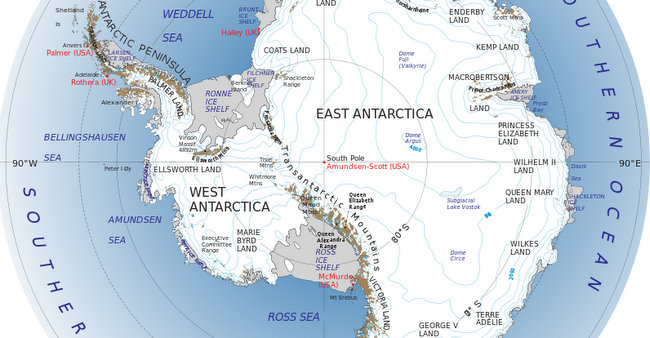
On Tuesday, 21 June 2016, the BBC World Service officially transmitted the 2016 BBC Antarctic Midwinter Broadcast–an international radio broadcast intended for a small group of scientists, technicians, and support staff who work for the British Antarctic Survey.
This is one of my favorite annual broadcasts, and I endeavor to listen every year. Once again, the SWLing Post called upon readers to make a short recording of the broadcast from their locale.
Below are the entries, roughly organized by continent and country/region, including reader’s photos if provided. I had planned to post these recordings by Sunday, but my travels interfered and I discovered an additional ten recordings in my inbox! (If I’ve somehow missed including your entry, please contact me; I’ll amend this post.)
So, without further ado….
The 2016 BBC Antarctic Midwinter Broadcast Recordings
Australia
SWL (Shortwave Listener):Rob Wagner Location: Mt Evelyn, Victoria, Australia Notes: [A] 12 minute video record of the broadcast that also demonstrates some tuning techniques and DSP facilities on the Yaesu FTDX3000. You can view the video below or by clicking here:
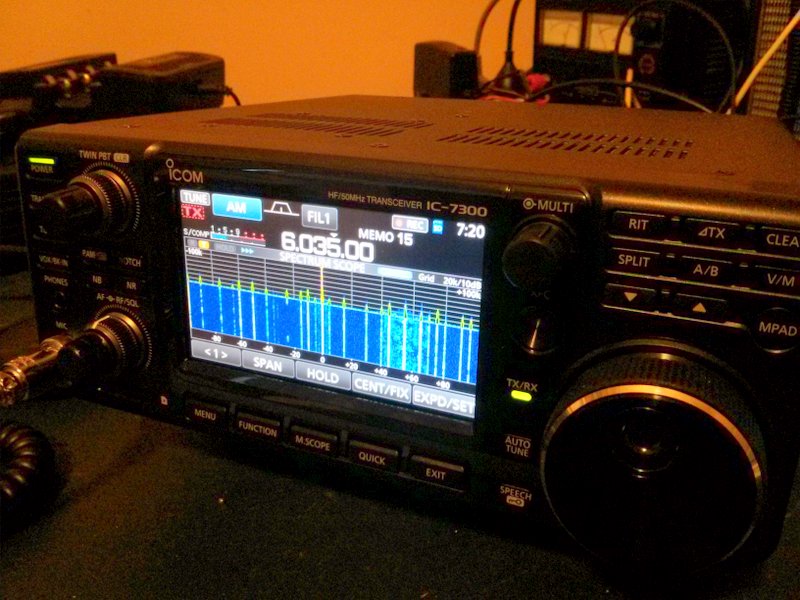
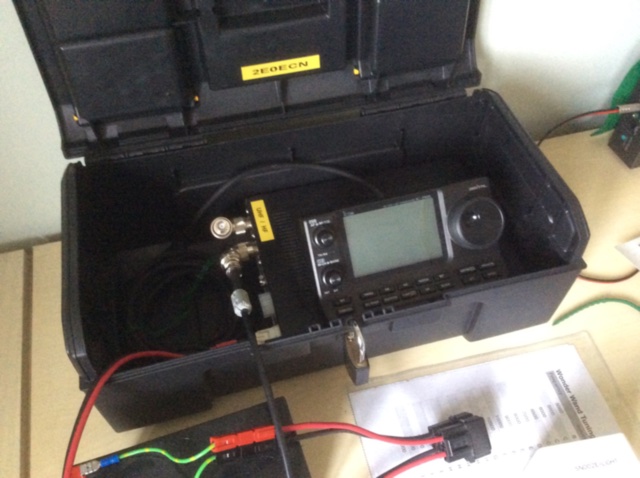
Paul’s Icom IC-7300 tuned to the BBC Midwinter broadcast.
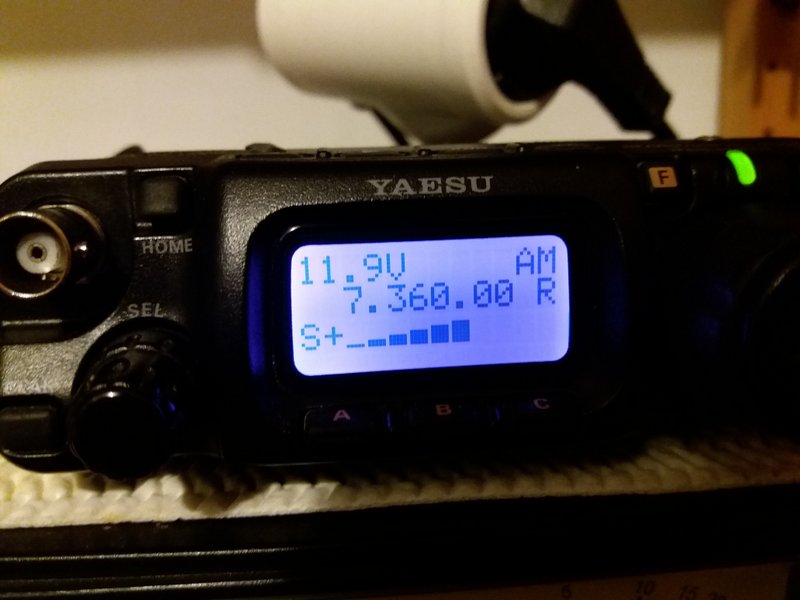
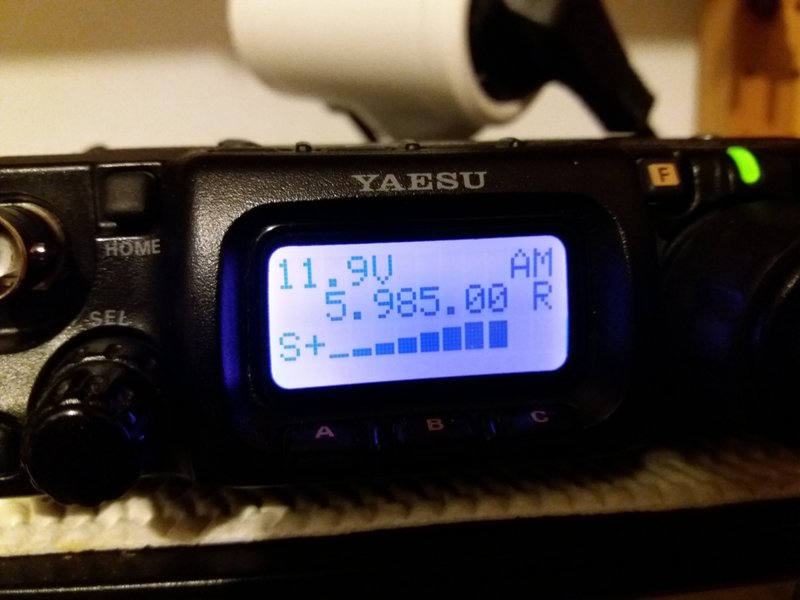
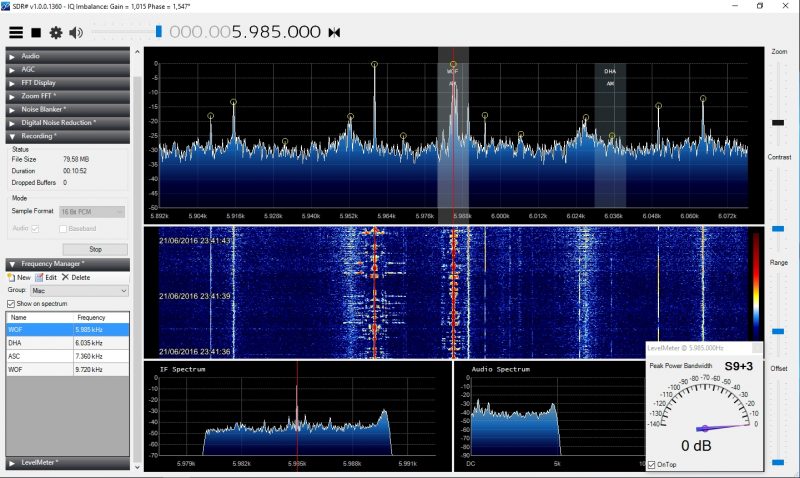
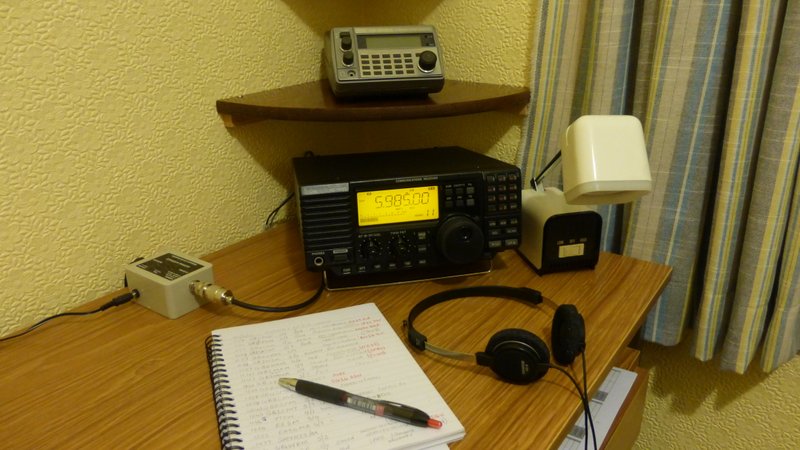
SWL: Paul Philbrook Location: Adelaide, South Australia Notes: Here are a couple of recordings from this mornings broadcast. Just had a quick listen before heading off to work and recorded these two with the IC-7300. Radio: Icom IC-7300 Aerial: Multi-band loaded dipole. 5985 Khz strength 5 readable, 6035 Khz strength 8 good readability, 7360 Khz no copy.
Click here to download recording 1 and recording 2, or simply listen via the embedded players below:
New Zealand
SWL: Bryan Clark Location: Mangawhai, New Zealand Notes: Listening in New Zealand, reception was not as good as last year.
Here are short audio files of the 3 frequencies. I used an EWE antenna aimed southeast, that is across South America, for the best signals. Receiver is a WinRadio Excalibur Pro SDR.
SWL: Christoph Ratzer Location: Salzburg, Austria Notes: Here my complete recording for you. Received at my remote station http://remotedx.wordpress.com in Salzburg, WinRadio G33 Excalibur PRO, Delta loop antenna with Bonito ML052 amplifier.
SWL: Willy Andersen Location: Soeborg, Denmark Notes: Here is my recording from 7360kHz on June 21. 2016. Very strong and clean signal. Vy 73 de Willy, OZ4ZT
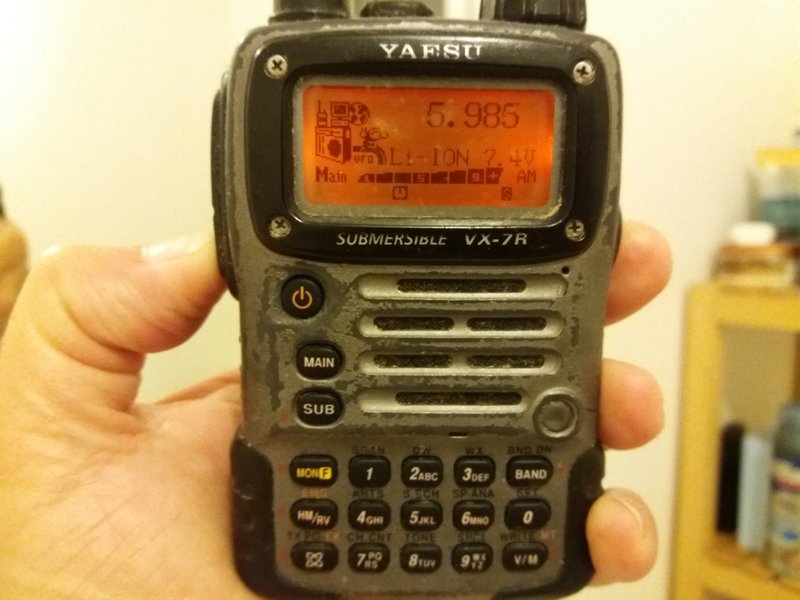
SWL: Philippe Location: L’Hôpital-Camfrout, France (few km south of Brest) Notes: Very good conditions here, good sound. Equipment: Yaesu FT817ND + V inverted antenna and Yaesu Vx7r + original antenna (little stick on the radio). On both radios, reception: 59 / 59+
SWL: Alan Location: County Kildare, Ireland Notes: 5,985 kHz Woofferton. Distance: 280km. Recorded from County Kildare, Ireland
with an Icom-718 and 20m Random wire on an Olympus vn-741pc.
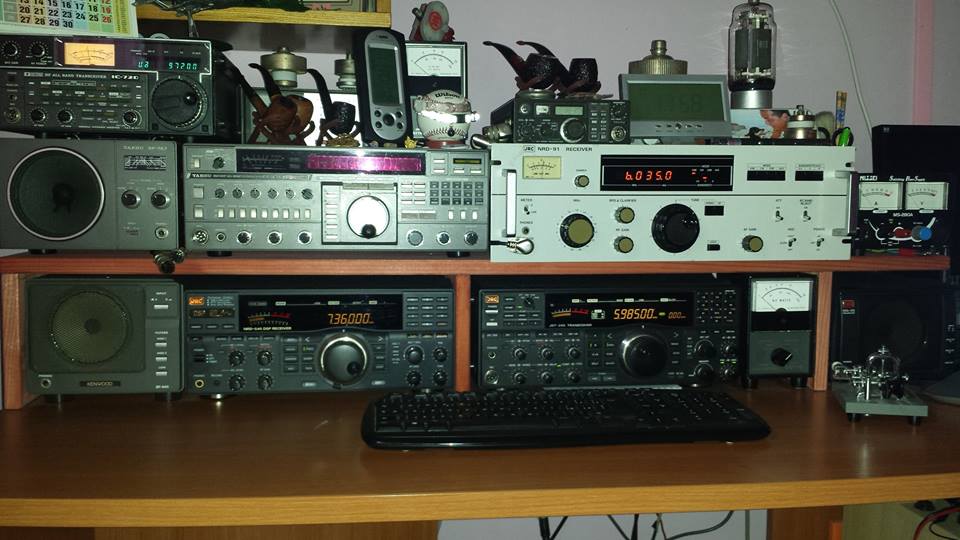
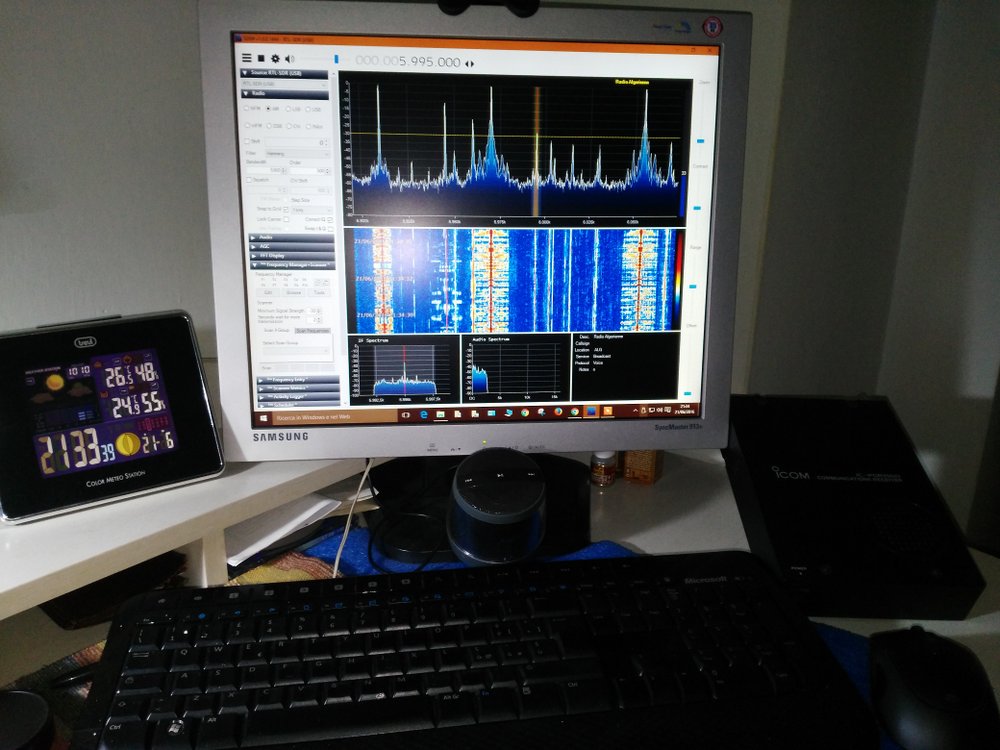
SWL: Renato Feuli (IK0OZK) Location: Valentano, Italy Notes: Woofferton at 5.895 Khz AM
Time UTC 21.33
Signal Report R/S R5 S 9+15 Db Very Good signal and audio
Equipement:
RTX JRC 245 and Windom antenna
To Ascension at 7.360 Khz AM
Time UTC 21.33
Signal Report R/S R5 S 9+10 Db Very Good Signal and audio
Equipement:
Receiver JRC NRD 545 Dsp and Long-Wire antenna
To Dhabayya at 6.035 Khz AM
Time UTC 21.38
Signal Report R/S R3 S 4/5 Low Signal and many QRM and QSB
Equipement:
Receiver JRC NRD 91 and Long-Wire antenna
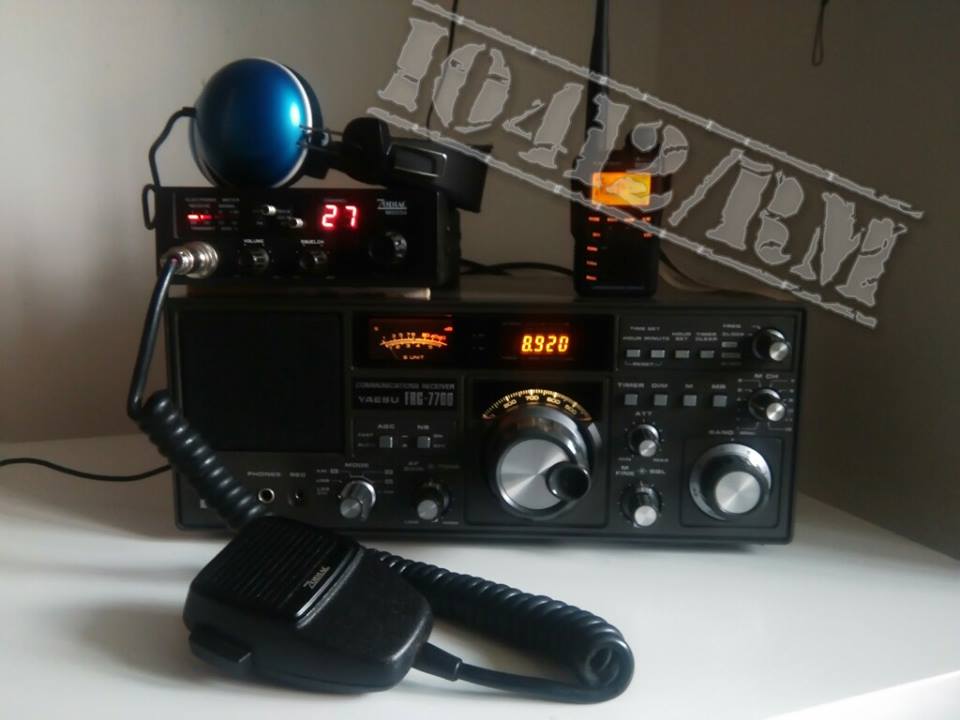
SWL: Joseph Location: Ponza island, Italy Notes: I am Joseph in Ponza island, Italy, with pleasure I send you a video of the Antarctic Midwinter 2016 recorded yesterday night with my old smartphone … great about the 5985 and 7360 frequencies, very poor reception on 6035, I used the 3 receivers Yaesu vr5000 connected on a discone antenna “Midland full band”, AOR ar 3030 and Kenwood R1000 on antenna “Mini Whip”.
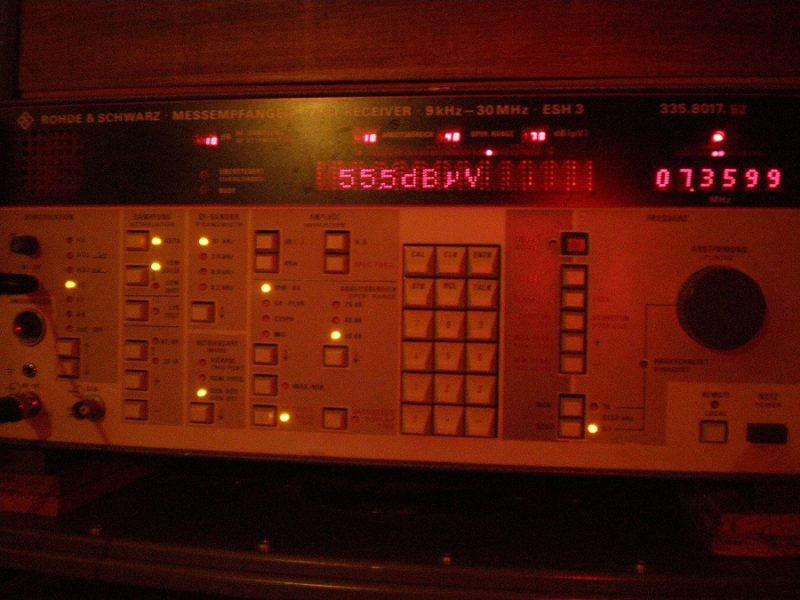
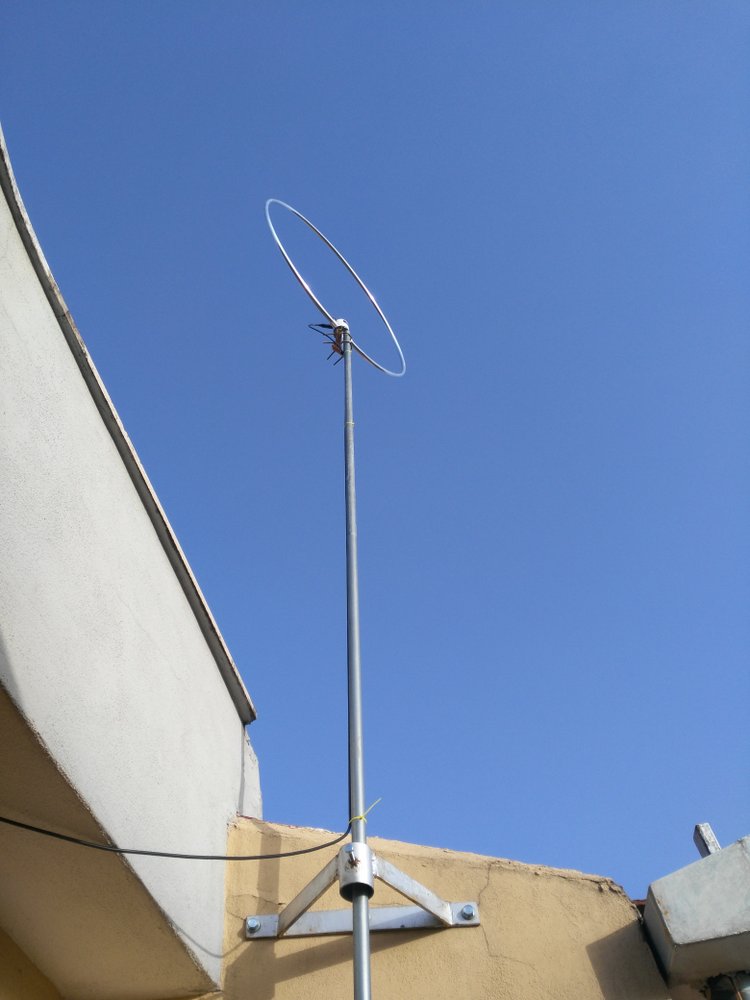
SWL: Davide Borroni Location: Saronno, Italy Notes: 21 June 2016 at 2130-2200 UTC on 7360 KHZ AM. I listened to the BBC broadcast with SINPO 54444. I listened to beautiful music and talk. Thanks for show ! I used my R&S ESH3 (see above) with my magnetic loop 2 meter diameter antenna.
SWL: Andrea Borgnino Location: Rome, Italy Notes: BBC Antarctic Midwinter Broadcast 2016 – 5985 khz 21/6/2016 recorded in Roma Italy. Click here to listen on SoundCloud.
SWL: Jordan Heyburn Location: Northern Ireland Notes:
BBC World Service Special Broadcast to Antarctica 5985khz received in Northern Ireland using a SDR Play RSP & Wellbrook ALA1530LN Active Loop Antenna. Click here to view on YouTube.
Poland
SWL: Chris Ditrich Location: Poland Notes: Reception on 5985 kHz and 7360 kHz was very good 59 – 58, however reception on 6035 kHz was not that good, signal was there but not much readable
SWL: Dmitry Elagin Location: Saratov, Russia Notes: I accepted BBC Antarctic Midwinter Broadcast in Saratov, Russia. I made video record by means of my SDRPlay.
SWL: Chris Inwood Location: Conrwall, England Notes: [R]ecorded on 5.985 MHz. This frequency was by far the best quality. I was able to copy 7.365 here but there was slight QSB and some interference from an adjacent broadcaster HCJB. 6.035 was not heard at all neither was 9.720 MHz. Very best wishes and thanks, I always look forward to my email.
SWL: Mark Hirst Location: Basingstoke, Hampshire Notes: Thanks for alerting shortwave listeners to the British Antarctic Survey broadcast. It felt very poignant listening to a broadcast aimed at such a small number of people, with the voices of their loved ones being launched around the world.
I was able to record the broadcast from only 100 miles away from the Woofferton transmitter, so needless to say the quality and strength was very good. I imagine hearing that broadcast buried in the noise from far away with those happy birthday songs and best wishes must have been very emotional for its intended audience.
My recording location was Basingstoke, Hampshire in the UK – locator IO91LH 20HH
[Note that Mark also recorded the full 30 minute broadcast which you can download by clicking here.]
SWL: Dean Allison Location: Bedlington, Northumberland, England Notes: I have attached an audio file of the BBC transmission to Antarctica. My location is Bedlington, Northumberland, England, about 100 feet above sea level, using a Kenwood R5000 receiver and a 30 feet longwire antenna about 12 feet off the ground. This was the 5985 kHz transmission.
SWL: Jerry Rhys Location: Surrey, England Notes: Attached are two recordings of today’s BBC Antarctic Broadcast made between
2130 and 2150z. The first recording was made using AM mode with 8 kHz bandwidth on 5985 then 7360, followed by 6035. The second recording was made using SAM mode with 10 kHz bandwidth on 7360, 6035, and 5985.
The best signal was on 5985, 7360 was weak but readable, on 6035 I could detect a carrier and occasional modulation – on this frequency there was also interference from a digital transmission on 6037. Nothing heard on 9720.
I was using a RF Space SDR-IQ Receiver, and a Wellbrook ALA1530S Loop
Antenna installed in my loft. Many thanks for the SWLing Post, always an enjoyable read!
SWL: Alan (G4TMV) Location: northern England Notes: Reception of this special broadcast was excellent here in northern England on 5985 kHz. It was an enjoyable broadcast again, but Babcock weren’t wasting any electricity on it, it came on and went off again almost spot on 2130 and 2200!
SWL: Dom B Location: Newcastle Under Lyme, England Notes: I live streamed the midwinter broadcast on my Tecsun PL-380 from my location in Newcastle Under Lyme in the UK
SWL: Lawrence Beedle Location: Manchester, England Notes: Here is my recording of the mid winter broadcast by the BBC 21st June 2016. Tecsun PL660 telescopic aerial, indoors, sat at kitchen table in a house in Manchester, England, UK. 5985khz good reception. 6035 kHz not as strong, 7360 kHz no reception. Recorded on iPhone next to speaker on radio. 36 seconds.
SWL: David Mappin Location: Filey, England Notes: Just thought I would let you know how I got on with the BBC WS broadcast to Antarctica. I used my Icom IC-R75 receiver and a Wellbrook ALA1530 inside the house. 5985 kHz was very strong with me here on the east coast of the UK (NVIS propagation?). Nothing heard on 6035 or 9720 but a weak signal on 7360. Attached (above) is a photograph of my listening post. This is a link to a YouTube video of the start of the broadcast. My very best regards and thank you for your excellent website.
A screenshot from Cap’s Elad FDM-S1 SDR.
SWL: Cap Location: N.W. Scotland Notes: Here is my attempt last night with SDR screenshot attached, Elad FDM-S1 with homebrew mini Mag Loop (<250mm dia) sitting on my bookcase. No doubt there will be better signals/recordings than mine as the signal was really strong from WOF and considering my setup is 100% indoors, it came out ok. External antennas don’t last here as I am by the sea and regular 100mph+ storms in the winter is too much hassle.
SWL: Richard Langley Location: New Brunswick Notes: Tecsun PL-880 receiver with a Tecsun AN-03L 7-metre wire antenna in AM mode with 5.0 kHz RF filtering at the back of my yard. The photo [of Richard’s outdoor portable listening post] was taken during some other recordings last year.
Click here to listen to Richard’s recording, or simply use the embedded player below:
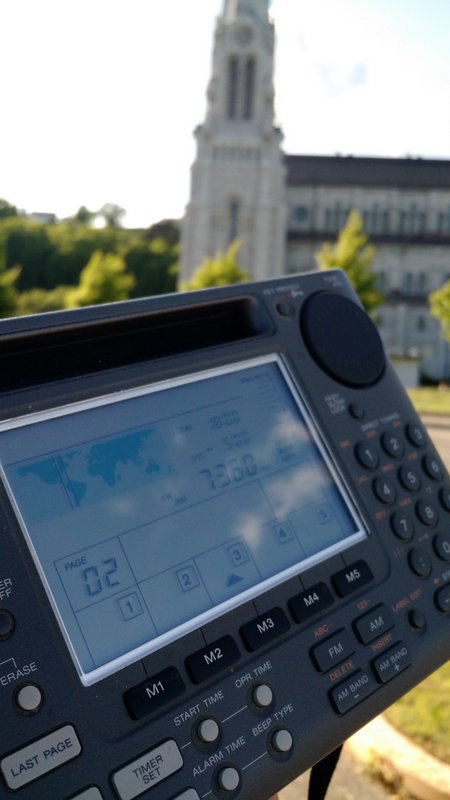
SWL: Thomas Witherspoon Location: Saint-Anne-de-Beaupré, Québec Notes: I traveled to an RFI quite spot in the parking lot of the Basilica in St.-Anne-de-Beaupré, Québec. Click here to read a full post about my set-up and conditions. Note that I used a Sony ICF-SW55 receiver (above), perched on top of my vehicle and tuned to 7360 kHz.
SWL: Dan Hawkins Location: Davis, California Notes:Here is my YouTube video. I’m using both the Sangean and Hammarlund receivers to hunt down the BBC Midwinter Antarctic Broadcast. Probably a somewhat different result than on most of the videos, but probably typical of West Coast propagation at these frequencies and times.
SWL: Nace Magner Location: Bowling Green, Kentucky Notes: Please find attached a video of my reception of the BBC broadcast. Unfortunately, a thunderstorm passed through about 10 minutes prior to the video and the audio is dominated by lightning-related crashes. However, the BBC signal can be heard periodically. My location was on a university campus in Bowling Green, Kentucky, which is about 50 miles north of Nashville, Tennessee. I received the signal using a Tecsun PL-660 and its whip antenna. I enjoy the SWLing site. Best regards, Nace Magner (KW4LY)
Once again, many thanks to all of you who submitted your recordings of the BBC Midwinter Broadcast! We’ll be sharing this post with both the British Antarctic Survey and the BBC World Service. And to all of you, from the SWLing Post: Happy Midwinter! Happy Summer/Winter Solstice!
We’ve just posted yet another excellent recording by Jim Jordan to the Shortwave Radio Audio Archive. This Cold War recording of Radio Moscow dates back to September 19, 1984.
Jim notes:
A nice Cold War piece from Radio Moscow on the double defection of the Soviet journalist Oleg Bitov. The real story behind it was revealed ten years later [click here to read article].
Also, check out this short mention in the Ukrainian Weekly:
THE UKRAINIAN WEEKLY SUNDAY. NOVEMBER 4,1984
Jim’s recording was made using a National Panasonic RF-2200 tuned to 9.5 MHz around 08:10 UTC. The location was South Shields, UK.
Every year, the BBC broadcasts a special program to the scientists and support staff in the British Antarctic Survey Team. The BBC plays music requests and sends special messages to the small team of 40+ located at various Antarctic research stations. Each year, the thirty minute show is guaranteed to be quirky, nostalgic, and certainly a DX-worthy catch!
After the successful listener event last year, I’m calling on all SWLing Post readers and shortwave radio listeners to make a short recording (say, 30-60 seconds) of the BBC Antarctic Midwinter Broadcast today and share it here at the Post (frequencies and time below).
The recording can be audio-only, or even a video taken from any recording device or smart phone. It would be helpful to have a description and/or photo of your listening environment and location, if possible.
If you submit your recording to me, I will post it here on the SWLing Post–and insure that the British Antarctic Survey receives the post, too. The recordings will be arranged by geographic location.
The broadcast will take place from 2130-2200 UTC today on the following frequencies (thanks to Alokesh Gupta for the tip):
5,985 kHz WOF 300 kW / 184 deg to Antarctica English
6,035 kHz DHA 250 kW / 203 deg to Antarctica English
7,360 kHz ASC 250 kW / 207 deg to Antarctica English
UPDATE: 9,720 kHz WOF 300 kW (Thanks to Richard Langley who notes that, per Glenn Hauser’s DXLG group, this frequency is not confirmed.)
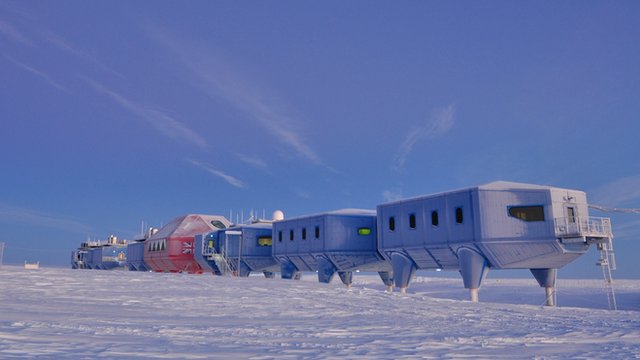
Halley VI: The British Antarctic Survey’s new base (Source: British Antarctic Survey)
I’m sure there will be live reports in the SWLing Post chat room during the broadcast. Please sign in and share your report as well!
I’m uncertain if I’ll be able to receive the broadcast this year–I’m traveling at the moment in Québec, but will have my trusty Sony ICF-SW55 and C.Crane CC Skywave in tow.
I’ll plan to seek out a quiet park away from man-made noise and give listening a go!
The Midwinter broadcast is one of my favorite programs of the year. I suppose, in part, this is because it happens on June 21–the Summer/Winter solstice–which also happens to be my birthday!
No seasoned shortwave DXer can forget one of the most distinctive interval signals ever–the “barnyard animals” which marked the beginning of the broadcast day of Radio Botswana, Gaborone, for decades.
On its long-time frequency of 4820 kHz, Botswana was an occasional catch for me from the Seattle USA area. I yearned for clearer, more reliable reception of this station and other Africans which my East Coast USA DXer pals enjoyed!
Zebras mingle with other animals at Chobe National Park, Botswana.
It was always fun–and a DXing challenge–to catch Radio Botswana’s interval signal and sign-on announcements, but it was typically mid winter for reception in Seattle. Propagation on 60 meters needed to be favorable to enjoy anything other than a weak, barely listenable signal. Imagine my surprise and excitement when on the evening of December 27, 1987 I came upon the following signal booming in on 4820 kHz, far, FAR better than any previous Botswana reception. Indeed, their signal that evening surpassed in clarity even the Papua New Guinea and Indonesian “regulars” I would hear on the tropical bands from the Northwest USA.
This recording begins with the famous barnyard animals interval, the beautiful Botswana national anthem (Fatshe leno la rona, or This is Our Land in English) and is followed by a full list of broadcasting frequencies and times in English and the (presumed) Setswana language. That information is followed by a flute instrumental version of the Christian hymn Beautiful Savior, which introduces a short devotional or scripture message. The 10 minute recording wraps up with an a cappella children’s choir.
Great Circle route from the Gaborone transmitter to Seattle receiver location.
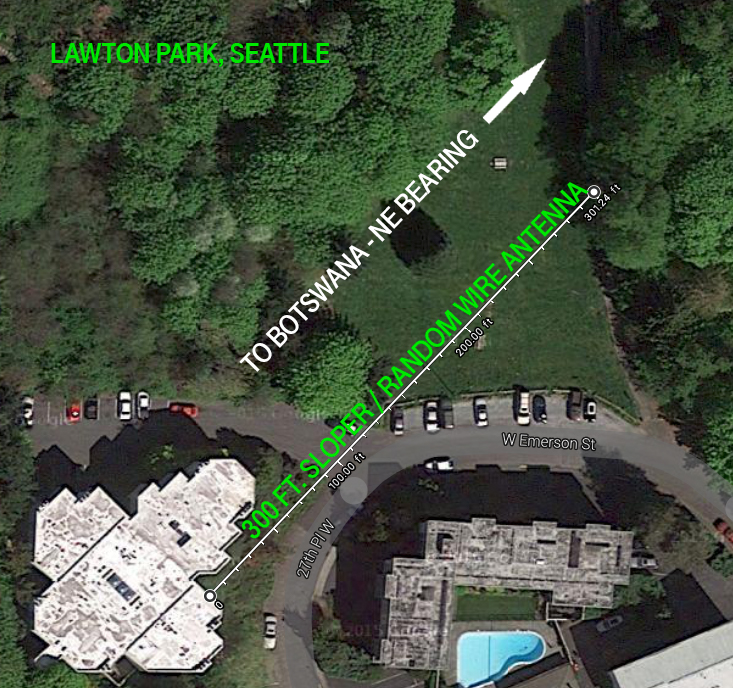
My receiving setup for this 1987 recording was an ICOM IC-R70 and a 300 foot long random wire antenna. Such a long antenna is unusual for the middle of an urban area, but I took advantage of living in a 3rd floor apartment across from a small city park. One midweek day, while most folks were at work, I managed to string out this long antenna with very small diameter braided steel wire from the 3rd floor apartment balcony to a distant treetop. This “sloper” antenna had significant directivity to the northeast, which happens to be the bearing for many African stations heard from the Pacific Northwest USA. The small diameter wire was suspended so high that it was virtually invisible from ground level.
Antenna orientation for 1987 reception of Radio Botswana. I’m sure this urban location is plagued by QRM and radio frequency interference now in 2016! My ICOM IC-R70 receiver handled the strong signals from nearby MW & FM broadcasters surprisingly well with the addition of a Grove Tun3 Mini-tuner preselector.
I continued to log Radio Botswana occasionally on 60 meters until the station eventually left the air (early 2000s I think), but I never heard them again with such a strong, clear signal as in late December 1987!
Guy Atkins is a Sr. Graphic Designer for T-Mobile and lives near Seattle, Washington. He’s a regular contributor to the SWLing Post.

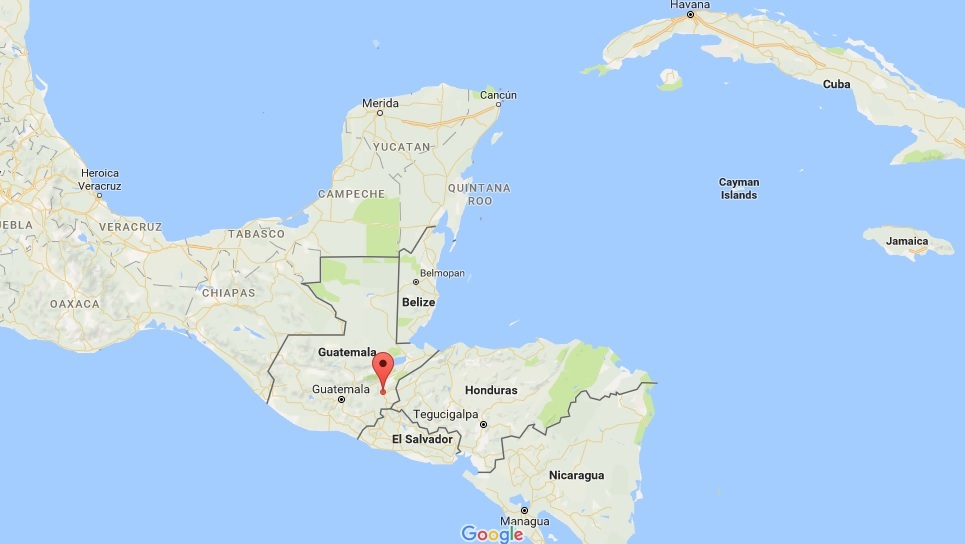 Radio Verdad, Chiquimula, Guatemala is quite a regular catch at home, however, their modulation is nearly always weak as the carrier struggles to lift above the ubiquitous blanket of local QRM. Another issue with hearing this station is the digital utility signal just above 4055 kHz, thus requiring LSB reception to reject the adjacent noise.
 A view looking toward