Category Archives: Shortwave Radio

What radio would you grab in a fire?

Scott-Marine-SLR-M

Lately, fires have been on my mind. No doubt, this is because there are so many wildfires in the greater southern Appalachian region right now, which is in the midst of a record drought. Brush fires start up almost daily, and no rain is in sight.  In the mountains, the air is hazy with smoke, and it’s become a struggle for fire departments to contain these blazes, even with help from outside the region.

Living, as we do, in a forest, we’ve always had to think through contingency plans if a forest fire should threaten our home:  with only a two hour (or so) warning, what items would we grab and load into our truck?

Of course, we’d likely focus on those things that are irreplaceable and thus essentially invaluable: our few family heirlooms, boxes of photos, documents––you know, stuff you can’t buy.

But what about radios?  I hope I’ll never be forced to choose the one thing I should save from my shack, because there are several to which I’m rather sentimentally attached…There’s my Zenith Transoceanic, for example–the first proper shortwave radio I ever owned. There are also a number of vintage radios as well as some SDRs which have become my staple receivers.
Scott-Marine-SLR-M-Dial

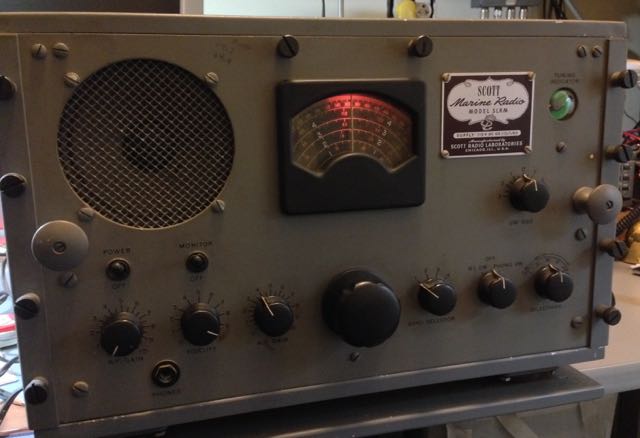
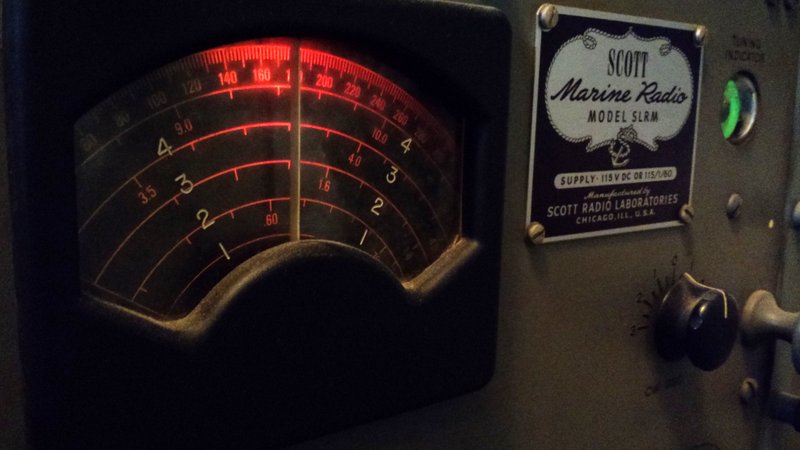
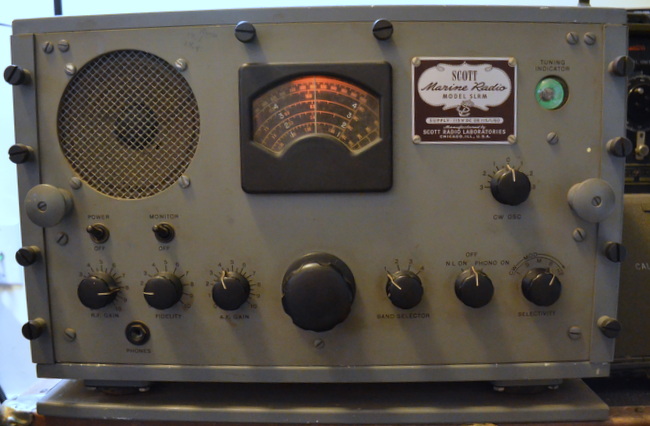
In the end, though, there’s no question which radio I’d grab. It would have to be my Scott Marine Radio Model SLR-M, affectionately nicknamed “Scottie.”. True, she’s not even close to portable at a solid 90 pounds, but I’d strap her to the roof of my vehicle, if I had to.

Why?  Well, it’s the most pristine vintage radio I own, and I use it daily. If it’s not tuned to Radio Australia in the morning, it’s tuned to my AMT3000 AM transmitter on 1570 kHz drawing in any of a number of stations I relay from my WiFi radio.
Scott-Marine-Radio-SLR-M

Scottie simply isn’t replaceable. Even though my Elecraft KX3 probably costs more in terms of monetary value, I could eventually scrape together the money to buy another KX3. But I couldn’t buy Scottie again. Not this one.

So, there you go: after we’ve saved those things important to our family, I’d grab a 1945 receiver and haul it to safety.

Post readers: Now I’m curious–if your home was threatened by fire or other disaster, what radio would you save? Please comment!

Which is the best? Sony ICF-2001D/2010 or ICF-SW77? The halfway score

Hi there, here is a summary of the first half of tests comparing the Sony ICF-2001D against it’s replacement the ICF-SW77. Both receivers are widely acknowledged as being amongst the best shortwave portables ever made, but how close are they in performance? Is there a clear winner after the first 8 reception tests? I hope you enjoy the summary video. Links to the first half of reception tests follow again, below, whilst the second half will follow in a separate post. Thanks and good DX to all.


Clint Gouveia is the author of this post and a regular contributor to the SWLing Post. Clint actively publishes videos of his shortwave radio excursions on his YouTube channel: Oxford Shortwave Log. Clint is based in Oxfordshire, England.

Radio World explores the PantronX Titus II

titus 2 big

Many thanks to SWLing Post contributor, Tom Ally, for sharing the following article by James Careless in Radio World:

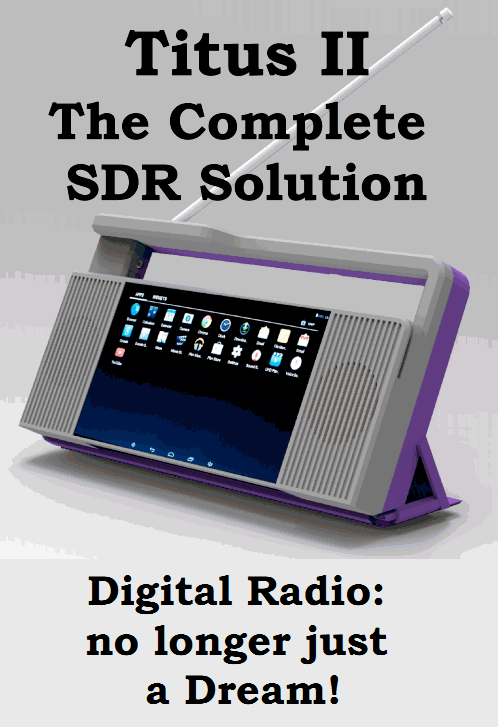
Well, if you are the engineering firm PantronX, you have the Titus II software-defined radio. And when you plan to sell this ultimate receiver for less than $100 each, you hope you have a consumer sensation for the worldwide broadcast market.

Unveiled by the Panama-based company at an international broadcasting meeting in Miami in August, the Titus II SDR is not yet shipping. But it is described as capable of receiving and playing analog and digital radio transmission formats including AM, FM, shortwave, HD Radio, DAB+ and Digital Radio Mondiale. The company is considering adding a DRM+ decoder.

The initial market is among worldwide broadcasters, particularly those serving countries where listeners may lack internet; a secondary market is individual listeners, hobbyists and others. PantronX will not supply all decoders for all formats but add them preloaded as needed.

Read the full article at Radio World…

Spectres of Shortwave sound track broadcast via WRMI

RCI-SpectresOfShortwave

Many thanks to SWLing Post contributor, Richard Langley, who writes:

Have you heard? Amanda Dawn Christie’s “Spectres of Shortwave” sound track will be broadcast over WRMI this Sunday evening from 23:00 UTC to 01:00 UTC on 7570 kHz.

The broadcast will coincide with the screening of the film at the Festival International du Cinéma Francophone en Acadie in Moncton, New Brunswick, being shown at the same time:
www.ficfa.com/film?id=5353&varLangue=LS

Thank you, Richard! I will certainly tune in and record this for Amanda.

SDRuno Version 1.1 Update

sdruno-screenshot

(Source: SDRplay Press Release)

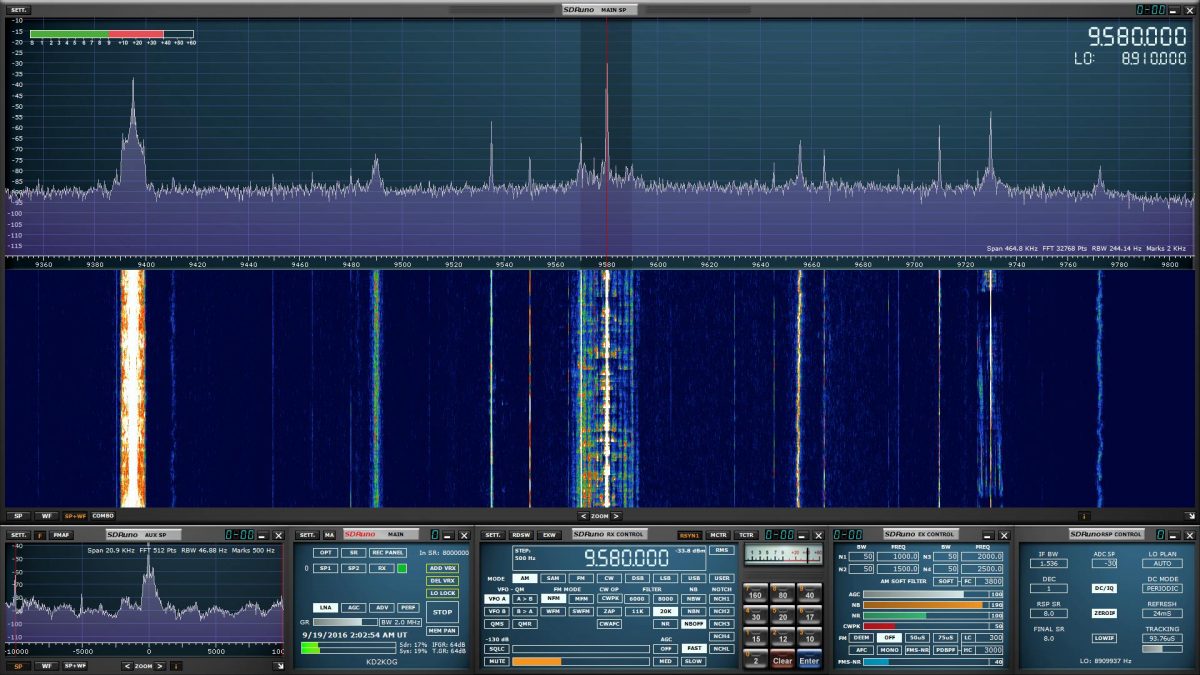
Today, we released version 1.1 of SDRuno, specifically for RSP. New features include a calibrated power measurement facility, an SNR meter and automatic S-meter calibration. There are many additional improvements and fixes. To find out more about all the additional features, documentation can be found on:

http://www.sdrplay.com/docs/SDRplay_SDRuno_Release_Notes.pdf

and the software is available to download from:

http://www.sdrplay.com/windows.html

Paul Jones and Mike Ladd have worked tirelessly to get the new features documented in an updated version of the SDRuno Cookbook: http://www.nn4f.com/SDRuno-cookbook.pdf

Other SDRs can also use SDRuno with a new increased bandwidth limit of 2.5MHz.

Many thanks to Jon Hudson at SDRplay for sharing this info!

Possible Tecsun PL-880 hidden feature: Noise reduction adjustment?

PL-880 (1)

Many thanks to SWLing Post reader, Paul, who writes:

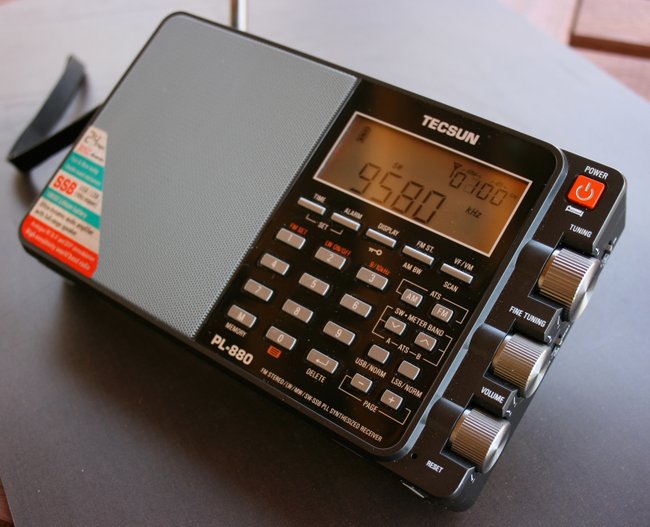
While putzing around with my new Tecsun PL-880 that I got while browsing at Universal Radio’s store in Columbus OH, I found what appears to be an adjustable noise reduction function.

Firmware level: 8820
Mfg date: probably August 2016 (201608 from the serial number inside the tilt stand)

Here are the steps to check it out;

When in a shortwave band, press “4” until either “ON” or “OFF” appears in the display.
If it displays “OFF”, press 4 briefly to clear, then long press again until “ON” appears.

Then, long press “9” until a two digit number appears.

Use either tuning knob to increase or decrease the number.

The number appears to correspond with the DbM threshold of the received signal.

Perhaps someone can play with the feature and elaborate on its function.

Hope this is useful, let me know.

Thank you for sharing, Paul!  I do wonder if this adjustment could affect the DNR setting (check out this previous post as well).

Post readers: Has anyone else been able to replicate and test this hidden feature? Please comment!

Shortwave Radio Recordings: Radio Thailand English language service

Paul-Walker-Galena-Alaska

Many thanks to SWLing Post contributor, Paul Walker, who shares this recording from his home in Galena, Alaska. Paul notes:

Radio Thailand (13745 kHz) English service to North America at 0000UTC on November 8th, 2016:

Click here to view on YouTube.

Not the strongest I ever hear them, but a good solid clean nearly noise and nearly fade free signal.

That’s an impressive signal, Paul, especially considering the fact that propagation conditions have been somewhat shaky as of late. Thanks for sharing!