Shortwave listening and everything radio including reviews, broadcasting, ham radio, field operation, DXing, maker kits, travel, emergency gear, events, and more
My source also sent a few RA internal notes/points regarding services, feeds and transmitters:
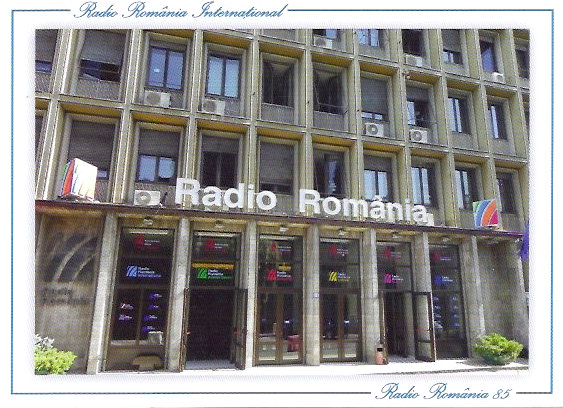
Radio Australia
Babcock ended 14th January.
Brandon last broadcast 31st January.
Shepparton reduced schedule from 1st February. 3 transmitters only.
RAS 1 is Pacific Satellite Feed
RAS 2 is Asia Satellite Feed
RAW 5 is Asia Web Feed
RAW 6 is Pacific Web Feed
Reminder – preferred backup domestic source is Classic FM, not Radio National.
[…]Radio Australia News ex N05 will be the SERN bed news 0600-1800 Monday-Friday.
Many thanks to SWLing Post reader, David, who passes along this announcement from Radio Australia via Pacific Beat:
On Sunday, Radio Australia’s shortwave signal to Asia will be turned off, another result the ABC says of recent government funding cuts.
Shortwave broadcasting into the Pacific will continue, but signal strenth outside Papua New Guinea, Solomon Islands and Fiji may be degraded.
Alex Oliver from the Lowy Institute has contributed evidence to Australian parliamentary inquiries and committees on foreign affairs, defence and trade for many years.
So does she view the switch off as a big step back from international broadcasting by Australia, or simply the retirement of some old technology.
It appears Blinq only has one more left in stock–though I imagine more will sporadically appear in the future. While I have received a dud radio from Blinq once (a 450DLX), their return process is so effortless and efficient, I personally don’t mind taking my chances.
The publishers of the Wold Radio TV Handbook sent the following message to me regarding availability of WRTH 2015 on Amazon.com:
“WRTH 2015 is now available on Amazon.com, despite the first page listing it as “This title has not yet been released.”We have been unable to get Amazon to change this page.
Readers in North America should click on the listing for other new offers – currently showing as 8 New from $27.28.The copies shipped by us to Amazon are listed under WRTH Publications Limited. These copies will be fulfilled direct from Amazon distribution centers. All the other offers on the page rely on shipping copies from Europe.”
Shortwave Radio Audio Archive contributor, Richard Langley, has digitized another set of historic off-air recordings–this time, documenting the independence of Lithuania through Radio Vilinus.
Many thanks to Richard for the following guest post and archived audio:
Radio Vilnius 1990-1991
On 11 March 1990, Lithuania was the first Soviet republic to declare its independence. The Soviet Union issued an ultimatum to the Lithuanian authorities to renounce independence or suffer the consequences.
On 17 March 1990, Lithuania rejected the demand and the Soviet Union responded by applying economic sanctions and occupied parts of Vilnius, the capital city. In January 1991, the Soviets launched a larger scale operation against Lithuania. On 11 January, Soviet military units seized several building in Vilnius and elsewhere. On 12 January, civilians congregated outside some strategically important buildings such as those of the Supreme Council (the Seimas Palace), the Radio and Television Committee, the Vilnius TV Tower, and the main telephone exchange in an attempt to prevent them from falling into the hands of the Soviet military. In the early hours of 13 January, tanks and soldiers attacked the TV tower. Fourteen Lithuanians and one Russian soldier died.
Subsequently, Soviet forces surrounded and entered the Radio and Television Committee building and forced the TV station off the air. Shortly thereafter, a small TV studio in Kaunas was used to resume TV transmissions and put out a call for help. Radio transmissions were also affected. Although Soviet forces were in the vicinity of the Supreme Council building, they retreated instead of attacking. The occupation and military raids continued for several months following the attacks.
Subsequent Lithuanian-Russian negotiations resulted in the signing of a treaty on 31 January. A referendum on independence held on 9 February overwhelmingly supported the full and total independence of Lithuania. Other republics of the Soviet Union declared their independence and following the resignation speech by Mikhail Gorbachev on 25 December, the Soviet Union was dissolved the next day. The last Russian troops left Lithuania on 31 August 1993.
Radio Vilnius, the external service of Lithuanian Radio, transmitted news about events in Lithuania and the other Baltic republics even at the height of the Soviet attacks. The broadcasts were made, in part, using transmitters elsewhere in the Soviet Union. However, there was a temporary interruption in these broadcasts after the occupation of the Radio and TV Centre by Soviet troops early in the morning of 13 January. They resumed on 25 January.
Radio Nederland’s “Media Network” programs of 20 January 1991 and 14 January 1992 featured reports on Radio Vilnius and the Soviet occupation. The sound files of these programs are available on the Web (“Media Network Vintage Vault“).
I have six recordings of Radio Vilnius English Service shortwave broadcasts between March 1990 and January 1991. These were received in Hanwell, New Brunswick, Canada, using a Sony ICF-7600D receiver and supplied wire antenna draped around the listening room.
28 March 1990, 22:00 UTC, 11770 kHz (00m:00s – 00m:55s)
Strong signal. Interval signal (IS) and station identification (ID) but the transmission was cut off in mid-sentence: “This is Radio Vilnius. Hello and welcome to our daily broad” All that could be heard faintly on this frequency then was Radio Liberty in Russian (“Govorit Radio Svoboda”). Initially could hear nothing on Radio Vilnius parallel frequencies until about four minutes into the broadcast when a very faint signal on 12060 kHz could be heard (not recorded).
29 March 1990, 22:00 UTC, 12060 kHz (00m:55s – 02m:04s)
Weak signal. IS, station identification, and first part of “News About Lithuania.” Radio teletype interference. Checked other frequencies.
3 April 1990, 22:00 UTC, 17665 kHz (02m:06s – 30m:02s)
Improved signal. Receiver briefly switched to other frequencies to check quality during the recording. IS, ID, “News About Lithuania,” report on the occupation of the Lithuanian Prosecutor’s Office on Friday night (30 March), music, sports news, “Lithuanian by Radio.”
Strong signal. Some co-channel interference from Radio Liberty. Receiver briefly switched initially to other frequencies to check signal quality during the recording. IS, ID, “News About Lithuania,” report about the Lithuanian Mission in Moscow, “Around Lithuania,” program in Esperanto (begins around 23m:08s) — a regular feature at the end of Monday broadcasts from Radio Vilnius in English. Interesting sign-off statement: “It’s goodbye and good luck.” On the recording, the Radio Vilnius transmission is followed at 29m:29s (on the same frequency), by the first approximately 15 minutes of a transmission from pro-Moscow Radio Minsk in Belorussian (now usually referred to as Belarusian). The transmission begins with the IS and ID (“Havorits Minsk … Radyjostancyja Saviecki Bielaru?”), followed by a news program.
Strong signal. Recording actually starts at about 22:58 UTC with music, the tail-end of a transmission on this frequency, likely from Radio Kiev. Some transmitter hum. Then, Radio Vilnius IS and ID. “We’re still hold up and we hope you can still hear us.” “News About Lithuania” including occupation news, commentary, and reports from the neighbouring Baltic states. Receiver briefly switched to other usual frequencies to check on signal quality (9750, 15180, 17690, and 17720 kHz; 6100 kHz not heard). Transmission ends with “And that’s all we have for our today’s broadcast, we hope not the last one, from Radio Vilnius in the Republic of Lithuania.” This is followed by the transmission schedule and contact information. After about 45 seconds, the Radio Minsk transmission begins with IS and ID.
Strong signal. Initial mix-up of interval signals. The first IS is believed to be that of Moskovskaya Radio, the Russian Service of Radio Moscow, followed by a bit of the Radio Moscow World Service IS, and then finally the Radio Vilnius IS. The transmission begins with the statement “We’re still broadcasting from Vilnius.” This is followed by the Lithuanian news reporting on the acts of aggression of the Soviet occupying forces and “Correspondents’ Reports.” The latter includes a report that the exam session at Vilnius University has been postponed to allow students to help protect buildings from the occupation forces, including the Radio and Television Building, and a report on the restrictions on travel. The reports were interrupted with “some news just come in” about a group trying to break into the building of the Council of Ministers. The announcer subsequently reported that the attackers had been put off and so the conflict has been neutralized. The broadcast ends with the statement “We hope to be with you tomorrow again” followed by the transmission schedule and contact information. The Radio Vilnius transmission is followed by the one from Radio Minsk. News organizations reported that Soviet troops entered the Radio and Television Building about 15 minutes after this Radio Vilnius transmission.
Strong signal on this and other frequencies usually received except 17690 kHz; only background noise on that frequency. However, there was no Radio Vilnius transmission on any frequency. It had been replaced by light classical and contemporary orchestral music. No IS or announcement of any kind. Music was faded out at 29m:03s before ending. During the recording, the receiver was briefly tuned to other Radio Vilnius frequencies to check on signal quality.
Strong signal. The recording begins with a few seconds of music from the previous transmission on this frequency. Then, after about one minute (there was no IS), the Radio Vilnius transmission starts with the beginning of the patriotic song “Lietuvninkai Mes Esam Gim?” (Lithuanians We Are Born) and an introduction stating that the broadcast is coming “from the capital of the independent Republic of Lithuania.” This is followed by “News About Lithuania” including items on further acts of violence by Soviet troops and severe winter weather. Then, there are reports on Lithuanian-Polish relations and the work of the commission on Soviet aggression. Next is an eye-witness report on the attack on the TV tower on the night of 13 January, a report on the current feelings of Lithuanians under occupation, and how music and the arts keep the people going. During the recording, the receiver was briefly tuned to other Radio Vilnius frequencies to check on signal quality. In addition to 7400 kHz, only 9750 and 17690 kHz could be heard.
Richard: Thank you so kindly for sharing these amazing off-air recordings.
Dr. Bertalan Eged of Spectrafold Technologies recently contacted me regarding a new military grade SDR they’ve produced: the Quadrus SDR. Today is the Quadrus official release.
The Quadrus SDR has phase-coherent multi-channel capabilities with up to 16 channels, which means that it can be used for direction finding, diversity reception, as well as MIMO applications.
While the Quadrus line is aimed squarely at government and scientific research markets, the $1490 US Quadrus DRU-244A-1-1-PCI, a four-channel SDR, might appeal to the discerning DXer, amateur radio operator, or radio experimenter.
Below, I’ve posted the full press release from Spectrafold Technologies along with several photos and screen shots.
Since I’m not a radio engineer, I’ve asked a representative of Spectrafold to answer any questions you may have about the Quadrus SDR line and its receiver architecture.
Military-Grade Software Defined Radio Receiver Platform
Now Commercially Available for Building Better Receivers
Phase-coherent, Multi-channelQuadrus Platform Brings New Features to Commercial Market
Spectrafold Technologies today released the Quadrus software defined radio (SDR) platform for commercial use, enabling access to advance, professional-grade platform for signal intelligence, spectrum monitoring communications systems and missions. The long-standing platform has features are still unmatched by other commercially available products, and include four cutting-edge, phase-coherent antenna inputs with 16 bit, 80 MSPS; high-sensitivity, high-dynamic range Analog-to-Digital Converters (ADCs) driven by a low phase noise; and high-stability sampling clock. The input signal chain also contains a Low-Noise pre-Amplifier (LNA) and an input leveling attenuator providing the necessary sensitivity while still maintaining the proper input drive. The architecture provides the capability of using high gain antennas, and standing against the overload by the crowded radio spectrum.
“Today there is strong international community of radio enthusiasts and listeners using SDR technology, looking for platforms that implement advanced radio signal processing algorithms,” said Dr. Bertalan Eged, chief architect of the Quadrus. “Physically and logically phase-coherent multi-channel SDR platforms provide the capability to implement various algorithms and receivers such as diversity reception, interference cancelling, beam forming and correlative receivers. These applications can help to deliver better sensitivity, more stable fading free reception, longer connectivity and collecting more information on the radio signal environment.”
The platform input bandwidth is wide enough to be used up VHF/UHF bands as Direct Digital Receiver (DDR). The samples are fed into an FPGA, where a non-blocking switch matrix is used to forward them to the input of the four on-board receiver signal processors. The on-board processing is capable of forming a 16 multi-channel receiver. The platform also features a standard PCI interface for PC integration, and comes with a Windows®32 bit kernel driver and fully open API, which can be downloaded from the website along with the operating SDR software. The SDR receiver software has remote control capability for system level integration via TCP/UDP/IP links. Further details on these capabilities are available at the Spectrafold website. The system has spectrum recording capability to binary files, some example can be downloaded for evaluation purposes.
The Quadrus API is available as a Windows® DLL, and developers and system integrators may download it from the SUPPORT page on the Spectrafold website. The hardware API is meant for direct hardware access, but a higher level remote control interface API is available as well, which can be used to (i) set up the receiver channel parameters and to (ii) access the IF as a UDP/IP stream. If you prefer to not use any of these methods, it is possible to fall back to a virtual audio card connection between the SDR software and external applications, like decoders and post processors.
Additional information on the performance and usage scenarios is available in the BLOG. Users interested in experimenting with the hardware can gain access to remote access to a computer with SDR hardware digitizer and installed SDR software. Interested parties should contact the team by email: [email protected]
Hardware orders may be placed through the manufacturer’s ORDER page. Standard secure payment option is provided via PayPal. International shipment by UPS is part of the service. The hardware is manufactured in batches with limited stock. Introductory pricing starts at $1490.
###
About Spectrafold Technologies
Spectrafold is a dedicated community of professionals, who work tirelessly to invent and create affordable, cutting edge SDR solutions. Together we have decades of hands-on experience delivering working solutions to the toughest missions and environments. Our customers include academic, governmental, and military organizations, but radio enthusiasts as well.
Screen shots
Click to enlarge:
Please support this website by adding us to your whitelist in your ad blocker. Ads are what helps us bring you premium content! Thank you!