Shortwave listening and everything radio including reviews, broadcasting, ham radio, field operation, DXing, maker kits, travel, emergency gear, events, and more
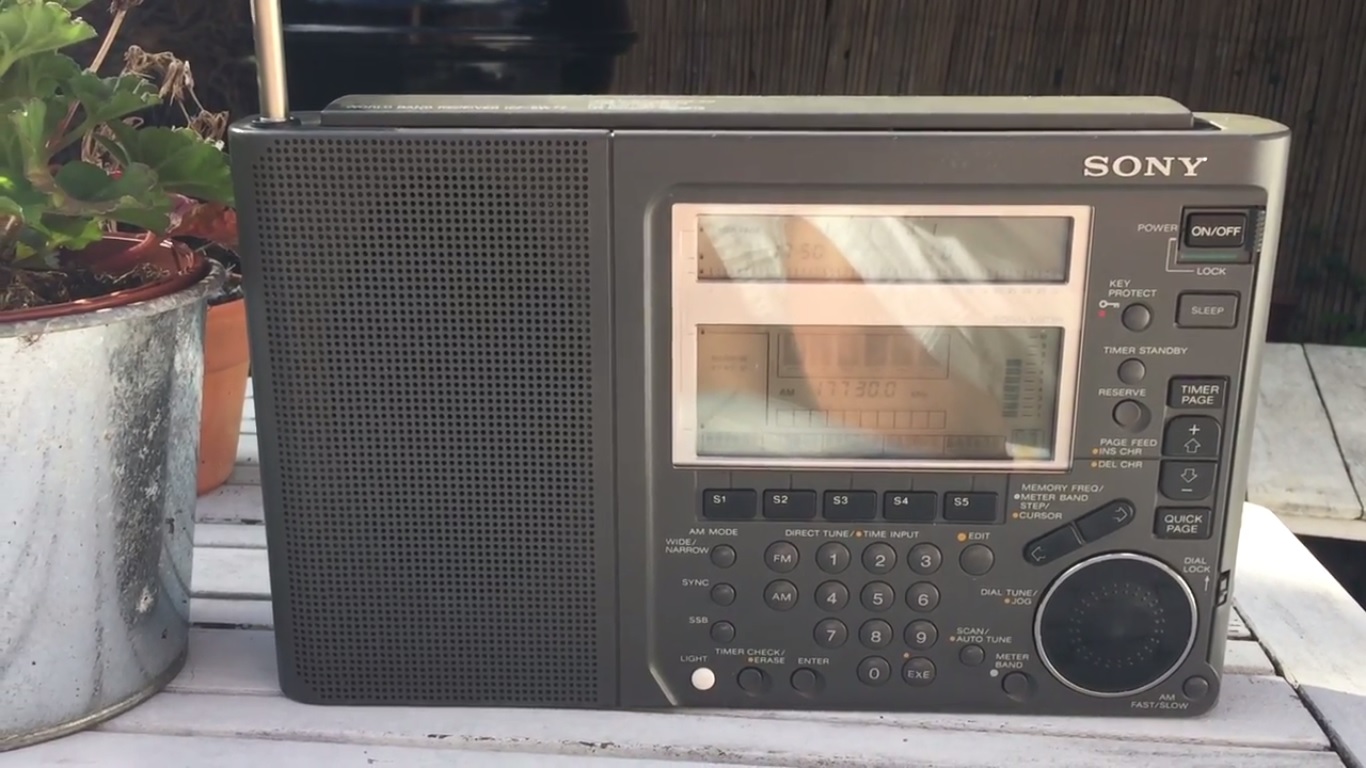
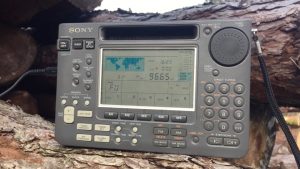
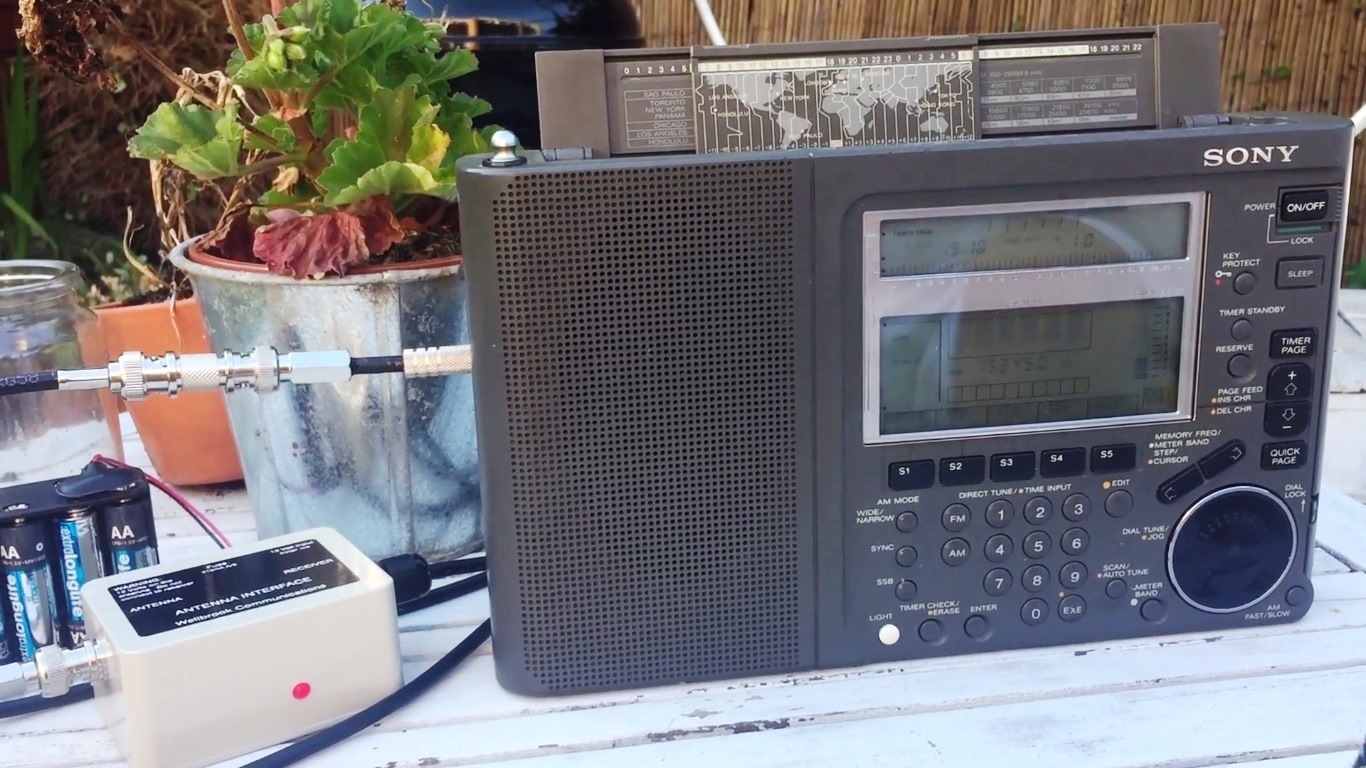
Hi there, subscribers to my YouTube channel Oxford Shortwave Log will be aware that I currently operate both of these wonderful vintage portables. I purchased the ICF-2001D only 18 months ago from eBay, based largely on its reputation as one of the best performing portables ever made. Previously I had been using my excellent ICF-SW55 as the mainstay receiver for my numerous DXpeditions, coupled with irregular appearances from my Sangean ATS-803A and the excellent value-for-money Tecsun PL-360. The ICF-2001D proved to be a revelation in terms of sensitivity, selectivity and contrary to popular belief, with careful planning (to avoid crowded bands), is able to cope pretty well with very large antennas. As regards audio bandwidth filtering, SSB and synchronous detection, in my experience, the ICF-2001D is as good as it gets in a portable – or a vintage portable at least. I have lost count of the number of personal-firsts I’ve achieved using this wonderful receiver and as someone who likes to push the envelope a little, I soon started to wonder whether it’s replacement, the ICF-SW77 might prove to be an even better performer. Subsequent online research confirmed there was no absolute consensus on this issue, with followers of these two great receivers firmly placed in both camps.
Sometime later, a good friend of mine, fellow radio hobbyist and subscriber to Oxford Shortwave Log very kindly offered to send me his cherished ICF-SW77 on long-term loan. Like me, he was intrigued to know how it compared to it’s venerable predecessor and thus the deal was done! Upon it’s arrival in July, I started planning a back-to-back series of comparison tests at the very quiet wood in Oxfordshire I used for my DX’peditions, using the same antenna for both recievers – the excellent Wellbrook ALA1530 active loop. In total, I made fourteen reception videos comparing the ICF-2001D and ICF-SW77 and posted them to Oxford Shortwave Log. Both receivers performed very well, delivering excellent reception on the Tropical Band and elsewhere on the shortwave spectrum from Bolivia, Brazil, Guatemala, amongst others. At the halfway stage, I generated a video to summarise the results to-date and this will follow in my next post to swling.com. In the meantime, I hope you enjoy the first half of the reception videos; which follow below:
Clint Gouveia is the author of this post and a regular contributor to the SWLing Post. Clint actively publishes videos of his shortwave radio excursions on his YouTube channel: Oxford Shortwave Log. Clint is based in Oxfordshire, England.
Capturing the shortwave spectrum out in the field.
Radio interference is a major problem in big cities when it comes to indoor shortwave reception. One effective solution I have found is to head for the local park and engage in scanning the bands there. However, since my time for making such outdoor trips is limited, I would always feel like I am missing out on a lot of radio action by monitoring a single frequency, which is all you can do with a standard shortwave radio. There are so many signals out there — which one should I go for? This inspired me to put together a lightweight, portable set-up that would let me capture large chunks of the shortwave radio spectrum out in the field, which I could later explore in detail. After two years of experimenting with various Software Defined Radio (SDR) technologies I am pleased to report that I finally have a solution that works well for this purpose.
A good SDR can give the user access to large portions of the radio spectrum via a graphical user interface. The user can then either process a specified part of it in realtime or record the chosen spectrum window in its entirety onto disk and analyse it later with the supplied software. Here is a short video showing the playback of one of such spectrum captures I made in a London park in September 2016. Note the final part where I zoom out to show the entire recorded frequency range (covering two broadcast bands with one ham band in the middle!):
When I got home from the park, I was able to replay that part of the spectrum capture many times over while scanning the frequency space, which is how I was able to identify a weak signal from a very distant ham radio operator that I might have otherwise missed.
Below is the list of the components I have used to put together my “portable spectrum capture lab”.
I bought this tablet in July 2014, based on the following criteria: the device had to have a reasonably powerful Intel processor, running the Windows 8 operating system. I believe that there are currently models on the market that are at least as powerful and are substantially cheaper (<$100).
Owing to its unique hardware design, the AirSpy SDR can monitor large parts of the radio spectrum (up to 10 MHz in bandwidth) while offering a high dynamic range and robustness to overloading, with almost no mixing/imaging products.
This additional device enables AirSpy to cover the shortwave bands (in fact, the entire frequency range between 0 khz and 30 MHz) and must be connected in-line between the AirSpy’s front end and the antenna feed line, as follows:
Connection cables
Below is a small collection of cable accessories to connect the antenna to AirSpy/SpyVerter:
I use a three-terminal matched balun connected two 6 metre copper wires via its antenna terminals as a dipole antenna, and connect it to the SDR via the feed line terminal with the 3m BNC cable listed above. The balun (Wellbrook UMB130) is engineered in a way that prevents the radio noise current from the tablet (usually a significant source of interference) flowing into the receiving part of the antenna.
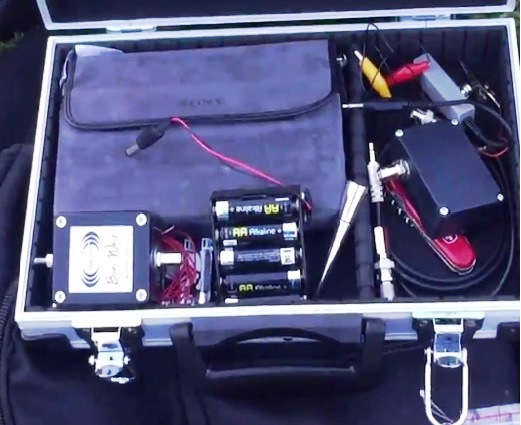
This foam-filled flight case comfortably houses all of the components. The parts 1 to 7 can remain assembled together, reducing the deployment time in the field.
I use this fast MicroSD card as the destination for my outdoor SDR recordings. The high transfer speed is critical – using slower MicroSD cards will result in large portions of the spectrum being dropped from the recordings. 64 Gigabytes can accommodate roughly one hour of spectrum data at 3 MHz bandwidth.
Windows tablets suffer from one major drawback: the touchscreen interface is usually inadequate for software that was designed for traditional computers with mice. A portable Bluetooth keyboard with a built-in trackpad solves this problem.
This small gadget turned out to be a very important part of the entire project. The Toshiba tablet has a rather unusual interference quirk that initially caused me hours of frustration. It turns out that significant amounts of radio noise are injected into the SDR when the tablet’s external speakers are active. One way to fix this is to plug a pair of headphones into the tablet’s line out jack, but this forces the listener to be glued to the device. The alternative is to pair the tablet with a Bluetooth audio receiving unit, such as the one listed above. It is worth noting that my other Windows tablet — a Dell Venue 8 — also suffers from this strange artefact.
Total cost: $610
Internal layout of the flight case
You’ll see that I have stacked the SpyVerter enclosure on top of the AirSpy one. As the latter can get very hot, it is essential to leave a sufficiently large gap in the foam for ventilation. It’s also worth leaving a small gap next to the tablet’s power button to prevent Windows from accidentally going into standby mode.
Software configuration
The best software to use with the AirSpy/SpyVerter combination is SDR#. It offers an impressive collection of features that many software packages and conventional radios don’t have, such as advanced noise reduction and synchronous detection with passband tuning. The following adjustments are required to make recording the spectrum a seamless experience:
Install the Baseband Recorder and File Player plugins
Baseband Recorder: this plugin enables efficient recording of very large spectrum (or “baseband”) files. Download and decompress the plugin zip file. Copy the .dll files into the directory with the SDRSharp.exe executable. Open the MagicLine.txt file and copy the first line of text into Plugins.xml file, just before the “</sharpPlugins>” line.
File Player: this plugin enables the playback of recordings made with the Baseband Recorder plugin. Download and decompress the plugin zip file. Copy the .dll files into the directory with the SDRSharp.exe executable. Open the MagicLine.txt file and copy the first line of text into FrontEnds.xml file, just before the “</frontendPlugins>” line.
Configure Baseband Recorder
Open SDRSharp.exe and check that the program reports no errors when it loads.
Baseband Recorder configuration
In the plugin pane on the left, expand the Baseband Recorder tab and click “Configure”. Change the File Format to WAV RF64 and make sure that the File length limit check box is not ticked. Click “Folder select” and choose the MicroSD card as the destination directory for the recordings.
Adjust AirSpy settings
Disclaimer: in this section I describe how I capture the maximum spectrum bandwidth that my tablet’s CPU can handle. It involves operating SDR# in “debug mode” and exposes some internal functionality of AirSpy, which, if used incorrectly, can damage the radio. If you choose to copy my approach, please understand that you are doing so at your own risk and follow my instructions carefully to avoid voiding your AirSpy warranty.
Open SDRSharp.exe.Config file in Notepad. Look for “<add key=”airspy.debug” value=”0″ />” line and change it to value=”1″.
Once the AirSpy and SpyVerter have been connected to the tablet, open SDR# and select AIRSPY in the Source tab. You will see the following configuration dialog.
AirSpy configuration
In the “Sample rate” field, type in “6 MSPS”. For the “Decimation” option, choose “2”. This setting will result in spectrum captures of 3 MHz bandwidth (although only 2.4 MHz of it will be shown on the waterfall display). To capture smaller chunks of the spectrum, increase the decimation value. Make sure the SpyVerter check box is ticked. Do not touch any of the fields or buttons under the “Address Value” line.
Make a short test recording
Press the play button in the top left corner and set the desired frequency.
In the Source tab, select the “Linearity” option. Keep increasing the Gain value by one position at a time until you notice that the radio signals suddenly become “saturated” (the waterfall display becomes full of artefacts and the signal you are listening to gets swamped with noise). Take the Gain value back down by two positions. This will ensure high sensitivity while preventing AirSpy from overloading.
In the Baseband Recorder tab, press “Record”. While recording, do not change the radio frequency and do not move/drag the waterfall portion of the display. Stop the recording after a few minutes.
SDR# FilePlayer plugin
In the Source tab, change the input to “File Player” in the drop down menu. Click the Settings cogwheel button and select the spectrum recording file from the MicroSD card. A vertical band visualising the timeline of the spectrum capture will appear immediately to the right of the plugin pane. Click on the play button and select a radio signal to demodulate in the spectrum display. Listen to the audio carefully to make sure there are no dropouts or clicks: if so, your tablet and MicroSD card are capable of handing and storing the specified spectrum bandwidth.
Keep an eye on the gain
While making longer spectrum recordings, select a weak radio signal and keep monitoring its audio for signs of overloading. If the overloading does occur, reduce the Gain value further by one or two positions.
Some example spectrum captures
Shortwave for lunch. Playing back parts of the shortwave spectrum captured earlier in the park, inside a local cafe.
Below are some example videos in which I play back and explore the spectrum recordings I made during the trips to my local park.
Hi there, I was fortunate enough recently for my work to take me to a very remote area of tropical rainforest in Pará, Northern Brazil and of course, I travelled with a shortwave radio. In fact I take a portable with me everywhere – even to work – just in case. During this trip I was using a Tecsun PL-680, for very specific reasons:
It can handle a longwire very well without overloading (I actually only used a 5 metre wire)
An excellent synchronous detection circuit and audio bandwidth filtering options
Excellent sensitivity, as demonstrating by the many DX reception videos on YouTube
If it got lost or damaged it would be a pain of course, but not difficult to replace
Although effectively travelling on business, I was hoping to find the time for a DXing session because I felt it would be really interesting to find out what could be heard on shortwave (and medium wave for that matter) out in the jungle, in the middle of nowhere! The environment was challenging – around 37/38 degrees C during the day and still 33 degrees C at 2 am, all day and night, every day and night! Furthermore, as you might imagine for a tropical location, the place was crawling with bugs lol, including mosquitos and thus a number of vaccinations were necessary, prior to the trip. Several days after arriving, I eventually managed to find the time for a DXing session in the jungle (with another the following week in Barcarena, on the coast).
So, what can you hear in the jungle? Part 1 of my group of reception videos follow below – I hope you enjoy them.
Clint Gouveia is the author of this post and a regular contributor to the SWLing Post. Clint actively publishes videos of his shortwave radio excursions on his YouTube channel: Oxford Shortwave Log. Clint is based in Oxfordshire, England.
Hi there, I thought I would share a few recent medium wave DX catches from South America. In the past month or so, I’ve managed to record signals from Colombia, Peru, Venezuela and one that I’m particularly happy about – Ecuador, which is rarely reported in Europe. All catches were obtained with my usual indoor home set-up – the brilliant little Elad FDM DUO coupled to the equally brilliant Wellbrook ALA1530 active loop antenna. I have started to take the Elad on DXpeditions now, having constructed a battery pack for it, but the results I’m yielding outdoors are so far mainly with shortwave reception, where the improvement in SNR is quite obvious in the size of the carriers I’m observing and much improved modulation/ audio clarity on the Tropical Band. Hopefully in time, similar results will yield on medium wave. In the meantime, Im very happy with the indoor performance and these catches demonstrate that. There are many more reception videos on my YouTube channel Oxford Shortwave Log, including a large number of signals recorded from North America on medium wave. Direct links follow below and further down, embedded reception videos. Thanks very much for watching, listening and I will you all excellent DX.
Clint Gouveia is the author of this post and a regular contributor to the SWLing Post. Clint actively publishes videos of his shortwave radio excursions on his YouTube channel: Oxford Shortwave Log. Clint is based in Oxfordshire, England.
It’s been quite a while since I posted any logs. I picked out my best ones from the last 2 months.
Equipment: Tecsun PL-880, 225 foot long wires oriented for different directions, EmTech ZM2 Antenna tuner, DX Engineering RPA-1PLUS HF PreAmp and EmTech ZM2 antenna tuner.
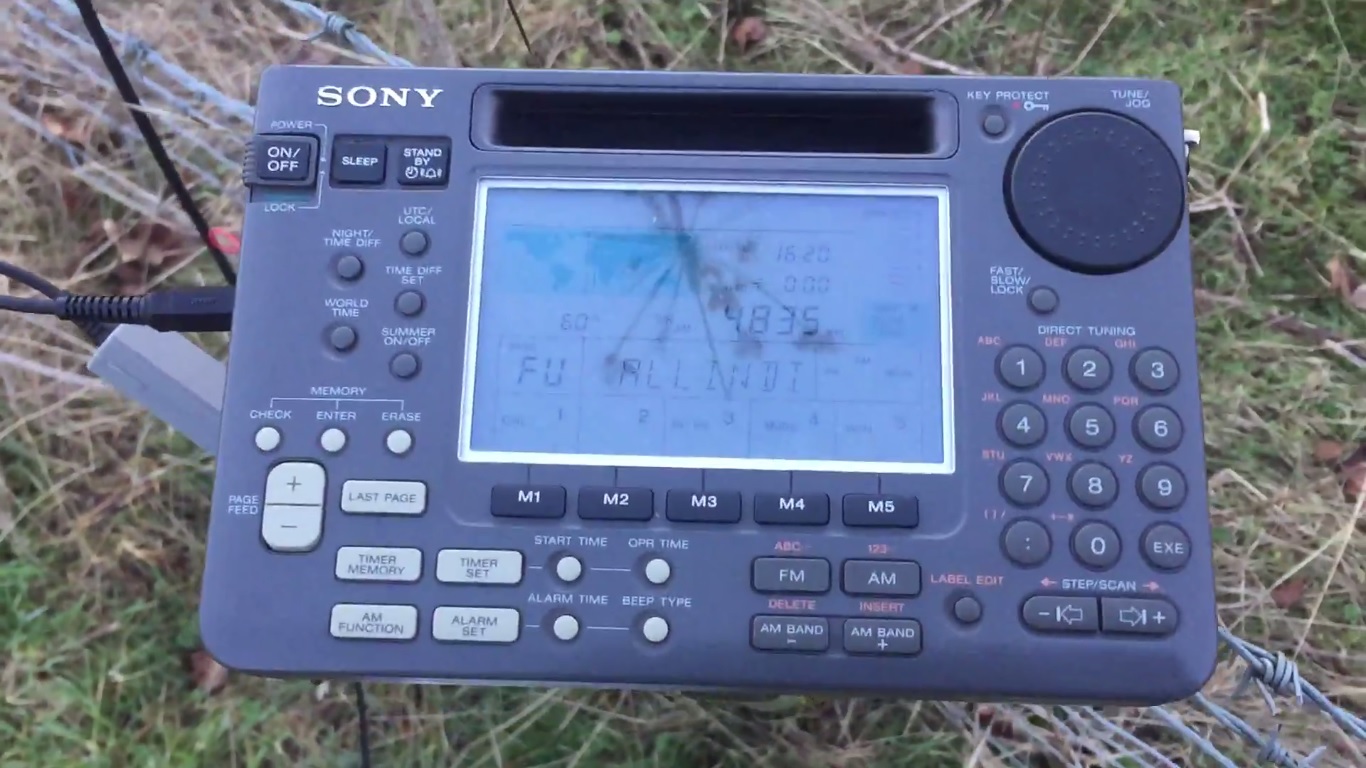
5040 kHz, All India Radio Jaypore from 1641UTC to 1645UTC on September 22nd in the Oriya language with some singing and/or chanting. I would give this broadcast a SINPO Rating of 33343. The signal was overall on the higher side of fair but there ewas some static and noise with a light to moderate amount of fading and some digital data/pulsing kind of noise. Audio here: https://www.youtube.com/watch?v=rvtOZFbYMxo (Walker-AK)
7295 kHz & 7345 kHz, Radio Sahka via Yauktsk 1020UTC to 1030UTC on September 11 in Russian. What sounds like contemporary russian music is being played. 7295 is a bit louder and stronger for me, sometimes by a fairly noticeable margin most days but this time, the difference is hugely noticeable between the two signals. I would give these broadcasts a SINPO rating of 45455 I am rating this good as there was almost no atmospheric noise and very little fading! 7295 kHz audio here: https://www.youtube.com/watch?v=g24DkJgv0qc 7345 kHz audio here: https://www.youtube.com/watch?v=Ia4N62KB2gM (Walker-AK
7315 kHz, The Voice of Vietnam via Cypress Creek, South Carolina from 0100 to 0115UTC on September 22. The program begins with the incredibly recognizable and lovely VOV interval tune/intro signal. A female announcer gives a quick preview of the show and headlines then a news report begins.with a male. I would give this broadcast a SINPO of 34233. The signal was pretty fair, listenable but with lots of atmospheric noise/fading/static, but thankfully no interference. Audio here: https://www.youtube.com/watch?v=e_PH8MraW7A.
VOV also heard at 1624UTC on 7220 kHz via Hanoi with a traditional Vietnamese song and a SINPO rating of 33232. The signal itself was ok but there was a lot of noise, fading and at times, interference which resulted in my overall poor rating. The signal itself was ok but there was alot of noise, fading and at times, interference which resulted in my overall poor rating. Audio here: https://www.youtube.com/watch?v=G9Kf2AYVeDA .
1209 kHz via Hanoi at 1130UTC is heard at fair to good levels from with a little fading and noise but not bad overall. Audio here: https://www.youtube.com/watch?v=VIFVztEl1yM .
I have not heard the claimed VOV broadcasts in English on 5955 via Moosbrun or the 9550 broadcasts, wherever that comes from! (Walker-AK)
9445 kHz, All India Radio General Overseas Service from 1826 to 1830UTC on August 27th in English. Indian music followed by a sports program, co produced by AIR, BBC and Radio Australia.I would give this broadcast a SINPO rating of 45454. THe signal was pretty darn good and audio was good too. Only a slight bit of fading and ever so slight noise. Audio here: https://www.youtube.com/watch?v=1ka9mc7c_F8 (Walker-AK)
9650 kHz, Radio Guinea via Conarky from 2357UTC to 0035UTC in French. Lively Afro-pop type music and announcers talking in french. I would give this a SINPO Rating of 35333. The broadcast was moderately fair, the unique music made this broadcast a bit easier to pick out of the noise but it was moderately listenable. Audio here: https://www.youtube.com/watch?v=-lmG9ms3ucU (Walker-AK)
9870 kHz, All India Radio Vividh Bharati Service from 1728UTC to 1741UTC on August 27th. Stellarly awesome signal with some lovely indian music and female announcer. I would give this a SINPO Rating of 5555! Audio here: https://www.youtube.com/watch?v=dyJAJmwoE8I (Walker-AK)
9895 kHz, Radio Rossi via (???) from 0951UTC to 1002UTC on September 11. Enjoying some Russian music on Shortwave! I would give this a SINPO rating of 44344. I rate this overall as good because of the strong signal and overall high listenability signal/audio quality wise. If it weren’t for the slight fading and noise, this would be nearly a 55555. Audio here: https://www.youtube.com/watch?v=-XcsJEAgDuc
5900 kHz heard a day earlier with what sounds like a news or feature interview segment with more then one man talking in Russian at 1000UTC. Audio here: https://www.youtube.com/watch?v=WWEgjpT1vwU (Walker-AK)
I would give this a SINPO rating of 44343. This signal was on the lower side of good but the overall quality was the higher side of fair due to the fading, noise and slightly low modulation.
11735 kHz, Zanzibar Broadcasting Corporation via Dole, Zanzibar from 2049UTC to 2059UTC on September 5th. Some music playing, maybe middle eastern-like? somewhat lively tunes. A male announcer speaking, possibly in Swahili This is far from the best I log ZBC with, but also far from the worst I give this broadcast a SINPO rating of 44434. It was a fair to good signal with a bit of fading and choppy propagation but not bad. Audio here: https://www.youtube.com/watch?v=mn7o4G2iHSU (Walker-AK)
11750 kHz, Sri Lanka Broadcasting Corporation via Trincomalee, Sri Lanka from 1721UTC to 1725UTC on September 24th in the Sinhalese language. Unfortunately, I do understand what is being said other then it appears this is an interview or discussion program hosted by a woman with a male guest on the phone.. A friend who listened to the recording says she gives a station ID at some point. I would give this broadcast a SINPO rating of 34444. The signal was fair and there was no interference but fading was moderate and propagation was somewhat choppy. If the signal had been a bit stronger with a little less fading and better propagation, this would’ve been a very enjoyable signal to listen to. Audio here: https://www.youtube.com/watch?v=tfqEK4caKKo (Walker-AK)
12035 kHz, Voice of Mongolia via Ulaanbaatar, Mongolia from 0859 to 0908UTC on September 25 in English. My recording starts out with the carrier but no program audio yet. The interval tune begins, a male announces the name of the radio station. A female announcer comes on, welcoming people to the radio station. Frequency and broadcast schedule information is given out along with your website information. Another female announcer comes on and welcomes people to a New Edition of The Sunday Music Program. That female announcer reads a few news stories before a Mongolian song plays. I would give this broadcast a SINPO rating of 44344. Overall this broadcast was good because the signal was strong and with no noise or interference, just moderate fading and slightly choppy propagation. Audio here: https://www.youtube.com/watch?v=QpfoLtxkr70 (Walker-AK)
15275 kHz, Deutsche Welle via Issoudun from 1835 to 1838UTC on September 24 in French. It sounds like a news discussion/interview program with one man doing the large part of the talking. I would give this broadcast a SINPO rating of 45444. It was a pretty good signal with no noise or interference and only a slight bit more fading then my 1530 kHz reception of RFI on the same date and nearly same time from the same site with nearly the same target area. Audio here: https://www.youtube.com/watch?v=vTUzBk3FjeY (Walker-AK)
15300 kHz, Radio France International via Issoudun from 1837UTC to 1841UTC on September 24 in French. What sounds like a woman possibly interviewing a man. I would give this broadsast a SINPO Rating of 45444. The signal was very good, there was no interference and very little noise. Just a bit of fading and ever so slightly choppy propagation. Audio here: https://www.youtube.com/watch?v=w1sJs9P0Qrw (Walker-AK)
15320 kHz, Radio Taiwan International via Paochung, Taiwan from 0356UTC to 0359TC on September 8th. There is ALOT of static/atmospheric noise on the channel and the signal is very weak. I recorded 5 minutes worth and took the 3 best segments of the reception and put them together. If I didn’t know what to look for, this would be impossible to have nailed down In the first part of this one clip which is 11 seconds, a male gives out a frequency and time schedule. In the second part of this clip which is 9 seconds, the same man gives out what I assume is the PO Box mailing address for RTI. In the 3rd and final part of this clip, that same man says simply “Radio Taiwan International” I would give it a SINPO rating of 12112. Audio here: https://app.box.com/s/kkcoe959r5iphbjvvnjoz2n0qxslhevz. I have also heard RTI’s 9465 kHz and 11685 kHz english broadcasts in the 1500 to 1600UTC time frame usually at barely fair levels, but occasionally at fair to good levels. (Walker-AK)
15520 kHz, Voice Of Turkey via Emirler, Turkey from 1628UTC to 1650UTC on September 24th in English. The lovely Voice of Turkey interval tune played for about 2 minutes before time pips played followed by a male announcing the start of the english service and the frequencies and times to listen. A Female announcer then came on and read news stories for about 10 minutes before the letter box program came on with a male announcer reading listener letters and reception report. I give this broadcast SINPO rating of 44333. This broadcast was teetering between fair and good. If it wasn’t for the choppy propagation, this signal would’ve been alot more listenable. Audio here of 15520 kHz: https://www.youtube.com/watch?v=J6F0ktPTDuc I caught 9830 the next day and they played their interval tune for about 9 minutes before signing off about 10 minutes early!! 9830 kHz audio here: https://www.youtube.com/watch?v=3o7_LINGYMA . I’ve heard the 9515 kHz Turkey broadcast in English in early September as well at fair signal levels with somewhat choppy propagation. Audio here: https://www.youtube.com/watch?v=anc_8jznz_k (Walker-AK)
15590 kHz, Radio Thailand via Udon Thani from 02359 to 0015UTC on August 19. Superb signal with interval tune, station introduction and a news segment of national headlines.An ad or two was heard for local/regional businesses along with promotional announcement inviting advertising inquires and giving an email address. I would give this a SINPO rating of 55455. This broadcast is near perfect! Audio here: https://www.youtube.com/watch?v=mPQaA_RM74I. 9390 kHz heard in English on September 24th at 1937UTC with business and financial report information in english. SINPO of 54444 Almost as good as 15590 kHz and it should be noted that 9390 isn’t usually this good. Audio here: https://www.youtube.com/watch?v=JQnEexGUBoE (Walker-AK)
Paul Walker is the Program Director at Community Radio For Alaska: KIYU located in Galena, Alaska and is a regular contributor to the SWLing Post. Be sure to check out Paul’s YouTube channel and SoundCloud channel where everything he logs is recorded and posted. Click here to read his other contributions on the SWLing Post.
Hi there, here is a selection of North American medium wave stations logged in Oxford UK, over the past couple of weeks using the Elad FDM DUO and Wellbrook ALA1530 active loop antenna (indoors). A quick list of stations logged follows below – with URL links which will take you directly to the respective reception video on the Oxford Shortwave Log YouTube channel. Embedded reception videos follow further below. A subsequent posting will follow detailing some South American stations logged recently on medium wave, using the same Elad/Wellbrook set-up. Thanks for watching/ listening and I wish you all great DX.
Clint Gouveia is the author of this post and a regular contributor to the SWLing Post. Clint actively publishes videos of his shortwave radio excursions on his YouTube channel: Oxford Shortwave Log. Clint is based in Oxfordshire, England.
Please support this website by adding us to your whitelist in your ad blocker. Ads are what helps us bring you premium content! Thank you!