Category Archives: Guest Posts

Shortwave Logs from Alaska: June 25 – July 16

Alaska-Paul-Walker-Wellbrook

Conditions haven’t been so great lately and combine that with just being a bit tired and worn out means I haven’t DX’ed as much as I’d like. But I have spent a little time at the radio dials and when I do, I usually pull out a few good logs, so here we go:

3325 kHz, July 12 at 1025UTC. NBC Radio Bouganville with an absolutely LOUD, STELLAR signal. Audio was excellent and there was only light fading with no interference or noise. Survivor’s 1984 hit, “High On You” was playing during my recording. They seem to favor 80s and 90s rock or adult contemporary music when they play tunes. Audio of 3325kHz here:

5835 kHz AM (July 15, 1621UTC, 10871.70kHz USB (July 12 2049UTC) & 10861.90kHz USB(2052UTC). Russian Channel Marker. I’m not really sure where in Russia these come from or what their purpose is, as i am not very “up” on the utility type broadcasts on HF. The 5835 kHz beeping is pretty clear and evident, but it sounds like there’s a little interference coming from somewhere or someone else. The signal from the 10871kHz signals is pretty weak but the beeps do make it above the fading/noise,  5835kHz audio

here: https://www.youtube.com/watch?v=DEZMo5DziCI. 10871.70kHz usb audio here: https://www.youtube.com/watch?v=kIhn7MIHMR4 and 10871.90kHz USB audio here: https://www.youtube.com/watch?v=xQ9BeqosLtc

5857kHz, July 15 at 1626UTC. “HLL Seoul” with a weather broadcast by a woman speaking Korean. Poor to fair signal with some noise and interference. Audio here: https://www.youtube.com/watch?v=jBNmrdyDDI4

https://www.youtube.com/watch?v=jBNmrdyDDI4

7260 kHz, July 12 at 1001UTC. Radio Vanuatu in their local language with talk in the local language, a little preaching and some Christian music. The audio quality isn’t too great (sounds like it’s full of digital artifacts) but the modulation level is better then usual.  Around 14 minutes and 35 seconds in, a female announcer comes on and talks for a bit then begins reading a sign off message then plays the Vanuatu national anthem. The carrier is left on for 10-15 minutes before being shut off. 7260 audio here: https://www.youtube.com/watch?v=jTnudTRmduk

7485 kHz, July 13 at 1636UTC. BBC Bengla service in Bengali language with a news broadcast. An absolutely stellar, steady signal with almost no noise whatsoever and no fading or interference. 7485kHz audio here: https://www.youtube.com/watch?v=hRDZKSDkSMk

https://www.youtube.com/watch?v=hRDZKSDkSMk

7210 kHz & 9730 kHz, July 13 at 1628UTC and July 15 at 1643 UTC respectively. 7201 kHz is their broadcast in Vietnamese with 20kw via Daclac, Vietnam. Vietnamese music is heard at fair levels but with lots of noise and fading. Pretty decent considering what and where it is. As for 9730kHz, it’s The Voice of Vietnam in what appears to be the Russian language. A poor to fair signal with fading/noise and what appears to be interference from another station. 7210kHz audio here: https://www.youtube.com/watch?v=_xUpmAbpOW4 and 9730kHz audio here: https://www.youtube.com/watch?v=x2CE2QCgiD0

9515 kHz & 9640 kHz, July 11 1644UTC to 1652UTC. The 9515 signal is a bit stronger with slightly fess fading and noise. both are broadcasting the KBS World Radio english service with talk about travelers and tourists. 9515kHz audio here: https://www.youtube.com/watch?v=V0k77cY4DLA and 9640kHz audio here: https://www.youtube.com/watch?v=KhBxIPGHMh8

9526kHz, July 15 at 1645UTC. Voice of Indonesia with Arabic language speech and music. Fair to good signal with low modulation and some noise/fading but comparatively speaking, this is a VERY GOOD signal for what is usually heard on 9526 kHz! And yes, they are about as close to 9526 as can be. Zero beating them in USB with my PL880 produces a whine/noise till I’m right at 9526 kHz. One website, Eibi’s schedule says that are at 9525.9.. I suspect they may be even closer then that! 9526 kHz audio here: https://www.youtube.com/watch?v=U4WdKewnyWM

9665kHz, July 16 at 1715UTC. The Voice of Korea is heard here all day everyday but the audio is usually noisy and fairly poor(usually overmodulated) but this is a case of not only good audio but a pretty solid signal! 9665kHz audio here: https://www.youtube.com/watch?v=cMBLYV4icBQ

https://www.youtube.com/watch?v=cMBLYV4icBQ

9770 kHz, July 11 at 1653UTC. KBS World Radio in Korean with men talking and a pretty steady, GOOD signal. Fair amount of noise and light fading. Audio of 9770kHz here: https://www.youtube.com/watch?v=tyXb3sg-1-o

9890 kHz, July 11 at 1729UTC. The Voice of Korea signing on in Arabic. Starts off as usual with a dead carrier, the interval signal and announcers mentioning the name of the signal. Noisy signal, but a much better signal then I’ve ever had from VoK on 9890kHz and the first time I’ve heard them here with log worthy audio! You can somewhat hear another station under them in this recording, and normally, that staion is usually on top VoK on this frequency. 9890 kHz audio here: https://www.youtube.com/watch?v=ftVaztXipTg

10005 kHz, July 12 at 1705UTC and July 16 at 1718UTC. For the 2nd and 3rd time in 6 months, I’ve heard the Chinese Firedrake jammer on 10005 kHz. The first time several months ago, it was so strong it was interfering with WWV & WWVH. These last two times it was fairly weak but what made it even more interesting both times is I heard time pips underneath the jammer. If you listen closely in the two following clips, you can hear the tips and you can clearly hear a longer louder tone signifying the minute mark.  July 12th clip: https://www.youtube.com/watch?v=t3X3iIs41PE. July 16th clip: https://www.youtube.com/watch?v=dClTJkpat30

https://www.youtube.com/watch?v=dClTJkpat30

11665 kHz, July 13 at 1647UTC. RTM Wai FM with an overall very good reception,  good audio and steady signal. Only a slight bit of fading. This is by far the best I’ve ever heard this frequency here! 11665kHz audio here: https://www.youtube.com/watch?v=iw4oVv1hzOI

11735 kHz, July 11 at 2033UTC. Zanzibar Broadcasting Corporation with music and talk in Swahili. This is about the usual kind of signal I get from them, fair to the low side of good with some fading and noise. At times, there signal is even steadier, stronger and less noisy then this. They are listed as being on till 2100UTC but I’ve heard them sign off anywhere between about 2045 and 2058UTC in mid song with no announcement of any kind. In this nearly 19 minute recording, they sign off at 17 minutes and 33 seconds in. Some type of RTTY/data broadcast has recently appear in the last few months on 11735kHz causing interference, severe at times, with Zanzibar on 11735kHz. Audio here: https://www.youtube.com/watch?v=gZiG_nslSi0

https://www.youtube.com/watch?v=gZiG_nslSi0

12015 kHz, July 11 at 1703UTC & July 13 at 1652UTC. In the July 11th clip, you can hear CRI & VOK fighting it out together, with the two trading places back and forth. If either has a silent carrier, you can clearly here one of them. In the Jul 13th clip, Voice of Korea is on the frequency alone. 12015kHz audio here: https://www.youtube.com/watch?v=OyKCnQ8DLCQ and https://www.youtube.com/watch?v=LF3PNWT69Fw

12035, July 12 at 0859UTC. The Voice of Mongolia. The signal is incredibly weak and this is a good catch if their beam is headed straight south from the transmitter site in Mongolia. Their interval signal pops up out of the noise a few times and you can hear a male announcer say the name of the station in Mongolia before the English language service begins at 0900UTC. Audio of 12035 kHz here: https://www.youtube.com/watch?v=DH3ibgLLAg4

13605kHz, June 25h, 1058UTc. All India Radio with fair signal but lots of fading and noise, this is better then what I usually get from AIR. 13605 audio here: https://www.youtube.com/watch?v=d03wQHXB-dA

https://www.youtube.com/watch?v=d03wQHXB-dA

13710kHz & 15435kHz, 1705UTC & 1705UTC. Radio Saudia/BSKSA. The 13710 signal was a bit better strength wise with chanting/Arabic music. The 15435 signal had men talking, like a news or interview program and was a bit weaker. 13710 audio here: https://www.youtube.com/watch?v=0t3YP8RCZY8 and 15435 audio here: https://www.youtube.com/watch?v=xr3tgnRBSn4

15235 kHz, July 14 1649UTC to 1710UTC. Channel Africa, first their news service in French followed by the English broadcast. Signal is good with some fading but very steady and listenable. 15235kHz audio here:  https://www.youtube.com/watch?v=rtFZxeh468k and here: https://www.youtube.com/watch?v=HD5lToK7Pdc

15275 kHz, July 16 at 1724UTC.  Deutsche Welle in French, a very noisy signal with lots of fading. Sounds like a news or interview program with a man and woman speaking. Any DW signal is pretty rare here! Audio here: https://www.youtube.com/watch?v=lChqqJH2crc

17730 kHz, July 13 at 1658UTC. Eye Radio, broadcasting to South Sudan. A very very weak signal with tons of noise and fading. I can barely make out a man speaking before the carrier drops at 1700UTC, which is Eye Radio’s sign off time. Audio here: https://www.youtube.com/watch?v=W-CphVmuJSA

17740 kHz, July 16 at 1732UTC. Deutsche Welle in French with a signal even noisier and worse than 15275kHz. It very well may have been the same broadcast as what was on 15275kHz that I heard minutes earlier. Any DW signal is pretty rare here! Audio here: https://www.youtube.com/watch?v=lChqqJH2crc

17775 kHz, July 13 at 1706UTC. KVOH which a preacher speaking in Spanish. Weak and noisy but steady signal. This may be the first time I’ve heard KVOH here and I consider this a good catch since they beam to Mexico and Central/South America. Audio here: https://www.youtube.com/watch?v=aqegTkffahA

17850 kHz, July 13 at 1702UTC. Radio France Internationale with a weak, noisy, fading signal. Women talking in French during a news broadcast. Audio here: https://www.youtube.com/watch?v=ujnbGMo8Tww

17850 kHz, June 25 at 1048UTc. Radio Thailand, they are a somewhat regular visitor but this is a bit better then usual signal. However, there is a lot of fading and noise. Audio of 17850 kHz here: https://www.youtube.com/watch?v=XOuoZM00XmI

https://www.youtube.com/watch?v=XOuoZM00XmI

Paul Walker is an avid Shortwave DX’er located in Galena, Alaska working at “Community Radio For Alaska: KIYU” as Program Director and is a regular contributor to the SWLing Post. Be sure to check out Paul’s YouTube channel and SoundCloud channel where everything he logs is recorded and posted. Click here to read his other contributions on the SWLing Post.

Video: Dan listens to RNZI’s Sunday Night with Grant Walker on a Hammarlund SP-600

DanH-SP-600

Many thanks to SWLing Post contributor, Daniel Hawkins, who writes:

One of my favorite Radio New Zealand International programs is Sunday Night with Grant Walker. This program is heard on RNZ in New Zealand from 8:06-10:00 p.m. and is run at the same time on RNZI. Sunday Night features hit oldies and one interview. Each program highlights oldies from one year. Last Sunday was 1977 and the week before was 1955. My video from last Sunday includes a favorite that I haven’t heard for many years.

The RNZI broadcast of Sunday Night is 0806-1000 UTC Sunday on 9700 kHz. That’s 1:06-3:00 a.m. Sunday, PDT. Definitely a show for night owls. West Coast reception is nearly spectacular for the distance: 6,600 miles from my location in Davis, CA, USA. The radio used for the video is a Hammarlund SP-600 JX-21, built in 1956 or 1957. Yes, the tuning dial is a little off on this band. I’m using the 8 kHz selectivity setting with fully advanced AVC. The antenna is a 106’ outdoor random wire. The speaker is antique as well: a 10” Jensen PM-10C with matching transformer connected to the 600 ohm audio output on the SP-600.

DanH

Click here to view on YouTube.

Wow! Thank you for the program recommendation, Dan!  I, too, have an SP-600–there are few valve receivers that can rival it for both audio fidelity and sensitivity. What a beauty of a rig you have there!

Guest Post: Patrick compares four receivers

Many thanks to SWLing Post contributor, Patrick Canler who writes to us from France and shares the following guest post which he translated into English:


4 rec

The number of receivers on the market is quite large, and all are sold to be the “best”. I have thought it useful to compare materials using them in the shack as a neophyte SWL; going beyond the features in the brochures to talk about everyday utility. This article does not pretend to do “scientific” testing of the four receivers–skills and special equipment are needed and some specialized laboratories already do it.

The four receivers cover thirty years of electronics manufacturing; four different brands with their own technology and specifications. Over such period, technologies and innovations have evolved. One of the questions I had was: “Does efficiency give any receiver an advantage?”.

The Contenders:

NRD-535 from Japan Radio Company.

nrd535

A reference of the 90s! It received 5 stars from WRTH (which publishes annually the almanac “World Radio and TV Handook”). The NRD-535 has conventional construction with an electronic card per function and discrete and analog filters.

This is a home station receiver, weighing in at 10 kg. The NRD-535 ceased to be produced in 1996, and its value second hand is growing due to its reputation.

AR7030 from AOR

ar7030

Designed by the engineer who developed the LOWE receiver line, the AR7030 is also famous for its reception. It uses special ergonomics and a hybrid of software menus and conventional controls. Quite small, it is easily transportable, due its design that already uses SMC but keeps the analog filters.

IC-R75 ICOM

ICR75

Modern device, classical format and renowned–the R75 is the only receiver tested that is still in production [Note: it was recently removed from production]. It uses CMS, combines analog and DSP filtering (the DSP option is present on the device under test). Its ergonomic design is intuitive and so too are controls and menus.

1102S RADIOJET Bonito,

SDR windows

The 1102S RADIOJET is the only unit in this comparison that is produced in Europe!
The Radiojet includes the latest developments in technology, its performance is simply stunning on the data/spec sheet. The application includes many tools (spectrograph, digital filters, IF and AF recorders, decoder, list of broadcast stations, etc.). It brings together all the SMC receiving electronics in a small box that can fit in a pocket.

SSDR box

The commands and tools are assigned to a software (highly evolved) that runs on the PC which is connected the SDR. The power of the PC also brings graphics, memory, recordings etc.

Why these four rigs?

In the beginning, and it was it which led me to be SWL, I acquired the RADIOJET based on its announced characteristics: sensitivity of “secret services”, adaptable to all cases with filters, graphics tools–“Star Wars equipment” is not it! Later I learned about 50 MHz and at the same time I was struggling to exploit the Radiojet SDR.

A good opportunity to purchase an ICOM R75 brought me back to conventional radio ergonomics. As time passed, I felt my listening skills improved with these 2 receivers and the receiver syndrome grew! A Kenwood R5000 joined the others for its VHF potential and HF reputation.

Then I discovered an NRD-525 on Ebay at a fair price point (rare)–it joined the group of receivers. The latter two were sold and replaced respectively by an AOR 7030 and by NRD-535. I really enjoyed the 525, but the 535 is even better.

In use, the RADIOJET and R75 have always posed problems with settings and sound quality. Kenwood reassured me about the fact that we could get some nice reception without fighting against the controls. validated by the AOR, the NRD 525 & 535. Perhaps I did not understand the manipulation of digital filters???

Now to the shack!

The four receivers are placed side by side, but arranged so as not to disturb each other (eg. the display of the ND535 disrupted the RADIOJET).

The antenna is a 25m random wire oriented East/West with 9:1 balun and its own ground. The passage from a receiver to the other is done by a conventional antenna switch.

All the tests were performed in one evening for constant conditions, there was a fairly present QRM which, was not too bad for comparison purposes. The tests were made in SSB or AM. Preliminary tests had shown that the results in digital modes (PSK31, JT65, ..) relied more on the decoder performance of the PC rather than the receiver. The tests increased from the lowest frequency detected this evening (Europe 1-163 kHZ) to the highest (Foreign Broadcast =15,545 MHz).

The highest frequencies, up to 30 MHz, were deserted in phone, at least for my installation.
The procedure was:

  1. Signal is detected from the spectrograph SDR: it typically “sees” almost inaudible signals.
  2. The candidate frequency is tuned on all four receivers
  3. I listening to all of the signals on all receivers, seeking to get the maximum performance, using all possibilities (notch, passband, IF Shift, integrated amplifiers, attenuator, etc.)
  4. Results are reported in the table below.

One can notice rather quickly:

  • that age is not a handicap
  • the number of functions is not always an advantage
  • 1102S RADIOJET
    Performance and capabilities above the rest (on paper) and requires being connected to a PC. At the present time, on an old Celeron 2Gb ram, the RadioJet’s application never saturated the CPU. The band spectrum display allows one to find the QSO, to filter theoretically perfectly, but it does not always equate to the understandability of the signal or give a pleasant audio. And the number of software features and functions complicates the signal manipulation. The sound is still a little metallic, perhaps due to the signal processing software. Its small size makes it a unbeatable mobile receiver for travel, functions are incredibly useful for those who master the RadioJet application.
  • AOR AR7030
    Inherently simpler at face value–the AR7030 is ultra easy to use. It makes it easy for the user to find and tweak a candidate signal. It’s intuitive and has essential functions only. It has well-designed electronics. The AR7030 is also best receiver tested for handling strong signals without overloading (broadcasts stations or nearby hyper-kilowatted amateur radio operators) which seems to prove that it is designed for these stations. Its limit is the lack of adaptive notch filter types to clean the noise, which is still quite present when the QRM is there. (The newer version 7030+ has added features to help). Finally, it is the smallest stand-alone, portable and with 3 options of antennas connections.
  • ICOM R75
    The R75 climbs up the frequency band all the way to 50 MHz, the only receiver tested with this frequency range. It enjoys an excellent reputation, and can be equipped with a DSP (digital signal processing) on audio. The DSP provides adaptive noise reduction and automatic notch, but has a relative effectiveness which is not always successful in clarifying the signal. Sometimes it adds an unpleasant “rattling”. In use, the interface is pretty intuitive–mixing commands by buttons and menus. Twin pass band tuning (PBT) is effective and allows for IF Shift and/or notch. The speaker is (very) small and gives an aggressive/harsh sound. This receiver is relatively small in size and lightweight. It has a mobile stand and is designed for a 12-14V power supply.
  • JRC NRD-535
    The NRD-535 is the oldest tested–indeed, it was already discontinued before the other receivers were in production. A solid and reliable construction, good ergonomic with conventional front panel controls, good sensitivity, and a decent sized speaker have earned it status as a benchmark in its time. Very sensitive, it extracts the signals and, once found the right filter, gives it pleasant audio. Some signals are not completely cleaned but it does rarely less than others. The NRD-535 is designed for home use: it is heavy, almost 10 kg, and is contains several circuit boards which should not be too exposed to excessive shocks, especially considering they’re over 20 years old.

Summary

My ranking is as follows:

  1. JRC NRD-535 for its ease of use and ability to dig out a usable signal from the QRM.
  2. AOR AR7030 for its simplicity, portability and the fact that it extract good sound/audio quickly, even if a little noisy at times.
  3. Bonito RADIOJET for its small size and its extensive feature set. It is ultra-mobile with a laptop.
  4. ICOM R75 does the job and covers a wide frequency range. But lags in performance relative to the other receiver tested, with a “nasal” sound and a DSP that does not keep its intended promises.

About digital filters: the SDR and ICOM have them, the possibilities are extensive and allow adaptive filtering that others do not with analog filters. By cons they give a dry sound and sometimes add “snap” under whistles. Listening is overall less pleasant in comparison.

Receivers Advantages + / Disadvantages –

Bonito RADIOJET
+ Top technology, visual and many new features over the others on this point
– Complicated, metallic sound, emphasizing the sometimes painful receiver interaction with a computer mouse

Icom R75
+ Great value at the present time
– Audio and imperfect signal cleaning

AOR AR7030
+ Simple and effective
– Ideal companion if it had a notch filter: noise is present

JRC NRD-535
+ Effective sensitivity and clean audio
– Older technology, less portable

Note that this is a personal opinion: a computer geek will certainly get the most of performance and possibilities from an SDR like the Bonito RadioJet.

The NRD-535 shows its age, will one day reach the end of its useful life despite its robust construction. ICOM can cover up to 6m remaining mobile and has a good filter possibilities (DSP). The AOR is easy, fast and gives a correct listening, general purpose. It is the only one to pass the VLF.

The ideal then?
* RADIOJET for sensitivity,
* The RADIOJET for tools/features and functions
* AR7030 for the lower bands
* Icom for the higher bands
* NRD-535 for ergonomics
* AOR for portability

Personally, I use the NRD-535 for DXing (due to superior audio), the AR7030 for digital modes,
the RADIOJET to visually search for signals, and to sometimes clarify the signal even better and because it’s ultra-mobile and always in my PC case.

73,
Patrick F61112


Thank you, Patrick!

I should mention that I think you did a fine job translating your article into English for us! I would not be as successful writing an article in French!  

I’ve never owned a JRC of any sort. If I ever found an NRD-535 for a good price, I would purchase one without hesitation. I’ve never spent much time on the AR7030 either. It’s simple “Lowe-like” front panel is quite appealing for field use. I found that the RadioJet audio is quite nice when paired with a good set of headphones. 

Alexander’s report from Ham Radio Friedrichshafen

5291678534939049c349d6

The Friedrichshafen exhibition grounds. (Photo: Ham Radio Friedrichshafen)

Many thanks to SWLing Post contributor, Alexander (DL4NO), who shared a few notes with me from his visit at the Friedrichshafen Ham Radio convention. Alexander has kindly allowed me to post his notes here on the SWLing Post. Alexander writes:

The first booth I visited was of Dokufunk (http://www.dokufunk.org/). They collect QSLs and other information about wireless history for scientific evaluation. Its head Wolf, OE1WHC, was a moderator for the Austrian shortwave service which does not exist anymore. But ORF still supports Dokufunk. They have a large archive and even the equipment to digitize large quantities if information. I brought them a package of ham radio periodicals, mostly issues of DL-QTC, the predecessor of cqDL, and got some QSPs (magazine of OEVSV) back. I collect those periodicals to gain and provide access. Seehttp://www.dl4no.de/thema/amateurfunk-zeitschriftenarchiv.htm, catalog at the bottom.

The flea market filled three exhibit halls. If you needed a tube heating for your shack you had a wide choice, from radios to ham equipment to scopes. On the newer side you could get Windows XP packages with the appropriate hardware.

Flea Market Photos Courtesy of Ham Radio Friedrichshafen

A3: Stand mit historischem Radiogeräten (Photo: Ham Radio Friedrichshafen)

A3: Stand mit historischem Radiogeräten

A3: Stand mit Empfängern und Messgeräten

A3: Stand mit Empfängern und Messgeräten (Photo: Ham Radio Friedrichshafen)

A3: Stand mit Empfängern und Messgeräten, hier zwei Schweizer an einer historischen Feld-Telefonzentrale

A3: Stand mit Empfängern und Messgeräten, hier zwei Schweizer an einer historischen Feld-Telefonzentrale (Photo: Ham Radio Friedrichshafen)

A3: Koffer mit Ham-Radio-Aufklebern aus mehreren Jahrzehnten

A3: Koffer mit Ham-Radio-Aufklebern aus mehreren Jahrzehnten (Photo: Ham Radio Friedrichshafen)

A3: Alte Radiogeräte

A3: Alte Radiogeräte (Photo: Ham Radio Friedrichshafen)

A3: Alte Empfänger und Radios

A3: Alte Empfänger und Radios (Photo: Ham Radio Friedrichshafen)

A3: Stand mit Empfängern und Messgeräten

A3: Stand mit Empfängern und Messgeräten (Photo: Ham Radio Friedrichshafen)

Yaesu, Icom & Co where there, of course. A large part of Hall 1 had booths for most of the European ham radio societies and other entities. Several attractions for the youths were there: A fox hunt around the hall, possibilities to solder simple circuits and more. The exhibit center even provides a kindergarden.

A1: Hilberling PT 8000A

A1: Hilberling PT 8000A (Photo: Ham Radio Friedrichshafen)

A1: ICOM

A1: ICOM (Photo: Ham Radio Friedrichshafen)

A1: Wimo, BABY Loop

A1: Wimo, BABY Loop (Photo: Ham Radio Friedrichshafen)

A1: YAESU Funkgeräte

A1: YAESU Funkgeräte (Photo: Ham Radio Friedrichshafen)

Hamradio had lots of presentations. The “SDR Academy” run all over Saturday – completely in English. See http://www.sdra-2016.de. Last year’s presentations are on Youtube. Search for “SDRA-2015”.

My presentation was titled “HAMNET On 70 cm – Possibilities and Limitations”. I should explain that HAMNET is our way to use the 44.0.0.0/8 TCP address space reserved for Ham Radio use. Starting in Germany and especially Austria we use more or less standard WLAN equipment to build a ham radio intranet. User access is mostly on 2.3 GHz and links on 5 GHz. Where we have gaps in the wireless coverage we use Internet wormholes. This way you can access for example packet radio sites in Canada. See http://hamnetdb.net.

2,3 GHz and up means exclusively line-of sight connections. Quite some OMs cannot reach access points this way. The only alternative up to now has been VPN connections through the Internet. I think we could provide relatively fast access on 70 cm. Here in Germany we have two 200-kHz channels for such uses. They were defined in the 1980s for packet radio access up to 76 kbps. This technology is next to dead.

Theoretical calculations show that we could provide up to 1 Mbps and cover up to 50 km if we use modern modulation schemes. You could even improve throughput by making TCP/IP less gossipy. I proposed to use SDR blocks like HackRF or LimeSDR and combine them with a RF frontend (filter, preamp, PA, fast switching). The hardware is more or less readily available, but this is mostly a software topic. While HAMNET relies on standard WLAN equipment with all its limitations for ham radio usage, this system could be completely open. We could it adapt to all our needs and ideas. In the end we could port it back to the microwave bands.

Even if we only work on the lowest protocol levels this will pose quite some challenges. We would need programmers with quite varied expertise from TCP/IP protocols to SDR technology. My presentation was to attract such people. Personally I will not program anything. As a technical writer with a quite wide expertise I might be a bracket for the project and write documentation for it.

PICT3344

A “Peltier Lamp”: The candle heats one side of the Peltier element while the other is cooled by the heat sink. This produces enough electricity to light a LED. (Photo: Alexander DL4NO)

At the opposite end of the exhibit center another fair went on, called Maker Faire. In former times you would have called it “make it yourself”. The exhibits there went from computer modding to 3D printing, knitting and also ham radio. For this I modified my presentation a bit: “WLAN Below 1 GHz – Do You Want To Program For It?” The technology I talked about is near hot topics like Internet of Things or traffic telematics.

Booth of a high school showing the robots they built. (Photo: Alexander DL4NO)

Booth of a high school showing the robots they built. (Photo: Alexander DL4NO)

PICT3337

Booth of a high school showing the robots they built. (Photo: Alexander DL4NO)

vy 73
Alexander
DL4NO

Thanks so much for sharing your notes from Friedrichshafen, Alexander. I look forward to attending one year myself!  I’m fascinated with the fact that the bulk of the event is indoors–what an incredible venue.

Any other Post readers attend Ham Radio Friedrichshafen? Please comment!

Useful Services for Shortwave DX’ers

I’m always tinkering, experimenting…trying different antennas and set ups and what not. But, the downside is, I don’t have the patience or a lot of technical skills to hand build stuff, so I have to buy it pre-made.

Like most, I don’t like throwing my money at a crap product. I have found two different folks who make some quality stuff that I wanted to share with the rest of you. I make ABSOLUTELY ZERO $$ from referring anyone to these two folks, but since quality products, good customer service and sometimes, customization are hard to come by, I wanted to share these.

lowbander-antenna

User “lowbander” on eBay makes longwires and dipoles. They come in stock 80 feet lengths with a 9:1 balun and a way to shunt common mode noise to ground. And unlike many longwires/dipoles, lowbanders products come with quality belden coax as well. So you order from him. you’re all set to plug and play

His dipoles and longwires range from $49 to $59, I do believe. Do you need a custom length? Want something shorter or longer then 80 feet? Send him an Ebay message and he’ll take care of you.

Do you need something other then the stock PL259 connector on your cable HE an likely help with that, let him know!

http://ebay.to/28KVp1g

q

My next find is Craig at K1CRA.COM. It’s mainly a store geared towards ham operators, but he also has a service useful to DX’ers.

He sells RG58 cable for 25 cents a foot, that’s right. 25 cents a foot. It’s the cheapest I’ve found anywhere. For those of us needing cable for our antennas going to our radios, this is a good option. For $8, he can put pl259 connectors on each end. Need something other then PL259’s? Put an order through and add comments on what connections you need and he can do that…I’ve had him do PL259s, 1/8th” (3.5mm) headphone jack types and BNC male connectors on cable for me

https://www.k1cra.com/ProductDetails.asp?ProductCode=DAVISRG58C-U

Select how many feet you want by changing the quantity.. say you want 25 feet? Make the quantity 25. The option to add the connectors is a bit down the page, with a checkbox.

Both lowbander on eBay and Craig at K1CRA ship via USPS priority mail. I had lowbander send me a package from Kansas City on a Friday and I had it here in Alaska on a Tuesday!

I have probably close to $500 worth of Lowbanders antennas and Around $150 worth of product from K1CRA.com stuff

I live in an area far from most of anything now, so finding good quality products at an affordable price from people you can trust is hard, and I just wanted to share these two.

Paul Walker is located in Galena, Alaska and is a regular contributor to the SWLing Post. Be sure to check out Paul’s YouTube channel and SoundCloud channel where everything he logs is recorded and posted. Click here to read his other contributions on the SWLing Post.

Shortwave Logs from Alaska’s Central Interior Region

Wellbrook-Paul-Walker-Galena-AK

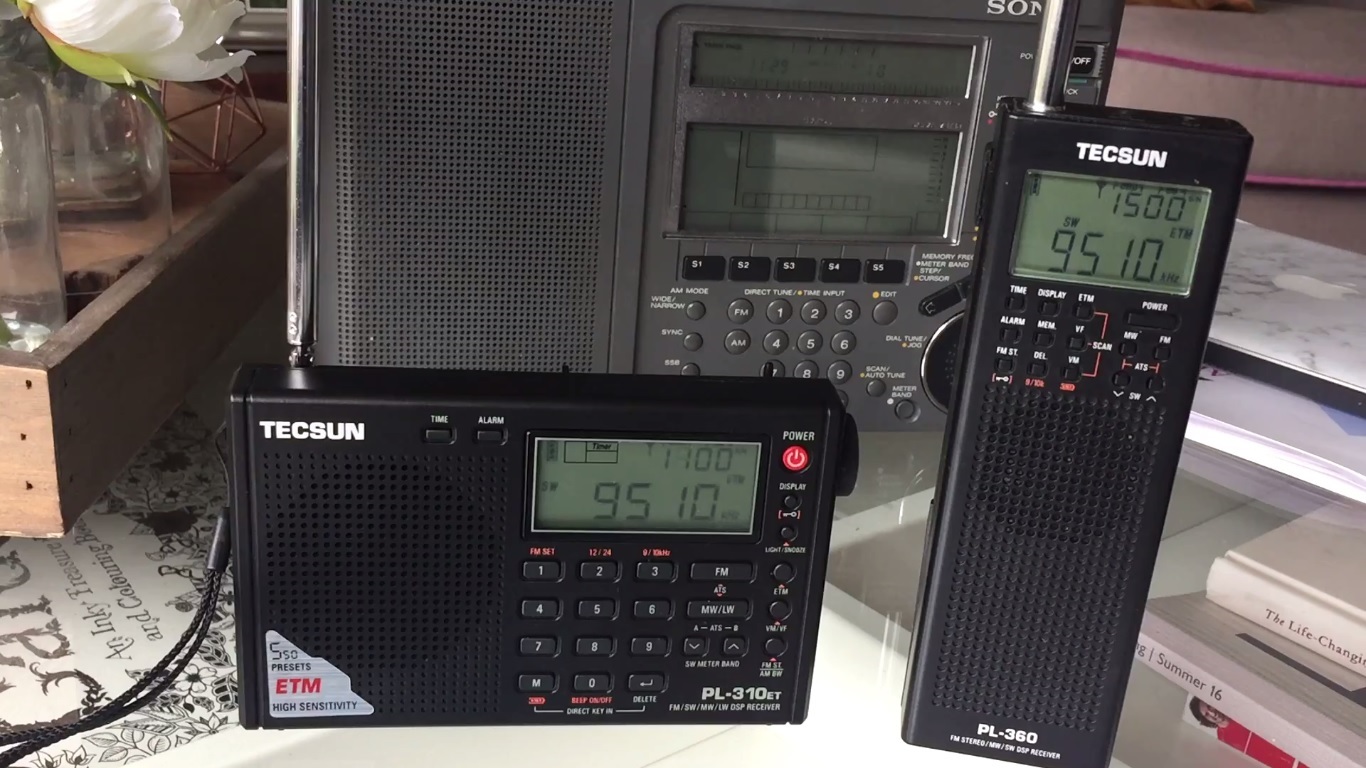
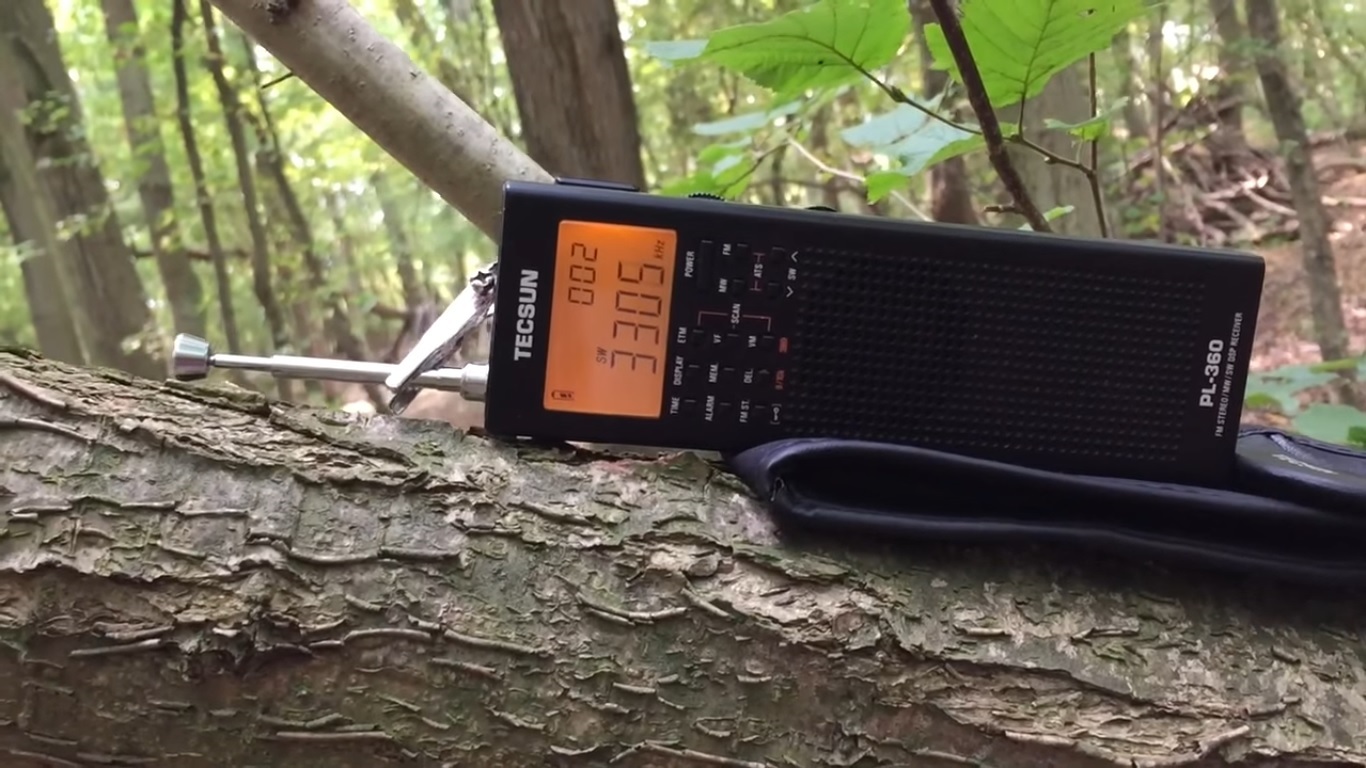
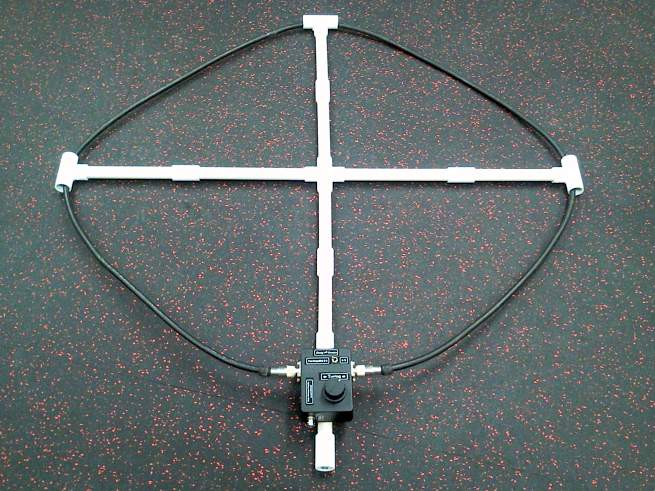
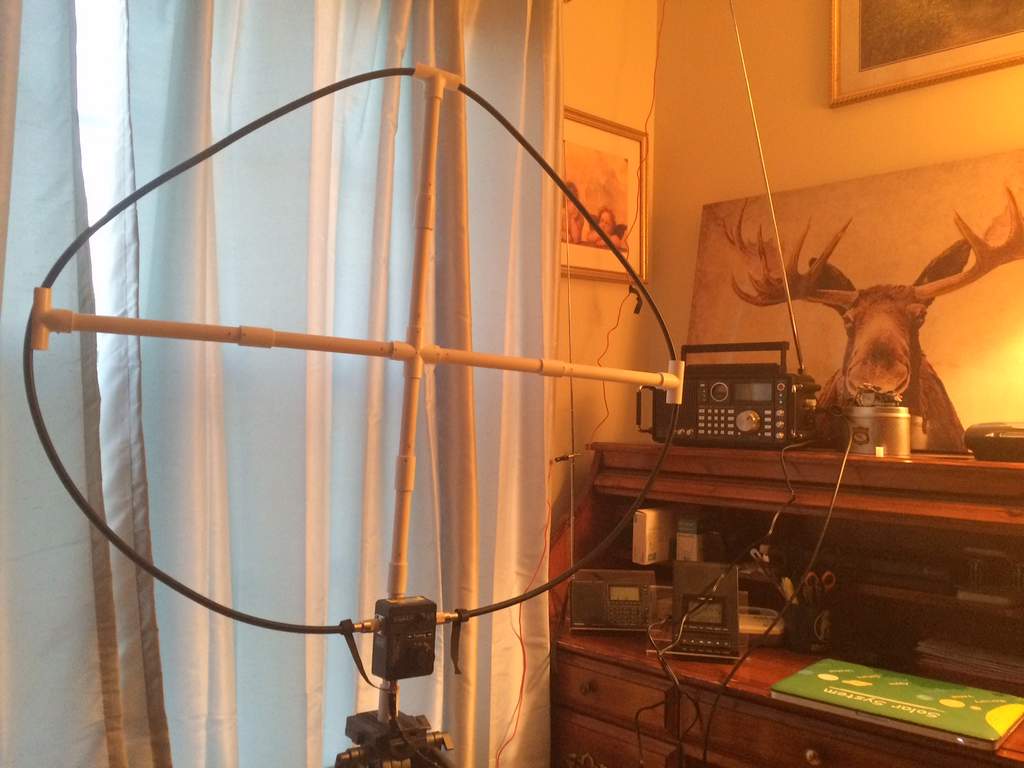
Here are some Shortwave logs from the central interior region of Alaska. I used a Tecsun PL880 and 225 foot long wire with Emtech ZM2 Tuner or a Wellbrook ALA1530LNP.

I’ve only used the Wellbrook for two days so I can’t really offer a thorough comparison yet. There was one case in particular where the 225 foot long wire and ZM2 tuner beat the Wellbrook by a large margin.

I don’t log everything I hear, but everything I do log gets recorded into an mp3 format audio clip. The audio recording helps tremendously with my QSL return rate, especially when I am hearing a broadcast in a language I don’t understand

I hear China Radio International, China National Radio, Radio Nacional de Brasilia/Amazonia, FEBC, World Harvest Radio and others regularly so I don’t log them because I try and keep my logs to what is interesting for one reason or another (programming, music, etc.) or rare/interesting.

3260 & 3325 kHz Papua New Guinea, NBC Radio. 1027 to 1034 UTC. 3325 Bouganville is carrying a man talking in a combination of Pidgin and English discussing mines, mine safety and mine regulations. Better then average signal with only light fading and interference. 3260 kHz Mandang is running music followed by an announcer talking about what I think are upcoming programming highlights. Fair signal, way better then usual

NBC Radio Mandang 3260 kHz audio: https://goo.gl/pmB8DD

NBC Radio Bouganviulle 3325 kHz audio: https://goo.gl/WKKEPJ

4870 kHz Indonesia, Radio Republik Indonesia Wamena. June 12 1001 UTCA regular visitor in the early morning hours here. not daily, but here often. Today’s signal is fair but with a moderate amount of fading and static crashes/interference. Usual fair of what I think is local music is being played.

Radio Republik Indonesia Wamena 4870 kHz audio: https://goo.gl/hjF1JL

5020 kHz Solomon Islands, Solomon Islands Broadcasting Corporation. June 12 1011UTC. Higher side of good signal with all factors taken into account. Only a little bit of fading during christian music.

Audio of Solomon Islands Broadcasting Corporation 5020 kHz here: https://goo.gl/d8BFX2

5745 kHz US, VOA Radio Gram. June 11 0943. The first time I logged VOA’s Radio Gram broadcast. There was something creating a loud buzzing noise but I could still hear the digital data. Only a little Russian text and text in english decoded for me. I will definitely try again!

VOA Radio Gram 5745 kHz audio here: https://goo.gl/LfxJ6w

6070 kHz DPRK, Voice of Korea.June 11 1005UTC. Fair signal, but low modulation. Announcers voice is lower then the music. Fair amount of fading. I heard their usual marching/patriotic music. This is not a frequency I usually hear them on, wether owing to I am not out when this frequency is on, conditions or I hear usually CFRX Toronto.

Voice Of Korea 6070 kHz audio here: https://goo.gl/SzXuEg

6115 kHz China, Voice of Strait. June 11 1008 UTC. Fair signal with a fair amount of fading. Sounds like a man talking, could be a news broadcast or interview. Not sure.

Voice Of Strait 6115 kHz audio here: https://goo.gl/V92tlD

7260 kHz Vanuatu, Radio Vanuatu. June 7 0857UTC. Low side of fair signal with interview in english and mentions of Vanuatu. Interview ends and music plays, one song sounds like it’s a kids chorus. There is a fair amount of fading and static crashing/atmospheric noise. Radio Vanuatu is habitually, chronically, woefully unde rmodulated on a daily basis. Just a few days after this logging was made, I had what my radio signal meter showed as a good signal but NO audio. The signal was so under modulated I had no audio but I had a signal! I would actually listen to them if they played more music and had better modulation

Radio Vanuatu 7260 kHz audio here: https://goo.gl/V1GMQS

9545 Solomon Islands, Solomon Islands Broadcasting Corporation. June 11 0835. SIBC was on over 3 hours late on 9545 kHz, it’s supposed to sign off at 0500UTC and switch to 5020 kHz but at 0835UTC this night it was still on. 9545 kHz staying on late has been happening a lot lately. 9545 kHz is used as SIBC’s workday frequency with 5020 kHz being used in the early to mid morning and afternoon/evening. In this recording SIBC is fairly strong here with light fading and static. Whenever 9545 kHz is on late, it seems to be stronger then 5020 kHz would be. My logging tonight starts with an interview then music is being played.

Audio of SIBC 9545 kHz here: https://goo.gl/0AIj5n

12035 Mongolia, Voice of Mongolia. June 11 1018UTC. NEW! This is a new logging for me. weak signal playing music. Was able to match the interval tune and the announcers voice heard during my logging with a clip of a recent broadcast on their website.

Audio of Voice of Mongolia 12035 kHz here: https://goo.gl/Y2QXH7

15400 kHz Romania, Radio Romania International. June 12 1006 UTC. News broadcast in French. Somewhat weak, but steady signal with only light fading.

Audio of Radio Romania International 1540 kHz here: https://goo.gl/OBK0Q9

17770 kHz Phillipines, Radio Liberty targeting Siberia. June 12 0948. What sounded like a man in Russian during a news broadcast or interview. Weak but steady signal.

Audio of Radio Liberty 1770khz here: https://goo.gl/5fxzxJ

I could use some opinions and inputs from others on something:

I am DXing about 500 feet from the transmitter sites for KXES-LPFM 92.9 and KIYU-FM 88.1 along with K10LJ Channel 10. The FM’s are only 100 watts and the TV station is only 10 watts of Digital RF. However, the FM’s overload my Shortwave radio around 9.4 to 9.6 MHz along with the lower to mid part of the tropical bands. I have a MCM Electronics and Radio Shack FM trap and they help a bit, but don’t do nearly enough. I am willing to spend $100 or so for a good FM Trap/Filter. I’ll spend a little more if I have to and the product is proven at works. I can null out the interference by rotating my Wellbrook ALA1530LNP, but I may be nulling out the signal I want to hear at the same time. Returning things for me is a hassle so I’d rather pay good $ for something that works. Feel free to email me, [email protected] or reply to this thread.

Paul Walker is located in Galena, Alaska and is a regular contributor to the SWLing Post. Be sure to check out Paul’s YouTube channel and SoundCloud channel where everything he logs is recorded and posted. Click here to read his other contributions on the SWLing Post.

Guest Post: My Evolving, Morphing, SW Listening Station

Many thanks to SWLing Post contributor, TomL, for the following guest post:


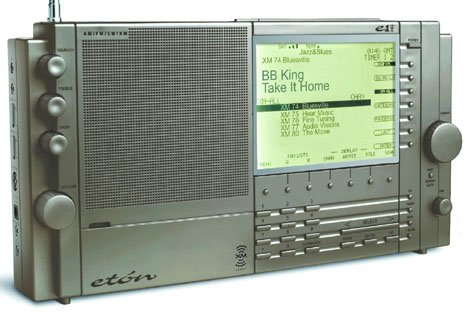
Sony-2010

My Evolving, Morphing, SW Listening Station

by TomL, May 26, 2016

My interest in radio listening has been rekindled after a long hiatus in parallel to my dwindling interest in Mainstream Media.  It is now about 8 years without cable TV and I seriously do not miss it, especially with the evolving nature of discovery with respect to other forms of media.  SWL radio was important to me in my formative years during the Cold War; fascinating were the many ways governments used shortwave radio to influence populations, each with their own brand of propaganda!  Young people today know nothing about the endless (and entertaining) tirades of East German editorial commentaries denouncing the evil, decadent West.  Or, of the free, large-sized envelopes full of travel and promotional brochures, pennants, bumper stickers, and booklets sent from the government broadcasters such as Poland, Hungary (yes, communist countries!), Australia, Netherlands, etc. just for sending in one simple QSL report!!!

I quickly realized that those days are gone forever, consigned to a period of history where radio was THE main method of disseminating copious amounts of government propaganda to very large swaths of humanity.  Now, the internet and cable TV fulfill that function in a much more CONTROLLED manner, both technically and socially (Big Brother like).  So, I have diversified my interests and have an unusual listening station.  It is multiple things in one small space.  You see, I live in a very small condo in a noise-plagued environment with only a 2nd floor wooden deck (owned by the Condo Association!) in which to put up any outside antennas.  Only a single “Dish” type antenna is allowed.  So my shortwave antenna needs to be well hidden.  Same for the TV antenna, since I also have a north-facing deck, I cannot have any line-of-sight to the Southern sky for a Dish.

The first wire antenna strung from the top and brought inside was a dismal failure receiving nothing but noise.  I gave up for a couple of years.  I built a loop TV antenna and mounted an FM antenna instead since those were less susceptible to noise issues.  Also recently added to this station are two cheap 4G antennas with wires into a single Verizon USB aircard plugged into my computer and getting up to 14 mbps performance.

But, I still wanted to try shortwave radio again (and medium wave too) but the noise issues were very, very discouraging.  S9 noise on some bands.  Tried preselector, a noise “phaser”, different lengths.  Nothing worked.  However, I read something from an amateur radio operator in Northern California who had a space problem.  He put up a helically-wound-vertical (HWV) antenna with radials for 160 meters (John Miller HWV antenna).  I also read about various “broomstick” antennas.  So, I tried my own version with an old RF Systems Magnetic Longwire Balun I still owned and NO radials.  Put it together with a 2 foot long, 4 inch schedule 40 PVC pipe wrapped in 200 feet of 18 awg magnet wire.  Well, still noisy but, at least now I had a portable antenna!

So, I went camping in March of this year!  Holy Cow, was it cold out but the helical antenna performed well enough to hear All India Radio for my very first time, a small 1kw Mexican station in the 49 meter band, and various others from Asia that were elusive for me in the distant past.  I was finally encouraged again to continue my research.  I did this a few more times and finally got tired of going camping just to listen to a radio!  NOISE at home was still the big bugaboo to kill (and it still is).

I read up on Common-mode noise travelling on ground and shield components of antenna systems.  So I bought a bunch of toroid ferrites of different types to cover different frequencies (something about initial permeability….) to make my own homemade “Super RF Choke” to cover all frequencies made on a Home Depot Homer bucket lid, winding the coax 5 or 6 times through all the toroids, the full diameter of the lid.

Measurements by Jim Brown published on the web (RFI-Ham.pdf), pages 32-33) indicate good choke performance using coax with these larger-sized coils.  I still hoped to salvage the use of the HWV antenna.  So, added the choke and noticed some improvement across most bands (less noise).  Medium wave broadcast was not effective and decided that I did not want to keep tuning an antenna that HAD to sit outside to get away from the noise inside my listening station.

I also shut off the power to my condo and found out which noise sources were mine vs. other noise that came from all the neighbors (very important step to do!!!).  For instance, I did not know before that USB charging adapters are PURE RF-NOISE EVIL in an innocently small package?!?!?!  I rearranged wiring to shut off certain devices and power strips when I want to listen to the radio!

So, I kept reading.  Found out about another magnetic balun from Palomar.  Tried it but not impressed –  performance was too lossy compared to the good old RF Systems MLB (what a great product that was back then!).  Kept reading and found out good things about the EF-SWL from PAR electronics (product is now made and sold by LNR).  The ground connections on it (and the Palomar) intrigued me.  So, I decided to go to Hamvention for the first time, even though I was skeptical of finding anything useful, I told myself, I could at least buy the EF-SWL on sale (which I did).

Installed EF-SWL to the HWV but no difference compared to the RF MLB. The antenna did perform better outside on the deck in the far corner, so there it still sits.  Then, I hooked up the wire they gave me with the EF-SWL to the ground and it resulted in MORE noise.  Then, took off the jumper (which connects the coax shield to the ground side of the balun) and connected only the middle post (balun ground) to the ground wire and a lot LESS noise resulted along with a small reduction in radio signal level!!!  Finally some progress – the wire seems to be acting like an old-fashioned “counterpoise”, which is misunderstood these days.  Apparently, back in the 1930’s-1950’s, people involved in radio knew the differences between an “earth ground”, a “radial system”, and a “counterpoise”.  Technically, they are all different and their use is different as a result.  Now, people moosh all these concepts together interchangeably which risks creating very ineffective antennas.

Photo of installed EF-SWL at the bottom of the HWV with coax at the output, the red magnet wire input on top, the middle post for the counterpoise wire, and the coax shield post is unused. 

Photo of installed EF-SWL at the bottom of the HWV with coax at the output, the red magnet wire input on top, the middle post for the counterpoise wire, and the coax shield post is unused.

The HWV antenna now has 600 feet of 26 awg teflon wire on the outside PVC, an inside 3 inch PVC “sleeve” with 102 Russian ferrite rods, a 56 inch stainless steel whip at the top, and one inch hole through the center to accommodate the 7 foot PVC mount to my carbon fiber photo tripod when I take it camping again.

So, I am on a new quest to understand counterpoises, how to actually TUNE them and, hopefully, how to use them to increase the performance of shortened antennas like my HWV (something about reducing the dB loss incurred by shortening….).  A second result I hope will be how to use the counterpoise to keep signal-to-noise ratio high at the same time (maybe with this used $100 Dentron Super Tuner bought at Hamvention?).

Transmatch

Also bought at Hamvention (thanks Thomas W. for the tip!!) and installed Bonito’s Galvanic Antenna Isolator GI300.

If input directly to the input of the radio, led to more reduction in noise and signal!!  Too much actually, so I took off my Super RF Choke and now I had a better result compared to the EF-SWL with the RF Choke (slightly cleaner sound with less hissy noise).  Apparently, the GI300 completely isolates the coax shield, better than my homemade choke!  The requirement is to use coax from the feedpoint and not bare wire.  I then placed a few clamp-on ferrites I bought from eBay to help with slightly higher frequency choking of the shield at various places on the feedline.

Bonito-Galvanic-Isolator

Photo of GI300 on radio with NO extra coax lead into the radio at right (Thanks to Dennis Walter of Bonito for that tip)

Before Hamvention, I wanted to try out AM broadcast.  I wanted to know more about this “FSL” antenna a well-known eccentric from Ireland (Graham Maynard FSL) developed before he passed away a few years later.  So read up and bought a whole bunch of ferrite rods and tried different configurations.  Well, my particular design did not work all that well because I did not follow directions for winding wire into a balanced design.  So, I added all those ferrite rods to the 2 foot HWV (inside a 3 inch thin-walled sewer PVC pipe).  The antenna is louder down to about 3 MHz with a stronger signal (including noise) than without.  I do not have measurements, and find it too time consuming to document.  Maybe one day, I will compare and document by sliding the ferrites out on the 3 inch PVC and measure actual signal levels.  The ferrite sleeve seemed to pick up MORE noise and radio signal than without it.  So, if you need more signal strength in a small package below 7 MHz, then the idea seems to have merit.  But since it increased noise as much as radio signals, it has limited usefulness to me.  I do have another project where I will put ferrite bars onto a tuned medium wave loop antenna (Tecsun AN100) that is much more portable and directional.  The bars and loop were both relatively inexpensive from eBay.  The ferrites change the tuning lower, so I have to figure out how to make it tune higher again…….

Photo of unfinished MW loop project.

Photo of unfinished MW loop project.

Summary

Evolving understanding of dealing with major problems like overwhelming noise and limited space have led to unexpected additions to my SW Listening Station:

  • A 2 foot long, 4 inch diameter helically-wound-vertical antenna (HWV) with way too much wire on it (and now inserted with 102 160mm Russian ferrite rods on a 3 inch diameter “sleeve”). Originally built because of its portability.  Can now be mounted on a carbon fiber photo tripod with a 7 foot 3/4” PVC pipe through the center length
  • A magnetic balun from LNR (designed by Parfitt) attached at the feedpoint of the antenna
  • A proprietary galvanic isolator from Bonito attached right at the radio’s antenna terminal
  • A “boat anchor” Dentron Super Tuner attached to the HWV feedline to help tune it
  • An unfinished MW loop antenna with more ferrite bars
  • An unused, homemade toroidal Super RF Choke
  • Clamp-on ferrites everywhere in proximity on wires and power leads
  • Re-arranged power strips and wires as needed for easier shutoff in functional groups

For shortwave, I still pick up mostly noise on many bands.  With the uncalibrated S-meter on the ICF-2010 – 49 meters is around S1 (before about S3).  31 meters is MUCH improved and is now listenable to stronger stations (S2 instead of S7 noise!).  Even 19 and 16 meters is improved from S6 to S7 down to about S3 now – noise still too annoyingly loud to understand any language being spoken however.  And forget about DXing from this location!  Will have to go camping again soon.

BUT, listening now to Voice of Greece, Radio Nacional Brasilia, or Radio Romania International is a much cleaner sounding experience than just a couple of months ago.  They are there to re-discover and appreciate, even though many speak a foreign language and I do not understand a word they are saying!  Also, there is the odd observation (like just this morning), that I can actually learn to enjoy listening to Country Music if it is the unique sounding Australian flavor!!

Do I miss cable TV??  Not a bit!!

Future investigations

  • Employ the Dentron Super Tuner in various configurations to find any improvements (currently attached to the coax of main feedline from the EF-SWL, it is helping tune different SW bands (not sure why it helps, does not make sense, must be a mismatch between coax and balun)
  • Obtain old book(s) on counterpoises
  • Get a Linear DC power supply for use with all the EVIL RF-spewing devices that use 5 volts. Maybe this one:  (Tekpower 3Amp Linear)
  • Replace any cheap/old RG58 cables with LMR-240 or similar
  • Finish the AM loop w/ferrites so I can take it places
  • Perhaps an ultra low-noise outdoor amplifier for the HWV, depends on counterpoise experiments: (Wellbrook ALA100M-2)  (I don’t want to spend that much money now)
  • Somehow use a noise antenna with a better phaser: (DX Engineering NCC-1) (gulp, don’t want to spend THAT much money now also!!!)
  • Get some relief from background noise using a really robust noise blanker. I don’t want to spend on the portable radio, would rather get something like the Bonito 1102S or an ELAD model both supposed to have excellent audio quality and excellent DSP noise blankers.  But that means getting a cheap laptop to run it and replacing the Sony.  MOAR big bucks…. but not right now
  • Maybe a real loop antenna, BUT it has to be remotely tunable and remotely turnable and small enough to HIDE. MOAR big bucks, sigh….

TomL from noisy Illinois, USA


Many thanks for sharing your experiences, Tom! Also, it was great meeting you at the Hamvention this year.

I must say that there is something to be said for brute-force experimentation when it comes to mitigating radio interference. I hope you keep us posted as you continue to experiment and improve upon your unique listening system.