
Many thanks to my buddy Ulis (K3LU) for sharing this brilliant commercial:
https://www.youtube.com/watch?v=hxU1ZhINaHk&t=13

Many thanks to my buddy Ulis (K3LU) for sharing this brilliant commercial:
https://www.youtube.com/watch?v=hxU1ZhINaHk&t=13
On Tuesday afternoon, I made a pilgrimage the to the National Capital Radio and Television Museum in Bowie, Maryland, USA. The museum is located in a modest and beautiful historic house on the corner of Mt. Oak and Mitchellville Roads in Bowie.


Museum Curator and volunteer, Brian Belanger, kindly gave me a private tour of the museum collections (the museum is closed on Tuesdays).
Many thanks to Brian for taking time out of his day for the tour, and for allowing me to take some photos for the SWLing Post!
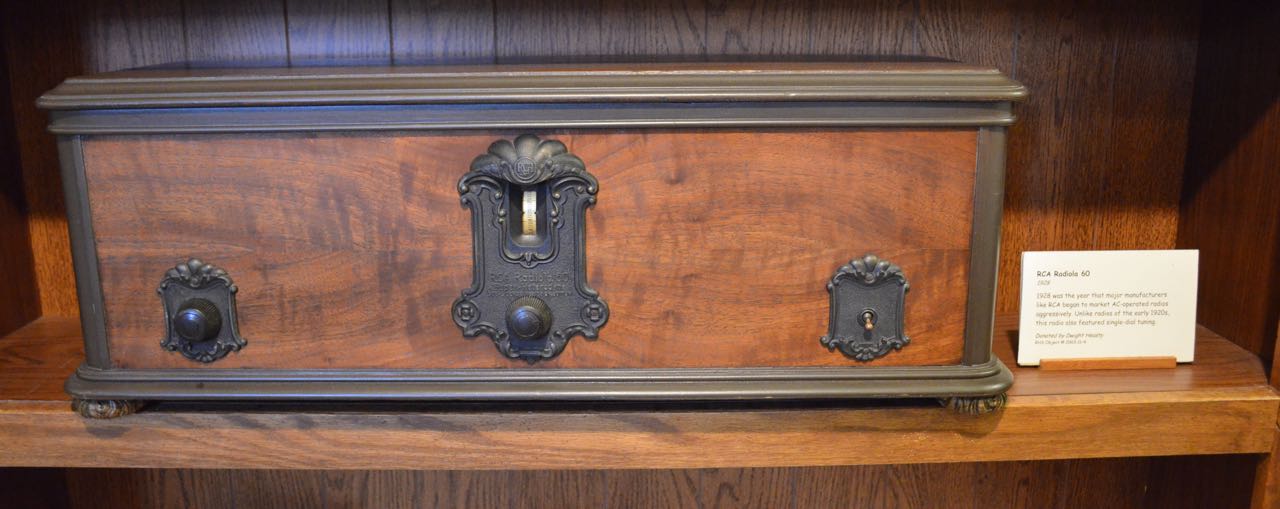
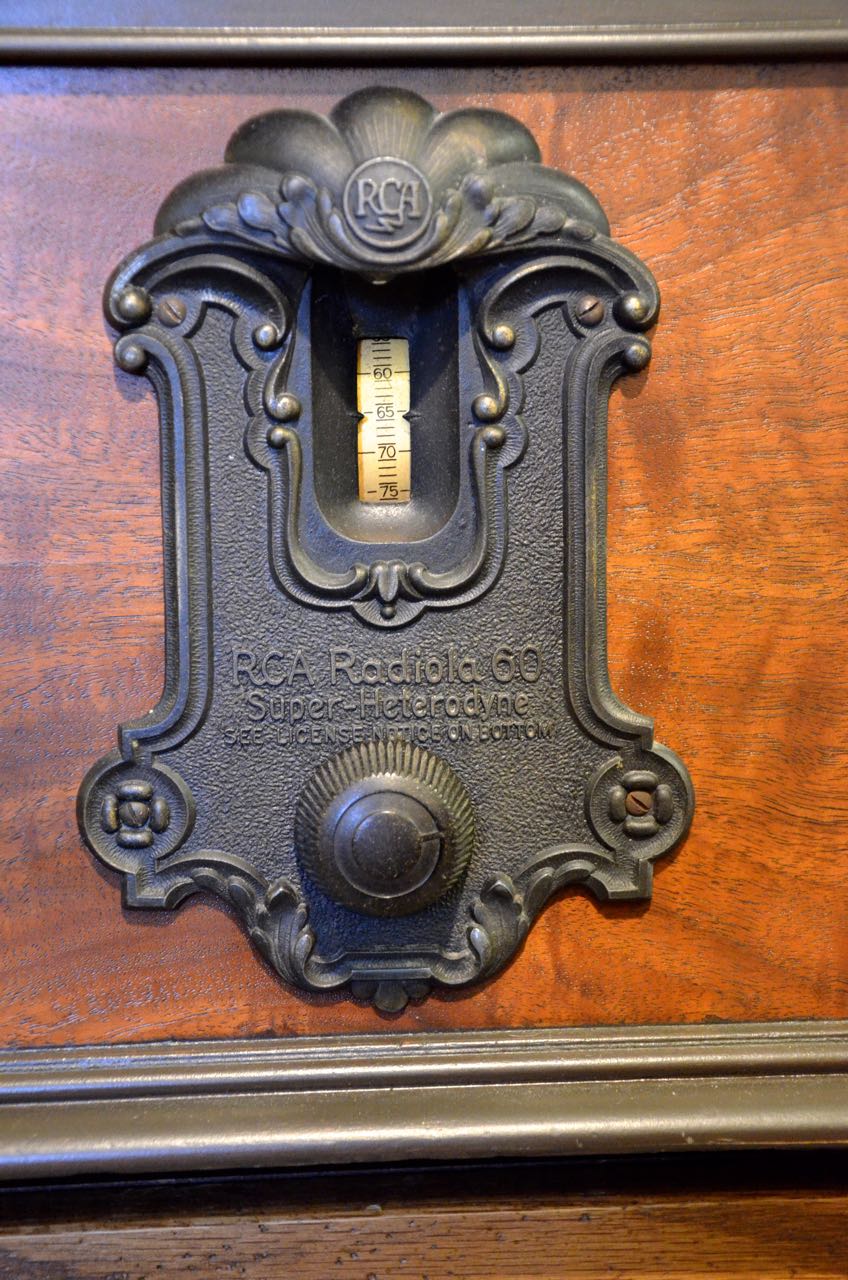
The museum has a number of display rooms with radios broadly grouped by style and decade. The first room offers examples of some of the earliest radios produced–including the venerable crystal radio (below).
[Click photos to enlarge.]

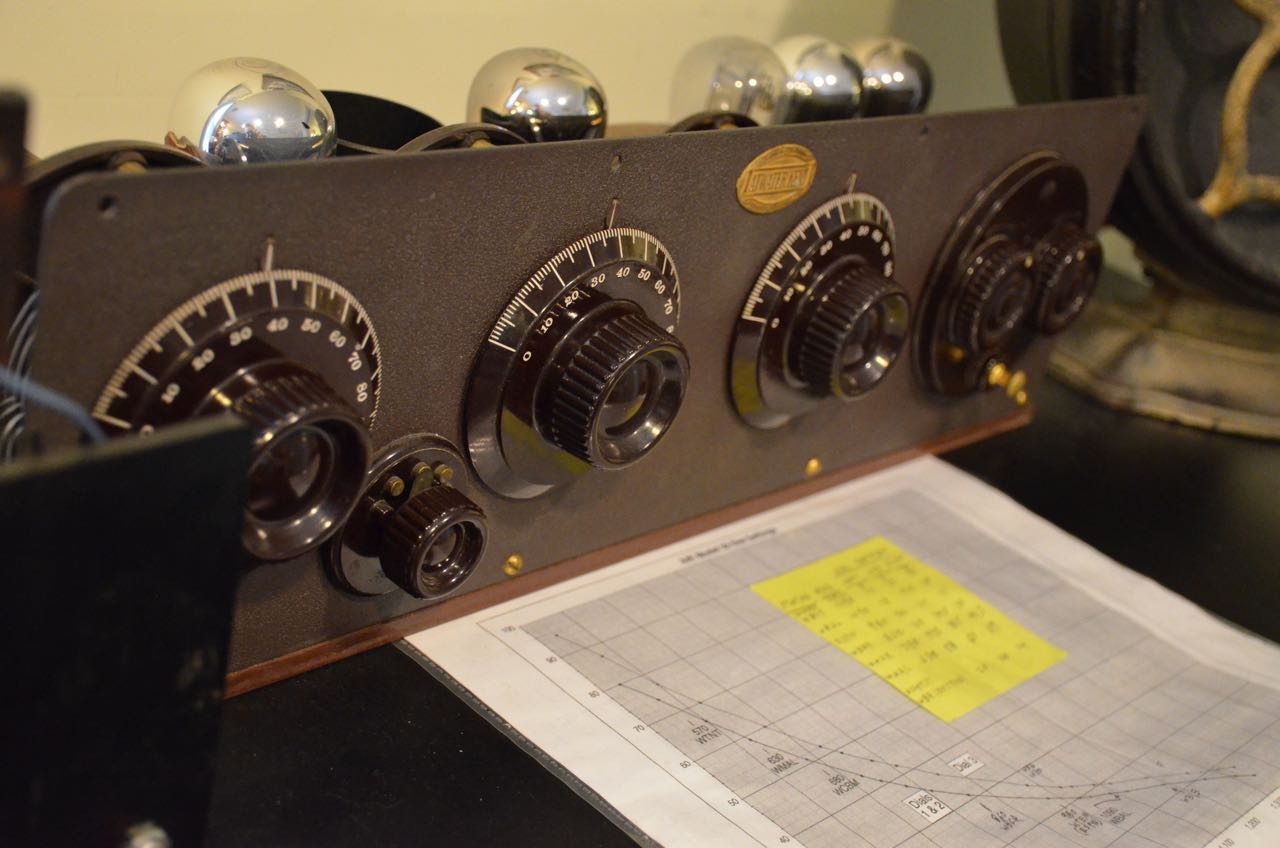
Like Brian, numerous volunteers work to keep the collections in working order. This isn’t a place where vintage radios come to die; they actually come to life here.

 Even examples of some of their earliest radios are on the air and can be tuned to local and international stations.
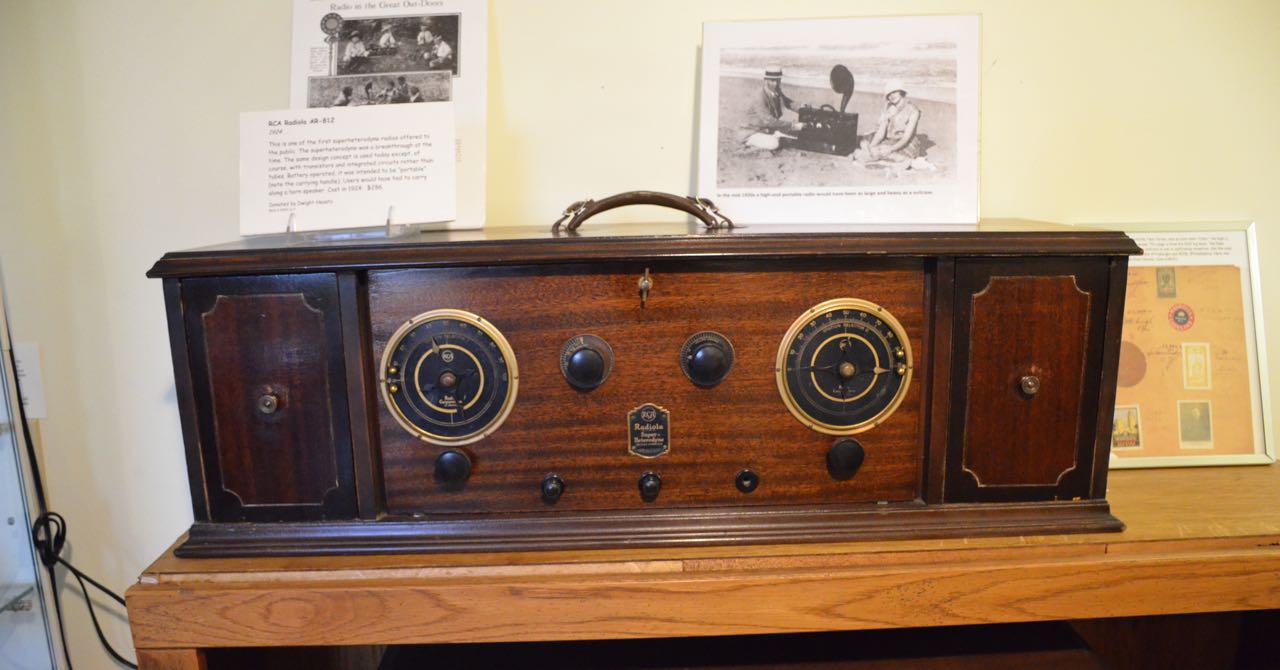
This RCA “portable” (below), housed two batteries on either side of the center faceplate. Note the ad on the wall above–a couple enjoy the RCA as they recline on a beach.
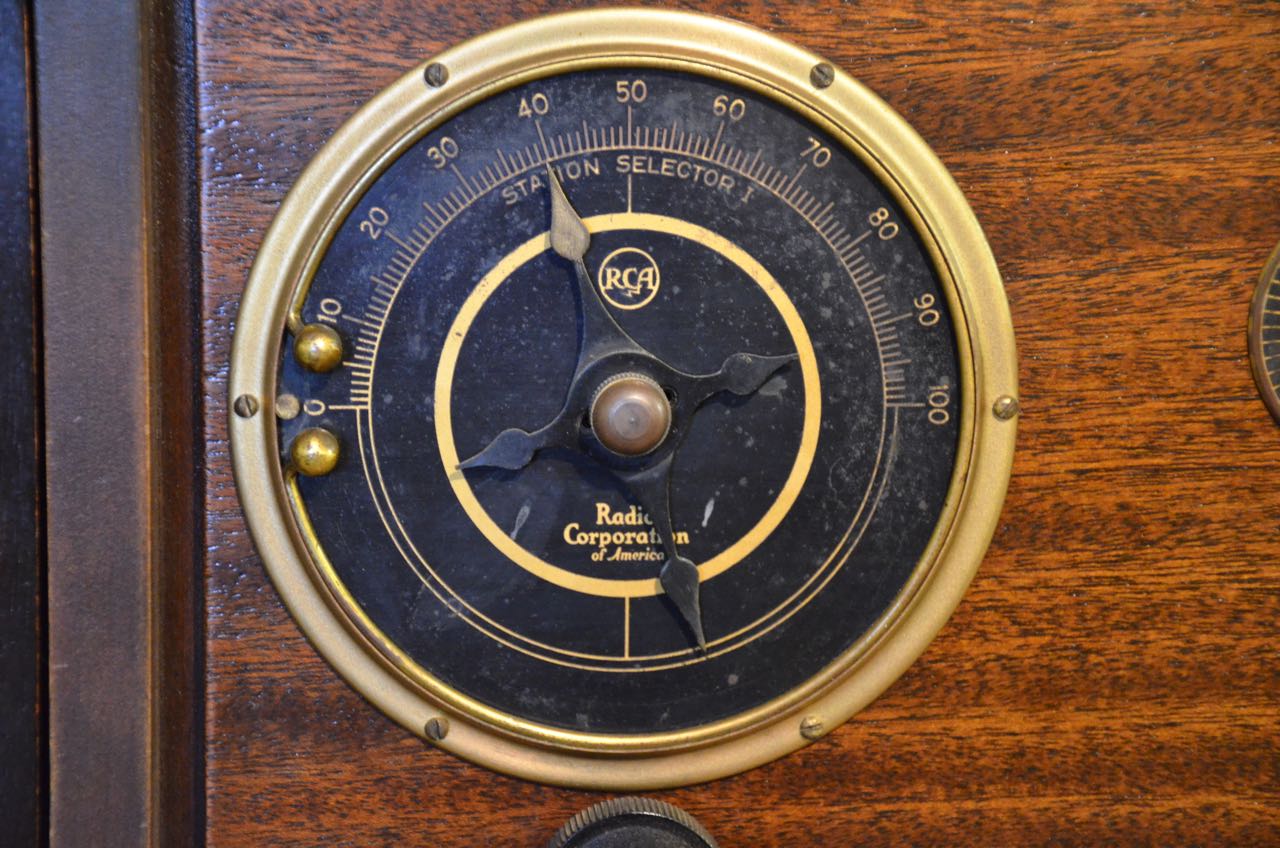

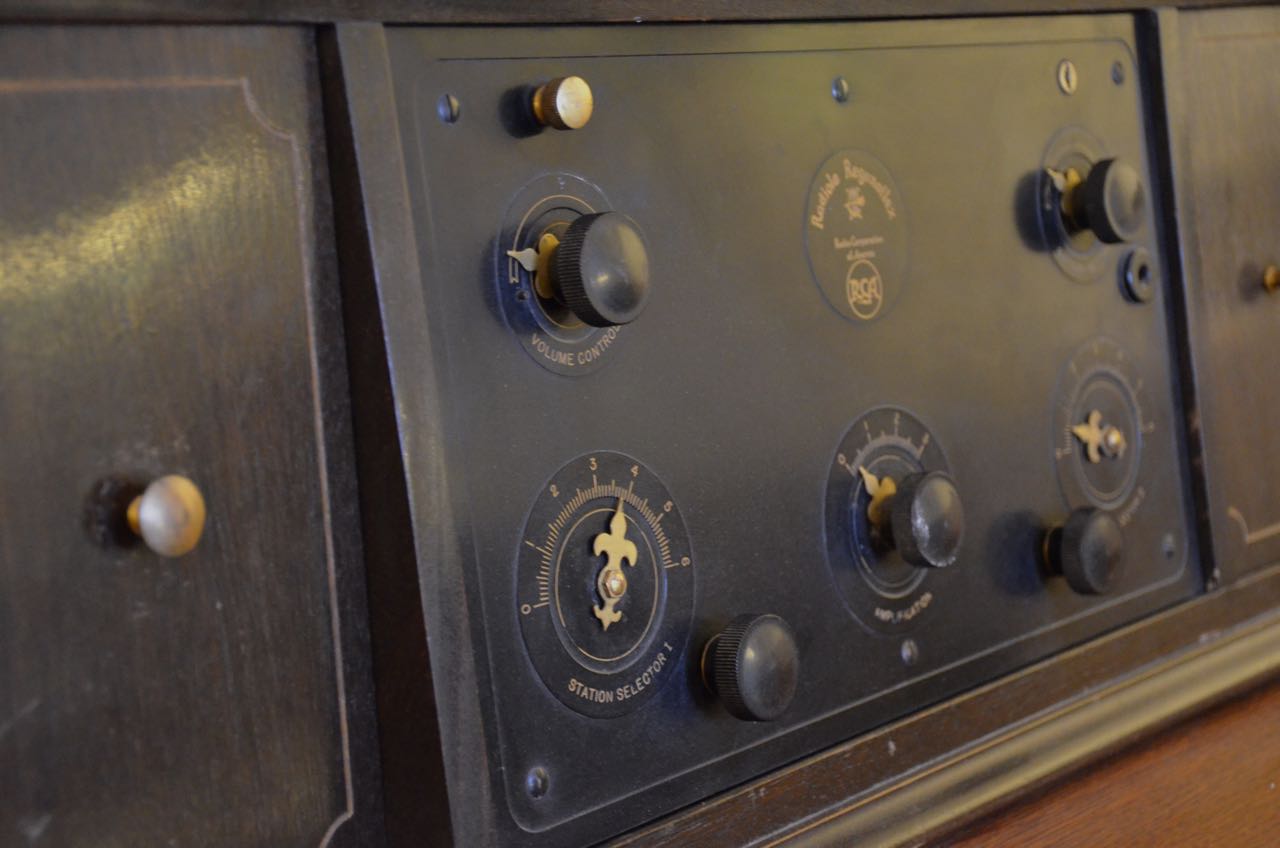
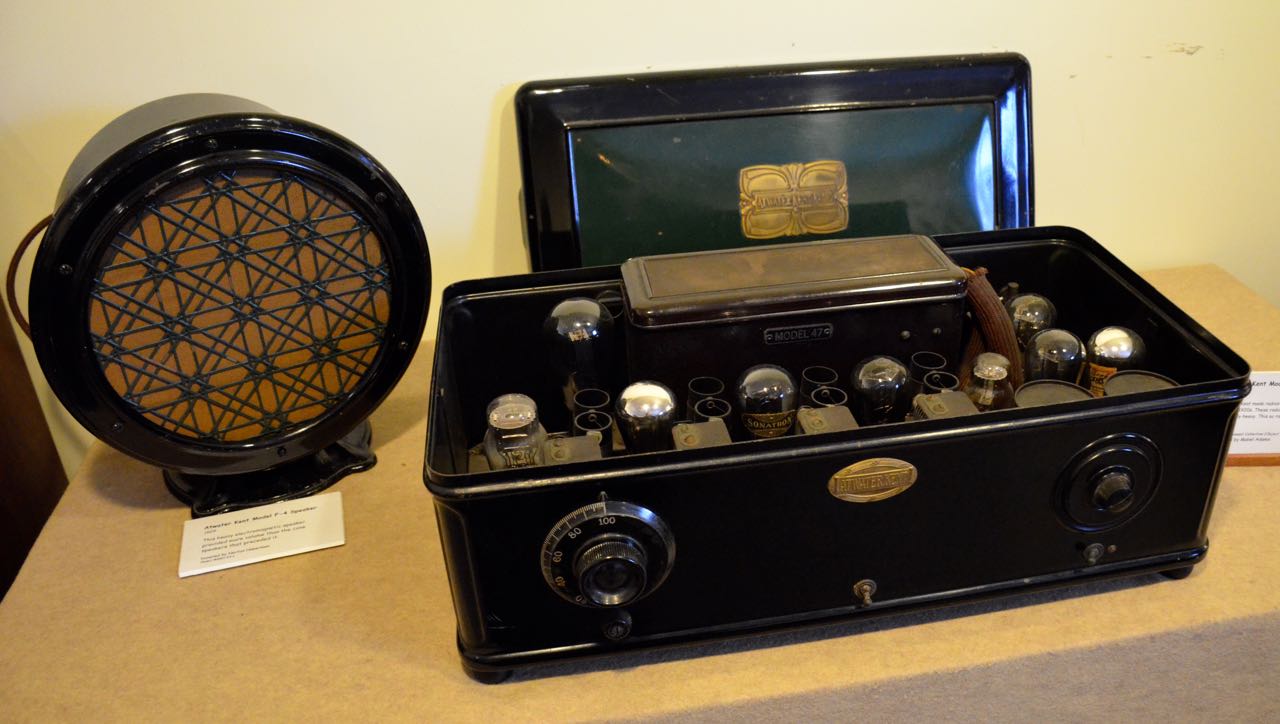

Speakers of the day were pretty amazing, too–check out this hand-painted 1927 Air Chrome Double Cone Speaker, below.

The museum also has an extensive collection of studio and off-air recordings that can be played over an AM carrier throughout the building.
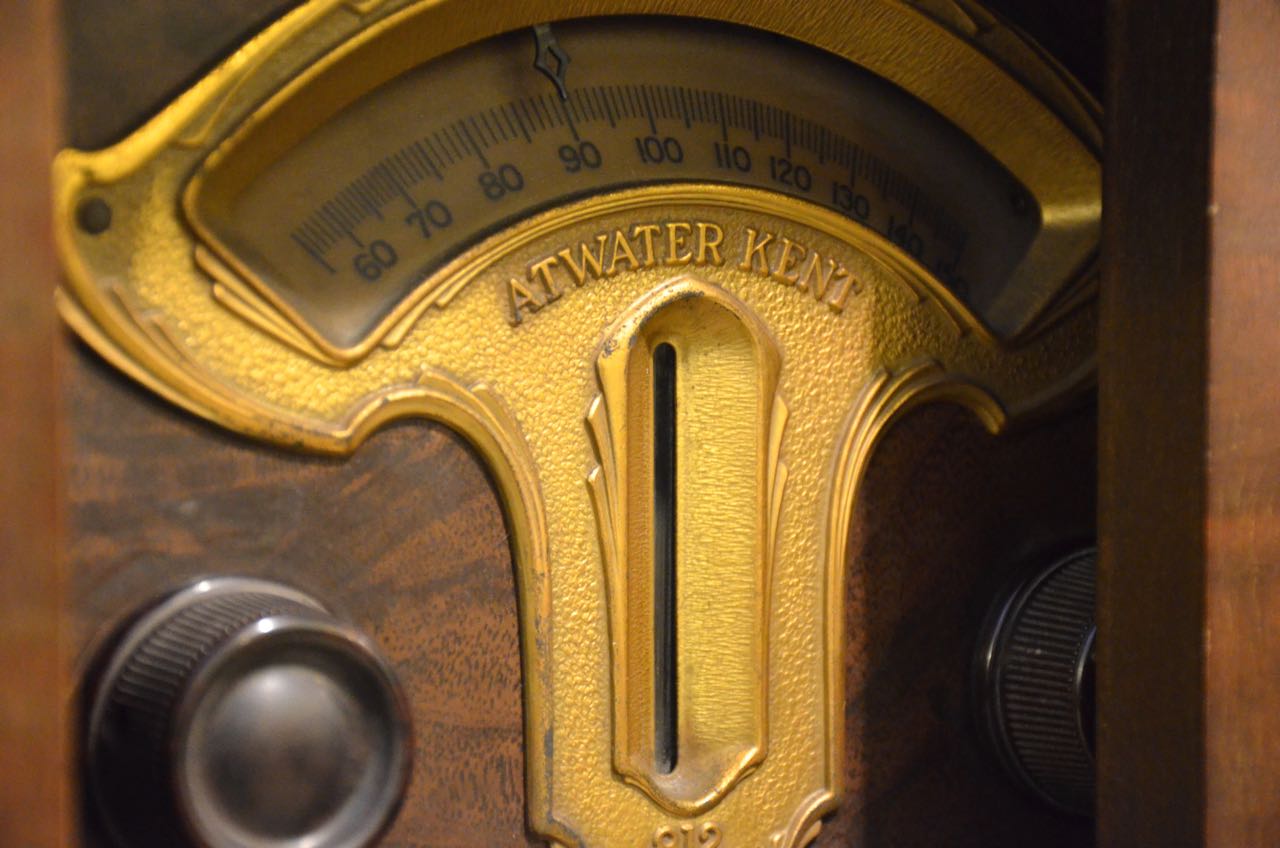
By the late 1920s and early 1930s, radio manufactures built gorgeous console radios, features in the living rooms and parlors of many lucky homes.
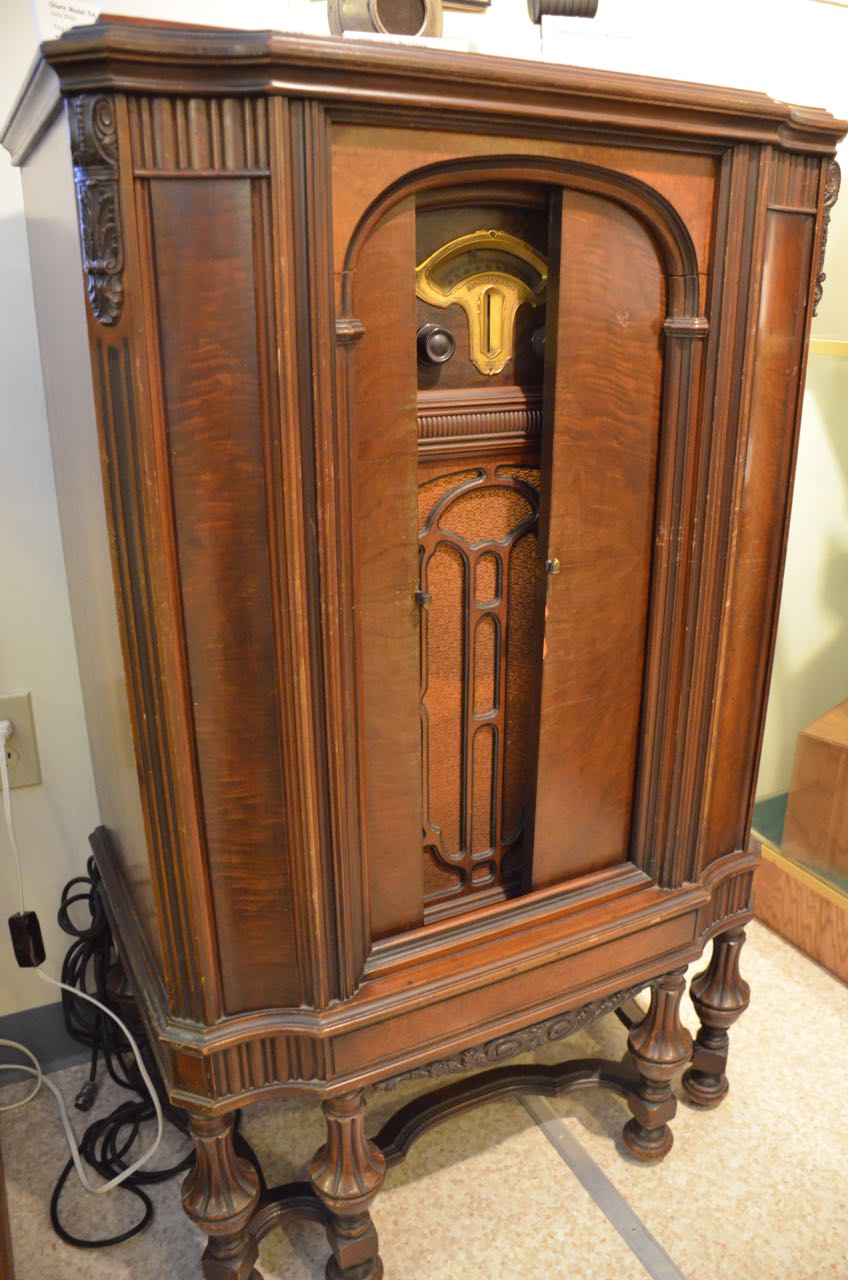
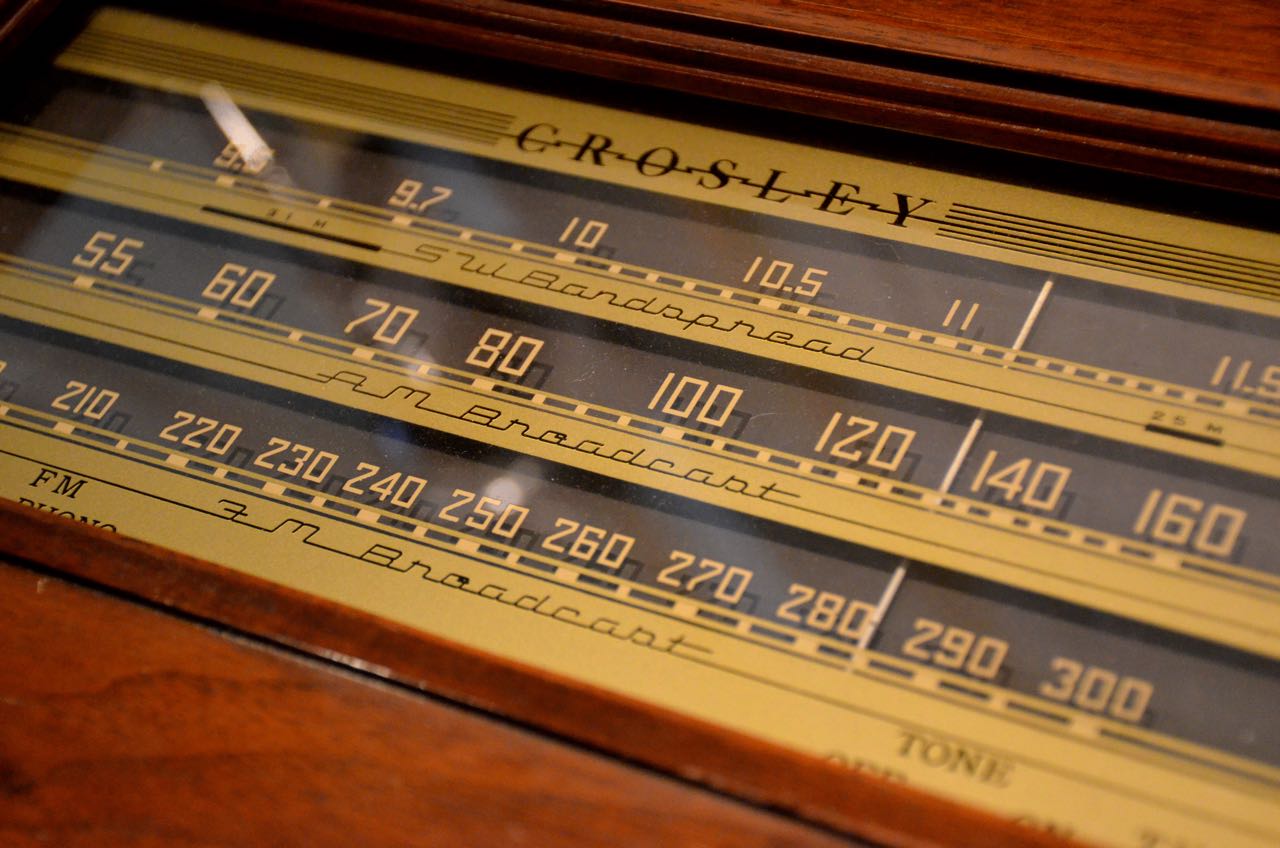
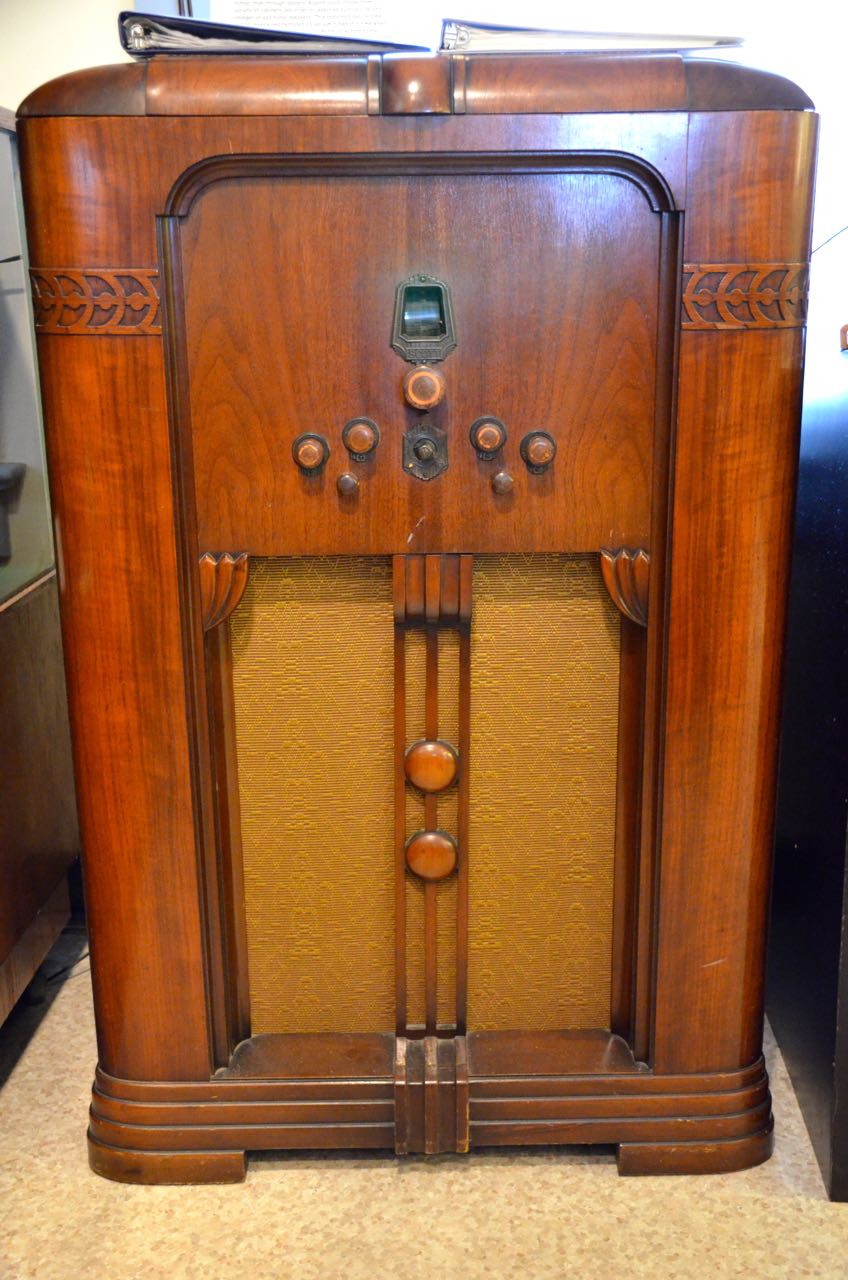
This E.H. Scott All-Wave 23 console (above and below) sported not only twenty-threee vacuum tubes, but a large, robust internal speaker. Radio collectors consider the All-Wave 23 to be one of the finest performing radios of the vacuum-tube era. 
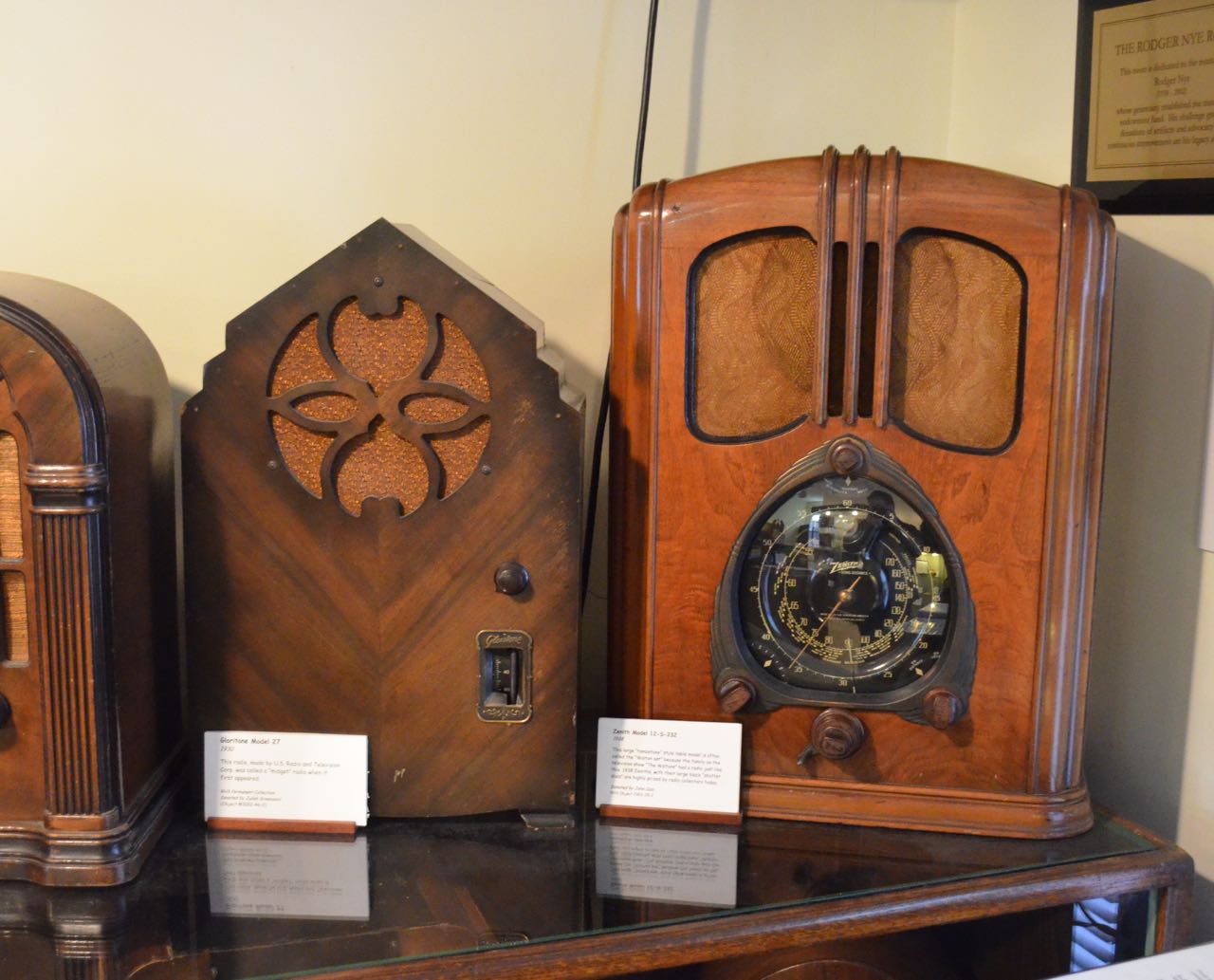
The museum also features the Zenith 12-S-232 tabletop radio with working shuttle dial–a futuristic band-switching mechanical wonder with a stunning dial.
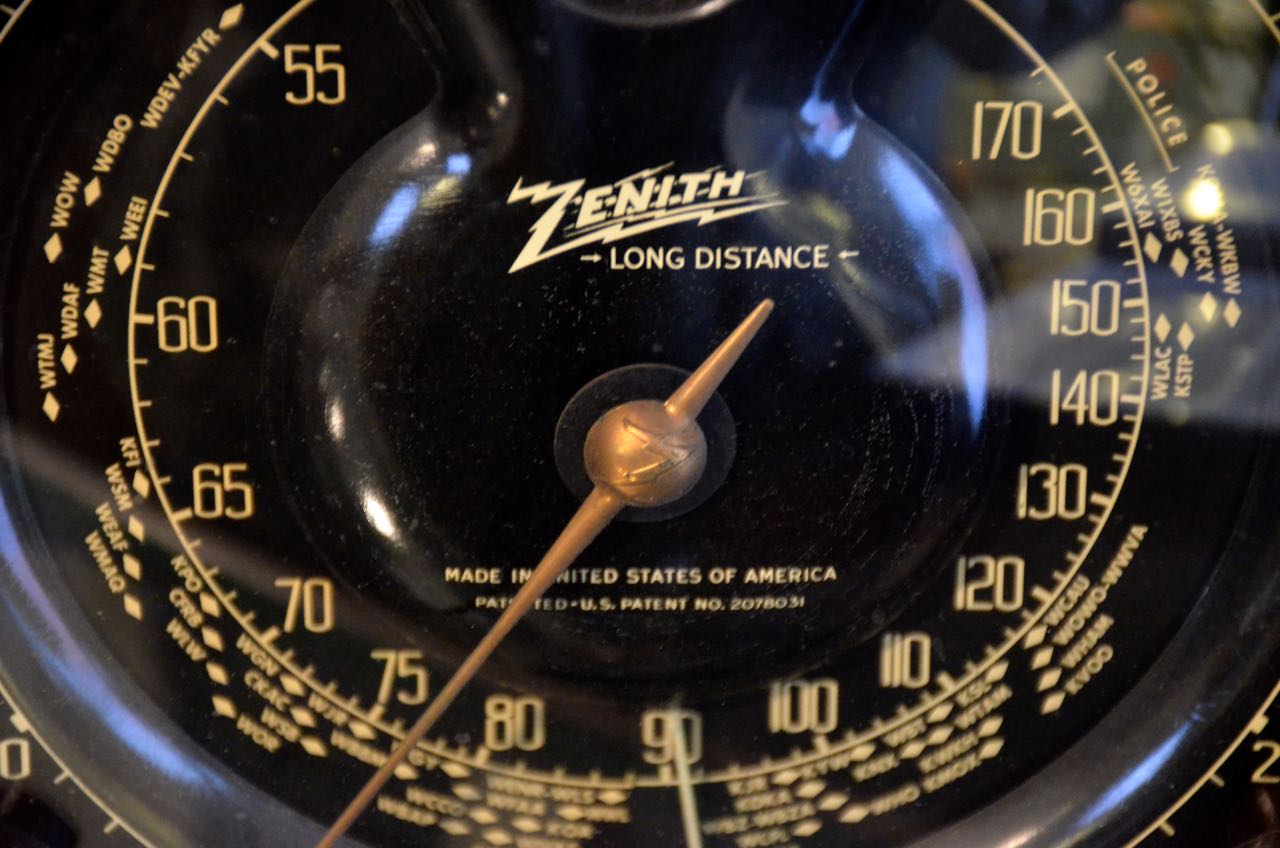
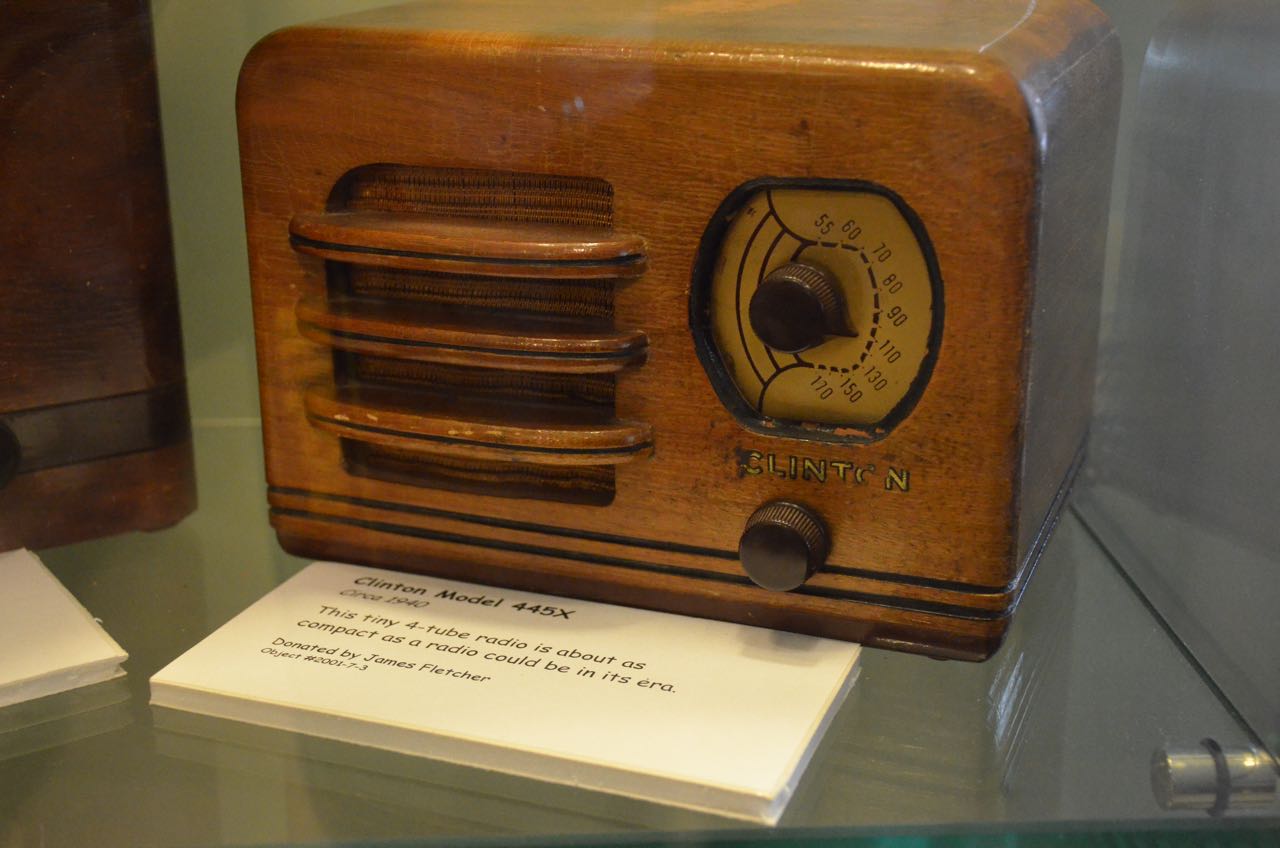
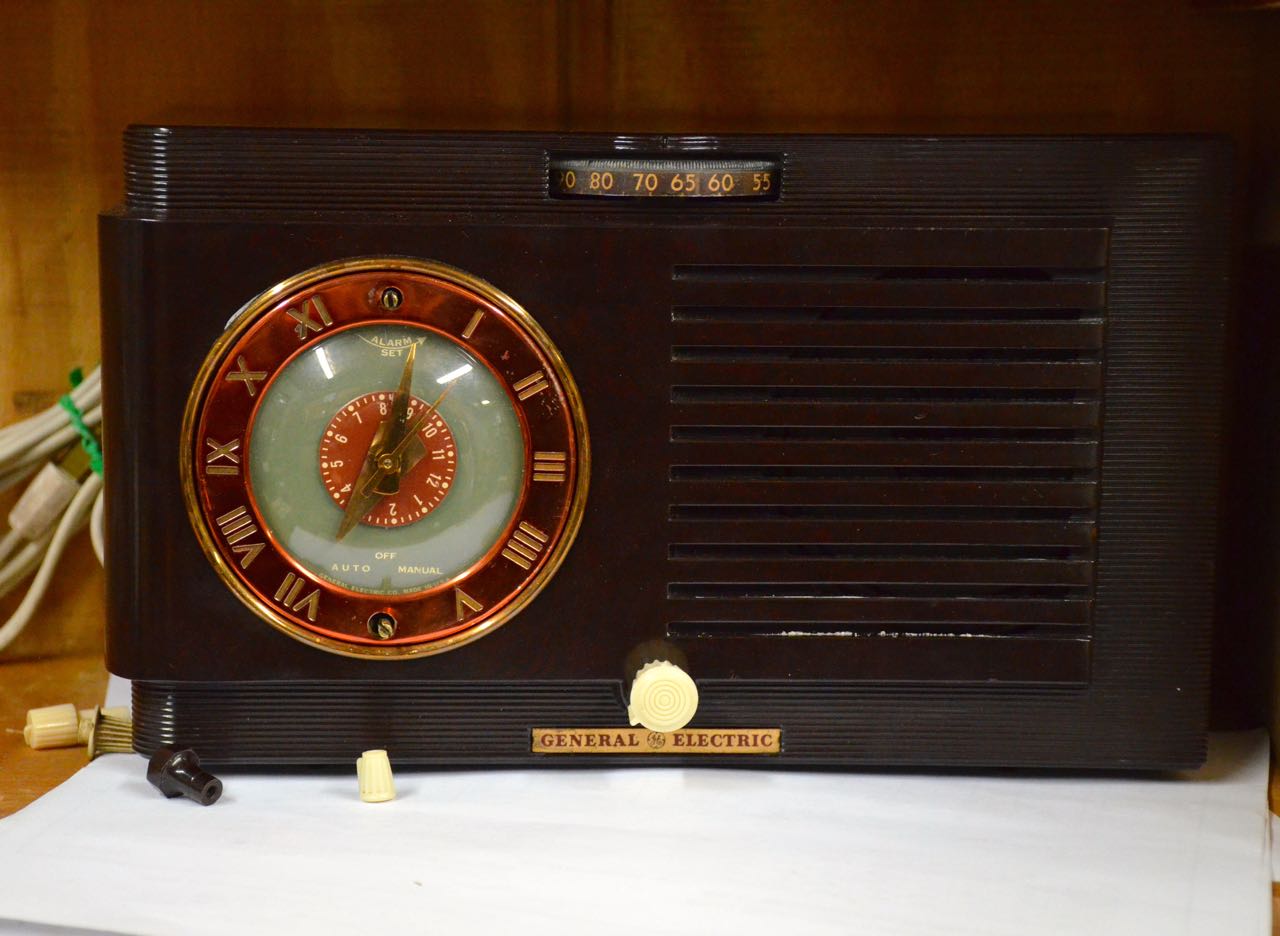
A number of tabletop and portable radios that span the decades have found their homes in this museum. No doubt many SWLing Post readers cut their teeth on these classics!
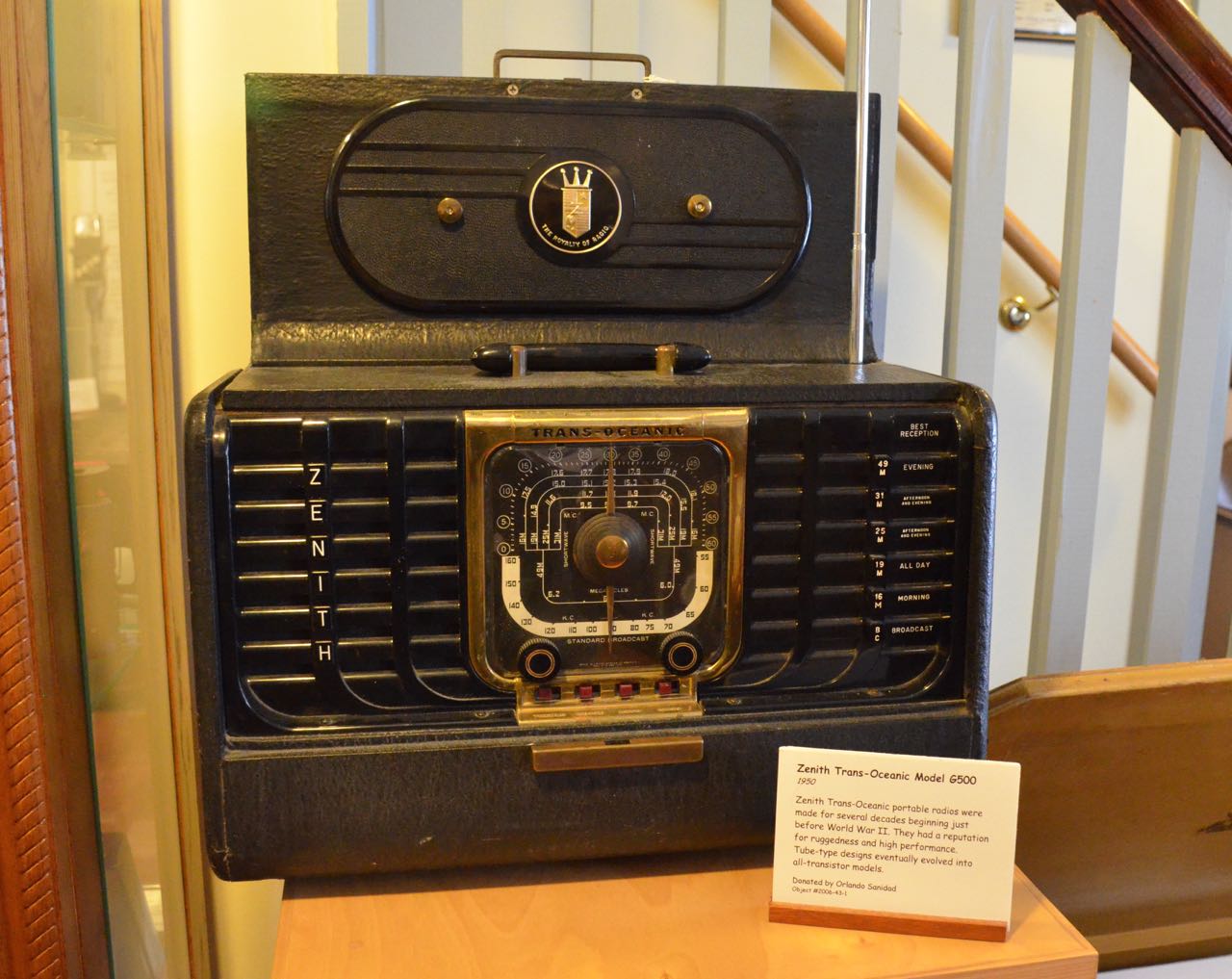
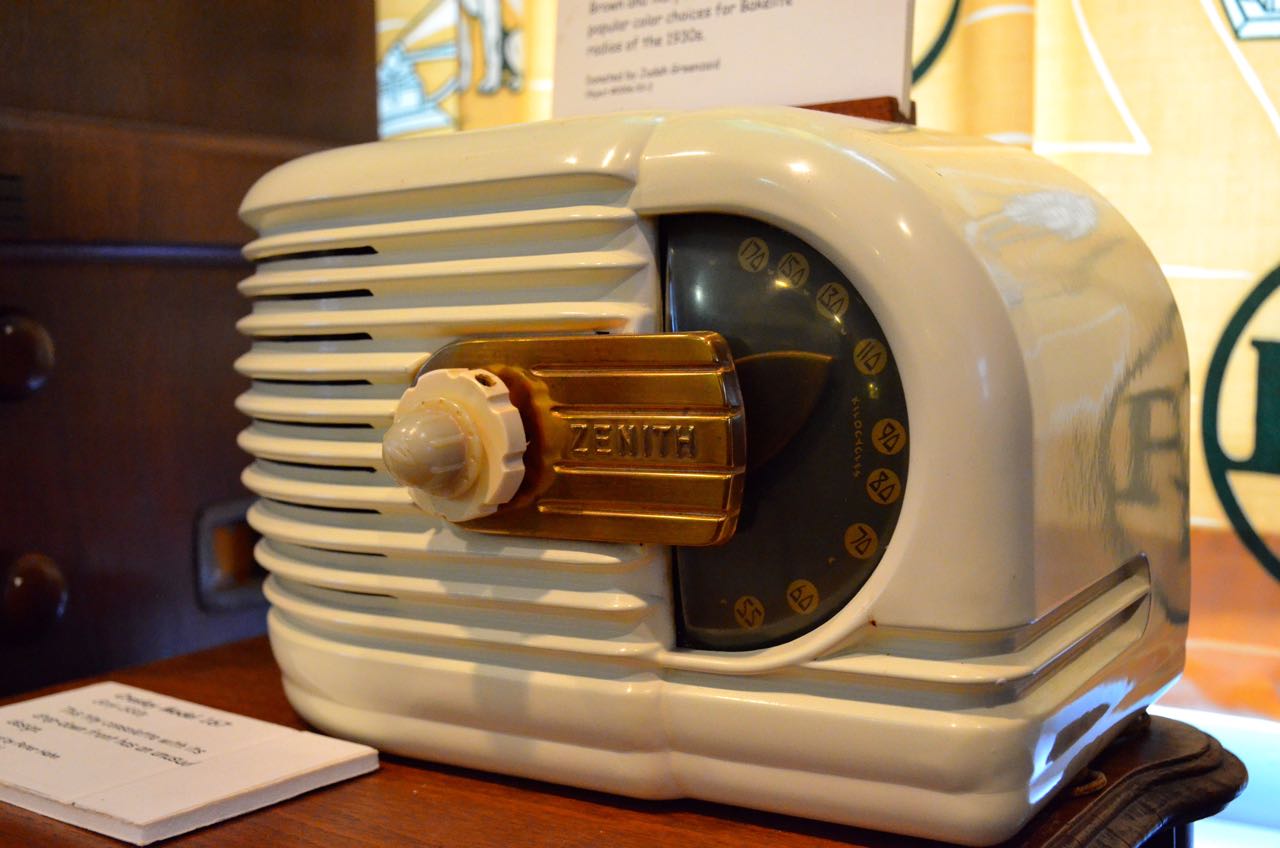
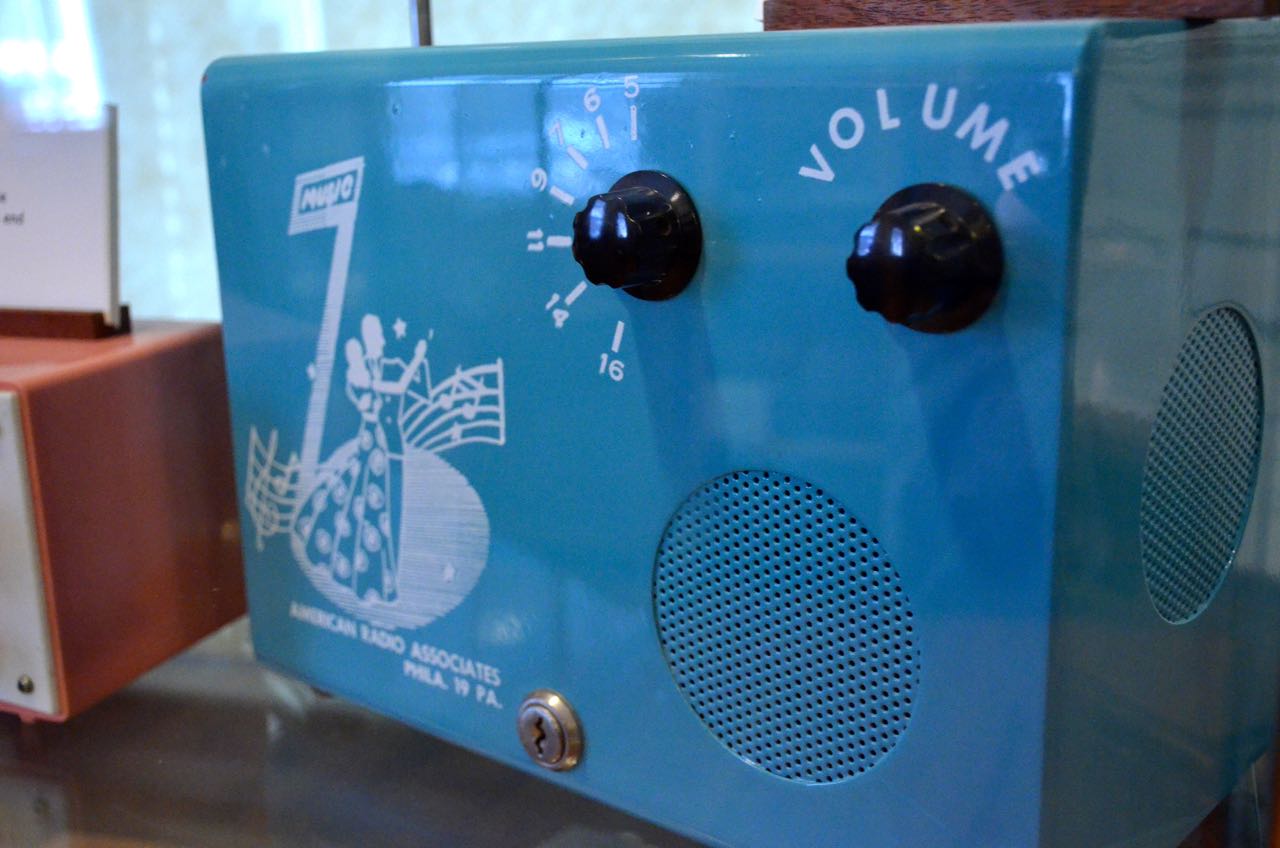
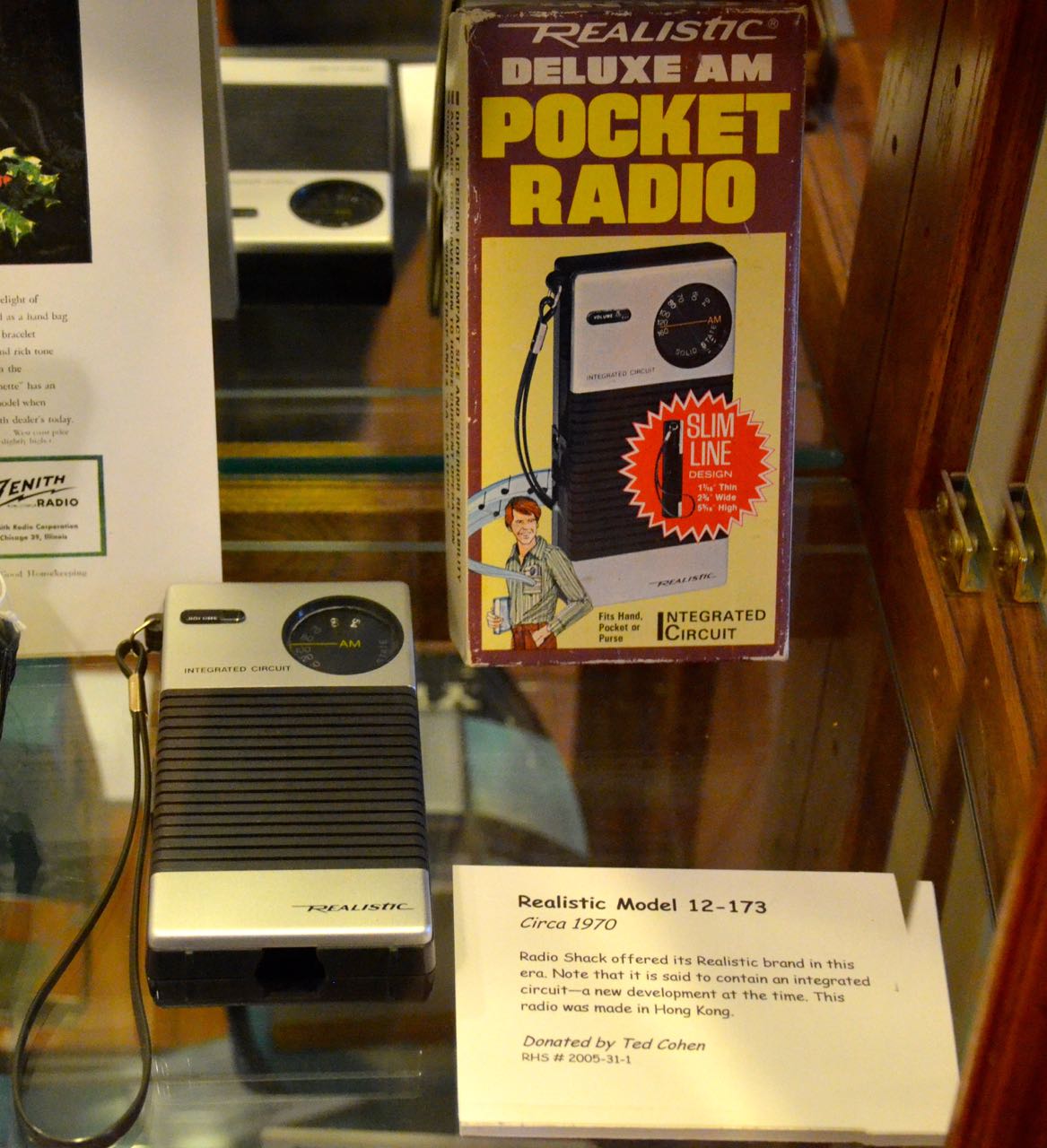
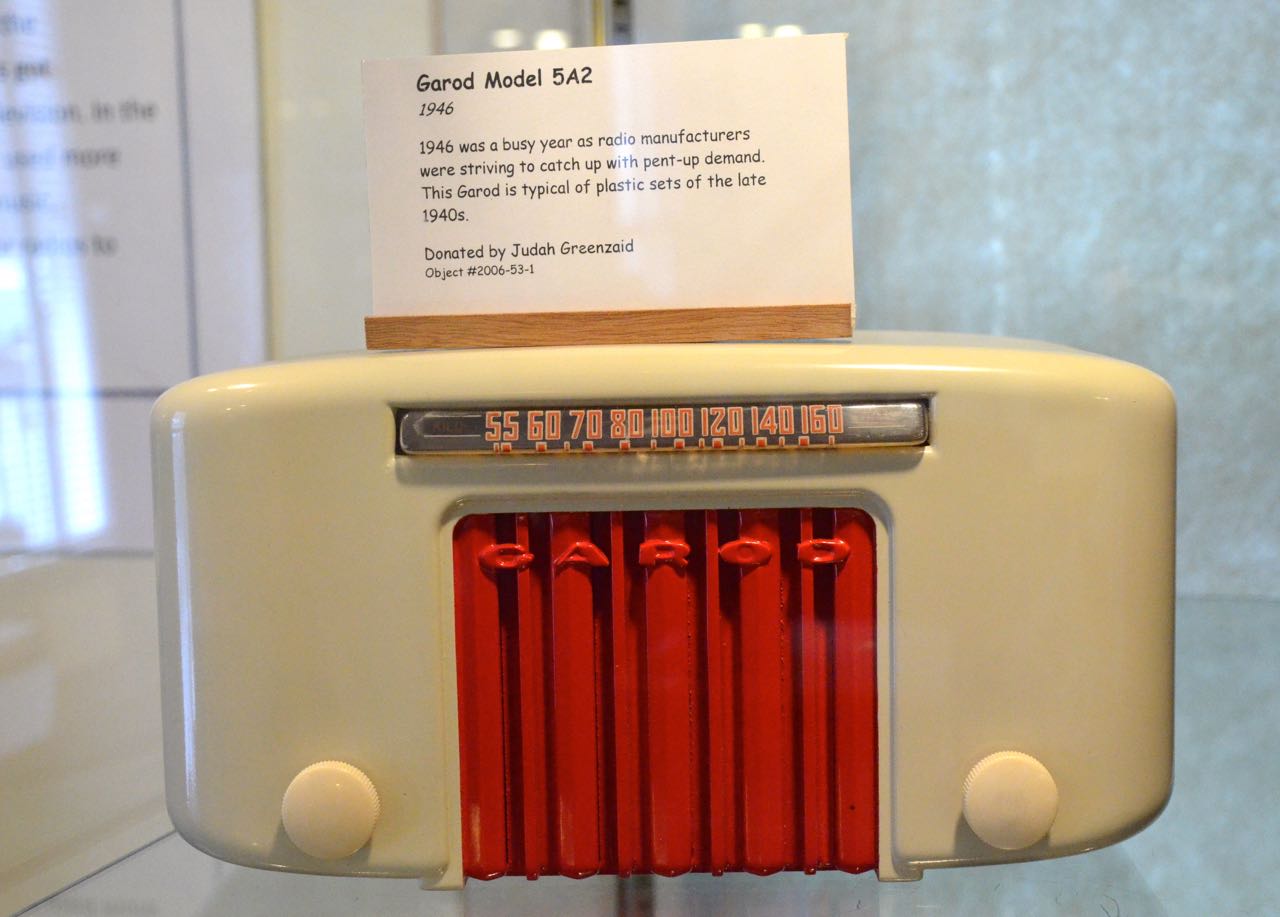
I love the design of the Garod Model 5A2–wow! And I’m sure many kids of the fifties wished they had an official Hopalong Cassidy AM radio (below).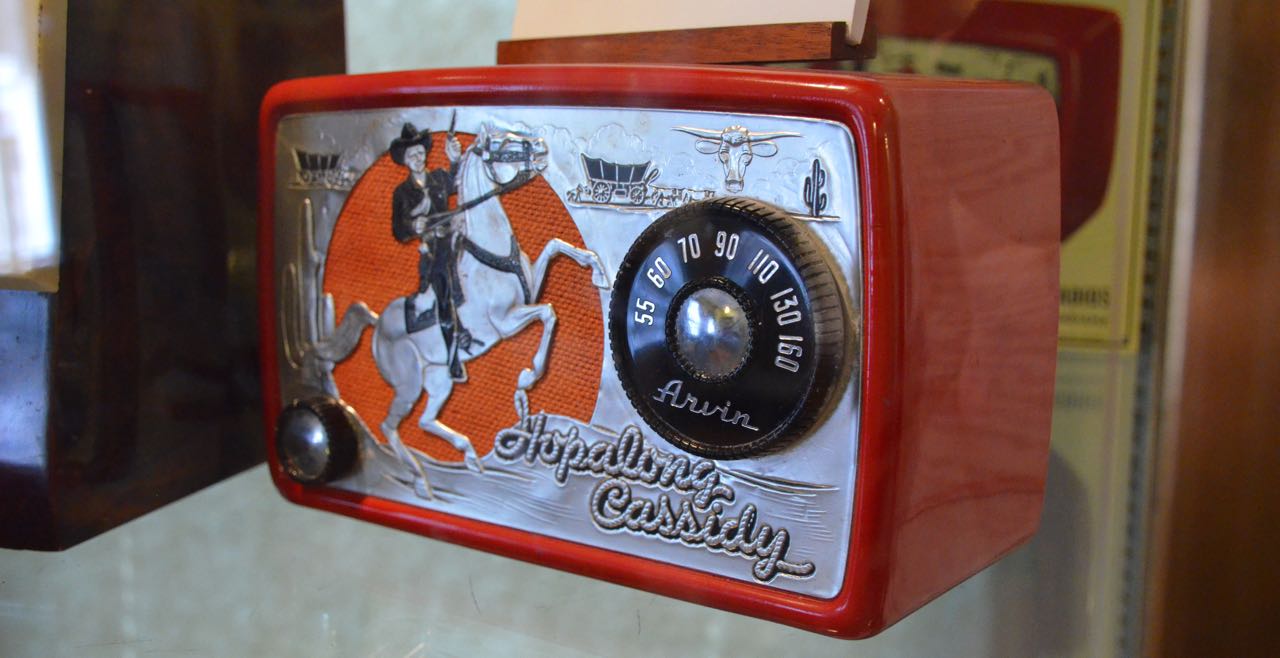
The museum, of course, also houses a large number of classic televisions.

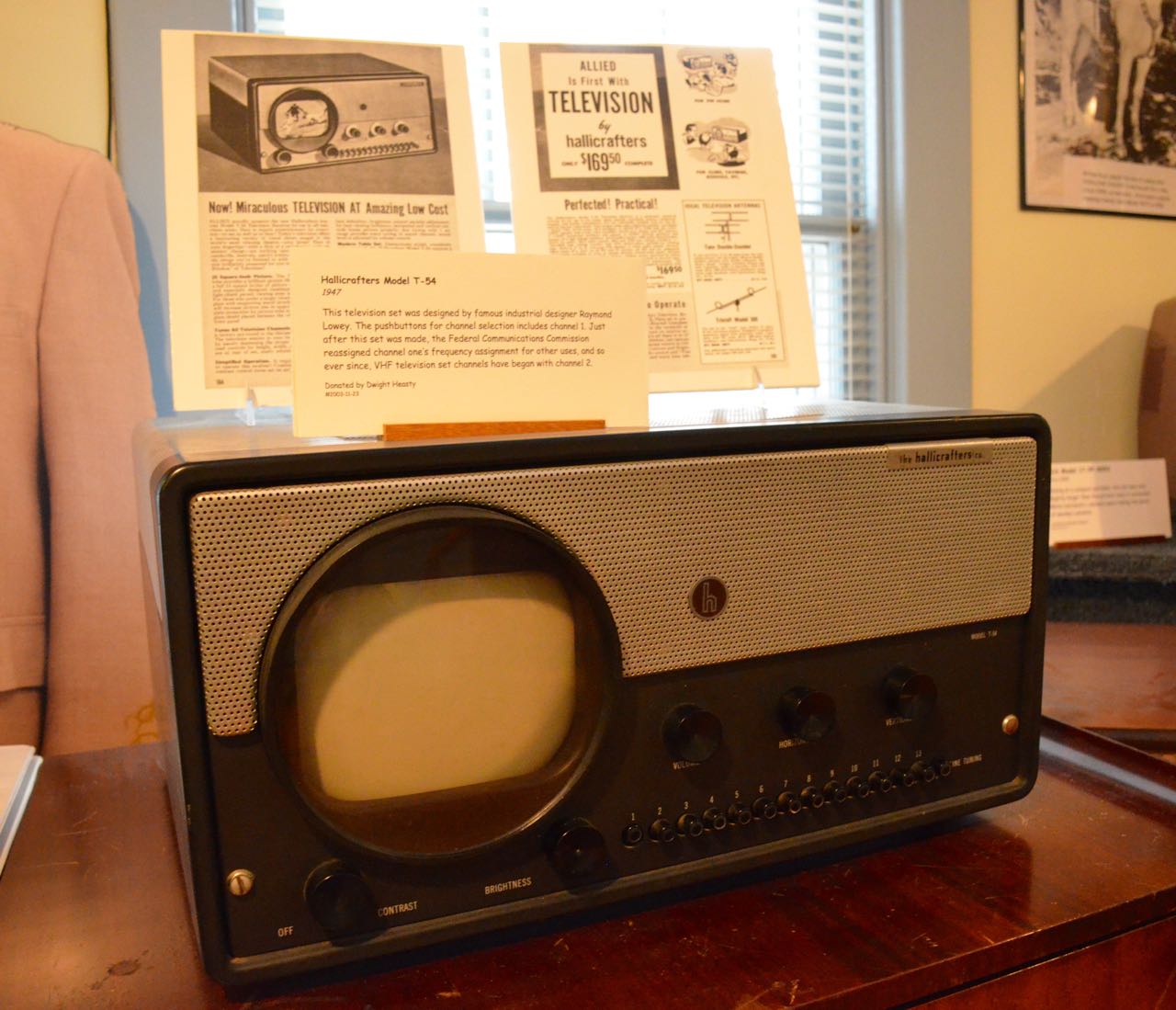
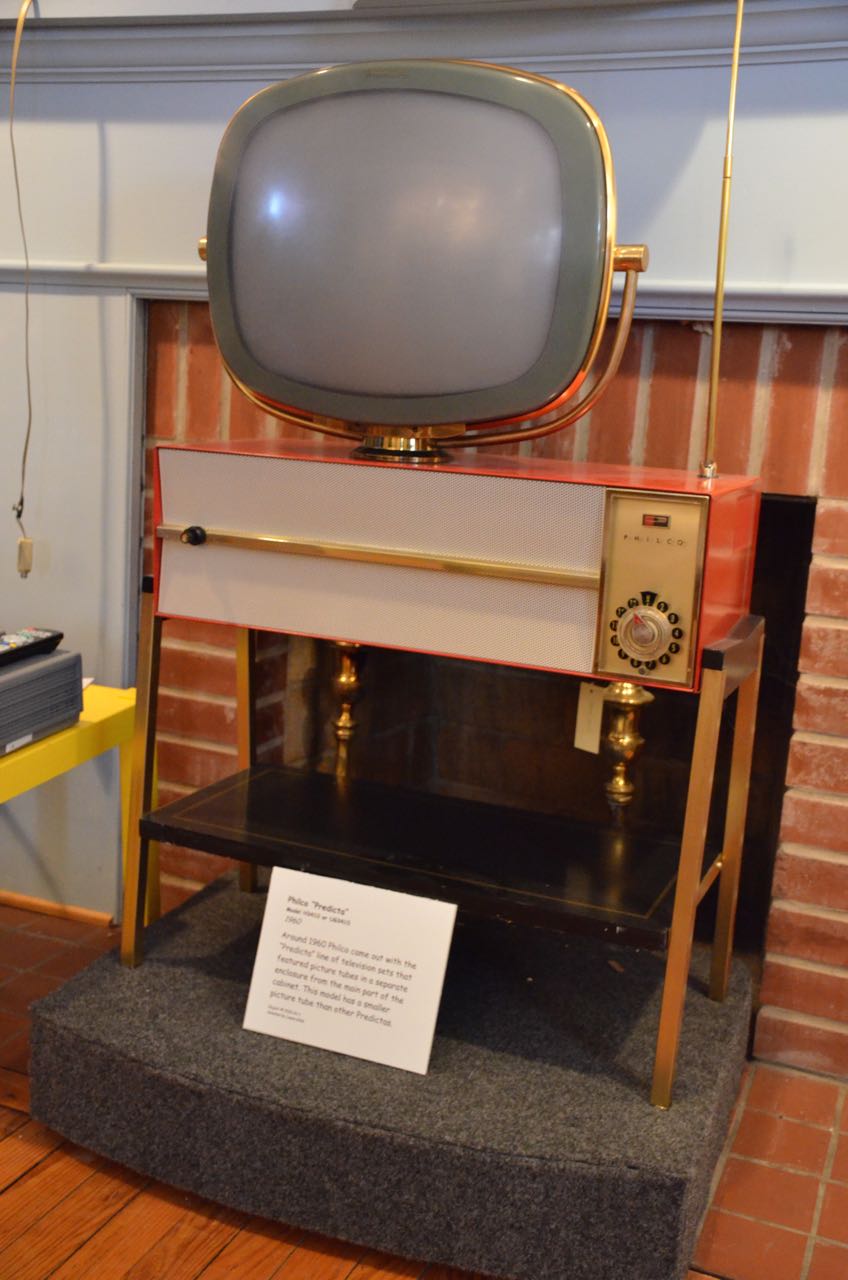
 Radio stations and benefactors have also donated many items used in the industry, both in broadcast and retail.
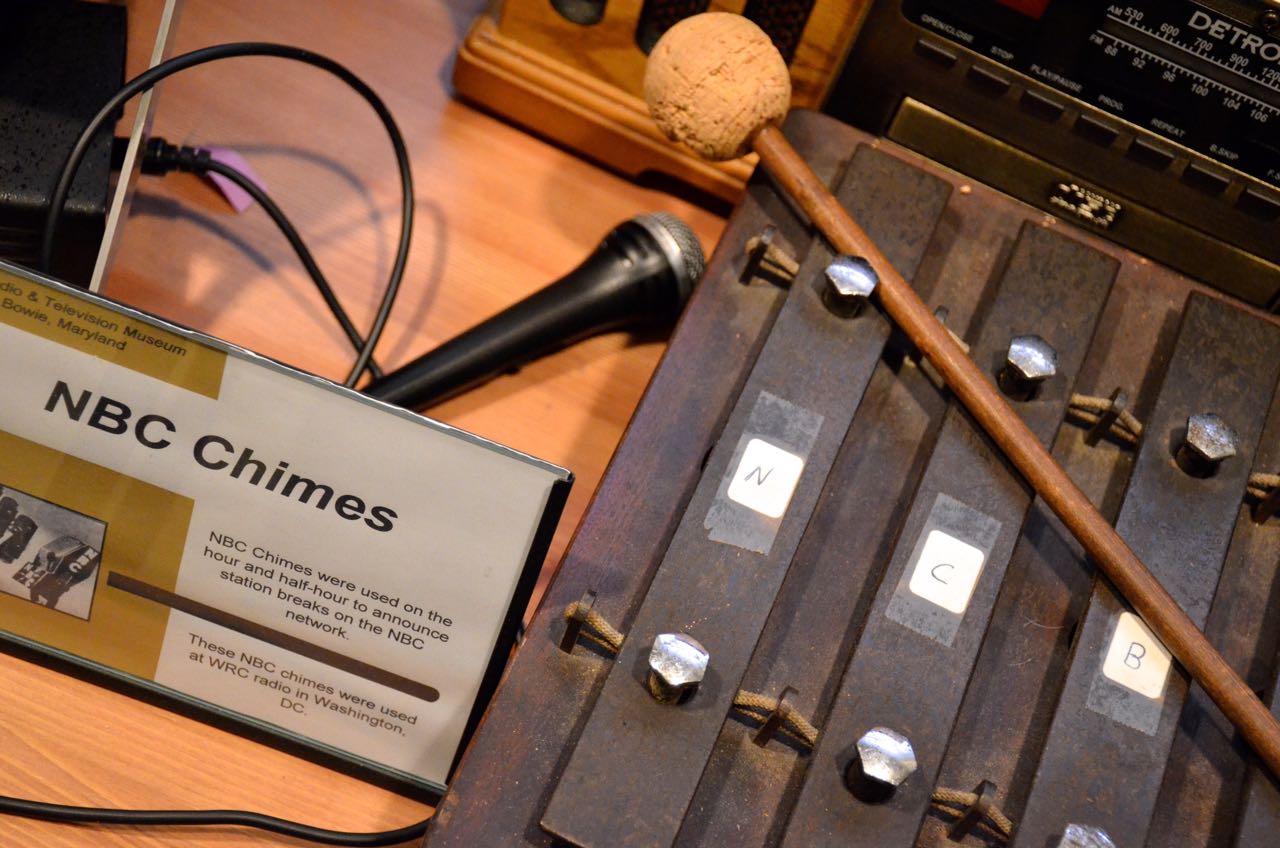

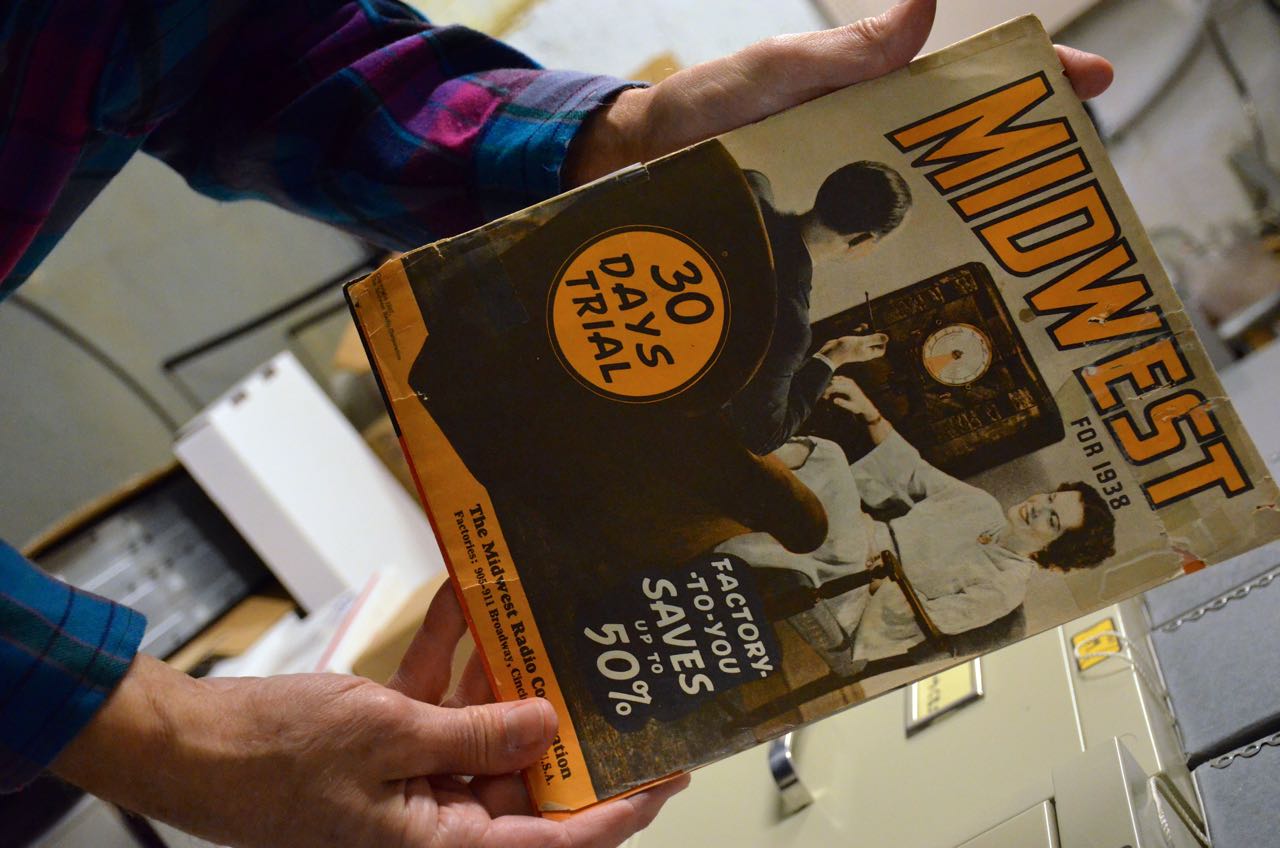

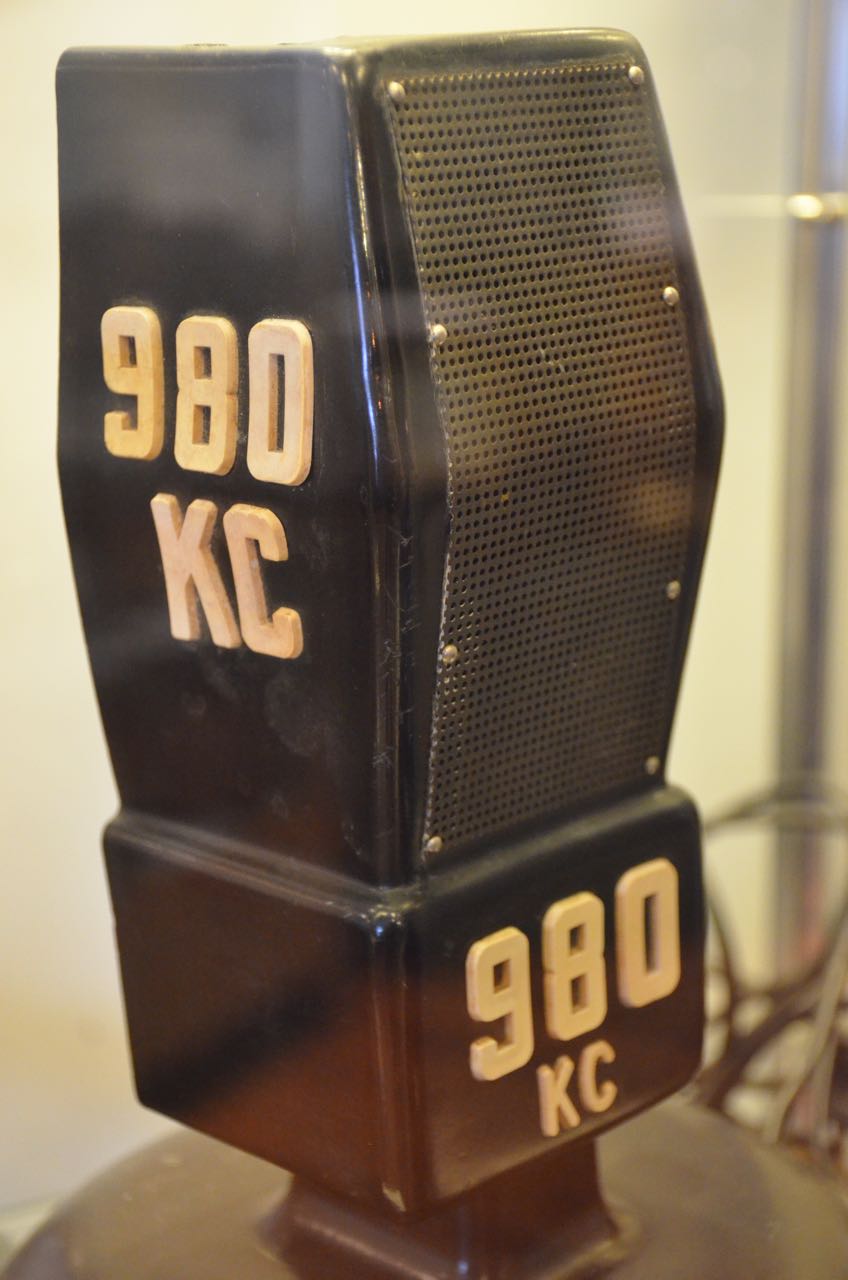 Brian was also kind enough to take me to the building, next door, where they repair radios and store others for eventual rotation into the collection.
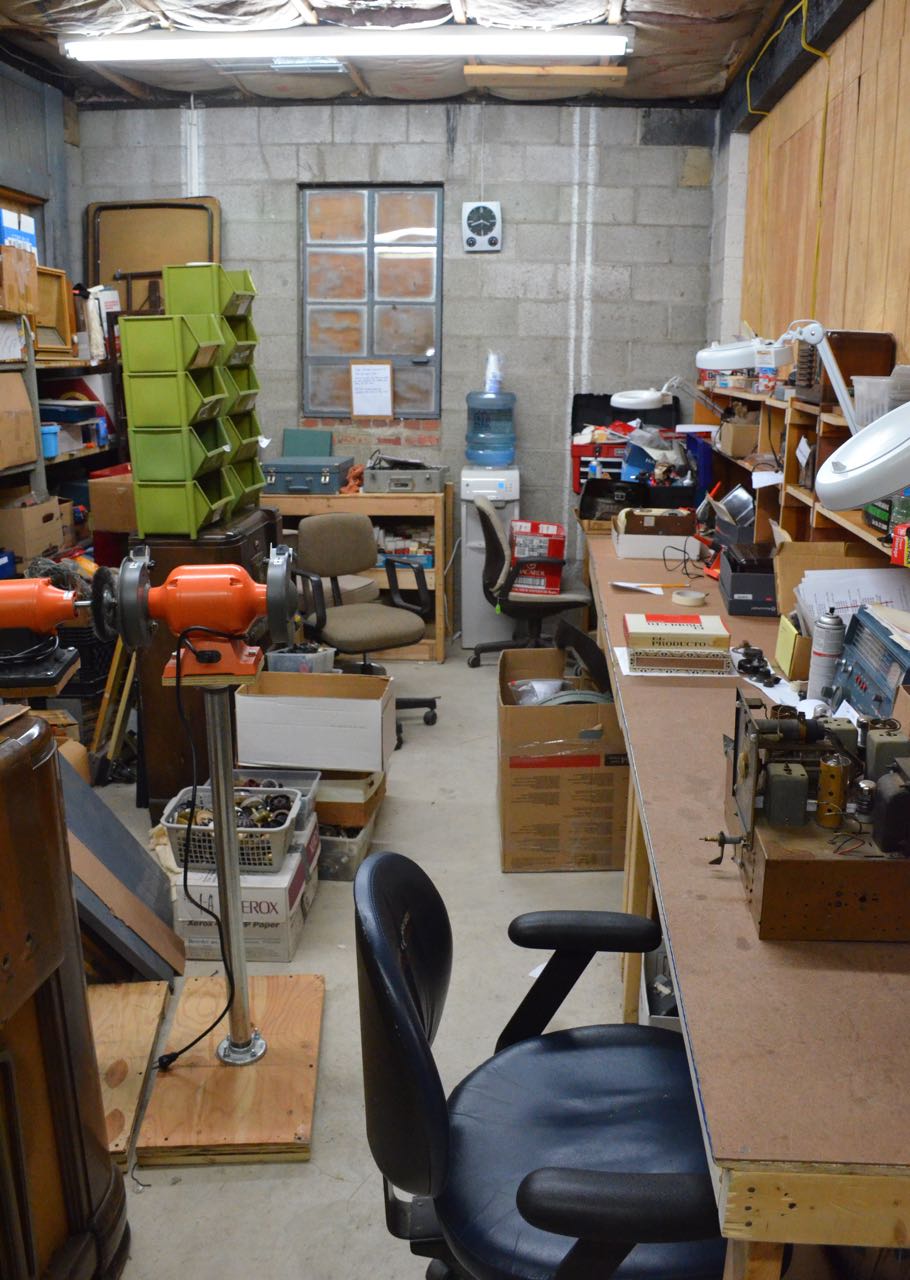
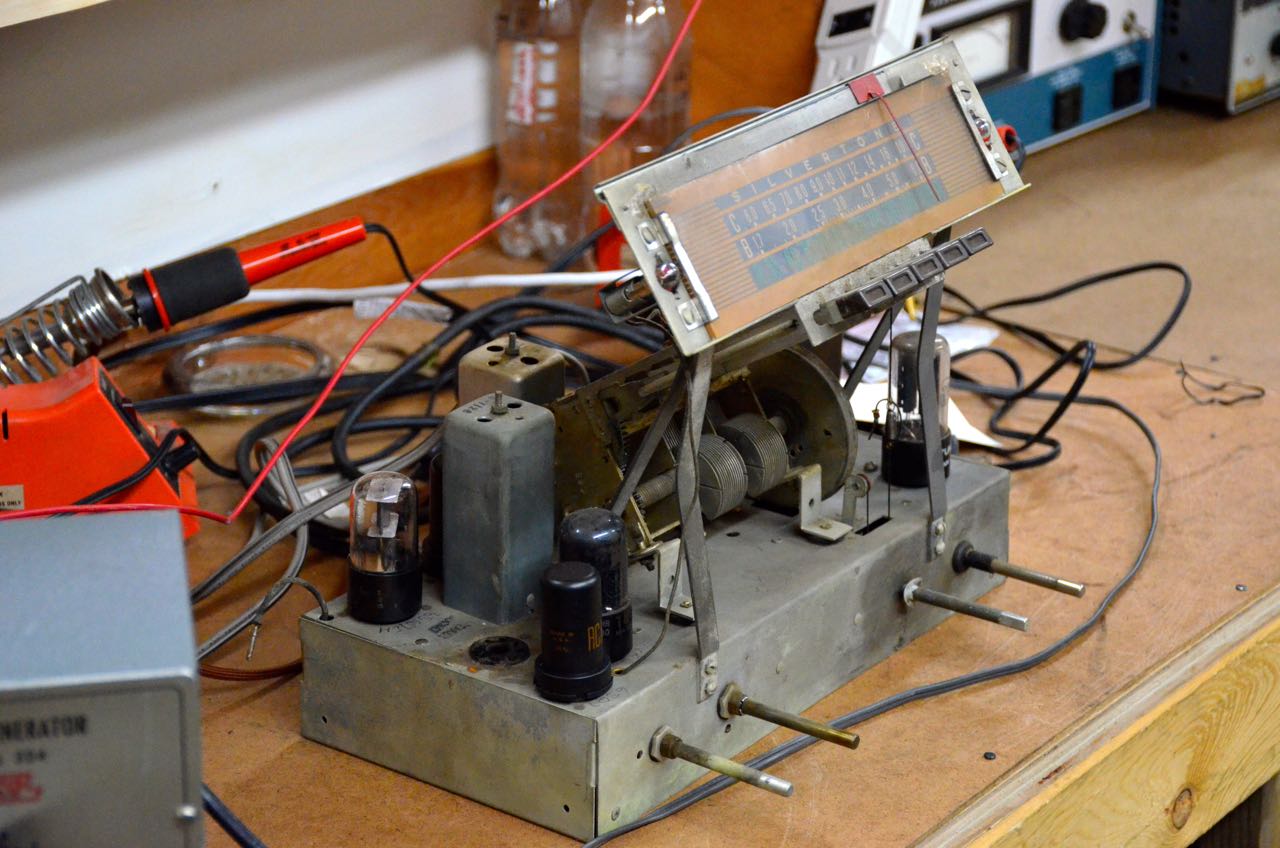
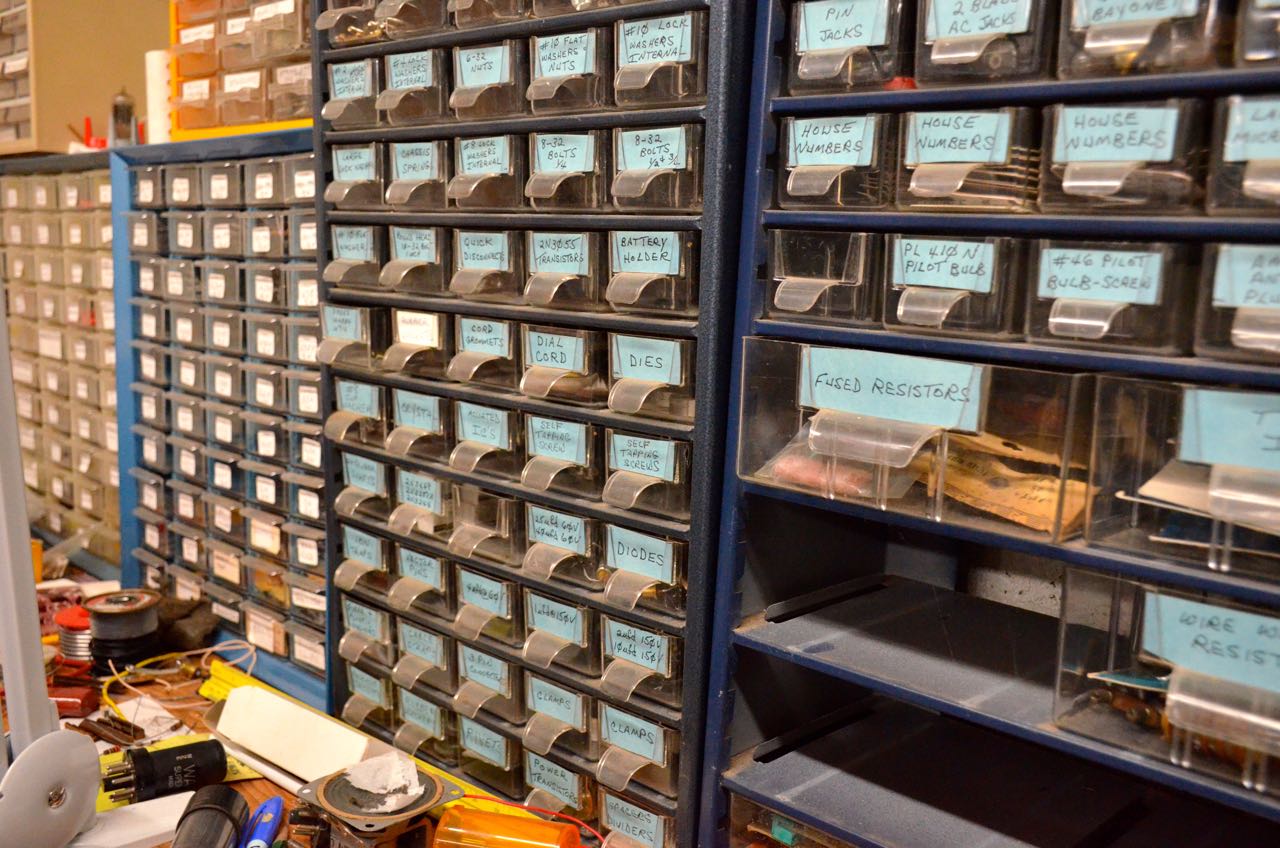
Museum volunteers also teach radio repair and restoration classes.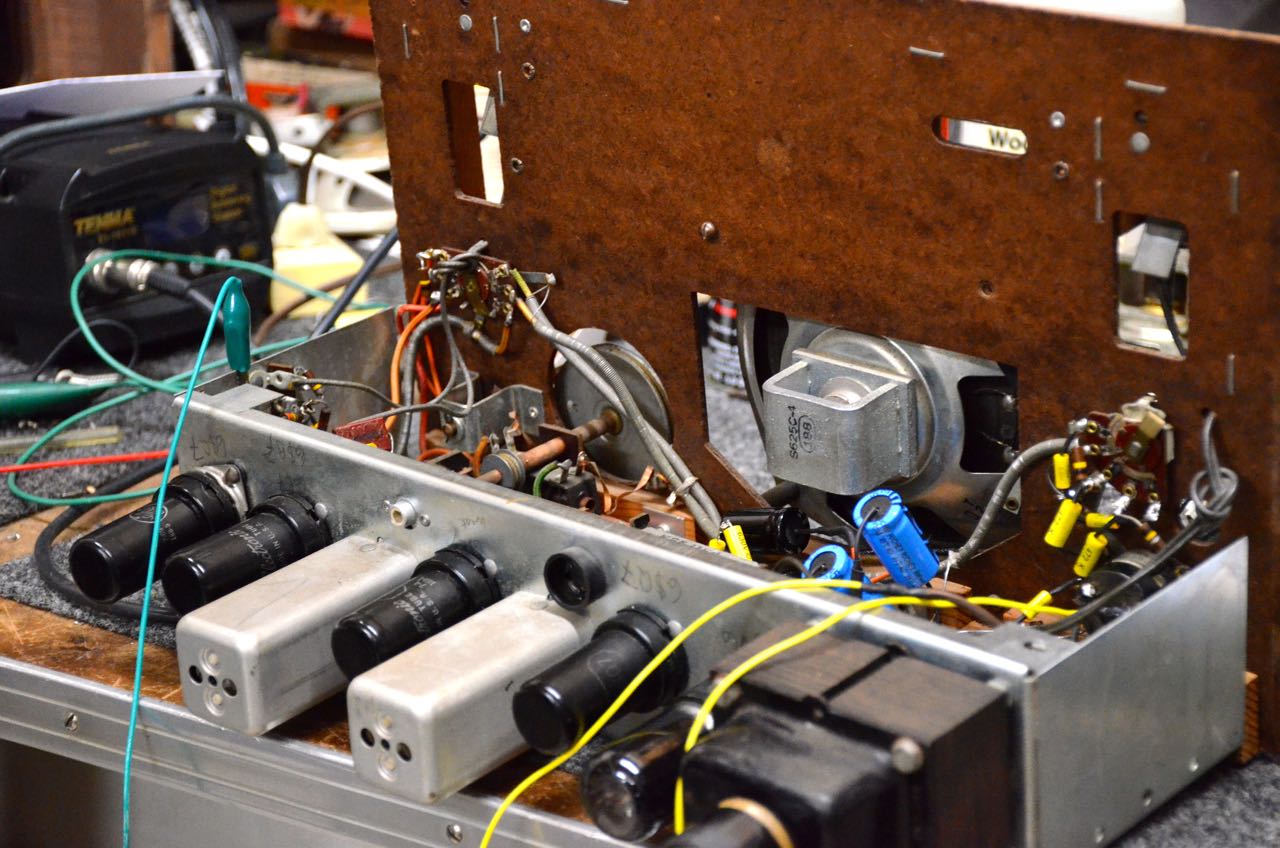
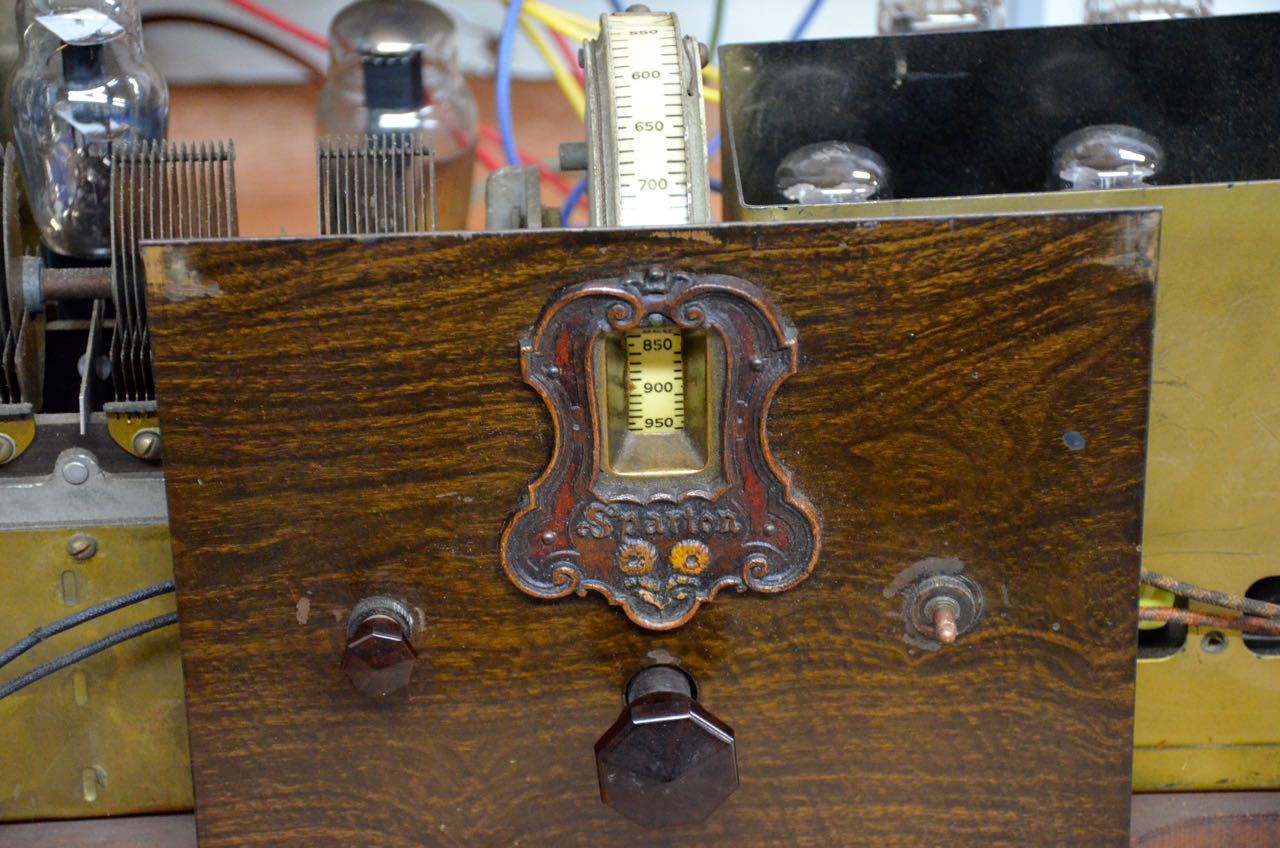
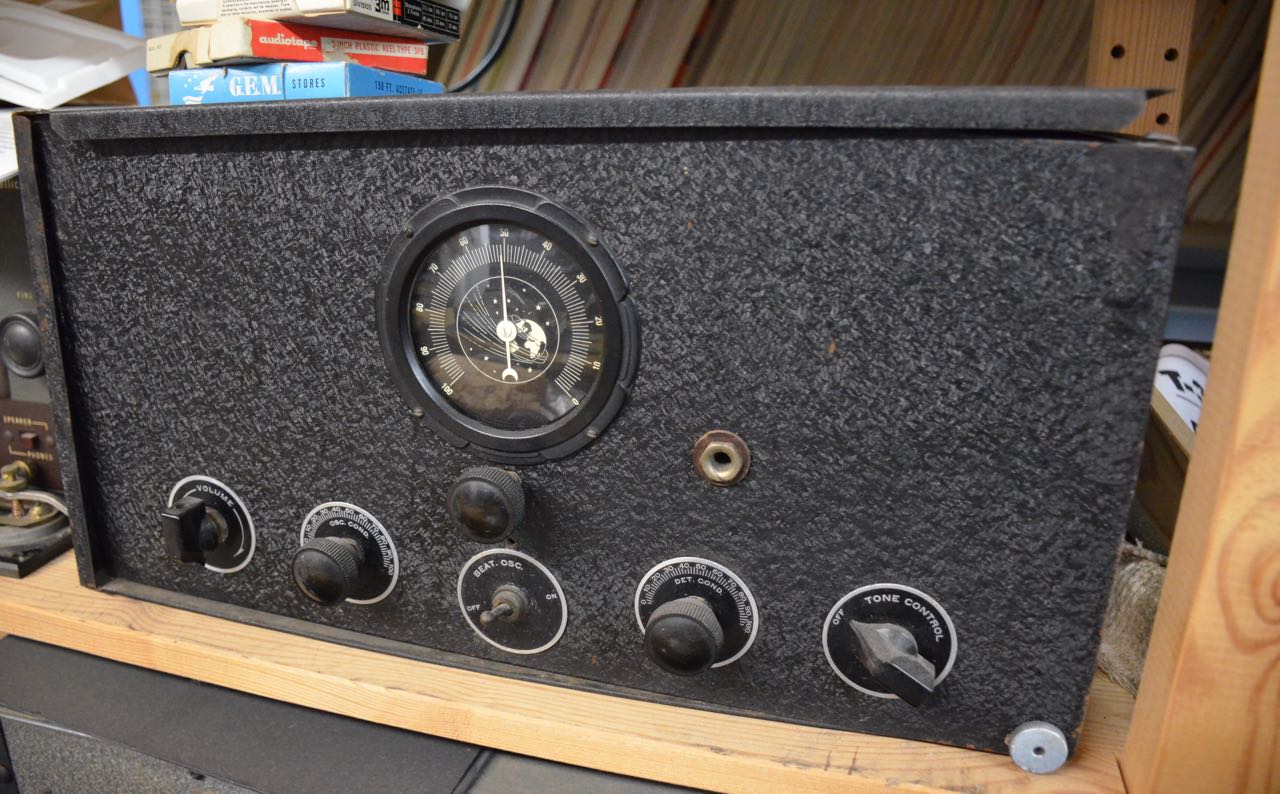
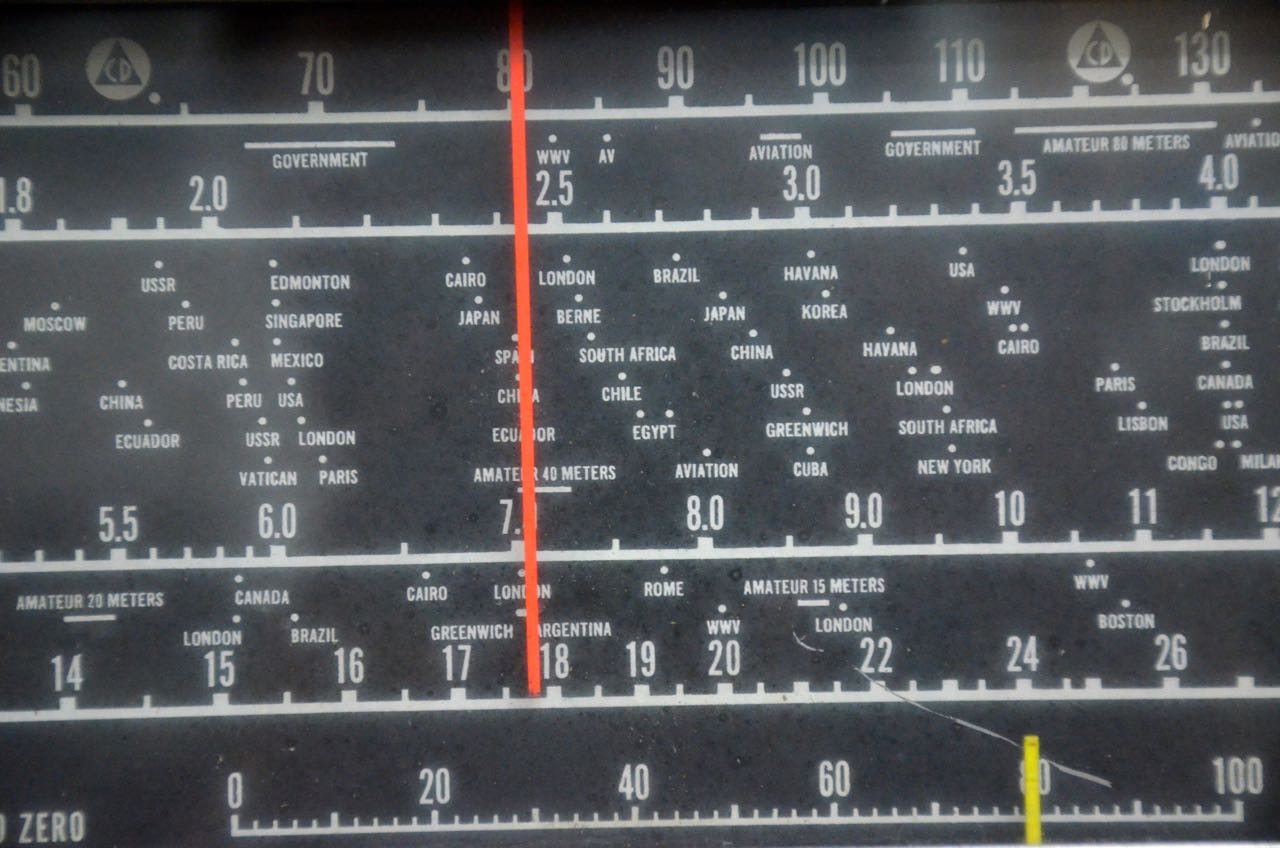
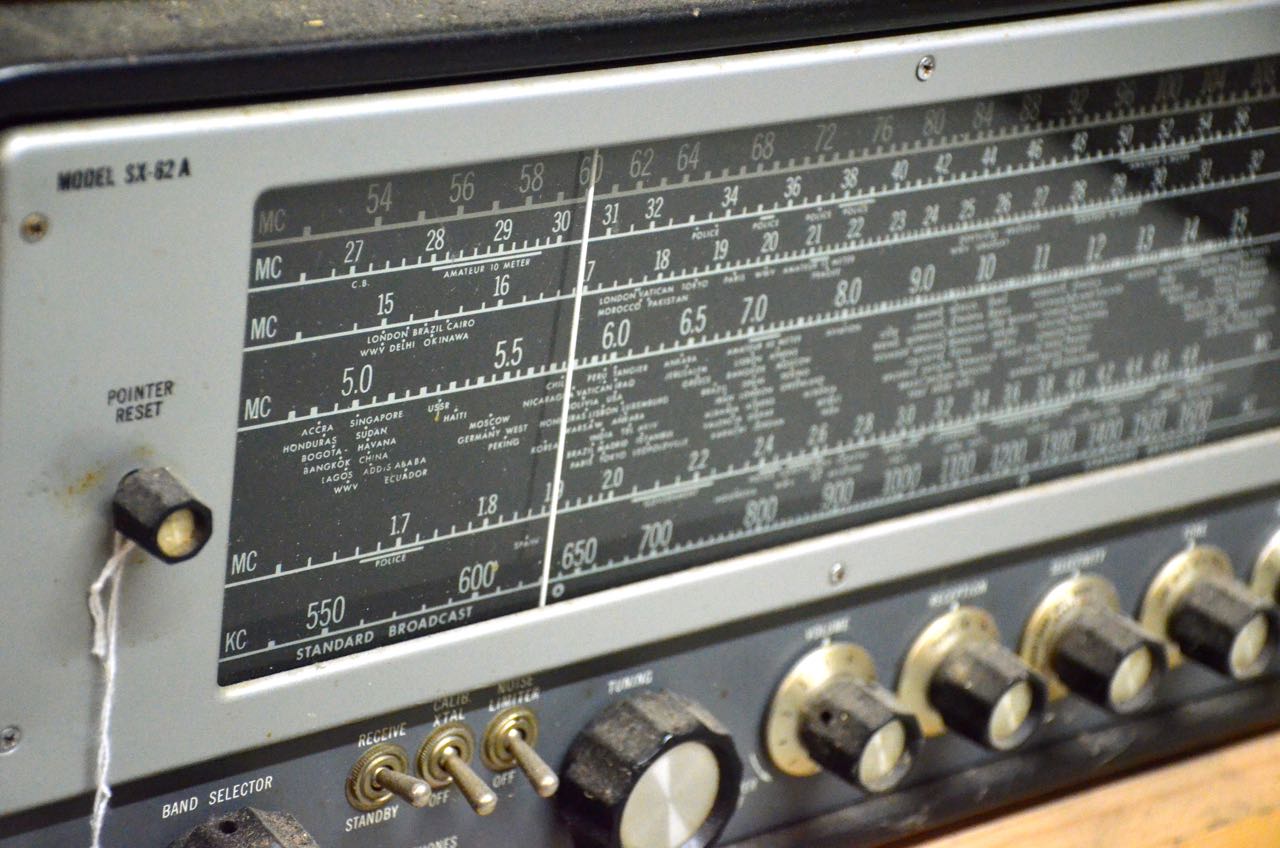
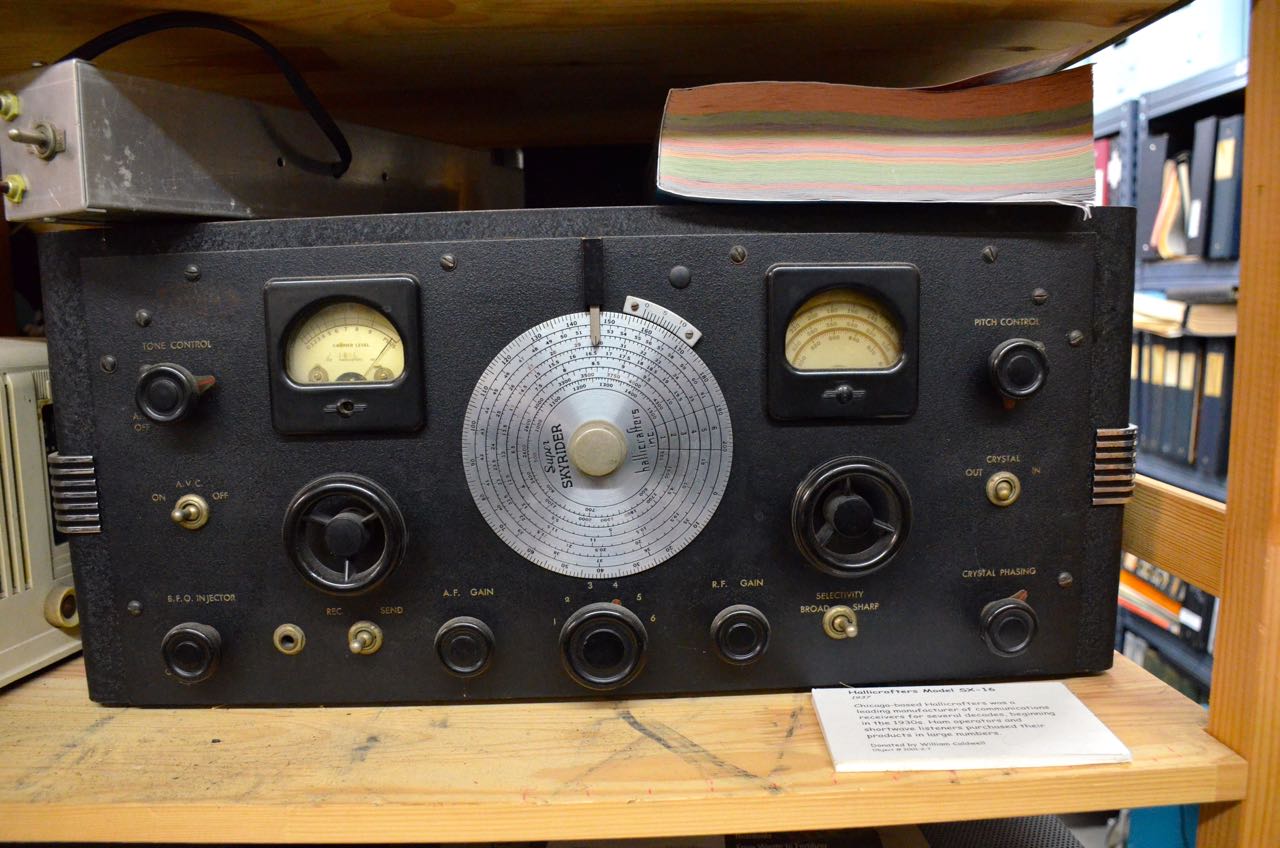
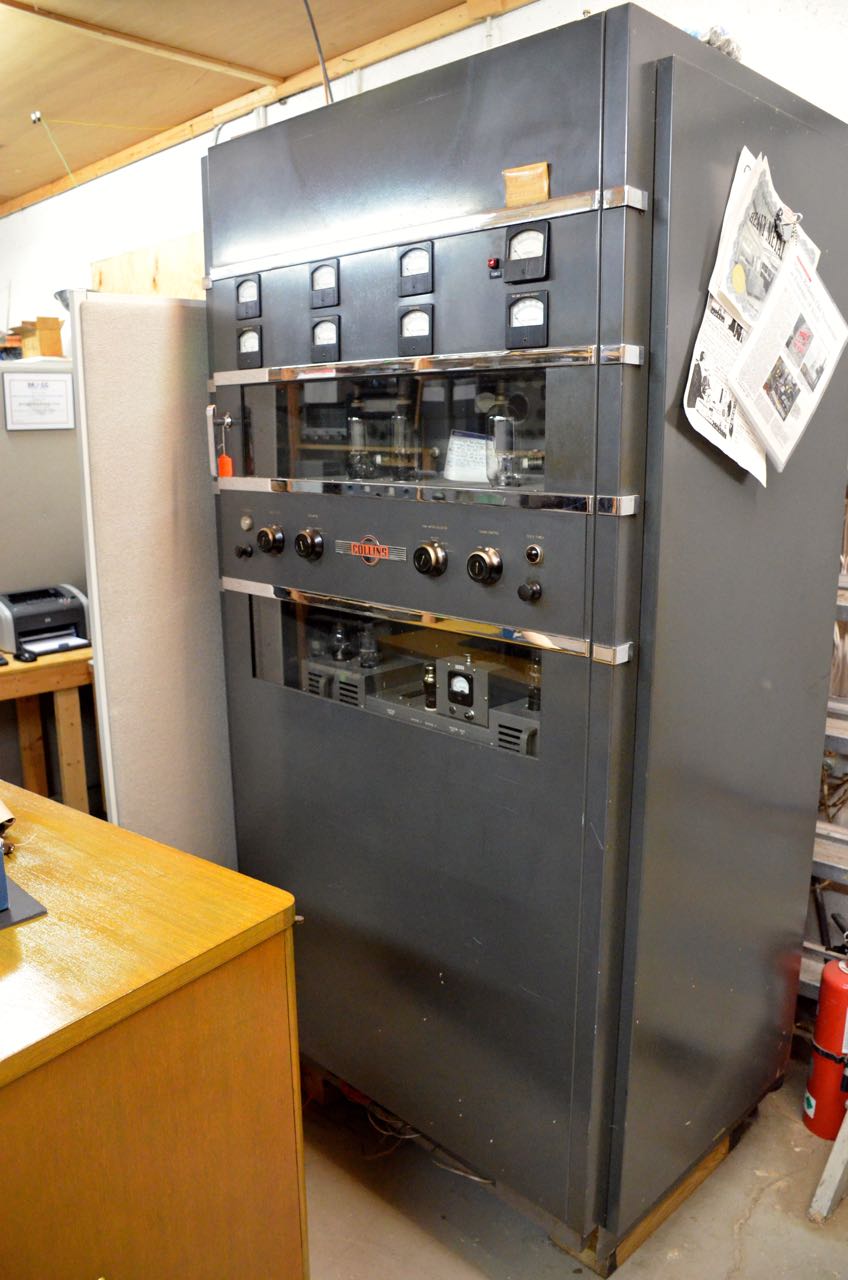
 The number of classic ham radios, home brew receivers and transmitters was simply amazing. Indeed, I felt like a kid in a candy shop!



 By the end of the tour, I had decided to become a member of the National Capital Radio and Television Museum. Even though I live a few states away, I like knowing that my membership funds not only help preserve vintage radios and televisions, but also provide me members-only access to many of their scanned archives. Click to view a full list of benefits for a modest $25 membership.
Again, many thanks to Brian Belanger for the amazing tour of this wonderful museum! Brian, I’ll be back next year…
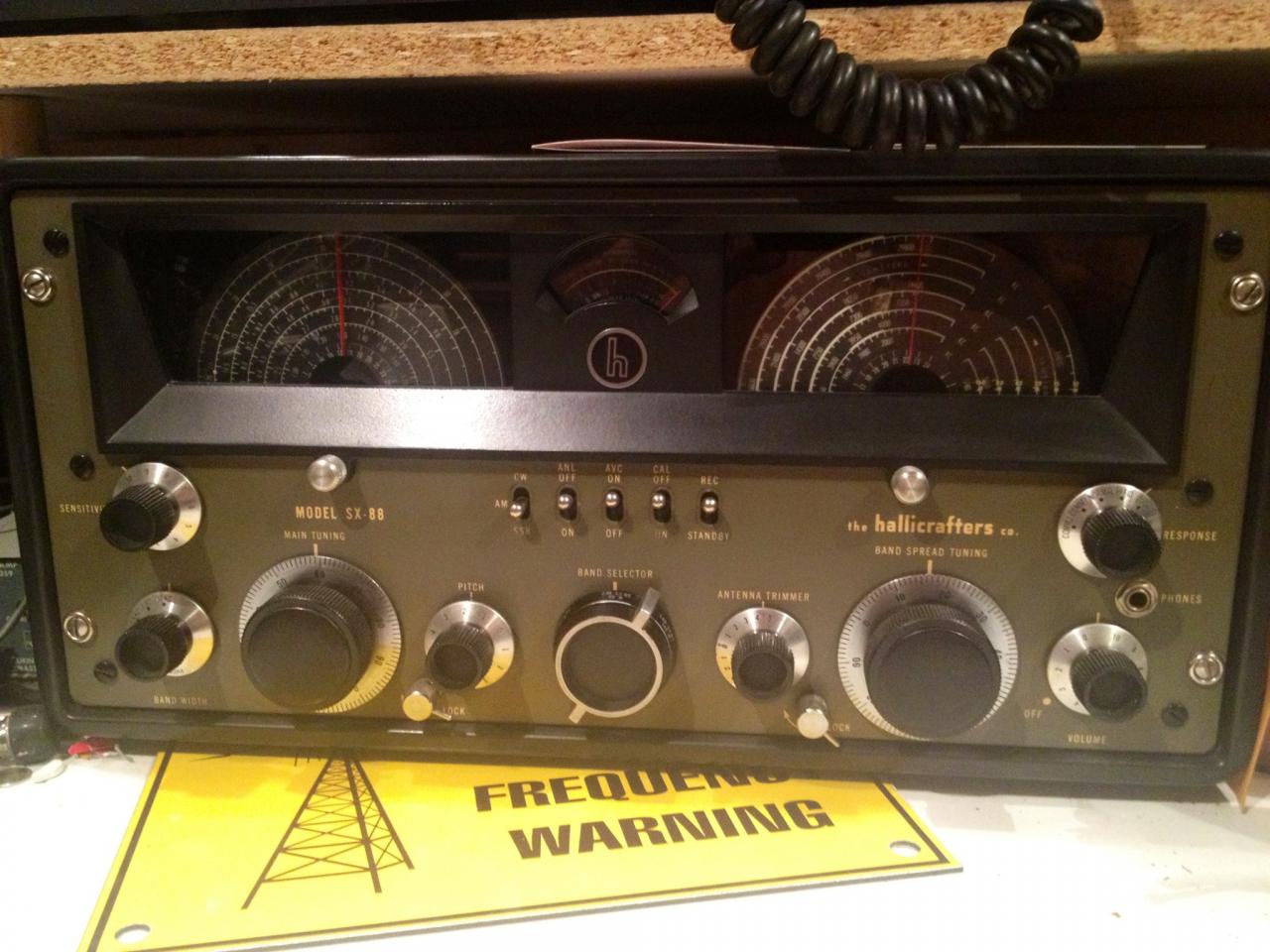
Yesterday while glancing through the QTH.com classifieds ads, I noticed a rare boat anchor for sale: the Hallicrafters SX-88.
The seller, Jeremy, describes this SX-88 as follows:
Hi [t]here, I have one SX88 in minty shape and is one of a handful that came in military green on [the] front panel for evaluation by the military. This is an exceptional radio in amazing condition. I can provide pics for someone who is seriously interested. I am open to a fair offer on radio. Please, no low-ballers. We all know what [it’s] worth…
 “We all know what it’s worth“–?
Well, it just so happened that my good friend (and Elmer, or ham radio guru) Mike Hansgen (K8RAT) had recently provided me with a little history lesson on the subject of the SX-88, so I did know what this rig is worth: a great deal of money.
But curiosity got the best of me, so I contacted Jeremy (a nice fellow, by the way) and asked what he was expecting to receive in exchange for his Hallicrafters SX-88? Jeremy’s reply:
“…$5,500 USD will take it. It is a very rare unit; it was… only one of about 6 [painted green]…for presentation to the military for evaluation.
That price is firm. [I] will not negotiate downward, and shipping [from Ontario, Canada] is extra.”
After receiving this response from Jeremy, I happened to think that I have the reference guide to rare/used shortwave receivers: Fred Osterman’s Shortwave Receivers Past and Present 4th edition. (Click here for more info.)
Osterman’s wonderfully comprehensive guide mentions that the SX-88 is a “highly regarded, rare and collectible model.” As for the rarity of the SX-88, he describes it thus: “Extremely Scarce.” The used price range he gives is from $3,500-7,000 US.
I also have Chuck Dachis’ book, Radios By Hallicrafters; in it, he states that the SX-88 is, “the most sought-after Hallicrafters model.” Wow.
After thanking Jeremy for his response, he replied:
“It’s a lot of money for a receiver for certain, but it is a fantastic shortwave receiver as the audio that comes out of it is amazing.
It has 10 watts of audio and into a big speaker–it is second to none. The fidelity is amazing and it is the king of its kind. [For those who like] tube rigs, it is the best of its kind.
For ham purposes on AM it is amazing, and on CW I find it incredible to use.
[W]hen they built this thing they intended to pull all [the] stops out and build the best radio they could for the day with the military in mind. It was an engineering marvel for the day.
Anyway, I have played with it for years now and need to thin out the herd.”
Impressive. And while I just don’t have that kind of money to fork out for a receiver, I did ask myself the question: “If I had $5,500 to blow, would I get that Hallicrafters SX-88?”
And my answer? Yes. In fact, I would personally drive to Jeremy’s home in Ontario and bring it back; no way I’d trust it to a parcel carrier or the post office…
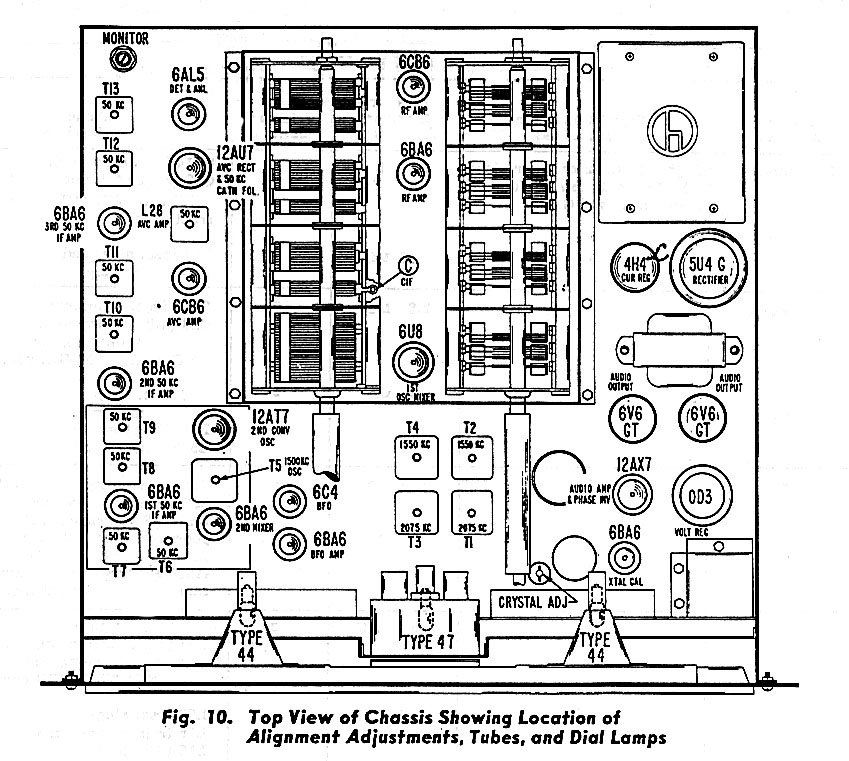
Click to enlarge (Source: AntiqueRadio.org)
Come on, you may say. For a guy who rarely pays over $50 for a vintage receiver, how could you possibly justify that kind of financial and time commitment–?
Well, let’s think of it this way. I remember when when I paid well over two thousand for my first laptop in college. How much is it worth now? Maybe twenty dollars–?
Many people have retirement funds in investments, some of which are in a variety of innovative companies that they actually patronize–for example, Apple or Microsoft. But how often can you find an investment that you can actually play with? One which you can turn on, tune in, work the controls, and enjoy?
Yes, I’m sure this is just the sort of justification voiced by many a vintage car collector…So, why not for a museum-worthy radio? After all, they’re not making these anymore.
I expect this Halli will not only hold its value, but will probably increase in value over time.
Ah, well; fun to ponder. My question to you: Would you buy a $5,500 vintage receiver if you had it to spare?
If your answer is yes, and you do have the money, then you might want to contact Jeremy.
I’m very curious if there are any SX-88 owners among our readership? If so, please comment with your thoughts about the ’88!
And for the rest of us, just so we can revel in the vicarious pleasure of ownership, I’ve included some additional information about the Hallicrafters SX-88 below, including two videos.
Resources (courtesy of Jeremy):
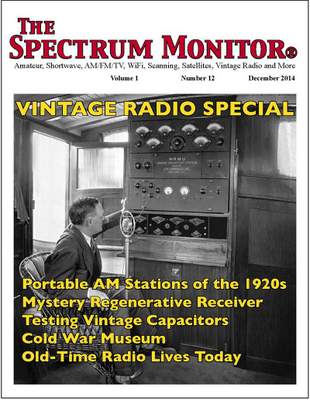 On occasion, the things you enjoy most, you forget to share with your friends. Not sure why this happens, but this is certainly the case with the Spectrum Monitor magazine (TSM). I’m long overdue to properly pitch TSM to my readers, which I feel is an absolute bargain at just $24 per year.
Why? Many of you may recall that it was only July of last year when we learned about the closure of The Monitoring Times magazine. I had always loved the magazine–not only were the management and editors a great group, but the magazine content was some of the best in the communications business when I began writing features and reviews for MT. But the owners of MT, Bob and Judy Grove, were ready to retire; ultimately, they decided to close their magazine down rather than sell it off.
Shortly after the announcement, MT‘s managing editor, Ken Reitz (KS4ZR), decided to make a go of a new publication. Albeit wholly digital, this magazine was to cover the same scope and content depth as MT, and would be known as The Spectrum Monitor (TSM).
In January of this year, TSM launched, and like many SWLing Post readers, I was eager to see if the content met the benchmark MT had set for so many years.
I needn’t have worried. Ken had corralled many excellent contributors, in many cases drawing upon previous writers for MT. And in the past year, I don’t believe it’s a stretch to say that in many respects, TSM not only met that benchmark, but has actually even exceeded it. TSM is now–unquestionably–a good, solid, thoroughly enjoyable publication.
Each issue is packed with topics covering the radio spectrum: shortwave, ham radio, vintage radio, pirate radio, scanning, public service, satellite, AM/medium wave and host of digital/mobile technologies, as well. Really, everything a listener could hope for.
 Initially, I had my doubts. I frankly wasn’t sure whether I’d like reading a “digital-only” radio publication, or whether other readers would. I confess to being a bit “old school;” as a radio listener, I like to hold a radio in my hands, to physically tune it; as a reader, I prefer holding a printed publication in hand, to turn the (paper) pages…How would I feel with an e-reader or laptop, instead? Would reading that way feel like work?
But TSM soon swayed me toward the digital as both reader and as a columnist. As a writer, there was less stress on word count. If it was a bit short, or lengthy– as my October column was–I soon found it mattered less. In a digital publication, page count is comparatively irrelevant as long as content is worthwhile and captivating for the reader. And as a reader, I appreciated that the columnists that I was reading would have the freedom to write at length, too.
Secondly, a digital publication gave its writers an opportunity to infuse columns with a multi-media element–something I’d become accustomed to as a blogger here on the SWLing Post. When I published a review of a radio, I could include actual audio clips in the article. If I wrote about pirate radio, for example, I could embed actual pirate radio recordings. Brilliant! And, again, more fun for the reader.
Also, including links or references to external websites is a cinch in a digital format, and quite easy for the reader to check out. Instead of copying a long gangly URL from a printed page, you simply click on a link as you would on a website, such as on this one. Second nature, really.
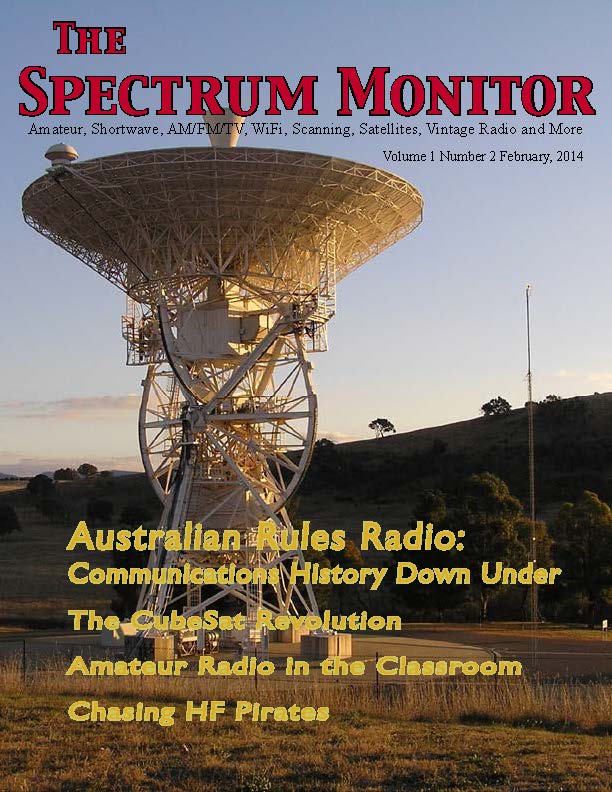 Finally, in a digital publication, I found writers could use more full-color images in their articles. I really enjoy the addition of the images; they make articles come to life…
So, I soon learned to relax with the e-reader just as I had with the printed Monitoring Times. No pages to turn, but then again, not so different from reading…well, a blog like this. I’ve received excellent feedback from TSM readers, too, many of whom admitted their initial bias against a “digital” magazine had since been withdrawn completely.
I continue to enjoy reading TSM every month. And although–due to time constraints–I’m no longer TSM‘s primary shortwave radio columnist, I still enjoy writing for TSM when time permits, so you will see my reviews and features pop up in TSM now and again.
But why take my word for it? Check it out for yourself–it’s one of the best magazines for the radio enthusiast, digital or print…And at only $24 annual cost, it’s a terrific and affordable last minute Christmas gift for a friend, family member, or–let’s be honest–for yourself.
Afraid to commit to a one year subscription? Individual issues of TSM are available online for $3 each. If you like what you’re reading (you will), you can then purchase a one year subscription, and the cost of your issue will be refunded.
If you’re lucky enough to receive a subscription to TSM in your stocking, I can assure you that you’re in for a real treat. Happy reading!
The following article originally appeared in the November 2014 issue of The Spectrum Monitor magazine.
Although many large government shortwave broadcasters are departing the shortwave radio scene, there’s no shortage of great products being introduced to it. Indeed, growth in the portable and SDR (software defined radio) markets is reasonably rapid. This suggests, perhaps, a new kind of future for shortwave.
The following is a basic, easy-to-follow buyer’s guide to some of the best receivers on the market. This guide is, by no means, comprehensive; rather it’s a selection of rigs I know or own, thus have tested.
If your budget is tight, or if you’re looking for a radio that could easily slip into your glove compartment, backpack, carry-on, or even jacket pocket, you need to look at an compact shortwave radio. Typically, there is a performance compromise with compact radios: they don’t typically have the sensitivity, like their more expensive cousins; they have a more limited frequency range; and they don’t detect single-sideband signals. Nonetheless, the ones listed here are fine performers for their size and price. Entries are listed in alphabetical order.
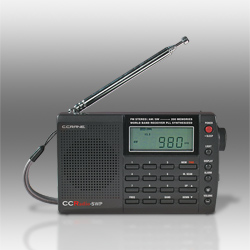 Crane CCRadio-SWP
The CC Radio SWP has been on the market for many years and has become a classic portable. The layout and design are very simple, the display clear, with easily-read icons and intuitive controls. The tuning knob on the right side is for fine tuning–no muting or chugging between frequencies, either. Shortwave and MW sensitivity are better than one might expect for a radio this size; I often find myself comparing it to much pricier portables. But most significantly, this radio offers the longest battery life of any radio I own: almost 70 hours on 2 AA cells!
The CC Radio SWP is available from C.Crane for $55.00 US. You can also purchase the CC Radio SWP from Universal Radio ($44.95) and Amazon.com.
Note: The CC Radio SWP may soon be replaced by the new CC Skywave which has just started shipping at time of posting.
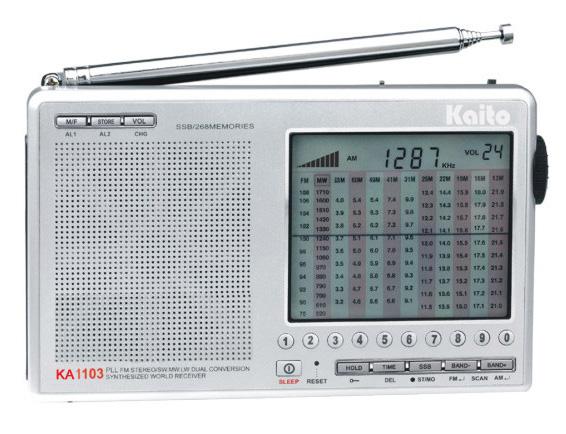 Kaito KA1103 or Degen DE1103
The Kaito KA1103 packs a lot of bang-for-your-buck if you’re looking for an inexpensive, ultra-portable entry into SWLing. Like the CC Radio SWP, the KA1103 (a.k.a. Degen DE1103) has enjoyed a long market life. The KA1103 is full-featured and one of the only sub-$100 radios with SSB mode. One interesting design feature of the KA1103 is its large Digital/Analog frequency display: the LCD screen features the frequency display in digits, but also sports a working digital representation of an analog frequency dial. As you tune up and down the band–with, yes, a tuning knob–the LCD needle moves along the display as it would on an analog radio dial. While I believe radio ergonomics could be improved, the KA1103 is still a great bargain.
The KA1103 is available at Universal Radio for $79.98 and Amazon.com for $79.99. Click here to search eBay for the Degen DE1103.
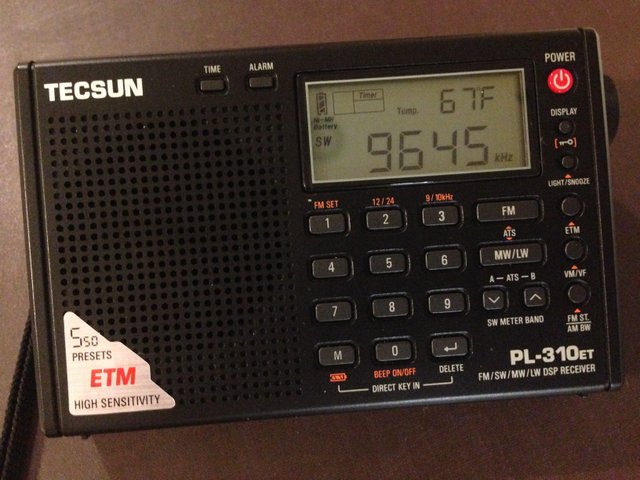 Tecsun PL-310ET
The Tecsun PL-310ET is an updated version of the acclaimed PL-310, a mini-legend in the world of portable radio, offering exceptional value and high-performance in a small package. The PL-310ET is fueled by a SiLabs DSP (Digital Signal Processing) chip that gives this ultra-portable excellent sensitivity and selectivity. The PL-310 has been a favorite amongst ultra-light Dxers, as sensitivity and selectivity are exceptional for the price. The new “ET” version of the PL-310 sports ETM tuning; a feature which allows you to scan the entire band and automatically store all strong stations to temporary memory locations. I believe the updated PL-310ET also has better AGC for weak signal DXing than its predecessor. Another bonus is that the PL-310ET sports an external antenna jack for shortwave and FM reception.
The Tecsun PL-310ET is largely available from Hong Kong-based sellers on eBay (http://ebay.to/1seZP3h) as well as on Amazon.com.
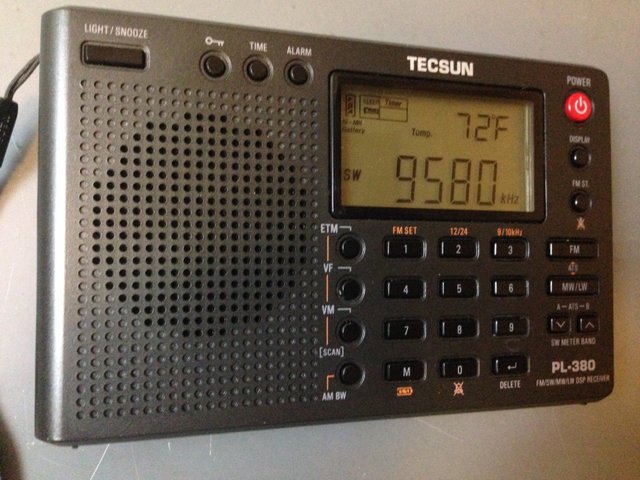 Tecsun PL-380
The Tecsun PL-380 is my favorite radio under $60. Much like its cousin, the PL-310ET (above), the PL-380 has a DSP (Digital Signal Processing) chip that gives this ultra-portable excellent sensitivity and selectivity. For three years, I have traveled extensively with the PL-380 in tow, and I’m constantly amazed by this radio’s excellent audio and reception across the bands.
The Tecsun PL-380 is available from Universal Radio for $59.95 and from Amazon.com for $54.99. Click here to search eBay for the PL-380.
Tecsun offers a number of compact portables, based on a similar DSP chip as the PL-380, but with built-in stereo speakers. Check out the Tecsun PL-390, PL-398BT, and PL-398MP, too.
In the portables market, I believe you get the most value and quality in the $90-250 price class. Most beginners and seasoned SWLs prefer a radio that includes everything necessary to get on the air immediately; all of these radios provide just that. Straight out of the box, you’ll have everything you need to listen to shortwave bands. All of these recommended radios are designed to pick up major shortwave broadcasters with ease, and offer the following features: good frequency coverage; circuitry that helps in the detection of weaker stations; and the ability to receive single-sideband (with the exception of the CCRadio-SW, see below).
 Crane CCRadio-SW
If you’re not as concerned about portability, the C.Crane CCRadio-SW is an excellent broadcast receiver. Think of the CCRadio-SW as a larger portable or tabletop radio (11.25″ x 7.25″ x 3.5″). What makes this radio stand out from its peers? Exceptional audio fidelity. The large built-in speaker has separate treble and bass controls and reminds me how important audio quality is while listening to a faint signal. This radio’s audio will fill a large room. Shortwave sensitivity is very good. Medium wave (AM broadcast) reception is excellent. Negatives? No direct keypad for frequency entry, and the SW also lacks a native SSB mode (a rare missing feature in this price class). With that said, it does have impressive array of external connections, including an IF-Out connection, which (with an IF converter and some free software) will allow you to interpret SSB and an array of digital signals, including DRM (Digital Radio Mondiale). What really strikes me about the CCRadio-SW is its sheer ease of use. Its design is simple, ergonomic, and highly effective. I’ve often recommended the CCRadio-SW to listeners who want simplicity of use and robust audio.
The CCRadio-SW is available for $149.95 at C.Cranes’ website, $129.95 from Universal Radio and is also available on Amazon.com. Click here to check eBay for used models.
Radios with a similar form-factor include the Grundig S450DLX and the new Eton Field.
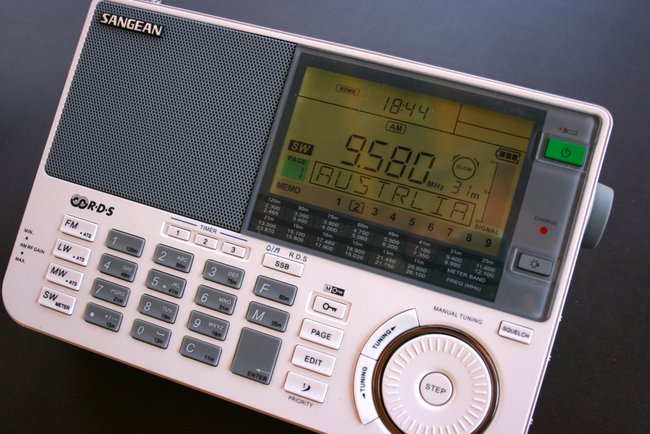 Sangean ATS-909X
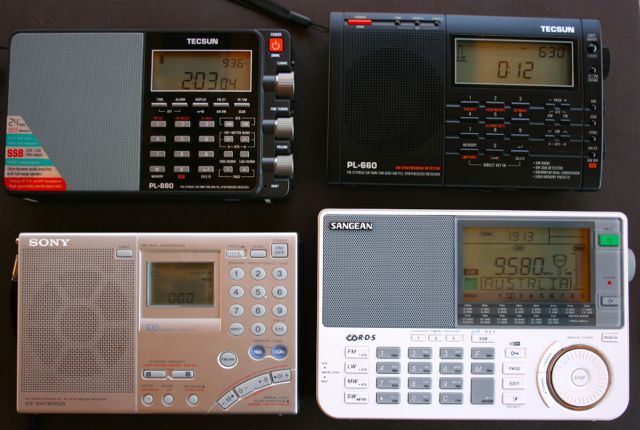
At $249.95, the Sangean ATS-909X is one of the priciest full-featured portables on the market. The 909X sports a large alpha-numeric display, tactile buttons, and a solid build quality. I also believe the 909X has a one of the better internal speakers and audio fidelity amongst portables. Negatives? Surprisingly, the 909X lacks synchronous detection, a tool most other portables have in this price range. Additionally, in my recent shortwave portable shoot-out, I gave the Sangean low marks for sensitivity; this review was based upon use of the built-in telescopic antenna. With an external antenna, on the other hand, the 909X performs admirably. If you’re looking for a quality portable with a front-end robust enough to be attached to a larger external antenna, the 909X may very well be your radio.
The Sangean ATS-909X is available at Universal Radio for $249.95 and Amazon.com for $219.99. Click here to search for used ATS-909Xs on eBay.
Sangean still has several models of portables available. Check out the Sangean ATS-404 and ATS-505P.
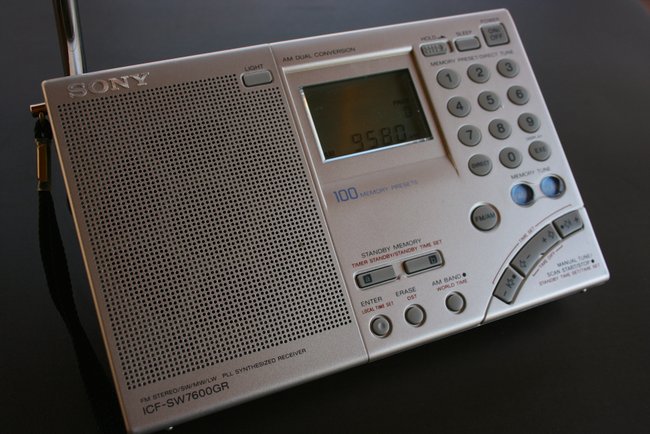 Sony ICF-SW7600GR
For performance, you’ll find that the Sony ICF-SW7600GR is top of its class among full-featured portables. Two of its outstanding features is a solid synchronous selectable sideband (a feature which helps to reduce fading distortion and adjacent-channel interference) and stable AGC circuit. In fact, the ICF-7600GR was chosen as a favorite in a blind audio test on the SWLing Post. Indeed, my only criticism of the ‘7600GR is that it lacks a tuning wheel; instead, you’re forced to use tuning buttons on the front face of the radio.
The Sony ICF-SW7600GR is available at Universal Radio for about $150.00 and at Amazon.com for $130-150.00. Click here to search eBay for a used ICF-SW7600GR.
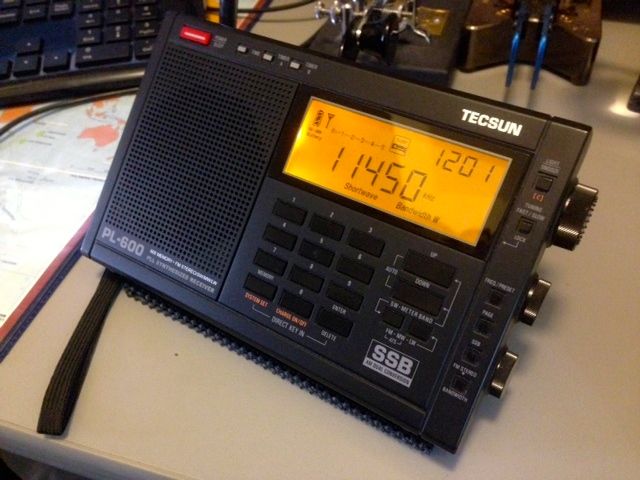 Tecsun PL-600
The Tecsun PL-600 is the value leader among the full-featured portables in this list. It can be found at a wide array of retailers, such as Universal Radio, Amazon and eBay. Price ranges from about $65 to $90. I’ve often recommended the PL-600 as a first full-featured radio for the budding SWL, and for good reason: the PL-600 has great sensitivity, selectivity, and even has capable single-sideband reception. The PL-600 does a surprisingly good job of holding its own against the other contenders in this list. Negatives? Like all sub-$100 portables, the PL-600 lacks synchronous detection (and if this is a deal-killer for you, check out the PL-660). Additionally, the PL-600 is not well suited for large external antennas; but it does work quite well with its own antenna. In a nutshell: if you’re not willing to spend over the $100 mark, the PL-600 is a safe bet.
The Tecsun PL-600 is available at Universal Radio for $89.95. Click here to search eBay for new and used PL-600s.
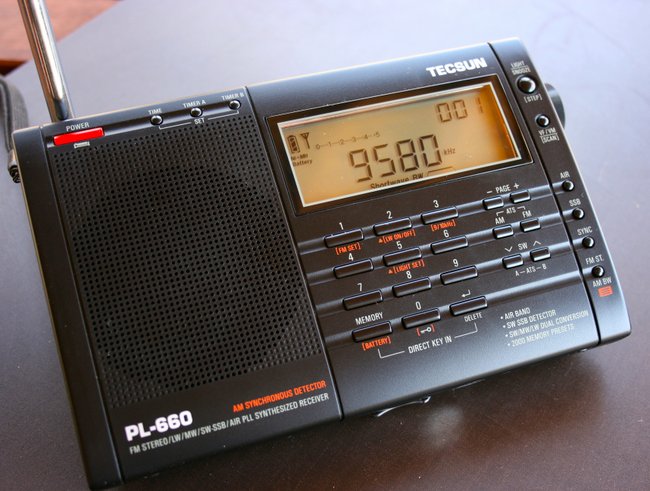 Tecsun PL-660
The Tecsun PL-660 is one of the best selling portable shortwave radios currently on the market–and for good reason. This rig has a full compliment of features and is quite easy to operate. The sync detector (selectable USB/LSB) is currently one of the best in the sub $150 US price range. Sensitivity and selectivity are both excellent; indeed, I consider it to have the most sensitive receiver among the portables listed here (and so. With the introduction of the Tecsun PL-880 on the market, the PL-660 has also become more affordable and can be found at or near the $100-120 price point with shipping. What a bargain!
The Tecsun PL-660 is available at Universal Radio for $109.95 and on Amazon.com (prices vary). Click here to search fro a new or used PL-660 on eBay.
Tecsun PL-880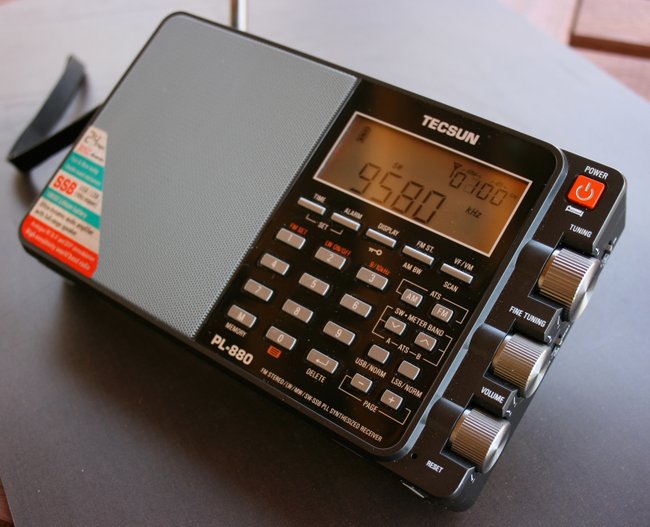
The Tecsun PL-880 was introduced to the market one year ago (November 2013), and while the introduction was a bit bumpy (feature variation based on differing firmware versions), it has recovered and found quite a good following. While the PL-880 does not rank as highly as the PL-660 or ICF-SW7600GR in terms of sensitivity (see review TSM June 2013) it does have compensating factors. For one thing, the PL-880 has the best audio fidelity from its internal speaker among the radios listed here. It’s also the most feature rich, boasting the most filter selections and a growing number of “hidden” features (http://wp.me/pn3uc-2tl). I also love the build quality, ergonomics, and tuning options; indeed, the PL-880 even has a dedicated fine tuning control. Negatives? Though the PL-880 has an undocumented sync detection among its “hidden” features, I find its sync lock quite feeble, compromising audio fidelity a bit too much. If you’re looking for a small portable that will fill a room with rich audio–whether you’re listening to the BBC, a classical concert, or just two ham radio operators chatting on 40 meters– look no further than the PL-880.
The Tecsun PL-880 is available at Universal Radio for $159.95 and on Amazon for $159.99. The Tecsun PL-880 is also available from Hong Kong-based sellers on eBay.
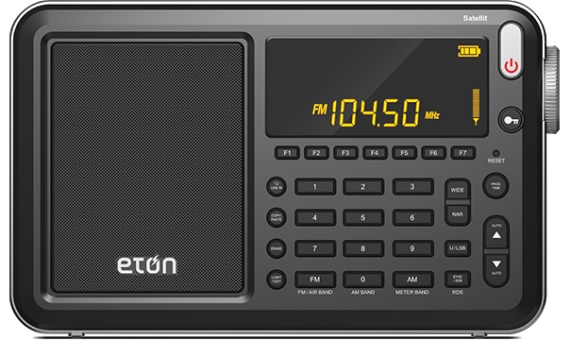 At time of publishing, Eton Corp–the North American distributor of Grundig–has four updated models of shortwave portables new to the market. All are updated versions of recently retired Grundig models:
If history is a guide, I expect all of these radios to prove worthy of the 2016 Shortwave Radio Buyer’s Guide. Indeed, preliminary reviews of the Field have been most favorable. Barring schedule changes, all models should be available in time for the 2014 holiday season…Stay tuned.
While tabletop receivers have started to decline with the advent of SDRs, there are many listeners who still prefer a simple, dedicated, stand-alone high-performance receiver with a good tuning knob and clear display, which is to say, a tabletop receiver. Tabletops are designed to perform best with a resonant external antenna.
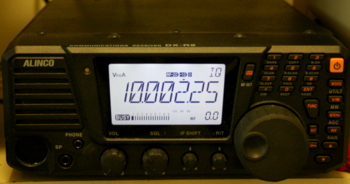 Alinco DX-R8T
I reviewed the Alinco DX-R8T in 2011 a few months after it was introduced. I was favorably impressed with the DX-R8T. So much so, I purchased one after the review. It has excellent selectivity and sensitivity, a large display and tuning knob, a detachable faceplate (if your desktop space is limited), and a decent built-in speaker. What’s more, the DX-R8T has an SDR mode that allows you to hook up the receiver to your PC to see a spectrum display, and with an optional accessory cable, control its rig functions and tuning. The DX-R8T requires a regulated 12-volt power supply (not included). Cons? The DX-R8T lacks a selectable synchronous detector–a feature I enjoy using to combat adjacent signal interference.
The Alinco DX-R8T is available at Universal Radio for $449.95. Click here to search eBay for the Alinco DX-R8T.
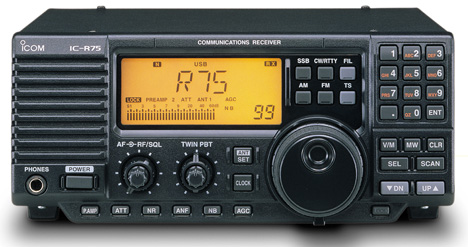 Icom R-75
Various versions of the Icom R75 have been on the market for well over a decade. This receiver stands the test of time because it’s a full-featured tabletop with attributes like twin passband controls, a two-level pre amp, separate AF/RF gain, adjustable AGC, an alpha numeric display, a direct frequency entry keypad, not to mention a logical, ergonomic layout for all controls. Amateur Radio operators, pirate radio listeners, as well as utility broadcast listeners will all appreciate the R75’s performance in SSB mode. Cons? The current base version of the R75 lacks synchronous detection, though some models in the past have had this option.
The Icom R75 is available at Universal Radio for $669.95. Click here to search eBay for the R75.
If you’re searching for maximum performance for the price, software-defined radios (SDRs) and IF receivers are hard to beat. These small “black box” radios require a computer to unlock their performance; none of these are stand-alone. But while I’ve never been a fan of combining my PC with radio listening, once I starting using an SDR, I never turned back. Now, 90% of the time that I’m on the air, it’s with an SDR. They’re simply incredible.
The following selection of SDRs–and IF receivers–are all available for $1,000 or less.
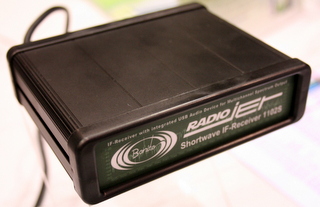 Bonito RadioJet IF-Receiver 1102S
The Bonito RadioJet is included in this group because it is very similar to an SDR, but strictly speaking, it’s an IF receiver. Like an SDR, it requires a PC for operation. But while the RadioJet’s spectrum bandwidth is more limited than the SDRs that follow, it has advantages over the others. For one, the RadioJet is more akin to a PC-controlled radio–most of the hard work is done in the receiver itself, not your computer–-so even older model Windows PCs, tablets and netbooks can run the RadioJet application with ease. The RadioJet is great for travelers since it requires no external power supply: it derives its power from your computer, from the same USB cable used for data. The RadioJet is an excellent receiver and has a very low noise floor. If you like listening to DRM, you’ll be impressed with its native ability to decode the mode. Click here to read my comprehensive review of the RadioJet.
The Bonito RadioJet 1102S is available at Universal Radio for $649.95. The RadioJet can also be purchased directly from Bonito in Germany.
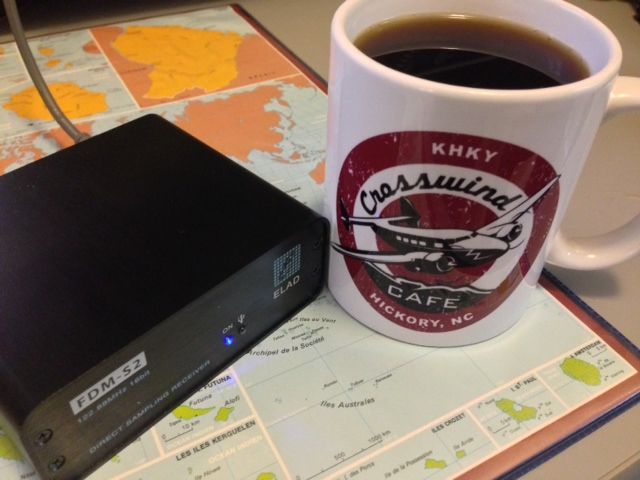 Elad FDM-S2
If you’ve read my Elad FDM-S2 review (coming soon!) you’ll know that this little SDR packs a powerful punch for the price. Indeed, I would venture to say that the FDM-S2 offers the best value among the SDRs listed here. Its performance is uncompromising, comparing favorably to receivers $300-400 more in price. The S2 also provides native DRM decoding. In short, the S2 makes for a fine DRM receiver.
Any negatives with this rig? Some users have reported diminished receiver performance in the presence of high-powered AM stations (fortunately, not an issue in the rural area where I live). Additionally, the Elad application has a greater learning curve than, say, the Perseus or the Excalibur (below). Still, I like the S2 so much that even though I already own a benchmark SDR, I’m planning to purchase the S2 after review.
The Elad FDM-S2 is available at Elad USA for $580.00.
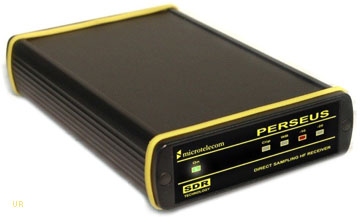 Microtelecom Perseus
If you’re looking for a benchmark SDR, it’s hard to overlook the venerable Microtelecom Perseus. Though it’s been on the market for many years now, the receiver architecture holds its own and is as robust as they come. Selectivity and sensitivity are absolutely superb: no matter the mode or band. Another benefit of the Perseus is that users can network their receivers with relative ease, sharing them with other Perseus users. Negatives? The Perseus price point still tops the charts at $1000. And while the supplied application works quite well, it lacks features found in other SDR apps, and the window cannot be resized (though numerous customer requests have been made). Still, the Perseus is likely to remain a DXer’s receiver of choice for years to come.
The Microtelecom Perseus is available at Universal Radio for $999.95. Click here to search eBay for a used Perseus.
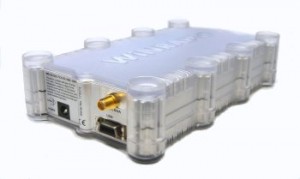 WinRadio Excalibur
I have owned the WinRadio Excalibur since 2012, and it has become my primary home receiver. I have directly compared the Excalibur to the Microtelecom Perseus and the Elad FDM-S2 (above); any receiver performance differences are minor. As a radio broadcast archivist, I find the Excalibur to be the best receiver suited to capturing broadcasts, as it’s the only one in this group that can record up to 2 MHz of radio spectrum (and allow you to play back this recording later); up to three broadcasts can be captured simultaneously within that 2 MHz window. Negatives? The Excalibur application only works on Windows PCs. Additionally, it requires a dedicated 12V power supply, thus is less convenient than the RadioJet or FDM-S2 for travel and outdoor listening. Read my full review of the Excalibur by clicking here.
The WinRadio Excalibur is available directly from WinRadio for $945.95. Click here to search eBay for a used Excalibur.
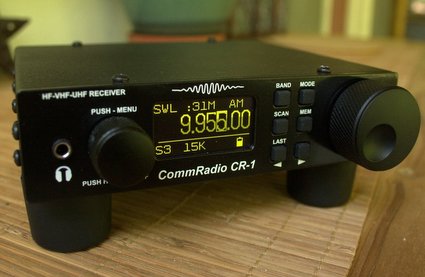
CommRadio CR-1a
The CommRadio CR-1a could be classed as either an SDR or a stand-alone tabletop receiver, as it fits both profiles. Furthermore, the CR-1a is as portable as nearly any of the portable radios mentioned above. In short, I really dig this radio! It’s beautifully engineered and mil-spec rugged; performance-wise, it’s hard to beat. Receiver sensitivity and selectivity are superb. The best part? The CR-1a has an optional internal battery that will power it for hours on a single charge. With antenna and fully-charged CR-1a, you will enjoy hours of outdoor listening while traveling [check out my recent travel review]. If you’re on the fence about getting an SDR or tabletop radio, grab the CR-1a; at $599.95, it’s a lot of kit for your investment. Click here to read my comprehensive review of the CR-1.
The CommRadio CR-1a is available from Universal Radio for $599.95 and directly from CommRadio for $599.99. Click here to search eBay for a used Comm Radio CR-1 or CR-1a.
If you would like to view a comprehensive list of all shortwave radios currently on the market, check out the Shortwave Radio Index (http://swling.com/db).
Universal Radio has just posted “Black Friday” deals on The Kenwood TS-590SG and a wide range of Icom radios.
The Icom R75 tabletop receiver is priced at $669.95 with free shipping and a free Grundig G2 portable radio. If you’ve been thinking about pulling the trigger on the R75, this is certainly a good deal.
Below, you’ll find links to each deal:
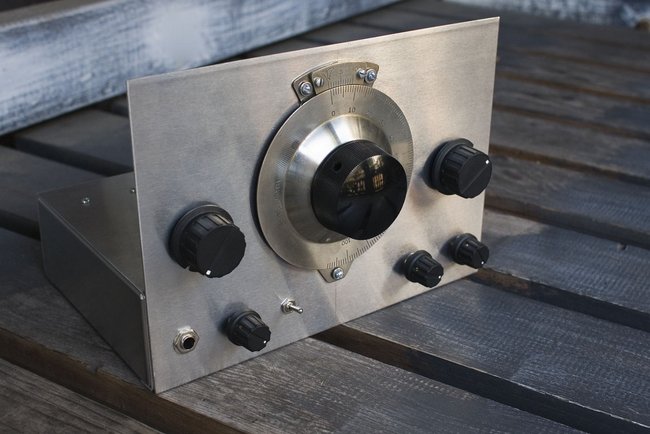
My good buddy, Dave Richards (AA7EE), has just posted videos of his home-brew regenerative receiver–nicknamed “The Sproutie.” [You may recall an earlier post about this very receiver.]
Below, you’ll find a video where Dave tunes in broadcasters with The Sproutie–she certainly has ears!
Dave, that’s a simple, beautiful little radio you’ve built there. I love the HRO knob–form and function at its best.
Readers: be sure to check out Dave’s full post about the Sproutie along with another video. If you haven’t yet, bookmark Dave’s blog–it’s a good one!